

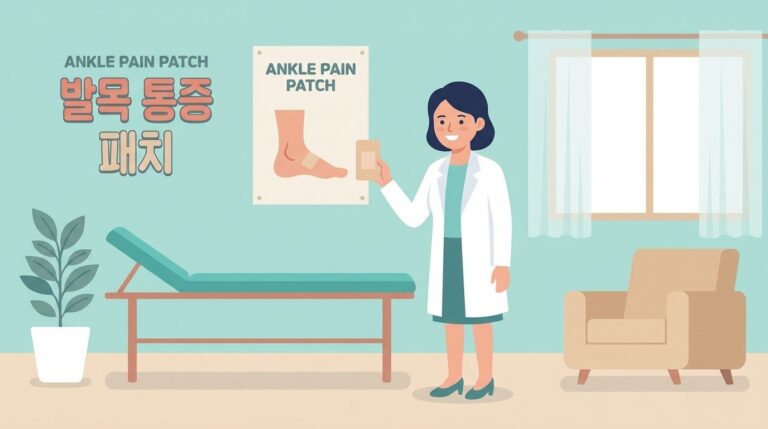
Treating an Ankle Sprain in Korea: Getting Pain Relief Patches at the Clinic
Phase 1: Empathy (Story-Driven Opening)
안녕하세요! 매일한글 에디터입니다. (Hello! This is your Daily Hangul editor.)
Imagine this: You are spending a dreamy afternoon exploring the charming cobblestone alleys of Bukchon Hanok Village or filming a viral TikTok dance challenge in Hongdae. Suddenly—crunch! You step on an uneven curb, your ankle twists, and a sharp pain shoots up your leg. Walking back to the subway station feels like an impossible marathon. You know you need medical care, but the thought of navigating a Korean clinic alone makes your heart race. What if you can’t explain your symptoms? What if you get lost between the consultation and the physical therapy room?
Take a deep breath! Many travelers and expats face this exact hurdle, but Korean medical care is famous for being incredibly fast, affordable, and warm. By mastering just a few core phrases around sprains, physical therapy, and the magical Korean wonder known as paseu (pain patches), you will walk into an orthopedic clinic with total confidence. This guide is crafted directly from real-life learner experiences and consultations with local Korean doctors so you can get treated smoothly and continue your Korean adventure pain-free.
Phase 2: Core 3 Expressions Deep Dive
Here are the top three survival expressions you need when stepping into a clinic for an ankle injury.
1. 발목을 삐었어요 (Balmogeul bpieosseoyo)
- Pronunciation: [Bal-mo-geul bpi-eo-sseo-yo] (Think: “Balm-oak-eul” + “pee-uh-ssuh-yo”)
- Meaning: Literal: “I sprained my ankle.” vs. Real Nuance: “I rolled/twisted my ankle and it hurts right now.”
- K-Culture Moment: In K-dramas, when the protagonist clumsily trips on steps and sits on the floor clutching their ankle, they inevitably sigh, “아, 발목 삐었네…” (Ah, I sprained my ankle…).
- Editor’s Insight: 삐다 (bbida) specifically refers to twisting, rolling, or spraining a joint. You can also use it for your wrist: 손목을 삐었어요 (Sonmogeul bpieosseoyo).
- Situation Spectrum: Casual (발목 삐었어) ⚠️ | Semi-formal (발목 삐었어요) ✅ | Formal (발목을 삐었습니다) ✅
- 🤔 Think About It: In English, we often say “I hurt my ankle” or “I twisted my ankle.” Why do you think Korean has a very specific single verb (삐다) reserved almost exclusively for sprains?
2. 소염진통 파스 처방해 드릴게요 (Soyeom-jintong paseu cheobanghae deurilgeyo)
- Pronunciation: [So-yeom-jin-tong pa-seu cheo-bang-hae deu-ril-ge-yo] (Think: “So-yuhm-jean-tong path cheo-bang-hae dew-ril-geh-yo”)
- Meaning: Literal: “I will prescribe anti-inflammatory pain-relief patches.” vs. Real Nuance: “I’m giving you strong medicated patches to bring down the swelling and ease the pain.”
- K-Culture Moment: When a doctor in a medical drama reassures a hardworking character with a bad back or swollen joint, handing them a slip for pharmacy-grade paseu.
- Editor’s Insight: 소염 (anti-inflammatory) + 진통 (pain relief) + 파스 (patch). Prescription paseu from an orthopedic clinic are usually much stronger and more adhesive than general over-the-counter patches from a convenience store!
- Situation Spectrum: Doctor to Patient (처방해 드릴게요) ✅ | Equal/Friendly (처방해 줄게) 🚫 | Highly Formal Doctor (처방해 드리겠습니다) ✅
- 🤔 Think About It: Paseu originates from the German word Pflaster (bandage/patch) via Japan. Isn’t it fascinating how loanwords evolve into iconic symbols of Korean daily self-care?
3. 통증이 심할 때 붙이세요 (Tongjeung-i simhal ttae buchiseyo)
- Pronunciation: [Tong-jeung-i sim-hal ttae bu-chi-se-yo] (Think: “Tong-jeung-ee seem-hahl tteh boo-chee-seh-yo”)
- Meaning: Literal: “Stick it on when the pain is severe.” vs. Real Nuance: “Apply a patch whenever the throbbing gets bad.”
- K-Culture Moment: A caring pharmacist or doctor carefully tapping their own ankle to demonstrate exactly where and when to attach the medicated patch before sending the patient home.
- Editor’s Insight: The verb 붙이다 (buchida) means “to stick / paste / attach.” The grammar pattern -(으)ㄹ 때 means “when/during.” So 통증이 심할 때 is the standard medical instruction for “as needed during acute pain.”
- Situation Spectrum: Doctor/Pharmacist advice (붙이세요) ✅ | Polite Peer Advice (붙여 보세요) ✅ | Casual Friend (붙여 봐) ⚠️
- 🤔 Think About It: In Korean culture, medical staff use honorific imperative forms (-세요) that sound warm and protective rather than demanding. Does your native language soften medical instructions like this?
Phase 3: Textbook Korean vs. Real Korean
Situation 1: Describing your pain to the doctor
- 📖 교과서 한국어 (Textbook): “제 발목 부위에 심한 통증이 발생했습니다.” (Severe pain has occurred in my ankle region.)
- 🗣️ 진짜 한국어 (Real Life): “발목을 삐어서 걸을 때마다 욱신거려요.” (I sprained my ankle and it throbs every time I walk.)
- 💡 왜 다를까? (Why is it different?): Textbook sentences rely on heavy Hanja (Sino-Korean) nouns that sound robotic. Real Koreans use vivid mimetic sensory verbs like 욱신거리다 (uksin-georida – to throb/ache).
Situation 2: Asking for pain patches at the clinic desk
- 📖 교과서 한국어 (Textbook): “소염진통 첩부제를 처방하여 주십시오.” (Please prescribe me transdermal anti-inflammatory patches.)
- 🗣️ 진짜 한국어 (Real Life): “통증 심할 때 붙이는 파스도 같이 처방해 주세요!” (Could you also prescribe some patches I can put on when the pain gets bad?)
- 💡 왜 다를까? (Why is it different?): Formal pharmaceutical terms like 첩부제 are only written on medicine boxes. In real speech, everyone—including doctors—simply calls them 파스 (paseu).
Phase 4: K-Culture Deep Dive & Non-Verbal Manners
4-1. 눈치 (Nunchi) & Clinic Etiquette
When entering an orthopedic clinic (정형외과 – Jeonghyeong-oegwa), you will notice that doctors and physical therapists move quickly. To demonstrate respectful manners (예의):
1. The Double-Handed Hand-off: Always receive your clinic registration card, prescription paper (처방전), and receipt using both hands or with your left hand lightly supporting your right forearm.
2. Pointing with Care: When the doctor asks “어디가 아프세요?” (Where does it hurt?), gently point to the swollen spot with an open palm rather than a stiff single finger.
3. Sock Etiquette: Since you will be taking off your shoe for the examination, wearing clean, hole-free socks is an unspoken rule of polite clinic etiquette in Korea!
4-2. The Korean Passion for Paseu (파스 문화)
If you have ever stepped into a Korean subway car or a traditional bathhouse (찜질방), you have likely smelled that refreshing, minty herbal aroma of menthol. That is the scent of 파스! In Korea, paseu is not merely medicine; it is an emotional remedy for life’s fatigue. Whether an office worker experiences a stiff neck from overtime or an elderly grandmother (할머니) feels joint aches before rainy weather, slapping on a patch is the ultimate everyday cure. There are cool patches (쿨파스) for fresh sprains and hot patches (핫파스) for chronic stiffness. When you sprain an ankle, clinics will invariably prescribe cooling anti-inflammatory patches to draw out internal heat and swelling.
Phase 5: Real-Life Roleplay Scenario
Setting: Hongdae Good Morning Orthopedic Clinic (홍대 굿모닝 정형외과). You are sitting in the exam room opposite Dr. Park.
- Turn 1 (의사 – Dr. Park): 어디가 불편해서 오셨어요?
(Eodiga bulpyeonhaeseo osyeosseoyo?)
“What brings you in today? / Where does it feel uncomfortable?”
🎭 따뜻한 미소로 발목을 바라보며 (Looking at your ankle with a warm smile) -
Turn 2 (나 – Patient): 어제 계단에서 발목을 삐었어요. 걸을 때 너무 아파요.
(Eoje gyedan-eseo balmogeul bpieosseoyo. Georeul ttae neomu apayo.)
“I sprained my ankle on the stairs yesterday. It hurts so much when I walk.”
🎭 발목 바깥쪽을 손으로 가리키며 (Gently pointing to the outer ankle) -
Turn 3 (의사 – Dr. Park): 여기 누르면 아프세요? 많이 부었네요.
(Yeogi nureumyeon apeuseyo? Mani bueonneyo.)
“Does it hurt when I press here? It is quite swollen.”
🎭 발목 인대 부위를 살짝 누르며 (Lightly pressing the ankle ligament area) -
Turn 4 (나 – Patient): 앗, 네! 거기가 제일 욱신거려요.
(At, ne! Geogiga jeil uksingeoryeoyo.)
“Ouch, yes! That exact spot throbs the most.”
🎭 아픈 표정으로 살짝 움찔하며 (Flinching slightly with an expressive face) -
Turn 5 (의사 – Dr. Park): 엑스레이상 뼈는 괜찮지만 인대가 늘어났어요. 오늘 물리치료 받고 가세요.
(Ekseureisang ppyeoneun gwaenchanchiman indaega neureonasseoyo. Oneul mullichiryo batgo gaseyo.)
“On the X-ray, the bone is fine, but the ligament is stretched. Please receive physical therapy today before you go.”
🎭 차트를 작성하며 모니터를 가리킴 (Pointing to the X-ray monitor while taking notes) -
Turn 6 (나 – Patient): 다행이네요. 약이나 파스도 처방해 주시나요?
(Dahaeng-ineyo. Yagina paseudo cheobanghae jusinayo?)
“What a relief. Do you also prescribe medicine or patches?”
🎭 안도하는 표정으로 두 손을 모으며 (Clasping hands together in relief) -
Turn 7 (의사 – Dr. Park): 네, 통증이 심할 때 붙이는 소염진통 파스를 처방해 드릴게요. 하루에 한 번 바꾸세요.
(Ne, tongjeung-i simhal ttae buchineun soyeom-jintong paseureul cheobanghae deurilgeyo. Harue han beon bakkuseyo.)
“Yes, I will prescribe anti-inflammatory pain patches to put on when the pain is severe. Change it once a day.”
🎭 처방전을 인쇄하며 친절하게 설명함 (Explaining kindly while printing the prescription) -
Turn 8 (나 – Patient): 네, 감사합니다! 물리치료실은 어디로 가면 되나요?
(Ne, gamsahamnida! Mullichiryosireun eodiro gamyeon doenayo?)
“Yes, thank you! Which way should I go for the physical therapy room?”
🎭 정중하게 목례하며 (Bowing politely with upper body)
🔀 Interactive Decision Point: What do you say to Dr. Park next?
- Choice A: “파스 하루에 열 장 붙여도 돼요?” (Can I stick ten patches on in one day?)
- Feedback [Bad 🚫]: Doctor will look horrified! Overusing patches can irritate your skin or cause contact dermatitis.
- Choice B: “물리치료는 얼마나 걸려요?” (How long does physical therapy take?)
- Feedback [Best ✅]: Perfect natural question! Orthopedic treatments (hot pack, electrical stimulation, ultrasound) usually take 30 to 40 minutes.
- Choice C: “약 안 먹고 술 마셔도 되죠?” (I can skip medicine and drink alcohol tonight, right?)
- Feedback [Risk ⚠️]: Danger! Alcohol accelerates blood circulation, making an acute sprain swell up twice as fast. Dr. Park will strictly forbid it!
Phase 6: 10-Second Emotion Shadowing Drill
Practice reading these out loud with rhythm and authentic emotional inflection! Slash marks (/) indicate natural micro-pauses.
[🥺 아프고 조심스럽게 / Painful & Cautious]
발목을 삐어서 / 걸을 때마다 / 너무 아파요.
(Balmogeul bpieosseo / georeul ttaemada / neomu apayo.)
“I sprained my ankle / and every time I walk / it hurts so much.”-
[🩺 다정하고 든든하게 / Reassuring & Professional]
통증이 심할 때 / 붙이는 파스를 / 처방해 드릴게요.
(Tongjeung-i simhal ttae / buchineun paseureul / cheobanghae deurilgeyo.)
“When the pain is severe / patches you stick on / I will prescribe for you.” -
[😊 안도하며 정중하게 / Relieved & Courteous]
물리치료실로 / 지금 가면 될까요?
(Mullichiryosillo / jigeum gamyeon doelkkayo?)
“To the physical therapy room / should I head over now?”
Phase 7: K-Culture Mini Dictionary
- 정형외과 (Jeong-hyeong-oe-gwa) | Orthopedic Clinic
- Everyday usage: If you have muscle aches, joint issues, broken bones, or sprains, skip the emergency room and look for a local clinic sign showing “정형외과”.
- 파스 (Pa-seu) | Medicated Pain Relief Patch
- Everyday usage: Essential topical pain patch. Ask for 쿨파스 (cool) for fresh sprains and 핫파스 (hot) for stiff, tired muscles.
- 물리치료 (Mul-li-chi-ryo) | Physical Therapy
- Everyday usage: Highly accessible in Korea. For just 5,000–10,000 KRW alongside your consultation, you get soothing heated pads, TENS electrical pulses, and laser therapy.
- 처방전 (Cheo-bang-jeon) | Medical Prescription Slip
- Everyday usage: The paper given at clinic reception after paying. Hand this directly to any neighboring pharmacy (약국) right outside the clinic door.
Phase 8: Traveler’s Survival Kit
Top 3 Survival Phrases for Clinic Visits
- “엑스레이 찍어 봐야 하나요?” (Ekseurei jjigeo bwaya hanayo?)
- Pro Tip: Use this to ask if you need an X-ray taken to check for hairline fractures.
- “파스는 몇 시간 동안 붙여요?” (Paseuneun myeot sigan dongan buchyeoyo?)
- Pro Tip: Ask the pharmacist how many hours the patch should stay on (usually 8–12 hours).
- “실비 보험 서류 떼어 주세요.” (Silbi boheom seoryu tteeo juseyo.)
- Pro Tip: Hand this line to reception if you need an itemized medical bill (진료비 세부내역서) for your travel insurance claim.
Editor’s Travel Note
- Finding Clinics: Download the 네이버 지도 앱 다운로드 to search “정형외과” in your neighborhood. Most clinics are open until 6:30 PM on weekdays and until 1:00 PM on Saturdays.
- The Golden Pharmacy Rule: In Korea, doctors do not hand out prescription medication inside the clinic. After settling your consultation bill at the desk, walk out of the clinic into the building lobby or next door—there is almost always a pharmacy (약국) located within 20 meters!
Phase 9: “One Step Deeper” (Food for Thought)
In many Western healthcare systems, visiting an orthopedic specialist requires weeks of waiting for a primary physician’s referral, and physical therapy sessions can run into hundreds of dollars. In South Korea, you can walk directly into a private specialist clinic without an appointment, get an X-ray, consult a board-certified physician, undergo physical therapy, and collect prescription patches all within 45 minutes for less than the cost of a nice dinner.
This phenomenal speed reflects the Korean cultural concept of 빨리빨리 (Ppalli-ppalli, “fast and prompt”) combined with communal health security. Healing is seen as something that must be tackled immediately so a person can swiftly return to their life and community.
💬 Your Turn: Have you ever needed medical care while traveling in another country? How does the speedy, direct clinic access in Korea compare to your hometown system? Share your stories below!
Phase 10: FAQ & Common Mistakes
Q: Can I buy effective paseu at a Korean convenience store if the clinic is closed?
A: Yes! 24-hour convenience stores (CU, GS25, 7-Eleven) stock basic emergency medicine (안전상비의약품), including common pain patches like Jeil Cool Pap (제일쿨파프). However, clinics prescribe stronger medicinal formulas with higher anti-inflammatory concentrations.
Q: Should I choose a cool patch (쿨파스) or hot patch (핫파스) for a twisted ankle?
A: For an acute injury within the first 48 hours (swollen, hot, throbbing), always use a 쿨파스 (Cool Patch) or cold compress! A hot patch (핫파스) dilates blood vessels and will make recent swelling significantly worse.
Q: Do Korean clinics accept foreign credit cards?
A: Absolutely! Almost all orthopedic clinics easily process foreign Visa and Mastercard credit cards. However, carry your physical passport as registration requires your official full name and date of birth.
🚨 Common Mistakes Board
- ❌ Mistake 1: Leaving a paseu on for 24+ hours until it falls off by itself.
- 👉 Correct Action: Take it off after 8 to 12 hours. Leaving it on too long traps moisture and causes severe skin rashes.
- ❌ Mistake 2: Walking into a large general university hospital (대학병원) for a simple sprain.
- 👉 Correct Action: University hospitals charge exorbitant emergency triage fees. Visit a neighborhood local clinic (의원) with a “정형외과” sign for fast, affordable care.
- ❌ Mistake 3: Applying pain relief cream (안티푸라민) and a patch simultaneously on the same spot.
- 👉 Correct Action: Choose one or the other! Combining both can trigger chemical skin burns.
Phase 11: Action Missions
- 🥉 Bronze Mission (Solo Practice): Stand before a mirror, point to your ankle, and say out loud three times: “발목을 삐었어요. 통증이 심할 때 붙이는 파스 처방해 주세요!”
- 🥈 Silver Mission (Social Sharing): Post a photo of any pain relief patch or your favorite Korean health tip on Instagram or Threads using the hashtag
#DailyHangulClinic. - 🥇 Gold Mission (Real Life Application): Next time you walk into a Korean pharmacy (약국), order your patches in 100% Korean: “발목에 붙이는 쿨파스 하나 주세요!” (One cool patch for my ankle, please!).
🎮 K-Culture Mission: In your next K-drama binge, spot any scene where an exasperated mother or weary employee slaps a white square patch on their shoulder or temple. Tell us which drama it was in the comments!
Phase 12: Interactive Quiz Challenge
Test what you learned today before you step into a Korean orthopedic clinic!
Q1. [Situation Judgment] You sprained your ankle 2 hours ago running to catch the bus. Your ankle is red and hot. What should you ask for at the pharmacy?
* A) 뜨거운 핫파스 주세요 (Give me a hot patch)
* B) 시원한 쿨파스 주세요 (Give me a cool patch)
* C) 따뜻한 쌍화탕 주세요 (Give me warm herbal tea)
Q2. [Fill in the Blank] Complete the doctor’s instruction:
“통증이 ______ 때 붙이는 파스를 처방해 드릴게요.”
(I will prescribe patches to apply when pain is severe.)
* A) 기쁠 (gippeul)
* B) 심할 (simhal)
* C) 작을 (jageul)
Q3. [True / False] In Korea, after seeing the orthopedic doctor, you receive your prescription pills and patches directly from the clinic doctor’s desk.
* (True / False)
👉 Click here to reveal answers & explanations!
- Q1 Answer: B) 시원한 쿨파스 주세요
- Explanation: Fresh sprains need cooling relief (쿨파스) to restrict swelling and calm inflammation. Hot patches are for chronic, dull muscle tightness.
- Q2 Answer: B) 심할
- Explanation: 심하다 means “to be severe or intense.” Combined with -(으)ㄹ 때, 심할 때 means “when [the pain] is severe.”
- Q3 Answer: False
- Explanation: Due to the Korean medical separation system (의약분업), clinics prescribe medication, but you must take the paper prescription (처방전) to a nearby external pharmacy (약국) to purchase the medicine.
- Explanation: Due to the Korean medical separation system (의약분업), clinics prescribe medication, but you must take the paper prescription (처방전) to a nearby external pharmacy (약국) to purchase the medicine.







