

안녕하세요! 매일한글 에디터입니다.
Have you ever sat frozen in a Korean class or language exchange, heart pounding, while the teacher moves to the next page before you could even ask what that last word meant? It feels like an intense scene straight out of a K-drama: the dramatic clock ticking, the teacher asking, “다들 알겠죠? (Dadeul algessjyo? – Everyone understands, right?)”, and everyone nodding along while your brain is desperately buffering. I’ve been there with hundreds of our A1 beginner students at Daily Hangul. Asking a question in a brand-new language takes genuine courage. But having the right survival phrase in your back pocket changes everything. Today, you’ll unlock the exact, natural phrases Korean learners use every single day to pause class smoothly, ask questions with zero awkwardness, and gain the ultimate respect of your Korean teacher!
Phase 2: Core 3 Expressions Deep Dive
1. 선생님, 질문 있어요! (Seonsaengnim, jilmun isseoyo!)
- Pronunciation: [Seon-saeng-nim, jil-mun iss-eo-yo] (Sounds like: sun-seng-neem, jeel-moon ees-uh-yo)
- Meaning: Literally “Teacher, question exists!” vs. Actual Nuance: “Teacher, I have a question!”
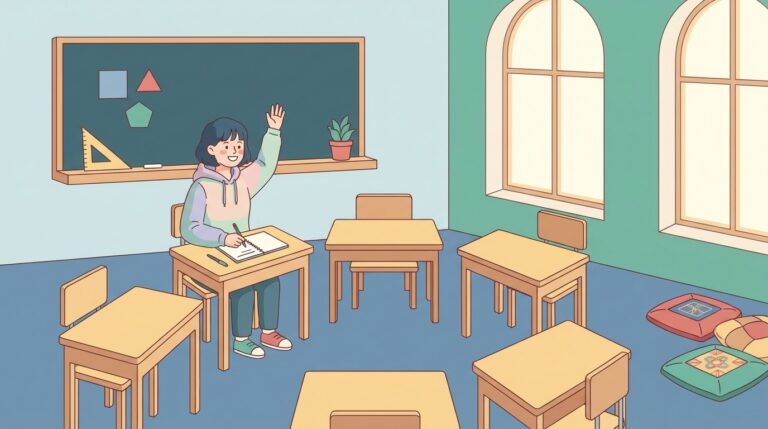
- K-Culture Moment: Think of standard variety shows or high school dramas where eager students enthusiastically raise one hand to clarify a task.
- Editor’s Insight: In English, we often start with “Excuse me,” but in Korean, addressing someone by their polite title first—선생님 (Seonsaengnim)—instantly catches their attention warmly and respectfully.
- Situation Spectrum: Casual 🚫 | Semi-formal ✅ | Formal ✅
- 🤔 Think About It: Why do you think Korean calls out the person’s social role (“Teacher”) rather than saying “Excuse me” or using their first name?
2. 다시 한번 말씀해 주세요. (Dasi hanbeon malsseumhae juseyo.)
- Pronunciation: [Da-si han-beon mal-sseum-hae ju-se-yo] (Sounds like: dah-shee hahn-bun mahl-ssum-heh joo-seh-yo)
- Meaning: Literally “Again one time please speak honorably” vs. Actual Nuance: “Could you please say that one more time?”
- K-Culture Moment: The humble phrase you hear contestants use on reality talent shows when they miss a judge’s feedback due to studio noise.
- Editor’s Insight: ‘말씀 (malsseum)’ is the humble/honorific upgrade of ‘말 (mal – words/speech)’. Using it shows immense politeness without feeling overly stiff.
- Situation Spectrum: Casual 🚫 | Semi-formal ✅ | Formal ✅
- 🤔 Think About It: In your native language, how do you adjust your tone when asking someone to repeat something so it doesn’t sound annoyed?
3. 이게 무슨 뜻이에요? (Ige museun tteusieyo?)
- Pronunciation: [I-ge mu-seun tteu-si-e-yo] (Sounds like: ee-geh moo-seun tteu-shee-eh-yo)
- Meaning: Literally “This, what meaning is it?” vs. Actual Nuance: “What does this mean?”
- K-Culture Moment: The classic subtitle popping up on reality shows whenever a cast member encounters Gen-Z slang for the first time.
- Editor’s Insight: Point directly at a word in your textbook or on the whiteboard while saying ‘이게 (Ige – this)’. It is straightforward, natural, and crystal clear.
- Situation Spectrum: Casual ⚠️ | Semi-formal ✅ | Formal ✅
- 🤔 Think About It: Notice how Korean connects the concept of ‘meaning (뜻 – tteut)’ directly with the verb ‘to be (이에요 – ieyo)’ to simplify the sentence structure.
Phase 3: Textbook Korean vs. Real Korean
Situation 1: Letting the teacher know you have a question
- 📖 교과서 한국어: 질문이 있습니다. (Jilmuni itsseumnida. – “I possess an inquiry.”)
- 🗣️ 진짜 한국어: 선생님, 질문 있어요! (Seonsaengnim, jilmun isseoyo! – “Teacher, I have a question!”)
- 💡 왜 다를까? While “질문이 있습니다” is grammatically impeccable, it sounds like an official military briefing. “질문 있어요!” is warm, polite, and universally favored in real-life classrooms.
Situation 2: Asking the teacher to repeat a fast sentence
- 📖 교과서 한국어: 다시 말씀하여 주시겠습니까? (Dasi malsseumhayeo jusigesseumnikka? – “Would you bestow speech again upon me?”)
- 🗣️ 진짜 한국어: 한 번만 다시 말씀해 주세요. (Han beonman dasi malsseumhae juseyo. – “Please say it just once more.”)
- 💡 왜 다를까? Adding “한 번만 (han beonman – just once)” softens your request, creating a polite, gentle plea rather than a formal demand.
Phase 4: K-Culture Deep Dive & Non-verbal Manners
4-1. Nunchi & Classroom Gestures
In Korean culture, body language carries half the message. When raising your hand to ask a question:
* Never snap your fingers or wave wildly. Keep your elbow steady on the desk and raise your hand comfortably around eye level.
* When the teacher looks at you, offer a slight nod (about 15 degrees). If they hand you a worksheet or write something down on your paper, lightly support your right forearm with your left hand. This classic Korean gesture signals deep manners and respect!
4-2. Cultural Code: The Sacred Teacher-Student Bond
In Korea, there is an old saying: “스승의 그림자도 밟지 않는다 (You do not even step on the shadow of your teacher).” While modern classrooms are relaxed and friendly, teachers (선생님) are still deeply respected mentors. Addressing your teacher as “민지 씨 (Minji-ssi)” or “Hey Minji” is a major faux pas. Always use their title: “선생님 (Seonsaengnim)”!
Phase 5: Real Roleplay Scenario
Setting: A bright language academy in Hongdae. Teacher Minji (선생님) is writing vocabulary on the board.
- 선생님 (Teacher Minji): 자, 여기까지 다 이해했어요? (Ja, yeogikkaji da ihaehaesseoyo?)
🎭 Turns around with an encouraging smile, holding a marker. - You: 저… 선생님, 질문 있어요! (Jeo… seonsaengnim, jilmun isseoyo!)
🎭 Raising right hand gently, making friendly eye contact. - 선생님 (Teacher Minji): 네, 말씀하세요! (Ne, malsseumhaseyo!)
🎭 Nods pleasantly and steps closer to your desk. - You: 3번 단어가 무슨 뜻이에요? (Sambeon daneoga museun tteusieyo?)
🎭 Pointing neatly at word number 3 in your textbook. - 선생님 (Teacher Minji): 아, 이건 ‘숙제 (homework)’라는 뜻이에요. (A, igeon ‘sukje’raneun tteusieyo.)
🎭 Writes the explanation clearly on the whiteboard. - You: 죄송하지만, 다시 한번 말씀해 주세요. (Joesonghajiman, dasi hanbeon malsseumhae juseyo.)
🎭 Tilting head slightly, speaking slowly and politely. - 선생님 (Teacher Minji): ‘숙.제.’ 발음도 따라 해 보세요! (‘Suk.je.’ Baleumdo ttara hae boseyo!)
🎭 Pronounces slowly and clearly with a warm grin. - You: 숙제! 감사합니다, 선생님! (Sukje! Gamsahamnida, seonsaengnim!)
🎭 Nodding head gratefully in understanding.
🔀 Interactive Decision Point
The teacher asks: “숙제 다 알겠죠? (Do you all understand homework?)” But you still want to know when it is due! What do you say?
- Choice A: “야! 언제까지야? (Ya! Eonjekkajiya?)”
- Choice B: “선생님, 언제까지예요? (Seonsaengnim, eonjekkajiyeyo?)”
- Choice C: “숙제 몰라요. (Sukje mollayo.)”
Feedback:
* Choice A (Bad): 🚫 Never use “야 (Hey!)” with a teacher! This will cause instant cultural shock in the room.
* Choice B (Best): ✅ Perfect! Respectful, polite, and uses standard beginner honorifics smoothly.
* Choice C (Risk): ⚠️ Saying “몰라요 (I don’t know)” blunt without context can sound unintentionally dismissive.
Phase 6: 10-Second Emotion Shadowing Drill
Practice these lines out loud with feeling, pausing at each /:
[🙋♂️ Polite and hesitant]저… 선생님, / 질문 있어요! (Jeo… seonsaengnim, / jilmun isseoyo!)[🙏 Earnest and gentle]한 번만 / 다시 말씀해 주세요. (Han beonman / dasi malsseumhae juseyo.)[💡 Curious and bright]이게 / 무슨 뜻이에요? (Ige / museun tteusieyo?)[😊 Relieved and thankful]아! 이제 알겠어요. / 감사합니다! (A! Ije algess-eoyo. / Gamsahamnida!)
Phase 7: K-Culture Mini Dictionary
- 선생님 (Seonsaengnim): “Teacher/Instructor.” Used both as a job title and as the polite vocative term to call your teacher directly.
- 질문 (Jilmun): “Question.” In everyday study sessions, paired with the verb ‘있다 (to have)’ or ‘하다 (to do)’.
- 숙제 (Sukje): “Homework/Assignment.” The most universally dreaded, yet essential classroom noun across all Korean schools.
- 짝꿍 (Jjakkkung): “Desk partner.” Refers to the classmate sitting right beside you who partners with you for speaking practice.
Phase 8: Traveler’s Survival Kit
TOP 3 Classroom & Workshop Survival Expressions
- 천천히 말씀해 주세요. (Cheoncheonhi malsseumhae juseyo.)
Pro Tip: Essential when taking a cooking, pottery, or K-pop dance class in Seoul! - 한국어로 뭐예요? (Hangugeoro mwoyeyo? – What is it in Korean?)
Pro Tip: Point to any object and ask your tutor or native friend to instantly expand your vocabulary. - 도와주세요! (Dowajuseyo! – Please help me!)
Pro Tip: A warm call for assistance when you get stuck during group activities.
Editor’s Travel Note
Taking short-term cultural workshops in Korea? Make sure to download and set up 네이버 지도 앱 다운로드 before arriving, as Google Maps does not provide real-time walking or subway navigation inside South Korea. When paying for lessons or materials, foreign credit cards are widely accepted at hagwon kiosks, but having a T-Money transit card ready for quick local travel is a lifesaver!
Phase 9: “한 발 더 깊이” (Food For Thought)
In many Western classrooms, speaking out or challenging a teacher is viewed as vibrant debate. In Korea, asking questions is also welcomed, but how you ask reflects your consideration for the collective harmony of the class. By saying “선생님, 질문 있어요!” with a soft tone, you signal that you are not interrupting, but rather humbly seeking guidance. Learning Korean is more than just memorizing vocabulary; it is adopting a mindset of mutual respect and social attunement.
💬 Your Turn: Have you ever hesitated to speak up in a foreign language class? What made you nervous? Share your story in the comments below!
Phase 10: FAQ & Common Mistakes
Q: Can I call my Korean teacher ‘Teacher’ in English or by their first name?
A: No. Even if your teacher is younger than you, calling them by their first name or just ‘Teacher’ feels disrespectful in Korean. Always use their surname followed by Seonsaengnim (e.g., 김 선생님 – Kim Seonsaengnim) or simply “선생님 (Seonsaengnim)”.
Q: What is the difference between ‘다시 말해 줘’ and ‘다시 말씀해 주세요’?
A: ‘다시 말해 줘 (Dasi malhae jwo)’ is casual talk (반말 – Banmal) used strictly with close friends or younger people. Using it with a teacher sounds very rude. Always use the honorific form: ‘다시 말씀해 주세요 (Dasi malsseumhae juseyo)’.
Q: What should I say when I finally understand the teacher’s explanation?
A: Simply nod and smile while saying: “아, 이해했어요! 감사합니다! (A, iha-e-haess-eoyo! Gamsahamnida! – Ah, I understand! Thank you!)”.
🚨 Common Mistakes Alert
- Mistake 1: Saying “저기요! (Jeogiyo!)” to the teacher.
Correct Action: “저기요” is for busy restaurant servers! In class, always use “선생님 (Seonsaengnim)”. - Mistake 2: Using “뭐? (Mwo? – What?)” when you didn’t hear.
Correct Action: Say “다시 말씀해 주세요 (Please say it again)” or “네? (Pardon?)”. - Mistake 3: Snapping fingers or waving frantically.
Correct Action: Calmly raise your right hand and make brief, polite eye contact.
Phase 11: Action Missions & Engagement
- 🥉 Bronze Mission (Solo): Stand in front of your mirror, gently raise your hand, and repeat “선생님, 질문 있어요!” three times out loud.
- 🥈 Silver Mission (Community): Leave a comment on this post using the sentence: “이게 무슨 뜻이에요? (Ige museun tteusieyo?)” with a Korean word you recently discovered!
- 🥇 Gold Mission (Live Action): Use “다시 한번 말씀해 주세요” during your next Korean lesson, language exchange, or speaking app session.
- 🎮 K-Culture Mission: Watch any Korean variety show set in a school (such as Knowing Bros / 아는 형님) and spot how often the cast raises a hand or shouts a question!
Phase 12: Interactive Quiz Challenge
Test your classroom survival skills with these three quick questions!
- Situational Judgment: You didn’t hear what page your Korean teacher told you to open. What is the best phrase to say?
- a) 야, 뭐야? (Ya, mwoya?)
- b) 다시 한번 말씀해 주세요. (Dasi hanbeon malsseumhae juseyo.)
- c) 저기요, 다시 말해. (Jeogiyo, dasi malhae.)
- Fill-in-the-Blank: Complete the polite question phrase:
“선생님, [ ] 있어요!” (Hint: Question) -
True / False Culture Check: In Korea, it is polite to point your index finger directly at the teacher’s face when asking for clarification. (True / False)
👉 Click to reveal answers & explanations!
-
Answer: b) 다시 한번 말씀해 주세요.
Explanation: Option (a) is rude slang, and option (c) uses restaurant phrasing mixed with casual speech. Option (b) is polite, honorific, and natural. -
Answer: 질문 (Jilmun)
Explanation: Full sentence: “선생님, 질문 있어요! (Teacher, I have a question!)”. -
Answer: False!
Explanation: Pointing fingers directly at people—especially elders or teachers—is considered aggressive and impolite in Korean culture. Point to your notebook or open your palm politely instead!







