

Unplugging in the Land of 5G: Your Guide to Korean ‘Dopamine Detox’ Buzzwords
Phase 1: Empathy & Story Intro
안녕하세요! 매일한글 에디터입니다. (Hello! I’m your Daily Hangul editor.)
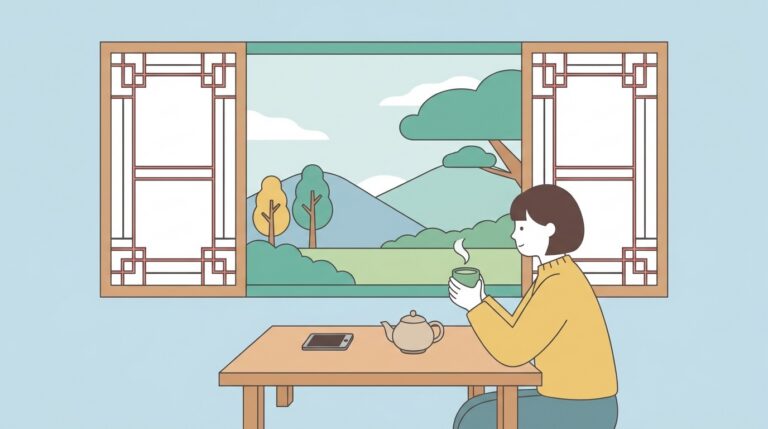
Picture this: You are sitting at a sunlit aesthetic cafe in Seongsu-dong on a breezy Saturday afternoon. Instead of whipping out their phone to record fifty rapid-fire Instagram Stories or doomscrolling through endless YouTube Shorts until their thumb goes numb, your Korean friend calmly flips their smartphone face down on the wooden table. They let out a deep, relaxed breath and announce: “나 이번 주말에 도파민 디톡스 하려고!” (I’m doing a dopamine detox this weekend!). In South Korea—often hailed as the world’s most hyper-connected society with lightning-fast 5G, instant deliveries, and round-the-clock notifications—digital burnout among the MZ generation is very real. Today, young Koreans are proactively reclaiming their mental peace through intentional offline weekends. If you’ve ever felt overwhelmed by algorithmic stimulation while trying to connect with Korean friends, you are definitely not alone. Master these modern digital lifestyle expressions, and you’ll immediately sound like a culturally tuned-in local insider!
Phase 2: Three Core Expressions Deep Dive
1. 도파민 디톡스 (Dopamine Detox)
- Pronunciation: [Dopamin Ditokseu] (Sounds like “Doh-pah-meen Dee-tohk-seu”)
- Meaning: Literal: Dopamine detox | Actual Nuance: Intentionally cutting off hyper-stimulating media (short-form videos, push notifications, binge-gaming, or late-night online shopping) to reset brain focus and restore inner calm.
- K-Culture Moment: Frequently featured on lifestyle vlogs and celebrity reality shows like I Live Alone (나 혼자 산다), where guests lock their smartphones inside time-lock containers before embarking on a quiet weekend.
- Editor’s Insight: This is not clinical hospital jargon in Korea; it’s a stylish, trendy buzzword used whenever someone wants a gentle break from screen exhaustion.
- Situation Spectrum: Casual ✅ / Semi-formal ✅ / Formal ⚠️
- 🤔 Think About It: In hyper-productive environments, taking time off can induce guilt. Why do you think framing a break as a “detox” helps modern people justify stepping back?
2. 갓생 살기 (Gatsaeng Salgi)
- Pronunciation: [Gatsaeng Salgi] (Sounds like “Gaht-saeng sahl-gee”, combining the English word “God” with “Insaeng” [Life] + “Living”)
- Meaning: Literal: Living a God-level life | Actual Nuance: Living a diligent, balanced, and productive lifestyle focused on micro-habits like reading, journaling, exercising, and disconnecting from distractions.
- K-Culture Moment: Korean university students and young professionals post morning study vlogs tagged with #갓생살기 to showcase phone-free mornings and healthy meal preps.
- Editor’s Insight: Doing a “도파민 디톡스” (Dopamine Detox) is widely considered the crucial first step toward achieving a sustainable “갓생” (Gatsaeng).
- Situation Spectrum: Casual ✅ / Semi-formal ✅ / Formal 🚫
- 🤔 Think About It: How does your native language describe the quest for personal self-improvement without sounding overly corporate or rigid?
3. 뇌 빼기 (Noe Ppaegi)
- Pronunciation: [Noe Ppaegi] (Sounds like “Nweh ppeh-gee”)
- Meaning: Literal: Brain pulling out / removing brain | Actual Nuance: Completely zoning out or engaging in mindless, zero-thought media consumption (the exact opposite state of mindfulness!).
- K-Culture Moment: Used self-deprecatingly when someone watches three straight hours of TikTok recipes or silly pet clips: “나 어제 뇌 빼고 쇼츠만 봤어.” (I watched Shorts with my brain completely unplugged yesterday.)
- Editor’s Insight: This is authentic intermediate (B1) slang. Knowing this word allows you to describe the exact problem before introducing the solution: “도파민 디톡스”.
- Situation Spectrum: Casual ✅ / Semi-formal ⚠️ / Formal 🚫
- 🤔 Think About It: Why do modern languages invent visceral physical metaphors (like removing an organ) to describe mental fatigue?
Phase 3: Textbook Korean vs. Real Korean
Situation 1: Telling someone you won’t be using your phone during the weekend
- 📖 교과서 한국어: “주말 동안 휴대전화를 사용하지 않겠습니다.” (Jumal dongan hyudaejeonhwareul sayonghaji ankkessseumnida. – I will not use my cellular phone during the weekend.)
- 🗣️ 진짜 한국어: “주말에 폰 끄고 도파민 디톡스 하려고요.” (Jumale pon kkeugo dopamin ditokseu haryeogoyo. – I’m planning to turn off my phone this weekend and do a dopamine detox.)
- 💡 왜 다를까? Textbook Korean uses the stiff formal term “휴대전화”, whereas native speakers virtually always say “폰” (phone) and explain their motive with relatable buzzwords.
Situation 2: Explaining that endless short videos drained your energy
- 📖 교과서 한국어: “짧은 동영상을 너무 많이 봐서 피곤합니다.” (Jjalbeun dong-yeongsang-eul neomu mani bwaseo pigonhamnida. – I watched too many short videos so I am tired.)
- 🗣️ 진짜 한국어: “쇼츠 알고리즘에 갇혀서 기 다 빨렸어요.” (Syocheu algorijeume gathyeoseo gi da ppallyeosseoyo. – I got trapped in the Shorts algorithm and got completely drained of energy.)
- 💡 왜 다를까? The phrase “기 빨려요” (energy drained) combined with “알고리즘에 갇히다” (trapped in the algorithm) paints an immediate, highly vivid picture of modern digital exhaustion.
Phase 4: K-Culture Deep Dive & Non-Verbal Manners
4-1. 눈치 (Nunchi) & Gestures: The Screen-Down Etiquette
In Korea’s cafe culture, how you place your smartphone communicates immense subtext. When meeting friends, placing your smartphone screen-up while glancing at every vibration can signal impatience or poor nunchi (tact). Conversely, intentionally turning your phone screen down on the table (폰 뒤집어 놓기) signals: “I am mentally here with you, and my screen won’t interrupt our conversation.” When someone mentions they are detoxing, nod with warm empathy while gently patting your temples to acknowledge the universal strain of screen fatigue.
4-2. Cultural Code Analysis: The Rise of ‘Jabaljeok Gorip’ & ‘Meong’
To counteract the high-pressure Palli-palli (빨리빨리 – hurry, hurry) speed of life, modern Koreans have embraced contemplative leisure trends. Temple stays (템플스테이) where smartphones are surrendered upon arrival, along with viral trends like Bulmeong (불멍 – zoning out watching a campfire) or Mulmeong (물멍 – spacing out watching flowing water), represent Korean society’s collective yearning for quiet moments. Taking a dopamine detox isn’t perceived as antisocial; rather, it is praised as mature emotional hygiene.
Phase 5: Real-World Roleplay Scenario
- Setting: A quiet traditional tea house in Bukchon Hanok Village.
- Character: Min-ji (민지), your Korean colleague and close weekend tea buddy.
Min-ji: “우리 오늘 모처럼 만났는데, 폰은 가방에 넣어둘까?” (Uri oneul mocheoreom mannanneunde, poneun gabange neoeodulkka? – We met up after a long time today, shall we keep our phones inside our bags? 🎭 smiling warmly while slipping her phone into her tote bag)
You: “좋아요! 저 요즘 쇼츠 보느라 뇌가 녹는 것 같았어요.” (Joayo! Jeo yojeum syocheu boneura noega nongneun geot gat-asseoyo. – Sounds great! I felt like my brain was melting lately from watching Shorts. 🎭 chuckling while sliding your phone into your pocket)
Min-ji: “맞아, 알고리즘 한번 빠지면 세 시간 순삭이잖아!” (Maja, algorijeum hanbeon ppajimyeon se sigan sunsak-ijana! – Right, once you fall into the algorithm, three hours vanish in a flash! 🎭 clapping her hands with mutual empathy)
You: “그래서 이번 주말에 ‘도파민 디톡스’ 도전해보려고요.” (Geuraeseo ibeon jumale ‘dopamin ditokseu’ dojeonhaeboryeogoyo. – So I’m trying to challenge myself to a ‘dopamine detox’ this weekend. 🎭 nodding with calm resolve)
Min-ji: “대박! 진짜 갓생 살기 시작하네. 연락 안 돼도 걱정 안 할게.” (Daebak! Jinjja gatsaeng salgi sijakhane. Yeonlak an dwaedo geokjeong an halge. – Awesome! You’re really living a Gatsaeng. I won’t worry even if you don’t reply. 🎭 giving an encouraging thumbs-up)
You: “고마워요. 월요일에 맑은 정신으로 다시 톡할게요!” (Gomaweoyo. Woryoile malgeun jeongsineuro dasi tokhalgeyo! – Thanks. I’ll message you back on Monday with a clear mind! 🎭 holding your warm teacup with both hands)
Min-ji: “응, 주말에 온전히 너만의 시간을 보내!” (Eung, jumale onjeonhi neoman-ui siganeul bonae! – Yeah, spend the weekend entirely enjoying your own time! 🎭 smiling serenely)
You: “네, 민지 씨도 이번 주말 편안하게 푹 쉬세요.” (Ne, Minji ssido ibeon jumal pyeon-anhage puk swiseyo. – Yes, please rest comfortably and deeply this weekend too, Minji. 🎭 bowing gently with a relaxed smile)
🔀 Interactive Branch Point
Min-ji asks: “주말에 폰 끄면 뭐 하고 시간 보낼 거야?” (What will you do to spend the time if you turn off your phone this weekend?)
- Option A: “책도 읽고 동네 산책하면서 멍때릴 거예요.” (I’ll read a book, stroll around the neighborhood, and just space out.)
👉 [Best Choice]: Perfectly aligns with the spirit of dopamine detox and displays natural vocabulary (멍때리다). - Option B: “넷플릭스 하루 종일 몰아볼 거예요.” (I will binge-watch Netflix all day long.)
👉 [Risk Choice]: Swapping short screens for long screens defeats the detox purpose! Min-ji might playfully tease your concept of rest. - Option C: “그냥 방에 불 끄고 아무것도 안 보고 숨어 있을 거예요.” (I’ll just turn off the lights and hide in my room doing nothing.)
👉 [Bad Choice]: Sounds slightly worrisome and depressive rather than rejuvenating.
Phase 6: 10-Second Emotion Shadowing Drill
Pay attention to the slash markers / for natural pause rhythms!
[😌 Calm & Determined]
“이번 주말엔 / 폰 끄고 / 도파민 디톡스 할 거예요.”
(Ibeon jumalen / pon kkeugo / dopamin ditokseu hal geoyeyo.)
“This weekend, / turning off my phone, / I’m doing a dopamine detox.”-
[😵 Exhausted & Relatable]
“쇼츠 보다가 / 시간 순삭 돼서 / 기 다 빨렸어요.”
(Syocheu bodaga / sigan sunsak dwaeseo / gi da ppallyeosseoyo.)
“While watching Shorts / time vanished in seconds / and my energy got totally drained.” -
[✨ Refreshed & Satisfied]
“폰 없이 산책하니까 / 머리가 진짜 / 맑아졌어요!”
(Pon eop-i sanchaekhanikka / meoriga jinjja / malgajyeosseoyo!)
“Walking without my phone / made my mind / truly clear!”
Phase 7: K-Culture Mini Dictionary
- 멍때리기 (Meong-ttaerigi)
Translation: Spacing out / Zoning out completely.
Usage: Widely accepted in Korea as therapeutic mental rest; there is even an annual national “Spacing Out Contest” (멍때리기 대회) held along the Han River! - 시간 순삭 (Sigan Sunsak)
Translation: Time vanishing in an instant (combining “시간” [Time] + “순식간 삭제” [Deleted instantly]).
Usage: Used when browsing social media, gaming, or chatting with friends where hours feel like minutes. - 알림 끄기 (Allim Kkeugi)
Translation: Muting / Turning off notifications.
Usage: Essential setting command before starting work or entering digital detox weekends. - 디지털 단식 (Dijiteol Dansik)
Translation: Digital fasting.
Usage: A slightly more traditional synonym for dopamine detox, emphasizing voluntary discipline.
Phase 8: Traveler’s Survival Kit
Survival Phrases TOP 3
- “여기 조용히 책 읽을 만한 공간인가요?” (Yeogi joyonghi chaek ilgeul manhan gong-gan-ingayo? – Is this a quiet space suitable for reading books?)
Pro Tip: Use this at independent Hanok tea cafes in neighborhoods like Seochon or Samcheong-dong. - “배터리가 없어서 휴대전화 충전 좀 부탁드려도 될까요?” (Baeteoriga eopseoseo hyudaejeonhwa chungjeon jom butakdeuryeodo doelkkayo? – My battery died, could I please ask you to charge my phone?)
Pro Tip: Most Korean cafes will happily charge your phone behind the counter if you ask politely. - “주말 동안 연락이 늦을 수 있어요.” (Jumal dongan yeonlagi neujeul su isseoyo. – My replies might be slow over the weekend.)
Editor’s Travel Note
If you want to experience a restorative digital break in Seoul, install the official 네이버 지도 앱 다운로드 before you head out, download your offline walking maps, and venture into lush offline havens like the Seoul Forest Ginkgo Path or Inwangsan Mountain trails. Even if you turn off mobile data, major subway stations and transit hubs feature emergency public kiosks, so you can explore with complete peace of mind.
Phase 9: “한 발 더 깊이” (Deep Cultural Reflection)
In South Korea, digital connectivity isn’t just a convenience—it is woven into everyday survival through apps like KakaoTalk, delivery tracking, and mobile transit cards. Because hyper-connection is the default standard of Korean communal life, choosing to disconnect requires conscious moral courage. Taking a weekend “도파민 디톡스” is not a rejection of society, but an act of self-preservation that allows individuals to return on Monday with renewed emotional generosity toward their friends and colleagues.
💬 Your Turn: Have you ever attempted an offline weekend or digital detox? What is the single hardest app on your phone to keep closed? Leave your thoughts in the comments below!
Phase 10: FAQ & Common Mistakes
Q: Can I use the expression “도파민 디톡스” with my company manager or boss?
A: Yes, but keep it in informal or lighthearted conversational contexts (e.g., during lunch or break time). It is a lifestyle buzzword rather than formal business terminology.
Q: How can I inform my Korean friends about my detox without hurting their feelings?
A: Send a courteous short note beforehand: “이번 주말엔 폰 끄고 푹 쉬려고요! 월요일에 답장할게요 :)” (I’m turning off my phone to rest deeply this weekend! I’ll reply on Monday :)). This prevents them from worrying that they are being ignored.
Q: Is “멍때리다” considered rude slang?
A: It is casual colloquial speech, not offensive or vulgar slang. However, during formal meetings or job interviews, replace it with “휴식을 취하다” (to take a rest).
🚨 Common Mistakes Warning Board
- Saying “스마트폰을 죽이다” (To kill a smartphone): In English, you might say “I’m killing my phone for the weekend,” but in Korean, you must say “스마트폰을 끄다” (to switch off) or “폰을 멀리하다” (to keep the phone at a distance).
- Confusing ‘뇌 빼기’ with positive mindfulness: “뇌 빼기” means zoning out mindlessly on junk media, not peaceful zen meditation. Use “마음 비우기” (emptying one’s mind) for meditative peace.
- Abruptly exiting KakaoTalk group chats without warning: Leaving a group chat (단톡방 나가기) looks like you are cutting ties! Simply mute notifications (알림 끄기) instead.
Phase 11: Action Missions
- 🥉 Bronze Mission: Speak this sentence aloud 3 times right now: “주말에 폰 끄고 도파민 디톡스 할 거예요!”
- 🥈 Silver Mission: Take a photo of your book, a cup of tea, or park scenery and share it with the Korean caption: “오늘의 도파민 디톡스 🌿” (Today’s dopamine detox 🌿).
- 🥇 Gold Mission: Keep your phone in a drawer for at least 3 hours this Sunday, and write down 2 sentences in Korean describing how quiet your afternoon felt.
- 🎮 K-Culture Mission: Search for the hashtag
#도파민디톡스or#템플스테이on Korean social media or YouTube, and observe how Koreans spend their calm offline hours.
Phase 12: Interactive Quiz Challenge
Q1. Situational Choice
Your Korean friend says: “쇼츠 보느라 세 시간 순삭 됐어요.” What is the most natural, empathetic reply?
(A) 축하해요! 갓생 살았네요!
(B) 맞아요, 알고리즘 빠지면 기 다 빨려요.
(C) 휴대전화를 즉시 버리세요.
Q2. Fill in the Blank
이번 주말에는 지나친 자극에서 벗어나서 뇌를 쉬게 하는 ‘________ 디톡스’를 할 거예요.
Q3. True or False
In Korean cafe etiquette, placing your smartphone screen-down on the table indicates that you are deliberately giving undivided attention to your companion. (True / False)
👉 Click here to reveal answers & explanations!
- Q1 Answer: (B)
Explanation: (B) “맞아요, 알고리즘 빠지면 기 다 빨려요” (Right, once you fall into the algorithm, you get totally drained) perfectly matches the shared struggle of digital fatigue. (A) makes no sense because doomscrolling is not Gatsaeng (living a productive life), and (C) is unnaturally extreme! - Q2 Answer: 도파민 (Dopamine)
Explanation: “도파민 디톡스” (Dopamine Detox) refers specifically to stepping back from hyper-stimulating digital content. - Q3 Answer: True
Explanation: Flipping the screen face down (폰 뒤집기) is widely recognized as a courteous non-verbal gesture signifying that you are fully present.







