

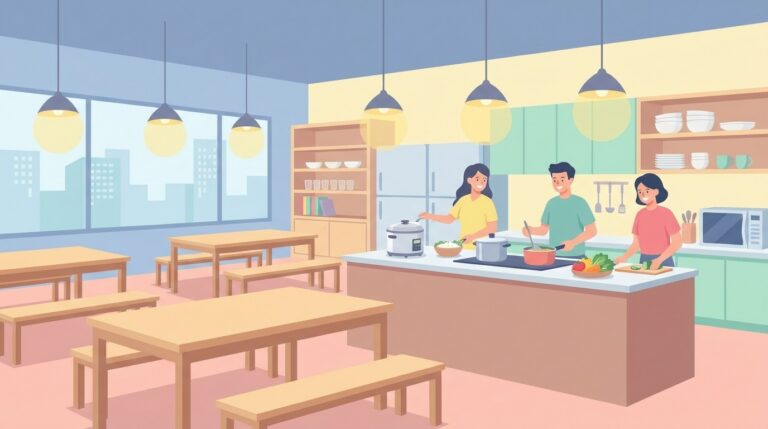
Phase 1: Empathy (Story Opening)
안녕하세요! 매일한글 에디터입니다. (Annyeonghaseyo! I am the Daily Hangul editor.)
Picture this: You have just moved to Seoul, unpacked your bags in a charming room in Seongsu-dong, and stepped into a sunlit lounge where the aroma of freshly toasted sesame oil and simmering kimchi stew fills the air. A housemate smiles and asks if you want to join for dinner, but panic hits: How do you say, “I want my personal space right now, but I would love to cook together this weekend”? Or how do you politely discuss sharing the refrigerator shelf without sounding stiff?
In South Korea, where single-person households (1-in gagu) now account for over 34% of the population, social isolation and the rising fear of godoksa (solitary death) have sparked a revolutionary urban trend: Co-living houses (코리빙 하우스). Young Koreans are redefining community by renting private bedroom-bath sanctuaries while sharing stylish chef kitchens, libraries, and movie rooms. They celebrate the philosophy of “따로 또 같이” (separately, yet together).
Living in a shared house requires mastering modern, nuanced Korean that navigates personal boundaries and community warmth. Based on feedback from hundreds of intermediate learners who felt trapped between textbook politeness and real-life slang, this guide equips you with B2-level natural fluency to connect effortlessly with Korean housemates.
Phase 2: 3 Key Expressions Deep Dive
1. 따로 또 같이 지내는 게 편해요. (한글)
- Pronunciation: [Ttaro tto gachi jinaeneun ge pyeonhaeyo.] (Sounds like: Tah-ro toh gah-chee jee-neh-noon geh pyun-hae-yo)
- Meaning: “It is comfortable living separately, yet together.” (Expressing the balance between solitude and community)
- K-Culture Moment: Seen frequently on urban lifestyle documentaries and reality shows like I Live Alone (나 혼자 산다) and Heart Signal (하트시그널) when residents explain why they chose co-housing over solitary studio apartments.
- Editor’s Insight: The phrase “따로 또 같이” has become the defining slogan of young urban Koreans. It communicates that while you value personal privacy (독립성), you also reject loneliness. Using this shows you deeply understand modern Korean urban psychology.
- Situation Spectrum:
- Casual (반말): 따로 또 같이 지내는 게 편해. (✅)
- Semi-formal (해요체): 따로 또 같이 지내는 게 편해요. (✅)
- Formal (하십시오체): 따로 또 같이 지내는 것이 편안합니다. (⚠️ – slightly stiff for casual housing chats)
- 🤔 Think About It: Does your native language have a concise phrase that honors boundary-setting while celebrating voluntary togetherness?
2. 각자 시간 보내다가 저녁 같이 먹을래요? (한글)
- Pronunciation: [Gakja sigan bonaedaga jeonyeok gachi meogeullaeyo?]
- Meaning: “Shall we do our own thing for a while, and then eat dinner together?”
- K-Culture Moment: Popularized in slice-of-life dramas like Age of Youth (청춘시대), where housemates respect each other’s study/work time before gathering at the communal dining table.
- Editor’s Insight: The connective particle -다가 (-daga) indicates an interruption or transition between two actions. By framing the invitation this way, you relieve the listener of the pressure to socialize immediately, which is peak Korean considerate communication (baeryeo).
- Situation Spectrum:
- Casual (반말): 각자 시간 보내다가 저녁 같이 먹을래? (✅)
- Semi-formal (해요체): 각자 시간 보내다가 저녁 같이 먹을래요? (✅)
- Formal (하십시오체): 각자 시간을 보내신 후 저녁을 함께 드시겠습니까? (🚫 – too business-like for housemates)
- 🤔 Think About It: Notice how Korean politeness often involves offering an “out” to avoid making others feel obligated.
3. 공용 공간에서는 서로 배려해야죠. (한글)
- Pronunciation: [Gong-yong gonggan-eseoneun seoro baeryeohaeyajyo.] (Sounds like: Gong-yong gong-gahn-eh-suh-noon suh-ro beh-ryuh-heh-yah-jyo)
- Meaning: “In shared spaces, we should definitely look out for and respect each other, right?”
- K-Culture Moment: Often heard during co-living town hall meetings or tenant interviews when establishing ground rules for communal living.
- Editor’s Insight: The ending -아/어/여야죠 (-yachyo) expresses a soft, mutual agreement on a moral or social standard. Instead of sounding like an order (“Clean up your mess!”), it frames the standard as common sense shared by reasonable adults.
- Situation Spectrum:
- Casual (반말): 공용 공간에서는 서로 배려해야지. (✅)
- Semi-formal (해요체): 공용 공간에서는 서로 배려해야죠. (✅)
- Formal (하십시오체): 공용 공간에서는 서로 배려해야 합니다. (✅)
- 🤔 Think About It: Why does Korean emphasize baeryeo (consideration) rather than individual “rights” (gwonri) in shared domestic environments?
Phase 3: Textbook Korean vs Real Korean
Situation 1: Offering to share your food in the communal kitchen
- 📖 교과서 한국어 (Textbook): 이 음식을 드셔 보세요. 아주 맛있습니다. (I eumsigeul deusyeo boseyo. Aju masitseumnida. / Please try eating this food. It is very delicious.)
- 🗣️ 진짜 한국어 (Real Korean): 이거 제가 만든 건데, 입에 맞으시면 좀 드셔보실래요? (Igeo jega mandeun geonde, ibe majeushimyeon jom deusyeobosillaeyo? / I made this; if it suits your taste, would you like a little bite?)
- 💡 왜 다를까? (Why is it different?): Textbook Korean sounds like a commercial or an imperative command. Native Koreans show modesty (gyeomsun) by suggesting food “might suit your palate” rather than boasting that it’s delicious.
Situation 2: Asking if a kitchen appliance is currently in use
- 📖 교과서 한국어 (Textbook): 당신은 지금 이 인덕션을 사용하고 있습니까? (Dangsineun jigeum i indeoksyeoneul sayonghago itseumnikka? / Are you currently using this induction stove?)
- 🗣️ 진짜 한국어 (Real Korean): 혹시 이거 쓰고 계신가요? (Hoksi igeo sseugo gyesingayo? / By any chance, are you using this right now?)
- 💡 왜 다를까? (Why is it different?): Direct pronouns like dangsin (you) sound aggressive in everyday speech. Using softeners like hoksi (by any chance) alongside honorifics makes the inquiry smooth and respectful.
Phase 4: K-Culture Deep Dive & Non-Verbal Manners
4-1. 눈치 (Nunchi) & Gestures in Co-Living
- The Shared Refrigerator Etiquette: Never put unpackaged items directly on shelves. Label everything with masking tape: your name and room number (e.g.,
302호 지민). If you borrow cooking oil or soy sauce, return it to the exact millimeter where you found it. - Eye Contact & Kitchen Greetings: When entering the kitchen while someone is cooking, avoid staring directly at their pots (it can feel intrusive). Give a slight head bow (목례, mongnye) and a warm smile with: “요리하고 계셨어요?” (Were you cooking?).
4-2. Cultural Code Analysis: From “Godoksa” to “Social Dining”
- As single-person households become the dominant demographic in Seoul, the dread of godoksa (dying unnoticed due to loneliness) has become a major topic in Korean policy and media. Enter the co-living movement. Brands like 맹그로브 (Mangrove) and 에피소드 (Episode) offer private studio suites alongside shared social dining areas. Young professionals choose this setup not because they can’t afford a studio, but because sharing a warm meal prevents modern urban alienation.
Phase 5: Real Role-play Scenario
Setting: 7:30 PM, the rooftop lounge kitchen of a stylish co-living building in Yeonnam-dong.
Character: Min-ji (민지), a freelance UX designer living on the 4th floor, is stirring a pan of homemade tteokbokki.
- Turn 1 (Min-ji):
🎭 (팬을 저으며 반갑게 미소 짓는다)
어, 퇴근하셨어요? 오늘 야근이라 늦으신 줄 알았어요!
(Eo, toegeunhasyeosseoyo? Oneul yageun-ira neujeusin jul arasseoyo! / Oh, are you back from work? I thought you were working late tonight!) -
Turn 2 (Learner):
🎭 (겉옷을 걸어두며 한숨을 가볍게 돌린다)
다행히 일찍 끝났어요. 주방에서 맛있는 냄새가 복도까지 나던데요?
(Dahaenghi iljjik kkeutnasseoyo. Jubang-eseo masinneun naemsaega bokdokkaji nadeon-deyo? / Luckily I finished early. A delicious smell from the kitchen reached all the way to the hallway!) -
Turn 3 (Min-ji):
🎭 (국자로 떡볶이를 보여주며 장난스럽게)
제가 스트레스받아서 매운 떡볶이 좀 만들었거든요. 아직 저녁 안 드셨죠?
(Jega seuteureseubadaseo maeun tteokbokki jom mandeureotgeodeunyo. Ajik jeonyeok an deusyeotjyo? / I was stressed so I whipped up some spicy tteokbokki. You haven’t had dinner yet, right?) -
Turn 4 (Learner):
🎭 (관심을 보이며 식탁 쪽으로 다가간다)
네, 방에 가서 배달시킬까 고민 중이었어요. 비주얼이 장난 아닌데요!
(Ne, bange gaseo baedalsikilkka gomin jung-ieosseoyo. Bijueori jangnan anindeyo! / Yeah, I was debating whether to order delivery in my room. That visual is no joke!) -
Turn 5 (Min-ji):
🎭 (수저와 앞접시 두 개를 꺼내며)
잘됐다! 혼자 먹으면 맛없잖아요. 우리 거실 큰 테이블에서 같이 먹어요.
(Jaldwaetda! Honja meogeumyeon mateopjanayo. Uri geosil keun teibeureseo gachi meogeoyo. / Perfect! It’s no fun eating alone anyway. Let’s eat together at the big living room table.) -
Turn 6 (Learner):
🎭 (두 손으로 앞접시를 받으며)
정말 감사해요! 그럼 제가 음료수랑 쿨피스 냉장고에서 꺼내 올게요.
(Jeongmal gamsahaeyo! Geureom jega eumryosurangg kulpiseu naengjanggo-eseo kkeonae olgeyo. / Thank you so much! Then let me grab some drinks and Coolpis from the fridge.) -
Turn 7 (Min-ji):
🎭 (감동한 표정으로 엄지를 치켜세운다)
와, 매운 음식에 쿨피스라니, 센스 최고예요! 설거지는 제가 할 테니 천천히 드세요.
(Wa, maeun eumsige kulpiseurani, senseu choegoyeyo! Seolgeojineun jega hal teni cheoncheonhi deuseyo. / Wow, Coolpis with spicy food? Your sense is incredible! I’ll do the dishes, so enjoy at your own pace.) -
Turn 8 (Learner):
🎭 (고개를 저으며 웃는다)
아니에요, 민지 씨가 요리하셨으니까 정리는 제가 맡아야죠. 맛있게 먹겠습니다!
(Anieyo, Minji-ssiga yorihasyeosseunikka jeongnineun jega mat-ayajyo. Masitge meokgetseumnida! / No way, Min-ji, since you cooked, cleaning up is my job. Let’s dig in!)
🔀 Interactive Decision Point
Min-ji offers you a second bowl, but you feel full and want to retreat to your private room to relax.
- Choice A: 배불러요. 이제 제 방으로 들어갈게요. (I’m full. I’m going into my room now.)
- Choice B: 너무 맛있어서 과식했나 봐요! 요리해주셔서 감사해요. 전 방에서 잠깐 쉬다가 공용 서재로 나올게요. (It was so delicious I think I overate! Thank you for cooking. I’ll rest in my room for a bit and then come out to the communal library.)
- Choice C: 음식은 고마운데 이제 혼자 있고 싶어요. (Thanks for the food, but I want to be alone now.)
Feedback:
* Choice A (Bad): Too curt; it shuts down the friendly vibe abruptly.
* Choice B (Best): Balances genuine appreciation for the meal, sets a gentle boundary to retreat to private quarters, and keeps future community interaction open.
* Choice C (Risk): Culturally blunt; explicitly declaring “I want to be alone” can sound standoffish in Korean communal culture.
Phase 6: 10-Second Emotion Shadowing Drill
[😊 친근하고 다정하게 (Warmly and friendly)]
각자 시간 보내다가 / 저녁 같이 먹을래요?
(Gakja sigan bonaedaga / jeonyeok gachi meogeullaeyo?)-
[🤝 정중하고 배려 깊게 (Politely with deep consideration)]
요리하셨으니까 / 뒷정리는 제가 맡아야죠!
(Yorihasyeosseunikka / dwitjeongnineun jega mat-ayajyo!) -
[😌 편안하고 여유롭게 (Relaxed and contented)]
방에서 쉬는 것도 좋지만 / 가끔 이렇게 모이는 게 / 힐링 돼요.
(Bang-eseo swineun geotdo jotjiman / gakkeum ireoke moineun ge / hilling dwaeyo.)
Phase 7: K-Culture Mini Dictionary
- 코리빙 (Co-living / Ko-ri-bing): Communal housing designed for modern urbanites that balances private bedrooms with luxurious shared lounges, gyms, and kitchens.
- 소셜 다이닝 (Social Dining / So-syeol Da-i-ning): The practice of solo dwellers gathering to cook, eat, and converse together to combat urban loneliness.
- 1인 가구 (Single-person Household / Il-in Ga-gu): The statistical and sociological term for people living alone, shaping modern Korea’s architecture, dining, and policy.
- 뒷정리 (Cleaning up afterwards / Dwit-jeong-ni): The etiquette of thoroughly cleaning cooking utensils, countertops, and tables immediately after using a communal space.
Phase 8: Traveler’s Survival Kit
Survival Expressions TOP 3
- 혹시 주방 지금 쓰고 계세요? (Hoksi jubang jigeum sseugo gyeseyo?)
Pro Tip: Use this before setting your pans on the stove to check if a housemate has reserved or is currently using the station. - 냉장고에 제 이름 써서 넣어둘게요! (Naengjanggo-e je ireum sseoseo neoeodulgeyo!)
Pro Tip: Essential for maintaining peace; always confirm you follow labeling rules. - 내일 오전에 공용 세탁기 돌려도 될까요? (Naeil ojeone gong-yong setakgi dollyeodo doelkkayo?)
Pro Tip: Asking before doing early-morning laundry prevents noise complaints.
Editor’s Travel Note
- If you want to experience Korean co-living firsthand during a mid-to-long term stay in Seoul, check out platforms like Download Naver Map app for local navigation to scout locations near subway lines 2 and 6 (Hongdae, Seongsu, Mangwon). To book short tours or preview floor plans, explore curated living platforms like Mangrove, Local Stitch, or Episode.
Phase 9: “한 발 더 깊이” (Thinking Question)
Traditional Korean culture was rooted in the collective village spirit of Pumasi (품앗이) and Jeong (정), where boundaries were almost non-existent. However, hyper-dense modern Seoul created severe urban burnout, driving the youth toward extreme individualism. Co-living represents a third way: an intentional balance where autonomy is protected by locked keypads, yet genuine warmth is revived over steaming bowls of soup in the shared kitchen.
💬 Your Turn: In your home country, is shared living seen merely as a financial compromise, or is it evolving into a curated lifestyle choice like Korea’s co-living movement? Share your thoughts below!
Phase 10: FAQ & Misconceptions
Q: Can I speak 반말 (casual talk) with housemates who are the same age as me right away?
A: Not immediately. In Korean co-living houses, everyone initially uses 존댓말 (polite speech) to maintain mutual respect in shared spaces. You can transition to 반말 only after mutual consent, usually accompanied by: “말 편하게 놓으셔도 돼요” (You may speak comfortably).
Q: How do housemates handle communal food supplies?
A: Most co-living spaces offer complimentary basic staples like white rice, olive oil, and coffee beans. However, specialized sauces, fresh produce, and meats belong to individuals. If a container does not have an explicit “자유롭게 드세요” (Help yourself) sticker, assume it belongs to someone.
Q: Is co-living the same as a traditional Korean 하숙집 (Hasukjib)?
A: No. A hasukjib is an older style of boarding house where a live-in landlord cooks communal meals for student tenants. Modern co-living houses are professionally managed facilities featuring autonomous private suites, smart amenities, and tenant-led community clubs.
🚨 Common Mistakes Alert
- Mistake: Leaving dirty dishes in the sink “to soak” for an hour.
Correct Action: In Korean co-living, clean dishes immediately upon finishing your meal. Leaving dirty pots in shared sinks is seen as disrespectful to fellow residents. - Mistake: Inviting outside friends to the communal lounge without notifying anyone.
Correct Action: Post a quick notice in the community group chat (e.g., “오늘 저녁에 친구 한 명 라운지 잠깐 들를 예정입니다!”). - Mistake: Using aggressive commands like “청소하세요” (Please clean up).
Correct Action: Use soft collective phrasing: “우리 함께 정리해볼까요?” (Shall we tidy up together?).
Phase 11: Action Missions
- Bronze Level: Say aloud 3 times: “각자 시간 보내다가 저녁 같이 먹을래요?” using smooth conversational intonation.
- Silver Level: Snap a picture of your shared kitchen or study lounge and post on social media with the caption: “따로 또 같이 지내는 우리 집!”
- Gold Level: At your accommodation or next social gathering, offer to do the cleanup with: “요리하셨으니까 뒷정리는 제가 맡을게요!”
- 🎮 K-Culture Mission: Watch an episode of Heart Signal or Age of Youth and spot the moment two housemates negotiate kitchen tasks or invite each other for late-night snacks.
Phase 12: Interactive Quiz Challenge
- Situational Judgment: You want to join your housemate cooking in the communal kitchen, but you do not want to intrude. What is the most natural sentence?
- A) 왜 요리하고 있어요? 저도 주세요.
- B) 맛있는 냄새가 나네요! 혹시 도와드릴 일 있을까요?
- C) 지금 당장 저랑 밥 먹어야 해요.
- Fill-in-the-Blank:
“개인 공간은 지키면서 거실은 공유하는, (________) 지내는 생활 방식이 인기예요.”- Hint: “Separately, yet together.”
- Cultural True/False:
In modern Korean co-living houses, you should address everyone you meet with informal language (banmal) right away to build community speed. (T/F)
👉 Click to Check Answers & Detailed Explanations
-
Answer: B
Explanation: Complimenting the aroma and asking politely if you can help (“혹시 도와드릴 일 있을까요?”) shows classic Korean baeryeo (consideration) without being presumptuous. -
Answer: 따로 또 같이
Explanation: 따로 또 같이 (separately, yet together) is the iconic motto describing modern Korean co-living. -
Answer: False
Explanation: Even in friendly youth co-living hubs, polite language (jondaetmal) preserves essential personal boundaries until both parties explicitly agree to speak informally.







