

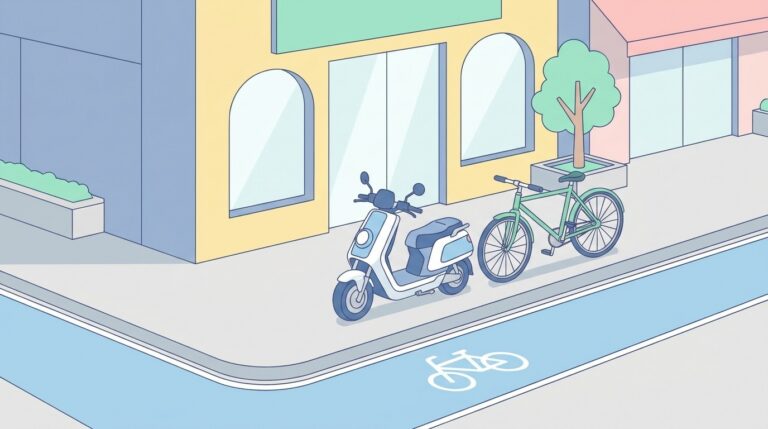
Phase 1: Empathy (Story-Driven Opening)
안녕하세요! 매일한글 에디터입니다. (Hello! It’s your Daily Hangul editor here!)
Imagine this: You have just finished a delicious meal of crispy Korean fried chicken along the picturesque Han River on a warm Seoul evening. You notice rows of sleek, brightly colored electric scooters (전동 킥보드, jeondong kikbodeu) lined up along the sidewalk. Back home, you probably unlocked similar scooters with a quick scan of a QR code on an app without any hassle. You download a local rental app, ready to glide alongside the river breeze like a chic K-drama lead—until suddenly, the app demands an unexpected verification: “운전면허증을 등록해 주세요” (Please register your driver’s license).
Many international travelers and exchange students assume shared e-scooters in Korea are treated just like casual bicycles. However, under the revised Korean Road Traffic Act, riding an electric scooter without a valid moped license or driver’s license is strictly illegal and subject to on-the-spot police fines! Many of our learners share how shocked they were when a police officer waved them over near Hongdae for riding without a helmet or license.
In this lesson, you will master the essential, real-world Korean phrases you need to navigate Korea’s micro-mobility laws smoothly, protect your wallet from unexpected 100,000 KRW fines, and blend into Korea’s pedestrian-friendly traffic culture like an experienced local insider.
Phase 2: Core Expressions Deep Dive
1. 면허증 있어야 탈 수 있어요. (Myeonheojeung isseoya tal su isseoyo.)
- Pronunciation: [Myeon-heo-jeung ee-sseo-ya tal soo ee-sseo-yo] (Think: “myun-huh” rhyming with ‘sun-huh’, followed by ‘jung’ like ‘jungle’)
- Meaning:
- Literal: “Only if you have a license, can you ride it.”
- Real Nuance: “You definitely need a driver’s license to ride this; you can’t ride it without one.”
- K-Culture Moment: In university campus vlogs and youth K-dramas, you often see sensible friends stopping their impulsive buddies from jumping on a scooter after class by reminding them: “야, 너 면허 없잖아! 면허증 있어야 타지!” (Hey, you don’t have a license! You can only ride if you have one!)
- Editor’s Insight: The grammar pattern
-어야/아야 (~eoya/aya) + verbexpresses an indispensable prerequisite (e.g., “Only when X happens, can Y occur”). It emphasizes that the license is non-negotiable. - Situation Spectrum:
- Casual: 면허증 있어야 탈 수 있어. (Myeonheojeung isseoya tal su isseo.) ✅
- Semi-formal: 면허증 있어야 탈 수 있어요. (Myeonheojeung isseoya tal su isseoyo.) ✅
- Formal: 운전면허증을 소지하셔야 이용 가능합니다. (Unjeonmyeonheojeung-eul sojihasyeoya iyong ganeunghamnida.) ✅
- 🤔 Think About It: In many Western countries, scooters are regulated similarly to bicycles. In Korea, scooters are classified under Personal Mobility (PM) motorized vehicles. How does requiring a motor vehicle license reflect Korean society’s attitude toward public safety and shared roadway accountability?
2. 헬멧 안 쓰면 벌금 나와요. (Helmet an sseumyeon beolgeum nawayo.)
- Pronunciation: [Hel-met an sseu-myeon beol-geum na-wa-yo] (The ‘sseu’ sounds like a sharp, tight ‘suh’, and ‘beol-geum’ rhymes with ‘ball-gum’)
- Meaning:
- Literal: “If you do not wear a helmet, a fine comes out.”
- Real Nuance: “You’ll get fined if you don’t wear a helmet!”
- K-Culture Moment: Korean variety show cast members frequently tease each other when spotted breaking public minor safety codes, jokingly shouting: “벌금 내야겠네!” (Looks like you’ll have to pay a fine!).
- Editor’s Insight: In Korean, fines “come out” (나와요, nawayo) rather than being merely “given.” This verb indicates an administrative penalty is automatically generated against you.
- Situation Spectrum:
- Casual: 헬멧 안 쓰면 벌금 나와. (Helmet an sseumyeon beolgeum nawa.) ✅
- Semi-formal: 헬멧 안 쓰면 벌금 나와요. (Helmet an sseumyeon beolgeum nawayo.) ✅
- Formal: 안전모 미착용 시 범칙금이 부과됩니다. (Anjeonmo michagyong si beomchikgeum-i bugwadoemnida.) ✅
- 🤔 Think About It: Notice the borrowed English loanword “헬멧” (helmet) alongside pure Sino-Korean “벌금” (beolgeum). Why do you think everyday Korean often chooses intuitive English loanwords for modern equipment?
3. 인도에서 타면 안 돼요! (Indoeseo tamyeon an dwaeyo!)
- Pronunciation: [In-do-eh-seo ta-myeon an dway-yo] (Rhymes loosely with: ‘in-door-eh-suh tah-myun ahn dweh-yo’)
- Meaning:
- Literal: “Riding on the pedestrian sidewalk is not allowed!”
- Real Nuance: “You can’t ride on the sidewalk—it’s strictly prohibited!”
- K-Culture Moment: When elderly citizens in residential alleys reprimand younger people whizzing past them on motorized boards, they exclaim loudly: “인도에서 타면 안 되지! 위험하게!” (You shouldn’t ride on the sidewalk! It’s dangerous!).
- Editor’s Insight: 인도 (Indo) means “sidewalk / pedestrian path” (literally ‘human way’), while 차도 (Chado) is the vehicle roadway. The grammar
-면 안 되다 (~myeon an doeda)is the standard, assertive way to say “you must not do X.” - Situation Spectrum:
- Casual: 인도에서 타면 안 돼! (Indoeseo tamyeon an dwae!) ✅
- Semi-formal: 인도에서 타면 안 돼요! (Indoeseo tamyeon an dwaeyo!) ✅
- Formal: 보도 주행은 금지되어 있습니다. (Bodo juhaeng-eun geumjidoeeo itseumnida.) ✅
- 🤔 Think About It: Why does Korean have distinct words for Indo (sidewalk) and Bodo (crosswalk/pavement), highlighting the clear segregation between pedestrians and machinery?
Phase 3: Textbook Korean vs. Real Korean
Scenario 1: Asking if a scooter requires a license
- 📖 교과서 한국어 (Textbook): 전동 킥보드를 운전하기 위해 운전면허증을 소지하고 계십니까? (Do you possess a driver’s license in order to operate an electric kickboard?)
- 🗣️ 진짜 한국어 (Real-Life): 킥보드 탈 때 면허증 꼭 있어야 해요? (Kikbodeu tal ttae myeonheojeung kkok isseoya haeyo?)
- 💡 왜 다를까?: In everyday speech, natives shorten “전동 킥보드” to simply “킥보드” and replace heavy administrative verbs like “소지하다” (to possess) with the natural and warm “있어야 해요” (must have). Adding “꼭” (definitely/truly) emphasizes genuine curiosity about strict requirements.
Scenario 2: Cautioning a friend who is swerving onto the sidewalk
- 📖 교과서 한국어 (Textbook): 보도 통행을 중단하시고 자전거 도로나 차도로 진입하십시오. (Please cease pedestrian walkway travel and enter the bicycle lane or roadway.)
- 🗣️ 진짜 한국어 (Real-Life): 인도에서 타면 위험해, 큰일 나! (Indoeseo tamyeon wiheomhae, keunil na!)
- 💡 왜 다를까?: Real situations call for quick, emotive interventions. Koreans instinctively use “큰일 나!” (lit. A big event will happen / You’ll be in serious trouble!) to emphasize real danger and social consequence rather than quoting regulatory jargon.
Phase 4: K-Culture Deep Dive & Non-Verbal Manners
4-1. 눈치 (Nunchi) & Gestures on the Road
Korean urban centers like Gangnam, Hongdae, and Euljiro feature dense foot traffic. When you ride a personal mobility device near pedestrians, high Nunchi (social awareness and etiquette) is essential:
* The Sincere Head-Nod (목례, Mongnye): If you pass close to pedestrians or ring your bell on a mixed bike path, give a slight 15-degree head nod while slowing down. A simple, polite nod avoids hostile friction instantly.
* Dismounting in Crowds: If a sidewalk becomes crowded, riding slowly while weaving between people is viewed as extremely inconsiderate. The polite Korean norm is to dismount and push the scooter with both hands (끌고 가기, kkeulgo gagi).
4-2. Cultural Phenomenon: The Rise of “킥라니” (Kik-rani)
In Korean news and social media, you will frequently encounter the viral portmanteau 킥라니 (Kik-rani). This combines 킥보드 (kickboard) and 고라니 (gorani, the Korean water deer known for leaping unpredictably into dark rural highways).
* It satirically labels reckless scooter riders who dart out from blind corners without helmets, weave across pedestrian crosswalks, or ride two people on one scooter. Because “Kik-rani” accidents sparked intense public outcry, the Korean government revised the Road Traffic Act in May 2021 to strictly require at least a Class 2 motorized bicycle license (원동기장치자전거면허) or regular driver’s license. Unlicensed riding carries a fine of 100,000 KRW, riding without a helmet costs 20,000 KRW, and carrying passengers costs 40,000 KRW!
Phase 5: Real-World Roleplay Scenario
Setting: Outside Exit 2 of Yeouido Hangang Park Station on a Friday evening.
Characters:
* Minho (민호): Your Korean university friend who knows all city safety regulations.
* Alex (알렉스): An excited international exchange student eager to ride along the river.
- Turn 1 (알렉스): 🎭 Points enthusiastically at two shared kickboards parked near the station.
민호야, 날씨도 좋은데 저거 타고 한강 갈까?
(Minhoya, nalssido joeunde jeogeo tago hangang galkka?)
Minho, the weather is great, should we ride those to the Han River? -
Turn 2 (민호): 🎭 Puts hands in pockets and checks Alex’s phone screen with a hesitant look.
킥보드? 좋긴 한데… 너 한국 운전면허증 있어?
(Kikbodeu? Jokgin hande… neo hanguk unjeonmyeonheojeung isseo?)
A kickboard? Sounds fun, but… do you have a Korean driver’s license? -
Turn 3 (알렉스): 🎭 Tiles head in confusion, showing the downloaded scooter app.
아니, 면허증 없는데… 자전거처럼 그냥 타면 안 돼?
(Ani, myeonheojeung eomneunde… jajeongeocheoreom geunyang tamyeon an dwae?)
No, I don’t have a license… Can’t we just ride it like a bicycle? -
Turn 4 (민호): 🎭 Waving index finger firmly.
절대 안 돼! 한국에서는 킥보드 탈 때 면허증 꼭 있어야 해.
(Jeoldae an dwae! Hangugeseoneun kikbodeu tal ttae myeonheojeung kkok isseoya hae.)
Absolutely not! In Korea, you must have a driver’s license to ride an e-scooter. -
Turn 5 (알렉스): 🎭 Eyes wide open in surprise.
진짜? 면허 없이 타면 어떻게 되는데?
(Jinjja? Myeonheo eopsi tamyeon eotteoke doeneunde?)
Really? What happens if you ride without a license? -
Turn 6 (민호): 🎭 Lowers voice seriously and mimics holding an official ticket.
경찰한테 걸리면 무면허 운전이라 벌금 십만 원 나와. 그리고 헬멧도 없잖아!
(Gyeongchalhante geollimyeon mumyeonheo unjeon-ira beolgeum simman-won nawa. Geurigo helmetdo eopjana!)
If the police catch you, it’s unlicensed driving and a 100,000 won fine. Plus, you don’t have a helmet either! -
Turn 7 (알렉스): 🎭 Sighs with relief for asking first, slipping phone into pocket.
와, 큰일 날 뻔했다! 알려줘서 고마워. 그럼 우리 어떻게 가지?
(Wa, keunil nal ppeonhaetda! Allyeojwoseo gomawo. Geureom uri eotteoke gaji?)
Whoa, that was a close call! Thanks for telling me. How should we go then? -
Turn 8 (민호): 🎭 Smiles warmly and points toward the green public bicycle rack across the street.
면허 필요 없는 ‘따릉이’ 빌려 타자. 내가 빌리는 법 알려줄게!
(Myeonheo piryo eomneun ‘Ddareungi’ billyeo taja. Naega billineun beop allyeojulge!)
Let’s rent a ‘Ddareungi’ bike that doesn’t need a license. I’ll show you how to rent it!
🔀 Interactive Decision Branch
What would you say if another international friend asks to ride double on a single kickboard to save money?
- Option A: “둘이 같이 타면 위험하니까 따로 따릉이 타자.” (Best! Explains safety and offers the legal Seoul bike alternative).
- Feedback: Perfect! You exhibit Korean cultural awareness (Nunchi) and safety compliance in natural B1-level Korean.
- Option B: “경찰 없으면 그냥 같이 타도 괜찮아.” (Risk! Recommends breaking the law).
- Feedback: Dangerous choice. Tandem riding on a single scooter brings a 40,000 KRW fine and poses severe accident hazards on busy Korean streets.
- Option C: “몰라, 네 마음대로 해.” (Bad! Indifferent and dismissive).
- Feedback: Overly blunt. Good friends in Korea protect each other from avoidable legal issues and street injuries.
Phase 6: 10-Second Emotion Shadowing Drill
Read these sentences aloud, pausing at the slashes / and matching the emotional cues:
[🚨 단호하고 진지하게 / Sternly & Firmly]
“한국에서는 / 킥보드 탈 때 / 면허증 꼭 있어야 해요!”
(Hangugeseoneun / kikbodeu tal ttae / myeonheojeung kkok isseoya haeyo!)-
[😱 깜짝 놀라며 안도하듯이 / Relieved & Surprised]
“벌금이 십만 원이나 나와요? / 큰일 날 뻔했네요!”
(Beolgeumi simman-won-ina nawayo? / keunil nal ppeonhaenneyo!) -
[💡 친절하게 대안을 제시하며 / Cheerful & Helpful]
“위험하니까 / 킥보드 대신 / 따릉이 타러 가요!”
(Wiheomhanikka / kikbodeu daesin / Ddareungi tareo gayo!)
Phase 7: K-Culture Mini Dictionary
-
킥라니 (Kik-rani)
- Meaning: Reckless e-scooter riders who abruptly jump into traffic like water deer.
- Usage: Used widely in casual talks and news when warning someone not to ride recklessly on pavements.
- 원동기 면허 (Wondonggi Myeonheo)
- Meaning: Motorized bicycle / Moped driver’s license (available from age 16 in Korea).
- Usage: The minimum legal driver’s license class required to rent or operate an electric kickboard.
- 범칙금 (Beomchikgeum)
- Meaning: Traffic infraction fine.
- Usage: Formal term for fines paid to the National Police Agency for violations like no helmet, no license, or sidewalk driving.
- 따릉이 (Ddareungi)
- Meaning: Seoul’s official public shared bicycle service (identifiable by green wheels).
- Usage: The ultimate tourist-friendly, license-free alternative for exploring rivers and parks safely.
Phase 8: Survival Kit for Travelers
Top 3 Survival Expressions
- 면허증 인증해야 돼요? (Myeonheojeung injeunghaeya dwaeyo?)
- Do I need to authenticate a driver’s license?
- Pro Tip: Use this when registering on Korean mobility apps or inquiring at rental kiosks.
- 헬멧은 어디에 있어요? (Helmet-eun eodie isseoyo?)
- Where is the helmet?
- Pro Tip: Many shared scooters in Korea have a helmet locked to the handlebars or stem. If missing, do not ride.
- 자전거 도로가 어디예요? (Jajeon-geo doroga eodiyeyo?)
- Where is the bicycle path?
- Pro Tip: Electric kickboards are legally required to use dedicated bicycle roads or the far right side of motor vehicle roads—never pedestrian sidewalks.
Editor’s Travel Note
- App Verification Reality: Most Korean domestic e-scooter apps (such as Xingxing, Beam, or Kickgoing) require a resident registration number or an ARC (Alien Registration Card) to verify local Korean driver’s licenses. International Driver’s Permits (IDPs) are rarely processed smoothly in automated apps.
- Best Alternative: Instead of risking unlicensed driving, download the international traveler-friendly bike service via the Seoul Public Bike Ddareungi app download guide. You can easily pay with foreign credit cards without needing a driver’s license!
Phase 9: “One Step Deeper” (Reflective Essay)
Korea is internationally celebrated for adopting smart-city innovations at lightning speed. However, this dense urban landscape also creates intense pressure on shared spaces. When electric personal mobility first exploded across Seoul, pedestrian injuries surged dramatically. In response, Korean society rapidly mobilized legal and civic barriers—prioritizing collective pedestrian safety over individual consumer convenience.
Respecting these regulations as a foreign visitor is more than just avoiding legal fines; it is an active participation in Korean civic consideration (배려, baeryeo).
💬 Your Turn: Does your home country require a driver’s license for electric scooters, or can anyone hop on with a credit card? Leave a comment below comparing your city’s scooter culture with Korea!
Phase 10: FAQ & Avoiding Misunderstandings
Q: Can I ride an electric scooter in Korea with my home country’s driver’s license?
A: No. You cannot directly use a domestic foreign driver’s license. To legally ride an e-scooter, you must hold either a valid Republic of Korea driver’s license (Class 2 or higher / Motorized Bicycle License) or an officially recognized International Driving Permit (IDP) that specifies motorized moped authorization. Moreover, most shared scooter rental apps only verify domestic Korean licenses.
Q: Can two people ride a single electric scooter together if they are careful?
A: Absolutely not! Riding tandem (two or more people on one scooter) is strictly illegal under Korean traffic law. If caught, you will receive an immediate fine of 40,000 KRW. E-scooters are engineered for single-rider balance only.
Q: Are electric scooters allowed on pedestrian sidewalks if I ride very slowly?
A: No. Sidewalk riding is illegal. You must ride on bicycle roads (자전거 도로) or the right edge of general roadways. If caught riding on the pedestrian sidewalk, you face a fine of 30,000 KRW, and you bear major criminal liability if an accident with a pedestrian occurs.
🚨 Common Mistakes (경고판)
- Riding without a helmet: “Nobody checks!” Wrong. Police regularly conduct checkpoint sweeps near subway exits and nightlife districts. (Fine: 20,000 KRW).
- Riding after drinking alcohol (음주운전): Riding an electric scooter while intoxicated carries the exact same severe legal penalties and license revocation as drunk driving a car!
- Parking anywhere: Blocking tactile paving for visually impaired pedestrians or parking directly in front of subway entrances can lead to immediate towing fees.
Phase 11: Action Mission & Engagement
- 🥉 Bronze Mission (Solo Practice): Practice saying “면허증 있어야 탈 수 있어요” three times in front of the mirror with confident pronunciation.
- 🥈 Silver Mission (Social Share): Save this article and share the “Kik-rani” trivia with a friend or study group planning a trip to Seoul!
- 🥇 Gold Mission (Real-Life Mastery): The next time you walk near a subway exit in Korea, locate a parked scooter, check if it has an attached helmet, and look for the nearest dedicated bike path.
- 🎮 K-Culture Mission: Search the hashtag
#따릉이or#킥라니on Instagram or YouTube Shorts to observe how everyday Koreans talk about micro-mobility etiquette!
Phase 12: Interactive Quiz Challenge
Question 1 (Situational):
You are in Seoul with an International Driving Permit, but you don’t have a helmet. Your friend offers to rent an e-scooter for you to ride on the sidewalk to a nearby café. What is the safest and legally correct reaction?
* A) Ride on the sidewalk because it is safer than the road.
* B) Refuse the ride and suggest renting Ddareungi public bikes or taking the subway.
* C) Ride together on one scooter to share the helmet.
Question 2 (Fill-in-the-Blank):
한국 도로교통법상 킥보드를 타려면 반드시 운전_______이/가 있어야 해요.
(According to Korean traffic law, you must possess a driver’s ________ to ride an e-scooter.)
Question 3 (True or False):
True or False: In Korea, you can legally ride an electric kickboard after drinking alcohol as long as you do not exceed 15 km/h.
👉 Click to reveal answers and explanations!
- Answer 1: B) Both sidewalk riding and riding without a helmet are illegal in Korea. Choosing Ddareungi or public transport is the smartest, legal solution!
- Answer 2: 면허증 (Myeonheojeung) (Full phrase: 운전면허증 – Driver’s License).
- Answer 3: False! Drunk riding on an electric scooter is treated as drunk driving (음주운전), resulting in heavy fines, criminal charges, and license suspension or cancellation.







