

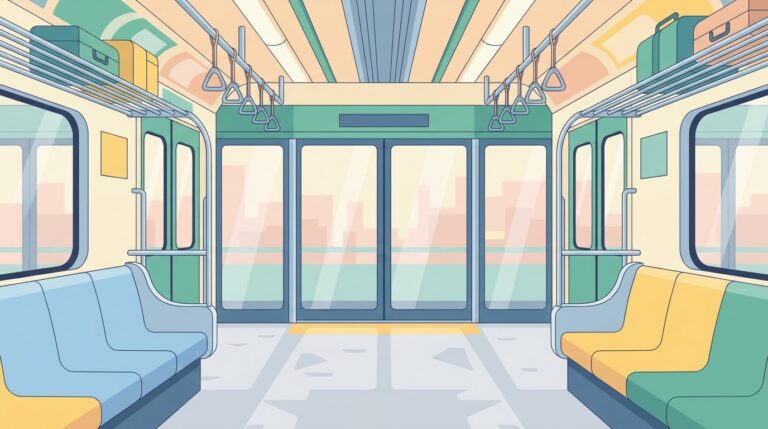
Don’t Panic at the Seoul Subway Lost and Found: The Exact Phrase to Get Your Bag Back
Phase 1: Empathy (Story-driven Opening)
안녕하세요! 매일한글 에디터입니다. (Hello! It’s your Daily Hangul editor.)
Picture this: You just had an unforgettable afternoon strolling along the vibrant streets of Hongdae. Your hands were full of shopping bags, your energy was buzzing, and you hopped onto Seoul Subway Line 2. You casually placed your favorite canvas tote on the overhead metal rack, scrolling through your phone to check out dinner spots in Gangnam. When the chime played for your transfer stop, you bounded out of the carriage with the crowd.
Five minutes later, walking through the station corridor, your stomach drops into an icy abyss: Your tote bag is still riding Line 2 without you.
Inside is your camera, your pocket notebook, and that cute plush keychain you just bought. Your heart races. You run to the station information desk (역무실), your mind frantically spinning. How do you explain which train car you were on? Do you know the train number? Was it carriage 2 or carriage 4?
Take a deep breath! Seoul’s subway system is internationally famous for its honest commuters and world-class lost-and-found system (유실물센터). In fact, the majority of misplaced belongings make their way safely back to their owners. But there is one crucial secret: station attendants need you to narrow down your location quickly. By learning today’s key expression—”앞에서 세 번째 칸쯤에 타 있었던 것 같아요” (Ap-eseo se beonjjae kan-jjeum-e ta isseotdeon geot gat-ayo / I think I was riding in about the third car from the front)—you will transform panic into calm, actionable confidence. Let’s master this essential travel-saver together!
Phase 2: Core 3 Expressions Deep Dive
1. 앞에서 세 번째 칸 (Ap-eseo se beonjjae kan)
- Pronunciation: [Ap-eseo se beon-jjae kan] (Phonetic rhythm: “Up-eh-saw seh bun-jjeh kahn”)
- Meaning: “The third car from the front”
- K-Culture Moment: Think of train-chase scenes in K-dramas where the characters coordinate via phone: “몇 번째 칸이야?” (Myeot beonjjae kaniya? / Which car are you in?). Counting compartments sequentially is instinctive in Korea.
- Editor’s Insight: ‘칸’ (kan) is the counter word used for compartments, boxes, or train cars. In Korean, when you want to specify a starting point, you attach ‘에서’ (from) to ‘앞’ (front) or ‘뒤’ (back). So ‘앞에서’ means “starting from the front.”
- Situation Spectrum: Casual ✅ / Semi-formal ✅ / Formal ✅
- 🤔 Think About It: In English, we usually rely on fixed car numbers (like “Car 3”), but in everyday Korean, relative counting (“third from the front”) is vastly more common when you don’t recall the carriage ID.
2. ~쯤에 (jjeum-e)
- Pronunciation: [Jjeum-e] (Phonetic rhythm: “Jjeum-eh” with a tense ‘jj’ sound like in the middle of ‘pizza’)
- Meaning: “Around / roughly at”
- K-Culture Moment: You’ll hear this daily in Seoul when friends set casual dates: “우리 7시쯤에 만날까?” (Uri ilgop-si-jjeum-e mannalkka? / Shall we meet around 7:00?).
- Editor’s Insight: When you are not 100% certain, adding ‘~쯤’ saves you from giving inaccurate information. Attendants know you’re estimating, so they will search that carriage and the adjacent ones.
- Situation Spectrum: Casual ✅ / Semi-formal ✅ / Formal ✅
- 🤔 Think About It: Why do Koreans love ‘~쯤’ so much? In Korean communication, avoiding blunt absolutes creates a polite buffer that prevents misunderstandings.
3. 타 있었던 것 같아요 (Ta isseotdeon geot gat-ayo)
- Pronunciation: [Ta isseotdeon geot gat-ayo] (Phonetic rhythm: “Tah ees-sut-dun gut gah-tah-yoh”)
- Meaning: “I think I was riding / I recall being on”
- K-Culture Moment: Whenever a K-variety show guest tries to recall a childhood memory, they soften their statements using ‘~었던 것 같아요’.
- Editor’s Insight: This combines three grammar pieces: ‘타다’ (to ride), ‘-았/었던’ (recalling a past situation), and ‘~것 같아요’ (it seems like / I think). It politely signals: “This is what I recall, though my memory might not be completely exact.”
- Situation Spectrum: Casual (타 있었던 것 같아) ⚠️ / Semi-formal ✅ / Formal ✅
- 🤔 Think About It: Notice how English speakers often state memories affirmatively (“I was sitting in car 3”), whereas Korean speakers naturally hedge past memories out of modesty and caution.
Phase 3: Textbook Korean vs. Real Korean
Situation 1: Describing the train car you boarded
- 📖 Textbook Korean: 저는 지하철 전동차 3호차에 탑승했습니다. (Jeoneun jihacheol jeondongcha sam-hocha-e tapseunghaessseumnida.)
- 🗣️ Real Korean: 앞에서 세 번째 칸쯤에 탔던 것 같아요. (Ap-eseo se beonjjae kan-jjeum-e tatdeon geot gat-ayo.)
- 💡 Why the difference? Textbook phrases use formal Sino-Korean terms like ‘전동차’ (electric train) and ‘탑승하다’ (to board). Real commuters speak relationally and conversationally, using native counters like ‘칸’.
Situation 2: Asking if someone turned in your missing bag
- 📖 Textbook Korean: 분실된 수하물이 접수되었는지 확인을 요청합니다. (Bunsildoen suhamul-i jeopsudoeeotneunji hwag-in-eul yocheonghamnida.)
- 🗣️ Real Korean: 혹시 가방 들어온 거 있나요? (Hoksi gabang deureo-on geo innayo?)
- 💡 Why the difference? In real station offices, staff and passengers use the warm, everyday verb ‘들어오다’ (to come in / to arrive) instead of stiff bureaucratic terminology.
Phase 4: K-Culture Deep Dive & Non-Verbal Manners
4-1. Nunchi (눈치) & Gestures
Subway station masters (역무원) handle hundreds of queries daily. When approaching the window:
1. Body Language: Hold your hands together lightly at waist height and give a small 15-degree bow as you say “저기요… 죄송한데요” (Jeogiyo… joesonghandeyo / Excuse me… I am sorry to bother you).
2. T-Money Card Ready: Hold out your transit card or phone app. The attendant can instantly tap your card to discover the exact train number, carriage line, and the precise minute you exited!
4-2. The Magic Numbers on the Platform Floor (스크린도어 번호)
Have you ever noticed two little numbers printed on the subway platform floor right before the screen doors? Numbers like 3-2 or 7-4 are not random codes. The first number (3) is the car number (칸), and the second number (2) is the door number (문).
If you memorized where you got on, telling the attendant “3-2번 문에서 탔어요” (Sam-i-beon mun-eseo tasseoyo / I got on at door 3-2) will make you look like a seasoned Seoulite!
Phase 5: Real-World Roleplay Scenario
Setting: Alex, an exchange student, rushes into the Station Office at Euljiro 1-ga Station after forgetting an eco-bag on the train. Station Attendant Park Min-woo looks up from his desk.
- Turn 1 (Alex): 저기요, 실례지만… 지하철에 가방을 두고 내렸어요. (Jeogiyo, sillyejiman… jihacheol-e gabang-eul dugo naeryeosseoyo.)
🎭 행동 지문: 양손을 모으고 불안한 표정으로 조심스럽게 다가가며
(Excuse me… I left my bag behind on the subway.) - Turn 2 (Attendant Park): 아, 그러세요? 당황하지 마시고요. 몇 호선 어디 방면이었어요? (A, geureoseyo? Danghwanghaji masigoyo. Myeot hoseon eodi bangmyeon-ieosseoyo?)
🎭 행동 지문: 안경을 고쳐 쓰며 차분하게 메모지를 꺼내며
(Oh, really? Don’t panic. Which line and which direction was it?) - Turn 3 (Alex): 2호선 시청 방면이었어요. 방금 5분 전에 내렸어요. (I-hoseon sicheong bangmyeon-ieosseoyo. Banggeum o-bun jeon-e naeryeosseoyo.)
🎭 행동 지문: 휴대전화 시계를 보여주며
(It was Line 2 heading toward City Hall. I just got off 5 minutes ago.) - Turn 4 (Attendant Park): 혹시 몇 번째 칸에 타셨는지 기억나세요? (Hoksi myeot beonjjae kan-e tasyeotneunji gieongnaseyo?)
🎭 행동 지문: 모니터 화면의 열차 운행표를 띄우며
(By any chance, do you remember which car you rode in?) - Turn 5 (Alex): 음… 앞에서 세 번째 칸쯤에 타 있었던 것 같아요. (Eum… ap-eseo se beonjjae kan-jjeum-e ta isseotdeon geot gat-ayo.)
🎭 행동 지문: 손가락으로 열차 앞쪽을 가리키며 기억을 더듬듯이
(Um… I think I was riding in about the third car from the front.) - Turn 6 (Attendant Park): 선반 위에 두셨나요, 아니면 의자 밑인가요? (Seonban wi-e dusyeotnayo, animyeon uija mit-in-gayo?)
🎭 행동 지문: 무전기를 손에 쥐며
(Did you leave it on the overhead rack or under the seat?) - Turn 7 (Alex): 노약자석 근처 선반 위에 올려뒀어요. (Noyakjaseok geuncheo seonban wi-e ollyeodwosseoyo.)
🎭 행동 지문: 가슴을 쓸어내리며 간절한 눈빛으로
(I put it on the overhead rack near the priority seating.) - Turn 8 (Attendant Park): 알겠습니다. 다음 역 역무원한테 바로 무전 쳐서 확인해 볼게요! (Algetseumnida. Daeum yeok yeongmuwon-hante baro mujeon chyeoseo hwag-inhae bolgeyo!)
🎭 행동 지문: 빠르게 무전기 버튼을 누르며
(Understood. I will radio the attendant at the next station right away to check!)
🔀 Interactive Decision Branch
What should Alex do if the attendant asks: “교통카드 찍고 나오셨나요?” (Did you tap out with your transit card?)
- Choice A: “네, 방금 찍은 카드 여기 있어요! 확인해 주세요.” (Ne, banggeum jjigeun kadeu yeogi isseoyo! Hwag-inhae juseyo.)
- Outcome: [BEST] The attendant swipes your card on the terminal, pinpointing the train’s precise vehicle ID in seconds. High probability of retrieval within 15 minutes!
- Choice B: “잘 모르겠어요. 그냥 찾아주시면 안 돼요?” (Jal moreugesseoyo. Geunyang chajajusimyeon an dwaeyo?)
- Outcome: [RISK] Sounding dismissive slows down the search. Station staff need timetable synchronization to know which train to contact among dozens running simultaneously.
- Choice C: “I don’t speak Korean, please speak English!”
- Outcome: [BAD] While major stations have translation support, jumping into English under pressure might cause communication delays while the train continues moving farther away.
Phase 6: 10-Second Emotion Shadowing Drill
Practice these natural rhythm pauses (/) and emotional cues:
[🥺 초조하지만 공손하게 / Anxious but polite]
저기요… / 지하철에 / 가방을 두고 내렸어요.
(Jeogiyo… / jihacheol-e / gabang-eul dugo naeryeosseoyo.)-
[💡 차분히 기억을 떠올리며 / Recalling thoughtfully]
앞에서 / 세 번째 칸쯤에 / 타 있었던 것 같아요.
(Ap-eseo / se beonjjae kan-jjeum-e / ta isseotdeon geot gat-ayo.) -
[🙏 간절한 마음으로 / Earnest and grateful]
선반 위에 올렸는데, / 꼭 좀 부탁드립니다.
(Seonban wi-e ollyeonneunde, / kkok jom butakdeurimnida.)
Phase 7: K-Culture Mini Dictionary
- 유실물센터 (Yusilmul Senteo) | Lost and Found Center
- The centralized facilities located at major hub stations (such as City Hall, Express Bus Terminal, and Wangsimni) where items unclaimed after 3–7 days are stored.
- 칸 (Kan) | Carriage / Compartment
- The everyday counting word for train carriages. (e.g., 첫 번째 칸 = first car, 마지막 칸 = last car).
- 선반 (Seonban) | Overhead Luggage Shelf
- The metal wire shelves located above the seats. This is where 70% of bags, umbrellas, and jackets are accidentally forgotten!
- 하차 태그 (Hacha Tae-geu) | Tapping out at the turnstile
- Tapping your transport card records the precise timestamp of your journey. Station attendants call this data your golden trail.
Phase 8: Traveler’s Survival Kit
Top 3 Survival Phrases for Subway Emergencies
- 검은색 백팩이에요. (Geomeun-saek baekpaek-ieoyo.)
- Meaning: “It’s a black backpack.”
- Pro Tip: Keep color names handy (검은색 = black, 흰색 = white, 갈색 = brown).
- 지갑 안에 신분증이 있어요. (Jigap an-e sinbunjeung-i isseoyo.)
- Meaning: “There is an ID card inside the wallet.”
- Pro Tip: Proves ownership immediately upon recovery.
- 물건을 찾으면 연락해 주실 수 있나요? (Mulgeon-eul chajeumyeon yeollakhae jusil su innayo?)
- Meaning: “Could you contact me if you find the item?”
- Pro Tip: Provide your Korean USIM number or a friend’s contact.
Editor’s Travel Note
If you discover your loss after leaving the station, don’t worry! Visit the lost112 경찰청 유실물 통합포털 웹사이트, Korea’s national police lost and found portal, where all subway items are registered with real-time photographs. Also, keeping the 지하철 종결자 앱 다운로드 handy helps you track exact line names and station numbers even when offline.
Phase 9: A Step Deeper (Cultural Reflection)
In many global metropolises, leaving a wallet or laptop behind in public means bidding it farewell forever. Yet in South Korea, people comfortably leave laptops on cafe tables while visiting the restroom. This phenomenon stems from Korea’s deep sense of communal trust and shared social responsibility.
However, this system runs on precision. Station attendants are eager to assist, but they need cooperative clarity rather than emotional venting. By learning to state your carriage position with phrases like “앞에서 세 번째 칸쯤”, you enter into this shared civic rhythm—meeting helpful locals halfway with cultural empathy.
💬 Your Turn: Have you ever lost an item while traveling abroad? How did you solve it? Share your story in the comments below!
Phase 10: FAQ & Mistake Prevention
Q: What if I don’t remember whether I was in the front or the back of the train?
A: You can tell the attendant the door location where you exited instead! For example: “계단 바로 앞 칸이었어요” (Gyedan baro ap kan-ieosseoyo / It was the car right in front of the station stairs).
Q: Are lost items kept at the station forever?
A: No. Station offices keep found items for about 3 to 7 days before transferring them to the central Seoul Metro Lost & Found office, and eventually to the National Police Agency (LOST112).
Q: Does someone check security cameras (CCTV) inside the train?
A: Most modern trains have CCTV, but attendants will first contact station managers ahead of the train to board and check the racks manually. Clear verbal descriptions work much faster than pulling video archives.
🚨 Common Mistakes Alert
- ❌ Mistake 1: Calling train carriages ‘룸’ (Room) or ‘방’ (Bang).
- ✔️ Correct Action: Always use ‘칸’ (Kan) or ‘호차’ (Ho-cha) for trains.
- ❌ Mistake 2: Running around different stations randomly looking for your train.
- ✔️ Correct Action: Stop moving! Stay at the nearest station office. The attendants will radio ahead to catch the train at a future station.
- ❌ Mistake 3: Forgetting to mention overhead racks.
- ✔️ Correct Action: Make sure to say ‘선반’ (Seonban). Otherwise, staff might only scan the floor and seats.
Phase 11: Action Missions
- 🥉 Bronze Mission (Solo Practice): Stand in your living room and practice saying today’s sentence aloud 3 times: “앞에서 세 번째 칸쯤에 타 있었던 것 같아요.”
- 🥈 Silver Mission (Social Share): Open your voice memo app or social media stories and record yourself pronouncing “유실물센터” and “선반” with natural intonation.
- 🥇 Gold Mission (Real Application): The next time you take any train or metro, look at the screen door numbers. Mentally form the sentence in Korean describing where you boarded!
🎮 K-Culture Mission: Watch an episode of a subway-centric drama (like Catch the Ghost / 유령을 잡아라) and see if you can spot the screen door numbers (칸-문) in the background!
Phase 12: Interactive Quiz Challenge
1. Situation Decision: You left your bag on Line 3. Which sentence is the most natural way to tell the attendant where you sat?
* A) 제 방은 3번이었어요. (Je bang-eun sam-beon-ieosseoyo.)
* B) 앞에서 두 번째 칸쯤에 탔던 것 같아요. (Ap-eseo du beonjjae kan-jjeum-e tatdeon geot gat-ayo.)
* C) 기차 2호에서 당신의 물건을 찾으세요. (Gicha i-ho-eseo dangsin-ui mulgeon-eul chajeuseyo.)
2. Fill-in-the-Blank: Complete the sentence meaning “I think I left it on the overhead rack.”
* “______ 위에 올려두었던 것 같아요.”
3. True or False: Attendants can check the exact train you were on if you show them your tapped T-Money card. (True / False)
👉 Click to view Answers & Explanations
- Answer: B.
- Explanation: ‘칸’ is the correct counter for train cars, and using ‘~쯤에 탔던 것 같아요’ provides polite, natural accuracy.
- Answer: 선반 (Seonban).
- Explanation: ‘선반’ is the luggage rack above passenger seats.
- Answer: True.
- Explanation: The entry/exit timestamp on your transit card matches the automated train movement log, pinpointing the train carriage instantly!
- Explanation: The entry/exit timestamp on your transit card matches the automated train movement log, pinpointing the train carriage instantly!







