

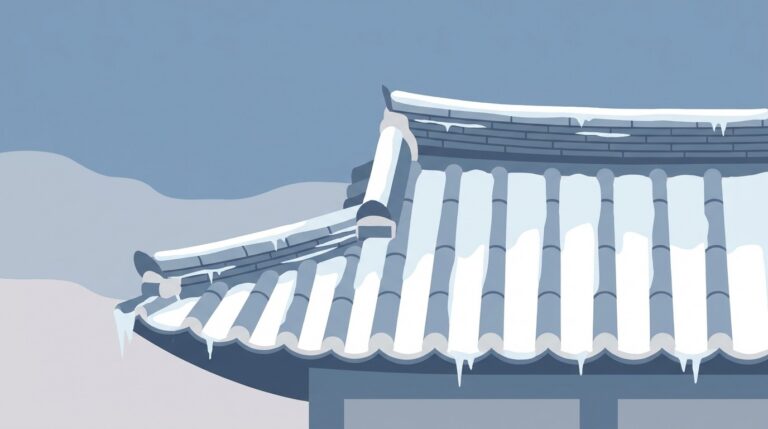
Phase 1: 공감 (Story-driven Opening)
안녕하세요! 매일한글 에디터입니다.
Picture this: You are watching an intense scene in an office K-drama like Misaeng or Agency. The startup’s quarterly report has just landed on the mahogany desk. Domestic consumer demand is already frozen solid, but now overseas supplier raw material prices have suddenly spiked by 40%. The team lead loosens his tie, leans back, rubs his temples, and sighs heavily: “하, 안 그래도 힘든데 이건 진짜 설상가상이군 (Ha, an geuraedo himdeunde igeon jinjja seolsanggasang-igun)…”
If you have ever felt trapped between two equally catastrophic choices or watched one disaster crash right over another, you already know the universal sting of life’s harshest plot twists. But at the C1 (Advanced) level, standard phrases like “너무 힘들어요 (It’s so tough)” or “문제가 많아요 (There are many problems)” sound far too flat to describe such nuanced dread.
In Korean corporate boardrooms, high-stakes negotiations, and dramatic storytelling, natives turn to ancient four-character idioms (사자성어, sajaseong-eo) to encapsulate structural catastrophes with poetic gravity. This comprehensive guide draws on real executive feedback and corporate language coaching to arm you with three indispensable power idioms: 설상가상 (雪上加霜), 진퇴양난 (進退兩難), and 사면초가 (四面楚歌). Let’s elevate your Korean from mere communication to commanding eloquence.
Phase 2: 핵심 표현 3선 심층 분석 (Core Expressions Deep Dive)
1. 설상가상 (雪上加霜)
- Pronunciation: [Seolsanggasang] (Think: “Soul-sahng-gah-sahng”—crisp, balanced, like rolling pebbles)
- Meaning: Literally “snow piled upon frost” (눈 위에 또 서리가 덮임). It means compounding misfortunes striking relentlessly in succession—adding insult to injury.
- K-Culture Moment: In news broadcasts discussing the domestic economy or business dramas when a company endures a sudden tax audit right after a major export deal falls through.
- Editor’s Insight: Use this when a negative baseline is suddenly struck by an unexpected, secondary blow. It implies an external fate or compounding bad luck that leaves little room to recover.
- Situation Spectrum: Casual: ⚠️ | Semi-formal: ✅ | Formal/Business: ✅
- 🤔 Think About It: While English often says “when it rains, it pours,” the Korean idiom evokes cold, freezing weather (snow and frost), reflecting how ancient agrarian Korea viewed extreme winter cold as a lethal threat to crops and survival.
2. 진퇴양난 (進退兩難)
- Pronunciation: [Jintoeyangnan] (Think: “Jin-tway-yahng-nahn”)
- Meaning: Literally “advancing or retreating are both difficult” (나아갈 수도 물러설 수도 없음). Equivalent to “caught between a rock and a hard place” or a classic double bind.
- K-Culture Moment: When a protagonist in a legal drama must either reveal an internal corporate whistleblower’s identity and betray a friend, or keep silent and face criminal indictment.
- Editor’s Insight: Unlike 설상가상 (which is about external events crashing down), 진퇴양난 highlights your agency and decision-making paralysis. Every available path leads to collateral damage.
- Situation Spectrum: Casual: ⚠️ | Semi-formal: ✅ | Formal/Business: ✅
- 🤔 Think About It: How does your native language characterize a dilemma? Is it spatial (between two stones), logical (horns of a dilemma), or kinetic (neither moving forward nor backward, as in Korean)?
3. 사면초가 (四面楚歌)
- Pronunciation: [Samyeonchoga] (Think: “Sah-myeon-cho-gah”)
- Meaning: Literally “Chu state folk songs heard from all four directions” (사방에서 들려오는 초나라의 노래). It conveys being completely surrounded by adversaries with zero external allies left.
- K-Culture Moment: Historical sageuk dramas (사극) during a final siege, or modern political thriller series where an isolated cabinet minister realizes every faction has turned against them.
- Editor’s Insight: Derived from the Chu-Han Contention when Xiang Yu’s besieged troops heard their homeland’s songs sung by the enemy army at night, breaking their morale. It signifies isolation, broken morale, and total entrapment.
- Situation Spectrum: Casual: 🚫 | Semi-formal: ✅ | Formal/Business: ✅
- 🤔 Think About It: Notice the psychological warfare behind the phrase. Defeat does not come merely from physical encirclement, but from hearing familiar songs that destroy your will to fight.
Phase 3: 교과서 한국어 vs 진짜 한국어 (Textbook vs. Real Native)
Situation 1: Reporting overlapping business catastrophes
- 📖 교과서 한국어: “나쁜 일들이 한꺼번에 일어나서 회사 운영이 매우 곤란합니다.” (Nappeun ildeuri hankkeobeone ireonaseo hoesa un-yeong-i maeu gonranhamnida. / Bad things happened all at once, so managing the company is very difficult.)
- 🗣️ 진짜 한국어: “내수 침체로 매출이 반토막 났는데, 원자재 가격까지 폭등하니 완전 설상가상입니다.” (Naesu chimchero maechuri bantomak nanneunde, wonjajae gagyeokkkaji pokdeunghani wanjeon seolsanggasang-imnida. / Domestic demand halved our revenue, and now soaring raw material prices are compounding our troubles—it’s pure frost on snow.)
- 💡 왜 다를까? C1-level business Korean avoids vague words like “나쁜 일” (bad things) or “매우 곤란” (very hard). Using 설상가상 alongside concrete industrial terms demonstrates mature situational control and contextual literacy.
Situation 2: Deciding between two painful choices
- 📖 교과서 한국어: “이쪽을 선택해도 저쪽을 선택해도 문제가 있어서 결정을 못 하겠습니다.” (Ijjogeul seontaekhaedo jeojjogeul seontaekhaedo munjega isseoseo gyeoljeong-eul mot hagessseumnida. / Whether I choose this or that, there are problems, so I cannot decide.)
- 🗣️ 진짜 한국어: “인력을 감축하자니 노조 반발이 크고, 유지하자니 적자가 눈덩이라 그야말로 진퇴양난이에요.” (Inryeogeul gamchukhajani nojo banbari keugo, yujihajani jeokjaga nundeong-ira geuyamallo jintoeyangnan-ieyo. / Downsizing triggers fierce union pushback, but maintaining staff snowballs our deficit—we are truly stuck between a rock and a hard place.)
- 💡 왜 다를까? Educated Koreans construct dilemma arguments using parallel grammar structures (
~자니 ..., ~자니 ...) capped with 진퇴양난 to highlight strategic complexity.
Phase 4: K-Culture 딥다이브 & 비언어적 매너 (Deep Dive & Non-Verbal Manners)
4-1. 눈치 (Nunchi) & Crisis Gestures
When delivering or receiving news that involves 설상가상 or 진퇴양난 in Korean professional settings, physical demeanor carries as much weight as spoken words:
* The Temples Touch (관자놀이 짚기): Senior leaders often rest one elbow on the table, softly massaging their temples with thumb and middle finger. This non-verbally signals that the crisis is strategic and intellectual, not merely an emotional outburst.
* The Controlled Exhale (깊은 한숨의 절제): Never sigh loudly or slump your shoulders abruptly; that telegraphs defeatism (패배주의). Instead, take a slow, quiet breath, lower your voice pitch by an octave, and deliver the idiom with measured firmness.
* The Somber Nod (비장한 끄덕임): When a colleague describes a 사면초가 situation, maintain steady eye contact without smiling, nodding slowly twice to acknowledge that you comprehend the severity of their isolation.
4-2. Cultural Code Analysis: The Aesthetic of Han (한) and Crisis
Korean business dramas (such as Reborn Rich or Incomplete Life) frequently depict crises where external macroeconomic shocks (like the 1997 IMF Asian Financial Crisis) collide with internal vulnerabilities. Korean culture historically reveres collective endurance (위기 극복). By deploying idioms like 설상가상, speakers do not surrender; rather, by identifying the crisis through dignified literary framing, they elevate the struggle into something stoic and surmountable.
Phase 5: 실전 롤플레이 시나리오 (Real-World Roleplay Scenario)
Setting: Boardroom of ‘Hanul Bio-Cosmetics’ in Pangyo Tech Valley. Domestic wholesale orders have dropped, and a critical overseas cargo flight has just been canceled.
NPC: Department Head Park Seong-hun (박성훈 부장) – Sharp, demanding, but respects subordinates who grasp strategic reality.
- Turn 1 (박 부장): “김 대리, 3분기 내수 판매 실적 보고서 봤어? 시장 침체가 생각보다 심각한데.” (Gim daeri, sambung-gi naesu panmae siljeok bogoseo bwasseo? Sijang chimchega saenggakboda simgakannde. / Assistant Manager Kim, did you review the Q3 domestic sales report? The market slump is more severe than anticipated.)
- Turn 2 (You): 🎭 [차분하게 서류를 넘기며 안경을 고쳐 쓴다] “네, 부장님. 소비 심리가 얼어붙어 전년 대비 30% 감소했습니다.” (Ne, bujangnim. Sobi simniga eoreobuteo jeonnyeon daebi samsip peosenteu gamsohaessseumnida. / Yes, Director. Consumer sentiment has frozen, dropping sales 30% year-on-year.)
- Turn 3 (박 부장): “그런데 방금 물류팀에서 연락 왔잖아. 유럽행 항공편 결항으로 수출 원자재 수급마저 막혔다는데?” (Geureonde banggeum mullyutimeseo yeollak watjanha. Yureophaeng hanggongpyeon gyeolhang-euro suchul wonjajae sugeummajeo makhyeotdaneunde? / But the logistics team just called. Due to European flight cancellations, our supply of imported raw materials is blocked too?)
- Turn 4 (You): 🎭 [목소리를 차분히 가라앉히며 진지한 눈빛으로] “내수 부진도 버거운데 공급망 차질까지 겹치다니, 그야말로 설상가상입니다.” (Naesu bujindo beogeounde gonggeummang chajilkkaji gyeopchidani, geuyamallo seolsanggasang-imnida. / Handling domestic stagnation was already tough, but with supply chain disruptions compounding it, this is truly frost atop snow.)
- Turn 5 (박 부장): “대체재를 국내에서 급히 찾자니 단가가 두 배로 뛰고, 생산 라인을 멈추자니 위약금이 걸려 있네.” (Daechaejaereul gungnaeseo geuphi chatjani dang-gaga du baero ttwigo, saengsan raineul meomchujani wiyakgeumi geollyeo inne. / Sourcing domestic substitutes doubles our unit cost, but stopping the assembly line triggers massive contract penalties.)
- Turn 6 (You): 🎭 [양측의 딜레마를 정확히 짚으며] “정말 진퇴양난의 국면이군요. 어느 쪽이든 손실을 피하기 어렵습니다.” (Jeongmal jintoeyangnan-ui gungmyeon-igunyo. Eoneu jjogideun sonsireul pihagi eoryeopsseumnida. / It is genuinely a dilemma where we can neither advance nor retreat. Either option bears unavoidable loss.)
- Turn 7 (박 부장): “투자사들도 이번 분기 마감 전까지 실마리를 못 찾으면 지원을 끊겠다고 압박 중이야.” (Tujasadeuldo ibeon bungi magam jeonkkaji silmarireul mot chajeumyeon jiwoneul kkeunkketdago apbak jung-iya. / Even our venture investors are threatening to pull funding if we don’t present a breakthrough before the quarter closes.)
- Turn 8 (You): 🎭 [결연한 표정으로 메모 패드를 열며] “완전 사면초가의 위기이지만, 즉시 비상 태스크포스를 꾸려 우회 수송로를 파악하겠습니다.” (Wanjeon samyeonchoga-ui wigijiman, jeuksi bisang taeseukeuposeureul kkulyeo uhoe susongnoreul paakhagessseumnida. / Though we are utterly besieged on all sides, I will immediately establish an emergency task force to identify rerouted freight corridors.)
🔀 인터랙티브 분기점 (Interactive Fork)
After Turn 7, how do you respond to Director Park’s investor threat?
* Option A: “완전 사면초가의 위기이지만, 즉시 비상 태스크포스를 꾸려 우회 수송로를 파악하겠습니다.” (Wanjeon samyeonchoga-ui wigijiman, jeuksi bisang taeseukeuposeureul kkulyeo uhoe susongnoreul paakhagessseumnida.)
* Outcome (Best): Demonstrates high emotional intelligence (눈치), accurate literary framing, and immediate executive action without making excuses.
* Option B: “진짜 최악이네요. 다른 회사들도 다 망하고 있으니 너무 걱정 마세요.” (Jinjja choe-agineyo. Dareun hoesadeuldo da manghago isseuni neomu geokjeong maseyo.)
* Outcome (Bad): Informal, fatalistic, and completely unprofessional. Diminishes seriousness.
* Option C: “설상가상이고 진퇴양난이고 사면초가니까 그냥 포기할까요?” (Seolsanggasang-igo jintoeyangnan-igo samyeonchoganikka geunyang pogihalkkayo?)
* Outcome (Risk): Cramming all three idioms sarcastically sounds provocative and flippant to a Korean superior.
Phase 6: 10초 감정 섀도잉 드릴 (10-Second Emotion Shadowing Drill)
Practice reading these lines aloud with the indicated pause markers (/) and emotional cues:
[😮💨 무겁고 침통하게 / Heavily and somberly]
“내수 침체에 / 원자재 폭등까지 겹쳤으니 / 이건 정말 설상가상입니다.”
(Naesu chimchee / wonjajae pokdeungkkaji gyeopchyeosseuni / igeon jeongmal seolsanggasang-imnida.)-
[🤔 고뇌에 찬 어조로 / In deep agony and contemplation]
“가격을 올리자니 고객이 이탈하고 / 동결하자니 적자라서 / 완전히 진퇴양난이에요.”
(Gagyeogeul ollijani gogaegi italhago / donggyeolhajani jeokjaraseo / wanjeonhi jintoeyangnan-ieyo.) -
[🔥 위기를 정면 돌파하려는 결의 / Resolute determination to break the siege]
“사방에 아군 하나 없는 사면초가의 상황이지만 / 돌파구를 찾아야 합니다.”
(Sabang-e agun hana eomneun samyeonchoga-ui sanghwang-ijiman / dolpagureul chajaya hamnida.)
Phase 7: K-Culture 미니 사전 (Mini Dictionary)
- 겹악재 (Gyeob-akjae) | Compounding misfortunes / Multiple negative factors hitting simultaneously.
- Usage: Essential in financial news: “원화 약세와 금리 인상이라는 겹악재를 맞았다.” (We faced compounding blows of a weak Won and rising interest rates.)
- 내수 침체 (Naesu chimche) | Stagnation of domestic consumption.
- Usage: Formal economic reporting: “장기적인 내수 침체 국면에서 벗어나지 못하고 있다.” (Unable to escape prolonged domestic consumption stagnation.)
- 풍전등화 (Pung-jeondeunghwa) | A candle flickering in the wind; an extremely precarious situation.
- Usage: Often paired with 사면초가 to highlight an entity on the verge of collapse.
- 고군분투 (Gogunbuntu) | Fighting alone courageously against impossible odds.
- Usage: Praising an executive or underdog team: “적진 속에서 홀로 고군분투했다.” (Fought valiantly all alone amidst hostile forces.)
Phase 8: 여행자 & 비즈니스 주재원을 위한 생존 키트 (Survival Kit)
서바이벌 표현 TOP 3
- “비행기 결항에 지갑까지 분실해서 설상가상이에요.”
(Bihaenggi gyeolhang-e jigapkpaji bunsilhaeseo seolsanggasang-ieyo.)- Pro Tip: Use at travel insurance desks or airline customer counters to explain compounding travel catastrophes with polite gravitas.
- “환불하자니 수수료가 크고, 가자니 아파서 진퇴양난이네요.”
(Hwanbulhajani susuryoga keugo, gajani apaseo jintoeyangnan-ineyo.)- Pro Tip: Ideal when explaining agonizing travel dilemma situations to Korean hotel concierges or travel agents.
- “외국어 지원도 안 되고 와이파이도 끊겨서 사면초가였어요.”
(Oegugeo jiwondo an doego wa-ipa-ido kkeunkyeoseo samyeonchogayeosseoyo.)- Pro Tip: Elicits immediate empathy from Korean tech-savvy support staff when explaining total isolation.
Editor’s Travel & Business Note
When navigating Korean corporate dynamics during crisis meetings, referencing official macroeconomic figures lends immediate authority. Check raw real-time domestic economic indices using 한국은행 경제통계시스템 ECOS 공식 사이트 to reference currency swings and inflation stats. If you are rushing between urgent client dispute meetings in downtown Seoul, rely on 네이버 지도 앱 다운로드 rather than international map apps for live subway delay notifications and subway car transfer optimization.
Phase 9: “한 발 더 깊이” (Cultural Essay)
Language mirrors how a society conceptualizes suffering. In many Western philosophical traditions, crisis is framed as a duel or a mechanical breakdown requiring direct confrontation or technical repair. In Korean culture, historically shaped by peninsula geography surrounded by superpowers and severe continental weather cycles, crises are experienced cyclically and environmentally—like frost coating frozen snow (설상가상) or hearing foreign war songs carried across open hills (사면초가).
Notice that Koreans rarely use these idioms to surrender; rather, framing a catastrophe through classical Chinese poetry elevates hardship into a shared, stoic reality. When a Korean says “설상가상입니다,” they are subtly inviting you to brace yourself together against the cold.
💬 Your Turn: Have you ever experienced a “설상가상” day while traveling or working in Korea? Share your story in the comments below!
Phase 10: FAQ & 오해 방지 (FAQ Schema)
Q: Can I use 설상가상 for minor everyday inconveniences, like dropping my toast?
A: You can use it playfully among close friends, but it may sound overly dramatic. Strictly speaking, 설상가상 carries literary and serious weight. For dropping toast on a rainy morning, native Koreans often say “오늘 왜 이리 꼬이지? (Why is everything so tangled today?)” or “재수 옴 붙었네 (What rotten luck)” in casual slang.
Q: What is the exact semantic boundary between 진퇴양난 (Jintoeyangnan) and 사면초가 (Samyeonchoga)?
A: 진퇴양난 is a directional dilemma between two choices (move forward or pull back; A vs. B). 사면초가 is omnidirectional isolation with no choices left (surrounded on all four sides by opponents, with zero allies).
Q: Is it grammatically correct to use these idioms as adjectives directly modifying nouns?
A: You can attach the particle -의 or -인 to modify nouns, such as “진퇴양난의 상황 (a situation of dilemma)” or “설상가상으로 (adverbial: to make matters worse, …)”. 설상가상으로 is by far the most frequent sentence-starter form.
🚨 흔한 실수 (Common Mistakes) 경고판
- Mistake: Saying “설상가상해서 슬퍼요” (Treating it as an active regular verb).
- Correct Action: Use it with auxiliary structures: “설상가상으로 (adverbial) …” or “완전 설상가상이다 / 설상가상인 상황이다.”
- Mistake: Confusing 사면초가 with feeling merely “busy”.
- Correct Action: Only use 사면초가 when facing institutional, external pressure with isolated opposition, not simple workload overload.
- Mistake: Using 진퇴양난 when there is an obvious, easy compromise.
- Correct Action: Reserve it for genuine zero-sum trade-offs where both sides involve substantial losses.
Phase 11: 액션 미션 & 참여 유도 (Action Missions)
- 🥉 Bronze Mission (Solo Mastery): Record a 15-second voice memo describing a recent difficult day using the sentence frame: “[Event A] 때문에 힘들었는데, [Event B]까지 겹쳐서 설상가상이었어요.”
- 🥈 Silver Mission (Social Connection): Post a short reflection on your social channels or community group evaluating whether a famous drama character is currently in 진퇴양난 or 사면초가.
- 🥇 Gold Mission (Real-World Deployment): In your next Korean business email or exchange session, substitute “정말 곤란합니다” with “그야말로 진퇴양난의 국면입니다” and observe the shift in professional respect.
- 🎮 K-Culture Mission: Watch episode 1 of the tvN drama Misaeng or Stranger (비밀의 숲). Identify the exact moment when the protagonist encounters a 설상가상 plot turn!
Phase 12: 인터랙티브 퀴즈 챌린지 (Interactive Quiz Challenge)
Q1. [상황 판단] Next-door competitor launches an identical cosmetic product at half price, while existing retail stores simultaneously cancel their display shelf contracts. Which idiom best describes the company’s external compounding catastrophe?
(A) 진퇴양난
(B) 설상가상
(C) 유비무환
Q2. [빈칸 채우기] 문맥에 알맞은 한자성어를 채워 넣으세요.
“구조조정을 단행하자니 직원들의 생계가 위태롭고, 미루자니 회사가 부도날 위기여서 경영진은 (________)에 빠졌다.”
Q3. [True / False 문화 퀴즈]
‘사면초가’는 사방에서 초나라의 노래가 들려와 군사들의 사기가 치솟아 승리했던 역사적 사건에서 유래했다. (True / False)
👉 정답과 해설 확인하기 (Click to reveal answers & explanations)
- Q1 정답: (B) 설상가상
해설: An existing baseline challenge (competitor undercut) compounded by an additional disastrous event (shelf cancellations) fits 설상가상 perfectly. 진퇴양난 describes a two-way decision dilemma, while 유비무환 means being prepared prevents disaster. - Q2 정답: 진퇴양난 (진퇴양난의 딜레마)
해설: Neither path (downsizing vs. delaying) can be chosen without ruinous consequences, making it a classic 진퇴양난 (caught between advancing and retreating). - Q3 정답: False
해설: 사면초가 refers to the enemy singing the Chu homeland songs to make Xiang Yu’s trapped army feel utterly homesick, demoralized, and isolated, leading to their catastrophic defeat.







