

When the CEO Bows Ninety Degrees: Mastering High-Stakes Korean Crisis PR and Press Briefings
Phase 1: Empathy (Story-Immersive Opening)
안녕하세요! 매일한글 에디터입니다. (Hello! I am your Daily Hangul editor.)
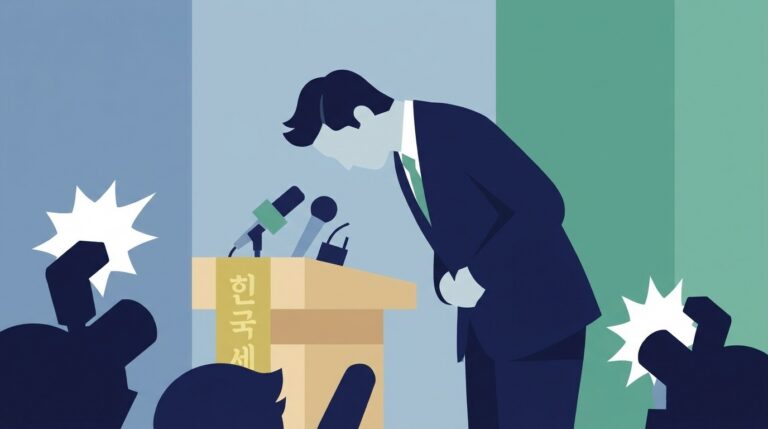
Picture this high-voltage scene straight out of a prime-time corporate K-Drama or live news broadcast from Yeouido, Seoul: Camera flashes erupt like continuous lightning across a packed press hall. Shutter clicks sound like a flurry of arrows. Facing dozens of investigative reporters clutching tablets and voice recorders, a corporate CEO stands up, buttons his dark navy jacket, steps out from behind the podium, and slowly bends his waist into a rigid, silent ninety-degree bow for five uninterrupted seconds.
For corporate communicators and professionals trained in Western crisis PR, this scene can feel jarring. In many Western legal traditions, counsel instructs executives: “Never admit liability prematurely, do not apologize outright, and refer all specifics to pending investigations.” In South Korea, however, corporate crisis communication operates on an entirely distinct cultural frequency governed by jinjeongseong (진정성 – raw, authentic sincerity) and the unwritten court of gukmin jeongseo (국민 정서 – collective public sentiment). If a leader reads stiff legal boilerplate or ducks behind a PR spokesperson, public outcry escalates instantly into consumer boycotts. But when a chief executive directly lowers their head and endures an aggressive, unscripted Q&A session until the last question has been addressed, it can turn an existential disaster into a demonstration of honorable accountability.
Whether you are preparing to interpret executive briefings, managing regional brand communications in Seoul, or mastering C1-level business Korean, understanding the language of corporate crisis management will elevate your Korean from textbook correctness to authentic executive authority.
Phase 2: Core Expressions Deep Dive
1. 고개를 숙이다 (Gogaereul suk-ida)
- Pronunciation: [Go-gae-reul suk-i-da] (Sounds like “Go-geh-rule sook-ee-da”)
- Meaning: Literally “to bow one’s head.” In crisis PR, it translates to “to publicly accept full moral responsibility and demonstrate solemn contrition.”
- K-Culture Moment: Seen whenever a conglomerate chairman or studio head steps before flashing cameras to apologize for a system failure or ethical lapse before taking any reporter questions.
- Editor’s Insight: In Korean corporate culture, gogae (고개) symbolizes executive pride and social hierarchy. Lowering it beneath the sightline of the public is an intentional ritual of subordination before the collective community.
- Situation Spectrum: Casual 🚫 | Semi-formal ⚠️ | Formal ✅
- 🤔 Think About It: In your home culture, does a public figure bowing signify organizational weakness or moral strength?
2. 질의응답에 성실히 임하다 (Jiri-eungdap-e seongsilhi imhada)
- Pronunciation: [Ji-ri-eung-dap-e seong-sil-hi im-ha-da] (Sounds like “Jee-ree-oong-dap-eh sung-sheel-hee eem-ha-da”)
- Meaning: Literally “to enter into question-and-answer with sincerity.” In business briefings, it means “to face media inquiries transparently without ducking, evading, or cutting the session short.”
- K-Culture Moment: In tense media briefings, when press aides attempt to escort an executive off-stage, a determined CEO waves them off and announces they will stay to answer every reporter’s inquiry.
- Editor’s Insight: The elevated Sino-Korean verb imhada (임하다) denotes facing a solemn, unavoidable duty with dignity rather than treating it as a trivial routine.
- Situation Spectrum: Casual 🚫 | Semi-formal ⚠️ | Formal ✅
- 🤔 Think About It: Why is using “no comment” (노코멘트) widely regarded as an admission of guilt in Korean press briefings?
3. 심려를 끼쳐드려 송구합니다 (Simryeoreul kkichyeodeuryeo songguhapnida)
- Pronunciation: [Sim-ryeo-reul kki-chyeo-deu-ryeo song-gu-ham-ni-da] (Sounds like “Seem-ryuh-rule kkee-chyo-doo-ryo song-goo-ham-nee-da”)
- Meaning: Literally “I am deeply distressed and apologetic for causing worry to your minds.” Nuance: “I extend my profound apologies for distressing our stakeholders and breaching public trust.”
- K-Culture Moment: The mandatory opening line read by corporate spokespeople and CEOs during emergency national media broadcasts.
- Editor’s Insight: Notice that this phrase targets simryeo (심려 – the mental anxiety of stakeholders) rather than just technical errors, using the humble honorific songguhapnida instead of the colloquial joesonghamnida.
- Situation Spectrum: Casual 🚫 | Semi-formal 🚫 | Formal ✅
- 🤔 Think About It: Why does Korean corporate crisis communication prioritize the emotional well-being of the public over purely technical liability?
Phase 3: Textbook Korean vs Real Korean
Situation 1: Pledging Organizational Accountability
- 📖 교과서 한국어 (Textbook Korean):
“저희 회사가 이 문제에 대해 책임을 지겠습니다.”
(Jeohui hoesaga i munjee daehae chaegimeul jigesseumnida. – Our company will take responsibility for this issue.) - 🗣️ 진짜 한국어 (Real C1 Crisis Korean):
“모든 질책을 겸허히 수용하며, 사태 수습과 재발 방지에 만전을 기하겠습니다.”
(Modeun jilchaegeul gyeomheohi suyonghamyeo, satae suseupgwa jaebal bangjie manjeoneul gihagessseumnida. – We humbly embrace all public criticism and will spare no effort in resolving the situation and preventing any recurrence.) - 💡 왜 다를까? (Why is it different?)
Textbook Korean sounds flat and self-evident. Real crisis communication deploys high-register idioms like gyeomheohi suyonghada (겸허히 수용하다 – humbly accept reproaches) and manjeoneul gihada (만전을 기하다 – leave nothing undone), establishing solemn executive gravity.
Situation 2: Handling Hostile Media Inquiries
- 📖 교과서 한국어 (Textbook Korean):
“기자님들의 질문에 다 사실대로 대답하겠습니다.”
(Gijanimdeurui jilmune da sasildaero daedabhagesseumnida. – I will answer all reporters’ questions truthfully.) - 🗣️ 진짜 한국어 (Real C1 Crisis Korean):
“한 치의 의혹도 남지 않도록 모든 사실관계를 명명백백하게 소명하겠습니다.”
(Han chi-ui uihokdo namji antorok modeun sasilgwangyereul myeongmyeongbaekbaekhage somyeonghagessseumnida. – We will clarify all factual relations with complete transparency so that not an inch of suspicion remains.) - 💡 왜 다를까? (Why is it different?)
Daedabhada (대답하다) sounds like an elementary student answering a teacher. In executive PR, somyeonghada (소명하다 – to present documented explanations and clarify facts) paired with the metaphor han chi-ui uihokdo eopsi (한 치의 의혹도 없이 – without a single inch of doubt) projects absolute procedural confidence.
Phase 4: K-Culture Deep Dive & Non-Verbal Manners
4-1. Nunchi & Executive Non-Verbal Protocol
During a Korean press conference (gijahoe-gyeon, 기자회견), an executive’s posture is analyzed frame-by-frame by broadcast media and online forums.
- The Folder Bow (폴더 인사, Folder Insa): The CEO steps out beside the podium. Hands must be neatly folded over the lower abdomen in the traditional gongsu posture (공수 자세). The waist bends smoothly to a sharp 90-degree angle, with the neck aligned straight with the spine. The bow must be held motionless for at least 3 to 5 full seconds. Rising too quickly signals impatience or performative insincerity (show-sik sagwa, 쇼식 사과).
- Eye Line & Demeanor: After the bow, the leader must maintain a somber, heavy countenance (chimtonghan pyojeong, 침통한 표정). Smirking, defensive scowling, or rolling one’s eyes during aggressive reporter grilling will become viral memes within minutes. Steady, humble eye contact with reporters is essential.
4-2. Cultural Code Analysis: “Public Sentiment Law” (국민 정서법)
In South Korea, observers often speak of gukmin jeongseo-beop (국민 정서법) or “Public Sentiment Law,” an informal socio-cultural framework that often carries more immediate weight than the statutory penal code. When a corporate scandal breaks—such as product recalls, customer privacy breaches, or workplace misconduct—the public expects immediate, heartfelt remorse (jinjeongseong, 진정성). Western legal teams often prioritize limiting financial liability in court. However, in Korea, winning a courtroom victory months later while losing the court of public opinion leads to catastrophic brand boycotts (bulmae-undong, 불매운동) that can permanently cripple enterprise valuation.
Phase 5: Real-Life Roleplay Scenario
Setting: The main briefing auditorium of Mirae Tech in Yeouido, Seoul. Flashes illuminate the room. CEO Kang Hyun-woo faces a national press conference regarding an enterprise platform outage. Next to him is PR Director Min, while seasoned technology reporter Reporter Han leads the interrogation.
- Turn 1 (Reporter Han):
“이번 서버 다운 사태, 사전에 취약점을 인지하고도 비용 절감을 위해 묵인한 것 아닙니까?”
(Ibeon seobeo daun satae, sajeone chwiyakjeomeul injihagodo biyong jeolgameul wihae muginhan geot animnikka?)
Translation: “Regarding this platform outage: didn’t you knowingly overlook system vulnerabilities in advance simply to cut infrastructure costs?”
🎭 Tapping his voice recorder aggressively on the table while glaring directly at the podium. -
Turn 2 (CEO Kang):
“기자님의 날카로운 질책을 뼈아프게 받아들입니다. 비용 문제로 타협한 사실은 결코 없으나, 관리 소홀로 국민 여러분께 막대한 피해와 심려를 끼쳐드린 점, 머리 숙여 사죄드립니다.”
(Gijanimui nalkaroun jilchaegeul ppyeoapeuge badadeurimnida. Biyong munjero tahyeophan sasireun gyeolko eopseosseuna, gwanli sohollo gukmin yeoreobun-kke makdaehan pihaewa simryeoreul kkichyeodeurin jeom, meori suk-yeo sajoe-deurimnida.)
Translation: “I take your incisive criticism deeply to heart. While we never compromised on costs, I bow my head in apology for causing tremendous disruption and distress through our negligence in oversight.”
🎭 Steps out from behind the microphones and executes a measured ninety-degree bow for four seconds before returning to the stand. -
Turn 3 (Reporter Han):
“피해를 입은 수백만 자영업자들에 대한 실질적인 보상 로드맵은 있습니까? 아니면 말뿐인 대국민 사과입니까?”
(Pihaereul ibeun subaengman jayeongeopjadeure daehan siljiljeogin bosang rodeumaep-eun itsseumnikka? Animyeon malppunin daegukmin sagwaimnikka?)
Translation: “Do you have an actionable compensation roadmap for the millions of small business owners affected? Or is this another public apology composed only of empty words?”
🎭 Looking around the room, gesturing toward the battery of television cameras. -
Turn 4 (CEO Kang):
“금주 내로 외부 전문가가 참여하는 독립 보상위원회를 출범시켜, 한 분도 억울함이 없도록 전액 보상안을 마련하겠습니다.”
(Geumju naero oebu jeonmun-gaga cham-yeohaneun dongnip bosang-wiwonhoereul chulbeomsikyeo, han bundo eogulhami eoptorok jeonaek bosang-aneul maryeonhagessseumnida.)
Translation: “Within this week, we will inaugurate an independent compensation committee with external specialists to formulate full compensation so no individual is left aggrieved.”
🎭 Speaking in an even, steady tone, maintaining direct eye contact without glancing down at notes. -
Turn 5 (PR Director Min):
“예정된 시간이 초과되었습니다. 질의응답은 이상으로 마치고 대표이사님은 퇴장하시겠습니다.”
(Yejongdoen sigani chogwadoeeotsseumnida. Jiri-eungdabeun isang-euro machigo daepyoisanim-eun toejanghasigessseumnida.)
Translation: “Our allotted briefing time has expired. We will conclude the Q&A here, and the CEO will now step down.”
🎭 Stepping forward to block the microphones with open palms. -
Turn 6 (Reporter Han):
“아직 백도어 해킹 여부에 대한 의혹은 풀리지 않았습니다! 대표이사가 직접 답변하십시오!”
(Ajik baekdo-eo haeking yeobue daehan uihogeun pulliji anatseumnida! Daepyoisaga jikjeop dapbyeonhasipsio!)
Translation: “Suspicions regarding the backdoor breach remain unresolved! The CEO must answer this directly!”
🎭 Reporters begin standing up in unison, shouting over one another. -
Turn 7 (CEO Kang):
“민 실장님, 물러서 계십시오. 기자님들의 모든 의문이 해소될 때까지 제가 끝까지 질의응답에 성실히 임하겠습니다.”
(Min siljangnim, mulleoseo gyesipsio. Gijanimdeurui modeun uimuni haesodoel ttaekkaji jega kkeutkkaji jiri-eungdap-e seongsilhi imhagessseumnida.)
Translation: “Director Min, please step aside. I will remain here and faithfully address every single inquiry until all questions from our reporters are fully resolved.”
🎭 Gently gesturing his aide to step back, gripping both edges of the podium firmly. -
Turn 8 (Reporter Han):
“그렇다면 외부 포렌식 조사단의 시스템 전체 접근 권한을 오늘 중으로 즉시 승인하시겠습니까?”
(Geureotamyeon oebu porensik josadan-ui siseutem jeonche jeopgeun gwonhaneul oneul jung-euro jeuksi seung-inhasigessseumnida?)
Translation: “If so, will you immediately approve full system access for the external forensic investigation team before the end of the day today?”
🎭 A sudden hush falls over the press gallery as camera operators zoom in on the CEO’s face.
🔀 Interactive Choice Point
How should CEO Kang respond to Reporter Han’s high-stakes demand?
- Option A: “법률 자문단의 검토를 거쳐 수사 기관의 정식 영장이 발부되면 검토하겠습니다.”
(We will review it once our legal counsel evaluates the request and a formal warrant is issued.)
Feedback (Risk): While legally safe, this response sounds evasive and defensive to the Korean media, prompting immediate headlines accusing the company of corporate foot-dragging (beop-mang-wi hoepi, 법망위 회피). -
Option B: “오늘 중으로 모든 시스템 접근 권한을 무조건 승인하고, 조사 결과를 언론에 투명하게 가감 없이 공개하겠습니다.”
(We will unconditionally approve full system access today and disclose all findings to the media transparently without redactions.)
Feedback (Best): Outstanding C1 Crisis Leadership. It directly meets media scrutiny with total transparency, transforming an adversarial interrogation into a demonstration of institutional confidence. -
Option C: “그 문제는 전산팀 소관이므로 제가 지금 즉답을 드리기는 곤란합니다.”
(That matter falls under our IT department’s jurisdiction, so it is difficult for me to give an immediate answer.)
Feedback (Bad): Never shift blame down to working-level staff during an executive briefing (kkori-jarigi, 꼬리자르기). This will immediately destroy executive credibility.
Phase 6: 10-Second Emotional Shadowing Drill
Practice reading these authentic crisis briefing statements aloud, pausing at the slashes (/) and channeling the emotional stage directions.
Drill 1
- Emotion:
[😔 침통하고 진중하게 - Somber, heavy, and deeply contrite] - Sentence:
“모든 질책을 / 뼈아프게 받아들이며, / 사태 수습과 / 피해 보상에 / 만전을 기하겠습니다.” - Romanization:
Modeun jilchaegeul / ppyeoapeuge badadeurimyeo, / satae suseupgwa / pihae bosang-e / manjeoneul gihagessseumnida. - Translation:
“Accepting all reprimands to the bone, / we will leave nothing undone / in containing the crisis / and compensating for damages.”
Drill 2
- Emotion:
[🤝 확고하고 책임감 있게 - Resolute, transparent, and unshakeable] - Sentence:
“단 한 치의 / 의혹도 남지 않도록, / 끝까지 자리를 지키며 / 성실히 소명하겠습니다.” - Romanization:
Dan han chi-ui / uihokdo namji antorok, / kkeutkkaji jarireul jikimyeo / seongsilhi somyeonghagessseumnida. - Translation:
“So that not a single inch / of suspicion remains, / I will keep my place until the end / and faithfully account for all facts.”
Phase 7: K-Culture Mini Dictionary
- 대국민 사과 (Daegukmin Sagwa)
Translation: National Public Apology
Usage: A high-profile formal press conference where corporate executives or public figures apologize directly to the entire nation for widespread disruption or ethical failure. -
진정성 (Jinjeongseong)
Translation: Authentic Sincerity / Genuineness of Heart
Usage: The decisive metric by which Korean society evaluates crisis PR. It is measured by unscripted willingness to accept blame, non-verbal humility, and speed of redress. -
유감 표명 (Yugam Pyomyeong)
Translation: Statement of Regret
Usage: A diplomatic expression of regret without admitting legal liability. In severe consumer crises, issuing a mere yugam instead of a full sagwa (사과) is often criticized as evasive political maneuvering. -
만전을 기하다 (Manjeoneul Gihada)
Translation: To Make Utmost Preparations / Leave Nothing to Chance
Usage: An elevated business idiom used when reassuring boards, shareholders, and media that comprehensive measures are actively deployed.
Phase 8: High-Stakes Professional Survival Kit
Top 3 Survival Expressions
-
“심려를 끼쳐드려 대단히 송구스럽습니다.”
(Simryeoreul kkichyeodeuryeo daedanhi songguseureopsseumnida.)
Pro Tip: Use this formal opening when opening any emergency shareholder, client, or media briefing. -
“사실관계를 명백히 파악한 후, 지체 없이 투명하게 공개하겠습니다.”
(Sasilgwangyereul myeongbaekhi pa-akhan hu, jiche eopsi tumyeonghage gong-gaehagessseumnida.)
Pro Tip: Use this instead of “no comment” when media ask for details currently under technical analysis. -
“책임을 통감하며 전사적 역량을 집중해 수습하겠습니다.”
(Chaegimeul tonggamhamyeo jeonsajeok yeongnyang-eul jipjunghae suseuphagessseumnida.)
Pro Tip: A powerful corporate phrase meaning “Feeling the weight of responsibility deeply, we will focus enterprise-wide resources on resolution.”
Editor’s Professional Note
When coordinating communications in Seoul, keeping track of press reporting in real time is vital. Download the official Naver News Application via Google Play Store to monitor media coverage and reader comment sentiment (daetgeul yeoron, 댓글 여론). For traveling corporate delegations visiting industrial complexes in Pangyo or Yeouido, download the Kakao T Mobility App for seamless executive transport between media centers.
Phase 9: One Step Deeper
In Western corporate governance, an executive functions primarily as a fiduciary agent representing shareholder capital. An apology is a legal artifact scrutinized for liability exposure. In Korean corporate society, however, an executive is viewed through an organic, communal lens inherited from relational ethics. Corporate leaders are seen as societal stewards who hold their license to operate by communal consent. When a system failure hurts ordinary citizens, it is perceived not merely as a breach of contract, but as an emotional rupture in mutual trust. The physical act of the ninety-degree bow is therefore not an admission of defeat; it is a ritual of communal restoration, signaling that the leadership respects the public’s moral standing above its own corporate prestige.
💬 Your Turn: In your home country or industry, how do corporate executives balance legal risk against public expectations of personal accountability? Share your thoughts in the comments below!
Phase 10: FAQ & Avoiding Misunderstandings
Q: Why do Korean CEOs physically bow at 90 degrees rather than just reading an apology from the lectern?
A: The physical gesture (folder bow) provides non-verbal proof of absolute humility. Standing upright behind a solid wooden podium creates physical separation between the executive and the public. Stepping to the side into plain view and bowing strips away corporate armor, signaling total vulnerability and deference to the public.
Q: What is the difference between saying “죄송합니다” (Joesonghamnida) and “송구합니다” (Songguhapnida)?
A: While joesonghamnida is standard polite Korean suitable for everyday business mistakes, songguhapnida is a far higher honorific register. It expresses deep shame and reverence before stakeholders, making it the mandatory standard for formal corporate press conferences.
Q: Can an executive say “유감스럽게 생각합니다” (I consider this regrettable) during a major crisis?
A: Exercise extreme caution. Yugam (유감) expresses passive regret rather than active fault. In minor diplomatic misunderstandings it is standard, but in severe corporate crises involving customer harm, saying yugam sounds like an executive dodging personal blame, often triggering severe public backlash.
🚨 Common Mistakes Alert
- Mistake: Using casual apology phrases like mianhamnida (미안합니다) in an executive briefing.
Correct Action: Use formal registers such as sajoe-deurimnida (사죄드립니다) or songgu-eopsseumnida (송구스럽습니다). - Mistake: Leaving the briefing room while reporters still have their hands raised.
Correct Action: Even if time is limited, the leader must explicitly request permission from the room: “추가 질의는 서면으로 한 점의 의혹 없이 소명하겠습니다” (We will address further questions in writing without leaving a single doubt). - Mistake: Constantly looking at legal counsel or public relations staff before answering.
Correct Action: Looking sideways signals evasiveness. Keep eyes trained directly on the questioning journalist to communicate unmediated accountability.
Phase 11: Action Missions
- 🥉 Bronze Mission: Practice delivering the Phase 6 Shadowing Drill into your smartphone voice recorder. Ensure your pauses match the designated slash markers (
/) with a calm, deliberate cadence. - 🥈 Silver Mission: Write a 3-sentence crisis response memo using the terms simryeo (심려), satae suseup (사태 수습), and manjeoneul gihada (만전을 기하다).
- 🥇 Gold Mission: Identify an ongoing corporate news briefing in South Korea on YouTube. Transcribe the CEO’s opening sentence and evaluate whether their physical bow met the 90-degree standard.
- 🎮 K-Culture Mission: Watch an episode of a high-stakes business K-Drama (such as Misaeng or Queen of Tears) and spot how executives adjust their honorifics when addressing boards versus the press.
Phase 12: Interactive Quiz Challenge
Question 1 (Situational Judgment)
During an emergency media briefing regarding a software breach, an aggressive reporter asks a question regarding classified engineering logs. Which response best exhibits C1 crisis management leadership?
* A) “보안 규정상 절대 공개할 수 없으니 다음 질문 받겠습니다.”
* B) “법적 검토와 개인정보 보호 절차를 준수하는 범위 내에서, 한 치의 의혹도 없도록 투명하게 공개 및 소명하겠습니다.”
* C) “저희 홍보팀과 상의한 후 나중에 보도자료로 배포하겠습니다.”
Question 2 (Fill in the Blank)
Fill in the missing high-register idiom representing complete executive diligence:
“회사의 모든 자원을 투입하여 사태 수습과 재발 방지에 ________을(를) 기하겠습니다.”
Question 3 (Culture True or False)
True or False: In South Korean corporate crisis communication, winning a technical legal case quickly absolves an enterprise from reputational damage even if public sentiment (gukmin jeongseo) is offended.
👉 Click here to reveal the answers and detailed explanations!
Answer Key & Explanations
-
Correct Answer: B
Explanation: Option B strikes the precise balance expected of C1 corporate leaders: it respects legal boundaries while committing to transparent clarification (somyeong) using the standard crisis phrase han chi-ui uihokdo eopdorok (한 치의 의혹도 없도록). Option A is arrogantly dismissive, and Option C defers accountability to subordinates. -
Correct Answer: 만전 (Manjeon)
Full Phrase: 만전을 기하겠습니다 (Manjeoneul gihagessseumnida – We will leave nothing undone / make utmost efforts). This is the hallmark idiom of high-stakes Korean crisis management. -
Correct Answer: False
Explanation: In South Korea, corporate legitimacy depends profoundly on maintaining public trust and societal harmony. A firm that hides behind technical legal exemptions while ignoring public sentiment often faces debilitating consumer boycotts and reputational ostracization.






