

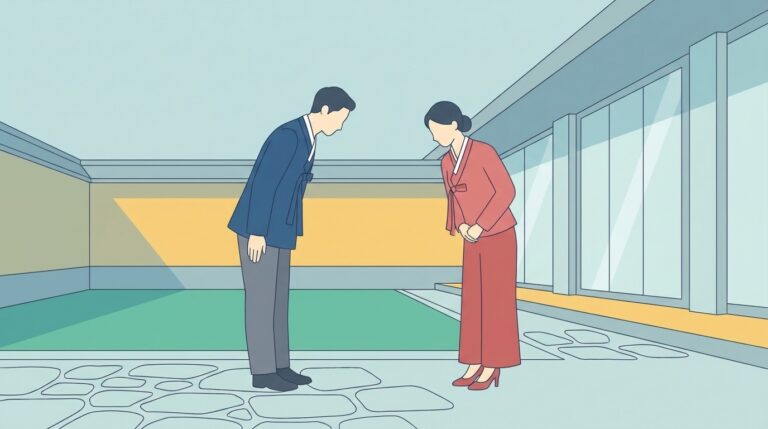
Master Korean Body Metaphors: Decoding Status, Humility, and Pride
Phase 1: Empathy (스토리 몰입형 오프닝)
안녕하세요! 매일한글 에디터입니다.
Imagine walking into a high-stakes board meeting right out of a gripping K-drama like Misaeng or Reborn Rich. The newly appointed project director steps up to the podium. His posture is upright, yet his gaze holds a subdued gravity. Later over drinks, he admits: “이번 프로젝트 때문에 정말 어깨가 무겁습니다 (Ibeon peurojekteu ttaemune jeongmal eokkaega mugeopseumnida – My shoulders feel so heavy because of this project).” Across the room, a rival department head struts in with his chin lifted high, speaking down to colleagues. A senior manager whispers under her breath: “김 부장은 승진하더니 목에 너무 힘을 주네 (Gim bujangeun seungjinhadeoni moge neomu himeul june – Manager Kim got promoted and now puts way too much strength in his neck).”
For advanced learners at the C2 tier, mastering Korean is no longer about parsing literal vocabulary. You already know that ‘어깨’ is shoulder, ‘허리’ is waist, and ‘목’ is neck. However, navigating real-world Korean requires understanding how the human body acts as a socio-spatial map. Why is responsibility heavy on the shoulders? Why does wisdom bend at the waist? And why does a stiff neck signal toxic arrogance rather than simple poor posture?
Our advanced students frequently share their frustration with idioms that seem interchangeable on paper but carry radically divergent social stakes in practice. Misjudging these nuances can turn a heartfelt compliment into an awkward slight or leave you blind to subtle corporate passive-aggression. Today, we will deconstruct this deep metaphorical anatomy, equipping you with the native intuition required to command Korean with absolute precision.
Phase 2: 핵심 표현 3선 심층 분석 (3 Core Expressions)
1. 어깨를 나란히 하다 (Eokkaereul naranhi hada)
- Pronunciation: [Eok-kae-reul na-ran-hi ha-da] (Think: Uh-kkae rhyming with a firm “cup-care”, followed by nah-rahn-hee)
- Meaning: Literal: “To align shoulders side-by-side.” | Actual Nuance: To stand on equal footing, achieve world-class parity, or match a formidable peer in status or capability.
- K-Culture Moment: Headlines celebrating Korean cinema after the Oscars or Cannes: “세계적인 거장들과 어깨를 나란히 하다 (Seogyejeogin geojangdeulgwa eokkaereul naranhi hada – Standing shoulder to shoulder with world-class maestros).”
- Editor’s Insight: In a society historically defined by vertical hierarchy, aligning shoulders horizontally implies a hard-won triumph. You do not use this for casual similarities; you invoke it when a former underdog earns unquestioned parity.
- Situation Spectrum: Casual ✅ | Semi-formal ✅ | Formal ✅
- 🤔 Think About It: In English, we say “rubbing shoulders” to imply mere proximity to greatness. How does “aligning shoulders” in Korean demand actual substantive parity rather than just mingling?
2. 허리를 굽히다 (Heorireul gubhida)
- Pronunciation: [Heo-ri-reul gup-hi-da] (Huh-ree-reul goop-hee-dah, with a soft aspirate on hee)
- Meaning: Literal: “To bend one’s waist.” | Actual Nuance: To humble oneself, yield gracefully to another’s seniority, or show profound deference.
- K-Culture Moment: In corporate sagas and historical period dramas (사극), when a proud entrepreneur bows before a veteran artisan or lender: “체면을 버리고 허리를 굽히다 (Chaemyeoneul beorigo heorireul gubhida – Discarding pride and bending one’s waist).”
- Editor’s Insight: In Western rhetoric, “bending the knee” often connotes total defeat or subservience. In Korean Confucian culture, bending at the waist is a strategic virtue. It demonstrates emotional control (인내) and tactical humility rather than cowardice.
- Situation Spectrum: Casual ⚠️ | Semi-formal ✅ | Formal ✅
- 🤔 Think About It: Why does Korean culture revere bending the waist as a display of inner strength rather than vulnerability?
3. 목에 힘을 주다 (Moge himeul juda)
- Pronunciation: [Mog-e him-eul ju-da] (Mawk-eh heem-eul joo-dah, crisp and pointed)
- Meaning: Literal: “To put strength into one’s neck.” | Actual Nuance: To act haughty, posture aggressively, or show unearned self-importance.
- K-Culture Moment: When an heir in a drama gets promoted overnight and starts barking orders: “직급 하나 올랐다고 목에 힘주는 꼴이라니 (Jikgeup hana ollatdago moge himjuneun kkol-irani – Putting so much strength in his neck over a single title bump).”
- Editor’s Insight: This idiom is intensely critical and almost always spoken behind someone’s back. Unlike the English “stiff-necked” (which denotes stubbornness), the Korean idiom targets relational snobbery.
- Situation Spectrum: Casual ✅ | Semi-formal ⚠️ | Formal 🚫
- 🤔 Think About It: Why is the neck, rather than the nose or chest, targeted in Korean when criticizing arrogance?
Phase 3: 교과서 한국어 vs 진짜 한국어 (Textbook vs. Real Native)
Situation 1: Discussing High-Stakes Professional Responsibility
- 📖 교과서 한국어: 이번 프로젝트의 책임이 매우 무겁고 큽니다. (Ibeon peurojekteu-ui chaegimi maeu mugeopgo keumnida. – The responsibility of this project is very heavy and large.)
- 🗣️ 진짜 한국어: 총괄을 맡고 나니 어깨가 정말 무겁네요. (Chonggwaleul matgo nani eokkaega jeongmal mugeomneyo. – Now that I’ve taken on the lead role, my shoulders feel undeniably heavy.)
- 💡 왜 다를까?: Abstract terms like “책임” (responsibility) sound academic. Educated native speakers anchor collective duty directly onto the shoulders (어깨), instantly inviting empathy and mutual solidarity.
Situation 2: Critiquing an Acquaintance’s Haughty Demeanor
- 📖 교과서 한국어: 그 사람은 성공한 후에 거만하게 행동합니다. (Geu sarameun seonggonghan hue geomanhage haengdonghamnida. – That person behaves arrogantly after succeeding.)
- 🗣️ 진짜 한국어: 요즘 조금 잘나간다고 목에 너무 힘주고 다니더라. (Yojeum jogeum jalnagandago moge neomu himjugo danideora. – He’s doing well lately, but he’s strutting around with way too much strength in his neck.)
- 💡 왜 다를까?: C2 discourse avoids flat adjectives like “거만하다” (arrogant) in colloquial speech. Using somatic metaphors paints a vivid sensory picture of the offender’s physical pretension.
Phase 4: K-Culture 딥다이브 & 비언어적 매너 (Deep Dive & Non-Verbal Manners)
4-1. 눈치 (Nunchi) & Posture Choreography
In Korean corporate and social ecosystems, posture serves as an open moral ledger. Physical gestures precede spoken words:
* The Shoulder Settle: When entering a room of superiors, drop your shoulders slightly and pull your elbows closer to your ribs. Puffed shoulders (어깨를 으쓱거리다) will instantly be perceived as combative.
* The Waist Angle: A standard nod is insufficient in serious negotiations. Bending from the lumbar vertebrae at 30 to 45 degrees while maintaining downward gaze reveals sincerity. Keeping your waist upright while bowing only your chin signals superficial compliance.
* The Neck Relax: If praised, tilt your head slightly downward with a modest smile. Stiffening the neck or tilting the chin up, even in lighthearted pride, triggers negative 눈치 (nunchi) warnings among observant colleagues.
4-2. Cultural Code Analysis: The K-Drama Boardroom Archetype
Watch any pivotal scene in Agency or Vincenzo. Power shifts are choreographed somatic dances. A fallen CEO must literally lower their waist to apologize to the public. Meanwhile, the corrupt antagonist displays their moral decay by locking their neck rigid and glaring downward. To native viewers, character morality is telegraphed through these somatic cues long before the script confirms their villainy.
Phase 5: 실전 롤플레이 시나리오 (Real-Life Roleplay Scenario)
Setting: A private dining room in Yeouido. Alex (Global Strategy Lead) and Director Min (a seasoned veteran mentor) are debriefing after a landmark multinational merger presentation.
- 민우 (Director Min): 알렉스 님, 오늘 프레젠테이션 정말 인상적이었습니다. 글로벌 파트너사 대표들도 완전히 감탄하더군요.
(Alex-nim, oneul peurejenteisyeon jeongmal insangjeogieosseumnida. Geulleobeol pateuneosa daepyodeuldo wanjeonhi gamtanhadeogunyo.)
“Alex, today’s presentation was truly impressive. Even the partner CEOs were completely blown away.” -
알렉스 (Alex): 🎭 두 손으로 찻잔을 받쳐 들며 겸손한 눈빛으로
칭찬해 주셔서 감사합니다, 이사님. 하지만 이제 막 첫걸음을 뗀 셈이라 어깨가 무겁습니다.
(Chingchanhae jusyeoseo gamsahamnida, isanim. Hajiman ije mak cheotgeoreumeul tten sem-ira eokkaega mugeopseumnida.)
“Thank you for the compliment, Director. But we have only just taken the first step, so my shoulders feel genuinely heavy.” -
민우 (Director Min): 겸손도 좋지만, 이번 성과는 우리 팀이 해외 선두 기업들과 어깨를 나란히 할 기회를 만든 겁니다. 자부심을 가지세요.
(Gyeomsondo jochiman, ibeon seonggwaneun uri tim-i haeoe seondu gieopdeulgwa eokkaereul naranhi hal gihoe-reul mandeun geomnida. Jabusim-eul gajiseyo.)
“Humility is fine, but this outcome gave our team the chance to stand shoulder-to-shoulder with leading overseas corporations. Have pride in it.” -
알렉스 (Alex): 🎭 가볍게 고개를 끄덕이며
이사님께서 든든하게 길을 터주신 덕분입니다. 혼자서는 불가능했을 프로젝트였습니다.
(Isanimkkeseo deundeunhage gireul teojusin deokbunimnida. Honjaseoneun bulganeunghaesseul peurojekteuyeosseumnida.)
“It was only possible because you paved such a solid path ahead of us, Director. Alone, this would have been impossible.” -
민우 (Director Min): 하하, 그런데 3팀 박 팀장 소식 들었습니까? 이번 성과급 받았다고 벌써 목에 힘을 주고 다닌다더군요.
(Haha, geureonde sam-tim Bak timjang sosik deureosseumnika? Ibeon seonggwageup badatdago beolsse moge himeul jugo danindadeogunyo.)
“Haha, by the way, did you hear about Team Leader Park in Team 3? Word is he’s already strutting around with strength in his neck after receiving that performance bonus.” -
알렉스 (Alex): 🎭 신중하게 찻잔을 내려놓으며
아, 그런 이야기가 있군요. 위로 올라갈수록 허리를 굽히는 법을 먼저 배워야 할 텐데요.
(A, geureon iyagiga itgunyo. Wiro ollagalsurok heorireul gubhineun beobeul meonjeo baewoya hal tendeyo.)
“Ah, so people are saying that. The higher one climbs, the more one ought to learn how to bend at the waist first.” -
민우 (Director Min): 정확해요! 역시 알렉스 님은 조직의 생리를 꿰뚫고 있군요. 그 균형 감각을 잃지 마세요.
(Jeonghwakhaeyo! Yeoksi Alex-nimeun jojik-ui saengrireul kkwettulko itgunyo. Geu gyunhyeong gamgageul ilji maseyo.)
“Spot on! As expected, Alex, you see right through corporate psychology. Never lose that sense of balance.” -
알렉스 (Alex): 🎭 공손하게 미소를 지으며
명심하겠습니다. 늘 이사님의 가르침을 마음에 새기고 임하겠습니다.
(Myeongsimhagetseumnida. Neul isanim-ui gareuchim-eul maeum-e saegigo imhagetseumnida.)
“I will keep that close to heart. I will always carry your guidance as we move forward.”
🔀 인터랙티브 분기점 (Choose Your Response!)
If Director Min subsequently asks: “다음 분기 전략 발표도 알렉스 님이 전적으로 도맡아 주시겠습니까?” how should you respond?
- Option A: “당연하죠! 제가 맡으면 경쟁사들을 단숨에 제치고 가장 높은 자리에 설 수 있습니다.”
- Feedback (Bad): Puffs the chest prematurely; violates Confucian professional modesty.
- Option B: “믿고 맡겨주신다면 최선을 다하겠지만, 책임이 큰 만큼 어깨가 무겁네요. 팀원들과 더 허리를 굽히고 철저히 준비하겠습니다.”
- Feedback (Best): Balances competence with deep somatic humility (어깨가 무겁다 + 허리를 굽히다).
- Option C: “제가 맡으면 목에 힘주지 않고 조용히 발표만 끝내고 오겠습니다.”
- Feedback (Risk): Misuses a third-person pejorative idiom about oneself in an unidiomatic, awkward way.
Phase 6: 10초 감정 섀도잉 드릴 (Shadowing Drill)
Practice these lines with appropriate breath pauses (/) and somatic inflection:
[😌 진중하고 무게감 있게]
대표 직함을 달고 나니 / 매 순간 / 어깨가 참 무겁습니다.
(Daepyo jikham-eul dalgo nani / mae sungan / eokkaega cham mugeopseumnida.)
“Now that I carry the title of CEO / every single moment / my shoulders feel genuinely heavy.”-
[😤 약간의 비판과 뼈있는 톤으로]
승진 좀 했다고 / 사람들 앞에서 / 저렇게 목에 힘을 주면 안 되지.
(Seungjin jom haetdago / saramdeul ap-eseo / jeoreoke moge himeul jumyeon an doeji.)
“Just because he got a little promotion / in front of people / he shouldn’t put so much strength in his neck like that.” -
[🤝 정중하며 단단한 결의를 담아]
배울 점이 많은 선배님들 앞에서는 / 언제나 허리를 굽히는 것이 / 기본 예의입니다.
(Baeul jeomi maneun seonbaenimdeul ap-eseoneun / eonjena heorireul gubhineun geosi / gibon ye-ui-imnida.)
“Before seniors from whom there is much to learn / always bending at the waist / is the fundamental courtesy.”
Phase 7: K-Culture 미니 사전 (Core Keywords)
- 벼는 익을수록 고개를 숙인다 (Byeoneun标准的-ik-eulsurok gogaereul suginda)
- Translation: “The riper the grain of rice, the lower it bows its head.”
- Usage: The premier philosophical proverb governing Korean leadership. Real authority is evidenced by humility, not chest-thumping.
- 기(氣)를 펴다 (Gireul pyeoda)
- Translation: “To unfold one’s inner vitality / To straighten one’s shoulders after hardship.”
- Usage: Used when someone regains confidence or overcomes oppression after a long struggle.
- 눈치싸움 (Nunchissaum)
- Translation: “Battle of wits and non-verbal intuition.”
- Usage: Silent tension where parties gauge who bows first, who speaks casually, and who concedes status.
- 갑질 (Gapjil)
- Translation: “Authoritarian overreach / Haughty abuse of socioeconomic status.”
- Usage: The direct real-world manifestation of someone who puts excessive strength into their neck (목에 힘을 주다).
Phase 8: 여행자를 위한 생존 키트 (Survival Kit for Travelers)
Top 3 Somatic Phrases for Professional & High-Context Travel
- 어깨가 무겁네요 (Eokkaega mugeomneyo)
- Pro Tip: Say this to an Airbnb host, tour guide, or partner coordinator organizing a complex schedule. It demonstrates that you understand the weight of hospitality.
- 허리 굽혀 감사드립니다 (Heori gubhyeo gamsadeurimnida)
- Pro Tip: Use in formal emails or parting speeches after receiving exceptional hospitality from veteran hosts.
- 목을 축이다 (Mogeul chugida)
- Meaning: “To moisten one’s throat (have a quick drink).”
- Pro Tip: A sophisticated, natural idiom to propose a café or water break without sounding elementary.
Editor’s Travel Note
When navigating Korean corporate districts like Teheran-ro or Yeouido, download the official navigation tools using this 네이버 지도 앱 다운로드 guide. Taxis and subways operate with extreme spatial etiquette; keep phone conversations at an absolute minimum to demonstrate non-verbal mindfulness.
Phase 9: “한 발 더 깊이” (Cultural Insights)
In Korean linguistic philosophy, the human body is not an isolated vessel of autonomous will; it is an antenna registering collective social harmony. When you say your shoulders are heavy, you are not complaining about physical fatigue; you are honoring the dreams and livelihoods of the family or team resting upon you. To bend the waist is not submission; it is a sacred cultural covenant that values interpersonal harmony over individual ego. When we speak through the body in Korean, we are constantly reaffirming our place within an interdependent web of mutual obligations.
💬 Your Turn: Does your native culture visualize responsibility or pride through physical body parts? Do you carry weight on your shoulders, or bend in a different way? Share your reflections below!
Phase 10: FAQ & 오해 방지 (FAQ Schema)
Q: Can I use ‘목에 힘을 주다’ directly to someone’s face as friendly banter?
A: Only with exceptionally close childhood friends (불알친구 or equivalent lifelong peers) in teasing irony. In any professional or hierarchical context, saying this directly is an inflammatory accusation that will permanently damage rapport.
Q: Does ‘허리를 굽히다’ mean the same thing as ‘굴복하다’ (to surrender)?
A: Not at all. ‘굴복하다’ implies humiliating defeat against your will. ‘허리를 굽히다’ is an intentional, strategic act of social respect and moral discipline. One can bend the waist while remaining inwardly unbroken.
Q: How does ‘어깨를 나란히 하다’ differ from ‘비슷하다’ (to be similar)?
A: ‘비슷하다’ merely describes external resemblance in metrics or appearance. ‘어깨를 나란히 하다’ carries an emotional weight of parity, prestige, and institutional recognition earned through rigorous effort.
🚨 흔한 실수 (Common Mistakes)
- Mistake 1: Translating “He is proud of himself” as “그는 목에 힘을 준다” (He puts strength in his neck).
- Correct Action: Use “자부심을 가지다” (to hold self-pride) or “자랑스러워하다”. Never use 목에 힘을 주다 for positive pride!
- Mistake 2: Saying “어깨가 가볍다” to imply you are carefree.
- Correct Action: While understood, Koreans usually say “홀가분하다” (to feel relieved/unburdened) or “짐을 덜었다” (lightened the load) when relief arrives.
- Mistake 3: Physically standing completely rigid when greeting seniors while reciting formal honorifics.
- Correct Action: Synchronize speech with a physical incline of the upper body. Rigid posture invalidates polite speech.
Phase 11: 액션 미션 & 참여 유도 (Action Missions)
- Bronze Mission (Solo Practice): Stand before a mirror. Practice delivering “어깨가 무겁습니다” while expressing calm resolve, and “허리 굽혀 감사드립니다” with a clean 30-degree waist inclination.
- Silver Mission (Social Engagement): Write a brief post on your social feed or language exchange app about your current career or language goals using the phrase: “~와/과 어깨를 나란히 할 때까지 열심히 하겠습니다.”
- Gold Mission (Real-World Application): The next time an elder, teacher, or colleague assigns you a meaningful task, respond using: “믿고 맡겨주신 만큼 어깨가 무겁지만 최선을 다하겠습니다.”
- 🎮 K-Culture Mission: Watch an episode of a drama like Misaeng, Itaewon Class, or The Glory. Identify at least two scenes where physical posture (neck angle, waist bend) signals authority or vulnerability without spoken dialogue.
Phase 12: 인터랙티브 퀴즈 챌린지 (Interactive Quiz)
1. Situational Judgment
Which of the following candidates demonstrates an inappropriate usage of Korean body idioms?
* (A) High-tech startup CEO: “우리 기술력은 세계적 거인들과 어깨를 나란히 합니다.”
* (B) Project Manager: “중책을 맡아 팀장으로서 어깨가 대단히 무겁습니다.”
* (C) Employee praising their boss directly to their face: “부장님은 언제나 목에 힘을 주셔서 정말 존경스럽습니다.”
* (D) Veteran executive advising a recruit: “성공할수록 허리를 굽히는 법을 알아야 하네.”
2. Fill in the Blank
한국 대표팀이 피나는 훈련 끝에 드디어 세계 정상급 선수들과 ________ 나란히 하게 되었습니다.
* (A) 머리를
* (B) 허리를
* (C) 어깨를
* (D) 다리를
3. True / False Cultural Check
- In Korean corporate culture, tilting your chin up and maintaining an inflexible neck during a performance review is interpreted as confident leadership.
정답 및 해설 보기 (Click to Reveal Answers)
- 정답: (C)
- 해설: 목에 힘을 주다 is a negative critique describing haughtiness and arrogance. Using it to praise a superior is a catastrophic pragmatic error!
- 정답: (C) 어깨를
- 해설: The fixed institutional idiom for standing as an equal rival or peer is 어깨를 나란히 하다.
- 정답: False
- 해설: Maintaining a rigid neck and elevated chin in front of superiors is perceived as insolent defiance (반항) or arrogance (오만). Proper Korean non-verbal etiquette calls for a relaxed neck and a humble, receptive posture.
- 해설: Maintaining a rigid neck and elevated chin in front of superiors is perceived as insolent defiance (반항) or arrogance (오만). Proper Korean non-verbal etiquette calls for a relaxed neck and a humble, receptive posture.






