

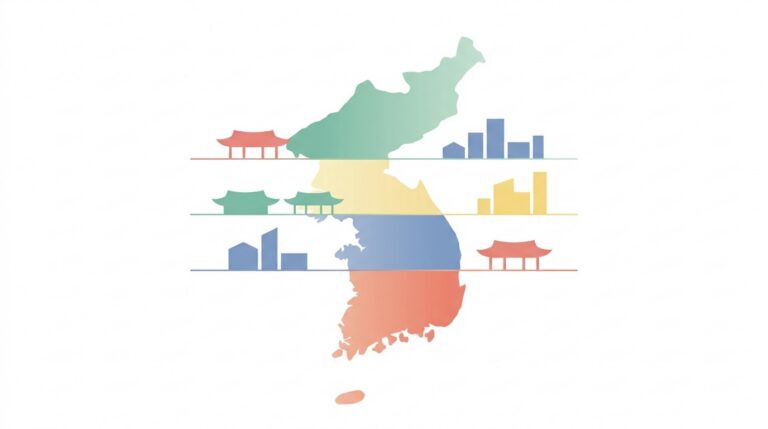
Pragmatic Divergence: South Korean Hedging vs. North Korean Forceful Cadences
Phase 1: 공감 (Story-Immersive Opening)
안녕하세요! 매일한글 에디터입니다.
Imagine sitting in an advanced Korean sociolinguistics seminar or watching a critically acclaimed drama like Crash Landing on You (사랑의 불시착). You have conquered the complex honorifics of Seoul, polished your haeyoche (해요체) to near perfection, and even mastered the delicate art of softening statements with ~in geot gatayo (~인 것 같아요). Then, an archival broadcast from Pyongyang crackles to life on screen. The news anchor doesn’t merely inform; she commands. Her intonation doesn’t float upward in polite inquiry; it plunges downward with rhythmic, staccato force. The vocabulary isn’t woven with polite circumlocution, but with militant metaphors—”crushing,” “iron-willed,” and “revolutionary fervour.”
Many of our C2 learners come to us with an acute dilemma: “I understand every single grammatical particle in official South and North Korean texts, yet their emotional frequencies feel like completely alien planets. Why does modern South Korean discourse lean so heavily into evasive euphemism, while North Korean public speech sounds like a ceaseless battle cry?”
This gap is not merely dialectal—it is pragmatic and ideological. Over seventy years of division have fractured the pragmatic soul of the Korean tongue. In this masterclass guide, built on real feedback from diplomatic interpreters and advanced scholars at Daily Hangul, we will dismantle the structural and prosodic differences between Seoul’s soft, defensive hedging and Pyongyang’s declarative, collectivist rhetoric so you can analyze, interpret, and navigate high-register Korean at a native-proficient level.
Phase 2: 핵심 표현 3선 심층 분석 (3 Core Expressions Deep-Dive)
1. 그런 측면이 없지 않아 있는 것으로 사료됩니다 (Geureon cheukmyeoni eopji ana inneun geoseuro saryodoemnida)
- Pronunciation: [Geu-reon cheung-myeo-ni eop-jji a-na in-neun geo-seu-ro sa-ryo-doem-ni-da] (Think of it as layered melodic waves, softly cascading without abrupt stops).
- Meaning: Literal: “It is considered that such an aspect is not entirely absent.” / Nuanced Pragmatic Meaning: “I somewhat agree with your point, but I must remain cautious and avoid absolute commitment.”
- K-Culture Moment: Frequently heard in political debates on JTBC or high-level corporate boardrooms in Yeouido when an official wants to acknowledge a critique without accepting direct liability.
- Editor’s Insight: This represents the zenith of South Korean epistemic hedging. Notice the double negative (eopji ana) coupled with institutional passive attribution (saryodoemnida). It minimizes direct interpersonal friction by cloaking personal opinion under layers of speculative modesty.
- Situation Spectrum: Casual 🚫 | Semi-formal ⚠️ | Formal ✅
- 🤔 Think About It: Does your native tongue value diplomatic indirectness over blunt clarity when delivering institutional critique?
2. 총돌격전을 벌여 단호히 분쇄해야 합니다 (Chongdolgyeokjeoneul beoryeo danhohi bunswaehaeya hamnida)
- Pronunciation: [Chong-dol-gyeok-jjeo-neul beo-ryeo dan-ho-hi bun-swae-hae-ya ham-ni-da] (Punchy, march-like rhythm with punchy consonants mimicking military percussion).
- Meaning: Literal: “We must launch a general assault and resolutely crush [it].” / Nuanced Pragmatic Meaning: “The entire collective must mobilize uncompromisingly to overcome this policy obstacle.”
- K-Culture Moment: Standard rhetorical staple in North Korean state media (Rodong Sinmun) and broadcast addresses when motivating agricultural, industrial, or ideological campaigns.
- Editor’s Insight: North Korea’s Munhwa’o (문화어) in public discourse operates on an agitational paradigm. State discourse rejects bureaucratic hedging as weakness or “bourgeois defeatism.” Instead, civil policies (like harvesting rice or boosting steel output) are framed as combat duties (jeontu), using decisive, terminal declaratives (~haeya hamnida).
- Situation Spectrum: Casual 🚫 | Semi-formal 🚫 | Formal (North Korean State Media / Academic Citation Only) ✅
- 🤔 Think About It: How does weaponized language in public policy transform a citizen’s relationship to everyday civic responsibilities?
3. 검토해 볼 여지가 있을 것으로 사견을 밝힙니다 (Geomtohae bol yeojiga isseul geoseuro sagyeoneul balkimnida)
- Pronunciation: [Geom-to-hae bol yeo-ji-ga i-sseul geo-seu-ro sa-gyeo-neul bal-kim-ni-da] (Calm, descending cadence with a gentle suspension on the topic marker).
- Meaning: Literal: “I disclose my private opinion that there may be room to review this matter.” / Nuanced Pragmatic Meaning: “We might consider this, but let’s keep all options non-binding.”
- K-Culture Moment: Seen in inter-Korean dialogue scenes in diplomatic thrillers like Steel Rain (강철비) or The Spy Gone North (공작).
- Editor’s Insight: By qualifying the statement with sagyeon (private, humble view) and modal possibility (yeoji, room/leeway), the speaker consciously depersonalizes authority to facilitate consensus without provoking face-loss.
- Situation Spectrum: Casual 🚫 | Semi-formal ⚠️ | Formal ✅
- 🤔 Think About It: Contrast this with declarative decrees. Why is vulnerability strategically leveraged as power in modern democratic diplomacy?
Phase 3: 교과서 한국어 vs 진짜 한국어 (Textbook vs. Real-World Pragmatics)
Situation 1: Institutional Rejection of a Proposal
- 📖 교과서 한국어: 제안하신 방안은 채택하기 어렵습니다. (Jeanhasin banganeun chaetaekhagi eoryeopseumnida. / “It is difficult to adopt your proposed plan.”)
- 🗣️ 진짜 한국어 (South Korean Administrative Pragmatics): 말씀해 주신 취지에는 깊이 공감합니다만, 제반 여건상 즉각적인 반영에는 다소 무리가 따를 것으로 사료됩니다. (Malsseumhae jusin chwijieneun gipi gonggamhamnidaman, jeban yeogeonsang jeukgakjeogin banyeongeneun daso muriga ttareul geoseuro saryodoemnida. / “While we deeply empathize with the spirit of your remarks, considering overall conditions, we believe immediate implementation would present significant complications.”)
- 💡 왜 다를까? In high-context South Korean public institutions, outright rejection (chaetaekhagi eoryeopseumnida) breaches communal face. Officials cushion negative decisions with empathetic prefaces (chwijie gonggam) and modal minimization (daso muri).
Situation 2: Issuing a Public Call to Action
- 📖 교과서 한국어: 모든 시민 여러분, 이번 계획에 적극적으로 협조해 주십시오. (Modeun simin yeoreobun, ibeon gyehoege jeokgeukjeogeuro hyeopjohae jusipsio. / “All citizens, please actively cooperate with this plan.”)
- 🗣️ 진짜 한국어 (North Korean Official Cadence): 모든 일꾼들과 근로자들은 결사적인 투쟁 정신으로 사회주의 건설의 총진군을 다그쳐 나가야 하겠습니다! (Modeun ilkkundeulgwa geunrojadeureun gyeolsajeogin tujaeng jeongsineuro sahoejuui geonseorui chongjinguneul dageuchyeo nagaya hagetseumnida! / “All functionaries and working masses must hasten the general march of socialist construction with a spirit of resolute struggle!”)
- 💡 왜 다를까? North Korean public speech is pedagogical and mobilized. Soft persuasion is viewed as bourgeois laxity; the speech act must embody dynamic, revolutionary momentum (chongjingun, tujaeng).
Phase 4: K-Culture 딥다이브 & 비언어적 매너 (Deep-Dive & Non-Verbal Pragmatics)
4-1. 눈치 (Nunchi), Gaze, and Prosodic Demeanor
In South Korean high-register interactions, delivery is marked by soft micro-pauses, gentle downward head angles, and melodic rise-fall pitch contours. Direct sustained eye contact during disagreement is considered aggressive. South Korean leaders soften assertive endings by slightly dropping voice volume at sentence boundaries.
Conversely, North Korean public rhetoric relies on an upright, chest-forward stance with rhythmic, sharp downward head nods (down-beats) synchronized with grammatical suffixes like ~hamnida or ~sipsio. Gaze is unblinking and projected broadly outward toward the collective. To an untrained South Korean listener, this register sounds confrontational; to someone socialized in the North, it embodies political sincerity, integrity (dandangham), and ideological unyieldingness.
4-2. Cultural Code Analysis: Dramatizing the Divide
In Crash Landing on You, when Captain Ri Jeong-hyeok’s squad arrives in Seoul, their biggest hurdle is pragmatic decoding. When a Seoul convenience store clerk kindly says, “비닐봉투 필요하세요? 50원 추가되시는 점 양해 부탁드릴게요~” (Binilbongtu piryohaseyo? 50won chugadoesineun jeom yanghae butakdeurilgeyo~ / “Would you need a plastic bag? We ask your kind understanding that 50 won will be added~”), the squad experiences sensory dissonance. The excessive customer-service honorifics (~dasineun jeom) and performative humbleness (yanghae butak) directly clash with North Korean public transactions, where interactions are concise, direct, and unadorned by commercialized politeness.
Phase 5: 실전 롤플레이 시나리오 (High-Level Simulation)
Setting: A bilateral preparatory session for the joint Inter-Korean Lexicographical Dictionary (Gyeoremar-keunsajeon). Dr. Han Min-seo (South Korea) is negotiating definitions with Director Ri Chol-ho (North Korea).
- Dr. Han: 🎭 (Gently folding hands over his briefing folder, tilting his head with a cordial smile) 위원장님, 본 표제어 기술 방식에 대해서는 남측 학회 내부에서도 다소 이견이 존재하는 것으로 파악되고 있습니다. (Wiwonjangnim, bon pyoje-eo gisul bangsige daehaeseoneun namcheuk hakhoe naebuesodo daso igyeoni jonjaehaneun geoseuro pa-akdoego itseumnida. / “Mr. Chairman, regarding the descriptive methodology for this headword, it is perceived that slight differences of opinion still exist within our southern academic society.”)
- Director Ri: 🎭 (Sitting erect, eyes focused firmly, delivering his sentence with staccato downward cadence) 한 선생, 학술적 유약성을 버려야 합니다. 민족어의 순결성을 지키는 대업에서 무엇을 망설입니까? (Han seonsaeng, haksuljeok yuyakseongeul beoryeoya hamnida. Minjokeoui sungyeolseongeul jikineun dae-eobeseo mueoseul mangseorimnikka? / “Comrade Han, we must discard academic feebleness. Why hesitate in this great enterprise of preserving the ethnic purity of our national tongue?”)
- Dr. Han: 🎭 (Nodding slowly, taking a micro-breath to de-escalate tension) 말씀하신 숭고한 취지는 십분 이해합니다만, 언어의 대중적 수용성을 고려하지 않을 수 없다는 점 또한 너그럽게 혜량해 주셨으면 합니다. (Malsseumhasin sunggohan chwijineun sipbun ihaehamnidaman, eoneoui daejungjeok suyongseongeul goryeohaji aneul su eopdaneun jeom ttohan neogeureopge hyeryanghae jusyeosseumyeon hamnida. / “I fully comprehend the noble objective you stated; however, we hope you will magnanimously consider that we cannot ignore the linguistic acceptability among the public.”)
- Director Ri: 🎭 (Tapping the desk decisively with a fountain pen) 타협적 접근으로는 언어의 외세 오염을 막아낼 수 없습니다! 원칙적 립장을 견지해야 합니다. (Tahyeopjeok jeopgeuneuroneun eoneoui oese oyeomeul maganael su eopseumnida! Wonchikjeok ripjangeul gyeonjihaeya hamnida. / “A compromising approach cannot stave off the foreign contamination of our language! We must firmly maintain an unyielding, principled stance.”)
- Dr. Han: 🎭 (Maintaining an even, calm tone, smiling faintly) 양측의 기본 입장을 병기하는 절충안을 모색해 보는 방안도 하나의 합리적인 대안이 될 수 있지 않을까 조심스럽게 제안해 봅니다. (Yangcheugui gibon ipjangeul byeonggihaneun jeolchung-aneul moseokhae boneun bang-ando hanaui hamnijeogin dae-ani doel su itji aneulkka josimseureopge je-anhae bomnida. / “I cautiously propose that seeking a compromise wherein both parties’ core stances are co-annotated might serve as a viable alternative.”)
- Director Ri: 🎭 (Pausing, softening his tone slightly while maintaining formal posture) 병기 방안이라… 원칙을 훼손하지 않는 범위 내에서라면 그 연구안을 서면으로 검토해 볼 용의는 있습니다. (Byeonggi bangan-ira… Wonchigeul hwesonhaji anneun beomwi nae-eseoramyeon geu yeon-gu-aneul seomyeoneuro geomtohae bol yong-uineun itseumnida. / “A co-annotation plan… As long as it remains within bounds that do not compromise core principles, we have the willingness to examine your research draft in writing.”)
- Dr. Han: 🎭 (Offering a slight, respectful bow of appreciation) 결단을 내려주셔서 감사합니다. 즉시 실무진을 통해 검토 문건을 전달해 올리도록 하겠습니다. (Gyeoldaneul naeryeojusyeoseo gamsahamnida. Jeuksi silmujineul tonghae geomto munggeoneul jeondalhae ollidorok hagetseumnida. / “Thank you for your decisive leadership. We will immediately ensure our working staff submits the review dossier for your perusal.”)
- Director Ri: 🎭 (Nodding briskly) 좋습니다. 민족의 염원에 부응하는 실질적인 진전을 기대합시다. (Jotseumnida. Minjogui yeomwone bueonghaneun siljiljeogin jinjeoneul gidaehapsida. / “Very well. Let us anticipate tangible progress commensurate with the aspirations of our people.”)
🔀 인터랙티브 분기점 (Interactive Choice)
You are Dr. Han’s junior aide. Director Ri questions an English loanword in the South Korean draft. How do you interject?
- Option A: “북측 의견도 맞지만, 국제화 시대에 외래어를 배제하는 건 솔직히 비현실적입니다.” (Bukcheuk uigyeondo matjiman, gukjehwa sidaee oeraeeoreul baejehaneun geon soljikhi bihyeonsiljeogimnida.)
- Option B: “남측의 언어 현실상 외래어의 정착 과정을 배제하기 어려운 측면이 있음을 헤아려 주시면 감사하겠습니다.” (Namcheugui eoneo hyeonsilsang oeraeeoui jeongchak gwajeongeul baejehagi eoryeoun cheukmyeoni isseumeul he-aryeo jusimyeon gamsahagetseumnida.)
- Option C: “그 문제는 저희가 알아서 결정할 테니 사전에 그대로 실어 주십시오.” (Geu munjeneun jeohuiga araseo gyeoljeonghal teni sajeone geudaero sireo jusipsio.)
Feedback:
* Option A (Risk): Too direct. Confronting Director Ri with bihyeonsiljeogida (unrealistic) causes ideological friction and risks walking out of the negotiation.
* Option B (Best): Superb. Uses classical C2 mitigation (he-aryeo jusimyeon, eoryeoun cheukmyeoni isseum) acknowledging realities without ideological aggression.
* Option C (Bad): Disastrous. Utterly dismisses the bilateral premise and violates both Northern collectivist pride and Southern diplomatic decorum.
Phase 6: 10초 감정 섀도잉 드릴 (10-Second Shadowing Drills)
Drill 1: The South Korean Diplomatic Hedging Wave
- Marked Sentence: “제기해 주신 문제는 / 충분히 검토할 가치가 있으나 / 당장 결론을 내리기에는 / 무리가 있을 것으로 사료됩니다.” (Jegihae jusin munjeneun / chungbunhi geomtohal gachiga isseuna / dangjang gyeolloneul naerigieneun / muriga isseul geoseuro saryodoemnida.)
- Cadence Cue:
[🕊️ Calm, empathetic, softly descending pitch on 'saryodoemnida']
Drill 2: The North Korean Forceful Call to Action
- Marked Sentence: “우리는 / 모든 난관을 / 자력갱생의 혁명 정신으로 / 단호히 짓부수고 / 승리를 쟁취해야 합니다!” (Urineun / modeun nangwaneul / jaryeokgaengsaeng-ui hyeongmyeong jeongsineuro / danhohi jitbusugo / seungrireul jaengchwihaeya hamnida!)
- Cadence Cue:
[⚡ Crisp, emphatic, martial rhythm with punchy terminal staccatos]
Phase 7: K-Culture 미니 사전 (Key Concept Lexicon)
- 완곡어법 (Wangok-eobeop / Circumlocution & Euphemism): The pragmatic technique dominant in South Korean interpersonal communication, designed to mitigate potential face-threat by deliberately relying on modals, double negatives, and non-declarative endings.
- 문화어 (Munhwa-eo / North Korean Cultural Language): Standardized in 1966 around the Pyongyang dialect, this register emphasizes ideological clarity, native Korean roots (mal-dadeumgi), and militant vigor, actively weeding out perceived bourgeois linguistic remnants.
- 표준어 (Pyojun-eo / Standard South Korean): Standardized around modern Seoul speech, prioritizing socio-cultural refinement, dynamic loanword absorption, and polite honorific elasticity.
- 말다듬기 운동 (Maldadeumgi Undong / Linguistic Purification Campaign): Systematic efforts on both sides of the DMZ (historically stronger in North Korea) to replace Japanese and Western loanwords with native or accessible Sino-Korean coinages (e.g., North Korean donggeulmuri for South Korean syampu / shampoo).
Phase 8: 여행자를 위한 생존 키트 (Traveler’s Survival Kit)
When visiting the DMZ, the Dora Observatory, or attending inter-Korean academic seminars in Paju:
- 남북한 언어 차이에 대한 학술 자료가 있을까요?
- Nambukhan eoneo cha-ie daehan haksul jaryoga isseulkkayo?
- Pro Tip: Use this at the Odusan Unification Observatory library to access specialized glossaries.
- 이 용어는 남한 표준어로는 어떻게 치환되나요?
- I yong-eoneun namhan pyojuneoroneun eotteoke chihwandoenayo?
- Pro Tip: Perfect when reading archival North Korean publications and consulting scholarly docents.
- 공식적인 석상에서는 완곡한 표현을 쓰는 것이 더 적절하겠지요?
- Gongsikjeogin seoksang-eseoneun wangokhan pyohyeoneul sseuneun geosi deo jeokjeolhagetjiyo?
- Pro Tip: Shows acute sociolinguistic awareness when speaking with conference organizers.
- Editor’s Travel Note: If traveling to border areas like Imjingak or the DMZ Peace Trail, prepare in advance. Download local routing via the Naver Map Application Platform to pinpoint transit hubs without network blind spots. Note that credit card payments are universal in South Korea, but sensitive military border checkpoints require carrying your physical passport at all times.
Phase 9: “한 발 더 깊이” (Linguistic Humanism Essay)
Language is not merely a mirror of reality; it is an ideological kiln that shapes the moral topography of its speakers. Over seven decades of geopolitical rupture, the South Korean tongue has adapted to democratic deliberation, consumer psychology, and market diplomacy—developing an intricate armor of evasive hedging to protect personal space and social harmony. In stark contrast, North Korea’s public lexicon has preserved a state of perpetual mobilization, where language functions as an acoustic bayonet aimed at social discipline. Yet beneath these diverging stylistic armors lies an identical syntactic backbone and phonetic intimacy that rekindles instantly whenever North and South Korean linguists gather over a manuscript. Does language division make political reunification harder, or will rediscovering linguistic commonalities become the very bridge that restores mutual empathy?
💬 Your Turn: When listening to the decisive, forceful rhetoric of North Korean broadcasts vs. the guarded hedging of South Korean institutions, which pragmatic style do you find more linguistically challenging to decode? Share your thoughts below!
Phase 10: FAQ & 오해 방지 (FAQ & Common Mistakes)
Q: Do North Koreans speak in this aggressive, militant tone in daily home life?
A: Absolutely not. The forceful, martial cadence is an institutional and public register reserved for news media, political rallies, and formal agitation. In private, family settings, North Koreans speak with gentle regional intonations (such as Hamgyong or Pyongan dialects) marked by deep familial warmth and playful pitch glides.
Q: Why do South Koreans avoid saying a direct “No” (Aniyo) in professional spaces?
A: In South Korean relational sociology, preserving the interlocutor’s gibun (inner emotional balance) is paramount. A categorical Aniyo creates immediate emotional severance. Hedging with ~geolro algo itseumnida (I understand it to be…) or ~swipji aneul geot gatseumnida (It seems not easy…) provides an honorable buffer for both sides.
Q: Are North Korean defectors easily understood in Seoul?
A: Grammatically and lexically, mutual comprehension is around 80–90% for basic everyday needs. However, pragmatic friction is significant. Many defectors report that Seoulites sound “dishonest” or “confusingly indecisive” due to excessive hedging, while South Koreans initially perceive defectors’ direct speech as “curt” or “angry.”
🚨 Common Mistakes Warning Board
- Mistake: Assuming North Korean vocabulary is purely Russian-derived.
- Correction: While Russian loanwords exist (e.g., ttoktto for tractor), North Korea actually prioritized systematic mal-dadeumgi (native purification) far more aggressively than the South, which embraced English borrowings.
- Mistake: Overusing South Korean conversational hedges (~in geot gatayo) in official North-South analytical essays.
- Correction: At the C2 academic level, replace conversational hedging with high-register administrative modals like ~ro saryodoemnida (사료됩니다) or ~ro chujeongdoemnida (추정됩니다).
- Mistake: Mocking or parodying North Korean broadcast cadences in professional South Korean settings.
- Correction: This is viewed as socially tactless and politically inappropriate. Treat the prosodic cadence objectively as an ideological linguistic artifact.
Phase 11: 액션 미션 & 참여 유도 (Action Missions)
- 🥉 Bronze Mission (Solo): Read a paragraph from Rodong Sinmun and a paragraph from an editorial in The Hankyoreh or Chosun Ilbo. Underline all epistemic hedges in blue and all martial/declarative verbs in red.
- 🥈 Silver Mission (Social): Record yourself reading the Phase 6 Shadowing Drills. Upload the audio to your language exchange forum or Daily Hangul study group and ask for feedback on your pitch drops.
- 🥇 Gold Mission (Real-World Mastery): Watch a joint inter-Korean press conference documentary. Take notes on how the respective spokespersons address the exact same geopolitical milestone using opposing pragmatic frameworks.
- 🎮 K-Culture Mission: Watch Episode 5 of Crash Landing on You. Identify three instances where Captain Ri’s team experiences confusion due to South Korean commercial hedging and post your favorite quote in the comments!
Phase 12: 인터랙티브 퀴즈 챌린지 (Interactive Quiz)
Q1. Which of the following expressions exemplifies typical South Korean institutional epistemic hedging?
1. 무조건 관철해야 합니다. (Mujogeon gwancheolhaeya hamnida.)
2. 즉각적인 조치가 불가능함을 단언합니다. (Jeukgakjeogin jochiga bulganeunghameul daneonhamnida.)
3. 현 단계에서는 다소 신중한 접근이 요구되는 것으로 사료됩니다. (Hyeon danggye-eseoneun daso sinjunghan jeopgeuni yogudoeneun geoseuro saryodoemnida.)
4. 과감한 총공격전을 개시해야 마땅합니다. (Gwagamhan chonggonggyeokjeoneul gaesihaeya mattanghamnida.)
Q2. (True/False) North Korean Munhwa’o utilizes conversational hedging like ~in geot gatayo in state broadcast news to build communal warmth.
Q3. Fill in the blank: South Korean public officials often soften negative assertions using double negation, such as “그런 문제점이 없지 ____ 있는 것으로 보입니다.”
🔍 Click here for Answers & Explanations
- A1: Option 3. “Hyeon danggye-eseoneun daso sinjunghan jeopgeuni yogudoeneun geoseuro saryodoemnida.” (It features the minimizer daso, the passive requirement yogudoeneun, and the hedging predicate saryodoemnida).
- A2: False. North Korean state media strictly avoids ambiguous epistemic modals like ~in geot gatayo in favor of decisive, declarative conclusions (~hamnida, ~haeya hamnida).
- A3: 않아 (ana). Complete phrase: “eopji ana inneun” (is not entirely absent). This classic litotes provides an indirect cushion to critical observations.







