

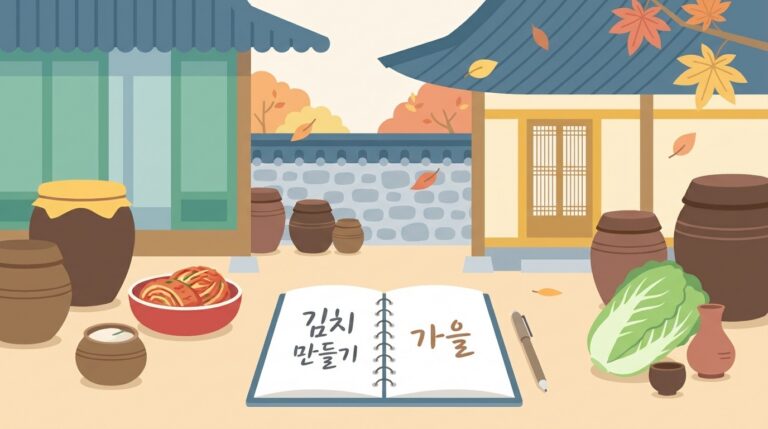
Phase 1: Empathy & Story-driven Opening
안녕하세요! 매일한글 에디터입니다.
Have you ever had a moment in Korea where two dishes with the exact same name tasted worlds apart? A close friend of mine, who was studying in Seoul, recently traveled down to a seaside village in Jeollanam-do. When the grandmother at the local guesthouse served her freshly made winter kimchi, she took a big bite—and froze. Back in Seoul, the kimchi she enjoyed was sparkling, crunchy, and almost soda-like in its crispness. Here, the kimchi was intensely ruby-red, thick with seasoned paste, and hit her palate with an unapologetic, savory wave of fermented salted anchovies and hairtail fish.
“Wait,” she texted me in genuine culinary confusion, “did this kimchi spoil, or did they accidentally spill sea brine all over it?”
Not at all! You have just stepped right into the heart of Korea’s profound climatic geography and fermentation science. For centuries before modern refrigeration, climate dictated everything. In the freezing northern provinces (like Pyeongan-do or Gangwon-do), cold temperatures naturally prevented vegetables from rotting quickly, meaning locals used minimal salt and light seafood broths, resulting in a crisp, clean flavor. Down in the sweltering southern regions (like Jeolla-do and Gyeongsang-do), cabbage would spoil in days if left unseasoned, so ancestors generously infused coarse sea salt, chili powder, and robust jeotgal (fermented fish paste) to slow down fermentation and deepen flavor.
By mastering how to describe these regional fermentation profiles, you jump from sounding like a tourist who just says “It’s spicy” to an insightful intermediate speaker who can articulate texture, depth, and cultural roots with absolute confidence.
Phase 2: Core Expressions Deep Dive
1. 시원하고 담백해요 (Siwonhago dambaekhaeyo)
- Pronunciation: [Si-won-ha-go dam-baek-hae-yo] (Think of ‘She-one-ha-go’ with a crisp, breezy lift at the end)
- Meaning: “It is refreshing and clean/savory without grease.”
- K-Culture Moment: Seen frequently in K-Dramas like Reply 1988 when characters slurp cold radish water kimchi (dongchimi) in winter: “국물이 진짜 시원하고 담백하다!” (The broth is so crisp and refreshing!).
- Editor’s Insight: English speakers often translate
시원하다as ‘cold’ temperature-wise. In Korean food culture,시원하다refers to a physical feeling of lightness and clarity in your chest and throat—even hot soup can be siwonhada! Combined with담백하다(clean, unburdened by heavy seasoning or oils), it is the ultimate praise for northern-style white kimchi or cold cabbage broth.- Situation Spectrum: Casual: ✅ | Semi-formal: ✅ | Formal: ✅
- 🤔 Think About It: Does your native language have a single word that describes food clearing your throat or making your stomach feel unburdened rather than just describing temperature or sugar/salt levels?
2. 젓갈 맛이 깊고 진해요 (Jeotgal masi gipgo jinhaeyo)
- Pronunciation: [Jeot-gal ma-si gip-go jin-hae-yo] (Pronounce ‘jeot’ like ‘jut’ with a firm, closed dental sound)
- Meaning: “The fermented seafood flavor is deep, rich, and full-bodied.”
- K-Culture Moment: In food travel variety shows like Baek Jong-won’s Street Food Fighter, judges close their eyes when tasting southern Jeolla banchan, murmuring this exact phrase to compliment the umami of aged anchovy or shrimp extract.
- Editor’s Insight: Foreign learners often shy away from
젓갈(salted fermented seafood), fearing it means ‘fishy’ in an unpleasant way. But in Korean culinary philosophy, well-fermented jeotgal provides gamchilmat (savory umami). Saying진해요(it is rich/dense) validates the host’s painstaking fermentation efforts.- Situation Spectrum: Casual: ✅ | Semi-formal: ✅ | Formal: ✅
- 🤔 Think About It: How does your culture view pungent fermented flavor bases (like blue cheese, anchovies, or fish sauce)? Is it considered an acquired taste or everyday comfort?
3. 김치가 쉬지 않게 간을 세게 해요 (Gimchiga swiji anke ganeul sege haeyo)
- Pronunciation: [Gim-chi-ga swi-ji an-ke ga-neul se-ge hae-yo] (‘Swi’ sounds like ‘shwee’ softly exhaled)
- Meaning: “We season it strongly so that the kimchi doesn’t sour too quickly.”
- K-Culture Moment: In historical and family dramas set around the autumn Gimjang season, an elder matriarch explains why her southern jars get extra rock salt and chili mash to preserve them through warm coastal winters.
- Editor’s Insight: Notice the verb
쉬다(swida). While it usually means ‘to rest’, in food contexts it means ‘to sour/spoil’.간을 세게 하다means to season assertively with salt. This isn’t complaining about high sodium; it describes deliberate bio-chemical wisdom.- Situation Spectrum: Casual: ✅ | Semi-formal: ✅ | Formal: ⚠️ (Slightly conversational, but standard)
- 🤔 Think About It: How did your ancestors preserve essential nutrients across long seasonal shifts before electricity existed?
Phase 3: Textbook Korean vs. Real Native Korean
Situation 1: Describing a mild, sparkling northern or central-style kimchi
- 📖 교과서 한국어: 이 김치는 소금을 적게 넣어서 짜지 않습니다. (I gimchineun sogeumeul jeokge neoeoseo jjaji anseumnida.) — “This kimchi has little salt added, so it is not salty.”
- 🗣️ 진짜 한국어: 이건 젓갈을 거의 안 써서 국물이 되게 맑고 개운해요! (Igeon jeotgaleul geoui an sseoseo gungmuri doege malkko gaeunhaeyo!) — “This barely uses any fermented fish paste, so the broth is super clean and light!”
- 💡 왜 다를까?: Textbook Korean relies on binary opposites (salty vs. not salty). Native speakers instead focus on the mouthfeel and fermentation base using nuanced sensory verbs like
개운하다(refreshingly crisp) and맑다(clear).
Situation 2: Praising deep, heavy, aged southern kimchi paired with Makgeolli
- 📖 교과서 한국어: 남쪽 김치는 양념이 많아서 아주 맛있습니다. (Namjjok gimchineun yangnyeomi manaseo aju masitseumnida.) — “Southern kimchi has lots of seasoning, so it is very delicious.”
- 🗣️ 진짜 한국어: 역시 남도 김치는 멸치젓이 팍 들어가서 묵직한 게 막걸리랑 찰떡이에요! (Yeoksi namdo gimchineun myeolchijeosi pak deureogaseo mukjikhan ge makgeollirang chaltteogieyo!) — “As expected of southern kimchi, the anchovy extract gives it that bold, punchy weight that pairs like a dream with makgeolli!”
- 💡 왜 다를까?: Words like
팍(vigorously/generously) and찰떡이다(to be an inseparable match like sticky rice cakes) express cultural enthusiasm that flat textbook words like맛있습니다simply cannot convey.
Phase 4: K-Culture Deep Dive & Non-Verbal Manners
4-1. 눈치 (Nunchi) & Table Manners for Fresh Kimchi
When Koreans gather for Gimjang, whole cabbages are marinated in large basins. When eating fresh winter kimchi served with boiled pork belly (bossam):
* Never cut it horizontally into tiny bits with scissors right away: The ultimate sign of respect is tearing long leafy cabbage strips vertically (길게 찢어 먹기).
* The Leaf Wrap Technique: Pick up a strip by the white stem, wrap the leafy tip around a slice of warm pork or tofu using chopsticks, and place it directly into your mouth in one bite.
* The Vocal Reaction: Take a bite, chew, and gently exhale with an appreciative “크으, 국물이 시원하네요!” (Ah, it feels so refreshing!). Suppressing all emotional response can make the cook think the fermentation failed or was bland.
4-2. Cultural Code Analysis: The Fermentation Latitude Divide
Kimchi is not a monolith; it is an edible geography map of the Korean Peninsula:
* The North (Pyongyang, Hamgyeong, Hwanghae, Northern Gangwon): Freezing sub-zero winters meant microbes multiply very slowly. Salt was expensive and unnecessary in large quantities. Kimchi here retains a pale pinkish broth, relies on sliced pears, radishes, and minimal salt (Baek-kimchi, Dongchimi). It pairs effortlessly with delicate buckwheat cold noodles (Naengmyeon) and clean distilled soju.
* The South (Jeolla, Gyeongsang): Warm sea winds required heavy defenses against early souring. Locals boiled whole anchovies and hairtail fish into dense pastes (Myeolchi-aekjeot, Galchi-jeot), combined them with glutinous rice paste and fiery red peppers. This heavy-bodied kimchi can ferment for years (Mugeunji), matching robust cloudy Takju or earthy rice wines.
Phase 5: Real-Life Roleplay Scenario
- Location: A traditional hanok kitchen in Jeonju during late autumn.
- Characters:
- 명인 (Grand Master Park): A 70-year-old culinary master blending a giant clay basin of Jeolla cabbage.
- 알렉스 (Alex): An intermediate Korean learner fascinated by artisanal fermentation.
— Dialogue —
- 명인: 🎭 (배춧잎을 쭉 찢어 양념을 듬뿍 얹으며) 자, 알렉스 씨! 남도 김치 맛 좀 볼래요? 입 크게 벌려봐요.
(Ja, Alex ssi! Namdo gimchi mat jom bollaeyo? Ip keuge beollyeobwayo.)
“Here, Alex! Want to taste true southern kimchi? Open wide!” -
알렉스: 🎭 (조심스럽게 한 입 받아먹고 두 눈을 동그랗게 뜨며) 으음! 명인님, 서울에서 먹던 거랑 느낌이 완전 달라요!
(Eueum! Myeonginnim, Seoureseo meokdeon georang neukkimi wanjeon dallayo!)
“Mmm! Master Park, the sensation is completely different from what I ate in Seoul!” -
명인: 🎭 (호탕하게 웃으며 배추통을 툭툭 치며) 그렇지? 위쪽 지방은 맑고 시원하게 담그지만, 여긴 멸치젓이랑 찹쌀풀을 듬뿍 넣거든.
(Geureochi? Wijjok jibangeun malkko siwonhage damgeujiman, yeogin myeolchijeosirang chapssalpuleul deumpuk neokgeodeun.)
“Right? Northern provinces make it clear and light, but down here we pour in generous anchovy paste and sweet rice porridge.” -
알렉스: 🎭 (양념 그릇을 유심히 살펴보며) 아, 그래서 바다 향이 확 나면서 뒷맛이 묵직하군요? 전혀 비리지 않아요.
(A, geuraeseo bada hyangi hwak namyeonseo dwinmasi mukjikhagunyo? Jeonhyeo biriji anayo.)
“Ah, is that why there’s an immediate ocean aroma with a rich lingering aftertaste? It’s not fishy at all.” -
명인: 🎭 (흡족해하며 막걸리 한 사발을 건네며) 맛을 제대로 아네! 날이 따뜻한 남쪽은 간을 세게 안 하면 김치가 금방 쉬어버려요.
(Maseul jedaero ane! Nari ttatteukhan namjjogeun ganeul sege an hamyeon gimchiga geumbang swieobeoryeoyo.)
“You truly know your flavors! In the warm southern weather, if we don’t salt it deeply, the cabbage goes sour in no time.” -
알렉스: 🎭 (두 손으로 막걸리 사발을 공손히 받으며) 기후에 따라 발효시키는 방법이 과학적으로 다른 거네요!
(Gihue ttara balhyosikineun bangbeobi gwahakjeogeuro dareun geoneyo!)
“So the fermentation method scientifically adapts to the regional climate!” -
명인: 🎭 (갓 삶은 수육 한 점을 김치 위에 얹어주며) 바로 그거지. 이 묵은 양념 맛에는 막걸리가 제격이라네.
(Baro geugeoji. I mugeun yangnyeom maseneun makgeolliga jeogyeogirane.)
“Spot on. And with this deep seasoned punch, artisanal makgeolli is the perfect partner.” -
알렉스: 🎭 (수육과 김치를 한입에 넣고 엄지를 치켜세우며) 와, 젓갈의 깊은 감칠맛이랑 막걸리의 탄산이 환상적으로 어울려요!
(Wa, jeotgarui gipeun gamchilmasirang makgeolliui tansani hwansangjeogeuro eoullyeoyo!)
“Wow, the deep savory umami of the seafood paste pairs fantastically with the sparkling tang of makgeolli!”
🔀 Interactive Choice Point
Master Park offers you a second bite covered in whole raw fermented oysters (굴젓). How do you respond?
* Option A: “죄송하지만 생선 썩은 냄새가 나서 못 먹겠어요.” (I’m sorry, but it smells like rotten fish so I can’t eat it.)
* Option B: “바다 향이 진하네요! 혹시 이게 김치가 빨리 시는 걸 늦춰주는 건가요?” (The ocean scent is bold! Does this also help slow down the kimchi souring?)
* Option C: “너무 맛있어요! 계속 매일 이것만 먹을 수 있을 것 같아요!” (It’s so tasty! I feel like I could only eat this every day!)
Feedback:
* Choice A (Bad): Using the word 썩다 (to rot) for fermented cuisine insults months of master craftsmanship. If hesitant, ask about the ingredients first!
* Choice B (Best): Insightful and culturally respectful! You acknowledge the aroma (바다 향) and engage with the scientific method of regional fermentation.
* Choice C (Risk): Friendly, but slightly hyperbolic. Southern aged kimchi with raw shellfish is potent; over-promising might get you handed an entire jar you can’t finish!
Phase 6: 10-Second Emotion Shadowing Drill
Read aloud, matching the vocal pauses (/) and internalizing the cultural emotion tags!
[😋 침 꼴깍 삼키며 / 군침 돌게]
우와, / 멸치젓이 팍 들어가서 / 감칠맛이 장난 아니에요!
(Uwa, / myeolchijeosi pak deureogaseo / gamchilmasi jangnan anieyo!)
“Whoa, / with all that anchovy paste tossed in, / the savory umami is out of this world!”-
[🧐 분석하듯 / 깨달음을 얻으며]
북쪽은 날씨가 추워서 / 소금을 적게 넣고 / 시원하게 담그는군요!
(Bukjjogeun nalssiga chuweoseo / sogeumeul jeokge neoko / siwonhage damgeuneungunyo!)
“So the northern regions stay cold, / which is why they use less salt / and keep it light and crisp!” -
[😊 정중하고 / 깊이 감탄하며]
젓갈 맛이 묵직해서 / 맑은 증류주보다 / 막걸리랑 훨씬 잘 어울려요.
(Jeotgal masi mukjikhaeseo / malgeun jeungryujuboda / makgeollirang hwolssin jal eoullyeoyo.)
“Because the fermented fish notes are so rich and bold, / it pairs far better with makgeolli / than with clear distilled spirits.”
Phase 7: K-Culture Mini Dictionary
- 젓갈 (Jeotgal): Traditional preserved seafood made by salting fish, shellfish, or fish entrails over months. Far from just a side dish, it acts as the primary enzymatic fermentation catalyst in southern-style kimchi.
- 묵은지 (Mugeunji): Kimchi aged at low temperatures for at least 6 months to a year. Unlike spoiled kimchi, mugeunji softens gradually while building an intensely sour, complex lactic acid profile.
- 겉절이 (Geotjeori): Fresh, unfermented cabbage tossed instantly in spicy garlic dressing right before serving. Crisp, sweet, and served frequently alongside noodle broths (Kalguksu).
- 슴슴하다 (Seumseumhada): A distinct dialect term from northern provinces describing food that is delicate, mild, and purposefully under-salted, allowing natural ingredient flavors to shine through.
Phase 8: Traveler’s Survival Kit
Top 3 Survival Phrases
- 한글: 이 김치 젓갈 많이 들어간 편인가요?
- Romanization: I gimchi jeotgal mani deureogan pyeon-ingayo?
- Pro Tip: Use this when ordering food in traditional restaurants if you are sensitive to seafood seasonings. It politely asks whether the dish leans toward southern fish-paste intensity.
- 한글: 국물이 진짜 시원하고 개운해요!
- Romanization: Gungmuri jinjja siwonhago gaeunhaeyo!
- Pro Tip: Say this to any Korean restaurant owner when drinking soup or cold watery kimchi. Their face will light up immediately.
- 한글: 겉절이 리필 좀 부탁드려도 될까요?
- Romanization: Geotjeori ripil jom butakdeoryeodo doelkkayo?
- Pro Tip: When you want more fresh, crunchy tossed cabbage at a noodle house, use this natural phrasing.
Editor’s Travel Note
When traveling to coastal provinces like Mokpo or Yeosu, explore traditional wet markets using the Naver Map application for Korea travel. Head toward the Jeotgal Alley (젓갈 골목). Vendors gladly offer free toothpicks with samples of aged hairtail (갈치속젓) or tiny shrimp (새우젓). Compare these flavors with northern dishes like Pyongyang Naengmyeon in Seoul to taste Korea’s climatic spectrum with your own palate!
Phase 9: Going One Step Deeper
Food in Korea is never just biological sustenance; it is a philosophy of balance with seasonal nature (순리, Sunri). In an era without electric climate controls, Korean ancestors did not fight their local weather—they adapted their microbiological methods to harmonize with it. The northern kitchen respected crisp mountain winds by allowing water and radish to breathe cleanly, while southern villages embraced ocean abundance and heat by building deep, dense, protective layers of sodium and spice. When Koreans share kimchi today, they are not merely eating cabbage; they are tasting centuries of geographic ingenuity that kept entire communities alive through freezing winters.
💬 Your Turn: What is a food from your home culture that completely changes its recipe, saltiness, or preservation style depending on whether you travel north, south, or coastally? Share your story in the comments below!
Phase 10: FAQ & Common Mistakes
Q: Why does northern kimchi use so little red pepper compared to southern kimchi?
A: Chili peppers (Gochu) were introduced to Korea via trade in the late Joseon dynasty. Because peppers help inhibit bad bacteria in warm weather, southern provinces utilized them heavily alongside salt. In the sub-zero north, extreme cold already inhibited bacterial decay naturally, keeping the historic white, clear style prevalent.
Q: Does 김치가 쉬었어요 mean the kimchi has gone rotten and must be thrown away?
A: Not necessarily! While 쉬다 indicates sour fermentation, aged kimchi that has simply soured under safe conditions becomes Shin-kimchi or Mugeunji. Koreans almost never throw this away; they boil it down into rich stews (Kimchi-jjigae) or pan-fry it into savory pancakes (Kimchi-jeon).
Q: Can vegetarians eat southern-style kimchi in Korea?
A: It can be challenging! Southern kimchi almost always relies on fermented seafood extracts (Myeolchi-aekjeot, Saeu-jeot). If you are strictly vegan or vegetarian, look specifically for Sachall-kimchi (사찰김치, Buddhist temple kimchi), which uses soy sauce, kelp broth, and persimmon extracts instead of seafood.
🚨 Common Mistakes Alert
- Mistake: Translating
시원하다only as “cold temperature.”- Correct Action: Use it when broth or pickled vegetables feel refreshing, clarifying, and clean on your stomach, even when the dish is piping hot.
- Mistake: Telling a cook
이 김치 비려요(This kimchi tastes fishy).- Correct Action:
비리다implies an unpleasant, rancid fish odor. Instead, say젓갈 향이 진하네요(The fermented seafood aroma is quite rich/potent).
- Correct Action:
- Mistake: Cutting fresh Gimjang kimchi horizontally into bite-sized squares before guests try it.
- Correct Action: Tear it vertically along the grain with your hands or tongs so each bite preserves the crunch of the stem and the rich sauce of the leaf.
Phase 11: Action Mission & Engagement
- 🥉 Bronze Level: Stand in front of your mirror and practice saying:
"국물이 되게 시원하고 담백해요!"three times with a refreshing smile. - 🥈 Silver Level: Next time you order K-food or buy kimchi, check the ingredient label. Does it list Myeolchi-aekjeot (anchovy)? Post a photo on social media tagging
@DailyHangulidentifying whether it’s southern or northern style! - 🥇 Gold Level: Visit a local Korean dining spot. When the server brings out banchan, politely ask:
"이 김치는 젓갈이 많이 들어간 편인가요?"
🎮 K-Culture Mission: Watch an episode of a Korean food series like Korean Cold Noodle Rhapsody or A Nation of Kimchi on Netflix. Spot the scenes where cooks mention regional differences between Seoul/North and Jeolla/South!
Phase 12: Interactive Quiz Challenge
1. Regional Match Challenge
You are at a restaurant tasting a cold white radish kimchi that tastes sparkling, clean, and has almost no red pepper or seafood paste. Which province’s style is this dish closest to?
* A) Jeollanam-do (전라남도)
* B) Gyeongsangnam-do (경상남도)
* C) Pyeongan-do / Northern Gangwon (평안도 / 강원도 북부)
2. Fill-in-the-Blank
남쪽 지방은 날씨가 따뜻해서 김치가 빨리 ______ 않도록 간을 세게 해요.
* A) 얼지 (freeze)
* B) 쉬지 (sour/spoil)
* C) 식지 (cool down)
3. True or False?
In Korean, calling hot soup or fresh kimchi 시원하다 (siwonhada) is a mistake because that word only describes sub-zero ice water.
* (True / False)
👉 Click to reveal answers & explanations!
- Answer: C (Pyeongan-do / Northern Gangwon). Cold northern regions preserve kimchi with minimal salt and clear broth, creating crisp, sparkling flavors without heavy seafood pastes.
- Answer: B (쉬지).
쉬지 않도록means “so that it doesn’t sour/spoil quickly.” - Answer: False.
시원하다refers to the sensation of refreshing relief, clarity in the throat, and lightness in the body—making it a natural compliment for hot stews and chilled kimchi broths alike!







