

Phase 1: Empathy (Immersive Storytelling Opening)
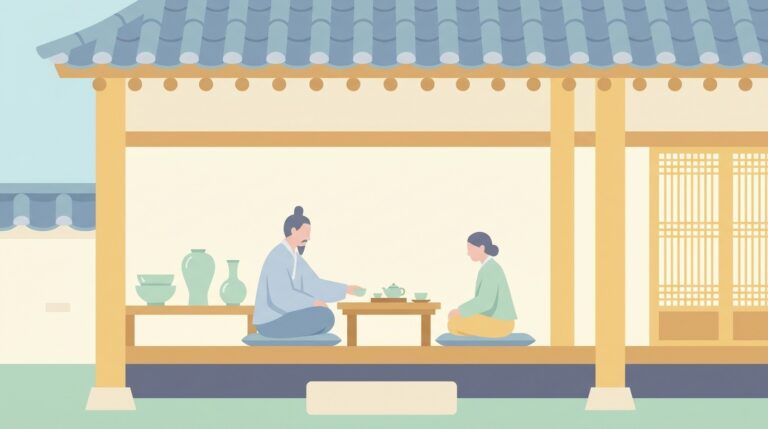
안녕하세요! 매일한글 에디터입니다. (Hello! I am your Daily Hangul editor.) If you have reached the C2 tier of Korean fluency, you have likely conquered thousands of Sino-Korean roots, passed high-level reading examinations, and dissected dense news editorials. Yet, many of our advanced learners encounter a startling, silent wall when stepping into authentic creative or philosophical spaces in Korea. Picture this: you are sitting in a master potter’s sunlit workshop in Icheon or observing an accomplished traditional pansori singer instruct an apprentice. The apprentice asks, “선생님, 이 대목의 한(恨)은 어떤 감정선으로 올려야 합니까? (Master, with what emotional arc should I pitch this sorrowful passage?)” The master does not consult a music sheet, nor do they lecture on music theory. Instead, they share a cup of tea, gaze intently into the pupil’s eyes, and simply say: “가슴이 타들어 갈 때 나오는 그 소리, 알지? 그냥 느껴라. (You know that sound that emerges when your heart turns to ash, right? Just feel it.)”
To an analytical mind accustomed to explicit rubrics, this feels baffling—even evasive. But in Korea’s deepest academic, martial, and artistic traditions, this is not evasion; it is the pinnacle of transmission known as ‘불립문자 교외별전 (不立文字 敎外別傳)’. When you master this four-character idiom, you do not just learn another rare classical proverb. You unlock the elusive epistemological code of Korean master-disciple pedagogy, non-verbal resonance, and elite artistic immersion. This guide is crafted directly from decades of cultural navigation and field observations with masters of traditional arts, tailored specifically for C2 scholars ready to cross from technical accuracy into soulful cultural fluency.
Phase 2: Deep Dive into 3 Core Classical Expressions
1. 불립문자 (不立文字)
- Pronunciation: [Bullipmunja] (Think of Bool-leep-moon-jah with a crisp, soft ‘p’ stop on the first syllable)
- Meaning: Literally “not establishing written letters.” Contextually, it refers to the philosophical realization that ultimate truth, profound insight, or transcendent artistic mastery cannot be confined, transcribed, or captured through written texts or dogmatic definitions.
- K-Culture Moment: In historical and contemporary prestige dramas (such as Mr. Sunshine or master-artisan documentaries on EBS), whenever a traditional sword-smith, scholar-monk, or calligrapher burns their manual and tells the prodigy to stop reading and start breathing the craft, this phrase surfaces.
- Editor’s Insight: Advanced speakers often confuse this with anti-intellectualism or illiteracy. It is the absolute opposite. It assumes you have already digested every book, and now you must transcend language itself to reach intuitive genius.
- Situation Spectrum: Casual 🚫 / Semi-formal ⚠️ / Formal & Intellectual ✅
- 🤔 Think About It: Does your native culture consider codified, written contracts superior to intuitive, wordless consensus? How does Korea’s Buddhist heritage shift that dynamic?
2. 교외별전 (敎外別傳)
- Pronunciation: [Gyo-oe-byeol-jeon] (Sounds like Gyo-way-byul-jun spoken with sustained, resonant vowels)
- Meaning: Literally “transmitting separately outside the doctrine/scriptures.” It describes transmission directly from soul to soul, bypassing orthodox didactic systems.
- K-Culture Moment: Think of the climax in artistic cinema like Seopyeonje (서편제), where the master singer passes on the true essence of Dongpyeonje pansori not through technical instruction, but through shared hardship and spiritual resonance.
- Editor’s Insight: While 불립문자 (Bullipmunja) highlights the insufficiency of text, 교외별전 (Gyo-oe-byeol-jeon) focuses on the special lineage of direct experiential inheritance. In elite creative or executive circles, referring to an unwritten proprietary trade secret as 교외별전 demonstrates sophisticated linguistic taste.
- Situation Spectrum: Casual 🚫 / Semi-formal ⚠️ / Formal & Intellectual ✅
- 🤔 Think About It: Can an algorithm or an AI ever accomplish a 교외별전 transmission, or is somatic presence indispensable?
3. 이심전심 (以心傳心)
- Pronunciation: [Isimjeonsim] (Pronounced smoothly like Ee-shim-jun-shim)
- Meaning: Literally “from heart-mind to heart-mind.” While widely understood as telepathic understanding, in classical Zen aesthetics it is the sister-concept to 불립문자, denoting the exact moment two minds align in absolute intuitive clarity without a single word spoken.
- K-Culture Moment: Frequently invoked in variety shows like Running Man or high-concept K-dramas when two longtime partners or rivals execute a flawless maneuver without speaking a single command.
- Editor’s Insight: At the C2 level, distinguish everyday pop-culture Isimjeonsim (e.g., guessing what your friend wants to eat) from its classical philosophical weight—an unshakeable spiritual sync between mentor and disciple.
- Situation Spectrum: Casual ✅ / Semi-formal ✅ / Formal ✅
- 🤔 Think About It: Why has a Buddhist doctrine evolved into an everyday Korean idiom for marital, romantic, and teamwork harmony?
Phase 3: Textbook Korean vs. Real Native C2 Korean
Situation 1: Explaining that an artistic breakthrough cannot be learned from a manual
- 📖 교과서 한국어: 이 예술적 경지는 책을 통해서 배울 수 없고 오직 마음으로만 이해할 수 있습니다. (I yeseuljeok gyeongjineun chaekeul tonghaeseo baeul su eopgo ojik maeumeuro-man ihaehal su itseumnida. – This artistic stage cannot be learned through books and can only be understood through the heart.)
- 🗣️ 진짜 한국어: 그야말로 불립문자의 경지라, 텍스트에 얽매이기보다 몸소 부딪치며 체득해야 비로소 와닿는 법이죠. (Geuyamallo bullipmunjaui gyeongjira, tekseuteue eongmaeigiboda momso buditchimyeo chedeukhaeya biroso wadatneun beobijyo. – That truly belongs to the realm of ‘bullipmunja’; rather than being bound to text, it only clicks once you internalize it through lived, physical experience.)
- 💡 왜 다를까? High-level native Korean literati rarely use mechanical verbs like ‘이해하다’ (to understand) when discussing transcendent crafts; they invoke classical idioms paired with evocative sensory verbs like ‘체득하다’ (to embody/internalize) and ‘와닿다’ (to strike one’s soul/click).
Situation 2: Acknowledging an unwritten, unspoken consensus in an executive creative meeting
- 📖 교과서 한국어: 우리는 계약서나 회의록에 쓰지 않아도 모두 같은 생각을 공유하고 있습니다. (Urineun gyeyakseona hoeuiroke sseuji anado modu gateun saenggakeul gongyuhago itseumnida. – Even if we do not write it in contracts or minutes, we all share the same thought.)
- 🗣️ 진짜 한국어: 굳이 활자화하지 않아도 이심전심이자 교외별전으로 이미 다 통했잖아요. (Guji hwaljahwahaji anado isimjeonsim-ija gyo-oe-byeol-jeoneuro imi da tonghaetjanh-ayo. – Even without committing it to print, we’ve already synced completely through implicit, intuitive consensus.)
- 💡 왜 다를까? C2 Korean speech thrives on metaphorical shorthand. Instead of pedestrian administrative vocabulary (‘회의록’, ‘공유’), advanced communicators employ classical idioms to cultivate an elite aura of camaraderie and shared philosophical alignment.
Phase 4: K-Culture Deep Dive & Non-Verbal Manners
4-1. 눈치 (Nunchi) & Non-Verbal Manners in High-Art Mastery
When operating in spaces governed by ‘불립문자 교외별전’, verbosity is often perceived as amateurish. When receiving critiques from a traditional artisan, professor, or senior creative director:
* The Gaze & Head Tilt: Maintain an attentive, slightly lowered chin with eyes focused gently on the master’s chest or hands—never an aggressive, unblinking lock on their eyes, which signals argumentative defiance.
* The Silence of Realization (심득, Simdeuk): When an insight strikes, native Koreans do not loudly interject with “아, 알겠습니다! (Ah, I understand!).” Instead, they let out a silent, slow exhalation, nod downward twice deliberately, and remain quiet for 3-5 seconds. This non-verbal pause signals that the realization has settled into your marrow, not just your verbal intellect.
4-2. Cultural Code: The Zen Heritage of Korean Aesthetics
From modern K-pop choreographers fine-tuning the “point choreo” to Michelin-starred Hanok chefs balancing fermentation, the philosophical DNA of Korean mastery stems from Seon (Zen) Buddhism. The phrase ‘불립문자 교외별전’ traces its roots back to the legendary transmission from the Buddha to Mahākāśyapa: the Buddha simply held up a lotus flower (염화미소, Yeomhwamiso), and Mahākāśyapa subtly smiled.
In modern Korean culture, this manifests as a deep distrust of purely superficial, pedantic eloquence. Someone who talks too much theory in an art atelier or startup brainstorm is often critiqued as “입으로만 일한다 (working only with one’s mouth).” The culture honors tacit, somatic knowledge (암묵지, Ammukji) above abstract posturing.
Phase 5: Real-World C2 Roleplay Scenario
Setting: The quiet tea-room of Master Kang (강 명장), a National Intangible Cultural Heritage holder of traditional celadon pottery. Julian, an international ceramicist with fluent C2 Korean, has spent six months struggling to replicate the subtle crackle glaze of Goryeo Celadon.
- Master Kang: (찻잔을 물끄러미 내려다보며 / Chatchaneul mulkkeureomi naeryeodabomyeo / Gazing contemplatively down at his teacup) 율리안 군, 요즘 물레 앞에 앉은 자네 어깨에 힘이 잔뜩 들어가 있더군. (Julian, your shoulders have been rigid at the potter’s wheel these days.)
- Julian: 🎭 진지하고 조심스러운 태도로 (Jinjihago josimseureoun taedoro / With a serious, careful demeanor) 죄송합니다, 선생님. 유약의 배합비와 가마 온도를 문헌대로 엄격하게 기록하며 맞추는데도 이상하게 그 오묘한 비색(翡色)이 나오지 않습니다. (I apologize, Master. Even though I record and match the glaze ratio and kiln temperature strictly according to ancient literature, that profound jade color strangely eludes me.)
- Master Kang: (희미하게 미소 지으며 / Huimihage miso jieumyeo / Smiling faintly) 불과 흙이 만나는 조화는 활자 안에 갇혀 있지 않네. 내가 자네에게 비결을 책으로 써준 적이 있던가? (The harmony where fire meets clay is not trapped inside printed letters. Have I ever written down the secret in a book for you?)
- Julian: 🎭 눈을 지그시 감았다 뜨며 (Nuneul jigeusi gamatda tteumyeo / Gently closing and opening his eyes) 아니요, 늘 제 손끝의 온도로 흙의 숨결을 느끼라고만 하셨습니다. (No, you only told me to feel the clay’s breath with the temperature of my fingertips.)
- Master Kang: 바로 그거야. 옛 선사들이 이르길 불립문자 교외별전이라 했지. (That is precisely it. The ancient Zen masters called it ‘Bullipmunja Gyo-oe-byeol-jeon’.)
- Julian: 🎭 깊이 고개를 끄덕이며 (Gipi gogaereul kkeudeogimyeo / Nodding deeply) 문헌적 수치에 집착하던 제 우매함을 깨달았습니다. 결국 가마 앞에서의 이심전심을 믿어야 했군요. (I realize my foolishness in obsessing over literary metrics. In the end, I should have trusted the mind-to-mind resonance in front of the kiln.)
- Master Kang: (차를 한 모금 권하며 / Chareul han mogeum gwonhamyeo / Offering a sip of tea) 그래. 진리는 경전 너머에 있는 법이지. 오늘 밤 가마 불을 다시 지펴보게. (Indeed. Truth lies beyond scripture. Rekindle the kiln fire tonight.)
- Julian: 🎭 경건한 눈빛으로 잔을 두 손으로 받들며 (Gyeonggeonhan nunbit-euro janeul du soneuro batdeulmyeo / Holding the cup reverently with both hands) 네, 선생님. 말씀하신 마음의 궤적을 흙에 오롯이 담아보겠습니다. (Yes, Master. I will pour the trajectory of the heart you spoke of wholly into the clay.)
🔀 Interactive Decision Point
How should Julian respond to Master Kang’s quote on 불립문자?
* Option A: “선생님의 침묵이 가르쳐주신 감각을 비로소 알 것 같습니다. 활자를 버리고 오직 흙의 미세한 떨림에만 온 감각을 집중하겠습니다.” (I think I finally grasp the sensation your silence taught me. I will cast aside the texts and focus all my senses purely on the minute vibrations of the clay.)
* Option B: “하지만 선생님, 과학적 데이터가 없으면 다음 세대에 이 도예 기술을 표준화하여 전승하기 어렵지 않겠습니까?” (However, Master, without scientific data, wouldn’t it be difficult to standardize and pass down this pottery skill to future generations?)
* Option C: “불립문자라 하셨으니, 이제부터는 모든 메모를 그만두고 제 직관대로 자유롭게 마음대로 구워보겠습니다!” (Since you said Bullipmunja, from now on I will stop all note-taking and just fire the kiln freely as my intuition pleases!)
- Feedback:
- Option A (Best): Perfect C2 contextual mastery. You demonstrate an embodied grasp of Buddhist aesthetics by abandoning stubborn attachment to text without disrespecting discipline.
- Option B (Bad): Pedantic and tone-deaf. Demanding modernization and standardization right when a traditional master is offering spiritual attunement disrupts the solemn atmosphere.
- Option C (Risk): Reckless overconfidence. Mistaking Zen transmission for chaotic spontaneity proves you have missed the rigor required before intuition can be trusted.
Phase 6: 10-Second Emotion Shadowing Drill
Practicing these high-register sentences helps synchronize your vocal cadence with authentic Korean philosophical contemplation.
[🧘 깊은 깨달음과 경건함을 담아 / With deep enlightenment and reverence]
“진정한 가르침은 / 책의 행간에 있지 않고 / 스승과 제자 사이의 / 고요한 울림 속에 / 깃들어 있습니다.”
(Jinjeonghan gareuchimeun / chaek-ui haenggan-e itji anko / seuseunggwa jeja sai-ui / goyohan ullim sog-e / gitdeureo itseumnida.)
“True teaching does not reside between the lines of a book, but dwells within the tranquil resonance between master and disciple.”-
[🤫 절제된 침묵 속에서 나지막이 / Softly, amidst restrained silence]
“굳이 말로 풀지 않아도 / 불립문자의 뜻처럼 / 눈빛 하나로 / 온전히 전해졌으니 / 더 바랄 것이 없습니다.”
(Guji mallo pulji anado / bullipmunjaui tteutcheoreom / nunbit hanaro / onjeonhi jeonhaejyeosseuni / deo baral geosi eopseumnida.)
“Even without untangling it into words, like the meaning of Bullipmunja, it was completely delivered through a single gaze, so there is nothing more to desire.” -
[💡 통찰력 넘치는 학구적 어조로 / In an insightful, scholarly tone]
“텍스트는 / 강을 건너기 위한 / 뗏목일 뿐, / 언어 너머의 본질을 꿰뚫어 보는 것이 / 진정한 학문의 극치입니다.”
(Tekseuteuneun / gangeul geonneogi wihan / tteonmogil ppun, / eoneo neomeoui bonjireul kkweottulleo boneun geosi / jinjeonghan hangmunui geukchi-imnida.)
“Text is merely a raft to cross the river; penetrating the essence beyond language is the true pinnacle of scholarly learning.”
Phase 7: K-Culture Mini Dictionary
-
체득 (體得 / Chedeuk)
Translation: Somatic learning / Embodied acquisition.
Context: Used in high-level arts, business, or sports when an ability moves from conceptual brain knowledge to reflex muscle memory. Example: “이 기술은 머리로 외운 게 아니라 수만 번의 연습 끝에 체득한 감각이다. (This skill was not memorized by head, but an embodied instinct acquired after tens of thousands of rehearsals.)” -
암묵지 (暗默知 / Ammukji)
Translation: Tacit knowledge.
Context: Widely used in modern Korean corporate strategy and sociology to define valuable skills that cannot be written down in an employee training manual. Example: “우리 장인들의 암묵지를 디지털 자산으로 전환하는 과제가 시급합니다. (The task of converting our artisans’ tacit knowledge into digital assets is urgent.)” -
심인 (心印 / Sim-in)
Translation: The Mind-Seal.
Context: A Zen Buddhist term designating the invisible, indelible imprint of enlightenment stamped directly from master to disciple’s consciousness without paper or seal paste. -
오도 (悟道 / Odo)
Translation: Awakening to the Way / Spiritual breakthrough.
Context: Applied when an artist, martial artist, or scholar attains a monumental breakthrough after years of stagnant plateau.
Phase 8: Traveler & Culture Connoisseur’s Survival Kit
TOP 3 Cultural Survival Expressions for Masterclasses & Temple Stays
- “선생님의 시범을 가슴으로 새겨보겠습니다.”
(Seonsaengnim-ui sibeomeul gaseumeuro saegyeobogetseumnida.)
Pro Tip: Use this when a master artisan or martial arts grandmaster prepares to demonstrate a technique. It shows you are not just filming with your phone, but absorbing the movement with your soul. - “활자 너머의 감각을 깨우치는 데 집중하겠습니다.”
(Hwalja neomeoui gamgakeul kkaeuchineun de jipjunghagetseumnida.)
Pro Tip: A sophisticated phrasing when asked by a mentor what your learning goal is for a traditional craft workshop. - “선생님과 저 사이의 이심전심이 느껴지는 뜻깊은 시간이었습니다.”
(Seonsaengnimgwa jeo sai-ui isimjeonsimi neukkyeojineun tteutgipeun sigani-eotseumnida.)
Pro Tip: The ultimate polite farewell compliment after an intensive masterclass or tea ceremony.
Editor’s Travel Note: Immersive Pilgrimage for the Soul
If you want to experience the living embodiment of ‘불립문자 교외별전’, do not stay solely in the bustling cafes of Gangnam. Take a KTX train toward the serene southern mountains.
* Reserve an authentic overnight stay through the 조계사 템플스테이 공식 예약 포털 (Jogyesa Temple Stay Booking Portal) to engage in Chamseon (Zen meditation). Experiencing the 3:00 AM silent tea ceremony with a monk clarifies this idiom in your bones.
* When navigating regional transport to ceramic villages in Icheon or tea plantations in Boseong, forgo foreign travel blogs and open the 네이버 지도 대중교통 길찾기 앱 (Naver Map Public Transit App) to navigate village bus routes with precision.
Phase 9: A Step Deeper (한 발 더 깊이)
In Western intellectual traditions descended from Aristotle and the Enlightenment, truth is predominantly constructed as something that can—and must—be articulated, codified, peer-reviewed, and published. If you cannot explain it systematically, you have not understood it.
However, Korean high culture is deeply rooted in the epistemic humility of Zen and Daoism: “The Tao that can be spoken is not the eternal Tao.” Words are regarded simply as a raft (뗏목) to cross the turbulent river of ignorance. Once you reach the other shore, hauling the heavy wooden raft on your back is foolishness. ‘불립문자 교외별전’ reminds the C2 scholar that ultimate competence in Korean culture requires letting go of the linguistic crutch. It asks you to trust communal, atmospheric intuition over legalistic definitions.
💬 Your Turn: In your home culture, is there a sphere (such as gourmet cooking, elite jazz improvisation, or family heritage) where written instructions fail, and only “wordless transmission” counts? Share your thoughts below in advanced Korean!
Phase 10: FAQ & Common Pitfalls
Q: Can I use ‘불립문자’ in casual modern business conversations?
A: Use it with nuance. If you use it playfully with a close peer (“우리 사이에 무슨 계약서야, 불립문자지!”), it can sound brilliantly witty. However, in formal legal negotiations, saying “우리는 불립문자입니다” might raise red flags about lack of contractual transparency. Reserve it for artistic or philosophical discussions, or metaphorical references to strong camaraderie.
Q: What is the difference between 이심전심 (Isimjeonsim) and 불립문자 (Bullipmunja)?
A: 이심전심 describes the mechanism of mental connection (the resonance itself), whereas 불립문자 represents the philosophical doctrine regarding the limitations of language and script.
Q: Does 불립문자 mean Korean masters never write textbooks or manuals?
A: Not at all. Korean history is full of exhaustive manuals (like the Dongui Bogam for medicine or Muye Dobo Tongji for martial arts). The doctrine means that books provide the foundation, but true genius (신위, Sinwi) begins where the pages end.
🚨 Common Mistakes Alert: Foreign Scholar Edition
- Mistake 1: Treating it as anti-intellectualism. Never say “불립문자니까 공부 안 해도 돼요 (Since it’s Bullipmunja, I don’t need to study).” True masters only invoke this after years of foundational study.
Correct Action: Emphasize it as transcendence of study, not evasion of effort. - Mistake 2: Pronouncing ‘불립’ as [Bul-rip] with a hard ‘r’. Due to Korean phonological rules (liquidization and assimilation), it is pronounced [Bullim-munja] in continuous native speech.
Correct Action: Practice smooth nasal assimilation: [불림문자]. - Mistake 3: Confusing it with mere silence or passive-aggressive coldness. Some learners confuse the negative silence of conflict with Zen silence.
Correct Action: Zen silence (불립문자) contains warmth, mutual acknowledgment, and intense focus, not cold detachment.
Phase 11: Action Mission & Engagement
- 🥉 Bronze Level (Solo Practice): Stand before a mirror. Shadow Sentence 1 from Phase 6, ensuring your face displays reverent composure, focusing on breathing out on the pauses.
- 🥈 Silver Level (Community & SNS): Post a short reflection on your study journal or Instagram using the hashtag
#매일한글 #C2고사성어: describe your favorite Korean artisan or actor using the phrase “활자 너머의 경지 (the realm beyond text).” - 🥇 Gold Level (Real-World Test): Next time you meet your Korean mentor, professor, or language exchange partner, use the phrase “불립문자 교외별전의 의미를 되새기며 연습하고 있습니다 (I am practicing while reflecting on the meaning of transmission outside words).” Observe their amazed reaction!
🎮 K-Culture Mission: Watch an episode of a master-artisan documentary or a historical drama like Dae Jang Geum or Painter of the Wind. Identify the exact scene where the mentor gives zero verbal instructions and forces the apprentice to learn through observation. Transcribe what that silence conveyed!
Phase 12: Interactive Quiz Challenge
1. Situational Judgment:
You are working with an elite Korean typography master. You ask for an exact numeric formula for the kerning between letters. The master sighs softly and points to the blank space between the lines. Which response demonstrates C2 mastery?
* (A) “선생님, 규격화된 수치를 엑셀 파일로 정리해 주셔야 작업 효율이 오릅니다.”
* (B) “문자에 얽매이지 않고, 여백이 품은 고요한 호흡을 먼저 느껴보라는 말씀이시군요.”
* (C) “불립문자라 하셨으니 글자 디자인을 그만두겠습니다.”
2. Fill in the Blank:
“진정한 비법은 서적에 적혀 내려온 것이 아니라, 사제지간에 오직 마음에서 마음으로 전해진 ( )의 역사였다.”
* Hints: Four-character idiom meaning “transmitting outside traditional doctrines.”
3. True or False:
‘불립문자’ implies that ancient Korean Buddhist monks rejected reading scriptures altogether.
🔍 Click here to reveal the Answers & Cultural Explanations
-
Answer: (B)
Explanation: Option B demonstrates that you understand the teacher is pointing toward intuitive spatial harmony (여백의 미, beauty of negative space) beyond mechanical calculation. -
Answer: 교외별전 (敎外別傳 / Gyo-oe-byeol-jeon)
Explanation: In historical artistic lineages, the most sacred trade secrets were considered “transmitted separately outside the scripture.” -
Answer: False (X)
Explanation: Ancient monks engaged in monumental scriptural projects (such as carving the Tripitaka Koreana / 팔만대장경). ‘불립문자’ served as a philosophical antidote against becoming pedantic scholars who worshipped ink while forgetting the living truth.







