

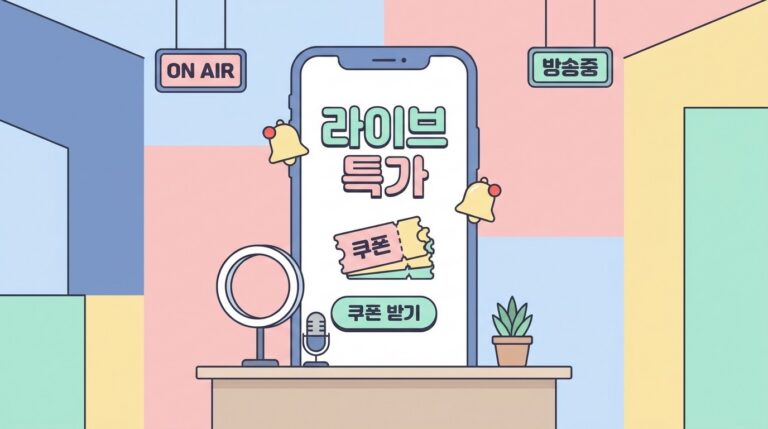
Master Korean Live Commerce: The Smart Cue Sheet Strategy That Skyrockets Real-Time Sales
Phase 1: Empathy (Story-Driven Opening)
안녕하세요! 매일한글 에디터입니다.
Picture this: You are standing in the control booth of a bustling studio in Gangnam, Seoul. The ring lights are blinding, the product displays are gleaming, and the host is doing last-minute vocal warm-ups. On the monitor, the countdown timer reads 00:02:15. Your heart is pounding against your ribs. If you have ever run an e-commerce campaign, you know the absolute horror of going live to an empty digital room—staring at a cold, unmoving viewer count of 12 while the host tries to smile through the silence.
In the hyper-competitive world of Korean rabang (라이브 커머스 – live commerce), timing is everything. Platforms like Naver Shopping Live, Kakao, and Coupang reward broadcasts that explode with engagement in the very first three minutes. The algorithm spots the immediate surge, categorizes your stream as trending, and pushes you to the app’s coveted front page banner.
How do top-tier Korean brands guarantee that massive kickoff? They do not rely on luck. They activate 사전 알림 (pre-show notification opt-ins) fueled by an irresistible hook: a 3,000-won stackable coupon (중복 할인 쿠폰). In this guide, tailored specifically for intermediate Korean learners (CEFR B2), you will discover how Korean marketing professionals plan bulletproof cue sheets, craft irresistible incentives, and talk like seasoned digital marketing insiders.
Phase 2: Key Expressions Deep Dive
Let’s unpack three indispensable industry phrases that will instantly elevate your professional and conversational Korean.
1. 사전 알림 신청 (Sajeon allim sincheong)
- Pronunciation: [사전 알림 신청] (Sah-jeon al-lim shin-cheong — imagine saying “soft yawn” without the w, then “all-in” with an m, followed by “seen-ch-young”)
- Meaning: Literal: “Pre-notification application” | Nuance: Opting in or turning on notifications before a broadcast starts to get reminders and early-bird perks.
- K-Culture Moment: On Naver Shopping Live, every brand page prominently features a glowing bell icon shouting: “사전 알림 신청하고 10% 쿠폰 받아가세요!” (Opt-in for pre-notifications and grab your 10% coupon!).
- Editor’s Insight: 사전 (pre-/prior) appears everywhere in Korean business: 사전 미팅 (pre-meeting), 사전 조사 (preliminary research). Using 사전 알림 shows you understand platform lead-generation mechanisms.
- Situation Spectrum: Casual ⚠️ | Semi-formal ✅ | Formal ✅
- 🤔 Think About It: Why does Korean e-commerce emphasize “opting in beforehand” rather than just relying on generic push notifications? What does this say about respect for user attention and intentional community building?
2. 중복 할인 쿠폰 (Jungbok harin kupon)
- Pronunciation: [중복 할인 쿠폰] (Joong-bok ha-rin koo-pon — “joong” rhymes with “book”, “bok” like “box” without the ‘s’, “ha-rin” like “ha-ring” without the ‘g’)
- Meaning: Literal: “Overlapping discount coupon” | Nuance: A stackable coupon that applies on top of existing sales or platform-wide promos.
- K-Culture Moment: Korean deal-hunters (체리피커 – cherry pickers) live for 중복 할인. In variety shows or YouTube haul videos, hosts brag: “이거 기본 할인에 라이브 중복 쿠폰까지 먹였어요!” (I combined the basic discount with the live stackable coupon!).
- Editor’s Insight: 중복 means duplication or stacking. In marketing contexts, customers often ask, “이거 다른 쿠폰이랑 중복 적용 돼요?” (Can this be stacked with other coupons?).
- Situation Spectrum: Casual ✅ | Semi-formal ✅ | Formal ✅
- 🤔 Think About It: In many Western stores, coupons are mutually exclusive (“limit one per customer”). Why does Korea embrace “stackable discounts” as an active gamification tactic?
3. 초기 유입을 극대화하다 (Chogi yuibeul geukdaehwahada)
- Pronunciation: [초기 유입을 극대화하다] (Cho-gi yoo-ee-beul geuk-dae-hwa-ha-da)
- Meaning: Literal: “To maximize initial inflow” | Nuance: Driving massive concurrent user traffic right at the launch or kickoff moment.
- K-Culture Moment: In corporate planning meetings (큐시트 회의), cue sheets are engineered around the first 5 minutes. The chief producer will stress: “초반 5분이 알고리즘을 타는 골든타임입니다. 초기 유입 무조건 극대화해야 합니다.” (The first 5 minutes are the golden time to ride the algorithm. We must maximize initial traffic at all costs).
- Editor’s Insight: 유입 (inflow/traffic) is a staple metric word alongside 이탈 (bounce/churn) and 전환 (conversion). B2 speakers should comfortably swap out simple verbs like 모으다 (gather) for refined analytical verbs like 유입을 극대화하다.
- Situation Spectrum: Casual 🚫 | Semi-formal ✅ | Formal ✅
- 🤔 Think About It: How does your native language express the concept of “front-loading traffic” in online media?
Phase 3: Textbook Korean vs. Real-World Korean
Situation 1: Announcing an exclusive promotional voucher
- 📖 교과서 한국어 (Textbook): 사전 알림을 등록한 고객에게 할인 쿠폰을 제공합니다. (Sa-jeon al-lim-eul deung-rok-han go-gaek-e-ge ha-rin ku-pon-eul je-gong-hap-ni-da.) — We provide discount coupons to customers who register for pre-notifications.
- 🗣️ 진짜 한국어 (Real-World): 사전 알림 누르신 분들께 3천 원 중복 쿠폰 바로 꽂아드려요! (Sa-jeon al-lim nu-reu-sin bun-deul-kke sam-cheon-won jung-bok ku-pon ba-ro kko-ja-deu-ryeo-yo!) — To those who tapped notifications, we are shooting a 3,000-won stackable coupon straight into your account right now!
- 💡 왜 다를까? In live stream marketing, verbs like 꽂아주다 (literally “to plug/insert into”, colloquially “to credit directly into someone’s coupon wallet”) create immediate excitement and intimacy compared to the sterile 제공하다 (to provide).
Situation 2: Encouraging viewers to join the broadcast promptly
- 📖 교과서 한국어 (Textbook): 방송 시간에 맞춰 시청해 주시기 바랍니다. (Bang-song si-gan-e mat-chwo si-cheong-hae ju-si-gi ba-ram-ni-da.) — Please tune in according to broadcast hours.
- 🗣️ 진짜 한국어 (Real-World): 시작하자마자 본방사수 달려오셔야 선착순 혜택 챙기실 수 있어요! (Si-jak-ha-ja-ma-ja bon-bang-sa-su dal-lyeo-o-syeo-ya seon-chak-sun hye-taek chaeng-gi-sil su iss-eo-yo!) — You have to rush over right when we start to secure the first-come, first-served benefits!
- 💡 왜 다를까? 본방사수 (strictly watching the original live broadcast) paired with 달려오다 (running over) injects a fun sense of urgency (FOMO), turning passive customers into eager participants.
Phase 4: K-Culture Deep Dive & Non-Verbal Manners
4-1. Nunchi & Studio Gestures
Behind the cameras of a live commerce shoot, communication happens in total silence to preserve crisp broadcast audio. Producers (PDs) rely on hyper-expressive non-verbal cues:
* The Visual Countdown: Instead of speaking, the floor director raises a hand at eye level, curling fingers one by one: 3… 2… 1… followed by an energetic pointer-finger snap pointing at the host, accompanied by a silent mouth-shape of “큐!” (Cue!).
* The Screen-Tap Gesture: When hosts remind viewers to claim coupons, they look directly into the camera lens, drop their gaze downward for a split second, and repeatedly point with two index fingers toward the bottom of the phone screen where the chat box and coupon tab sit: “지금 밑에 쿠폰 다운로드 버튼 보이시죠?” (See that coupon download button right down there?).
* Nunchi in the Control Room: When the initial traffic metric spikes, the PD gives the host a quiet two-thumbs-up at chest level. If traffic lags, the PD rotates one rolled cue sheet in circles to signal: “텐션 올리세요!” (Bring the energy up!).
4-2. Cultural Code: The ‘소통’ (Communication) Commerce Phenomenon
Korean live shopping is not a late-night American infomercial where a lone spokesperson pitches non-stick frying pans. It is an interactive variety show. Viewers join not merely to buy, but to engage in 티키타카 (witty banter) with showhosts, influencers, and brand managers who lurk in the chat room.
Promotions like the “3,000-won stackable coupon” serve as an introductory greeting gift (정 – jeong). By offering a discount that can be layered onto existing sales, the brand displays 혜자롭다 (generous, abundant value) rather than stinginess. In Korean consumer psychology, a brand that offers stackable discounts is seen as “knowing how to play the game” and genuinely respecting its loyal fans.
Phase 5: Real-World Roleplay Scenario
Setting: A post-show strategy review inside a studio in Seongsu-dong between Sarah (Junior Global E-Commerce Strategist) and Min-woo (Veteran Live Commerce PD).
Min-woo: 사라 씨, 오늘 뷰티 브랜드 론칭 라방 수치 확인해 봤어요? (Sara ssi, oneul byuti beuraendeu ronching rabang suchi hwag-in-hae bwasseo-yo?) — Sarah, did you check the metrics from today’s beauty brand launch live? 🎭 Holds an iPad displaying the real-time analytics graph.
Sarah: 네, PD님! 방송 시작과 동시에 동시 접속자 수가 3,000명을 바로 넘겼더라고요. (Ne, PD-nim! Bang-song si-jak-gwa dong-si-e dong-si jeop-sok-ja su-ga sam-cheon-myeong-eul ba-ro neom-gyeot-deo-ra-go-yo.) — Yes, PD! Right at broadcast kickoff, concurrent viewers immediately surpassed 3,000. 🎭 Points proudly at the steep initial traffic spike on the graph.
Min-woo: 역시 오프닝 큐시트 전략이 제대로 먹혔네요. 초기 유입이 이렇게 폭발한 비결이 뭐였죠? (Yeok-si opeuning kyu-siteu jeon-ryag-i je-dae-ro meok-hyeoss-ne-yo. Cho-gi yu-ib-i i-reoh-ge pok-bal-han bi-gyeol-i mwo-yeoss-jyo?) — Our opening cue sheet strategy definitely hit the mark. What was the secret behind this explosive initial influx? 🎭 Nods approvingly while taking a sip of iced Americano.
Sarah: 방송 3일 전부터 사전 알림 신청 이벤트를 진행했거든요. (Bang-song sam-il jeon-bu-teo sa-jeon al-lim sin-cheong i-ben-teu-reul jin-haeng-haet-geo-deun-yo.) — We ran a pre-notification sign-up event starting three days prior to the broadcast. 🎭 Opens the marketing funnel dashboard.
Min-woo: 아, 알림 신청자한테 리워드를 걸었던 건가요? (A, al-lim sin-cheong-ja-han-te ri-wo-deu-reul geol-eot-deon geon-ga-yo?) — Ah, did you attach a reward for users who opted in for notifications? 🎭 Leans forward with keen interest.
Sarah: 맞아요. 알림 받기를 누른 고객 전원에게 3,000원 중복 할인 쿠폰을 미리 지급했어요. (Maj-a-yo. Al-lim bat-gi-reul nu-reun go-gaek jeon-won-e-ge sam-cheon-won jung-bok ha-rin ku-pon-eul mi-ri ji-geup-haess-eo-yo.) — Exactly. We issued a 3,000-won stackable coupon in advance to every customer who clicked ‘Get Notifications’. 🎭 Shows the coupon redemption conversion rate breakdown.
Min-woo: 중복 쿠폰이라니, 구매 전환율까지 잡는 신의 한 수였네요! (Jung-bok ku-pon-i-ra-ni, gu-mae jeon-hwan-yul-kka-ji jam-neun sin-ui han su-yeoss-ne-yo!) — A stackable coupon? That was a masterstroke that captured the purchase conversion rate too! 🎭 Taps the desk lightly with his pen in admiration.
Sarah: 덕분에 방송 시작 10분 만에 준비한 오프닝 특가 세트가 완판되었습니다. (Deok-bun-e bang-song si-jak sip-bun man-e jun-bi-han o-peu-ning teuk-ga se-teu-ga wan-pan-doe-eoss-seum-ni-da.) — Thanks to that, our opening special deal set completely sold out within ten minutes of kickoff. 🎭 Beams with a confident smile.
🔀 Interactive Decision Point
How should Sarah follow up to propose their next campaign optimization?
- Choice A (Best): “다음 라방 때는 첫 구매 고객을 위한 전용 중복 쿠폰을 추가 기획해서 재방문율도 높여보는 건 어떨까요?” (What if we design an exclusive stackable coupon for first-time buyers next time to boost retention too?)
- Choice B (Bad): “쿠폰 비용이 너무 많이 들었으니 다음엔 할인 없이 그냥 진행하시죠.” (The coupon cost was way too high, so next time let’s just proceed without any discounts at all.)
- Choice C (Risk): “다음엔 알림 쿠폰 금액을 10,000원으로 대폭 올려서 무조건 1등 먹어보죠!” (Next time let’s dramatically raise the notification coupon to 10,000 won and grab 1st place no matter what!)
Feedback:
* Choice A (Best): Fantastic! You are thinking like a data-driven growth marketer. Reinvesting proven promo mechanics into new cohorts balances profitability and audience growth.
* Choice B (Bad): Dangerous move. Stripping away incentives in the Korean live market will cause traffic to evaporate instantly. Competition is fierce.
* Choice C (Risk): High risk of burning your marketing margin (역마진 – negative margin). Big coupon face values attract voucher hunters who churn immediately after purchase.
Phase 6: 10-Second Emotion Shadowing Drill
Practice these lines out loud. Pay attention to pauses marked with / and emotional directions.
- [🔥 텐션 올려서 박진감 넘치게 / Energized & Dynamic]
사전 알림 누르신 분들 / 지금 바로 입장하셔서 / 3천 원 중복 쿠폰 / 싹 챙겨가세요!
(Sa-jeon al-lim nu-reu-sin bun-deul / ji-geum ba-ro ip-jang-ha-syeo-seo / sam-cheon-won jung-bok ku-pon / ssak chaeng-gyeo-ga-se-yo!) -
[😊 당당하고 확신에 차서 / Confident & Professional]
방송 시작과 동시에 / 초기 유입을 극대화해서 / 알고리즘 추천 탭에 / 진입했습니다!
(Bang-song si-jak-gwa dong-si-e / cho-gi yu-ib-eul geuk-dae-hwa-hae-seo / al-go-ri-jeum chu-cheon taeb-e / jin-ip-haess-seum-ni-da!) -
[🥺 솔직하고 다정하게 / Warm & Engaging]
중복 적용 가능한 쿠폰이라 / 이번 라이브 특가에서 / 안 쓰시면 / 정말 손해예요!
(Jung-bok jeok-yong ga-neung-han ku-pon-i-ra / i-beon ra-i-beu teuk-ga-e-seo / an sseu-si-myeon / jeong-mal son-hae-ye-yo!)
Phase 7: K-Culture Mini Dictionary
- 라방 (Rabang)
- Meaning: Live Commerce / Live Broadcast (Short for 라이브 방송).
- Usage: Widely used across Korean business and social media. E.g., “오늘 밤 8시에 인스타 라방 켤게요!” (I’ll turn on Instagram live tonight at 8 PM!).
- 본방사수 (Bonbangsasu)
- Meaning: Catching the broadcast live on time (never waiting for the replay).
- Usage: Originally from TV drama fandoms, now essential e-commerce slang when brands release time-limited flash drops.
- 줍줍 (Jup-jup)
- Meaning: Snapping up items, deals, or shares at bargain basement prices (mimicking the sound of picking up dropped items).
- Usage: Live viewers write in comments: “오늘 쿠폰 먹여서 대박 줍줍했어요!” (I picked up an incredible bargain today by applying coupons!).
- 품절대란 (Pumjeoldaeran)
- Meaning: A sold-out frenzy / supply crisis caused by overwhelming demand.
- Usage: Used to build viral prestige: “지난 라방에서 품절대란을 일으킨 바로 그 앰플입니다!” (This is the very ampoule that triggered a sold-out frenzy during our last live stream!).
Phase 8: The Marketer’s Survival Kit
Top 3 Survival Expressions
- 이거 장바구니 쿠폰이랑 중복 할인 돼요?
- I-geo jang-ba-gu-ni ku-pon-i-rang jung-bok ha-rin dwae-yo?
- Meaning: Can this be stacked with my shopping cart coupon?
- Pro Tip: Use this whenever shopping on Korean platforms to verify whether vouchers can be layered.
- 알림 받기 신청 완료했는데 쿠폰 어디서 확인해요?
- Al-lim bat-gi sin-cheong wan-ryo-haess-neun-de ku-pon eo-di-seo hwag-in-hae-yo?
- Meaning: I finished signing up for notifications, where can I check my coupon?
- Pro Tip: Common customer inquiry in chat rooms; great for troubleshooting user flow.
- 오프닝 타임 어택 특가 지금 마감 임박입니다!
- O-peu-ning ta-im eo-taek teuk-ga ji-geum ma-gam im-bak-im-ni-da!
- Meaning: The opening time-attack special is about to end right now!
- Pro Tip: Crucial cue sheet line for live shopping hosts to close deals during the initial ten minutes.
Editor’s Operational Note
To observe Korean live commerce mechanics in the wild, check out 네이버 쇼핑라이브 앱 바로가기. Observe how hosts cue the audience to tap the bell icon. Note also that seamless checkouts are linked directly via mobile wallets; setting up a test account on 카카오페이 결제 가이드 will reveal how frictionless 1-click purchases transform viewers into paid customers in under four seconds.
Phase 9: “한 발 더 깊이” (Cultural Insight)
In Korean digital marketing, the concept of 초기 유입 (initial influx) is deeply tied to 빨리빨리 (hurry-hurry) culture and the phenomenon of 군중 심리 (crowd psychology). When a Korean consumer enters a live room and sees 5,000 active comments flying up the screen, they intuitively think, “여기 맛집이네” (“This is a famous joint / a place worth visiting”). Conversely, low traffic triggers hesitation. Pre-show notifications and stackable coupons are not mere budget giveaways; they are the digital ignition fuel that builds the visual spectacle of a crowded Korean market square (장터 – jangteo), where everyone gathers because everyone else is already there.
💬 Your Turn: In your home country, what promotional incentives make you tune into an online broadcast on time? Do brands let you stack multiple discounts, or is that rare? Share your thoughts below!
Phase 10: FAQ & Common Mistakes
Q: What is the exact difference between 일반 할인 (regular discount) and 중복 할인 (stackable discount)?
A: An 일반 할인 is a standard markdown applied directly to the product price (e.g., 20% off retail). A 중복 할인 is a secondary voucher that cuts further into the already discounted price (e.g., an additional 3,000 KRW off your cart). When negotiating cue sheets, always clarify whether coupon funds (쿠폰 분담금) are covered by the platform, the distributor, or the brand.
Q: Can I use the word “본방사수” in formal business meetings with Korean clients?
A: While 본방사수 originated as informal TV slang, it is now widely accepted in digital marketing and content production meetings as industry jargon. However, in formal written proposals or boardroom cue sheets, it is safer to write 실시간 본방송 시청 유도 (driving live broadcast viewership).
Q: Why do Korean live commerce platforms prioritize the first 5–10 minutes so heavily?
A: Algorithms on platforms like Naver and Kakao measure velocity of concurrent viewers and chat interactions at broadcast start. High initial velocity pushes the stream to the “Top Live” widget on the app’s home tab, generating an organic viral traffic loop.
🚨 Common Mistakes Alert
- Mistake: Confusing 사전 알림 (pre-notification) with 사후 알림 (follow-up notification).
- Fix: 사전 (事前) means before the event; 사후 (事後) means after the event. Always confirm 사전 알림 설정 링크.
- Mistake: Saying 쿠폰을 더블로 줘요 in business meetings.
- Fix: While understood colloquially, use the proper professional business term: 중복 할인 쿠폰을 적용하다/지급하다.
- Mistake: Over-using dry written honorifics on live stream chat (e.g., 귀하의 시청에 감사드립니다).
- Fix: Live streams require friendly, high-energy polite speech (해요체): 어서 오세요! 알림 쿠폰 꼭 챙기세요!.
Phase 11: Action Mission
- 🥉 Bronze Mission (Solo Practice): Read Phase 6’s 3 shadowing sentences aloud three times, emphasizing the slashes for rhythmic breathing and natural pauses.
- 🥈 Silver Mission (Social Share): Open any Korean shopping live app (Naver, Kakao, or Olive Young) for 5 minutes. Find a broadcast featuring a coupon, take a screenshot of the notification bell, and practice identifying the terms 알림 받기 and 쿠폰.
- 🥇 Gold Mission (Real Application): Write a 3-sentence Korean cue sheet intro introducing a 3,000-won stackable discount for your favorite product using the expressions learned today, and share it in the comment section below!
- 🎮 K-Culture Mission: Watch an episode of a Korean business reality or office drama (like Start-Up or Misaeng), and note down any words starting with the prefix 사전- (pre-) or 기획- (planning).
Phase 12: Interactive Quiz Challenge
1. Situation Judgment
You are presenting a live commerce cue sheet to your Korean marketing director. You want to explain that giving a 3,000-won stackable coupon will ensure that viewers flood into the live stream right at the 8:00 PM start time. Which Korean sentence is the most professional and accurate?
- (A) 방송 끝나고 고객들에게 3,000원 쿠폰을 줘서 이탈을 막겠습니다.
- (B) 사전 알림 신청 고객에게 3,000원 중복 할인 쿠폰을 지급해 초기 유입을 극대화하겠습니다.
- (C) 쿠폰을 아무에게도 주지 않고 방송 시작할 때 조용히 기다리겠습니다.
2. Fill-in-the-Blank
기본 세일 가격에 추가로 더해서 쓸 수 있는 할인권을 한국어로 [ ] 할인 쿠폰이라고 부릅니다.
3. True / False Cultural Check
- In Korean live commerce, offering stackable discounts is frowned upon because it makes high-end brands look desperate. ( True / False )
Click to view answers and explanations
- Answer: (B)
- Explanation: Option (B) accurately utilizes both 사전 알림 신청 and 중복 할인 쿠폰 to state the goal of 초기 유입 극대화 (maximizing initial traffic). (A) describes a post-show coupon to prevent churn, and (C) is a recipe for an empty broadcast!
- Answer: 중복 (Jungbok)
- Explanation: 중복 할인 means “stackable discount” or overlapping discount.
- Answer: False
- Explanation: Even luxury and premium beauty brands in Korea regularly utilize limited-time stackable coupons during live commerce. Rather than looking desperate, it is viewed as an engaging promotional ritual (이벤트성 혜택) that rewards live viewers.
- Explanation: Even luxury and premium beauty brands in Korea regularly utilize limited-time stackable coupons during live commerce. Rather than looking desperate, it is viewed as an engaging promotional ritual (이벤트성 혜택) that rewards live viewers.







