

Phase 1: Empathy (Real-Life House Hunting Story)
안녕하세요! (Annyeonghaseyo!) Daily Hangul editor here! 👋
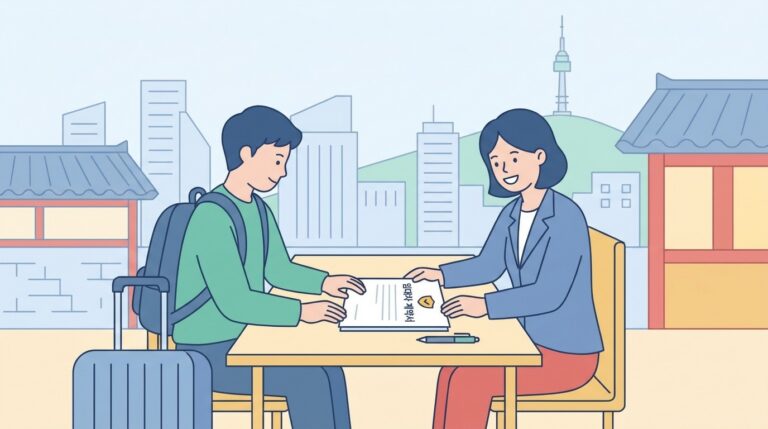
Picture this: You are sitting in a cozy, slightly cluttered local real estate office (부동산 – budongsan) in Seoul. The gentle hum of the floor heater warms your shoes, while the agent slides a thick paper contract across the table. You’ve fallen in love with a bright sunny studio near Hongdae or Gangnam, and your mind is already arranging your furniture. But then, a cold chill hits you—the infamous K-drama plotline where an unsuspecting tenant loses their entire life savings to a shady landlord or sudden loan rejection!
Navigating the Korean Jeonse (전세 – lump-sum deposit lease) or Wolse (월세 – monthly rent with a hefty deposit) can feel intimidating, especially when bank loans and insurance policies get involved. Countless expat learners have told us: “Editor, what if the bank denies my Jeonse guarantee insurance after I sign and hand over a 10% down payment? Can I get my money back?”
Take a deep breath! That is exactly why native Koreans insist on adding a protective safety net called a 특약 사항 (teugyak sahang – special rider clause). By mastering today’s power sentence, you will not only protect thousands of dollars of your hard-earned money, but you will also earn the deep respect of real estate agents who will realize: “This tenant knows how things work in Korea!” Let’s dive in together.
Phase 2: Deep Dive into 3 Key Expressions
1. 특약 사항에 넣었어요 (Teugyak sahange neoeosseoyo)
- Pronunciation: [Teuk-yak sa-hang-e neo-eo-sseo-yo] (Sounds like: “Took-yahk sah-hahng-eh nuh-uh-ssuh-yo”)
- Meaning: Literal: “I put it in the special contract items.” / Real Nuance: “I made sure to add this as a binding custom clause in our lease agreement.”
- K-Culture Moment: Seen in legal slice-of-life K-dramas where the meticulous protagonist highlights the bottom handwritten section of a rental agreement before signing.
- Editor’s Insight: Standard Korean lease forms look identical everywhere, but the 특약 (teugyak) section at the bottom is where the real legal shield is built. If it’s written there and stamped, it overrides standard default assumptions.
- Situation Spectrum: Casual (🚫 – too legal) / Semi-formal (✅) / Formal (✅)
- 🤔 Think About It: In your home country, do standard rental templates allow hand-typed addendums negotiated on the spot, or is everything fixed by corporate agencies?
2. 보증보험 가입 불가 시 (Bojeungboheom ga-ip bulga si)
- Pronunciation: [Bo-jeung-bo-heom ga-ip bul-ga si] (Sounds like: “Boh-jung-boh-huhm gah-eep bool-gah shee”)
- Meaning: Literal: “At the time of guarantee insurance enrollment impossibility.” / Real Nuance: “In the event that the housing deposit guarantee insurance is rejected.”
- K-Culture Moment: In financial reality shows, housing experts always shout this five-word condition as rule number one before transferring even a single won of deposit.
- Editor’s Insight: The suffix
-시 (-si)comes from Hanja (時) meaning ‘time’ or ‘circumstance’. In semi-formal/formal speech, attaching-시creates a conditional clause equivalent to “In the event of ~” or “Upon ~.” - Situation Spectrum: Casual (🚫) / Semi-formal (✅) / Formal (✅)
- 🤔 Think About It: Why does Korean rely on Hanja-based compounding words like 불가 (bulga – cannot/impossible) in contracts rather than longer everyday verbal endings like 안 돼요 (an dwaeyo)?
3. 계약금을 반환한다 (Gyeyakgeumeul banhwanhanda)
- Pronunciation: [Gye-yak-geu-meul ban-hwan-han-da] (Sounds like: “Gyeh-yahk-geum-eul bahn-hwahn-hahn-dah”)
- Meaning: Literal: “Returns the contract down payment.” / Real Nuance: “The deposit down payment shall be fully refunded without penalty.”
- K-Culture Moment: The sigh of relief uttered by house hunters when confirming their 5% to 10% preliminary deposit won’t disappear into thin air.
- Editor’s Insight: Contracts in Korea use the plain declarative form (-한다 / -한다 style) instead of polite sentence endings (-해요 / -합니다) to establish neutral, legally binding authority.
- Situation Spectrum: Casual (🚫) / Semi-formal (⚠️ – spoken explanation only) / Formal (✅ – written clause)
- 🤔 Think About It: How does switching from polite honorifics to plain declarative endings (-다) change the legal weight of a document in Korean culture?
Phase 3: Textbook Korean vs. Real Korean
Situation 1: Asking the agent to include your protective clause
- 📖 교과서 한국어 (Textbook): 이 조건도 계약서에 써 주시겠습니까? (I jogeondo gyeyakseoe sseo jusigesseumnikka? – Would you please write this condition in the contract?)
- 🗣️ 진짜 한국어 (Real-World): 소장님, 특약에 이 문구 한 줄만 꼭 넣어주세요. (Sojangnim, teugyage i mungu han julman kkok neoeojuseyo. – Director/Agent, please make sure to include just this one specific sentence in the special terms.)
- 💡 왜 다를까? (Why the difference?): Real estate brokers in Korea are warmly and respectfully addressed as 소장님 (sojangnim – director) rather than the cold textbook title 중개사님. Using 특약 (teugyak) directly shows you understand contract procedures.
Situation 2: Confirming if your deposit is protected if loans fail
- 📖 교과서 한국어 (Textbook): 대출이 안 되면 돈을 다시 돌려받습니까? (Daechuri an doemyeon doneul dasi dollyeobatseumnikka? – If the loan doesn’t work, do I get the money back?)
- 🗣️ 진짜 한국어 (Real-World): 대출이나 보증보험 안 나오면 계약금 100% 반환 조건 맞죠? (Daechurina bojeungboheom an naomyeon gyeyakgeum baek-peosenteu banhwan jogeon matjyo? – If the loan or guarantee insurance falls through, it’s a 100% refund of the down payment, right?)
- 💡 왜 다를까? (Why the difference?): Using precise terms like 100% 반환 조건 (100% refund condition) leaves zero room for ambiguity and prevents disputes before signing.
Phase 4: K-Culture Deep Dive & Non-Verbal Manners
4-1. Nunchi (눈치) & Gestures at the Broker’s Desk
When discussing safety clauses, keep a calm, appreciative, yet resolute posture.
1. Two-Hand Rule: Always accept and present the contract or registration copies (등기부등본 – deung-gibudeungbon) with both hands.
2. Firm Warmth: Real estate agents may sometimes say, “집주인 분이 좋은 분이라 이런 거 안 넣어도 돼요~ (The landlord is such a nice person, you don’t need this clause~).” Do not get flustered! Smile politely, nod, and calmly reply: “그래도 첫 독립이라 안심하고 싶어서요. 꼭 부탁드릴게요! (Still, this is my first time living independently and I want peace of mind. I really request this!)” This displays high Nunchi—you respect their relationship with the landlord while firmly securing your legal rights.
4-2. Cultural Code Analysis: The Rise of Jeonse Guarantee Insurance (HUG/HF)
In Korea’s unique housing ecosystem, tenants pay lump-sum deposits that can exceed tens of thousands (or hundreds of thousands) of dollars. With recent interest rate fluctuations, 전세보증보험 (Jeonse deposit guarantee insurance) through public institutions like HUG (Housing & Urban Guarantee Corporation) has transformed from an optional backup into an absolute essential. Landlords and brokers who balk at adding an insurance-refund rider are often a red flag! Knowing this phrase marks you as a modern, legally savvy resident.
Phase 5: Real-World Roleplay Scenario
Setting: A sunlit real estate agency in Mapo-gu. Broker Kim (김 소장님), a sharp-eyed but kind 50-something agent, is finalizing the paperwork with you.
- Turn 1 (Broker Kim): 자, 계약서 다 작성했고 이제 도장만 찍으시면 됩니다. (Ja, gyeyakseo da jakseonghaetgo ije dojangman jjigeusimyeon doemnida.)
(Alright, the lease is all written up and now you just need to stamp your seal.)
🎭 [Smiling brightly while pointing with a red ballpoint pen to the signature line] -
Turn 2 (You): 소장님, 도장 찍기 전에 특약 사항 한 번만 더 확인해도 될까요? (Sojangnim, dojang jjikgi jeone teugyak sahang han beonman deo hwaginhaedo doelkkayo?)
(Director, before I stamp, may I verify the special rider clauses one more time?)
🎭 [Leaning in politely with two hands resting on the desk edge] -
Turn 3 (Broker Kim): 네, 물론이죠! 융자 없는 조건이랑 다 확인하셨잖아요? (Ne, mullon-ijyo! Yungja eomneun jogeon-irang da hwaginhasyeotjanayo?)
(Yes, of course! You already checked the condition about no existing mortgages, right?)
🎭 [Adjusting her reading glasses and sliding the page toward you] -
Turn 4 (You): 네, 그런데 보증보험 가입 특약 문구가 빠진 것 같아요. (Ne, geureonde bojeungboheom ga-ip teugyak munguga ppajin geot gatayo.)
(Yes, but it seems the clause regarding deposit insurance enrollment is missing.)
🎭 [Gently pointing with a finger at the empty 특약 section] -
Turn 5 (Broker Kim): 아, 집주인 할아버지가 워낙 깐깐하셔서 그런 문구 싫어하실 텐데… (A, jipjuin harabeojiga wonak kkankkanhasyeoseo geureon mungu sileohasil tende…)
(Ah, the elderly landlord is quite picky, so he might not like that kind of phrasing…)
🎭 [Pausing with an apologetic, hesitant smile] -
Turn 6 (You): 특약 사항에 ‘보증보험 가입 불가 시 계약을 무효로 하고 계약금을 반환한다’고 꼭 넣어주세요. 안 그러면 진행이 어려워요. (Teugyak sahange ‘bojeungboheom ga-ip bulga si gyeyageul muhyoro hago gyeyakgeumeul banhwanhanda’go kkok neoeojuseyo. An geureomyeon jinhaeng-i eoryeowoyo.)
(Please make sure to add: ‘If deposit insurance enrollment is denied, this contract is nullified and the down payment is refunded.’ Otherwise, I cannot proceed.)
🎭 [Speaking with a calm, gentle, but uncompromising tone] -
Turn 7 (Broker Kim): 아이고, 손님이 똑부러지시네! 알겠어요, 집주인분께 전화해서 바로 넣자고 할게요. (Aigo, sonnimi ttokbureojisine! Algesseoyo, jipjuinbunkke jeonhwahaeseo baro neotjago halkeyo.)
(Oh my, you are so sharp and thorough! Got it, I’ll call the landlord right now and have it added.)
🎭 [Nodding in admiration and picking up her phone to dial] -
Turn 8 (You): 배려해 주셔서 정말 감사합니다, 소장님! (Baeryeohae jusyeoseo jeongmal gamsahamnida, sojangnim!)
(Thank you so much for accommodating this, Director!)
🎭 [Bowing your head slightly with a relieved, sincere smile]
🔀 Interactive Decision Point
What would you say if the broker asks: “Can’t we just trust the landlord’s verbal promise?”
* Option A: “네, 소장님 믿고 그냥 진행할게요.” (Bad: Never rely on verbal promises for financial contracts in Korea!)
* Option B: “특약 사항에 ‘보증보험 가입 불가 시 계약을 무효로 하고 계약금을 반환한다’고 넣어주셔야 계약금 입금할 수 있어요.” (Best: Clear, courteous, and sets legal boundaries firmly before funds move.)
* Option C: “사기 치시는 거예요? 당장 경찰 부를게요!” (Risk: Unnecessarily confrontational; escalates before understanding if it’s just standard negotiation resistance.)
Phase 6: 10-Second Emotion Shadowing Drill
Practice reading these out loud with rhythm and authentic emotional cadence!
[🧐 차분하고 단호하게 - Calm and resolute]
특약 사항에 / ‘보증보험 가입 불가 시 / 계약금을 반환한다’고 / 넣어주세요.
(Teugyak sahange / bojeungboheom ga-ip bulga si / gyeyakgeumeul banhwanhandago / neoeojuseyo.)-
[😊 정중하고 안도하며 - Polite and relieved]
확인해 주셔서 / 안심이 돼요 / 소장님!
(Hwaginhae jusyeoseo / ansimi dwaeyo / sojangnim!) -
[📞 확신에 차서 은행/센터에 문의할 때 - Confident during inquiry]
보증보험 / 심사 서류 / 바로 제출할게요.
(Bojeungboheom / simsa seoryu / baro jechulhalkeyo.)
Phase 7: K-Culture Mini Dictionary
- 공인중개사 (Gong-injung-gaesa) | Licensed Real Estate Agent
Insight: In daily life, address them respectfully as 소장님 (sojangnim) or 중개사님 (junggaesanim) rather than just ‘sir/ma’am’. - 계약금 (Gyeyakgeum) | Down Payment / Deposit Hold
Insight: Typically 5% to 10% of the total lease deposit. Paid immediately upon signing the contract. - 전세보증보험 (Jeonse bojeungboheom) | Jeonse Deposit Return Guarantee Insurance
Insight: An insurance policy issued by state corporations (HUG or HF) that guarantees the return of your full deposit if the landlord cannot pay. - 확정일자 (Hwakjeong-ilja) | Fixed Date Certification
Insight: A legal date stamp you receive at the local community center (주민센터) or online to give you statutory priority creditor status.
Phase 8: Expat & Traveler Survival Kit
Survival Phrases TOP 3
- 등기부등본 보여주세요. (Deung-gibudeungbon boyeojuseyo.)
Pro Tip: Ask for this on the very day of signing to ensure no fresh liens or mortgages were taken out that morning. - 전입신고는 언제 하나요? (Jeon-ipsing-goneun eonje hanayo?)
Pro Tip: Do your move-in report (전입신고) and 확정일자 on the exact day you receive the key. - 영수증 발급해 주세요. (Yeongsujeung balgeubhae juseyo.)
Pro Tip: Always obtain a written receipt when transferring down payments.
Editor’s Travel & Housing Note
- Install the Korea Housing & Urban Guarantee Corporation official site and app to check building eligibility and insurance simulation before touring.
- Always make wire transfers directly to the landlord’s personal bank account name that matches the deed (등기부등본 소유자), never to a broker’s personal account!
Phase 9: “One Step Deeper” (Cultural Reflection)
In Korean society, the word 정 (Jeong – affectionate bond) permeates many business interactions. Local elders often say, “We trust people, not papers.” However, modern Korean real estate culture has matured into a system prioritizing black-and-white documentation over informal goodwill. Insisting on a written 특약 (teugyak) does not mean you suspect the counterparty; rather, it honors the legal standard of keeping clean, respectful boundaries (깔끔한 관계).
💬 Your Turn: In your home country, is lease negotiation primarily verbal, handled by lawyers, or protected through government escrows? Share your experience in the comments below!
Phase 10: FAQ & Common Mistakes
Q: Can a landlord refuse to accept this special insurance clause?
A: Yes, landlords can technically negotiate or refuse terms before the contract is finalized. However, if a landlord aggressively refuses this clause, it usually indicates they know their property has financial encumbrances or is ineligible for insurance. Treat refusal as a strong signal to walk away.
Q: Is this clause valid if it is handwritten by the agent instead of printed?
A: Yes! Hand-written clauses in the 특약 사항 box are 100% legally binding as long as both parties sign or place their personal stamp (도장) directly next to or under the section.
Q: Can foreigners enroll in Jeonse Guarantee Insurance (HUG)?
A: Yes, registered foreign residents with an Alien Registration Card (ARC) who have completed their 전입신고 and obtained a 확정일자 can enroll, provided the building and lease meet standard underwriting criteria.
🚨 흔한 실수 (Common Mistakes) Checklist
- ❌ Mistake 1: Relying on the broker’s verbal promise: “Don’t worry, the loan always gets approved.”
👉 Correct Action: Always insist: 특약 사항에 꼭 적어주세요 (Please put it in the rider clause in writing). - ❌ Mistake 2: Using vague language like “if something goes wrong” instead of precise terms like “보증보험 가입 불가 시 (if insurance enrollment is denied)”.
👉 Correct Action: Stick to the exact keyword formula provided in Phase 2. - ❌ Mistake 3: Paying the down payment before verifying the deed (등기부등본) owner.
👉 Correct Action: Double-check the owner’s resident registration number and bank account name before hitting send.
Phase 11: Action Missions
- 🥉 Bronze Mission (Solo Practice): Read the Phase 5 dialogue aloud 3 times, focusing on switching smoothly between the formal rider clause and polite conversational endings.
- 🥈 Silver Mission (Community Share): Write out the sentence: 특약 사항에 ‘보증보험 가입 불가 시 계약금을 반환한다’고 넣었어요 in your study notes or Instagram stories and tag
@DailyHangul. - 🥇 Gold Mission (Real-World Power): Next time you consult a real estate agent or Korean friend about housing, use the term 특약 사항 naturally in conversation!
- 🎮 K-Culture Hunt: Watch a real estate or law-related scene in a modern Korean drama (like Law School or Agency) and listen for when they mention 계약금 (down payment) or 특약 (rider)!
Phase 12: Interactive Quiz Challenge
Test your real estate Korean mastery below!
1. Situational Judgment:
You want to make sure your down payment is refunded if the loan/insurance fails. Which clause should you ask the agent to add?
* A) 월세를 매달 5일에 입금한다.
* B) 보증보험 가입 불가 시 계약을 무효로 하고 계약금을 반환한다.
* C) 집주인이 원할 때 즉시 퇴거한다.
2. Fill-in-the-Blank:
계약서 맨 아래에 특별한 약속을 추가하는 항목을 [ _______ 사항 ]이라고 부릅니다.
(Hint: Begins with ‘특’)
3. True or False:
Foreigners with an ARC (Alien Registration Card) living in Korea are never allowed to sign up for public deposit guarantee insurance. (True / False)
👉 Click to reveal answers & explanations!
-
Answer: B
Explanation: Option B is the exact protective clause ensuring your deposit is returned if the guarantee insurance is denied. Option A is monthly rent payment timing; Option C is an unfair eviction clause! -
Answer: 특약 (Teugyak)
Explanation: 특약 사항 (Teugyak sahang) translates to special conditions or rider clauses added to standard agreements. -
Answer: False
Explanation: Foreigners with legal residency status and valid registration (전입신고 & 확정일자) are eligible to enroll in Jeonse guarantee insurance policies such as HUG!







