

Phase 1: Empathy & Storytelling Opening
안녕하세요! 매일한글 에디터입니다. (Hello! I’m your Daily Hangul editor.)
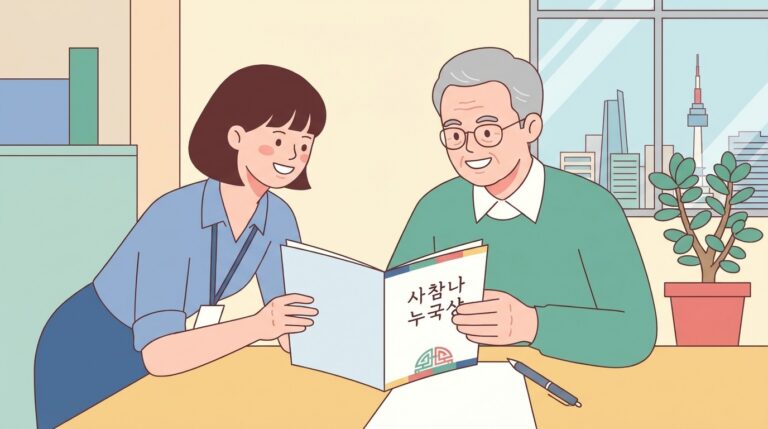
Picture this: You are sitting in a conference room in Gangnam, or enjoying an after-work team dinner (hoesik) at a cozy barbecue spot in Euljiro. Your team leader, a seasoned professional in his late forties, leans back and sighs: “When I first entered this company, we worked through the weekends without complaint…” Across the table, a newly joined twenty-something colleague quietly stares down at their iced Americano, resisting the urge to roll their eyes. You can feel the invisible tension crackling across the tabletop.
In contemporary South Korea, buzzwords like 꼰대 (kkondae – an authoritarian senior who insists their way is the only right way) and 영포티 (yeong-poti – “Young Forties,” caught between traditional hierarchies and modern youth trends) dominate social media and evening talk shows. Many of our intermediate learners share this exact pain point: “How do I express fresh, modern ideas to Korean seniors without sounding insolent? And how do I show respect for their hard-earned experience without simply agreeing to outdated methods?”
Finding that balance is not about taking sides; it is about mastering 쌍방향 소통 (ssangbanghyang sotong – two-way communication). When you understand how to navigate Korean cultural hierarchies with empathy and linguistic finesse, you transform potential workplace friction into deep mutual respect. Today’s guide draws directly from real-life office scenarios and feedback from bilingual professionals who have successfully bridged this generational gap in Seoul. Let’s explore how to communicate with confidence, grace, and authentic warmth.
Phase 2: Top 3 Core Expressions Deep Dive
1. 선배님의 노하우를 배우고 싶습니다 ( 한글 ) / Seonbaenim-ui nohau-reul baeugo sipseumnida
- Pronunciation: [Seon-bae-nim-ui no-ha-u-reul bae-u-go sip-seum-ni-da] (Think: Sun-bae-neem-wee no-how-rul beh-oo-go sheep-sum-nee-da)
- Meaning: Literal: “I want to learn your know-how, senior.” / Nuance: “I deeply respect the value of your practical experience and want to learn from the foundation you built.”
- K-Culture Moment: Seen frequently in dramas like Misaeng (Incomplete Life), where a smart but inexperienced rookie disarms a skeptical team manager by sincerely validating their career journey.
- Editor’s Insight: Using the word 노하우 (nohau – borrowed from “know-how”) combined with the honorific title 선배님 (seonbaenim) strokes a senior’s professional pride in a humble, proactive way. It signals: “I am not here to tear down what you built; I want to understand it first.”
- Situation Spectrum:
- Casual (with close friends): 🚫
- Semi-formal (colleagues/peer seniors): ✅
- Formal (work meetings/supervisors): ✅
- 🤔 Think About It: In many Western corporate environments, claiming independence immediately proves competency. Why does Korean culture value asking a senior for their “know-how” before asserting your own solutions?
2. 새로운 방식도 한번 검토해 주실 수 있나요? ( 한글 ) / Saeroun bangsik-do hanbeon geomtohae jusil su innayo?
- Pronunciation: [Sae-ro-un bang-sik-do han-beon geom-to-hae ju-sil su in-na-yo] (Think: Say-ro-oon bahng-sheek-doh hahn-beon gum-toe-heh joo-sheel soo een-nah-yo)
- Meaning: Literal: “Could you perhaps review a new method as well once?” / Nuance: “I have an alternative perspective that might optimize our results—would you be open to exploring it with me?”
- K-Culture Moment: In modern legal and tech dramas like Start-Up, younger innovators use this polite inquiry to introduce disruptive strategies to cautious veteran investors without sounding dismissive.
- Editor’s Insight: Notice the softening particle -도 (-do, meaning “also/as well”) and the cushion adverb 한번 (hanbeon, meaning “once/briefly”). Instead of saying “Your way is outdated, try this,” this phrasing treats the new method as an addition rather than a replacement.
- Situation Spectrum:
- Casual (with friends): ⚠️ (Slightly too formal)
- Semi-formal (colleagues): ✅
- Formal (presentations/proposals to seniors): ✅
- 🤔 Think About It: How does phrasing a challenge as a polite request for “review” (geomto) alter the emotional dynamic between junior and senior generations?
3. 서로 맞춰가면서 시너지를 내봐요 ( 한글 ) / Seoro matchwogamyeonseo sineoji-reul naebwayo
- Pronunciation: [Seo-ro mat-chwo-ga-myeon-seo si-neo-ji-reul nae-bwa-yo] (Think: Suh-ro maht-chwo-gah-myun-suh she-nuh-jee-rul neh-bwah-yo)
- Meaning: Literal: “Let’s create synergy while adjusting to each other.” / Nuance: “Let’s blend your experience and my fresh perspective together so we both win.”
- K-Culture Moment: Often heard during variety shows like You Quiz on the Block when veteran entertainers and Gen-Z creators collaborate on a fresh project.
- Editor’s Insight: The compound verb 맞춰가다 (matchwogada) means to adjust mutually over time. It explicitly rejects one-sided dominance. It tells your counterpart that collaboration is an ongoing, shared journey.
- Situation Spectrum:
- Casual (project teammates): ✅
- Semi-formal (cross-generational team tasks): ✅
- Formal (boardroom speeches): ⚠️ (Upgrade to 시너지를 내보겠습니다 for strict board meetings)
- 🤔 Think About It: Does your native language have an everyday idiom that focuses on mutual tuning (맞추다) rather than compromise (타협)?
Phase 3: Textbook Korean vs. Real Korean
Situation 1: Pitching a different method to a traditional senior
- 📖 교과서 한국어 (Textbook): 제 생각도 맞으니 제 방식으로 변경합시다. (Je saenggak-do majeuni je bangsik-euro byeongyeonghapsida.) – “My thought is also correct, so let us change to my method.”
- 🗣️ 진짜 한국어 (Real-world): 선배님 말씀도 일리가 있는데, 이런 방향도 어떨까요? (Seonbaenim malsseum-do illiga inneunde, ireon banghyang-do eotteolkkayo?) – “What you said makes total sense, senior, but how would you feel about exploring this direction too?”
- 💡 왜 다를까? (Why the difference?): Direct opposition threatens a senior’s face (체면 / chemyeon). Real Korean uses 일리가 있다 (makes sense / has a valid point) as a respectful verbal cushion before offering an alternative angle.
Situation 2: A senior mentoring without acting authoritarian
- 📖 교과서 한국어 (Textbook): 내가 시키는 대로만 하면 성공합니다. (Naega sikineun daeroman hamyeon seonggonghamnida.) – “If you only do as I instruct, you will succeed.”
- 🗣️ 진짜 한국어 (Real-world): 내 경험상 이런 변수가 있었는데, 요즘 감각으로는 어떻게 보여요? (Nae gyeongheomsang ireon byeonsuga isseonneunde, yojeum gamgak-eoroneun eotteoke boyeoyo?) – “In my experience, we faced these hidden variables, but how does it look from today’s perspective?”
- 💡 왜 다를까? (Why the difference?): Modern senior leaders avoid absolute directives (-대로 해). Instead, they share the historical hazard (내 경험상… 변수) and actively solicit the junior’s contemporary intuition (요즘 감각).
Phase 4: K-Culture Deep Dive & Non-Verbal Etiquette
4-1. Nunchi & Non-Verbal Manners (눈치와 비언어적 태도)
Bridging generational differences in Korea requires sharp 눈치 (nunchi – situational awareness) and conscious physical cues:
1. The Attentive Angle: When a senior explains past context, do not maintain rigid, unblinking eye contact; it can feel confrontational. Instead, look gently at the area between their nose and chin, nodding rhythmically (고개 끄덕임). This physically signals active listening.
2. The Two-Handed Handover: Even if you disagree with a printed proposal or reference document, always receive and hand papers with both hands (두 손으로 건네기). Body language preserves interpersonal respect even during tough debates.
3. Tone Modulation: Lower your vocal pitch slightly when disagreeing. A higher, defensive pitch sounds reactive, whereas a grounded, measured tone communicates thoughtful professionalism.
4-2. Cultural Code Analysis: The Shift from Kkondae to Sincere Mentorship
Historically, the rapid economic rise of South Korea (often called the “Miracle on the Han River”) required strict collective obedience and top-down management. Older generations literally sacrificed their youth to build industries from scratch. For them, past formulas are not stubbornness—they are proof of survival.
However, in today’s digital, creative landscape, flexibility is paramount. Pop-culture staples like the comedy-drama Kkondae Intern playfully highlight this clash: a rigid old boss ends up working under his former junior, forcing both to deconstruct their prejudices. Real connection happens when juniors recognize the emotional weight of a senior’s dedication, and seniors realize that empowering juniors is the ultimate hallmark of a true mentor.
Phase 5: Real-World Roleplay Scenario
Setting: A sunlit project room at a technology startup in Pangyo.
Characters:
* 팀장 박민호 (Team Leader Park Min-ho, 48): An experienced marketer who led offline campaigns for two decades.
* 사원 사라 (Associate Sarah, 26): A creative bilingual planner advocating for an interactive short-form social strategy.
- 박 팀장: 예전에는 신제품 런칭할 때 신문 광고와 옥외 전광판이 제일 확실한 정답이었어요. (Yeojeon-eneun sinjepum reonchinghal ttae sinmun gwanggo-wa ogwoe jeongwangpan-i jeil hwaksilhan jeongdabi-eosseoyo.)
🎭 [Action: He crosses his arms, looking nostalgically at past portfolio binders.]
“In the past, when launching a new product, newspaper prints and outdoor billboards were the most reliable formula for success.” -
사라: 네, 선배님들이 그런 탄탄한 브랜딩으로 지금의 회사를 일궈내셨죠. (Ne, seonbaenim-deuri geureon tantanhan beuraending-euro jigeum-ui hoesa-reul ilgwonaesyeotjyo.)
🎭 [Action: Sarah nods warmly, jotting down a note with both hands on the table.]
“Yes, seniors like you built today’s firm through such solid foundation branding.” -
박 팀장: 그렇지. 그때 쏟은 노력이 있으니까 지금 우리 인지도가 있는 거야. (Geureochi. Geuttae ssodeun noryeogi isseunikka jigeum uri injidoga inneun geoya.)
🎭 [Action: He smiles proudly, his shoulders relaxing noticeably.]
“Exactly. Because of the sweat we poured in back then, we have our current brand recognition.” -
사라: 선배님의 노하우를 배우고 싶습니다. 다만 이번 타깃층은 미디어 소비 패턴이 많이 다른 것 같아요. (Seonbaenim-ui nohau-reul baeugo sipseumnida. Daman ibeon tagit-cheung-eun midieo sobi paeteon-i mani dareun geot gatayo.)
🎭 [Action: Sarah maintains soft eye contact and tilts her tablet slightly toward him.]
“I really want to learn from your know-how, Team Leader. However, this target demographic seems to have very different media consumption patterns.” -
박 팀장: 음, 요즘 젊은 소비자들은 숏폼 영상만 본다면서요? (Eum, yojeum jeolmeun sobijadeur-eun syot-pom yeongsangman bondamyeonseoyo?)
🎭 [Action: He tilts his head curiously, intrigued rather than defensive.]
“Well, they say younger consumers only watch short-form videos these days?” -
사라: 맞아요! 그래서 기존 브랜드 자산에 숏폼 챌린지를 더하는 새로운 방식도 한번 검토해 주실 수 있나요? (Majayo! Geuraeseo gijon beuraendeu jasan-e syot-pom chaellinji-reul deohaneun saeroun bangsik-do hanbeon geomtohae jusil su innayo?)
🎭 [Action: She smiles gently, presenting the pilot data with open palms.]
“Exactly! So, would you be open to reviewing a new method that adds a short-form challenge onto our existing brand equity?” -
박 팀장: 하하, 예전 방식만 고집하다간 뒤처지겠네. 사라 씨 기획안을 보면서 같이 다듬어봅시다. (Haha, yejeon bangsikman gojiphada-gan dwicheojigenne. Sarah ssi gihoegan-eul bomyeonseo gachi dadeumeobopsida.)
🎭 [Action: He laughs lightly, leaning forward over Sarah’s screen.]
“Haha, if I only insist on my old ways, we’ll fall behind. Let’s look over your proposal and polish it together.” -
사라: 감사합니다! 서로 맞춰가면서 시너지를 내봐요. (Gamsahamnida! Seoro matchwogamyeonseo sineoji-reul naebwayo.)
🎭 [Action: She bows her head courteously with an encouraging smile.]
“Thank you! Let’s build synergy as we fine-tune everything together.”
🔀 Interactive Decision Point (What would you say next?)
Imagine Team Leader Park says: “I’m not fully convinced short-form video matches our dignified company image.” How do you respond?
- Option A: “팀장님, 요즘 시대가 바뀌었는데 예전 생각만 하시면 꼰대 소리 들어요.” (Team Leader, times have changed; if you only stick to old thoughts, people will call you a kkondae.)
- Feedback [Bad ❌]: Calling someone a kkondae directly is an immediate career hazard. It destroys psychological safety and shuts down dialogue instantly.
- Option B: “아, 알겠습니다. 그럼 원래 팀장님이 말씀하신 전통적인 광고로만 진행하겠습니다.” (Ah, I see. Then we will just proceed solely with the traditional advertisement you mentioned.)
- Feedback [Risk ⚠️]: Giving up completely removes the opportunity for innovation and leaves you resentful. You miss the chance to offer value.
- Option C: “선배님께서 품격을 걱정하시는 점 충분히 공감합니다. 우리 브랜드의 신뢰도를 지키면서 위트 있게 접근할 수 있는 숏폼 레퍼런스를 보여드려도 될까요?” (I completely relate to your concern regarding our brand’s dignity, senior. May I show you some short-form references that maintain our credibility while introducing witty appeal?)
- Feedback [Best ⭐]: Validates the senior’s legitimate concern (brand dignity) and gently proposes data-backed references. Perfect high-empathy B2 communication!
Phase 6: 10-Second Emotion Shadowing Drill
Practice these lines aloud, breathing at each / mark and adopting the emotional cue:
[😊 존경과 호기심을 담아 / With respect and curiosity]
선배님의 노하우를 / 배우고 싶습니다.
(Seonbaenim-ui nohau-reul / baeugo sipseumnida.)-
[🤝 정중하고 부드럽게 제안하듯 / Courteously and gently suggesting]
선배님 말씀도 일리가 있는데, / 이런 방향도 검토해 주실 수 있나요?
(Seonbaenim malsseum-do illiga inneunde, / ireon banghyang-do geomtohae jusil su innayo?) -
[✨ 긍정적인 협력의 에너지를 싣고 / Full of positive collaborative energy]
서로 맞춰가면서 / 멋진 시너지를 내봐요!
(Seoro matchwogamyeonseo / meotjin sineoji-reul naebwayo!)
Phase 7: K-Culture Mini Dictionary
-
꼰대 (Kkondae)
Definition: An authoritarian older person or boss who lectures without listening.
Real-World Usage: Originally 1960s underworld slang for an old man, it is now an ubiquitous cultural label. To avoid being one, modern managers often playfully declare: “내가 꼰대처럼 들릴 수 있지만…” (I might sound like a kkondae, but…). -
영포티 (Yeong-poti / Young Forty)
Definition: People currently in their forties who dress youthfully, consume K-Pop, and seek work-life balance, yet often hold middle-management authority.
Real-World Usage: Often used in social debates: while some praise them for breaking rigid corporate traditions, others critique them for trying too hard to seem “hip” to Gen-Z juniors. -
라떼는 말이야 (Latte-neun mariya)
Definition: Pun on “나 때는 말이야” (Back in my day).
Real-World Usage: When a senior starts reminiscing about grueling past work hours, younger listeners joke about “ordering a cup of Latte.” Used self-deprecatingly by cool seniors to laugh at their own nostalgia. -
역멘토링 (Yeok-mentoring / Reverse Mentoring)
Definition: Workplace pairing where junior employees mentor senior executives on emerging tech, subcultures, and Gen-Z trends.
Real-World Usage: Major Korean conglomerates like Samsung and SK now officially implement this program to dismantle communication silos.
Phase 8: Traveler & Expat Survival Kit
Survival Expressions TOP 3
- 가르쳐 주셔서 감사합니다 ( 한글 ) / Gareuchyeo jusyeoseo gamsahamnida
English: Thank you for teaching me.
Pro Tip: Use this whenever an older taxi driver, shopkeeper, or senior colleague explains local norms. It turns an unsolicited lecture into a gracious teaching moment. - 경험이 많으시니 조언 부탁드려요 ( 한글 ) / Gyeongheomi maneusini joeon butakdeuryeoyo
English: You have so much experience, so I would love your advice.
Pro Tip: The magic key to opening closed doors with Korean elders. It instantly changes their disposition from defensive to nurturing. - 새로운 것도 배우는 중이에요 ( 한글 ) / Saeroun geot-do baeuneun jung-ieyo
English: I am also learning new things along the way.
Pro Tip: A humble way to explain why your approach might differ from standard expectations.
Editor’s Travel Note
When navigating modern Korean cities, generational dynamics appear even in public transport and payments. While younger Koreans rely strictly on mobile cards and kiosk ordering, many older shopkeepers appreciate a warm verbal greeting (“안녕하세요 사장님!”). When presenting credit cards or subway passes, use both hands to hand them over. To navigate like a local across diverse Seoul neighborhoods, check our guide to downloading the Naver Map application for real-time bilingual transit guidance.
Phase 9: A Step Deeper (한 발 더 깊이)
South Korea underwent compressed economic modernization (압축 성장), transforming from an agrarian society to a semiconductor titan within two generations. Because societal changes that took centuries elsewhere occurred in mere decades here, a 50-year-old manager and a 25-year-old entry-level employee practically grew up in two distinct historical eras. The senior remembers hunger, intense collective loyalty, and overtime work as heroic duties; the junior values mental well-being, transparent communication, and individual identity.
Bridging this divide is not about declaring one generation superior. It is an exercise in cultural translation. When juniors recognize the historical sacrifices behind a senior’s fierce pride, and seniors realize that a junior’s demand for balance is not laziness but a search for sustainable living, true harmony emerges.
💬 Your Turn: Have you ever experienced an awkward generational moment at work or during your travels in Korea? How did you handle it? Share your story in the comments below!
Phase 10: FAQ & Common Mistakes
Q: Can I use the term “꼰대 (Kkondae)” directly as a lighthearted joke with my Korean boss?
A: Unless your boss specifically makes a self-deprecating joke about it first and you share an exceptionally close friendship outside the office, never initiate calling your boss a kkondae. Even in jest, it touches on deeply sensitive anxieties regarding relevance and authoritarianism.
Q: What is the most polite way to disagree with a senior’s outdated plan in a group meeting?
A: Always use the “Agree & Pivot” method (쿠션어 / Cushion Language). Start by acknowledging their underlying intention: “팀장님 말씀처럼 안정성이 정말 중요합니다. 다만 이번 안건에 한해 이런 보완책을 더하면 어떨까요?” (Just as you noted, stability is crucial. What if we supplement it with this option specifically for this issue?).
Q: Is calling an older colleague “선배님 (Seonbaenim)” appropriate even if they are not in my direct reporting line?
A: Yes! Seonbaenim is an honorable, warm term for anyone with more experience in your field, school, or industry. It builds an emotional bridge far more effectively than cold, bureaucratic job titles.
🚨 Common Mistakes Alert (흔한 실수 TOP 3)
- Directly saying “틀렸습니다” (You are wrong):
Correction: In Korean business discourse, replacing “틀렸습니다” with “이런 시각도 있습니다” (There is also this perspective) prevents emotional defensiveness. - Using informal banmal (반말) just because someone is younger than you:
Correction: Modern Korean workplace etiquette requires mutual honorifics (존댓말 / jondaetmal) regardless of age, until mutual permission for informal speech is explicitly agreed upon. - Dismissing advice as mere nagging (잔소리):
Correction: Acknowledge the care behind the advice with “염려해 주셔서 감사합니다” (Thank you for your concern), then set boundaries constructively.
Phase 11: Action Missions
- 🥉 Bronze Mission (Solo Practice): Stand before a mirror and practice saying: “선배님의 노하우를 배우고 싶습니다” with a gentle bow and soft smile three times.
- 🥈 Silver Mission (Social Share): Post your favorite Korean generational term (꼰대, 영포티, or 라떼는 말이야) on your Instagram story or study journal with your own personal definition.
- 🥇 Gold Mission (Real-world Challenge): Next time you interact with a Korean senior, mentor, or teacher, ask for their perspective on an issue using: “선배님 말씀도 일리가 있는데, 이런 방향도 어떨까요?”
🎮 K-Culture Mission: Watch an episode of the drama Misaeng (Incomplete Life) or Kkondae Intern. Spot at least one scene where a senior uses their past experience to guide a junior, or where a junior tactfully proposes a modern alternative!
Phase 12: Interactive Quiz Challenge
Test your cultural fluency below!
1. Situational Judgment
You want to propose a digital marketing tool that your senior colleague has never heard of. Which phrase is the most culturally intelligent approach?
* A) “선배님 방식은 너무 오래되었으니 최신 툴을 씁시다.” (Your method is too old, let’s use the latest tool.)
* B) “선배님께서 관리해 오신 데이터를 바탕으로, 이 새로운 툴도 한번 검토해 주실 수 있나요?” (Based on the data you have managed, could you also review this new tool?)
* C) “어차피 요즘 사람들은 선배님 방식 모릅니다.” (Anyway, people these days don’t know your method.)
2. Fill in the Blank
Complete the sentence for encouraging mutual teamwork:
“서로 ________ 시너지를 내봐요!” (Let’s build synergy while adjusting to each other!)
* A) 싸우면서 (fighting)
* B) 맞춰가면서 (adjusting to each other)
* C) 무시하면서 (ignoring each other)
3. Cultural True or False
- Q: In contemporary Korean culture, calling someone a “Young Forty (영포티)” is always an unequivocal compliment with no social controversy. (True / False)
👉 Click here to reveal answers & explanations!
- Answer: B
Explanation: Option B honors the senior’s historical management while gently proposing the tool as an enhancement, preventing generational defensiveness. -
Answer: B (맞춰가면서)
Explanation: 맞춰가다 reflects the core philosophy of mutual compromise and dynamic alignment. -
Answer: False
Explanation: While 영포티 describes energetic 40-somethings, it is also debated critically online when older generations try too hard to impose or mimic youth culture without listening to genuine youth struggles.
Keep practicing, stay curious, and let’s bridge every conversation with warmth and wisdom! See you in the next Daily Hangul lesson!







