

Phase 1: Empathy (Story-Driven Opening)
안녕하세요! (Annyeonghaseyo!) It’s your Daily Hangul editor here!
Imagine this: It is 10:30 PM on a crisp Friday night in Hongdae. The street performers are singing your favorite K-drama soundtrack, the aroma of spicy tteokbokki is calling your name, and you step into a brightly lit 24-hour ATM booth to withdraw some cash. You insert your card, press the buttons, and wait. Suddenly, the machine lets out a strange beep, clicks shut, and your card vanishes inside. The screen displays an error message you can’t quite decipher. Panic mode sets in, right?
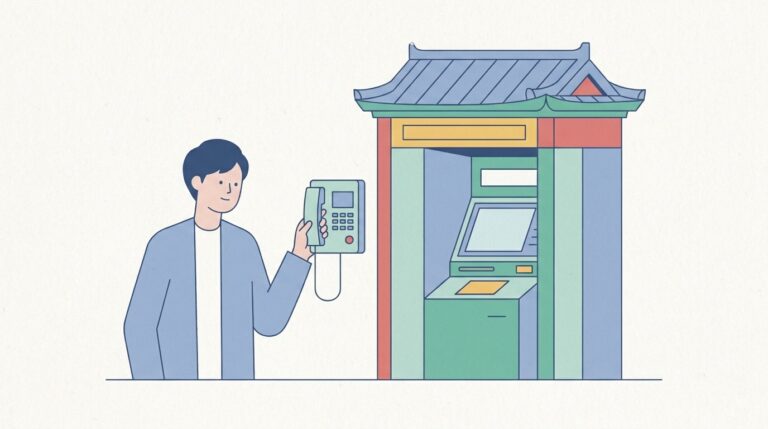
Take a deep breath! Look closely right beside the screen. There is a small handset or a silver button labeled 인터폰 (Intercom). In Korea, you are never stranded. By pressing that single button, you are immediately connected to a 24/7 security agent ready to rescue your card. Today, based on real experiences from our global learners, we are mastering the exact A2-level Korean phrases you need to talk through that intercom calmly and get your card back. Let’s conquer ATM anxiety together!
Phase 2: Key Expressions Deep Dive
1. 카드가 안 나와요 (Kadeuga an nawayo)
- Pronunciation: [Kadeuga an nawayo] (Sounds like “Kah-deu-gah ahn nah-wah-yo”)
- Meaning: Literal: “Card does not come out.” | Nuance: “My card is stuck inside the machine / The machine swallowed my card!”
- K-Culture Moment: You often see this dramatic moment in modern K-dramas where the main character tries to pay rent or withdraw cash, and the machine unexpectedly eats their card during a tense cliffhanger!
- Editor’s Insight: 안 (An) means ‘not’, and 나와요 (Nawayo) comes from 나오다 (to emerge/come out). This is the fastest, most effective phrase to state your problem without complicated banking jargon.
- Situation Spectrum: Casual: ⚠️ (카드가 안 나와 / Kadeuga an nawa) | Semi-formal: ✅ (카드가 안 나와요 / Kadeuga an nawayo) | Formal: ✅ (카드가 나오지 않습니다 / Kadeuga naoji anseumnida)
- 🤔 Think About It: In English, we say “The machine ate my card,” treating the machine as an active monster. Korean focuses on the card’s action: “The card isn’t coming out.” How does this change the feeling of the problem?
2. 인터폰 눌렀어요 (Inteopon nulleosseoyo)
- Pronunciation: [Inteopon nulleosseoyo] (Think: “In-ter-phone nool-luh-ssuh-yo”)
- Meaning: Literal: “I pressed the intercom.” | Nuance: “I am speaking through the booth intercom right now.”
- K-Culture Moment: Used by apartment residents or delivery drivers over the intercom system in Korean high-rise apartments when confirming their presence.
- Editor’s Insight: 인터폰 (Inteopon) is a Korean-style English loanword (Konglish) understood anywhere in Korea. Adding 눌렀어요 (pressed) explains why you are connected.
- Situation Spectrum: Casual: ⚠️ (인터폰 눌렀어) | Semi-formal: ✅ (인터폰 눌렀어요) | Formal: ✅ (인터폰을 눌렀습니다)
- 🤔 Think About It: Notice how loanwords like ‘interphone’ blend seamlessly into Korean grammar. Do you use similar loanwords in your language when dealing with technology?
3. 어떻게 해야 돼요? (Eotteoke haeya dwaeyo?)
- Pronunciation: [Eotteoke haeya dwaeyo?] (Sounds like: “Uh-ttuh-keh hae-yah dway-yo?”)
- Meaning: Literal: “How must I do?” | Nuance: “What should I do now? / What are the next steps?”
- K-Culture Moment: Heard constantly in Korean reality variety shows whenever cast members receive a confusing mission card from the producer!
- Editor’s Insight: This is the Swiss Army Knife of A2 survival Korean. When you have explained the stuck card and you don’t know the bank’s protocol, this prompt asks the agent for clear instructions.
- Situation Spectrum: Casual: ⚠️ (어떻게 해야 돼?) | Semi-formal: ✅ (어떻게 해야 돼요?) | Formal: ✅ (어떻게 해야 합니까?)
- 🤔 Think About It: Asking for help directly in Korea is seen as cooperative and polite rather than helpless. Don’t hesitate to ask!
Phase 3: Textbook Korean vs. Real Korean
Situation 1: Reporting the swallowed card
- 📖 교과서 한국어 (Textbook): 현금자동입출금기가 제 카드를 반환하지 않습니다. (Hyeongeumjadong-ipchulgeumgiga je kadeureul banhwanhaji anseumnida. / “The automated teller machine does not return my card.”)
- 🗣️ 진짜 한국어 (Real-life): 카드가 기계에 먹혔어요 / 카드가 안 나와요! (Kadeuga gigyee meokhyeosseoyo / Kadeuga an nawayo! / “My card got eaten / My card won’t come out!”)
- 💡 왜 다를까? (Why the difference?): Real people rarely recite the full legal name for an ATM (현금자동입출금기). Just say 카드 (card) and 기계 (machine) to solve emergencies five times faster.
Situation 2: Asking for an English speaker
- 📖 교과서 한국어 (Textbook): 영어 통역 서비스를 제공해 주실 수 있습니까? (Yeongeo tong-yeok seobiseureul jegonghae jusil su itseumnikka? / “Can you provide English translation service?”)
- 🗣️ 진짜 한국어 (Real-life): 혹시 영어 가능한 분 계세요? (Hoksi yeongeo ganeunghan bun gyeseyo? / “By any chance, is there someone who can speak English?”)
- 💡 왜 다를까? (Why the difference?): In everyday speech, Koreans soften inquiries with 혹시 (by chance) and honorific terms like 분 (honored person) rather than demanding formal translation services.
Phase 4: K-Culture Deep Dive & Non-Verbal Manners
4-1. 눈치 (Nunchi) & Gestures at the Intercom
When you press the intercom button next to a Korean ATM, you are speaking directly to a real human security control room.
* Body Posture: Lean slightly toward the speaker/mic unit. Avoid looking at your phone while speaking; look directly at the machine screen, because the agent might change the screen prompts remotely.
* Finding the Machine Number: The very first thing the agent will ask is: “어느 기기인가요?” (Which machine is it?) Look for a small sticker with numbers labeled 기기번호 (Machine Number) or 점번 (Branch ID), usually near the top right of the screen. Pointing your finger at it while reading gives you instant clarity.
4-2. Cultural Code: The ‘Palli-Palli’ Emergency Dispatch
Korea’s banking infrastructure is deeply connected with private security companies (like S-1, ADT Caps, or KT Telecop). When a card is trapped or cash errors occur late at night, the intercom agent will often say: “보안 요원이 출동합니다” (A security guard is being dispatched). In typical Korean 빨리빨리 (Palli-Palli, fast-fast) fashion, a patrol motorcycle or car usually arrives within 10 to 15 minutes! Do not wander away from the ATM booth once you hang up.
Phase 5: Real-Life Roleplay Scenario
Setting: A 24-hour bank ATM booth in Gangnam at 11:00 PM. Traveler Alex presses the small green intercom button on the wall.
Characters: Alex (A2 Korean learner), Bank Customer Agent (상담원).
- 🎭 (A loud ringback tone sounds, followed by a soft chime)
상담원 (Agent): 네, 고객센터입니다. 무엇을 도와드릴까요?
(Ne, gogaeksenteo-imnida. Mueoseul dowadeurilkkayo?)
“Yes, this is the customer service center. How may I help you?” -
🎭 (Leaning close to the intercom speaker, speaking clearly)
Alex: 저기요, ATM에서 카드가 안 나와요.
(Jeogiyo, ATM-eseo kadeuga an nawayo.)
“Excuse me, my card isn’t coming out of the ATM.” -
🎭 (Keypad clicking sounds over the line)
상담원 (Agent): 아, 카드가 걸리셨군요. 기기 번호 몇 번인지 보이세요?
(A, kadeuga geollisyeotgunyo. Gigi beonho myeot beoninji boiseyo?)
“Ah, your card is trapped. Can you see what the machine number is?” -
🎭 (Scanning the bezel above the card slot)
Alex: 잠시만요… 기기 위에 ‘3번’이라고 적혀 있어요.
(Jamsimanyo… Gigi wie ‘sambon’-irago jeokhyeo isseoyo.)
“Just a moment… It says ‘Number 3’ above the machine.” -
🎭 (Checking the terminal remotely)
상담원 (Agent): 확인했습니다. 고객님, 카드 분실이나 정지 상태는 아니신가요?
(Hwaginhaesseumnida. Gogaengnim, kadeu bunsirina jeongji sangtaeneun anisimgayo?)
“Confirmed. Customer, is the card reported lost or suspended?” -
🎭 (Nodding reflexively)
Alex: 아니요, 정상 카드예요. 방금 돈 뽑으려고 했어요.
(Aniyo, jeongsang kadeuyeyo. Banggeum don ppobeuryeogo haesseoyo.)
“No, it’s a regular active card. I was just trying to withdraw money.” -
🎭 (Gentle, reassuring tone)
상담원 (Agent): 알겠습니다. 기기 재부팅 해드릴 테니 1분만 기기 앞에서 기다려 주세요.
(Algetseumnida. Gigi jaebuting haedeuril teni il-bunman gigi ap-eseo gidaryeo juseyo.)
“Understood. I will reboot the machine remotely, so please wait 1 minute in front of it.” -
🎭 (Sigh of relief)
Alex: 네, 감사합니다! 여기서 기다릴게요.
(Ne, gamsahamnida! Yeogiseo gidarilgeyo.)
“Yes, thank you! I will wait right here.”
🔀 Interactive Decision Point
The machine reboot completes, but the card still does not eject! What do you press/say on the intercom?
- Option A: “기계를 다시 껐다 켜주셨는데도 카드가 안 나와요. 출동 기사님 불러주세요.” (The machine restarted but the card still didn’t come out. Please dispatch a technician.)
- Option B: “왜 안 나와요?! 기계 부술 거예요!” (Why isn’t it coming out?! I’m going to smash the machine!)
- Option C: Say nothing, assume your card is gone forever, and walk back to your hotel.
Feedback:
* Option A is BEST! Polite, factual, and requests the standard technician dispatch (출동 기사님).
* Option B is BAD! Threatening automated equipment will trigger an immediate emergency security alarm and police response.
* Option C is RISKY! If the ATM spits the card out 5 minutes later, an unauthorized passerby could take it. Always wait for official resolution.
Phase 6: 10-Second Emotion Shadowing Drill
Practice matching the exact rhythm and feeling of a real phone call:
[😰 당황하지만 침착하게 / Flustered but calm]
저기요, / 기기 옆에 있는 / 인터폰 눌렀어요.
(Jeogiyo, / gigi yeope inneun / inteopon nulleosseoyo.)
“Excuse me, / I pressed the intercom / next to the machine.”-
[🚨 긴급하게 / Urgent]
돈은 나왔는데, / 카드가 안 나와요!
(Doneun nawanneunde, / kadeuga an nawayo!)
“The cash came out, / but the card isn’t coming out!” -
[🙏 정중하고 공손하게 / Polite and appreciative]
네, / 알겠습니다. / 기기 앞에서 / 기다릴게요.
(Ne, / algetseumnida. / Gigi ap-eseo / gidarilgeyo.)
“Yes, / understood. / In front of the machine / I will wait.”
Phase 7: K-Culture Mini Dictionary
- 고객센터 (Gogaek-senteo) | Customer Service Center
Every Korean bank, shopping site, and service booth features a 고객센터. The word ‘고객’ means honored client/customer. - 인터폰 (Inteopon) | Intercom / Call Button
Found directly on the frame of Korean ATMs, parking ticket gates, and unmanned photo booths to connect you to real-time assistance. - 분실 신고 (Bunsil singo) | Loss Report / Reporting Lost Items
Essential terminology if your card cannot be retrieved right away and you need to freeze it temporarily. - 기기번호 (Gigi-beonho) | Machine Identification Number
The 3- to 6-digit identification code stuck to the corner of an ATM that tells the call center exactly where you are standing.
Phase 8: Traveler’s Survival Kit
Survival Expressions TOP 3
- 기기 번호 2번이에요. (Gigi beonho ibeon-ieyo.) – “This is machine number 2.”
Pro Tip: Point at the sticker with your finger while reading the number aloud. - 직원분 보내주실 수 있나요? (Jik-won-bun bonaejusil su innayo?) – “Could you dispatch a staff member?”
Pro Tip: Use this if the machine freezes completely and the reboot fails. - 영수증 나왔어요. (Yeongsujeung nawasseoyo.) – “The receipt came out.”
Pro Tip: Always keep the printed transaction slip! It contains the exact error code needed for bank refunds.
Editor’s Travel Note
- Essential Navigation: Never search blindly for bank branches at night. Use the 네이버 지도 앱 다운로드 to search for “ATM” or specific bank names like “하나은행 (Hana Bank)” or “국민은행 (KB Bank)” which have Global ATMs.
- Card Retrieval ID: If a technician comes to unlock the ATM, you must show your physical passport matching the name embossed on the credit card.
Phase 9: A Step Deeper (한 발 더 깊이)
In many Western cities, encountering an ATM malfunction late at night might mean waiting until Monday morning to speak with a teller. Korea, however, operates on a high-trust, 24-hour civic support system. The presence of CCTV cameras, immediate intercom connections, and 15-minute dispatch teams is an extension of Korea’s collective care and rapid infrastructure responsiveness.
This intercom is not just a plastic speaker; it is an umbilical cord to Korea’s ultra-reliable safety net. When speaking into it, Koreans maintain a cooperative, calm tone because they trust that a solution is already on its way.
💬 Your Turn: Have you ever experienced an ATM error or lost an item while traveling abroad? How did you solve it, and how does that compare to having an instant intercom button?
Phase 10: FAQ & Common Mistakes
Q: What if the agent only speaks Korean and speaks too quickly?
A: Don’t panic! Simply say: “천천히 말씀해 주세요. 외국인이에요.” (Cheoncheonhi malsseumhae juseyo. Oeguk-in-ieyo. / “Please speak slowly. I am a foreigner.”) They will immediately lower their speaking rate and switch to simple keywords or connect an English interpreter.
Q: Can I leave the booth if the agent promises to retrieve my card tomorrow?
A: Yes, but only after you ask them to temporarily block the card: “카드 정지해 주세요” (Kadeu jeongjihae juseyo / “Please suspend the card”) and note down the case number or reference ID.
Q: Does pressing the intercom button trigger a police siren?
A: No. The red emergency button (비상벨) might sound an alarm, but the 인터폰 (Intercom) button is just a two-way phone call directly to the bank’s monitoring room.
🚨 흔한 실수 (Common Mistakes) Top 3
- Pressing the Emergency Alarm instead of Intercom:
Mistake: Pushing the big red bell labeled 비상벨 (Siren).
Correct Action: Look specifically for the button with a telephone receiver icon or labeled 인터폰. - Walking away before getting confirmation:
Mistake: Leaving because you feel embarrassed or can’t understand the voice.
Correct Action: Stay put for 3 minutes! Often, the remote operator pushes an emergency eject command and the card pops out. - Throwing away the error paper slip:
Mistake: Leaving the error receipt in the trash slot.
Correct Action: Keep the slip! It is your official proof of lost cash or swallowed card.
Phase 11: Action Missions
- 🥉 Bronze Mission (Solo Shadowing): Practice saying “카드가 안 나와요. 어떻게 해야 돼요?” 5 times aloud until you can say it under 3 seconds.
- 🥈 Silver Mission (Social Sharing): Share this guide or bookmark these 3 phrases on your phone notes before your trip to Seoul.
- 🥇 Gold Mission (Real Life Discovery): Next time you pass any Korean ATM (even in convenience stores), locate the 인터폰 button and the 기기번호 sticker with your eyes!
- 🎮 K-Culture Mission: Watch an episode of a slice-of-life K-drama and spot how characters react when an automated machine or door does not open.
Phase 12: Interactive Quiz Challenge
Question 1: Situation Check
You inserted your card, but the machine made a clicking noise and the screen returned to the home menu without giving your card back. What should you say first through the intercom?
1. 카드가 안 나와요. (Kadeuga an nawayo.)
2. 밥 먹었어요? (Bap meogeosseoyo?)
3. 사진 찍어 주세요. (Sajin jjigeo juseyo.)
👉 Click to reveal Answer & Explanation
Correct Answer: 1번 (카드가 안 나와요.)
Explanation: Option 1 clearly states that your card is stuck. Option 2 asks “Did you eat?” and Option 3 asks “Please take a picture of me!”
Question 2: Fill in the Blank
Complete the sentence to tell the agent you pressed the intercom:
“기기 옆에 있는 ________ 눌렀어요.”
(Hint: The Korean loanword for call button/intercom)
👉 Click to reveal Answer & Explanation
Correct Answer: 인터폰 (Inteopon)
Full sentence: 기기 옆에 있는 인터폰 눌렀어요. (I pressed the intercom next to the machine.)
Question 3: Cultural True or False
True or False: If the ATM retains your card late at night, you must break the plastic casing on the machine to get it before morning.
👉 Click to reveal Answer & Explanation
Correct Answer: False!
Explanation: Damaging bank property will trigger an immediate police call. The 24-hour intercom service connects you to customer care who can reboot the machine or dispatch a licensed technician quickly!







