

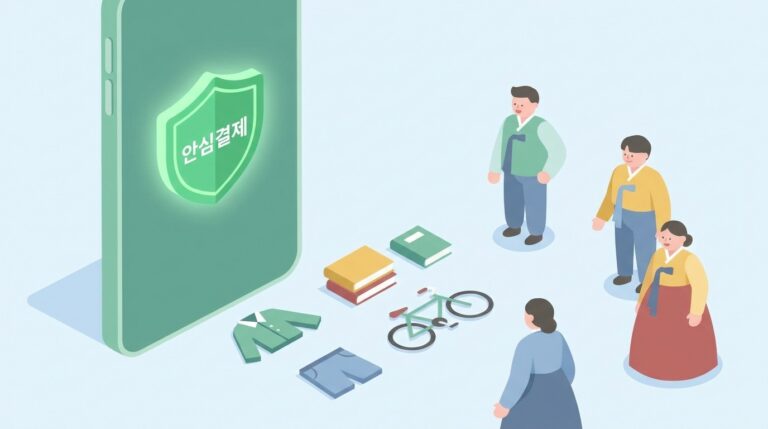
Phase 1: 공감 (스토리 몰입형 오프닝)
안녕하세요! 매일한글 에디터입니다.
Have you ever browsed through Korean secondhand platforms like Danggeun (Karrot) or Bungaejangter and suddenly gasped because you found your ultimate holy grail? Maybe it is a sold-out NewJeans limited-edition vinyl, a vintage digital camera from the 2000s, or rare K-drama merchandise that you simply cannot find anywhere else. The price looks unrealistically good, and your fingers start typing furiously to claim it before someone else does.
You politely ask the seller to trade using an escrow system: “I will even pay the escrow transaction fee!” But within seconds, the seller replies with a cold line: “No escrow. Bank transfer only, please.”
Suddenly, your excitement hits a wall. Your stomach drops. Should you trust this complete stranger and wire money directly to their bank account, or are you walking straight into a textbook secondhand scam (중고거래 사기)? Many of our intermediate learners tell us that when sellers get pushy or dismissive, their Korean freezes up. They worry that being cautious might sound rude, or they simply lack the natural vocabulary to stand their ground.
Do not worry! In today’s guide, crafted from real-life survival experiences and student consultations, we will arm you with practical, native Korean expressions to protect your wallet without sounding hostile. By the end of this lesson, you will spot digital red flags from a mile away and negotiate safely like a true local.
Phase 2: 핵심 표현 3선 심층 분석
1. 안전결제로 진행해도 될까요? 제가 수수료 부담할게요. (Anjeongyeoljelo jinhaenghaedo doelkkayo? Jega susulyo budamhalgeyo.)
- Pronunciation: [An-jeon-gyeol-je-ro jin-haeng-hae-do doel-kka-yo? Je-ga su-su-ryo bu-dam-hal-ge-yo.] (Think of ‘Anjeon’ sounding like ‘un-zone’ and ‘budam’ like ‘boo-dahm’)
- Meaning: Literal: “Can we proceed with safe payment? I will burden the fee.” / Natural: “Could we use safe escrow payment? I’ll cover the transaction fee.”
- K-Culture Moment: Seen in everyday Korean life when buyers offer courtesy in online chats to ensure peace of mind without inconveniencing the seller.
- Editor’s Insight: The word 부담하다 (budamhada) literally means ‘to bear a burden’, but in commerce it translates naturally to ‘covering the expenses’. Offering this right away shows you are considerate, making it virtually impossible for an honest seller to refuse.
- Situation Spectrum: Casual ⚠️ | Semi-formal ✅ | Formal ✅
- 🤔 Think About It: In Korean culture, preemptively offering to pay the fee shows considerate etiquette (배려). If someone rejects this polite offer, what does that say about their hidden motive?
2. 계좌이체만 고집하시면 이번 거래는 패스할게요. (Gyejwaicheman gojibhasimyeon ibeon georaeneun paesuhalgeyo.)
- Pronunciation: [Gye-jwa-i-che-man go-jip-ha-si-myeon i-beon geo-rae-neun pae-seu-hal-ge-yo.] (Pronounce ‘Gyejwa’ smoothly like ‘gyay-jwah’)
- Meaning: Literal: “If you persist only in bank transfer, I will pass this trade.” / Natural: “If you insist only on direct bank transfer, I’ll have to pass on this purchase.”
- K-Culture Moment: Used by smart shoppers in lifestyle vlog segments when setting firm boundaries against sketchy marketplace sellers.
- Editor’s Insight: 고집하다 (gojibhada) means ‘to insist stubbornness’. Adding the loanword 패스할게요 (I will pass) keeps the exit casual, polite, yet unyielding. It ends the conversation cleanly without a messy argument.
- Situation Spectrum: Casual ✅ | Semi-formal ✅ | Formal ⚠️
- 🤔 Think About It: Direct confrontation is often avoided in Korean discourse. Notice how 패스할게요 softens what could otherwise be a sharp accusation into a breezy personal boundary.
3. 안전결제가 안 되시면 직거래는 가능하신가요? (Anjeongyeoljega an doesimyeon jikgeoraeneun ganeunghasingayo?)
- Pronunciation: [An-jeon-gyeol-je-ga an doe-si-myeon jik-geo-rae-neun ga-neung-ha-sin-ga-yo?]
- Meaning: Literal: “If safe payment doesn’t work, is direct transaction possible?” / Natural: “If safe payment isn’t an option, would you be open to meeting in person?”
- K-Culture Moment: The ultimate scam-buster question. Con artists hiding behind fake accounts will instantly ghost you the moment you suggest meeting face-to-face at a subway station.
- Editor’s Insight: 직거래 (jikgeorae) refers to meet-up trades in person. Scammers rarely agree to meet in public spaces. Asking this works like a verbal shield.
- Situation Spectrum: Casual ✅ | Semi-formal ✅ | Formal ✅
- 🤔 Think About It: Why is in-person trading (직거래) so popular in dense Korean urban areas near subway exits and convenience stores?
Phase 3: 교과서 한국어 vs 진짜 한국어
Situation 1: Offering to cover the escrow fee
- 📖 교과서 한국어: 에스크로 서비스 수수료는 구매자인 제가 지불하겠습니다. (Eseukeuro seobiseu susulyoneun gumaejain jega jibulhagetseumnida.)
- 🗣️ 진짜 한국어: 안전결제 수수료는 제가 낼 테니, 안전결제로 부탁드려요! (Anjeongyeolje susulyoneun jega nael teni, anjeongyeoljelo butakdeuryeoyo!)
- 💡 왜 다를까?: In textbooks, you see formal loanwords like ‘에스크로 서비스’ and rigid verbs like ‘지불하겠습니다’. Real marketplace apps (like Bungaejangter or Karrot) use platform-specific terms like 안전결제 (Safe-Pay), and conversational endings like -(으)ㄹ 테니 to state conditions smoothly.
Situation 2: Politely refusing an unsafe transaction
- 📖 교과서 한국어: 귀하가 현금 송금만을 요구하시므로 본 거래를 취소합니다. (Gwihaga hyeongeum songgeummaneul yoguhasimeuro bon georaereul chwisohamnida.)
- 🗣️ 진짜 한국어: 죄송하지만 계좌입금만 되시면 저는 패스하겠습니다! (Joesonghajiman gyejwaiptgeumman doesimyeon jeoneun paesuhagetseumnida!)
- 💡 왜 다를까?: Words like 귀하 (esteemed you) and 송금만을 요구하시므로 sound like an official court summons! Real buyers state their stance lightly with 죄송하지만 (I’m sorry, but…) and 패스하겠습니다 (I’ll pass).
Phase 4: K-Culture 딥다이브 & 비언어적 매너
4-1. 눈치 (Nunchi) & Digital Gestures
In Korean digital marketplaces, tone of voice is conveyed through punctuation and emojis. An honest seller who cannot use safe payment due to banking verification issues will usually offer profuse explanations, using softenings like ㅠㅠ (crying face) or 죄송해요 (I’m sorry).
However, a scammer often displays zero Nunchi. They will pressure you: “지금 입금 안 하시면 다른 분한테 넘겨요” (“If you don’t wire the money right now, I’m giving it to someone else”). If someone rushes you, creates artificial urgency, or refuses escrow even when you offer to cover the 3.5% fee, your internal Nunchi radar should ring loudly. Never compromise safety for speed.
4-2. Culture Code: The Secondhand Boom & Manner Temperature
Koreans love peer-to-peer commerce. In Karrot, people take pride in their 매너온도 (Manner Temperature), which starts at 36.5°C (human body temperature) and rises with positive reviews. If a seller has a low temperature, an account created yesterday, or sends you external chat links (like random KakaoTalk Open Chat URLs claiming their app chat is glitching), that is a massive red flag. Always stay inside the official app’s transaction environment!
Phase 5: 실전 롤플레이 시나리오
Setting: Alex is chatting on an online secondhand app with a seller offering a rare vintage camera at half the market price.
Characters: Alex (Foreign exchange student in Seoul) & J-Seller (Mysterious online seller).
- Turn 1 (Alex): 안녕하세요! 카메라 아직 구매 가능한가요? (Annyeonghaseyo! Kamera ajik gumae ganeunghangayo?)
🎭 [Excitedly checking condition while looking at photo] “Hello! Is the camera still available for purchase?” - Turn 2 (J-Seller): 네, 구매 가능합니다. 바로 입금 가능하시면 배송비는 제가 빼드릴게요. (Ne, gumae ganeunghamnida. Baro ipgeum ganeunghasimyeon baesongbineun jega ppaedeurilgeyo.)
🎭 [Quickly typing with enticing deal] “Yes, available. If you can transfer the cash right now, I’ll waive the shipping fee.” - Turn 3 (Alex): 혹시 안전결제로 거래해도 될까요? 수수료는 제가 전부 부담할게요! (Hoksi anjeongyeoljelo georaehaedo doelkkayo? Susulyoneun jega jeonbu budamhalgeyo!)
🎭 [Courteously proposing escrow protection] “By any chance, could we trade via safe payment? I’ll cover all the fees!” - Turn 4 (J-Seller): 아, 제가 정산받는 게 복잡해서 안전결제는 안 써요. 그냥 계좌로 보내주세요. (A, jega jeongsanbanneun ge bokjaphaeseo anjeongyeoljeneun an sseoyo. Geunyang gyejwalo bonaejuseyo.)
🎭 [Dismissive tone] “Ah, settlement takes too long so I don’t use safe payment. Just send it to my account directly.” - Turn 5 (Alex): 그러시면 홍대입구나 신촌 근처에서 직거래는 가능하신가요? (Geureosimyeon Hongdaeipguna Sinchon geuncheoeseo jikgeoraeneun ganeunghasingayo?)
🎭 [Testing authenticity with in-person meeting] “In that case, would direct trade near Hongdae or Sinchon station be possible?” - Turn 6 (J-Seller): 지금 지방 출장 중이라 택배만 돼요. 10분 내로 입금 안 하시면 예약 취소합니다. (Jigeum jibang chuljang jung-ira taekbaeman dwaeyo. Sipbun naero ipgeum an hasimyeon yeyak chwisohamnida.)
🎭 [Hurrying with typical excuse] “I’m currently on a business trip in the countryside, so only parcel delivery is possible. If no transfer in 10 mins, I cancel.” - Turn 7 (Alex): 안전결제도 안 되고 직거래도 어려우시면 이번 거래는 패스할게요! (Anjeongyeoljedo an doego jikgeoraedo eoryeousimyeon ibeon georaeneun paesuhalgeyo!)
🎭 [Setting calm, polite, and firm boundary] “If neither safe payment nor in-person trade works, I’ll pass on this deal!” - Turn 8 (J-Seller): 네, 마음대로 하세요. (Ne, maeumdaero haseyo.)
🎭 [Coldly exiting chat] “Fine, do whatever you want.”
🔀 인터랙티브 분기점 (Interactive Choice)
If the seller pressures you in Turn 6 to send money immediately, what should you do?
* Choice A: Send the money immediately so you don’t lose the rare item.
👉 [Risk – 🚫 Scam Trap]: Classic scam tactic! The ‘business trip’ excuse combined with urgency is the #1 fraud formula.
* Choice B: Ask them to verify their ID and bank account on TheCheat first, or stand firm with escrow.
👉 [Best – ✅ Flawless Defense]: Protects your finances and lets the seller prove authenticity.
* Choice C: Cuss them out in Korean because you are sure they are a fraudster.
👉 [Bad – ⚠️ Aggressive Pitfall]: If your account gets reported for harassment, your marketplace account could get suspended.
Phase 6: 10초 감정 섀도잉 드릴
Practice these lines out loud with intonation markers (/ = brief pause):
[🧐 정중하지만 조심스럽게 - Polite but careful]
안전결제로 진행해도 될까요? / 수수료는 / 제가 부담할게요!
(Anjeongyeoljelo jinhaenghaedo doelkkayo? / Susulyoneun / jega budamhalgeyo!)-
[🛡️ 단호하고 침착하게 - Firm and composed]
계좌입금만 고집하시면 / 이번 거래는 / 패스하겠습니다.
(Gyejwaiptgeumman gojibhasimyeon / ibeon georaeneun / paesuhagetseumnida.) -
[🕵️ 자연스럽게 떠보기 - Casual verification test]
혹시 / 지하철역 근처에서 / 직거래 가능하실까요?
(Hoksi / jihacheol-yeok geuncheoeseo / jikgeorae ganeunghasilkkayo?)
Phase 7: K-Culture 미니 사전
- 안전결제 (Anjeongyeolje) | Escrow / Safe Payment
A platform protection system where the platform holds the payment until the buyer receives the item and clicks ‘Confirm Purchase’ (구매확정). - 계좌이체 (Gyejwaiche) | Direct Bank Transfer
Directly sending funds from your bank to the seller’s account. Highly vulnerable because once transferred, it cannot easily be refunded if fraudulent. - 직거래 (Jikgeorae) | Face-to-Face Transaction
Meeting in a bright, crowded public spot (like a metro turnstile or cafe) to inspect the goods before handing over cash or sending money on the spot. - 더치트 (TheCheat) | TheCheat Fraud Database
Korea’s premier civilian fraud tracking database. Koreans search bank account numbers and phone numbers here before transferring money.
Phase 8: 여행자를 위한 생존 키트
Survival Expressions TOP 3
- 사기 이력 조회해 봐도 될까요? (Sagi iryeok johuihae bwado doelkkayo?)
Pro Tip: “May I run a search on fraud history?” Mentioning this alone scares off amateur fraudsters. - 사진에 오늘 날짜 적어서 인증해 주세요. (Sajine oneul naljja jeogeoseo injeonghae juseyo.)
Pro Tip: Ask them to place a memo with today’s date next to the item to confirm they actually possess it. - 구매확정 바로 눌러드릴게요! (Gumaehwakjeong baro nulleodeurilgeyo!)
Pro Tip: Honest sellers fear escrow delays. Assuring them that you will click ‘purchase confirmed’ as soon as the package arrives earns immense goodwill.
Editor’s Travel Note
Before doing transactions, ensure you verify unknown contact details using the TheCheat fraud prevention search portal. If you plan to meet for a 직거래, choose a well-lit subway station exit near CCTV cameras and check the seller’s location on the Naver Map navigation application.
Phase 9: “한 발 더 깊이” (생각 질문)
Secondhand trading in South Korea is built on a fascinating paradox of hyper-trust and hyper-vigilance. While people routinely leave laptops unattended at Starbucks tables without theft, digital spaces experience rampant phishing and account spoofing. The linguistic preference for soft refusals like “패스할게요” reflects the deep-rooted Korean cultural priority of avoiding public shame (체면) while asserting clear self-protection.
💬 Your Turn: In your home country, how do secondhand buyers protect themselves from escrow refusal? Have you ever had an awkward marketplace experience? Let’s chat in the comments below!
Phase 10: FAQ & 오해 방지
Q: Why do legitimate sellers sometimes refuse safe escrow payment?
A: In Korea, escrow funds can take 3 to 7 days to clear into the seller’s account because the buyer must receive the parcel and manually confirm the order. Sellers needing cash right away might genuinely prefer direct transfer. However, if they become hostile when you offer to cover the fee, caution is paramount.
Q: What is an external link scam (외부 링크 사기)?
A: A scammer might send you a fake webpage URL resembling Bungae-Pay or Naver Pay and tell you to complete payment there. Real escrow payments are processed strictly inside the official app interface, never via standalone web links sent in messenger.
Q: Can foreigners use safe payment apps without a Korean resident card?
A: Most Korean marketplace safe-pay systems require identity verification (본인인증) via a Korean domestic SIM card registered under your Alien Registration Card (ARC). If you are a short-term traveler, opting for cash-based 직거래 (in-person meet-ups) is significantly safer.
🚨 흔한 실수 (Common Mistakes) 경고판
- Mistake: Moving the chat to KakaoTalk because the seller claimed app notifications aren’t working.
👉 Correct Action: Stay inside the platform’s chat window. Platform customer support cannot assist or reimburse you for chats conducted outside. - Mistake: Assuming a photo of the seller’s Korean ID card guarantees safety.
👉 Correct Action: Scammers frequently use stolen resident cards. Insist on escrow or in-person verification. - Mistake: Wiring money just because the seller has a polite profile picture.
👉 Correct Action: Judge safety by verified badges, Manner Temperature, and willingness to use safe payment systems.
Phase 11: 액션 미션 & 참여 유도
- 🥉 Bronze Mission (Solo Shadowing): Practice saying “안전결제 수수료는 제가 부담할게요!” three times smoothly without pausing.
- 🥈 Silver Mission (Community Check): Look up one secondhand listing on Karrot or Bungaejangter and identify whether the seller has enabled safe-pay icons.
- 🥇 Gold Mission (Real-world Ready): In your next exchange or language meetup, roleplay declining a suspicious bank transfer request using the phrase “직거래나 안전결제 안 되시면 이번 거래는 패스할게요!”
- 🎮 K-Culture Mission: Watch an episode of a Korean investigative program like 꼬리에 꼬리를 무는 그날 이야기 or 실화탐사대 featuring secondhand scams and spot the phrases you learned today!
Phase 12: 인터랙티브 퀴즈 챌린지
1. Situation Judgment:
A seller offers a mint condition iPad for 70% off. When you propose safe escrow payment and offer to pay the fees, they say: “I’m busy, so just transfer cash to my account within 5 minutes or I’ll block you.” What is the smartest move?
* A) Wire the cash quickly before getting blocked.
* B) Apologize and offer even more money.
* C) Say “안전결제 안 되시면 패스할게요” and report the account.
2. Fill-in-the-Blank:
“Could we use safe payment? I’ll cover the fee.”
안전결제로 진행해도 될까요? 제가 _______ 부담할게요.
3. True or False:
If a seller sends you an external web link claiming to be the platform’s official escrow payment gateway, it is safe to enter your banking details.
🔍 Click here to reveal Answers & Explanations!
- Answer: C
Explanation: Pressuring you with artificial deadlines while refusing escrow is a classic signature of fraudulent accounts. Never transfer cash directly. - Answer: 수수료 (Susulyo)
Explanation: 수수료 means ‘fee’ or ‘commission’. Combined with 부담할게요, it creates the essential phrase for polite negotiation. - Answer: False
Explanation: Legitimate escrow in Korean apps is executed directly within the app itself. External payment links are phishing sites built to steal your bank credentials.







