

Phase 1: Empathy & Immersion Opening
안녕하세요! 매일한글 에디터입니다. (Hello! It’s your Daily Hangul editor.)
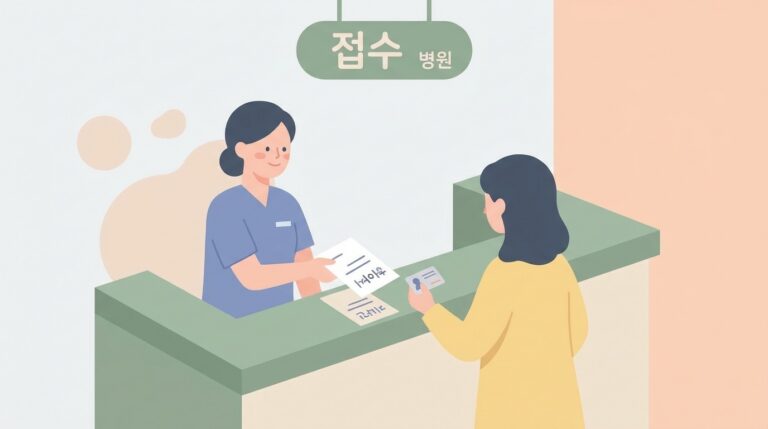
Picture this: You just survived your first doctor appointment in Seoul. Your throat was burning, but you bravely pointed to your neck, the doctor gave you a reassuring nod, and now you are standing at the reception desk ready to pay. The receptionist smiles warmly, takes your payment card with both hands, and hands back your card along with two sheets of paper, saying: “진료비 수납하실 때 처방전 두 장 뽑아 드렸어요” (When paying the medical fee, I printed two copies of the prescription for you).
Suddenly, your mind freezes. Wait, why two sheets? Did I get double billed? Do I need to give both to the pharmacist? What about my national health insurance?
If you have ever felt a surge of panic at a Korean hospital checkout counter, you are not alone! Many of our international students tell us that paying for medical care and dealing with prescriptions feels like a final boss battle. Today, we will break down this everyday hospital phrase so you can handle reception desks like a true Seoul local!
Phase 2: Top 3 Core Expressions
1. 진료비 수납 도와드릴게요 (Jinryobi sunap dowadeurilgeyo)
- Pronunciation: [Jin-ryo-bi su-nap do-wa-deu-ril-ge-yo] (Think: “Jean-raw-bee soo-nap doe-wah-dew-ril-gay-yo”)
- Meaning: Literal: “I will help you receive payment for your medical consultation.” | Real Nuance: “I can help you settle your bill now.”
- K-Culture Moment: You hear this exact line in hospital dramas like Hospital Playlist whenever patients walk up to the central finance counter on the first floor.
- Editor’s Insight: Korean staff rarely say “Pay your bill now!” Instead, they frame it politely as helping you make the payment (수납 도와드릴게요).
- Situation Spectrum: Casual 🚫 | Semi-formal ⚠️ | Formal ✅ (Standard polite customer service tone)
- 🤔 Think About It: In your native language, do service workers say they are “helping you pay,” or do they simply say “That will be $20”?
2. 처방전 두 장 뽑아 드렸어요 (Cheobangjeon du jang ppoba deuryeosseoyo)
- Pronunciation: [Cheo-bang-jeon du jang ppo-ba deu-ryeo-sseo-yo] (Sounds like: “Chuh-bang-jun doo jahng po-bah dew-ryuh-ssuh-yo”)
- Meaning: Literal: “I drew and gave two sheets of prescription for you.” | Real Nuance: “I’ve printed two copies of your prescription.”
- K-Culture Moment: Seen at local neighborhood clinics (의원) throughout Korea right before the receptionist points toward the pharmacy downstairs.
- Editor’s Insight: In Korea, you receive two identical prescription sheets: one marked “For Pharmacy Submission” (약국 제출용) and one “For Patient Storage” (환자 보관용). Keep one for your personal insurance or records!
- Situation Spectrum: Casual 🚫 | Semi-formal ⚠️ | Formal ✅
- 🤔 Think About It: Does your home country hand medical paperwork directly to patients to deliver to pharmacies, or is it fully digital?
3. 건강보험 적용되었나요? (Geongangboheom jeok-yong-doe-eonnayo?)
- Pronunciation: [Geon-gang-bo-heom jeok-yong-dwe-eon-na-yo?] (Sounds like: “Gun-gahng-bo-hum juk-yong-dway-un-nah-yo?”)
- Meaning: Literal: “Has health insurance been applied?” | Real Nuance: “Did this bill include my health insurance coverage?”
- K-Culture Moment: An expat life-saver phrase when you want to confirm your National Health Insurance (NHIS) discount went through properly.
- Editor’s Insight: Foreigners often worry whether their Alien Registration Card (ARC) is registered in the hospital system. Asking this question gives you instant peace of mind.
- Situation Spectrum: Casual 🚫 | Semi-formal ✅ | Formal ✅
- 🤔 Think About It: Health insurance in Korea covers substantial outpatient fees. Asking politely confirms you received the subsidized rate.
Phase 3: Textbook Korean vs. Real Korean
Situation 1: Settling your payment
- 📖 Textbook Korean: 진료비를 지불하고 싶습니다. (Jinryobireul jibulhago sipsumnida. / “I wish to pay the consultation fee.”)
- 🗣️ Real Korean: 수납할게요. (Sunaphalgeyo. / “I’m ready to pay.”) or 계산해 주세요. (Gyesanhae juseyo. / “Please calculate the bill.”)
- 💡 Why the difference? 지불하다 is very literary and sounds like you are reading a formal legal contract. Real people use 수납 at clinics or simply 계산.
Situation 2: Asking where to take your prescription
- 📖 Textbook Korean: 이 처방전 서류를 어디에 제출합니까? (I cheobangjeon seoryureul eodie jechulhamnikka? / “To where do I submit this prescription document?”)
- 🗣️ Real Korean: 이거 약국에 내면 돼요? (Igeo yakguge naemyeon dwaeyo? / “Do I just give this to the pharmacy?”)
- 💡 Why the difference? In daily conversations, Koreans replace heavy nouns with 이거 (this) and simple verbs like 내다 (to hand in).
Phase 4: K-Culture Deep Dive & Non-Verbal Manners
4-1. Nunchi & Clinic Gestures
When handing over your card or ARC at the counter, always use two hands or hold your right wrist with your left hand. When the receptionist hands you the two prescription slips, take them with both hands and do a quick, respectful head-nod (목례). This little gesture shows respect and builds immediate goodwill!
4-2. Cultural Code: The Clinic & Pharmacy Duo
Notice how every medical clinic in Korea has at least one or two pharmacies (약국) on the exact same floor or right beside the building entrance? Under Korea’s medical system separation (의약분업), clinics diagnose and prescribe, while pharmacies dispense medicine. Handing you two physical printouts ensures transparency—one copy is given to the pharmacist, and the other belongs to you.
Phase 5: Real-World Roleplay Scenario
Setting: Front reception desk at “Seoul Star Ear, Nose & Throat Clinic” (서울스타이비인후과) in Hongdae. Receptionist Minji is checking your records.
- Turn 1 (Minji): 김민우 님, 진료비 수납 도와드릴게요. (Gim Min-u nim, jinryobi sunap dowadeurilgeyo.)
🎭 Smiles while pointing to the card terminal reader.
(Mr. Minwoo Kim, I will help you pay your clinic fee.) - Turn 2 (You): 네, 여기 카드요. 건강보험 적용된 거죠? (Ne, yeogi kadeuyo. Geongangboheom jeok-yong-doen geojyo?)
🎭 Handing your payment card with both hands.
(Yes, here is my card. Health insurance was applied, right?) - Turn 3 (Minji): 네, 외국인등록번호로 전산 조회해서 보험 처리해 드렸어요. (Ne, oeguk-in-deung-nok-beon-ho-ro jeonsan joe-hoe-haeseo boheom cheorihae deuryeosseoyo.)
🎭 Typing on her keyboard and sliding your card into the reader.
(Yes, we looked up your Alien Registration Number in the system and processed your insurance.) - Turn 4 (You): 다행이네요! 감사합니다. (Dahaeng-ineyo! Gamsahamnida.)
🎭 Breathing a sigh of relief.
(That’s a relief! Thank you.) - Turn 5 (Minji): 진료비 수납하실 때 처방전 두 장 뽑아 드렸어요. (Jinryobi sunap하실 ttae cheobangjeon du jang ppoba deuryeosseoyo.)
🎭 Handing over two A4-sized papers along with your card.
(When processing your fee, I printed out two copies of your prescription.) - Turn 6 (You): 두 장 다 약국에 드려야 하나요? (Du jang da yakguge deuryeoya hanayo?)
🎭 Looking between the two papers curiously.
(Do I need to give both copies to the pharmacy?) - Turn 7 (Minji): 아니요, ‘약국 제출용’ 한 장만 약국에 내시고, ‘환자 보관용’은 가지고 계시면 돼요. (Aniyo, ‘yakguk jechuryong’ han jangman yakguge naesigo, ‘hwanja bogwanyon’geun gajigo gyesimyeon dwaeyo.)
🎭 Pointing her pen at the top corner title of the paper.
(No, just submit the one marked ‘For Pharmacy Submission’, and keep the ‘For Patient Storage’ copy.) - Turn 8 (You): 아, 그렇군요! 친절하게 설명해 주셔서 감사합니다. (A, geureokunyo! Chinjeolhage seolmyeonghae jusyeoseo gamsahamnida.)
🎭 Bowing slightly and heading to the elevator.
(Ah, I see! Thank you for explaining so kindly.)
🔀 Interactive Decision Point
The receptionist hands you the two papers, but you are not sure where the closest pharmacy is. What do you say?
* Option A: “약국 어디 있어요?” (Yakguk eodi isseoyo? – “Where is the pharmacy?”)
* Feedback (Best): Perfect! Natural, polite, and directly solves your problem. The receptionist will point toward the 1st floor exit.
* Option B: “약 주세요!” (Yak juseyo! – “Give me medicine!”)
* Feedback (Bad): The receptionist cannot dispense pills! Korean clinics and pharmacies are legally separated.
* Option C: “약국 안 가도 돼요?” (Yakguk an gado dwaeyo? – “Can I not go to the pharmacy?”)
* Feedback (Risk): If the doctor prescribed antibiotics or symptom relief, skipping the pharmacy will keep you sick!
Phase 6: 10-Second Shadowing Drill
Practice matching the cadence and polite melody of Korean staff!
[😊 차분하고 친절하게 / Calm and helpful]
진료비 / 수납 / 도와드릴게요.
(Jinryobi / sunap / dowadeurilgeyo.)-
[🤝 명확하고 배려 깊게 / Clear and thoughtful]
처방전 / 두 장 / 뽑아 드렸어요.
(Cheobangjeon / du jang / ppoba deuryeosseoyo.) -
[💡 궁금증을 풀며 안도하듯 / Curious and relieved]
약국 제출용만 / 내면 되나요?
(Yakguk jechuryongman / naemyeon doenayo?)
Phase 7: K-Culture Mini Dictionary
- 수납 (Sunap): Meaning payment receipt/processing at clinics, institutions, and government offices. Unlike casual shopping (계산), 수납 specifically denotes settling institutional medical balances.
- 처방전 (Cheobangjeon): Medical prescription slip. In Korea, this must be delivered to an external certified pharmacy within the validity period (usually 3 to 7 days).
- 건강보험 (Geongangboheom): Korea’s National Health Insurance Service (NHIS). It subsidizes clinic visits so basic consultations often cost less than 10,000 KRW for covered residents.
- 약국 (Yakguk): Pharmacy. Recognized by large red neon signs with the character 약. Always look right outside the hospital door!
Phase 8: Traveler Survival Kit
Top 3 Survival Phrases
- 처방전 유효기간이 언제까지예요? (Cheobangjeon yuhyogigani eonjekkajiyeyo?)
Pro Tip: Prescriptions expire! Most are valid for 3 or 7 days. If you forget to go to the pharmacy today, ask how long you have. - 영수증하고 진단서 떼어 주세요. (Yeongsujeunghago jindanseo tteeo juseyo.)
Pro Tip: Need to claim private travel insurance? Say this to get official medical certificates and receipts. - 가장 가까운 약국이 어디예요? (Gajang gakkaun yakgugi eodiyeyo?)
Pro Tip: Usually, the receptionist will say “1층 입구 왼쪽에 있어요” (It is on the 1st floor to the left of the entrance).
Editor’s Travel Note
Always keep your physical Alien Registration Card or passport handy. If you need help finding medical services open on weekends or late evenings, look for clinic directories via the National Emergency Medical Portal Web Guide or search on your Naver Map Navigation App.
Phase 9: One Step Deeper
Notice how the receptionist said 뽑아 드렸어요 (I printed for you) rather than 뽑았어요 (I printed)? In Korean culture, actions done on behalf of customers or patients almost always pair with the auxiliary honorific verb -아/어 드리다. This linguistic hospitality embeds warmth and consideration directly into administrative hospital encounters, turning a routine transaction into a caring relationship.
💬 Your Turn: Have you ever received a prescription or paid a medical bill in a foreign country? What surprised you most about the process? Let us know in the comments below!
Phase 10: FAQ & Common Mistakes
Q: Why do Korean clinics give me two sheets of paper for the prescription?
A: One sheet is labeled 약국 제출용 (For Pharmacy Submission), which the pharmacist keeps to process your medications. The second sheet is labeled 환자 보관용 (For Patient Storage), which is for your personal records, tax deductions, or private insurance reimbursement claims.
Q: What if I lose the pharmacy copy before visiting the drugstore?
A: You will have to return to the clinic front desk and say: “처방전 재발급해 주세요” (Please reissue my prescription). They will reprint it for you, sometimes for a tiny administrative fee.
Q: Can I buy prescription medications without visiting a doctor first in Korea?
A: No. Over-the-counter drugs like mild painkillers or digestive pills can be bought immediately at any pharmacy, but antibiotics, specialized allergy remedies, and strong painkillers strictly require a doctor’s 처방전 (prescription).
🚨 Common Mistakes Warning Board
- Mistake 1: Handing both prescription copies to the pharmacy and walking away with nothing.
Correct Action: Check the top header! Keep the 환자 보관용 sheet in your bag for your own medical records. - Mistake 2: Leaving your Alien Registration Card at home when expecting health insurance pricing.
Correct Action: Clinics need your ARC number to verify insurance status on the computer; keep it on you or have your Korean resident number memorized. - Mistake 3: Waiting a week to fill your prescription.
Correct Action: Prescriptions expire quickly! Visit the pharmacy right outside the clinic on the same day.
Phase 11: Action Mission
- 🥉 Bronze Mission: Practice reading 처방전 두 장 뽑아 드렸어요 out loud 5 times using our emotion shadowing cues.
- 🥈 Silver Mission: Write down the difference between 약국 제출용 and 환자 보관용 in your Korean study notebook and tag @DailyHangul on Instagram!
- 🥇 Gold Mission: Next time you visit a Korean clinic, ask the front desk: “건강보험 적용되었나요?” with a confident two-handed bow.
- 🎮 K-Culture Mission: Watch an episode of Hospital Playlist or your favorite Korean medical drama, and spot whenever someone receives a paper prescription at the front counter!
Phase 12: Interactive Quiz Challenge
Test your clinic knowledge below! Click each toggle to reveal the explanation.
Q1. Situation Check: What should you do with the two prescription sheets?
A) Give both to the pharmacist and leave
B) Throw away both because the pharmacy receives it digitally
C) Give ‘약국 제출용’ to the pharmacy and keep ‘환자 보관용’
👉 Click to view answer & explanation
Correct Answer: C
In Korea, one sheet is for the pharmacy (약국 제출용), and the other sheet is for your personal records (환자 보관용).
Q2. Blank Fill-in: Complete the sentence for paying clinic fees.
진료비 _______ 도와드릴게요. (I will help you settle the medical fee.)
Hint: The formal noun for institutional payment.
👉 Click to view answer & explanation
Correct Answer: 수납 (Sunap)
수납 is the standard term used at hospital finance desks for billing and receiving fees.
Q3. True or False: You can use a Korean prescription at any pharmacy 6 months after the clinic visit.
👉 Click to view answer & explanation
Correct Answer: False!
Korean prescriptions have a designated validity period (보통 3일~7일, usually 3 to 7 days). After it expires, pharmacists cannot legally dispense the medication without a newly reissued prescription.






