

Phase 1: Empathy & Storytelling Opening
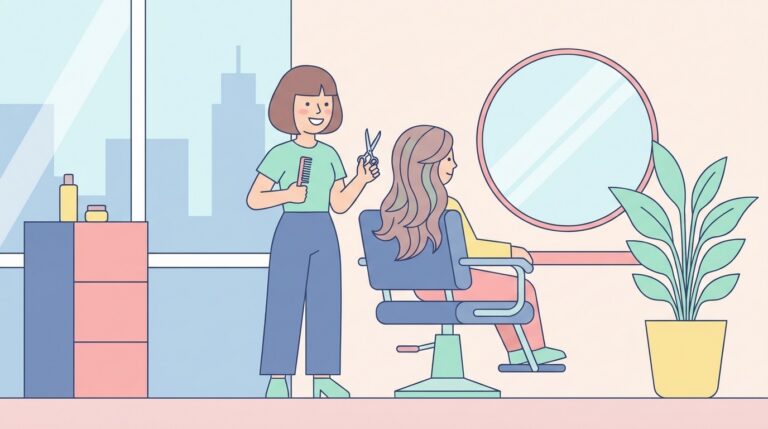
안녕하세요! Daily Hangul Editor here! Imagine this: you’ve finally arrived in Seoul, stepping off the subway into the chic, aesthetic streets of Hongdae or Seongsu-dong. Everywhere you look, people sport effortless, airy, Pinterest-perfect hairstyles that bounce gracefully with every step. You eagerly book an appointment at a trendy Korean salon. You sit down in the chair, cape draped over your shoulders, sipping a complimentary iced Americano. The friendly stylist smiles and asks what you’d like.
You have thick, heavy hair, and your dream is to get that wispy, weightless K-drama haircut. But your mind suddenly goes completely blank! You try miming scissors with your fingers, saying “make it light, please?” but you worry you might walk out with a heavy bowl cut or an accidental buzzcut.
Don’t panic! Communicating your exact hair preferences in Korean is much simpler than you think. Today’s guide is crafted from real student experiences and local salon field notes, specifically designed for A2 beginner learners. By the end of this guide, you will master the exact native phrases needed to comfortably ask for hair thinning and light layers with confidence!
Phase 2: Deep Dive into 3 Key Expressions
1. 머리숱이 많아서 층 좀 내주세요. (Meorisusi manaseo cheung jom naejuseyo.)
- Pronunciation: [Meo-ri-su-si ma-na-seo cheung jom nae-ju-se-yo] (Sound tip: “Meo-ri” rhymes with “merry”, “cheung” sounds like “chung”, and “jom” sounds like “chome”)
- Meaning: Literal: “Because hair quantity is much, please put out layers.” / Real Nuance: “My hair is on the thicker side, so please add some layers to give it shape.”
- K-Culture Moment: You will hear female leads in makeover scenes of rom-com dramas say this right before revealing their chic transformation!
- Editor’s Insight: ‘머리숱’ (meorisut) refers specifically to the density or volume of hair on your scalp, not the length. Adding ‘좀’ (jom – a little/please) softens the request instantly.
- Situation Spectrum: Casual: ⚠️ | Semi-formal: ✅ | Formal: ✅
- 🤔 Think About It: In English, we say “My hair is thick,” describing the texture of the hair itself. Why do you think Korean focuses on ‘숱’ (the collective amount or density)?
2. 가볍게 숱 쳐주세요. (Gabyeopge sut chyeojuseyo.)
- Pronunciation: [Ga-byeop-ge sut chyeo-ju-se-yo] (Sound tip: “Ga-byeop-ge” sounds like “Gah-byup-geh”, and “chyeo” sounds like the “cheo” in “cheer-up”)
- Meaning: Literal: “Lightly strike/trim the hair density, please.” / Real Nuance: “Please thin it out lightly so it feels lightweight.”
- K-Culture Moment: Male and female K-pop idols often say this before a world tour so their hair stays bouncy under stage lights and choreography.
- Editor’s Insight: ‘숱을 치다’ (suteul chida) is the exact industry-standard verb for thinning hair using thinning shears. Adding ‘가볍게’ (lightly) prevents the stylist from removing too much volume.
- Situation Spectrum: Casual: ⚠️ | Semi-formal: ✅ | Formal: ✅
- 🤔 Think About It: The verb ‘치다’ usually means ‘to hit’ or ‘to strike’. How does striking relate to removing weight from dense hair?
3. 레이어드 컷으로 해주시겠어요? (Reieodeu keoseuro haejusigesseoyo?)
- Pronunciation: [Re-i-eo-deu keot-seu-ro hae-ju-si-ge-sseo-yo] (Sound tip: English loanwords “Layered Cut” followed by the polite honorific “hae-ju-si-ge-sseo-yo”)
- Meaning: Literal: “Could you do it with a layered cut?” / Real Nuance: “Could you give me a layered cut?”
- K-Culture Moment: Used when referencing iconic celebrity cuts like the famous “Wendy Cut” or trendy “Hush Cut”.
- Editor’s Insight: ‘-주시겠어요?’ is the gold standard polite inquiry at an A2 level. It sounds extremely respectful and pleasant to service staff.
- Situation Spectrum: Casual: 🚫 | Semi-formal: ✅ | Formal: ✅
- 🤔 Think About It: Koreans use English loanwords like ‘레이어드 컷’ (Layered Cut) alongside pure Korean words like ‘층’ (Cheung). Why do both coexist in salons?
Phase 3: Textbook Korean vs. Real Korean
Situation 1: Asking the stylist to thin out thick hair
- 📖 교과서 한국어 (Textbook Korean): 제 머리카락의 양을 줄여주십시오. (Je meorikaragui yangeul juryeojusipsio.) — Please decrease the volume of my hair strands.
- 🗣️ 진짜 한국어 (Real Korean): 숱 좀 많이 쳐주세요. (Sut jom mani chyeojuseyo.) — Please thin it out quite a bit.
- 💡 Why is it different?: Textbook phrases sound like an official military command or scientific paper. Native speakers use the conversational formula ‘숱 치다’ with softening adverbs like ‘좀’ (a bit).
Situation 2: Requesting layered hair instead of a blunt cut
- 📖 교과서 한국어 (Textbook Korean): 머리를 계단식 모양으로 잘라주세요. (Meorireul gyedansik moyangeuro jallajuseyo.) — Please cut my hair into the shape of stair steps.
- 🗣️ 진짜 한국어 (Real Korean): 층을 자연스럽게 내주세요. (Cheungeul jayeonseureopge naejuseyo.) — Please give me natural-looking layers.
- 💡 Why is it different?: Korean stylists think in terms of texture and movement (‘자연스럽게’ – naturally), rather than geometric definitions.
Phase 4: K-Culture Deep Dive & Non-Verbal Manners
4-1. Nunchi (눈치) & Gestures in the Salon Chair
- The Photo Reveal: Korean stylists adore visual references! Instead of stumbling over vocabulary, open your Instagram or Pinterest and say: “이 사진처럼 해주세요.” (I sajin-cheoreom haejuseyo. / Please make it look like this photo). Point politely with your whole hand or index finger softly curved.
- Head Posture: Keep your head straight. When the stylist tilts your chin or gently nudges your head, follow their pressure without resisting. Nodding too enthusiastically while talking can lead to an uneven cut!
- Mirror Eye Contact: When explaining what you want, look at the stylist’s eyes in the mirror rather than turning your neck around.
4-2. The Cultural Aesthetics of K-Hair: The “Airy” Look
In Korean beauty culture, heavy and blunt cuts are often seen as stuffy (답답하다 – dabdabhada). The holy grail of K-style is 공기감 (gong-gi-gam – feeling of airiness). Styles like the “Hush Cut” (허쉬컷), “Build Perm” (빌드펌), and “Layered C-curl” were all born from the desire to make hair look effortless, soft, and framing the face to create a smaller face profile (얼굴이 작아 보이는 효과).
Phase 5: Real-Life Roleplay Scenario
Setting: “헤어살롱 고운” (Hair Salon Gowoon) in Mapo-gu, Seoul.
Characters: Stylist Min-ji (friendly, stylish professional) & Alex (you, visiting Seoul).
- Turn 1 (Min-ji): 🎭 Smiling warmly while helping Alex into the salon chair
안녕하세요! 오늘 어떤 스타일 원하세요?
(Annyeonghaseyo! Oneul eotteon seutail wonhaseyo?)
Hello! What kind of style are you looking for today? -
Turn 2 (Alex): 🎭 Touching the bottom ends of hair with both hands
머리가 너무 무거워서요. 머리숱이 많아서 가볍게 층 좀 내주세요.
(Meoriga neomu mugeowoseoyo. Meorisusi manaseo gabyeopge cheung jom naejuseyo.)
My hair feels too heavy. It’s thick, so please add light layers to thin it out. -
Turn 3 (Min-ji): 🎭 Combing through Alex’s hair with gentle fingers
아, 숱이 정말 많으시네요! 길이는 유지하고 싶으세요?
(A, suti jeongmal maneusineyo! Girineun yujihago sipeuseyo?)
Ah, you really do have thick hair! Would you like to keep the current length? -
Turn 4 (Alex): 🎭 Showing one inch with thumb and index finger
네, 길이는 조금만 다듬어주시고, 숱만 많이 쳐주세요.
(Ne, girineun jogeumman dadeumeojusigo, sutman mani chyeojuseyo.)
Yes, please just trim the length slightly and thin out the volume a lot. -
Turn 5 (Min-ji): 🎭 Showing a photo on a tablet screen
앞머리랑 옆머리는 자연스럽게 연결해 드릴까요?
(Angmeorirang yeongmeorineun jayeonseureopge yeonggyeolhae deurilkkayo?)
Shall I blend the front bangs and side hair naturally? -
Turn 6 (Alex): 🎭 Nodding gently while looking into the mirror
네! 얼굴 작아 보이게 레이어드 컷으로 해주세요.
(Ne! Eolgul jaga boige reieodeu keoseuro haejuseyo.)
Yes! Please give me a layered cut so my face looks smaller. -
Turn 7 (Min-ji): 🎭 Lifting scissors with a confident nod
네, 알겠습니다. 가볍고 세련되게 해드릴게요!
(Ne, algesseumnida. Gabyeopgo seryeondoege haedeurilkeyo!)
Understood! I’ll make it feel light and stylish! -
Turn 8 (Alex): 🎭 Smiling gratefully with a soft head bow
감사합니다. 잘 부탁드려요!
(Gamsahamnida. Jal butakdeuryeoyo!)
Thank you! I trust your hands!
🔀 Interactive Decision Point
At Turn 3, when Min-ji asks about your length, what will you say?
* Option A: “그냥 알아서 짧게 잘라주세요.” (Geunyang araseo jjalge jallajuseyo. – Just cut it short however you see fit.)
Feedback: Risk! ‘알아서’ gives complete creative freedom to the stylist. You might end up with a pixie cut you didn’t anticipate!
* Option B: “길이는 1센티만 다듬고, 숱 많이 쳐주세요.” (Girineun il-senti-man dadeumgo, sut mani chyeojuseyo. – Please trim just 1cm of length and thin out the volume a lot.)
Feedback: Best! Clear, precise numbers with exact phrasing guarantee you maintain length while dropping heavy bulk.
* Option C: “머리카락을 다 없애주세요.” (Meorikarageul da eopsaejuseyo. – Please get rid of all my hair.)
Feedback: Bad! This literally translates to asking for a complete head shave! Min-ji will be startled.
Phase 6: 10-Second Emotion Shadowing Drill
Read these out loud with rhythm and emotional markers!
[😊 다정하고 확실하게 - Friendly & Clear]
머리숱이 많아서 / 가볍게 / 층 좀 내주세요.
(Meorisusi manaseo / gabyeopge / cheung jom naejuseyo.)-
[✂️ 편안하고 조심스럽게 - Casual & Gentle]
길이는 그대로 두시고 / 숱만 쳐주세요.
(Girineun geudaero dusigo / sutman chyeojuseyo.) -
[✨ 반짝이며 기대감 가득 - Bright & Hopeful]
이 사진처럼 / 자연스럽게 / 레이어드 컷 해주세요!
(I sajin-cheoreom / jayeonseureopge / reieodeu keot haejuseyo!)
Phase 7: K-Culture Mini Dictionary
- 머리숱 (Meori-sut) | Noun | Hair thickness / volume. In Korea, having healthy ‘머리숱’ is considered a major beauty asset symbolizing youth and vitality.
- 층 / 레이어드 (Cheung / Re-i-eo-deu) | Noun | Layers. ‘층’ literally means ‘floor’ or ‘level’, used here to describe stepped hair gradation.
- 기장 (Gi-jang) | Noun | Length of hair or clothing. Salons frequently ask: “기장은 어떻게 하실래요?” (What would you like to do with the length?).
- 드라이 (Deu-ra-i) | Noun/Verb | Blow-dry styling. Not just drying wet hair, but styling with a round brush and hairdryer before leaving the salon.
Phase 8: Traveler’s Survival Kit
Top 3 Survival Phrases
- 다듬기만 해주세요. (Dadeumgiman haejuseyo.)
Just a trim, please.
Pro Tip: Use this when you do not want to lose any visible length at all. - 사진 보여드릴게요. (Sajin boyeodeurilkeyo.)
I will show you a photo.
Pro Tip: Say this while reaching for your smartphone reference images. - 샴푸 물 온도는 괜찮아요. (Syampu mul ondoneun gwaenchanayo.)
The shampoo water temperature is fine.
Pro Tip: Stylists will always ask “물 온도 어떠세요?” (How is the water temp?). This is your instant answer!
Editor’s Travel Note
Booking your appointment is easy! Most Korean salons prioritize reservations over walk-ins. Search for your salon via Naver Map App Download Page to view stylist portfolios, prices, and available time slots. International credit cards are accepted everywhere, and there is strictly no tipping culture in Korea—the price on the screen is all you pay!
Phase 9: “한 발 더 깊이” (One Step Deeper)
In Korean hair salons, you will notice an intense culture of considerate hospitality (배려, baeryeo). Hair stylists often ask numerous small questions like “Are you uncomfortable anywhere?” (불편한 곳 있으세요?) or offer tea and arm pillows. This reflects Korea’s ‘Jeong’ (정) and deep service etiquette. When you clearly state your preferences with polite forms like ‘-해주세요’ (please do for me), you help the stylist provide the best care without any awkward guesswork.
💬 Your Turn: What Korean hairstyle has caught your attention lately? Would you dare to get a trendy Korean short bob or a Hush Cut? Share your dream hairstyle in the comments below!
Phase 10: FAQ & Common Mistakes
Q: Can I bring photos of non-Asian models to a Korean hair salon?
A: Absolutely! Korean stylists are highly skilled with all textures. However, bring 2-3 different angles of the desired haircut so the stylist can analyze the layering structure accurately.
Q: What should I say if the water is too hot during the shampoo massage?
A: Simply say: “조금 뜨거워요!” (Jogeum tteugeowoyo! / It’s a bit hot!) or “미지근하게 해주세요” (Mijigeunhage haejuseyo / Please make it lukewarm).
Q: Do I need to wash my hair before heading to the salon?
A: No! In Korean salons, a cut appointment usually includes a thorough wash and scalp massage either before or after the cut.
🚨 Common Mistakes Alert
- Mistake 1: Saying “머리 깎아주세요” (Meori kakkajuseyo)
Why it is wrong: ‘깎다’ is mainly used for shaving military buzzcuts or peeling fruit!
Correct Action: Say “머리 잘라주세요” (Meori jallajuseyo) or “다듬어주세요” (Dadeumeojuseyo). - Mistake 2: Confusing ‘길이’ (length) with ‘숱’ (volume)
Why it is wrong: If you say “머리 많이 줄여주세요” (Make my hair much less), they might cut it short!
Correct Action: Specify “길이는 유지하고, 숱만 쳐주세요” (Keep length, thin volume only). - Mistake 3: Forgetting to mention face-framing pieces
Why it is wrong: If you want those cute Korean curtain bangs, stylists won’t cut them unless asked.
Correct Action: Point to your cheekbones and ask “옆머리도 내주세요” (Yeongmeorido naejuseyo).
Phase 11: Action Missions
- 🥉 Bronze Mission (Solo Practice): Stand in front of your mirror, gently hold the tips of your hair, and repeat “머리숱이 많아서 가볍게 층 좀 내주세요” out loud 3 times smoothly.
- 🥈 Silver Mission (Social Challenge): Save a picture of your favorite K-pop idol’s hairstyle and write a Korean caption on Instagram or Weverse: “이 레이어드 컷 너무 예뻐요!” (This layered cut is so pretty!).
- 🥇 Gold Mission (Real Life Application): Next time you visit a Korean salon (or order online Korean hair products), use the terms ‘머리숱’ and ‘레이어드’ directly with a native speaker.
- 🎮 K-Culture Mission: Watch an episode of a K-drama makeover scene and spot if the stylist asks “어떤 스타일 원하세요?”!
Phase 12: Interactive Quiz Challenge
1. Situation Quiz: You want to keep your current long hair length, but it feels like a heavy winter coat on your head. What should you say to the hair designer?
* A) 머리 완전히 밀어주세요. (Meori wanjeonhi mireojuseyo.)
* B) 길이는 두고 숱만 가볍게 쳐주세요. (Girineun dugo sutman gabyeopge chyeojuseyo.)
* C) 파마 완전히 풀어주세요. (Pama wanjeonhi pureojuseyo.)
2. Fill-in-the-Blank: Complete the phrase meaning “Please add some layers natural-looking.”
* “층을 _________ 내주세요.” (Hint: Starts with ‘자’)
3. True or False: In Korean salons, it is customary to leave a 15-20% cash tip on the table after receiving your haircut.
* True / False
👉 Click to Reveal Answers & Explanations
- Answer: B — ‘길이는 두고’ (keep the length) + ‘숱만 가볍게 쳐주세요’ (thin out only the volume lightly) is the golden sentence!
- Answer: 자연스럽게 (jayeonseureopge) — Means ‘naturally’. Full sentence: “층을 자연스럽게 내주세요.”
- Answer: False — There is zero tipping in South Korea! Paying the listed price at the counter is standard and polite.






