

Phase 1: Empathy & Storytelling Opening
안녕하세요! 매일한글 에디터입니다.
Have you ever stood in the middle of a bustling international forum, a quiet literary salon in Bukchon, or an intense project debriefing in Yeouido, searching for words that do more than merely transmit information? You have already conquered the steep summits of Korean grammar—the honorific systems, the complex subordinate clauses, and the labyrinth of Hanja-based idiomatic expressions. Yet, at this supreme C2 horizon, a completely different kind of wall often appears: the delicate barrier of texture and warmth.
Many of our advanced learners confess: “My Korean is grammatically flawless, yet native speakers still look at me as if I am reading from a translated whitepaper. How do I move from speaking correct Korean to speaking Korean that genuinely touches hearts and bridges worlds?”
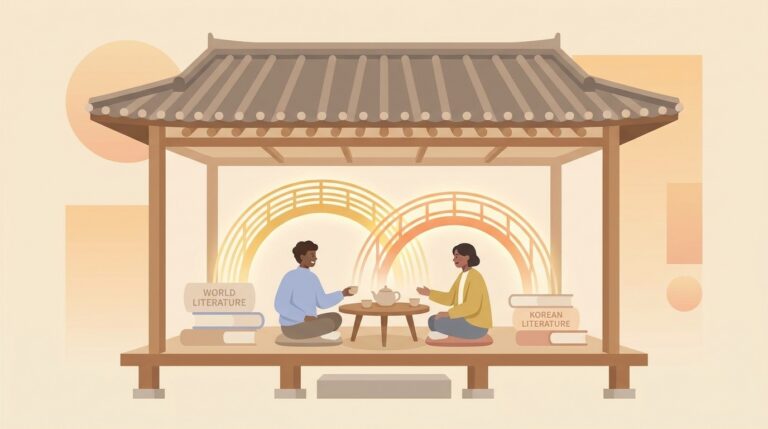
This guide is born out of hundreds of hours of mentor debriefs with diplomats, translators, and global creators who unlocked that ultimate step. You are no longer just an overseas learner analyzing the Korean peninsula from the outside. You are a global intellectual navigating the vast galaxy of the Korean language. Let us explore the sophisticated, heartfelt phrases that will transform your speech into an authentic cultural bridge.
Phase 2: Core Expressions Deep Dive
1. 서로의 결을 어루만지다 (Seoroui gyeoreul eorumanjida)
- Pronunciation: [Seo-ro-ui gyeo-reul eo-ru-man-ji-da] (Think of gyeol like the natural, smooth grain of fine cedar wood, and eorumanjida as gently running your palm over it to soothe and honor its shape.)
- Meaning: Literal: “To caress and soothe each other’s grain.” / Real Nuance: To deeply understand, respect, and tenderly embrace another person’s or culture’s innate characteristics, historical sensitivities, and unspoken wounds.
- K-Culture Moment: Heard during award acceptance speeches by acclaimed directors at international film festivals, or in literary critiques praising a novel that reconciles generational divide.
- Editor’s Insight: ‘결’ (gyeol) is an untranslatable Korean aesthetic concept meaning texture, intrinsic rhythm, and temperamental grain. Using this expression shows you perceive subtle emotional undercurrents rather than superficial logic.
- Situation Spectrum: Casual ⚠️ | Semi-formal ✅ | Formal ✅
- 🤔 Think About It: In your native tongue, do you describe empathy through tactile metaphors like wood grain, or through visual and auditory terms? What does this reveal about Korean perceptual philosophy?
2. 마음에 깊은 울림을 주다 (Maeume gipeun ullimeul juda)
- Pronunciation: [Ma-eum-e gi-peun ool-lim-eul joo-da] (Ullim rhymes closely with the resonant humming sound of a bronze temple bell echoing across a mountain valley.)
- Meaning: Literal: “To give a deep reverberation to the mind/heart.” / Real Nuance: To provoke profound emotional and intellectual resonance that lingers long after words cease.
- K-Culture Moment: Used by veteran cultural hosts on programs like You Quiz on the Block when a guest shares a life epiphany, or in formal diplomacy when addressing shared historical milestones.
- Editor’s Insight: Avoid saying just ‘감동적이었어요’ (gamdongjeogieosseoyo – “It was touching”). C2 mastery expresses emotional resonance as physical reverberation (‘울림’).
- Situation Spectrum: Casual ✅ | Semi-formal ✅ | Formal ✅
- 🤔 Think About It: Why does Korean culture value lingering resonance (yeoun) over immediate, bombastic persuasion during high-stakes dialogues?
3. 경계를 허물고 지평을 넓히다 (Gyeonggyereul heomulgo jipyeongeul neolphida)
- Pronunciation: [Gyeong-gye-reul heo-mul-go ji-pyeong-eul neol-pi-da] (Pronounce heomulgo with a sweeping, fluid cadence, mirroring walls falling down smoothly.)
- Meaning: Literal: “To tear down borders and broaden horizons.” / Real Nuance: To transcend preconceived cultural, ideological, or disciplinary boundaries, creating a larger shared intellectual landscape.
- K-Culture Moment: Common in thought-leadership keynotes, collaborative K-Pop artist manifestos, or symposium opening remarks celebrating global collaboration.
- Editor’s Insight: It elevates an ordinary conversation about intercultural friendship to a visionary, intellectual discourse without sounding pedantic.
- Situation Spectrum: Casual 🚫 | Semi-formal ✅ | Formal ✅
- 🤔 Think About It: When you cross linguistic borders, are you merely entering another country’s space, or expanding your own universal horizon?
Phase 3: Textbook Korean vs. Real Korean
Situation 1: Expressing Mutual Cultural Understanding in a High-Level Meeting
- 📖 교과서 한국어 (Textbook): 우리 두 나라는 서로의 문화를 더 많이 이해해야 합니다. (Uri du naraneun seoroui munhwareul deo mani ihaehaeya hamnida. – “Our two countries must understand each other’s cultures more.”)
- 🗣️ 진짜 한국어 (Real C2 Native): 서로의 문화적 결을 온전히 마주할 때, 비로소 진정한 교감의 지평이 열립니다. (Seoroui munhwajeok gyeoreul onjeonhi maju-hal ttae, biroso jinjeonghan gyogamui jipyeongi yeollimnida. – “When we fully confront and embrace the cultural textures of one another, the horizon of genuine communion finally opens.”)
- 💡 왜 다를까?: The textbook relies on imperative necessity (‘~해야 합니다’), while advanced Korean relies on poetic abstraction and state-change markers (‘결’, ‘지평이 열리다’) to inspire consensus.
Situation 2: Praising an Insightful Comment during a Discussion
- 📖 교과서 한국어 (Textbook): 당신의 의견은 정말 훌륭하고 인상 깊습니다. (Dangsinui uigyeoneun jeongmal hullyunghago insang gipseumnida. – “Your opinion is very great and deeply impressive.”)
- 🗣️ 진짜 한국어 (Real C2 Native): 방금 짚어주신 통찰은 저희 모두에게 묵직한 화두를 던져주네요. (Banggeum jipeojusin tongchareun jeohui moduege mukjikhan hwadureul deonjyeojuneyo. – “The insight you just pinpointed presents a weighty conversational theme for all of us.”)
- 💡 왜 다를까?: Native Korean intellectuals replace generic compliments with philosophical vocabulary like ‘화두’ (hwadu – Buddhist/intellectual core contemplation) and sensory descriptors like ‘묵직한’ (mukjikhan – pleasantly weighty).
Phase 4: K-Culture Deep Dive & Non-Verbal Manners
4-1. 눈치 (Nunchi) & Intellectual Posture
At C2, Nunchi is no longer about survival or pleasing your boss; it is an art of intellectual space-making. When delivering profound observations:
* The Thoughtful Pause (침묵의 미학): Do not jump straight to the rebuttal. Lower your gaze slightly for 1.5 seconds, nod softly, and start with “말씀하신 맥락을 짚어보니…” (Malsseumhasin maengnageul jipeoboni… – “Reflecting on the context you just laid out…”). This signals that you are digesting their cognitive universe before offering yours.
* The Open Hand Gesture: When using phrases like ‘지평을 넓히다’, unfold both palms slightly upward toward your interlocutor. In Korean interpersonal dynamics, this conveys that your knowledge is not a weapon of superiority, but an invitation to shared ground.
4-2. Cultural Code Analysis: The Philosophy of 화이부동 (Harmony Without Sameness)
In classical and contemporary Korean discourse, the highest intellectual virtue is Hwa-i-bu-dong (화이부동, 和而不同)—achieving deep harmony without erasing unique differences. When international intellectuals engage with Korean counterparts (whether in literature, arts, or business partnerships), Koreans are not looking for someone who simply mirrors their words. They revere those who can contextualize foreign perspectives with profound Korean empathy. When you speak of ‘결’ (grain) and ‘울림’ (resonance), you prove that you understand Korean collectivism while preserving your own international viewpoint.
Phase 5: Real-Life Roleplay Scenario
- Setting: An evening salon at a renovated Hanok cultural center in Samcheong-dong, Seoul, celebrating the launch of a multilateral cultural exchange program.
- NPC Character: Curator Ji-min (이지민 큐레이터), a sharp, warm Korean cultural director known for championing deep East-West dialogues.
- 지민: 이번 프로젝트를 준비하면서 가장 고심하셨던 부분이 무엇인지 궁금해요. (Ibeon peurojekteureul junbihamyeonseo gajang gosimhasyeotdeon bubuni mueosinji gunggeumhaeyo. – “I am curious to know what you deliberated over most while preparing this project.”)
- Learner:
🎭 와인잔을 가볍게 쥐고 진중한 눈빛으로단순한 번역을 넘어, 두 문화의 고유한 결을 훼손하지 않고 담아내는 것이었습니다. (Dansunhan beonyeogeul neomeo, du munhwaui goyuhan gyeoreul hwesonhaji anko damanaeneun geosieotseumnida. – “Beyond mere translation, it was about capturing the unique grain of both cultures without compromising either.”) - 지민: ‘결’이라는 표현을 쓰시다니 놀랍네요. 많은 분들이 속도와 효율성만을 강조하곤 하잖아요. (Gyeoriraneun pyohyeoneul sseusidani nollamneyo. Maneun bundeuri sokdowa hyoyulseongmaneul gangjohagon hajanayo. – “I am surprised you used the word ‘gyeol’. So many people usually just emphasize speed and efficiency.”)
- Learner:
🎭 부드러운 미소를 지으며 고개를 끄덕인다효율성 뒤에 가려진 감정의 파동이야말로 사람들의 마음에 진정한 울림을 준다고 믿거든요. (Hyoyulseong dwie garyeojin gamjeongui padong-iyamallo saramdeurui maeume jinjeonghan ullimeul jundago mitgeodeunyo. – “Because I believe the emotional waves hidden behind efficiency are what truly evoke resonance in people’s hearts.”) - 지민: 들을수록 감탄이 나오네요. 그럼 이번 전시가 관객들에게 어떤 의미로 가닿길 바라시나요? (Deureulsurok gamtani naoneyo. Geureom ibeon jeonsiga gwan-gaekdeurege eotteon uimiro gadatgil barasinayo? – “The more I listen, the more impressed I am. How then do you hope this exhibition reaches our audience?”)
- Learner:
🎭 전시장 전경을 따뜻하게 둘러보며언어와 국경의 경계를 허물고, 서로의 사유를 확장하는 지평이 되었으면 합니다. (Eoneowa gukgyeongui gyeonggyereul heomulgo, seoroui sayureul hwakjanghaneun jipyeongi doe-eosseumyeon hamnida. – “I hope it becomes a horizon that dismantles linguistic and national borders, expanding each other’s philosophical thought.”) - 지민: 오늘 나눈 대화 자체가 이미 하나의 아름다운 가교 같네요. 함께하게 되어 참 든든합니다. (Oneul nanun daehwa jachega imi hanaui areumdaun gagyo gatneyo. Hamkkehage doe-eo cham deundeunhamnida. – “Our conversation today already feels like a beautiful bridge. I feel genuinely grounded and reassured to have you with us.”)
- Learner:
🎭 두 손을 모아 가볍게 목례하며저야말로 선생님의 혜안 덕분에 더 깊은 사유의 바다를 유영하고 있습니다. (Jeoyamallo seonsaengnimui hye-an deokbune deo gipeun sayuui badareul yuyeonghago itseumnida. – “It is I who, thanks to your keen insight, am swimming across an even deeper sea of thought.”)
🔀 Interactive Decision Point
Curator Ji-min asks how you plan to address misunderstandings between foreign participants and Korean traditional artisans during tomorrow’s forum. How do you respond?
* Choice A: “서로의 방식이 다르니 규율을 엄격히 세워 합의된 기준대로 통제해야 합니다.” (Control strictly according to rigid guidelines.)
* Choice B: “어느 한쪽의 기준을 앞세우기보다, 각자가 지닌 삶의 결을 경청하며 접점을 찾아가야겠지요.” (Listen to each other’s living textures and gently locate common ground rather than pushing one standard.)
* Choice C: “한국 분들이 정이 많으시니 그냥 술 한잔하면서 회포를 풀면 다 해결될 겁니다.” (Since Koreans have lots of Jeong, drinking soju will solve everything automatically.)
Feedback:
* Choice A (Risk): Sounds overly technocratic and dismissive of relational warmth (In-jeong). Artisans will feel alienated.
* Choice B (Best): Perfect C2 nuance! Demonstrates respect, intellectual maturity, and utilizes core cultural concepts (삶의 결, 접점).
* Choice C (Bad): Oversimplifies complex professional relations with superficial clichés about drinking culture.
Phase 6: 10-Second Emotion Shadowing Drill
Shadow these high-level sentences by feeling the pauses (/) and capturing the emotional frequency:
[🌿 담담하지만 깊은 온기를 담아]
언어란 / 단순한 기호가 아니라, / 사람과 사람의 온기를 잇는 / 가장 다정한 다리입니다.
(Eoneoran / dansunhan gihoga anira, / saramgwa saramui on-gireul inneun / gajang dajeonghan dari-imnida.)-
[🏛️ 지적이고 단단한 확신을 실어]
서로의 다름을 / 경계가 아닌 축복으로 받아들일 때, / 비로소 / 새로운 지평이 열립니다.
(Seoroui dareumeul / gyeonggyega anin chukbogeuro badadeuril ttae, / biroso / saeroun jipyeongi yeollimnida.) -
[🌌 잔잔한 여운을 남기며]
오늘 나눈 / 이 작은 화두가 / 오랫동안 마음에 / 깊은 울림으로 머물기를 바랍니다.
(Oneul nanun / i jageun hwaduga / oraedong-an maeume / gipeun ullimeuro meomulgireul baramnida.)
Phase 7: K-Culture Mini Dictionary
- 결 (Gyeol): The inner grain, weave, or characteristic temperament. Used in intellectual writing to describe art, human nature, or literary prose (“그 작가의 문장은 고유한 결이 살아있다”).
- 화두 (Hwadu): Originally a Zen Buddhist term for meditative themes; now signifies an essential, thought-provoking societal or intellectual question (“지속 가능성은 우리 시대의 가장 무거운 화두입니다”).
- 귀감 (Gwigam): A mirror or paradigm of excellence that serves as an inspiring model for others (“선생님의 삶의 태도는 많은 이들에게 귀감이 됩니다”).
- 여운 (Yeoun): Lingering reverberation, afterglow, or residual fragrance of a profound moment, conversation, or artistic piece (“공연이 끝난 후에도 깊은 여운이 가시지 않았다”).
Phase 8: Traveler’s Survival Kit (Cultural Explorer Edition)
Top 3 Survival Phrases for Cultural Salons & Thought Exchanges
- “말씀의 결이 참 따뜻하게 와닿습니다.” (Malsseumui gyeori cham ttatteuthage wadatseumnida.)
- Pro Tip: Use this when responding to an elder, mentor, or panelist. It shows you appreciate not just their facts, but their emotional delivery.
- “그 부분은 우리가 함께 곱씹어볼 만한 가치가 있네요.” (Geu bubuneun uriga hamkke gopssi-eobol manhan gachiga itneyo.)
- Pro Tip: Replaces the generic “좋은 생각입니다” (Good idea) with high-level contemplative appreciation (‘곱씹다’ means to chew thoughtfully / ruminate).
- “덕분에 사유의 폭이 한층 넓어졌습니다.” (Deokbune sayuui pogi hancheung neolpeojyeotseumnida.)
- Pro Tip: The ultimate closing compliment to an intellectual host or debate partner.
Editor’s Travel Note
When visiting Korea for symposiums or cultural immersions, don’t just rely on standard tourist guides. Download the 국립중앙박물관 공식 오디오 전시 가이드 앱 to absorb the cadence of high-register Korean curator narrations. Also, use the 네이버 지도 앱 다운로드 to uncover quiet cultural foundation archives and book cafes tucked away in the alleys of Tongui-dong and Paju Book City.
Phase 9: “한 발 더 깊이” (One Step Deeper)
Korean is inherently a communal, relational language. In English, the self is an autonomous sovereign entity asserting clarity; in Korean, the self is a reflective lens woven into a web of shared sentience (Jeong and Che-myeon). To master C2 Korean is not to showcase rhetorical dominance or defeat an interlocutor in an academic duel. Rather, it is the rare virtue of making the other person feel dignified and deeply understood through your deliberate vocabulary. When you refer to their thoughts as ‘울림’ (resonance) and your relationship as ‘가교’ (a bridge), you validate the collective spirit that animates Korean life.
💬 Your Turn: What is one phrase in your native language that captures the gentle, unhurried respect of human connection? Share it below, and let’s craft its poetic Korean equivalent together!
Phase 10: FAQ & Mistake Prevention
Q: Isn’t using words like ‘결’ or ‘화두’ too poetic for ordinary business discussions?
A: In purely transactional contexts (like reporting quarterly sales numbers), keep it direct. However, in strategy, vision-sharing, international diplomacy, client appreciation, or leadership addresses, these words distinguish a master communicator from a mere functional speaker.
Q: How can I avoid sounding pretentious when using high-level Hanja idioms?
A: Balance is key. Pair elevated vocabulary with humble sentence endings. For instance, combine ‘사유의 지평’ (intellectual horizon) with self-effacing verbs like ‘~배워갑니다’ (I am learning from) rather than grandiose pronouncements.
Q: What is the exact difference between ‘감동’ (Gamdong) and ‘울림’ (Ullim)?
A: Gamdong is an active, often immediate emotion—like crying at a movie climax. Ullim is an intellectual and existential vibration; it might not bring immediate tears, but it stays with you for weeks, gently restructuring your world.
🚨 흔한 실수 (Common Mistakes) Warning Board
- Mistake: Using ‘당신’ (Dangsin) in intellectual debates when addressing the opposite speaker.
- Correct Action: ‘당신’ sounds confrontational in spoken Korean. Use “선생님” (Seonsaengnim), “교수님” (Gyosunim), or the neutral third-person anchor “앞서 말씀해주신 의견” (The opinion shared earlier).
- Mistake: Translating “I understand your point” literally as “당신의 요점을 이해합니다.”
- Correct Action: Use “말씀하신 취지를 충분히 헤아렸습니다.” (I have thoroughly grasped the considerate intent of your words).
- Mistake: Overusing blunt declarative endings like ‘~이다’ or ‘~해야 한다’ in speeches.
- Correct Action: Soften with ‘~지 않을까 생각합니다’ or ‘~길 소망합니다’ to foster collaborative consensus.
Phase 11: Action Missions
- 🥉 Bronze Mission (Solo Shadowing): Record yourself reading the 3 emotional shadowing sentences from Phase 6. Listen back and verify if your pauses (
/) hold genuine breathing room. - 🥈 Silver Mission (Social Reflection): Write a 2-sentence post on Instagram or Threads reflecting on your favorite Korean film, book, or song using the phrase
마음에 깊은 울림을 주다. - 🥇 Gold Mission (Real-world Bridge): Next time you interact with a Korean peer, exchange student, or business partner, replace a generic “고마워요” with “당신과 나눈 대화 덕분에 생각의 결이 한층 깊어졌어요.” Watch their eyes light up.
- 🎮 K-Culture Discovery Mission: Watch Bong Joon-ho’s or Han Kang’s interviews in Korean. Spot every time an interviewer or speaker uses the words ‘결’, ‘결을 달리하다’, or ‘여운’. Note down the context!
Phase 12: Interactive Quiz Challenge
1. Situational Judgment Quiz
You are giving the concluding toast at an international bilateral arts banquet in Seoul. Which statement expresses the highest level of thoughtful warmth and intercultural leadership?
A. “한국 술이 아주 맛있으니 우리 모두 끝까지 마십시다!”
B. “오늘 이 자리가 양국의 문화를 넘어, 서로의 삶의 결을 보듬는 진정한 지평이 되기를 소망합니다.”
C. “우리의 계약 조건이 완벽히 합의되었음을 선포합니다.”
2. Fill-in-the-Blank Quiz
그 강연자의 깊이 있는 통찰은 청중들의 마음에 긴 ( )을/를 남기며 오랜 감동을 주었다.
(Hint: The lingering afterglow or reverberation of a profound moment.)
3. True or False Cultural Quiz
True or False: In advanced Korean intellectual etiquette, speaking rapidly without any pauses is celebrated as the highest sign of fluency and cognitive brilliance.
👉 Click to reveal answers & explanations
- Answer: B
- Explanation: Choice B demonstrates quintessential C2 elegance, blending ‘삶의 결’ (life’s textures) and ‘지평’ (horizons) into a compassionate vision.
- Answer: 여운 (Yeoun)
- Explanation: ‘여운을 남기다’ is the quintessential idiom for experiences that leave a lasting emotional resonance.
- Answer: False
- Explanation: True mastery in Korean high-context communication is marked by the deliberate cadence of silence, respectful listening, and thoughtful pauses (침묵과 호흡의 미학).
- Explanation: True mastery in Korean high-context communication is marked by the deliberate cadence of silence, respectful listening, and thoughtful pauses (침묵과 호흡의 미학).







