

Phase 1: Empathy & Storytelling Opening
안녕하세요! 매일한글 에디터입니다. (Hello! I’m your Daily Hangul editor.)
Picture this: You walk into your morning study group or office in Seoul, and your friend or colleague suddenly walks in rocking a brand-new, shoulder-length bob cut. Back home, you might just flash a smile and say, “Nice hair!” But in Korea, you see everyone instantly light up, exclaiming with high energy: “Eomeo! Meori hasyeotneyo! Wanjeon sangkeumhaeyo!” You want to join in and say something warm, but your mind freezes. Is it rude to comment on someone’s look? What if you sound awkward or use textbook grammar that sounds like an interrogation robot?
Take a deep breath—you are not alone! Many A2 Korean learners tell us they hesitate to compliment someone’s change in appearance because they fear sounding overly personal or grammatically stiff. But here is the local secret: In Korean social life, noticing small personal changes—especially a new haircut, chic glasses, or a fresh outfit—is considered a supreme form of 눈치 (Nunchi – social emotional intelligence) and genuine care.
By mastering today’s guide, based on real feedback from hundreds of elementary learners living and studying in Korea, you will learn how to praise someone’s new look effortlessly, spread warm vibes, and instantly break the ice like a true local friend.
Phase 2: Top 3 Core Expressions Deep Dive
Let’s break down the three must-have expressions to compliment a makeover.
1. 머리 스타일 바꾸셨네요! (Meori seutail bakkusyeotneyo!)
- Pronunciation: [Meo-ri seu-ta-il ba-kku-syeot-ne-yo!] (Sounds like: “Muh-ree stah-eel bah-kkoo-shyut-neh-yo”. The “kku” has a tight, popped “k” sound like the ‘c’ in “sky”.)
- Meaning: Literal: “You changed your hair style!” / Real Nuance: “Look at you! You got your hair done—I totally noticed!”
- K-Culture Moment: Seen in countless office K-Dramas when coworkers gather around the water cooler in the morning, greeting a female lead who stepped out with a transformative new look.
- Editor’s Insight: Notice the honorific
-(으)시in바꾸셨네요. Even if you talk to someone slightly older or a coworker, this honorific marker shows respect while the ending~네요conveys delightful, spontaneous surprise. - Situation Spectrum: Casual: ⚠️ (drop the honorific to 바꾸었네 / 바꿨네) | Semi-formal: ✅ | Formal: ✅
- 🤔 Think About It: In many Western settings, asking directly about personal changes might sometimes feel intrusive. Why do you think Korean culture considers noticing small physical transformations a gesture of thoughtfulness?
2. 단발머리가 정말 잘 어울려요. (Danbalmeoriga jeongmal jal eoullyeoyo.)
- Pronunciation: [Dan-bal-meo-ri-ga jeong-mal jal eo-ul-lyeo-yo.] (The “eo” in “eoullyeoyo” sounds like the “u” in “cup”, rolling smoothly into “lyeo-yo”.)
- Meaning: Literal: “Short bob hair suits you very well.” / Real Nuance: “That bob cut was made for you! It looks incredible on you.”
- K-Culture Moment: Every time a K-Pop idol trades long locks for a chic short bob, YouTube comments flood with: “Danbal wanjeon jal eoullyeo!”
- Editor’s Insight:
잘 어울려요comes from어울리다(to suit / to match). It focuses on how harmonious the style is with the person, making it an ego-boosting, safe, and flattering compliment. - Situation Spectrum: Casual: ✅ (단발머리 완전 잘 어울려) | Semi-formal: ✅ | Formal: ✅
- 🤔 Think About It: How does saying “it matches you well” differ from simply saying “it is pretty”?
3. 완전 상큼하고 예뻐요! (Wanjeon sangkeumhago yeppeoyo!)
- Pronunciation: [Wan-jeon sang-keum-ha-go ye-ppeo-yo!] (Pronounce “sangkeum” crisp and bright, like biting into a tart green apple.)
- Meaning: Literal: “Completely refreshing and pretty!” / Real Nuance: “You look so fresh, vibrant, and youthful!”
- K-Culture Moment: Used by variety show hosts whenever an actress walks in sporting a lively summer look or pastel outfit.
- Editor’s Insight:
상큼하다(refreshing/crisp) is the ultimate compliment for bob cuts or bright styling in Korea. It praises energy, youthfulness, and lighthearted charm. - Situation Spectrum: Casual: ✅ | Semi-formal: ✅ | Formal: ⚠️ (too playful for stiff board meetings)
- 🤔 Think About It: Do you have words in your native language that describe aesthetic beauty using taste or sensory words like “citrusy/fresh”?
Phase 3: Textbook Korean vs. Real Korean
Situation 1: Pointing out someone’s new haircut
- 📖 교과서 한국어 (Textbook): 당신은 머리를 잘랐습니까? (Dangsin-eun meori-reul jallasseumnikka? – “Did you cut your hair, you?”)
- 🗣️ 진짜 한국어 (Real Korean): 머리 하셨네요! 완전 찰떡이에요! (Meori hasyeotneyo! Wanjeon chaltteog-ieyo! – “You got your hair done! It matches you to perfection!”)
- 💡 왜 다를까? (Why the difference?): Using
당신sounds aggressive or confrontational. Real Koreans use the natural verb머리 하다(to do hair) rather than자르다(to cut), and celebrate the result with slang like찰떡(sticky rice cake = perfect fit).
Situation 2: Complimenting an outfit style
- 📖 교과서 한국어 (Textbook): 당신의 옷이 대단히 아름답습니다. (Dangsin-ui osi daedanhi areumdapseumnida. – “Your clothes are extremely beautiful.”)
- 🗣️ 진짜 한국어 (Real Korean): 오늘 착장 너무 멋져요! 어디 가세요? (Oneul chakjang neomu meotjyeoyo! Eodi gaseyo? – “Love today’s outfit! Going somewhere special?”)
- 💡 왜 다를까? (Why the difference?): In everyday speech, younger Koreans love using
착장(outfit/fit) or스타일(style). Adding “Are you going somewhere nice?” shows friendly interest in their day.
Phase 4: K-Culture Deep Dive & Non-Verbal Manners
4-1. Nunchi (눈치) & Gestures
- Eye Contact & Soft Hands: When delivering this compliment, do not stare unblinkingly. Briefly glance at their new hairstyle, widen your eyes with pleasant surprise, and clasp your hands lightly near your chest or gently point with an open palm toward your own hair.
- Tone Contour: Start slightly higher in pitch. A flat tone might sound sarcastic! Let your voice rise on “바꾸셨네요!” to signal pure enthusiasm.
4-2. Cultural Code: Korea’s “Danbal-byeong” (단발병)
In Korea, there is a legendary cultural phenomenon called 단발병 (Danbal-byeong / Bob Cut Syndrome). Whenever a famous celebrity (like IU, Wendy, or Kim Chaewon) cuts their hair into a stylish short bob, thousands of people rush to hair salons across Gangnam and Hongdae with screenshot photos, desperately asking for the same cut.
Because chopping off long hair is seen as a bold, refreshing transformation, acknowledging it with “상큼해요” (so refreshing) or “어려 보여요” (you look younger) is the highest social praise you can gift someone!
Phase 5: Real-Life Roleplay Scenario
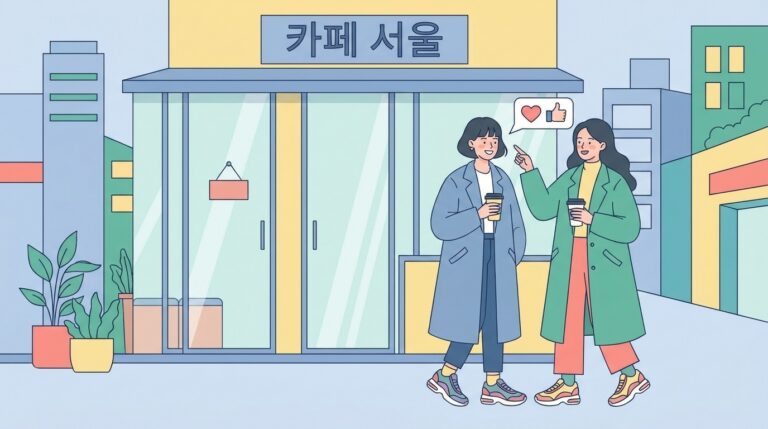
Setting: A cozy boutique cafe in Seongsu-dong. Minji arrives to meet Alex for a weekend study session, sporting a chic new bob cut instead of her usual long wave.
Characters:
* 민지 (Minji): Alex’s Korean study partner, feeling slightly nervous about her brand-new cut.
* 알렉스 (Alex): Eager A2 Korean learner wanting to make Minji feel confident.
- 알렉스: 민지 씨, 안녕하세요! 어? 머리 스타일 바꾸셨네요!
(Minji ssi, annyeonghaseyo! Eo? Meori seutail bakkusyeotneyo!)
🎭 Alex widens his eyes with a bright, welcoming smile.
“Hi Minji! Huh? You changed your hairstyle!” -
민지: 아, 알아채셨네요! 오늘 아침에 미용실 다녀왔어요.
(A, arachae-syeotneyo! Oneul achime miyongsil danyeowasseoyo.)
🎭 Touches her ends bashfully, tucking hair behind her ear.
“Ah, you noticed! I went to the salon this morning.” -
알렉스: 단발머리가 정말 상큼하고 잘 어울려요!
(Danbalmeoriga jeongmal sangkeumhago jal eoullyeoyo!)
🎭 Nods warmly with open palms.
“The bob cut looks so fresh and suits you really well!” -
민지: 정말요? 오랫동안 긴 머리여서 조금 어색했거든요.
(Jeongmallyo? Oraetdong-an gin meori-yeoseo jogeum eosaekhaetgeodeunyo.)
🎭 Smiles with relief, laughing softly.
“Really? I had long hair for so long that I felt a bit awkward.” -
알렉스: 전혀 어색하지 않아요. 완전 찰떡이에요!
(Jeonhyeo eosaekhaji anayo. Wanjeon chaltteog-ieyo!)
🎭 Shakes head reassuringly with great conviction.
“Not awkward at all. It’s an absolute match!” -
민지: 고마워요, 알렉스 씨 덕분에 기분 좋아졌어요!
(Gomawoyo, Alex ssi deokbune gibun joajyeosseoyo!)
🎭 Beams with bright confidence.
“Thank you, Alex! You made my day!” -
알렉스: 오늘 옷 스타일하고도 정말 딱 맞아요.
(Oneul ot seutail-hagodo jeongmal ttak majayo.)
🎭 Gently gestures toward her stylish jacket.
“It fits today’s outfit style perfectly too.” -
민지: 하하, 오늘 커피는 기분 좋게 제가 쏠게요!
(Haha, oneul keopineun gibun joke jega ssolgeyo!)
🎭 Proudly brings out her card toward the cafe counter.
“Haha, the coffee is on me today!”
🔀 Interactive Decision Point
If Minji had asked: “단발머리 하니까 좀 이상하지 않아요? (Does the bob cut look strange on me?)”, what should Alex say?
- Option A: “아니에요, 진짜 잘 어울리고 훨씬 시원해 보여요!” (No way, it suits you so well and looks much cooler!)
Feedback: [BEST] 🌟 Instant reassurance! Using훨씬(much more) dispels her anxiety. - Option B: “네, 머리가 좀 짧아진 것 같아요.” (Yes, your hair seems a bit shorter.)
Feedback: [BAD] ❌ Stating the obvious without any emotional warmth makes the atmosphere cold. - Option C: “예전 긴 머리가 더 예뻤던 것 같아요.” (I think your previous long hair was prettier.)
Feedback: [RISK] ⚠️ Brutal honesty here stings! Hair cannot grow back instantly, so this kills the mood.
Phase 6: 10-Second Emotion Shadowing Drill
Practice these lines out loud! Follow the rhythm breaks (/) and tap into the bracketed emotion.
[✨ 깜짝 놀라며 밝게]
민지 씨! / 머리 스타일 바꾸셨네요! / 완전 상큼해요!
(Minji ssi! / Meori seutail bakkusyeotneyo! / Wanjeon sangkeumhaeyo!)-
[💖 다정하고 진심 어린 어조로]
단발머리가 / 진짜 찰떡이에요. / 너무 잘 어울려요!
(Danbalmeoriga / jinjja chaltteog-ieyo. / Neomu jal eoullyeoyo!) -
[👍 자신감을 불어넣어 주며]
어색하지 않아요. / 오늘 착장하고 / 완전 딱 맞아요!
(Eosaekhaji anayo. / Oneul chakjang-hago / wanjeon ttak majayo!)
Phase 7: K-Culture Mini Dictionary
-
단발병 (Danbal-byeong)
Translation: Bob Cut Syndrome / Craze
Context: Used in lifestyle articles and everyday chats when someone is tempted to cut their hair short after seeing trendy looks. -
찰떡이다 (Chaltteog-ida)
Translation: To be a match made in heaven / Fits like a glove
Context: Slang derived from sticky rice cakes. Used when an outfit, hairstyle, or makeup matches someone’s vibe flawlessly. -
꾸안꾸 (Kku-an-kku)
Translation: Effortlessly stylish (“Dressed up, but looking natural”)
Context: Short for “꾸민 듯 안 꾸민 듯”. A huge trend in Seoul street fashion where you praise someone for looking chic without trying too hard. -
인생 머리 (Insaeng Meori)
Translation: Life-defining hairstyle / The best haircut of one’s life
Context:인생(life) +머리(hair). Say this to someone who got the most flattering haircut they’ve ever had!
Phase 8: Traveler’s Survival Kit
Top 3 Survival Phrases
- 사진이랑 똑같이 해주세요. (Sajin-irang ttokgati hae-juseyo.)
Meaning: “Please make it look just like this photo.”
Pro Tip: Essential when visiting trendy Korean salons in Hongdae or Apgujeong. - 머리 감겨 드릴게요. (Meori gamgyeo deurilgeyo.)
Meaning: “I will wash your hair now.”
Pro Tip: What the salon staff will say right before you lie down at the shampoo station. - 드라이만 해주세요. (Deura-iman hae-juseyo.)
Meaning: “Just blow-dry styling, please.”
Pro Tip: Great when getting styled before an event without cutting your hair.
Editor’s Travel Note
- Salon Bookings: Avoid walking in without appointments at popular hair studios. Check out the Kakao Hairshop reservation app or search top-rated salons via Naver Map search for Seoul salons.
- Photo Prep: Instead of trying to describe cuts in complex Korean, prepare 2-3 Instagram angles of the cut you desire!
Phase 9: A Step Deeper (한 발 더 깊이)
In Western cultures, commenting on someone’s physical appearance can sometimes feel risky or overly personal. In Korea, however, relational warmth (정 / Jeong) is built on attentiveness. Noticing a coworker’s new bob cut or a friend’s new coat signals: “I see you, you matter in our group, and I pay attention to you.” It is less about superficial vanity and more about social attunement. When delivered with respect and warmth, it melts awkward tension faster than anything else.
💬 Your Turn: Have you ever noticed a friend’s new style but didn’t know what to say? Leave a comment below with your favorite new expression from today!
Phase 10: FAQ & Common Mistakes
Q: Can I say “예뻐졌어요” (You became prettier) to a friend?
A: Yes, to close peers, but be cautious with seniors or supervisors! It can unintentionally imply that they were not pretty before. Sticking to 잘 어울려요 (it suits you) is always 100% safe.
Q: What if a male friend gets a dramatic haircut?
A: Swap 상큼해요 (refreshing/crisp) with 깔끔해요 (Kkalkkeumhaeyo – neat/sharp) or 훨씬 멋져요 (Hwoolssin meotjyeoyo – looks way cooler)!
Q: How do I reply if someone compliments my hair first?
A: Smile bashfully and say: “감사해요! 기분 전환 겸 잘라봤어요.” (Gamsahaeyo! Gibun jeonhwan gyeom jallabwasseoyo. – Thank you! I cut it for a refreshing change of pace.)
🚨 Common Mistakes Warning Board
- Mistake 1: Calling someone’s hair
털 (Teol).
Correction:털refers to animal fur or body hair! Head hair is always 머리 (Meori) or 머리카락 (Meorikarak). - Mistake 2: Saying “당신의 머리가 좋아요.” (Dangsin-ui meoriga joayo.)
Correction: Avoid당신and use머리 스타일 너무 잘 어울려요! - Mistake 3: Shouting “축하해요!” (Congratulations!) for a haircut.
Correction: Getting a haircut is not a wedding or graduation! Say잘 어울려요instead.
Phase 11: Action Missions
- 🥉 Bronze Mission (Solo): Stand in front of your mirror and practice: “머리 스타일 바꾸셨네요! 정말 상큼하고 잘 어울려요!” 5 times with smiling eyes.
- 🥈 Silver Mission (Social): Leave a comment in Korean on your favorite K-pop idol or actor’s recent selfie: “단발머리 완전 찰떡이에요!”
- 🥇 Gold Mission (Real World): Use today’s compliment when your Korean tutor, classmate, or friend arrives with any slight wardrobe or hairstyle change.
- 🎮 K-Culture Mission: Watch an episode of a modern K-Drama (like Business Proposal or Castaway Diva) and spot the exact scene where someone notices a female character’s makeover!
Phase 12: Interactive Quiz Challenge
Question 1. Situational Judgment
Your coworker Min-su came to the office with his hair styled short and clean. What is the most natural compliment?
A) 머리 털이 참 대단합니다.
B) 민수 씨, 머리 하셨네요! 깔끔하고 완전 잘 어울려요.
C) 당신은 머리를 잘랐습니까? 축하해요!
Click here to reveal the answer and explanation
Correct Answer: B
Explanation: B uses the natural expression 머리 하셨네요 and pairs it with 깔끔하고 잘 어울려요 (neat and suits you well). Option A uses 털 (animal fur), and Option C uses the aggressive pronoun 당신 and inappropriate congratulations 축하해요.
Question 2. Fill in the Blank
Complete the sentence to say: “The bob cut looks so fresh and youthful!”
“단발머리가 정말 [ ] 예뻐요!”
Click here to reveal the answer and explanation
Correct Answer: 상큼하고 (sangkeumhago)
Explanation: 상큼하고 comes from 상큼하다 (refreshing/vibrant) and joins with 예뻐요 (pretty) using -고 (and).
Question 3. Culture True or False
In Korean culture, telling someone 어려 보여요 (You look younger) after a new haircut is considered an insult.
Click here to reveal the answer and explanation
Correct Answer: False
Explanation: In Korea, looking youthful is one of the highest compliments! Pairing a new bob cut with “훨씬 어려 보여요!” (You look so much younger!) is regarded as flattering and polite.







