

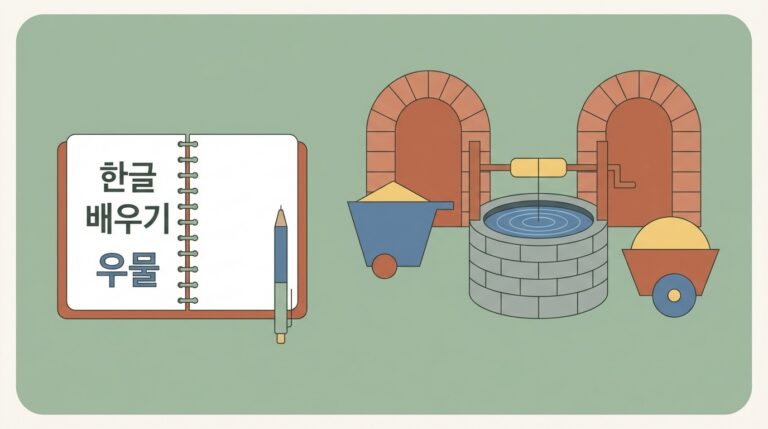
The Well Metaphor of Bukhak: When Joseon’s Rebels Preached Consumption
Phase 1: Empathy (Narrative Immersion)
안녕하세요! 매일한글 에디터입니다. (Hello! I’m your Daily Hangul editor.) Have you ever engaged in a debate with Korean intellectuals or executives where someone cited classical philosophy to justify modern consumer psychology? Picture this: you are sitting in a sleek hanok cafe in Bukchon, sipping a single-origin pour-over, discussing Korea’s hyper-active domestic consumer trends. You bring up the traditional Neo-Confucian virtue of extreme frugality—geun-geom-jeol-yak (근검절약)—only for your Korean colleague to smile and counter: “Ah, but what about the Northern Learning school’s well metaphor?” If your mind blanks at that moment, don’t worry. Many advanced Korean learners hit a wall when transitioning from standardized conversational topics to the profound socio-economic philosophies of late Joseon. The Northern Learning faction (Bukhakpa, 북학파), led by titans like Pak Chi-won and Pak Che-ga, revolutionized Korean thought by arguing that wealth is like water in a well: draw from it constantly, and fresh water keeps bubbling up; leave it untouched, and it turns stagnant and dries up. This guide draws upon genuine feedback from C2-level researchers and business professionals who needed the linguistic finesse to articulate sophisticated socio-economic frameworks in authentic Korean. Mastering these concepts will elevate your Korean expression from textbook fluency to genuine intellectual authority.
Phase 2: Core Expressions Deep Dive
1. 재물을 우물에 비유하다 (Jaemul-eul umul-e bi-yu-hada)
- Pronunciation: [Jae-mul-eul oo-mool-e bee-yoo-ha-da] (Think: “Jae-mool” flowing like a cool spring pool, “bee-yoo” sounding like ‘be you’ spoken quickly)
- Meaning: Literally “to liken wealth to a well.” In real discourse, it signifies an economic philosophy advocating that continuous consumption drives production and circulates liquidity, rather than hoarding assets.
- K-Culture Moment: Quoted in modern economic documentaries, boardroom strategy presentations on domestic consumer demand, and period dramas (Sageuk) depicting late Joseon reformists challenging conservative ministers.
- Editor’s Insight: This phrase does not mean reckless spending. It represents a dynamic circulation model. When using it at a C2 level, you evoke Pak Che-ga’s Bukhak-ui (북학의), suggesting that hoarding suppresses technological innovation and national vitality.
- Situation Spectrum: Casual: ⚠️ | Semi-formal: ✅ | Formal: ✅
- 🤔 Think About It: Does your native culture perceive saving as an absolute moral good, or does it champion velocity of capital like the Bukhak scholars?
2. 이용후생을 도모하다 (I-yong-hu-saeng-eul do-mo-ha-da)
- Pronunciation: [Ee-yong-hoo-saeng-eul doh-moh-ha-da] (Think: “Ee-yong” like utilizing, “hoo-saeng” like enriching life, “doh-moh” like planning deliberately)
- Meaning: Literally “to seek practical utility and enrich the people’s livelihood.” Nuance: Pursuing pragmatic, state-of-the-art technology and infrastructure to tangibly improve human living conditions, unburdened by empty ideological dogma.
- K-Culture Moment: Frequently cited by tech innovators and cultural commentators describing Korea’s rapid adoption of high-speed rail, smart logistics, and civic digital infrastructure.
- Editor’s Insight: This four-character idiom (Yong-hu-saeng, 이용후생) is the cornerstone of Silhak thought. Pairing it with the verb domohada (도모하다, to foster/aim for) demonstrates sophisticated rhetorical mastery.
- Situation Spectrum: Casual: 🚫 | Semi-formal: ✅ | Formal: ✅
- 🤔 Think About It: How does prioritizing tangible human utility alter the philosophical justification for technological disruption?
3. 물꼬를 트다 (Mulkko-reul teuda)
- Pronunciation: [Mool-kko-reul teu-da] (Think: “Mool” as water, “kko” with a sharp tense ‘k’, “teu-da” like clearing an obstruction)
- Meaning: Literally “to open the irrigation gate.” Nuance: To break a deadlock, initiate an intellectual or economic breakthrough, or pave the path for commercial exchange.
- K-Culture Moment: Prominently used in public debates, newspaper editorials, and corporate negotiations when launching bilateral trade agreements or deregulation policies.
- Editor’s Insight: While derived from agricultural irrigation, Pak Chi-won used this conceptual imagery when advocating for maritime trade routes and brick-paved transport networks to overcome Joseon’s mountainous bottlenecks.
- Situation Spectrum: Casual: ✅ | Semi-formal: ✅ | Formal: ✅
- 🤔 Think About It: Notice how Korean uses water and irrigation metaphors to conceptualize progress, while Western metaphors often rely on mechanical gears or sparks.
Phase 3: Textbook Korean vs. Real Korean
Situation 1: Arguing that consumer spending stimulates the national economy
- 📖 교과서 한국어: 소비를 늘려야 생산이 활성화됩니다. (Sobi-reul neullyeoya saengsan-i hwalseonghwadoemnida. – “Production is revitalized only when consumption increases.”)
- 🗣️ 진짜 한국어: 지갑을 열어야 내수 시장에 숨통이 트이고 선순환이 이루어지죠. (Jigab-eul yeoreoya naesu sijang-e sumtong-i teuigo seonsunhwan-i irueojijyo. – “People must open their wallets to give the domestic market breathing room and trigger a virtuous cycle.”)
- 💡 왜 다를까? Educated native speakers avoid dry economic formulas in high-level discussions. They employ tactile idioms like sumtong-i teuida (breathing room) and seonsunhwan (virtuous cycle) to convey systemic momentum.
Situation 2: Proposing the introduction of advanced foreign methodologies
- 📖 교과서 한국어: 새로운 기술을 도입해야 발전할 수 있습니다. (Saeroun gisul-eul doiphaeya baljeonhal su itseumnida. – “We can develop only if we introduce new technology.”)
- 🗣️ 진짜 한국어: 낡은 관념을 걷어내고, 선진 인프라를 과감히 수혈해야 할 때입니다. (Nalgeun gwannyeom-eul geodeonaego, seonjin impeura-reul gwagamhi suhyeolhaeya hal ttae-imnida. – “It is time to cast aside archaic dogmas and boldly transfuse advanced infrastructure.”)
- 💡 왜 다를까? C2-level debate relies on transformative verbs like suhyeolhada (literally ‘to give a blood transfusion’, figuratively ‘to infuse/adopt vital resources’) and active conceptual framing.
Phase 4: K-Culture Deep Dive & Non-Verbal Nuance
4-1. Nunchi & High-Context Gestures
When discussing complex historical parallels in Korean scholarly or professional environments, physical posture determines how your erudition is received:
* The Framing Gesture: When presenting an abstract thesis like the “Well Metaphor,” hold your hands shoulder-width apart, palms facing slightly inward and upward, lowering them gently as you land the thesis. This conveys reflective balance rather than aggressive assertion.
* The Rhetorical Tilt: Tilt your head slightly (approx. 5 degrees) while listening to an opposing conservative viewpoint, nodding slowly twice. Say: “말씀하신 취지는 십분 공감합니다만…” (Malsseumhasin chwijineun sippun gonggamhamnidaman… – “I fully understand the spirit of what you are saying, however…”). This preserves communal harmony while preparing a sharp Silhak-style counter-argument.
4-2. Cultural Code Analysis: The Echo of Bukhak in Modern K-Trends
Why is contemporary Korea a global testing ground for pop-up retail stores, hyper-designed cafes in Seongsu-dong, and bleeding-edge logistics? It is not mere consumerism; it is the modern manifestation of Iyonghusaeng (이용후생) and the Bukhak ethos. In late Joseon, while orthodox Neo-Confucian literati (Sarim) condemned material pursuits and foreign commerce, Pak Chi-won (Yeolha Ilgi) and Pak Che-ga argued that without carts (sure), cargo vessels, and refined brick kilns, philosophical morality was an empty stomach. Pak Che-ga’s assertion that under-consumption starves artisans anticipated Keynesian economics by over a century. When Koreans queue for innovative pop-ups or adopt automated smart-farm technologies today, they mirror that centuries-old Silhak impulse: practical utility driving cultural flourishing.
Phase 5: Real-World Roleplay Scenario
Setting: A cultural policy symposium salon in Samcheong-dong. Dr. Han, an economic historian, is discussing regional economic revitalization with Alex, an international cultural strategist.
- 한 박사 (Dr. Han): 전통적인 절약 정신이야말로 불확실한 경기 침체기를 버텨낼 유일한 해법 아닐까요? (Jeontongjeogin jeoryak jeongsin-iyamallo bulhwaksilhan gyeonggi chimchegi-reul beotyeonael yuilhan haebeop anilkkayo? – “Isn’t the traditional spirit of frugality the only true solution to endure an uncertain recession?”)
- 알렉스 (Alex): 🎭 차분하게 찻잔을 내려놓으며 눈을 맞춘다 (Calmly setting down the teacup and maintaining eye contact) 물론 근검절약의 가치도 귀중합니다. 하지만 박제가 선생의 ‘우물 비유’를 떠올려볼 필요가 있지 않을까요? (Mollon geungeomjeoryak-ui gachido gwijunghamnida. Hajiman Bak Che-ga seonsaeng-ui ‘umul bi-yu’-reul tteoollyeobol piryoga itji aneulkkayo? – “Of course the virtue of frugality is precious. But shouldn’t we recall Scholar Pak Che-ga’s ‘well metaphor’?”)
- 한 박사 (Dr. Han): 🎭 흥미로운 듯 안경을 고쳐 쓰며 (Adjusting his glasses with genuine curiosity) 북학의의 소비론을 현대 지역 경제에 대입하시겠다는 말씀이신가요? (Bukhak-ui-ui sobiron-eul hyeondae jiyeok gyeongje-e daeiphasigessdaneun malsseum-isingayo? – “Are you suggesting we apply the consumption theory of Bukhak-ui to modern regional economies?”)
- 알렉스 (Alex): 🎭 손바닥을 완만하게 펼쳐 보이며 (Gently opening the palms) 그렇습니다. 비단옷을 입지 않으면 비단 짜는 사람이 사라지듯, 합리적 소비와 인프라 투자가 선행되어야 생산도 살아납니다. (Geureoseumnida. Bidan-ot-eul ipji aneumyeon bidan jjaneun saram-i sarajideut, hamnijeok sobi-wa impeura tuja-ga seonhaengdoeeoya saengsan-do saranamnida. – “Precisely. Just as silk-weavers vanish if no one wears silk robes, sensible consumption and infrastructural investment must precede viable production.”)
- 한 박사 (Dr. Han): 🎭 무릎을 가볍게 치며 고개를 끄덕인다 (Lightly tapping his knee and nodding) 일리 있는 지적입니다. 결국 물꼬를 트지 않으면 고인 물은 썩기 마련이니까요. (Illi inneun jijeok-imnida. Gyeolguk mulkko-reul teuji aneumyeon goin mul-eun sseokgi maryeon-inikkayo. – “A cogent point. After all, if we do not open the irrigation channel, stagnant water is bound to rot.”)
- 알렉스 (Alex): 바로 그 지점에서 실사구시적 정책 접근이 필요한 것이죠. (Baro geu jijeom-eseo silsagusijeok jeongchaek jeopgeun-i piryohan geos-ijyo. – “That is precisely where an evidence-based, practical policy approach becomes imperative.”)
- 한 박사 (Dr. Han): 현대의 물류망과 디지털 플랫폼이야말로 박지원이 강조했던 수레와 벽돌의 현대적 환생이겠군요! (Hyeondae-ui mullyumang-gwa dijiteol peullaetpom-iyamallo Bak Chi-won-i gangjohaetdeon sure-wa byeokdol-ui hyeondaejeok hwansaeng-igessgunyo! – “Then modern logistics networks and digital platforms are indeed the contemporary reincarnation of Pak Chi-won’s carts and bricks!”)
- 알렉스 (Alex): 🎭 미소를 지으며 공감을 표한다 (Smiling with empathetic resonance) 정확하십니다. 이용후생의 현대적 재해석이야말로 우리의 핵심 과제입니다. (Jeonghwakhasimnida. Iyonghusaeng-ui hyeondaejeok jaehaeseok-iyamallo uri-ui haeksim gwaje-imnida. – “Spot on. The modern reinterpretation of practical utility is indeed our central mission.”)
🔀 Interactive Decision Point
How would you frame the counter-argument if Dr. Han pushed back on foreign tech integration?
* Option A: “외국 거라면 무조건 가져와야죠. 우리 기술은 아직 멀었습니다.” (We must adopt anything foreign unconditionally; our tech is far behind.)
* Option B: “무분별한 도입이 아니라, 실사구시(實事求是) 관점에서 우리 실정에 맞게 체계적으로 접목해야 합니다.” (Rather than indiscriminate adoption, we must systematically adapt it to our realities from an evidence-based Silhak perspective.)
* Option C: “그냥 옛날 학자들 말이 다 맞으니 따르는 게 안전합니다.” (The ancient scholars were always right, so following them blindly is safest.)
- Feedback:
- Option A (Risk): Exhibits cultural deference and lacks analytical nuance; antithetical to Silhak’s critical realism.
- Option B (Best): Flawless C2 academic framing. Uses Silsagusi accurately to balance openness with contextual adaptation.
- Option C (Bad): Fails to engage critically, contradicting the core Silhak premise of challenging blind orthodoxy.
Phase 6: 10-Second Emotion Shadowing Drill
[🧐 사색적이고 단호하게 - Reflective and resolute]
재물은 / 우물과 같아서 / 퍼 쓸수록 / 맑은 물이 차오르고 / 방치하면 / 마르는 법입니다.
(Jaemul-eun / umul-gwa gat-aseo / peo sseulsurok / malgeun mul-i chaoreugo / bangchihamyeon / mareuneun beob-imnida.)
“Wealth is like a well: the more you draw from it, the clearer the water springs forth, but neglect it, and it dries out.”-
[💡 무릎을 탁 치며 번뜩이듯 - Eureka realization]
소비의 물꼬를 트지 않고서는 / 생산의 바퀴를 / 굴릴 수 없습니다!
(Sobi-ui mulkko-reul teuji ankoseoneun / saengsan-ui bakwi-reul / gullil su eopseumnida!)
“Without opening the floodgates of consumption, you cannot turn the wheels of production!” -
[🤝 정중하면서도 당당하게 - Polite yet assertive]
명분에 얽매이기보다 / 실질적인 이용후생을 도모하는 것이 / 진정한 개혁입니다.
(Myeongbun-e eongmae-igi-boda / siljiljeogin iyonghusaeng-eul domohaneun geos-i / jinjeonghan gaehyeok-imnida.)
“True reform lies in pursuing practical utility rather than remaining tethered to empty moral posturing.”
Phase 7: K-Culture Mini Dictionary
- 북학파 (Bukhakpa): The Northern Learning School. A group of progressive 18th-century Joseon scholars (Pak Chi-won, Pak Che-ga, Hong Dae-yong) who advocated learning from Qing China’s commercial technology and institutional pragmatism.
- 이용후생 (Iyonghusaeng): “Abundant utilization and enriching welfare.” In corporate leadership contexts, Koreans use this to describe product innovation that directly upgrades societal standards of living.
- 실사구시 (Silsagusi): “Seeking truth from facts.” Originally a Han Dynasty axiom revitalized by Silhak thinkers; used widely today in politics and tech entrepreneurship to mean empirical, evidence-driven problem solving.
- 우물 비유 (Umul bi-yu): Pak Che-ga’s famous metaphor in Bukhak-ui asserting that consumption is the mother of production and wealth circulation.
Phase 8: Traveler’s Survival Kit
Survival Expressions TOP 3 (For Heritage & Cultural Sites)
- 실학 박물관 기획 전시가 어디서 진행되나요? (Silhak bangmulgwan gihoek jeonsiga eodiseo jinhaengdoenayo?)
Pro Tip: Use this at museum info desks to locate special exhibitions on 18th-century reformists. - 조선 후기 상업 발달과 관련된 유물을 보고 싶습니다. (Joseon hugi sang-eop baldal-gwa gwanryeondoen yumul-eul bogo sipseumnida.)
Pro Tip: Curators will instantly recognize your high-level research focus and direct you past general ceramic halls. - 당시 수레나 선박 기술의 실물 복원 모형이 있습니까? (Dangsi sure-na seonbak gisul-ui silmul bogwon mohyeong-i itseumnikka?)
Pro Tip: Ideal when touring open-air fortress sites like Suwon Hwaseong.
Editor’s Travel Note
When tracing the steps of the Bukhak school, skip the crowded generic tourist strips and head straight to the Silhak Museum in Namyangju. Situated near Dasan Jeong Yak-yong’s birthplace overlooking the Han River, it houses mechanical models, astronomical spheres, and Pak Che-ga’s original manuscripts. To navigate the local bus connections and regional train schedules effortlessly, use the Naver Map application. Note that regional museums in Gyeonggi-do often close on Mondays, and you can book a Korean-language docent tour directly through the museum portal.
Phase 9: “One Step Deeper” (Humanities Essay)
The intellectual paradox of Late Joseon lies in the tension between Geom-i-bul-lu (검이불루, “frugal but not shabby”) and Pak Che-ga’s aggressive defense of luxury consumption. Orthodox Neo-Confucianism viewed material desire as a finite pie: if one gained, another suffered moral decay. The Northern Learning scholars shattered this zero-sum worldview by recognizing that an economy is an ecological organism. If elite households cease wearing silk, sericulture collapses; if scholars refuse to ride sturdy carts, road networks fall into disrepair. By reframing consumption as civic responsibility, Bukhak thinkers laid the philosophical bedrock upon which modern Korea seamlessly reconciles ancient community ethics with hyper-dynamic global commerce.
💬 Your Turn: Does your culture perceive spending money as personal indulgence, or do you view it as a communal catalyst that sustains industry? Share your reflections below!
Phase 10: FAQ & Common Mistakes
Q: Is Pak Che-ga’s well metaphor identical to modern Keynesian economic stimulus?
A: While remarkably convergent in arguing that demand generates its own supply, Pak Che-ga’s framework was rooted in ethical statecraft (Gyeongse). He believed ethical governance must provide concrete tools (Iyong) before demanding moral perfection (Dogi).
Q: Can I use “이용후생” (Iyonghusaeng) in casual daily conversation with friends?
A: No. It sounds overly academic or satirical if used when buying snacks at a convenience store. Reserve it for debates, business presentations, political essays, or cultural discussions.
Q: Did Dasan Jeong Yak-yong agree entirely with the Bukhak school?
A: Jeong Yak-yong was deeply inspired by them (and shared their passion for technology and brick-making, seen in Suwon Hwaseong’s construction), but his works Mokmin Simseo and Gyeongse Yupyo emphasized institutional administrative reform and land redistribution alongside technological adoption.
🚨 Common Mistakes Warning Board
- Mistake: Confusing Silhak (실학, Practical Learning) with generic modern realism (Hyeonsiljuui, 현실주의).
Correct Action: Use Silhak specifically for the 17th-19th century Joseon reformist movement. - Mistake: Translating “consuming wealth” literally as Don-eul beorida (돈을 버리다, wasting money).
Correct Action: Use Jaemul-eul yutonghada (재물을 유통하다, circulating wealth) or Sobireul jinjak-hada (소비를 진작하다, stimulating consumption). - Mistake: Pronouncing Bukhak as [Book-hack] with flat English rhythm.
Correct Action: Pronounce it as [북학 / Buk-hak], holding the unreleased [k] at the coda before aspirating the [h].
Phase 11: Action Missions
- 🥉 Bronze Mission (Solo Shadowing): Record yourself delivering the “Well Metaphor” drill sentence in Phase 6 three times with genuine cadence and conviction.
- 🥈 Silver Mission (Social Media): Write a 2-sentence post on Instagram or Threads reviewing a favorite Korean brand or store, using the phrase 이용후생의 가치 (the value of practical utility).
- 🥇 Gold Mission (Live Discourse): In your next advanced Korean lesson or conversation exchange, explain the difference between 근검절약 (traditional frugality) and 우물 비유 (the well metaphor).
- 🎮 K-Culture Mission: Watch an episode of a period drama dealing with King Jeongjo’s reign (such as Yi San or The Red Sleeve) and identify scenes showing the introduction of new engineering tools, carts, or trade goods.
Phase 12: Interactive Quiz Challenge
- Situational Judgment: You are presenting a paper on sustainable market circulation in Korea. Which phrase best articulates that money must flow freely to generate national prosperity?
- (A) 티끌 모아 태산 (Gathering dust makes a great mountain)
- (B) 우물물은 퍼 쓸수록 새 물이 찬다 (Well water refills with fresh water the more it is drawn)
- (C) 뱁새가 황새 따라가면 다리가 찢어진다 (If a crow-tit mimics a crane, its legs tear)
- Fill-in-the-Blank: 박지원과 박제가는 기술 혁신과 대외 통상을 통해 백성들의 삶을 윤택하게 만드는 ( )을/를 역설했다.
-
True / False: The Northern Learning scholars (Bukhakpa) argued that Korea should completely isolate its domestic markets to protect traditional handcraft industries.
🔍 Click here to reveal Answers & Explanations
-
Answer: (B)
Explanation: (B) directly reflects Pak Che-ga’s famous well metaphor (Umul bi-yu). (A) refers to traditional slow saving, while (C) warns against overextending beyond one’s means. -
Answer: 이용후생 (Iyonghusaeng)
Explanation: Iyonghusaeng (utilizing tools practically to enrich the people’s lives) is the core philosophical pillar championed by Pak Chi-won and Pak Che-ga. -
Answer: False
Explanation: They argued the exact opposite! Bukhakpa strongly advocated building large trading ships, paving transport roadways, and actively trading with Qing China to acquire advanced techniques.







