

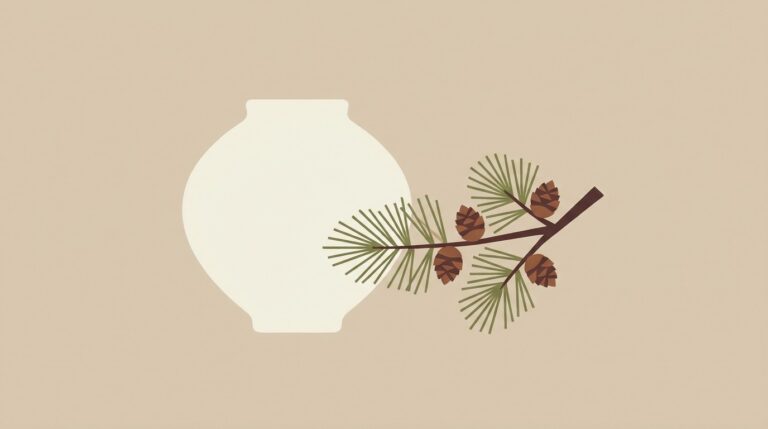
Transcending the ‘Aesthetic of Sorrow’: Reclaiming the Vibrant Soul of Joseon Art
Phase 1: 공감 (Story Immersion Opening)
안녕하세요! 매일한글 에디터입니다.
Have you ever stood before an asymmetrical Joseon Moon Jar (달항아리) at the National Museum of Korea, only to hear someone casually murmur, “There is something deeply tragic and lonely about Korean white porcelain—it feels like the sadness of an oppressed nation”? If your intellectual instincts twitched at that comment, you are definitely not alone. For decades, international and even domestic observers uncritically inherited Japanese critic Yanagi Muneyoshi’s early 20th-century colonial framing: the so-called “Aesthetic of Sorrow” (비애의 미, Biae-ui mi), which patronizingly claimed that Korea’s unadorned surfaces, muted tones, and organic lines reflected a tragic history of foreign invasions.
As advanced learners navigating C2-level discourse, mastering art history terminology isn’t just about vocabulary—it’s about reclaiming narrative sovereignty. When pioneer Korean art historian Ko Yu-seop (고유섭) dismantled this colonial gaze, he didn’t uncover sorrow; he unveiled 무기교의 기교 (artless art) and 구수한 큰 맛 (a hearty, profound taste): a resilient, humorous, and healthy life-force rooted in nature. Today, we will equip you with high-register Korean aesthetic discourse to discuss Korean art with intellectual rigor and cultural pride.
Phase 2: 핵심 표현 3선 심층 분석 (Core Aesthetic Expressions)
1. 무기교의 기교 (Mugigyo-ui gigyo)
- Pronunciation: [Moo-gih-gyo-eui gee-gyo] (Think of a jazz virtuoso playing an unhurried, clean chord: ‘Moo-gee-gyo’)
- Meaning: Literal: “Technique of no-technique” / Nuanced: Supreme artlessness born from masterful restraint and harmony with nature.
- K-Culture Moment: Seen frequently in architectural retrospectives and art documentaries (such as discussions around BTS RM’s love for artist Yun Hyong-keun) when describing why an artwork looks deceptively simple yet spiritually overwhelming.
- Editor’s Insight: This phrase was coined by art historian Ko Yu-seop to capture the paradox of Joseon ceramics and woodwork. It does not mean a lack of skill; rather, it denotes deliberate non-artificiality where human ego dissolves into the raw nature of the medium.
- Situation Spectrum:
- Casual: ⚠️ (A bit too high-brow for everyday chat, unless being poetic)
- Semi-formal: ✅ (Deep conversations about design, architecture, or music)
- Formal / Academic: ✅ (Standard terminology in art criticism)
- 🤔 Think About It: Does your native culture elevate raw imperfection as supreme mastery (like Japanese Wabi-sabi or Western Sprezzatura), or is perfection traditionally judged by flawless symmetry and polish?
2. 구수한 큰 맛 (Gusu-han keun mat)
- Pronunciation: [Goo-soo-han keun maht] (Sounding like the earthy warmth of roasted barley tea: ‘Goo-soo-han’)
- Meaning: Literal: “A savory, nutty, grand flavor” / Nuanced: An earthy, unpretentious, deeply comforting aesthetic resonance.
- K-Culture Moment: Used by seasoned critics reviewing folk art (Minhwa), traditional fermentation culture, or pansori performances that feel grounded and communal rather than pristine.
- Editor’s Insight: While 구수하다 usually describes roasted grain tea (boricha) or toasted rice (nurungji), Ko Yu-seop elevated this visceral culinary sensation into an aesthetic pillar. It embodies a beauty free from cold pretension—warm, generous, and endlessly approachable.
- Situation Spectrum:
- Casual: ✅ (Can be playfully applied to a friend’s down-to-earth charisma)
- Semi-formal: ✅ (Discussing vintage aesthetics or craft)
- Formal: ✅ (Classic Korean aesthetic theory)
- 🤔 Think About It: Why do you think Korean philosophy bridges culinary sensations (taste/flavor) directly with visual art and spatial atmosphere?
3. 비애미의 굴레를 탈피하다 (Biaemi-ui gulle-reul talpihada)
- Pronunciation: [Bee-ae-mi-eui gool-leh-reul tahl-pee-hah-dah] (Rhythmic and formal: ‘Tal-pi’ like shedding an old skin)
- Meaning: Literal: “To break free from the shackles of the aesthetic of sorrow” / Nuanced: To actively decolonize one’s perspective on Korean art.
- K-Culture Moment: A staple thesis statement in university symposiums, curatorial program notes at MMCA, and modern cultural essays analyzing the shift from colonial victimhood narratives to contemporary sovereign pride.
- Editor’s Insight: 굴레 signifies an oppressive bridle or fetter. Coupling it with 탈피하다 (to shed/break out) immediately signals an assertive intellectual position that rejects Yanagi Muneyoshi’s passive, melancholic colonial lens.
- Situation Spectrum:
- Casual: 🚫 (Way too academic for coffee chat!)
- Semi-formal: ⚠️ (Acceptable in a book club or gallery tour)
- Formal: ✅ (Ideal for essays, presentations, and scholarly critiques)
- 🤔 Think About It: How does external colonial framing alter the way people view their own cultural artifacts for generations?
Phase 3: 교과서 한국어 vs 진짜 한국어 (Textbook vs. Real-World Fluency)
Scenario 1: Commenting on the subtle asymmetry of a Joseon Moon Jar
- 📖 교과서 한국어:
이 도자기는 한국의 전통적인 미의식을 반영하고 있습니다.
(I dojagineun hangugeui jeontongjeogin mieosigeul banyeonghago itseumnida.)
“This ceramic reflects Korea’s traditional aesthetic consciousness.” - 🗣️ 진짜 한국어 (C2 Educated Native):
기교를 일부러 덜어낸 듯한 무심함 속에 오히려 범접할 수 없는 깊이가 느껴져요.
(Gigyoreul ilbureo deoreonaen deutan musimham soge ohiyeo beomjeophal su eomneun gipiga neukkyeojyeoyo.)
“In that casual nonchalance that seems to deliberately strip away artifice, one senses an unapproachable depth.” - 💡 왜 다를까? Textbook Korean sounds generic and bureaucratic. Sophisticated native speakers capture artistic nuance through expressive adjectives like 무심함 (nonchalance/indifference to artifice) and 기교를 덜어내다 (to pare down technique).
Scenario 2: Refuting the idea that Korean art is inherently melancholic
- 📖 교과서 한국어:
조선 미술은 슬프지 않고 아주 건강하며 아름답습니다.
(Joseon misureun seulpeuji anko aju geonganghamyeo areumdapseumnida.)
“Joseon art is not sad; it is very healthy and beautiful.” - 🗣️ 진짜 한국어 (C2 Educated Native):
야나기식 ‘비애미’ 프레임을 걷어내고 보면, 특유의 해학과 뚝심 있는 생명력이 비로소 눈에 들어오죠.
(Yanagisik ‘biaemi’ peureimeul geodeonaego bomyeon, teugyueui haehakgwa dduksim inneun saengmyeongnyeogi biroso nune deureo-ojyo.)
“Once you peel away the Yanagi-style ‘aesthetic of sorrow’ frame, that distinctive humor and steadfast vitality finally come into view.” - 💡 왜 다를까? C2 discourse requires meta-criticism. Using phrases like 프레임을 걷어내다 (to strip away a biased frame) and invoking 해학 (satirical humor) and 뚝심 (resilient tenacity) positions you as an expert insider.
Phase 4: K-Culture 딥다이브 & 비언어적 매너 (Deep Dive & Decorum)
4-1. 눈치 (Nunchi) & Art Gallery Manners in Korea
When visiting high-profile exhibitions at venues like the Leeum Museum of Art (리움미술관) or the Kansong Art Museum (간송미술관), high-register appreciation is quiet, restrained, and contemplative.
* The Decentering Nod: Avoid dramatic exclamations. Instead, step back slightly, tilt your head at an angle of roughly 15 degrees, and offer a slow, gentle nod. It signals that you are taking in the whole proportion (여백의 미, beauty of negative space) rather than fixating on surface defects.
* Audible Contemplation: Educated Koreans often let out a soft, aspirated “허…” or “아…” under their breath, followed by a quiet reflection like: “선의 흐름이 참 담담하네요” (The flow of the line is so serene).
4-2. Cultural Code Analysis: The Moon Jar in Contemporary K-Art
Why are K-pop luminaries, high-end interior designers in Hannam-dong, and contemporary Dansaekhwa (monochrome) painters obsessed with the Moon Jar? Because it embodies ideological liberation. In post-colonial Korea, artists like Kim Whanki and modern architects looked to Joseon white porcelain not as relics of a fallen dynasty, but as radical minimalists ahead of their time. The irregular, swelling belly of the Moon Jar is formed by joining two hemispherical halves in the kiln—creating an organic warp. It rejects mechanical symmetry, celebrating life’s vibrant, imperfect resilience.
Phase 5: 실전 롤플레이 시나리오 (Interactive Roleplay)
- Setting: An exhibition hall at the National Museum of Korea in Seoul.
- Characters:
- Alex (You): An advanced Korean learner with a passion for art history.
- Curator Min-seo (민서): A knowledgeable, sharp museum curator examining an 18th-century Buncheong stoneware bowl.
Turn 1 (Alex):
선생님, 이 분청사기의 거친 귀얄 자국을 보고 있으면 묘하게 가슴이 뭉클해져요. 혹시 이게 일제강점기에 언급되던 ‘한(恨)’이나 ‘비애의 정서’와 닿아 있는 걸까요?
(Seonsaengnim, i buncheongsagi-ui geochin gwiyal jagugeul bogo isseumyeon myohage gaseumi mungkeulhaejyeoyo. Hoksi ige iljegangjeomgi-e eongeupdoedeon ‘han’ina ‘biae-ui jeongseo’wa daa inneun geolkkayo?)
[🎭 Leans forward with genuine curiosity, observing the white slip brushstrokes]
“Curator, looking at these coarse brush marks on this Buncheong ware makes my heart swell strangely. Could this be connected to the emotion of ‘Han’ or ‘sorrow’ discussed during the colonial era?”
Turn 2 (Min-seo):
흥미로운 접근이에요. 하지만 야나기 무네요시가 주장했던 그 ‘비애미’는 사실 식민사관의 렌즈로 조선의 주체성을 거세한 해석에 가깝습니다.
(Heungmiro-un jeopgeuni-eyo. Hajiman Yanagi Muneyosiga jujanghaetdeon geu ‘biaemi’neun sasil sikminsagwaneui renjeuro Joseoneui jucheseongeul geosehan haeseoge gakkapseumnida.)
[🎭 Adjusts museum lanyard, offering a welcoming, scholarly smile]
“That’s an interesting approach. However, the ‘aesthetic of sorrow’ Yanagi Muneyoshi argued for is closer to an interpretation that castrated Joseon’s agency through the lens of colonial historiography.”
Turn 3 (Alex):
아, 고유섭 선생님께서 야나기의 관점을 비판하며 ‘무기교의 기교’를 주창하신 맥락이 바로 그것이군요?
(A, Ko Yu-seop seonsaengnimkkeseo Yanagi-eui gwanjeomeul bipanhamyeo ‘mugigyo-ui gigyo’reul juchanghasin maengnagi baro geugeosigunyo?)
[🎭 Eyes light up with intellectual recognition, nodding deliberately]
“Ah, so that’s the exact context in which Master Ko Yu-seop criticized Yanagi’s viewpoint and advocated ‘artless art’?”
Turn 4 (Min-seo):
정확해요! 고유섭은 우리 미술의 본질을 병적인 슬픔이 아니라, 기교를 초탈한 대범함과 ‘구수한 큰 맛’으로 규정했거든요.
(Jeonghwakhaeyo! Ko Yu-seobeun uri misureui bonjireul byeongjeogin seulpeumi anira, gigyoreul chotalhan daebeomhamgwa ‘gusu-han keun mat’euro gyujeonghaetgeodeunyo.)
[🎭 Gestures smoothly toward the uninhibited white brushstroke on the vessel]
“Precisely! Ko Yu-seop defined the essence of our art not as pathological sadness, but as a boldness transcending mere technique, and a ‘hearty, grand taste.'”
Turn 5 (Alex):
그 말씀을 듣고 다시 보니, 계산되지 않은 자유분방함에서 오히려 건강한 생명력이 뿜어져 나오는 것 같습니다.
(Geu malsseumeul deutgo dasi boni, gyesandoeji aneun jayubunbangham-eseo ohiyeo geonganghan saengmyeongnyeogi ppum-eojyeo naoneun geot gatseumnida.)
[🎭 Steps back two paces to take in the entirety of the vessel]
“Hearing you say that and looking again, I feel healthy vitality radiating from this uncalculated, spontaneous freedom.”
Turn 6 (Min-seo):
맞습니다. 백자의 덤덤한 맛이나 민화의 해학도 같은 선상에 있죠. 슬픔에 짓눌린 것이 아니라 현실을 긍정하고 초월하는 태도입니다.
(Matseumnida. Baekja-eui deomdeomhan masina minhwa-eui haehatdo gateun seonsang-e itjyo. Seulpeume jinnullin geosi anira hyeonsireul geungjeonghago chowolhaneun taedo-imnida.)
[🎭 Nods approvingly at Alex’s analytical synthesis]
“Exactly. The quiet calm of white porcelain and the humor of folk art lie on the same continuum. It’s an attitude of affirming and transcending reality, not being crushed by sorrow.”
Turn 7 (Alex):
식민지적 시선이 덧씌운 슬픔의 껍질을 벗겨내야만 우리 고유의 미감이 온전히 보이는 법이네요.
(Sikminjijeok siseoni deotssiun seulpeumeui kkeopjireul beotgyeonaeyaman uri goyueui migami onjeonhi boineun beobineyyo.)
[🎭 Speaks with a clear, resolute cadence, hands gently clasped]
“One must strip away the veneer of sorrow imposed by colonial perspectives to see our authentic aesthetic sensibility in its entirety.”
Turn 8 (Min-seo):
오늘 알렉스 님과의 대화가 참 뜻깊네요. 그런 혜안을 가진 감상자가 많아질수록 우리 미술의 숨결이 더 생생해집니다.
(Oneul Alex nim-gwaeui daehwaga cham tteutgipneyo. Geureon hye-aneul gajin gamsangjaga man-ajilsurok uri misureui sumgyeori deo saengsaenghaejimnida.)
[🎭 Hands Alex an exhibition catalog with genuine warmth]
“Our dialogue today was truly profound, Alex. The more viewers we have with such insight, the more vibrant the true breath of Korean art becomes.”
🔀 인터랙티브 분기점 (Choose Your Response)
After Min-seo praises your insight, how do you steer the conversation?
- Option A: “과찬이십니다. 다음 전시실에 있는 달항아리의 부정형 미학도 고유섭 선생의 시각으로 다시 짚어보고 싶네요.” (You redirect the concept directly to Moon Jars with humility and intellectual curiosity.)
- Option B: “맞아요, 역시 한국 역사는 슬퍼서 도자기에도 비극성이 흐르는 줄로만 알았어요.” (You accidentally relapse into the colonial melancholy trope.)
- Option C: “일본 학자들의 견해는 무조건 엉터리니 앞으로 전부 무시해도 되겠죠?” (You dismiss the historiographical context with unnuanced, aggressive rhetoric.)
Feedback on Your Choice:
- Option A (Best!): Perfect score! You demonstrate humility (과찬이십니다), utilize advanced terminology (부정형 미학 – aesthetic of non-fixed form), and maintain continuous intellectual momentum.
- Option B (Bad): Risk of cultural regression! Curator Min-seo just spent 10 minutes deconstructing that exact trope. Saying this proves you missed the entire point of overcoming the Aesthetic of Sorrow.
- Option C (Risk): Lacks academic rigor! In C2 scholarly discourse, one critically deconstructs colonial historiography through contextual analysis, rather than relying on emotional or anti-intellectual generalizations.
Phase 6: 10초 감정 섀도잉 드릴 (Emotional Shadowing Drill)
Practice reading these sentences aloud, respecting the pauses (/) and channeling the emotional stage directions.
- [🧐 차분하고 단호한 어조 – Calm and resolute intellectual critique]
조선 미술의 본질은 / 비애가 아니라 / 자연과의 합일을 지향하는 / 대범한 생명력에 있습니다.
(Joseon misureui bonjireul / biaega anira / jayeongwaeui habireul jihyanghaneun / daebeomhan saengmyeongnyeoge itseumnida.)
“The essence of Joseon art / lies not in sorrow, / but in a bold vitality / aspiring toward unity with nature.” -
[✨ 깊은 감탄과 경외감 – Deep awe and understated marvel]
억지로 꾸미지 않은 / 그 무기교의 기교에서 / 형언할 수 없는 / 구수한 큰 맛이 우러나옵니다.
(Eokjiro kkumiji aneun / geu mugigyo-ui gigyoe-seo / hyeong-eonhal su eomneun / gusu-han keun masi ureonaomnida.)
“From that artless art, / devoid of artificial embellishment, / arises an ineffable, / deeply comforting and hearty taste.” -
[🤝 지적이면서도 정중한 확신 – Intellectual, courteous conviction]
외부의 타자화된 시선을 걷어낼 때 / 비로소 / 우리 예술의 참된 주체성이 / 선명해집니다.
(Oebueui tajahwadoen siseoneul geodeonael ttae / biroso / uri yesureui chamdoen jucheseongi / seonmyeonghaejimnida.)
“Only when we peel away external, othering gazes / does the authentic agency / of our art / become brilliantly clear.”
Phase 7: K-Culture 미니 사전 (Mini Glossary)
- 달항아리 (Dalhang-ari) | Moon Jar
- Late Joseon large white porcelain jar made by fusing two halves. Today, it symbolizes pure form, intentional asymmetry, and modern Korean luxury minimalism.
- 분청사기 (Buncheongsagi) | Buncheong Ware
- Coarse, gray stoneware coated in white clay slip. Celebrated globally for its bold, expressive, quasi-modern graffiti-like brushwork and raw vigor.
- 해학 (Haehak) | Satirical Humor / Whimsical Wit
- A hallmark of traditional Korean culture that defuses tragedy with resilient laughter and irony without cynicism.
- 식민사관 (Sikminsagwan) | Colonial View of History
- The historical distortion created during the Japanese colonial occupation that framed Korean culture as historically stagnant, passive, and destined for subordination.
Phase 8: 여행자를 위한 생존 키트 (Connoisseur Traveler’s Kit)
Top 3 Curatorial Survival Expressions
- 도록 혹시 남아 있나요? (Dorok hoksi nama innayo?)
- “Do you still have the official exhibition catalog in stock?”
- Pro Tip: In Korean art centers, major catalogs sell out fast. Asking this at the front desk marks you instantly as a serious collector.
- 이 유물의 출토지와 제작 연대를 알고 싶습니다. (I yumureui chultojiewa jejak yeondaereul algo sipseumnida.)
- “I would like to know the excavation site and production era of this artifact.”
- Pro Tip: Perfect for C2 speakers seeking deep historical context during docent-led Q&A.
- 여백과 질감이 주는 여운이 참 깊네요. (Yeobaekgwa jilgami juneun yeo-uni cham gipneyo.)
- “The lingering resonance produced by the negative space and texture is truly profound.”
- Pro Tip: The ultimate aesthetic compliment to offer when standing before minimalist ink art or ceramics.
Editor’s Travel Note
- When planning a cultural trip to Seoul, bypass superficial souvenir shops and visit the 국립중앙박물관 공식 오디오 가이드 앱 다운로드 for authoritative, scholarly curations of Korean porcelain.
- For private contemporary collections showcasing how traditional Korean aesthetics merge with post-war monochrome, use your local navigation tools to locate the 리움미술관(Leeum) in Hannam-dong.
Phase 9: “한 발 더 깊이” (Deep Cultural Reflection)
Colonialism does not merely conquer territories; it attempts to conquer aesthetic perception. When Yanagi Muneyoshi categorized Korean beauty as the “Aesthetic of Sorrow,” he established an insidious orientalist archetype: the romanticized, pitiable Joseon forever doomed to lament. Pioneering aesthetician Ko Yu-seop recognized that language shapes visual consciousness. By naming the true essence of Joseon beauty as 무기교의 기교 and 구수한 큰 맛, he reclaimed cultural agency from foreign pity. True aesthetic decolonization occurs when we see art through the unvarnished eyes of its creators.
💬 Your Turn: Have you ever encountered an international museum caption that described non-Western art using reductive, melancholic, or exotic tropes? Share your experience in the comments below!
Phase 10: FAQ & 오해 방지 (FAQ & Common Mistakes)
Q: 야나기 무네요시는 한국 미술을 사랑했던 인물 아닌가요?
A: Yanagi Muneyoshi did harbor a genuine personal fondness for Joseon crafts and founded the Joseon Folk Art Museum. However, modern critical historiography emphasizes that his interpretation was rooted in an imperialist, paternalistic framework. By defining Korean art exclusively through sorrow and historical victimhood, he implicitly validated the colonial narrative that Joseon lacked sovereign agency and vitality.
Q: ‘무기교’라는 말이 기술의 부족이나 게으름을 뜻하는 건 아닌가요?
A: 전혀 아닙니다. ‘무기교의 기교’는 의도적인 생략과 자연에 대한 경외를 바탕으로 합니다. 인위적인 잔재주를 부리지 않고 흙과 불, 나무의 자연스러운 성질을 온전히 존중하는 가장 높은 경지의 원숙함을 뜻합니다.
Q: ‘구수한 맛’을 서양 미술사 용어로 번역할 수 있을까요?
A: ‘Earthy authenticity’ or ‘unpretentious rustic profundity’ come close, but none capture the full sensory resonance of ‘구수하다.’ It combines the culinary warmth of toasted rice, the smell of sun-drenched earth, and the comfortable intimacy of family life into an aesthetic principle.
🚨 흔한 실수 (Common Mistakes) 경고판
- Mistake 1: Equating all Korean unadorned surfaces with Japanese Wabi-sabi.
- Correct Action: Japanese aesthetics often involve meticulous, deliberate calculation of rusticity. Joseon’s 무기교 is spontaneous, bold, and uncalculated. Differentiate them clearly.
- Mistake 2: Using 한 (Han) as a universal catch-all for every traditional Korean work.
- Correct Action: Avoid reducing Korean art to grief. Pair your understanding of 한 with its natural twin, 흥 (Heung – ecstatic joy), and 해학 (Haehak – humor).
- Mistake 3: Treating 구수하다 as purely a food descriptor in cultured conversations.
- Correct Action: Recognize its metaphorical weight! When an aesthetician says an artwork is 구수하다, praise their choice of words.
Phase 11: 액션 미션 & 참여 유도 (Action Missions)
- 🥉 Bronze Mission (Solo): Stand in front of a mirror and recite the three Core Expressions aloud with native intonation using the shadowing audio markers.
- 🥈 Silver Mission (Social): Find a photo of a Joseon Moon Jar or Buncheong ware. Post it to social media with a short bilingual caption explaining why it represents 무기교의 기교, tagging #DailyHangul.
- 🥇 Gold Mission (Real World): Visit a local museum, ceramic studio, or gallery. Introduce yourself and ask a curator or artist: “이 작품에서 느껴지는 담백한 무기교의 기교에 대해 어떻게 생각하시나요?”
- 🎮 K-Culture Mission: Watch a documentary or clip featuring contemporary Korean artists (such as interviews with modern Korean ceramicists on YouTube) and note every time they use tactile adjectives like 담담하다, 구수하다, or 투박하다.
Phase 12: 인터랙티브 퀴즈 챌린지 (Quiz Challenge)
1. 상황 판단 (Situational Judgment)
At an art gallery, an acquaintance remarks: “조선 백자는 색채가 없고 하얗기만 해서 나라를 잃은 민족의 깊은 슬픔이 그대로 느껴져요.” What is the most sophisticated, culturally sound C2 response?
* ① “맞아요, 조선 시대 사람들은 원래 울적해서 흰색 옷만 입었대요.”
* ② “그건 야나기식 식민주의적 해석에 가깝습니다. 고유섭 선생이 짚었듯, 조선 백자의 진정한 가치는 비애가 아니라 기교를 초탈한 담백함과 뚝심 있는 생명력에 있어요.”
* ③ “전통 미술에 대해 잘 모르시면서 함부로 아는 척하시면 곤란합니다.”
2. 빈칸 채우기 (Fill in the Blank)
고유섭은 조선 미술의 핵심 미감을 인위적인 손재주를 버리고 자연의 순리를 따르는 ‘________의 기교’와 푸근하고 소박한 ‘________ 큰 맛’으로 규정했다.
3. True / False Cultural Check
- (T/F) 야나기 무네요시가 명명한 ‘비애의 미’는 20세기 조선 미술사학계 전반에서 비판 없이 환영받았다.
👉 정답과 해설 확인하기 (Click to reveal answers)
- 정답: ②
- 해설: ①번은 역사적 왜곡(백의민족에 대한 오해)을 답습하는 답변이며, ③번은 지나치게 공격적입니다. ②번은 상대의 오류를 정중하게 지적하면서도 학술적 대안(고유섭의 미학론)을 제시하는 완벽한 C2 품격의 답변입니다.
- 정답: 무기교 / 구수한
- 해설: 고유섭 미학의 양대 축인 ‘무기교의 기교(Artless Art)’와 ‘구수한 큰 맛(Hearty Grand Taste)’입니다.
- 정답: False
- 해설: 고유섭을 필두로 한 현대 한국 미학자들은 야나기의 ‘비애의 미’가 조선의 활력과 주체성을 깎아내린 식민사관적 프레임임을 날카롭게 비판하고 이를 적극적으로 극복했습니다.
- 해설: 고유섭을 필두로 한 현대 한국 미학자들은 야나기의 ‘비애의 미’가 조선의 활력과 주체성을 깎아내린 식민사관적 프레임임을 날카롭게 비판하고 이를 적극적으로 극복했습니다.







