

Phase 1: Empathy (Story-Immersive Opening)
안녕하세요! 매일한글 에디터입니다. (Hello! This is your Daily Hangul editor.)
Picture this: You are exploring the trendy, hilly alleys of Ikseon-dong or running down the subway stairs at Hongdae station to catch the last Line 2 train after an exciting night of street food and karaoke. Suddenly, your sneaker slips on the edge of the curb. You hear a dull pop, and a sharp, throbbing pain shoots right up your lower leg. Your ankle balloons within minutes, turning an angry shade of purple-red.
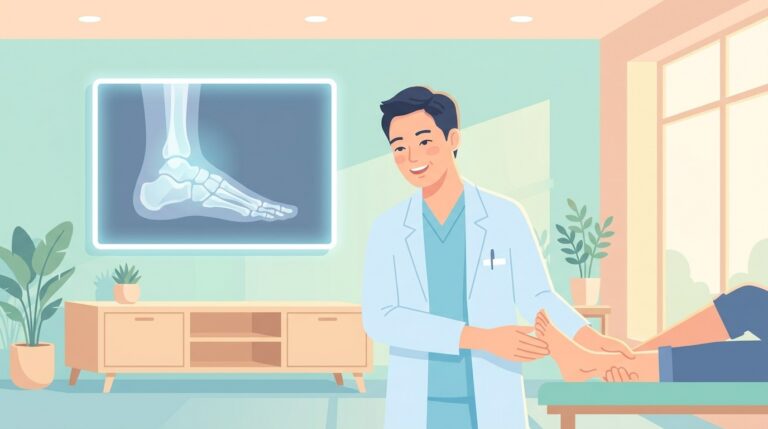
In your home country, you might brace yourself for a five-hour wait in an emergency room or a massive medical bill. But in Korea, modern neighborhood clinics called 정형외과 (jeonghyeong-oegwa – Orthopedics) sit on almost every street corner. You limp through the glass doors, get registered, take X-rays in under five minutes, and sit nervously in front of the doctor.
The doctor clicks through your black-and-white scan, turns toward you with a reassuring smile, and says:
“다행히 뼈에는 금이 안 갔고 인대가 조금 늘어났네요.”
(Dahaenghi ppyeoe-neun geumi an gasseoyo, indaega jogeum neureonatneyo – Thankfully, there is no hairline fracture in the bone; your ligament is just slightly stretched.)
If you don’t know medical Korean, words like geum (금이 가다) and inda (인대) can make you freeze. Did he say bone? Is it broken? Do I need surgery? Don’t panic! Today, we will master the real phrases, non-verbal cues, and cultural warmth you will encounter when treating a twisted ankle or muscle ache in Korea. Tested by dozens of international students and travelers, this guide will turn medical anxiety into confident relief!
Phase 2: In-Depth Breakdown of 3 Core Expressions
1. 다행히 뼈에는 금이 안 갔어요 (Dahaenghi ppyeoe-neun geumi an gasseoyo)
- Pronunciation: [Da-haeng-hi ppyeo-e-neun geu-mi an gat-sseo-yo] (Think: “Dah-hang-hee ppyuh-eh-noon goo-mee ahn gahs-saw-yo”)
- Meaning:
- Literal: “Fortunately, crack did not go into the bone.”
- Real Nuance: “Thankfully, you don’t have a hairline fracture.”
- K-Culture Moment: You hear this in every medical or family K-Drama when a character rushes their friend to the hospital after a sudden fall. The dramatic tension dissolves the second the doctor utters “다행히…” (Thankfully…).
- Editor’s Insight: In Korean, hairline bone fractures are described visually as “a crack going into something” (금(이) 가다). This is much milder than “broken” (부러지다). When Koreans begin with “다행히…”, take a deep breath—the worst-case scenario has been ruled out!
- Situation Spectrum:
- Casual: ⚠️ (Use 다행히 뼈는 멀쩡해 with close friends)
- Semi-formal (Polite -요): ✅ (Standard for clinic visits)
- Formal: ✅ (Used in official medical consultations)
- 🤔 Think About It: Notice how Korean doctors frequently preface medical updates with emotional words like 다행히 (fortunately). Why do you think Korean culture weaves emotional empathy directly into professional diagnoses?
2. 인대가 조금 늘어났네요 (Indaega jogeum neureonatneyo)
- Pronunciation: [In-dae-ga jo-geum neu-reo-nat-ne-yo] (Think: “In-day-gah joh-goom nuh-raw-naht-nay-yo”)
- Meaning:
- Literal: “The ligament has stretched a little bit, I see.”
- Real Nuance: “You’ve got a minor ligament sprain/strain.”
- K-Culture Moment: Used whenever an idol twists their ankle during intense choreography practice. Entertainment agencies release statements saying: “인대가 늘어나 당분간 무리한 안무는 피하라는 소견을 받았습니다” (The artist stretched their ligament and was advised to avoid strenuous choreography).
- Editor’s Insight: English speakers say “I sprained my ankle” or “I tore a ligament.” In Korean everyday speech, people say the ligament 늘어났다 (stretched out). The ending -네요 signals that the doctor is making an immediate observation from your physical exam or X-ray.
- Situation Spectrum:
- Casual: ⚠️ (Use 인대 좀 늘어났어 with peers)
- Semi-formal (Polite -요): ✅ (Doctor to patient default)
- Formal: ✅ (인대가 다소 늘어난 상태입니다)
- 🤔 Think About It: Describing an injury as “stretched” rather than “torn” softens the blow. How does medical vocabulary in your native language frame the severity of minor injuries?
3. 물리치료 받고 가세요 (Mullichiryo batgo gaseyo)
- Pronunciation: [Mul-li-chi-ryo bat-go ga-se-yo] (Think: “Mool-lee-chee-ryoh baht-goh gah-say-yo”)
- Meaning:
- Literal: “Receive physical therapy and then leave.”
- Real Nuance: “Please stop by our physical therapy room before you head out.”
- K-Culture Moment: In slice-of-life dramas, grandmothers and hard-working office workers meet inside the neighborhood clinic’s cozy physical therapy section, lying down under warm heat lamps while sharing village gossip.
- Editor’s Insight: Unlike in some Western clinics where physical therapy requires booking a separate clinic weeks later, Korean orthopedic clinics have on-site physical therapy suites (물리치료실). Doctors routinely prescribe same-day ultrasound, hot packs, and electrical stimulation right after the exam.
- Situation Spectrum:
- Casual: 🚫 (Sounds awkward between friends)
- Semi-formal: ✅ (Medical staff instruction)
- Formal: ✅ (물리치료를 받고 귀가하시기 바랍니다)
- 🤔 Think About It: Why is it common in Korea to combine consultation and physical rehabilitation in one single visit?
Phase 3: Textbook Korean vs. Real Korean
Situation 1: Confirming that the bone isn’t broken
- 📖 Textbook Korean:
“골절이 발생하지 않았습니다.” (Goljeori balsaenghaji anatseumnida – A fracture has not occurred.) - 🗣️ Real Korean:
“뼈에는 아무 이상 없어요. 금도 안 갔네요!” (Ppyeoe-neun amu isang eopseoyo. Geumdo an gatneyo! – There’s nothing wrong with the bone. Not even a hairline crack!) - 💡 Why is it different?
While 골절 (fracture) is standard medical jargon, real doctors speak reassuringly to relieve your anxiety, using descriptive phrases like 이상 없다 (no problems) and 금 안 갔다 (no crack).
Situation 2: Explaining where it hurts when pressed
- 📖 Textbook Korean:
“해당 부위를 누를 때 극심한 통증이 느껴집니다.” (Haedang buwireul nureul ttae geuksimhan tongjeungi neukkyeojimnida – I experience extreme pain when the said region is compressed.) - 🗣️ Real Korean:
“선생님, 거기 누르면 찌릿하고 욱신거려요.” (Seonsaengnim, geogi nureumyeon jjorithago uksingeoryeoyo – Doctor, when you press right there, it shoots and throbs.) - 💡 Why is it different?
Koreans love sensory mimetics! Words like 찌릿 (sharp electric twinge) and 욱신욱신 (deep, pulsing throb) explain pain far more accurately than clinical textbook terms.
Phase 4: K-Culture Deep Dive & Non-Verbal Manners
4-1. Nunchi (눈치) & Clinic Etiquette
- The Visual Map: When the doctor asks you to point out the pain, don’t just wave at your entire shoe. Point with your index finger directly at the outer ankle bone (복사뼈 – bok-sa-ppyeo) or the tender ligament underneath.
- Doctor-Patient Body Language: When entering the consultation room, offer a quick 15-degree nod with both hands kept neatly in front of you. When answering questions, avoid crossing your arms, which can look defensive. A slight head nod accompanied by “네, 맞아요” (Yes, that’s right) shows attentive respect.
- Pain Expression: Korean patients avoid screaming out loudly. If the palpation hurts, a sharp intake of breath like “앗!” (Aht!) or saying “거기 많이 아파요” (It hurts a lot right there) is culturally natural.
4-2. The Romantic Piggyback vs. Real-World Clinics
In K-dramas (think Crash Landing on You or Business Proposal), spraining an ankle is practically mandatory. It’s the ultimate setup for the male lead to swoop in, offer his broad back, and give the female lead an 어부바 (eobuba – piggyback ride) down romantic autumn paths.
In reality, if you twist your ankle, skip waiting for a handsome CEO. Walk into the nearest commercial building with a blue cross sign reading 정형외과. Korean neighborhood orthopedics are hyper-efficient. For a minor sprain, your entire registration, consultation, bilateral X-ray, cold/hot therapy, and splint application often takes under 40 minutes and costs less than the price of a modest dinner!
Phase 5: Real-Life Roleplay Scenario
Setting: Seoul Gangnam Orthopedic Clinic (서울 정형외과). Patient Alex sits on the examination bed after rolling his ankle on the subway stairs.
- 박 원장님 (Doctor Park):
발목 엑스레이 보고 왔어요. 걸을 때 많이 시큰거리셨죠?
(Balmok ekseu-rei bogo wasseoyo. Georeul ttae mani sikeungeorisyeotjyo?)
“I checked your ankle X-ray. It must have felt really tender and throbbing when you walked?”
🎭 [안경을 고쳐 쓰며 엑스레이 모니터를 손가락으로 가리킨다] -
알렉스 (Alex):
네, 딛을 때마다 찌릿해서 발을 땅에 못 대겠어요.
(Ne, dideul ttaemada jjorithaeseo bareul ttange mot daegesseoyo.)
“Yes, every time I step down it shoots sharp pain, so I can barely touch the ground.”
🎭 [다친 발목을 살짝 들어 보이며 미간을 찌푸린다] -
박 원장님 (Doctor Park):
다행히 뼈에는 금이 안 갔고 인대가 조금 늘어났네요.
(Dahaenghi ppyeoe-neun geumi an gasseoyo indaega jogeum neureonatneyo.)
“Thankfully, there’s no hairline crack in the bone; your ligament is just slightly stretched.”
🎭 [발목 양쪽을 부드럽게 짚어보며 온화하게 웃는다] -
알렉스 (Alex):
정말 다행이에요! 깁스까지 해야 하나요?
(Jeongmal dahaengieyo! Gip-seu-kkaji haeya hanayo?)
“What a relief! Do I need a full cast?”
🎭 [가슴을 쓸어내리며 안도 섞인 질문을 건넨다] -
박 원장님 (Doctor Park):
통깁스는 필요 없고, 며칠 동안 탈부착 가능한 반깁스만 하시면 됩니다.
(Tong-gipseuneun piryo eopgo, myeochil dongan talbuchak ganeunghan ban-gipseuman hasimyeon doemnida.)
“You don’t need a full cast. A removable splint for a few days will do.”
🎭 [벨크로 밴드가 달린 반깁스 샘플을 보여준다] -
알렉스 (Alex):
약도 먹어야 하나요?
(Yakdo meogeoya hanayo?)
“Do I also need to take medicine?”
🎭 [진료실 책상 쪽으로 몸을 살짝 기울인다] -
박 원장님 (Doctor Park):
네, 소염진통제 3일 치 처방해 드릴게요. 붓기 빠지는 데 도움 돼요.
(Ne, soyeom-jintongje sam-il chi cheobanghae deurilgeyo. Butgi ppajineun de doum dwaeyo.)
“Yes, I’ll prescribe anti-inflammatory painkillers for three days. It helps reduce swelling.”
🎭 [차트에 처방 내역을 타이핑한다] -
박 원장님 (Doctor Park):
나가서 안쪽 물리치료실에서 물리치료 받고 가세요.
(Nagaseo anjjok mullichiryosireseo mullichiryo batgo gaseyo.)
“Head inside the physical therapy room at the end of the hall before you leave.”
🎭 [치료실 문 쪽을 손바닥으로 정중히 안내한다]
🔀 Interactive Decision Branch
Now, imagine the physical therapist brings out cold cryo-therapy, asking: “치료 강도가 너무 세면 말씀해 주세요!” (Let me know if the intensity is too strong!) How do you respond?
- Option A: “네, 조금 차가운데 참을 만해요. 감사합니다!” (Polite & clear: “Yes, it’s a bit cold, but it’s bearable. Thank you!”)
- Outcome (BEST): The therapist understands your comfort threshold and optimizes the timer. You get pristine care and a cheerful reply.
- Option B: “야, 너무 차가워! 꺼줘!” (Casual Banmal: “Hey, too cold! Turn it off!”)
- Outcome (BAD): Using rude informal language in a clinical setting causes instant embarrassment and awkward silence.
- Option C: Say nothing, grit your teeth, and shake uncontrollably trying to look tough.
- Outcome (RISK): Over-freezing can irritate superficial nerves or skin. Medical staff expect open feedback!
Phase 6: 10-Second Emotion Shadowing Drill
Practice these lines with rhythm, breath pauses (/), and genuine emotion!
[😌 Deeply relieved & sighing]
다행히 / 뼈에는 / 금이 안 갔어요.
(Da-haeng-hi / ppyeo-e-neun / geu-mi an gat-sseo-yo.)-
[🩹 Calmly explaining your diagnosis to a friend]
인대가 / 조금 / 늘어났다고 하네요.
(In-dae-ga / jo-geum / neu-reo-nat-da-go ha-ne-yo.) -
[💪 Cheerful, encouraging tone]
물리치료 받고 / 푹 쉬면 / 금방 나을 거예요!
(Mul-li-chi-ryo bat-go / puk swi-myeon / geum-bang na-eul geo-ye-yo!)
Phase 7: K-Culture Mini Dictionary
-
정형외과 (Jeonghyeong-oegwa)
- Translation: Orthopedic Clinic
- Usage: Look for these exact characters whenever you suffer joint twists, back strain, knee sprains, or muscle pulls. No referral needed.
- 반깁스 (Ban-gipsu)
- Translation: Half-cast / Removable splint (from German Gips)
- Usage: Unlike a rigid, plaster full-cast (통깁스), this velcro splint can be taken off for showers. Extremely common for minor twists.
- 파스 (Paseu)
- Translation: Medicated transdermal pain-relief patch
- Usage: Sold at pharmacies and convenience stores. Choose between 쿨파스 (cool patch for immediate swelling) and 핫파스 (warm patch for chronic muscle tightness).
- 물리치료실 (Mullichiryosil)
- Translation: Physical Therapy Room
- Usage: The dedicated room located inside neighborhood clinics offering heat pads, laser therapy, and electrical muscle stimulation.
Phase 8: Survival Kit for Travelers
Survival Expressions TOP 3
- 발목을 삐었어요. (Balmogeul ppi-eosseoyo – I twisted/sprained my ankle.)
- Pro Tip: Say this at the reception desk to immediately register under orthopedics.
- 걸을 때 찌릿해요. (Georeul ttae jjirit-haeyo – It twinges sharply when I step.)
- Pro Tip: Helps the doctor differentiate between dull ligament pain and nerve/bone pain.
- 영수증이랑 진료확인서 떼어 주세요. (Yeongsujeung-irang jinryo-hwaginseo tte-eo juseyo – Please issue a receipt and medical certificate.)
- Pro Tip: Essential paperwork to claim reimbursement from your travel insurance back home!
Editor’s Travel Note
- Clinic Search: If you stumble on a curb, search “정형외과” on your Naver Map app download for navigation. Walk-in registrations close roughly 30 minutes before lunch break (usually 1:00 PM – 2:00 PM).
- Payment & Identification: Don’t forget your physical passport or Alien Registration Card (ARC). Even without Korean National Health Insurance, a routine visit with an X-ray and splint typically costs between 40,000 to 70,000 KRW, payable with standard credit cards.
Phase 9: “One Step Deeper” (Cultural Reflection)
In Korean society, the word 다행이다 (What a relief / Fortunately) reflects the communal nature of Korean interpersonal care (정 – Jeong). When a Korean doctor or pharmacist looks at your scan and says “다행이네요”, they aren’t just reciting data; they are validating your vulnerability and sharing in your emotional relief. In high-density urban environments where everyone rushes through transit hubs, unexpected accidents remind us how interconnected we are.
💬 Your Turn: Have you ever experienced an injury while traveling abroad? How did the clinic visit compare to healthcare interactions in your home country? Share your stories below!
Phase 10: FAQ & Common Mistakes
Q: Can a traveler visit a local orthopedic clinic without Korean National Health Insurance?
A: Yes! Unlike some countries where you cannot see a specialist without a family doctor’s referral, in Korea you can walk directly into any neighborhood 정형외과. Simply present your passport at reception. You will pay the non-insured foreigner rate, which remains remarkably reasonable compared to Western emergency care.
Q: What is the exact difference between ‘금이 가다’ and ‘부러지다’?
A: 금이 가다 literally means “a crack has run through it,” describing a hairline or stress fracture where the bone remains in alignment. 부러지다 means a complete snap or fracture where the bone separates.
Q: Why do doctors prescribe physical therapy right away for an ankle twist?
A: Korean clinical care prioritizes fast rehabilitation. Immediate cryotherapy (cooling) or gentle ultrasound reduces tissue inflammation on Day 1, speeding up recovery so patients can return to work or travel smoothly.
🚨 Common Mistakes Warning Board
- Mistake: Slapping a hot patch (핫파스) on a freshly swollen, red ankle.
- Correct Action: Fresh injuries need cold therapy (냉찜질 / 쿨파스) for the first 48 hours to curb swelling. Hot patches worsen acute inflammation!
- Mistake: Saying “발 아파요” without specifying where.
- Correct Action: 발 means the entire foot. Use 발목 (bal-mok) specifically for ankle to ensure proper X-ray angles.
- Mistake: Throwing away your clinic receipts.
- Correct Action: Always ask the front desk for 진료비 세부내역서 (Itemized medical bill) to submit to your international travel insurance.
Phase 11: Action Mission & Participation
- 🥉 Bronze Mission: Stand in front of your mirror and practice the 10-second shadowing drill from Phase 6 three times with expressive facial relief.
- 🥈 Silver Mission: Save the word 정형외과 in your phone’s memo app or pin your nearest clinic on your map app.
- 🥇 Gold Mission: Leave a comment below translating this English prompt into natural Korean: “Doctor, I twisted my ankle and the ligament feels stretched.”
🎮 K-Culture Mission: Watch an episode of a medical drama (like Hospital Playlist or Romantic Doctor, Teacher Kim) and listen for when characters say “다행히…” after an emergency!
Phase 12: Interactive Quiz Challenge
1. Situation Judgment
You just rolled your ankle on a staircase in Myeongdong. It is hot and swollen. What should you look for on your map app?
* A) 치과 (Chigwa)
* B) 정형외과 (Jeonghyeong-oegwa)
* C) 안과 (An-gwa)
👉 Click to reveal the answer and explanation!
Correct Answer: B
- Explanation: 정형외과 specializes in bones, joints, and ligaments. 치과 is the dentist, and 안과 is the ophthalmologist (eye clinic).
2. Fill-in-the-Blank
Doctor: “X-ray looks good. 다행히 뼈에는 ____이/가 안 갔어요.” (Thankfully, there is no hairline crack in the bone.)
👉 Click to reveal the answer and explanation!
Correct Answer: 금 (Geum)
- Explanation: 금이 가다 is the idiomatic Korean expression for experiencing a hairline bone crack.
3. True / False Cultural Check
True or False: In Korea, you must wait at least two weeks and get a referral from a general practitioner before receiving physical therapy at an orthopedic clinic.
👉 Click to reveal the answer and explanation!
Correct Answer: False
- Explanation: In Korea, primary specialty clinics allow direct walk-ins, and many have dedicated physical therapy suites for immediate, same-day treatment.







