

안녕하세요! 매일한글 에디터입니다.
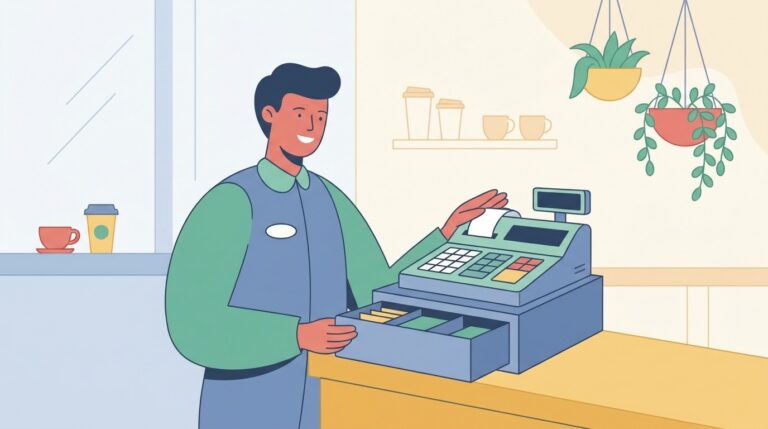
Have you ever stood in front of a buzzing electronic cash register at 10:55 PM in a Seoul convenience store, heart pounding as the neon clock ticks down? If you have ever worked or dreamed of working a part-time job (아르바이트, alba) in South Korea, you know that exact stomach-dropping moment. The doors are locked, the late-night street noise fades, and now comes the moment of truth: pressing that settlement button and counting every single crumpled 1,000-won note, shining 500-won coin, and paper receipt in the drawer. In K-dramas, working an alba looks cozy and romantic—think of the main leads meeting cute over a triangle gimbap. But in real life, standing before the POS (Point of Sale) terminal praying that your cash drawer balances to the exact won is an adrenaline sport!
Balancing cash on hand (현금 시재, hyeongeum sijae) and leaving a spotless handover logbook (인수인계 노트, insu-ingye noteu) is the ultimate test of workplace competence in Korea. When you can announce your numbers confidently and leave crisp notes for the morning shift, you instantly transform from an anxious foreign worker into the most trustworthy teammate in the shop. This guide was built straight from real workplace stories, shift-manager feedback, and our own bruised-but-wiser experiences behind Korean registers. Let’s make sure you never dread the closing shift again!
1. 포스기 마감 정산 버튼 눌렀어요 (Poseugi magam jeongsan beoteun nulleosseoyo)
- Pronunciation: [Po-seu-gi ma-gam jeong-san beo-teun nul-leot-seo-yo] (Think: “PO-soo-gee” like a soft tech device, “ma-gahm” like marking time, and “nool-lut-suh-yo” like gently pushing a button)
- Meaning: Literal: “I pressed the POS machine closing settlement button.” | Real Nuance: “I’ve initiated the end-of-shift financial closing on the register terminal.”
- K-Culture Moment: Seen in slice-of-life dramas like My Liberation Notes or Twenty-Five Twenty-One, where part-timers punch the final register button with a heavy sigh of relief at midnight.
- Editor’s Insight: 마감 정산 (magam jeongsan) combines 마감 (closing/deadline) and 정산 (calculating/settling accounts). Saying this signals to your senior coworker or manager that the active sales period has officially ceased and financial reconciliation is underway.
- Situation Spectrum: Casual: ⚠️ | Semi-formal: ✅ | Formal: ✅
- 🤔 Think About It: In English, we simply say “I closed out the till.” Why does Korean separate the device (포스기), the process (마감 정산), and the action (버튼 누르다)? Notice how Korean highlights procedural transparency step-by-step.
2. 현금 시재가 딱 맞아요 (Hyeongeum sijae-ga ttak majayo)
- Pronunciation: [Hyeon-geum si-jae-ga ttak ma-ja-yo] (Think: “Hyun-gum” like raw cash, “she-jay” like cash in till, and “ttahk” like a satisfying snap of puzzle pieces fitting)
- Meaning: Literal: “The cash on hand fits precisely.” | Real Nuance: “The register drawer balances out to the exact won without any surplus or shortage!”
- K-Culture Moment: The euphoric high-five moment between two convenience store part-timers when the register receipt matches the counted bills, avoiding the dreaded boss phone call.
- Editor’s Insight: 시재 (sijae) is specialized accounting jargon (current cash on hand) that every single Korean part-timer knows. The magic word 딱 (ttak) is an onomatopoeia/mimetic word meaning “dead-on” or “perfectly.” Using it proves you understand authentic Korean workplace rhythm.
- Situation Spectrum: Casual: ✅ | Semi-formal: ✅ | Formal: ⚠️
- 🤔 Think About It: How does your native language celebrate reaching an exact zero-discrepancy balance? Does it use an emphatic snap word like 딱?
3. 인수인계 노트에 메모 남겨 둘게요 (Insu-ingye noteu-e memo namgyeo dulgeyo)
- Pronunciation: [In-su-ing-gye no-teu-e me-mo nam-gyeo dul-ge-yo] (Think: “In-soo-in-gyay” like handing over a baton, “no-too-eh” at the notebook, “nam-gyuh dool-gay-yo” like leaving something behind for safekeeping)
- Meaning: Literal: “I will leave a memo in the handover notebook.” | Real Nuance: “I’ve documented all key notes, stock notices, and issues for the next shift to review.”
- K-Culture Moment: The camera zooms into a spiral notebook near the POS terminal filled with colorful stickers and polite handwriting: “사장님, 폐기 삼각김밥 2개 찍었습니다” (Boss, I registered 2 expired triangle gimbap).
- Editor’s Insight: 인수인계 (insu-ingye) is a paired compound: 인수 (taking over) + 인계 (handing over). It represents the unbroken chain of responsibility that Korean work culture prizes above all else.
- Situation Spectrum: Casual: ⚠️ | Semi-formal: ✅ | Formal: ✅
- 🤔 Think About It: Leaving written records avoids personal confrontation. How does Korean communication lean on written notes to preserve harmony between opposite shifts who rarely meet face-to-face?
Situation 1: The register has a discrepancy
- 📖 Textbook Korean: 현금 정산 결과 금액 차이가 발생했습니다. (Hyeongeum jeongsan gyeolgwa geumaek cha-i-ga balsaenghaesseumnida. / “As a result of cash settlement, a monetary discrepancy has occurred.”)
- 🗣️ Real Korean: 점장님, 시재가 천 원 비어요. / 백 원 남아요. (Jeomjangnim, sijae-ga cheon won bieoyo. / Baek won namayo. / “Manager, the cash drawer is 1,000 won short. / It has 100 won extra.”)
- 💡 Why the difference? Textbook language sounds like a corporate financial audit. On the shop floor, managers need immediate, operational clarity: Is it missing (비다, literally ‘empty’) or surplus (남다, ‘remaining’)?
Situation 2: Finishing your shift handover notes
- 📖 Textbook Korean: 다음 근무자를 위한 업무 인수인계를 완료했습니다. (Daeum geunmujareul wihan eommu insu-ingyereul wallyohaesseumnida. / “I have completed the handover of duties for the next worker.”)
- 🗣️ Real Korean: 교대 노트 다 적고 마감 쳤어요! (Gyodae noteu da jeokgo magam cheosseoyo! / “I finished writing in the shift log and closed out the register!”)
- 💡 Why the difference? 마감 치다 (magam chida) is colorful, universal worker slang meaning “to hit/finish the closing shift.” It communicates energetic efficiency among peers.
4-1. 눈치 (Nunchi) & Non-verbal Manners at the Till
- Under the Eye of the Camera: Every Korean POS terminal has a CCTV camera pointed directly down at the cash drawer. When counting cash (시재 점검), never turn your back to the register or count under the counter ledge. Lay out bundles of 10,000-won and 1,000-won bills flat on the counter directly within the camera’s sightline. This non-verbal habit silently demonstrates utmost honesty (정직함).
- Bill Placement Etiquette: Korean cashiers keep all banknotes facing the same direction (King Sejong’s face upright and looking forward). When restocking the till for the morning shift, straighten bent edges. It reflects consideration for the person taking over.
- The Logbook Bow: Always leave the handover notebook open to today’s page right beside the POS keyboard, anchored under the register key or a tape dispenser so it does not blow away.
4-2. Cultural Code Analysis: The Sacredness of “Alba” Handover
In Korea, part-time jobs are not viewed merely as isolated hourly gigs; they are tightly interconnected relays. The Korean word 아르바이트 (derived from the German Arbeit) embodies a shared social understanding among youth and university students. Because shifts run 24/7 in convenience stores and late into the night in cafes, the 마감조 (closing crew) directly protects the 오픈조 (opening crew). If your cash is off by even 500 won, the morning worker cannot open smoothly. Writing a kind, thorough note ending with “오늘도 수고하세요!” (Have a great shift today as well!) builds an unspoken bond of workplace solidarity.
- Setting: 11:55 PM at a 24-hour convenience store in Sinchon, Seoul. The hum of refrigerated display cases fills the quiet store.
- Characters:
- Alex (알렉스): An international exchange student working his third closing shift.
- Manager Park (박 점장님): A meticulous yet warm store manager stopping by for the midnight register sign-off.
- 알렉스: 점장님, 손님 다 나가셔서 지금 마감 정산 시작할게요. (Jeomjangnim, sonnim da nagasyeoseo jigeum magam jeongsan sijakhalgeyo. / “Manager, all customers have left, so I will start the closing settlement now.”)
🎭 Carefully locks the automatic front door and taps the POS touch screen. -
박 점장님: 그래, 알렉스 씨. 포스기에서 마감 버튼 누르고 시재 영수증 먼저 뽑아요. (Geurae, Allekseu ssi. Poseugi-eseo magam beoteun nureugo sijae yeongsujeung meonje ppobayo. / “Sure, Alex. Press the closing button on the POS and print the cash count receipt first.”)
🎭 Hands over the store register key with both hands. -
알렉스: 네, 정산 버튼 눌렀어요. 영수증 나왔습니다! (Ne, jeongsan beoteun nulleosseoyo. Yeongsujeung nawasseumnida! / “Yes, I pressed the settlement button. The receipt is out!”)
🎭 Tears the thermal receipt neatly along the serrated metal edge. -
박 점장님: 좋아, 이제 금고 열고 권종별로 지폐 세어 봐요. 천천히 해도 돼요. (Joa, ije geumgo yeolgo gwonjongbyeollo jipye seeo bwayo. Cheoncheonhi haedo dwaeyo. / “Good, now open the cash drawer and count the bills by denomination. Take your time.”)
🎭 Steps back so the overhead CCTV has a clear view of the counter. -
알렉스: 만 원짜리 열 장, 오천 원짜리 네 장… 어, 현금 시재가 딱 맞아요! (Man wonjjari yeol jang, ocheon wonjjari ne jang… eo, hyeongeum sijae-ga ttak majayo! / “Ten 10,000-won bills, four 5,000-won bills… oh, the cash balance matches perfectly!”)
🎭 Exhales a big breath of relief and beams proudly. -
박 점장님: 오, 완벽하네! 시재 딱 맞추기 쉽지 않은데 잘했어요. (O, wanbyeokhane! Sijae ttak matchugi swipji aneunde jalhaesseoyo. / “Oh, perfect! It’s not easy to match the till down to the won, great job.”)
🎭 Nods with a satisfied smile and signs the settlement slip. -
알렉스: 감사합니다! 인수인계 노트에 내일 오전 폐기 상품이랑 특이사항 메모 남겨 둘게요. (Gamsahamnida! Insu-ingye noteu-e naeil ojeon pyegi sangpum-irang teugisahang memo namgyeo dulgeyo. / “Thank you! I will leave a memo in the handover log about tomorrow morning’s expiring items and special notices.”)
🎭 Picks up a black gel pen and writes neatly in the shift notebook. -
박 점장님: 고마워요, 알렉스 씨. 노트 적고 바로 퇴근 찍어요. 조심히 들어가요! (Gomawoyo, Allekseu ssi. Noteu jeokgo baro toegeun jjigeoyo. Josimhi deureogayo! / “Thank you, Alex. Finish writing the note and clock out right away. Get home safely!”)
🎭 Pats Alex lightly on the shoulder before checking the ambient beverage shelf.
🔀 Interactive Decision Point: Cash Discrepancy Panic!
You count the drawer, and your heart freezes: the register receipt says you should have 142,000 won, but you only count 141,000 won. You are exactly 1,000 won short (천 원이 빕니다). What do you say to the manager?
- Option A: “점장님, 천 원 비는데 제 주머니 돈으로 채워 넣을게요!” (Jeomjangnim, cheon won bineunde je jumeoni doneuro chaewoneoeulgeyo. / “Manager, it’s 1,000 won short, so I will fill it in with money from my pocket!”)
- Option B: “점장님, 현금 시재가 천 원 비는데, 영수증 다시 확인해 봐도 될까요?” (Jeomjangnim, hyeongeum sijae-ga cheon won bineunde, yeongsujeung dasi hwaginhae bwado doelkkayo. / “Manager, the cash is 1,000 won short; may I double-check the receipts again?”)
- Option C: “시재 영수증에 문제 있는 것 같아요. 기계 오류예요.” (Sijae yeongsujeunge munje inneun geot gatayo. Gigye oryuyeyo. / “I think there is a problem with the till receipt. It’s a machine error.”)
Feedback & Strategy:
* Option A (Risk): While well-intentioned, putting your own pocket money into the till without investigating creates accounting chaos and can look suspicious on CCTV. Most managers prefer discovering why the gap happened (e.g., miscounted change).
* Option B (BEST!): Transparent, calm, and professional. You acknowledge the difference immediately and ask to audit the transaction logs before assuming the worst.
* Option C (BAD): Deflecting blame onto the POS terminal damages trust immediately. Modern POS systems rarely miscalculate inputs.
Read these out loud! Focus on the rhythm slashes (/) and embody the bracketed emotions.
[😅 안도하며 기분 좋게]
포스기 정산 눌렀는데 / 현금 시재가 / 딱 맞아요!
(Poseugi jeongsan nulleonneunde / hyeongeum sijae-ga / ttak majayo!)
“I pressed the POS settlement, / and the cash balance / fits dead-on!”-
[🫡 야무지고 책임감 있게]
내일 오픈 근무자 보라고 / 인수인계 노트에 / 메모 남겨 뒀어요.
(Naeil opeun geunmuja borago / insu-ingye noteu-e / memo namgyeo dwosseoyo.)
“So the morning opening worker can see it, / in the handover logbook / I left a clear memo.” -
[🧐 차분하고 정직하게]
점장님, / 백 원이 조금 남는데 / 결제 내역 / 다시 확인해 볼게요.
(Jeomjangnim, / baek won-i jogeum namneunde / gyeolje naeyeok / dasi hwaginhae bolgeyo.)
“Manager, / there is an extra 100 won, / so the payment history / I will recheck.”
- 시재 (Sijae) | Cash on hand / Till balance
The actual physical cash currently present in the register drawer. In convenience stores, workers conduct a “시재 점검” (cash audit) at every shift change. - 마감 (Magam) | Closing / Deadline
Used broadly across Korean society (from project deadlines to store closings). At work, 마감 타임 refers specifically to the night closing shift. - 인수인계 (Insu-ingye) | Work handover / Succession
The formal transfer of tasks, keys, and operational information from one worker to the next. High-quality 인수인계 is considered top-tier professionalism in Korea. - 빵꾸 (Bbang-kku) | Shortage / Discrepancy / Puncture
Originally derived from the Japanese pronunciation of “puncture,” this is ubiquitous Korean colloquial slang. In store work, “시재 빵꾸났다” means your cash register came up short!
Survival Expressions TOP 3
- 영수증 재출력해 드릴게요. (Yeongsujeung jaechullyeokhae deurilgeyo.)
Pro Tip: “I will reprint the receipt for you.” Essential when paper jams during the closing printout! - 돈통이 안 열려요. (Dontong-i an yeollyeoyo.)
Pro Tip: “The cash drawer won’t open.” 돈통 (dontong) is the common word for the spring-loaded cash register drawer. - 교대 시간 맞춰서 왔습니다! (Gyodae sigan matchwoseo watseumnida!)
Pro Tip: “I arrived right on time for shift change!” Use this greeting when arriving for your shift to impress your coworker.
Editor’s Travel & Alba Note
If you are searching for part-time gigs or navigating commercial areas in Korea, skip foreign map tools. Always use a tailored local app; make sure to check out the 네이버 지도 앱 다운로드 page to locate convenience store chains and cafes with active hiring posters. Furthermore, familiarise yourself with local digital payment methods like KakaoPay and Naver Pay, as more than 80% of transactions in Korean stores are cashless! Cash closing is faster today, but counting remaining bills requires absolute precision.
In many Western workplaces, if a till is off by 50 cents, it is often dismissed as minor rounding or written off without stress. In Korea, however, workers obsess over a 100-won coin discrepancy. Why? It isn’t about the monetary value of that 100-won coin (worth less than ten US cents); it is about 신뢰 (Trust) and 배려 (Consideration). When the register balances to zero, you are silently telling your teammates: “I handled every single customer with care, and I respect your time so you don’t have to troubleshoot my mistakes.”
💬 Your Turn: Have you ever worked a register or handled a handover note in your home country? How do you react when the numbers don’t balance? Tell us your funniest or most stressful register story in the comments below!
Q: What should I do if the POS machine cash is short by a large amount (e.g., 10,000 won)?
A: Never try to cover it secretly with your personal debit card or cash. Immediately alert your shift manager (점장님) by sending a polite message: “점장님, 정산 시재가 만 원 부족하여 내역을 확인 중입니다” (Manager, the cash is 10,000 won short, so I am checking transaction records). Check the receipt spindle for canceled card receipts or double-refunded items first.
Q: Can I use informal Banmal (반말) in the handover notebook if my coworker is the same age?
A: Even if you are close friends with the next shift worker outside work, keep the official handover notebook in polite language (존댓말 or polite memo form -음/임). The store owner and head office managers read this notebook during weekly audits!
Q: What does ‘시재 점검’ button mean on the touch screen during the middle of the day?
A: 시재 점검 (Cash Audit) lets you count cash mid-shift without resetting the daily sales database. It prints out a mid-day balance check without triggering the final end-of-day 마감 정산.
🚨 Common Mistakes (흔한 실수) TOP 3
- Throwing Away the Settlement Slip: Tossing the long printed thermal slip into the recycling bin.
Correct Action: Always staple or tape the 마감 영수증 (closing receipt) directly into the handover notebook or store journal. - Leaving Ambiguous Log Notes: Writing “우유 문제 있음” (Milk has a problem).
Correct Action: Be precise! Write “서울우유 200ml 유통기한 오늘 자정까지라 폐기 등록함” (Seoul Milk 200ml expires midnight today, registered as expired discard). - Counting Cash Out of Camera Range: Moving the cash drawer to the back break room to count in private.
Correct Action: Always keep the drawer in full view of the ceiling CCTV camera at the front counter.
- 🥉 Bronze Mission (Solo Practice): Stand in front of your desk, mimic pressing a POS screen, and say out loud three times with clear emotion: “현금 시재가 딱 맞아요!”
- 🥈 Silver Mission (Social Share): Leave a comment below sharing one phrase you learned today that surprised you regarding Korean store culture.
- 🥇 Gold Mission (Real Life Action): Next time you visit a Korean convenience store or cafe around 10~11 PM, quietly observe the cashier counter. Can you spot the handover notebook (인수인계 노트) or see the POS terminal settlement slip?
- 🎮 K-Culture Mission: Watch an episode of a modern Korean drama set around university life (like Cheese in the Trap or Weightlifting Fairy Kim Bok-joo) and spot how part-time job shifts are described by the characters!
1. Situational Judgment:
You have finished counting the cash drawer and the balance matches the POS receipt to the exact won. Which sentence should you say to your manager?
* A) 시재가 빵꾸났어요. (Sijae-ga bbangkkunasseoyo.)
* B) 현금 시재가 딱 맞아요. (Hyeongeum sijae-ga ttak majayo.)
* C) 인수인계 노트 버렸어요. (Insu-ingye noteu beoryeosseoyo.)
2. Fill in the Blank:
다음 근무자를 위해 중요한 내용을 [ _______ ] 노트에 메모해 두었습니다.
(For the next worker, I wrote down important notes in the [ _______ ] logbook.)
3. True or False:
In Korean stores, it is customary to take the cash drawer into the back staff restroom or storage room where customers cannot see you count the money. (True / False)
👉 Click to reveal answers & explanations!
-
Answer: B) 현금 시재가 딱 맞아요.
Explanation: Option A means there is a big shortage/puncture, and Option C means you threw away the handover book! -
Answer: 인수인계 (Insu-ingye)
Explanation: 인수인계 노트 is the official handover logbook used across Korean businesses. -
Answer: False
Explanation: Cash should always be counted right at the front counter under the watchful eye of the overhead CCTV to guarantee complete honesty and prevent misunderstandings!







