

Phase 1: 공감 (스토리 몰입형 오프닝)
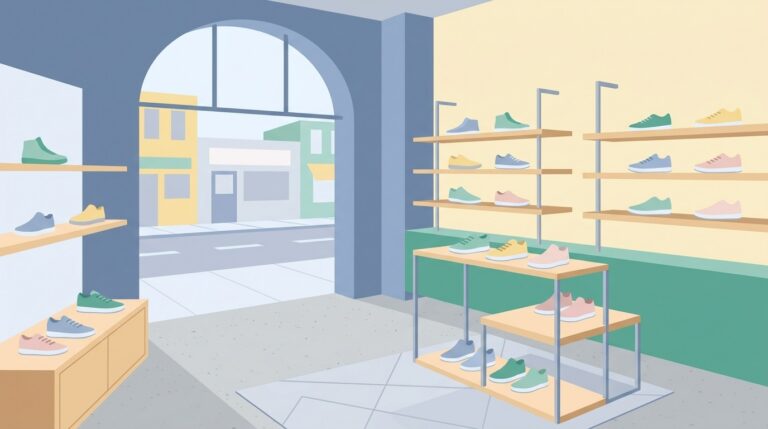
안녕하세요! 매일한글 에디터입니다. (Hello! It is your Daily Hangul editor.) Have you ever walked into a buzzing, ultra-stylish sneaker store in Hongdae or Seongsu-dong, spotted the absolute pair of your dreams, and suddenly frozen on the spot? You look at the tags and realize: Korean shoe sizes are in millimeters! Even worse, Korean sneakers often have a slightly narrower fit (balbol), leaving you caught right between 240mm and 245mm.
You want to ask the staff to bring both sizes so you can test which one feels best, but your mind races: “What if it is rude to make them run back and forth to the stockroom? How do I say ‘both sizes’ naturally without sounding demanding?” Many of our learners have told us they ended up buying shoes a half-size too small just because they felt shy asking for another pair.
Do not let shoe stress ruin your Seoul shopping spree! In this lesson, you will master the exact native phrase to compare two sizes comfortably and politely. Based on real-life shopping scenarios and feedback from hundreds of beginners, this friendly guide will turn your shoe store anxiety into pure confidence. Let us jump right in!
Phase 2: 핵심 표현 3선 심층 분석
1. 이 운동화 240 사이즈랑 245 사이즈 둘 다 신어 볼게요
- Pronunciation: [I undonghwa ibaeksasip sa-i-jeu-rang ibaeksasibo sa-i-jeu dul da sineo bol-ge-yo] (Sound tip: “Sineo” blends like “she-nuh”, and “bol-ge-yo” has a soft, bounce-like ending “bowl-geh-yo”)
- Meaning:
- Literal: “These sneakers 240 size and 245 size both I will try wearing.”
- Natural Nuance: “I’d like to try on both size 240 and 245 in these sneakers, please.”
- K-Culture Moment: Picture a scene in a trendy K-Drama like Record of Youth where characters shop in a chic flagship store. Instead of demanding “Bring me sizes!”, the protagonist politely states their intention with
~신어 볼게요, balancing casual coolness and shop etiquette. - Editor’s Insight: The ending
-(으)ㄹ게요expresses the speaker’s mild intention or gentle declaration (“I think I will do this”). Adding둘 다(dul da – “both”) makes it crystal clear that the clerk can grab both boxes in a single trip. - Situation Spectrum: Casual: ⚠️ (too formal for friends) | Semi-formal: ✅ (perfect for retail stores) | Formal: ✅
- 🤔 Think About It: In English, we usually ask questions: “Could I please try…?” In Korean retail, declaring your polite intent with
~신어 볼게요(“I will try on…”) sounds warm, cooperative, and natural rather than presumptuous. Why do you think Korean expresses requests through gentle self-actions?
2. 발볼이 좀 끼는데, 더 편한 거 추천해 주실 수 있나요?
- Pronunciation: [Balbor-i jom kki-neun-de, deo pyeon-han geo chu-cheon-hae ju-sil su in-na-yo?]
- Meaning:
- Literal: “Foot width pinches a bit, more comfortable thing can you recommend?”
- Natural Nuance: “The sides feel a bit tight. Could you recommend something with a roomier fit?”
- K-Culture Moment: You will often hear this in shopping vlogs when K-Pop idols or YouTubers go thrift shopping in Dongmyo or testing designer shoes in Gangnam.
- Editor’s Insight: Korean footwear tends to have a standard or slightly narrow width (
발볼, balbol). The verb끼다(kkida) describes items pinching or feeling tight around your feet. Asking더 편한 거(deo pyeon-han geo, “a more comfortable one”) signals to the clerk that you prioritize comfort over rigid styling. - Situation Spectrum: Casual: ⚠️ | Semi-formal: ✅ | Formal: ✅
- 🤔 Think About It: Notice the polite hedging word
좀(jom – a little). Even if a shoe is crushing your toes, saying좀 끼네요softens the critique. Do you use mitigating words in your native language to remain polite?
3. 다른 색상도 비교해 보고 싶어요
- Pronunciation: [Dareun saek-sang-do bi-gyo-hae bo-go si-peo-yo]
- Meaning:
- Literal: “Other colors also compare and see I want.”
- Natural Nuance: “I would also love to compare the other color options.”
- K-Culture Moment: Popularized by reality variety shows where cast members browse concept stores and debate between “Ivory Cream” and “Matte Charcoal” colorways.
- Editor’s Insight:
비교하다means to compare. Attaching~보고 싶어요turns an analytical action into a gentle consumer wish. This is the go-to line when checking if a bag or shoe looks different under store lighting versus natural daylight. - Situation Spectrum: Casual: ⚠️ | Semi-formal: ✅ | Formal: ✅
- 🤔 Think About It: Retail interactions in Korea frequently combine multiple sensory evaluations (touching, looking, testing). Why is
~해 보다(to try doing and see) attached to almost every customer expression?
Phase 3: 교과서 한국어 vs 진짜 한국어
Situation 1: Asking to try on two sizes
- 📖 교과서 한국어 (Textbook): 저에게 240 사이즈와 245 사이즈 신발을 보여 주십시오. (Jeo-e-ge ibaeksasip sa-i-jeu-wa ibaeksasibo sa-i-jeu sinbar-eul bo-yeo ju-sip-si-o. / “Please show me the 240 and 245 size shoes.”)
- 🗣️ 진짜 한국어 (Real-life Native): 이거 240이랑 245 둘 다 신어 봐도 될까요? (I-geo ibaeksasib-i-rang ibaeksasibo dul da sineo bwa-do doel-kka-yo? / “Could I try on both 240 and 245 in this?”)
- 💡 왜 다를까?: Textbook Korean relies heavily on formal imperative endings like
~십시오, which sounds like a 1980s military manual. Modern retail clerks appreciate the softer, friendlier permission marker~아/어도 될까요?(“Would it be okay to…?”).
Situation 2: Asking if there are other colors
- 📖 교과서 한국어 (Textbook): 이 가방의 다른 색상이 매장에 존재합니까? (I gabang-ui dareun saek-sang-i mae-jang-e jon-jae-ham-ni-kka? / “Do other colors of this bag exist in the store?”)
- 🗣️ 진짜 한국어 (Real-life Native): 이 가방 다른 색상은 없어요? (I gabang dareun saek-sang-eun eop-seo-yo? / “Are there any other colors for this bag?”)
- 💡 왜 다를까?: Native speakers rarely use clinical terms like
존재하다(to exist) when shopping. The natural conversational pattern simply asks with없어요?(lit. “Isn’t there…?”) with a curious, rising intonation.
Phase 4: K-Culture 딥다이브 & 비언어적 매너
4-1. 눈치 (Nunchi) & Store Floor Manners
When trying on shoes in Korea, two vital physical habits show exceptional retail manners:
1. The Trial Mat (발판 / Mat): Always keep your feet over the designated floor carpet or stool pad. Stepping directly onto dirty concrete or tile floor with fresh, unstamped soles makes staff nervous.
2. The Shoehorn Grace (구두걱 / Hera): Most Korean shoe stores keep plastic or metal shoehorns hanging on mirrors or benches. Using the shoehorn instead of crushing the heel counter shows great care (bae-ryeo) for the merchandise.
4-2. Cultural Code: Millimeter Measurements & Trend Culture
Unlike the US (Size 7, 8) or the UK/EU (Size 37, 38), Korea measures shoes strictly by foot length in millimeters (mm).
* 230mm ≈ US Women 6
* 240mm ≈ US Women 7
* 260mm ≈ US Men 8
* 270mm ≈ US Men 9
Furthermore, in hotspots like Seongsu-dong and Dosan Park, footwear stores double as art galleries with multi-color displays. Clerks love when customers request color comparisons because matching daily fashion (OOTD – Outfit Of The Day) with nuanced shades (like “ecru” vs. “chalk white”) is considered a fun, shared creative process.
Phase 5: 실전 롤플레이 시나리오
Setting: A vibrant, minimalist streetwear boutique in Seongsu-dong.
Characters:
* Ji-hoon (직원 – Store Clerk): Stylish, attentive, and wearing a crisp canvas apron.
* You (손님 – Customer): Finding the ultimate everyday sneaker.
- Turn 1 (Ji-hoon): 어서 오세요! 편하게 둘러보시고, 신어 보고 싶으신 거 말씀해 주세요.
(Eoseo oseyo! Pyeon-ha-ge dulleo-bosigo, sineo bo-go si-peu-sin geo malsseum-hae juseyo.)
“Welcome! Feel free to look around and let me know if there’s anything you’d like to try on.”
🎭 [미소를 지으며 정중하게 목례한다 - Smiles warmly and gives a polite nod] -
Turn 2 (You): 저기요, 이 운동화 240 사이즈랑 245 사이즈 둘 다 신어 볼게요.
(Jeogiyo, i undonghwa ibaeksasip sa-i-jeu-rang ibaeksasibo sa-i-jeu dul da sineo bol-ge-yo.)
“Excuse me, I’d like to try on both size 240 and 245 in these sneakers.”
🎭 [손가락 대신 손바닥을 펼쳐 진열된 신발을 가리킨다 - Points to the display shoe with an open palm] -
Turn 3 (Ji-hoon): 네! 두 사이즈 바로 준비해 드릴게요. 잠시만 앉아서 기다려 주세요.
(Ne! Du sa-i-jeu baro junbi-hae deuril-ge-yo. Jamsiman anj-aseo gidaryeo juseyo.)
“Sure! I will prepare both sizes right away. Please have a seat and wait just a moment.”
🎭 [빠른 걸음으로 창고를 향해 이동한다 - Walks briskly toward the stockroom] -
Turn 4 (Ji-hoon): 오래 기다리셨습니다! 왼쪽이 240이고, 오른쪽이 245예요.
(Orae gidarisyeosseumnida! Oen-jjog-i ibaeksasib-igo, oreun-jjog-i ibaeksasibo-ye-yo.)
“Thank you for waiting! The left one is 240, and the right one is 245.”
🎭 [신발 상자를 열고 매트 위에 가지런히 놓아준다 - Opens the boxes and sets them neatly on the mat] -
Turn 5 (You): 240은 발볼이 좀 끼는데, 245가 발이 훨씬 편하네요.
(Ibaeksasib-eun balbor-i jom kki-neun-de, ibaeksasibo-ga bar-i hwolssin pyeon-ha-ne-yo.)
“The 240 pinches the sides a bit, but the 245 feels so much more comfortable.”
🎭 [일어서서 가볍게 체중을 실어 발을 굴려본다 - Stands up and gently shifts weight to test the soles] -
Turn 6 (Ji-hoon): 맞아요, 이 디자인이 앞 코가 약간 좁게 나왔거든요. 245 사이즈가 딱 예쁘게 맞으세요!
(Maj-a-yo, i di-ja-in-i ap ko-ga yakgan jop-ge nawat-geodeun-yo. Ibaeksasibo sa-i-jeu-ga ttak yeppeuge majeuseyo!)
“Right, this design comes out a bit narrow in the toe box. The 245 fits you perfectly and looks great!”
🎭 [신발 옆라인과 발끝 공간을 확인해 준다 - Checks the shoe profile and toe spacing] -
Turn 7 (You): 혹시 이 디자인 다른 색상도 비교해 볼 수 있을까요?
(Hoksi i di-ja-in dareun saek-sang-do bi-gyo-hae bol su isseulkkayo?)
“By any chance, could I also compare other colors in this design?”
🎭 [기대 어린 눈빛으로 주변 컬러 차트를 둘러본다 - Looks around at the color swatches with anticipation] -
Turn 8 (Ji-hoon): 물론이죠! 블랙이랑 올리브 그린 색상도 있어요. 둘 다 보여 드릴게요!
(Mullon-i-jyo! Beullaeg-i-rang ollibeu geurin saek-sang-do isseoyo. Dul da bo-yeo deuril-ge-yo!)
“Of course! We have it in black and olive green as well. I’ll show you both!”
🎭 [신이 난 손짓으로 다른 컬러 박스를 가져온다 - Brings over the other color boxes enthusiastically]
🔀 인터랙티브 분기점 (Interactive Crossroads)
After trying both, the 245 fits great, but you want to think about the price before buying. What do you say?
- Choice A: “너무 비싸요. 그냥 갈게요.” (Too expensive. I’m just leaving.)
- Choice B: “조금만 더 고민해 보고 다시 올게요. 감사해요!” (I’ll think about it a little more and come back. Thank you!)
- Choice C: “사이즈 봤으니까 인터넷으로 살게요.” (I’ve seen the size, so I’ll buy it online.)
Feedback:
* Choice A (Bad): While honest, saying “It is too expensive, I am leaving” sounds blunt and leaves an awkward silence after the clerk retrieved 4 boxes for you.
* Choice B (Best): Polite, graceful, and standard retail etiquette. Clerks respect customers taking time to decide, and the warm “감사해요!” leaves a positive impression.
* Choice C (Risk): Telling a retail clerk to their face that you are showrooming to buy online is considered a major social taboo in Korea.
Phase 6: 10초 감정 섀도잉 드릴 (Emotion Shadowing Drill)
Read these lines aloud, paying attention to rhythm, breath pauses (/), and emotional intent!
[👟 호기심 가득하고 밝게 - Curious & Upbeat]
이 운동화 / 240 사이즈랑 245 사이즈 / 둘 다 신어 볼게요!
(I undonghwa / ibaeksasip sa-i-jeu-rang ibaeksasibo sa-i-jeu / dul da sineo bol-ge-yo!)-
[🤔 신중하고 솔직하게 - Thoughtful & Sincere]
240은 발볼이 좀 끼는데 / 245가 훨씬 편하네요.
(Ibaeksasib-eun balbor-i jom kki-neun-de / ibaeksasibo-ga hwolssin pyeon-ha-ne-yo.) -
[✨ 눈을 반짝이며 기대감 있게 - Sparkly & Expectant]
이 가방 / 다른 색상도 / 비교해 보고 싶어요!
(I gabang / dareun saek-sang-do / bi-gyo-hae bo-go si-peo-yo!)
Phase 7: K-Culture 미니 사전
- 발볼 (Balbol): Foot width across the ball of the foot. In Korea, shoes frequently specify whether they suit a “wide foot width” (발볼 넓음) or “narrow foot width” (발볼 좁음).
- 착화감 (Chak-hwa-gam): “Wear-feel” or foot cushioning comfort. Essential review metric on Korean e-commerce platforms like Musinsa and 29CM.
- 실물 (Sil-mul): Physical reality / real appearance. Shoppers often comment: “실물이 훨씬 예뻐요!” (“The item looks way better in real life than in photos!”).
- 반사이즈 (Ban-sa-i-jeu): Half size (e.g., 5mm intervals like jumping from 240 to 245). You will often hear: “반사이즈 업 하세요” (“Size up by a half size”).
Phase 8: 여행자를 위한 생존 키트
서바이벌 표현 TOP 3
- 거울 어디에 있어요? (Geour eodie isseoyo?)
Pro Tip: Where is the mirror? Essential for checking full-body proportions with bags and sneakers. - 새 상품으로 있나요? (Sae sangpum-euro innayo?)
Pro Tip: Is there a brand-new boxed item? Keeps you from accidentally taking the floor display copy. - 텍스 리펀드 돼요? (Tekseu ripeondeu dwaeyo?)
Pro Tip: Can I get a tax refund? Korea offers immediate tax refunds at most registered shopping venues when you show your physical passport.
Editor’s Travel Note
When hunting for limited-edition sneakers or popular Korean designer canvas bags, open your smartphone and search via the 네이버 지도 앱 다운로드 to locate multi-brand shoe chains like ABC-Mart Grand Stage, Folder, or flagship stores in Seongsu and Myeongdong. Always carry your physical passport for instant tax rebates at checkout!
Phase 9: “한 발 더 깊이” (생각 질문)
In Korean linguistic culture, the grammatical ending -(으)ㄹ게요 balances personal autonomy with relational harmony. Instead of issuing a command (“Bring me size 240”), you state your future action (“I will try on both”), leaving space for the other person to willingly assist you. It subtly acknowledges that retail workers are working alongside you in partnership. This dynamic reflects the deep-rooted Korean value of jeong (relational warmth) and mutual consideration in day-to-day public life.
💬 Your Turn: In your home country, do customers typically use direct imperatives (“Give me size 8”) or polite questions (“Could I see size 8?”)? How do you think language influences the mood of a store? Share your thoughts below!
Phase 10: FAQ & 오해 방지 (FAQ Schema)
Q: What should I do if the store does not have half-sizes (like 245mm)?
A: Many casual slip-ons or canvas shoes only release in 10mm increments (240, 250, 260). If you are between sizes, ask the staff: “반사이즈 없으면 크게 신는 게 나을까요?” (“If there is no half size, is it better to wear it bigger?”). Clerks will often provide complimentary insole pads (깔창, kkalchang) to help fine-tune the fit!
Q: Is it considered rude to try on shoes and not buy anything?
A: Absolutely not! Trying shoes on (착화) is completely normal in Korea. As long as you step on the designated trial mats, use a shoehorn, and politely say “조금만 더 둘러볼게요, 감사합니다!” (“I will look around a bit more, thank you!”), retail staff will happily smile and bow.
Q: Can I wear my own socks when trying on shoes in Korean stores?
A: Yes, and in fact, wearing socks is highly encouraged for hygiene! If you are wearing sandals or bare feet during summer, ask the clerk for a disposable foot stocking: “덧선이나 양말 있나요?” (“Do you have a foot cover or sock?”).
🚨 흔한 실수 (Common Mistakes) 경고판
- Mistake: Stepping straight onto the bare store floor with the brand-new shoes.
Correct Action: Always stay centered on the floor carpet or designated trial step-mat. - Mistake: Saying “Size 7 주세요” using your home country’s shoe sizing system.
Correct Action: Memorize your millimeter size (e.g., 240, 265) in advance before speaking to the clerk. - Mistake: Forcing your heel into the sneaker with your fingers, creasing the shoe back.
Correct Action: Use the store shoehorn (구두걱, gudugeok) to slip in smoothly.
Phase 11: 액션 미션 & 참여 유도
- 🥉 Bronze Mission (Solo Practice): Stand in front of your shoe rack at home. Point to two different sneakers and practice saying out loud: “이 운동화 240 사이즈랑 245 사이즈 둘 다 신어 볼게요!” three times with cheerful energy.
- 🥈 Silver Mission (Community Share): Leave a comment on our Instagram or blog post sharing your Korean shoe size in millimeters (e.g., “저는 250 사이즈예요!”).
- 🥇 Gold Mission (Real-world Challenge): Next time you enter a shoe or fashion boutique in Korea or a Korean marketplace, ask the clerk to compare two items using
둘 다 신어 볼게요or다른 색상도 비교해 보고 싶어요!
🎮 K-Culture Mission: Watch a recent episode of your favorite K-pop vlog or reality show (like Going Seventeen or BTS In the Soop). Listen closely for whenever someone uses the ending ~ㄹ게요 or the word 색상 (color) while choosing their gear!
Phase 12: 인터랙티브 퀴즈 챌린지
Quiz 1. Situational Judgment
You tried on a pair of designer boots, but the sides feel quite narrow and uncomfortable around your toes. What is the most natural way to express this?
A) 발이 너무 아파서 화나요. (My foot hurts so much, I am angry.)
B) 발볼이 좀 끼는데, 더 편한 거 추천해 주실 수 있나요? (The foot width pinches a bit, could you recommend something more comfortable?)
C) 신발을 왜 이렇게 작게 만들었어요? (Why did you make the shoes so small?)
👉 정답 & 해설 보기 (Click to view Answer & Explanation)
정답: B
해설: Stating that the width pinches slightly (발볼이 좀 끼는데) followed by a polite recommendation request (추천해 주실 수 있나요?) is courteous, effective, and sounds like a native speaker!
Quiz 2. Fill-in-the-Blank
Complete the sentence to say: “I’d like to try on both sizes, please.”
“이 운동화 두 사이즈 [ ] 신어 볼게요.”
👉 정답 & 해설 보기 (Click to view Answer & Explanation)
정답: 둘 다 (dul da)
해설: 둘 다 means “both”. Placing it before the action verb emphasizes that you want to try both items together.
Quiz 3. True / False Culture Check
Statement: In South Korea, shoe sizes are standardly labeled in UK numbers (e.g., Size 5, Size 6).
👉 정답 & 해설 보기 (Click to view Answer & Explanation)
정답: False (X)
해설: South Korea exclusively uses millimeter (mm) measurements based on foot length (e.g., 230mm, 240mm, 270mm) for all shoes.







