

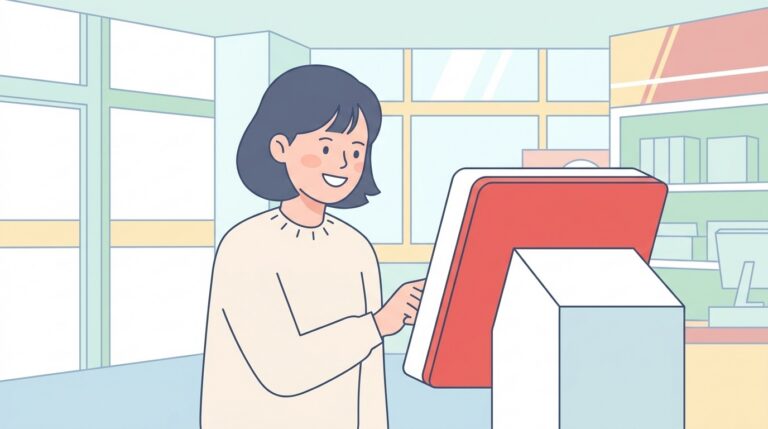
Master the Korean Post Office: Sending EMS with Smart Kiosks
Phase 1: Empathy (Story-Driven Opening)
안녕하세요! 매일한글 에디터입니다. (Hello! This is your Daily Hangul editor!)
Picture this: You are standing in the middle of a lively post office in Hongdae, Seoul. Your arms are aching from carrying a heavy cardboard box stuffed with Olive Young skincare hauls, limited-edition K-pop albums, and instant ramyeon packets for your best friends back home. You grab a pen at the counter, ready to scribble your address on a paper EMS waybill—just like travelers have done for decades.
Then, the staff member smiles warmly and says, “국제우편은 키오스크나 스마트폰으로 미리 접수하셔야 해요!” (Gukje-upyeon-eun kioseukeu-na seumateupon-euro miri jeopsuhasyeoya haeyo! / For international mail, you need to register on the kiosk or smartphone beforehand!)
You freeze. Where did the paper forms go? Is that big touchscreen kiosk going to ask for Korean resident numbers? Don’t panic! Korea Post has shifted almost entirely to digital pre-registration for international express mail to speed up customs clearance worldwide. We developed this friendly A2-level guide directly from the real struggles of international students and travelers. By the end of this guide, you will master the exact Korean phrases and digital etiquette needed to dispatch your package across the globe with zero stress!
Phase 2: Core Expressions Deep Dive
Here are the 3 essential expressions you must know at the post office:
1. 미리 신청해야 돼요? (Miri sincheonghaeya dwaeyo?)
- Pronunciation: [Miri sincheong-haeya dwae-yo?] (Sounds like: mee-ree sheen-chuhng-hae-yah dway-yo)
- Meaning: “Do I have to register/apply in advance?”
- K-Culture Moment: You will hear this everywhere in modern Korea—from ordering at automated fast-food stores to booking trendy pop-up stores in Seongsu-dong.
- Editor’s Insight: 미리 (miri) means ‘in advance’ or ‘ahead of time’, and -아/어야 돼요 (-a/eoya dwaeyo) means ‘must / have to’. Combining them creates a polite question to confirm whether a process requires digital pre-booking.
- Situation Spectrum: Casual: ⚠️ | Semi-formal: ✅ | Formal: ✅
- 🤔 Think About It: In many Western countries, walking up to a counter and filling out a paper form is standard. Why has Korea moved toward digital-first ‘smart pre-registration’ across almost every public service?
2. 키오스크로 어떻게 해요? (Kioseukeuro eotteoke haeyo?)
- Pronunciation: [Kioseukeu-ro eotteoke hae-yo?] (Sounds like: kee-oh-seu-keu-roh uh-ttuh-keh hae-yo)
- Meaning: “How do I do it using the kiosk?”
- K-Culture Moment: Seen frequently in K-Dramas when older characters ask young protagonists for a quick hand when facing touchscreens at metro stations or cafes.
- Editor’s Insight: -(으)로 (-(eu)ro) indicates the tool or method used (‘by means of’). 어떻게 해요? is your ultimate survival question whenever you feel lost with technology in Korea.
- Situation Spectrum: Casual: ⚠️ | Semi-formal: ✅ | Formal: ✅
- 🤔 Think About It: Asking for help politely in Korea instantly evokes 정 (Jeong – warm social bonding). Staff members are almost always happy to guide your fingers on the screen!
3. 무게 좀 재 주시겠어요? (Muge jom jae jusigesseoyo?)
- Pronunciation: [Muge jom jae jusigesseo-yo?] (Sounds like: moo-geh johm jae joo-shee-get-ssuh-yo)
- Meaning: “Could you weigh this for me, please?”
- K-Culture Moment: The moment of truth! You place your precious package onto the digital scale next to the window to calculate shipping rates.
- Editor’s Insight: Adding 좀 (jom – a little) softens requests dramatically in Korean culture. 재다 (jaeda) means ‘to measure/weigh’, and -어 주시겠어요? turns it into an ultra-polite request.
- Situation Spectrum: Casual: 🚫 | Semi-formal: ✅ | Formal: ✅
- 🤔 Think About It: Notice how softeners like 좀 replace direct commands. How does your native language soften direct requests when speaking to service workers?
Phase 3: Textbook Korean vs. Real Korean
Situation 1: Telling the counter staff you want to send international EMS
- 📖 교과서 한국어 (Textbook): “국제 특급 우편을 발송하고 싶습니다.” (Gukje teukgeup upyeoneul balsonghago sipsumnida. – I wish to dispatch international express postal mail.)
- 🗣️ 진짜 한국어 (Real-life): “EMS 보내려고 하는데요.” (EMS bonaeryeogo haneundeyo. – I am looking to send an EMS package.)
- 💡 왜 다를까? (Why the difference?): In daily life, Koreans prefer the internationally recognized acronym EMS rather than the lengthy formal term 국제 특급 우편. Ending with -려고 하는데요 sounds much softer and invites the clerk to give you the next instructions.
Situation 2: Asking if you can fill it out on your phone right now
- 📖 교과서 한국어 (Textbook): “스마트폰 접수 웹사이트의 위치를 알려주십시오.” (Seumateupon jeopsu wepsaiteu-ui wichireul allyeojusipsio. – Please inform me of the smartphone registration website location.)
- 🗣️ 진짜 한국어 (Real-life): “폰으로 지금 접수해도 돼요?” (Poneuro jigeum jeopsuhaedo dwaeyo? – Can I just register it on my phone right now?)
- 💡 왜 다를까? (Why the difference?): Native speakers casually shorten 스마트폰 to 폰 (pon). The grammar pattern -해도 돼요? (Can I do…?) is natural, quick, and polite for A2 learners.
Phase 4: K-Culture Deep Dive & Non-Verbal Manners
4-1. 눈치 (Nunchi) & Post Office Gestures
- Two-Handed Phone Presentation: When showing your completed digital registration barcode or QR code on your phone screen, hold your phone with both hands (or support your right forearm with your left hand). This shows respect to the postal worker scanning your screen.
- Packaging Desk Etiquette: Korean post offices provide dedicated packaging zones (포장대) complete with communal scissors, tape dispensers, and bubble wrap. Once you finish taping your box, immediately return the tape gun to the center tray so the next person can use it without waiting. Being aware of shared space is peak 눈치 (Nunchi).
4-2. Cultural Code Analysis: The ‘Ppalli-Ppalli’ (Fast-Paced) Digital Shift
Korea’s legendary 빨리빨리 (ppalli-ppalli) culture values speed and efficiency above all. In the past, reading messy handwritten foreign addresses caused major shipping delays and customs errors. By transitioning to kiosk and mobile pre-registrations, the system prints standardized barcodes instantly. This saves up to 10 minutes per customer in line! Embracing the kiosk isn’t just following rules; it’s participating in Korea’s collective respect for everyone’s valuable time.
Phase 5: Real-Life Roleplay Scenario
Setting: Seoul Central Post Office (서울중앙우체국). Mina, an exchange student, approaches the counter with a taped box.
Characters: Mina (A2 Korean learner) & Staff Mr. Park (friendly postal clerk).
- Mina: 🎭 Hands resting gently on the box, bowing slightly
안녕하세요! 미국으로 EMS 보내려고 하는데요.
(Annyeonghaseyo! Migugeuro EMS bonaeryeogo haneundeyo.)
“Hello! I’m looking to send an EMS package to the US.” -
Mr. Park: 🎭 Points politely toward the kiosk near the entrance
네, 고객님! 혹시 모바일이나 키오스크로 사전 접수 하셨나요?
(Ne, gogaeknim! Hoksi mobairina kioseukeuro sajeon jeopsu hasyeonnayo?)
“Yes, valued customer! Did you happen to do the advance registration on mobile or the kiosk?” -
Mina: 🎭 Looking a bit surprised, tilting head
아, 아직 안 했어요. 미리 신청해야 돼요?
(A, ajik an haesseoyo. Miri sincheonghaeya dwaeyo?)
“Ah, not yet. Do I have to register in advance?” -
Mr. Park: 🎭 Nods with a warm smile
네, 해외 배송은 키오스크에서 영문 주소를 먼저 입력하셔야 접수가 가능해요.
(Ne, haeoe baesongeun kioseukeueseo yeongmun jusoreul meonjeo imnyeokhasyeoya jeopsuga ganeunghaeyo.)
“Yes, for international shipping, you must first input the English address at the kiosk to register.” -
Mina: 🎭 Checking the kiosk screen from afar, speaking cautiously
키오스크로 어떻게 해요? 한국어만 나와요?
(Kioseukeuro eotteoke haeyo? Hangugeoman nawayo?)
“How do I do it with the kiosk? Is it only in Korean?” -
Mr. Park: 🎭 Steps around the counter to guide her toward the machine
화면 오른쪽 위에서 영어로 바꿀 수 있어요. 제가 도와드릴게요!
(Hwamyeon oreunjjok wieseo yeongeoro bakkul su isseoyo. Jega dowadeurilgeyo!)
“You can change the language to English in the top-right corner. I will help you!” -
Mina: 🎭 Bowing head gratefully with a bright expression
우와, 정말 감사합니다! 금방 하고 올게요.
(Uwa, jeongmal gamsahamnida! Geumbang hago olgeyo.)
“Wow, thank you so much! I will finish it quickly and come back.” -
Mr. Park: 🎭 Giving an encouraging nod
천천히 하세요. 접수증 나오면 3번 창구로 바로 오세요!
(Cheoncheonhi haseyo. Jeopsujeung naomyeon sambeon changguro baro oseyeo!)
“Take your time. Once the receipt ticket prints out, come straight to Counter 3!”
🔀 Interactive Branching Moment
After entering your details at the kiosk, the machine prints a barcode sticker. You head back to Mr. Park. What do you say?
- Option A: “여기요! 다 했어요. 무게 좀 재 주시겠어요?” (Yeogiyo! Da haesseoyo. Muge jom jae jusigesseoyo?)
- Option B: “야, 이거 끝났다. 가져가.” (Ya, igeo kkeutnatda. Gajyeoga.)
- Option C: “돈 얼마예요? 그냥 가져가세요.” (Don eolmayeyo? Geunyang gajyeogaseyo.)
Decision Feedback:
* Option A (Best): Perfect! Polite, natural, and accurately requests weighing the box with respectful softeners.
* Option B (Bad): Extremely rude (야 is banmal used only among close childhood peers; staff will be stunned).
* Option C (Risk): Awkward and slightly impolite; the price cannot be determined until the package is weighed on the scale!
Phase 6: 10-Second Emotion Shadowing Drill
Read these aloud while mimicking the emotion and pausing at every slash /:
[😊 친절하고 싹싹하게 / Friendly & Cheerful]
안녕하세요! / EMS 보내려고 하는데요. / 무게 좀 재 주시겠어요?
(Annyeonghaseyo! / EMS bonaeryeogo haneundeyo. / Muge jom jae jusigesseoyo?)-
[😅 쑥스럽지만 정중하게 / A Bit Flustered but Polite]
죄송한데요, / 키오스크로 / 어떻게 해요?
(Joesonghandeyo, / kioseukeuro / eotteoke haeyo?) -
[💡 깨달음을 얻고 명쾌하게 / Bright & Relieved]
아! / 스마트폰으로 / 미리 신청해야 돼요? / 알겠습니다!
(A! / seumateuponeuro / miri sincheonghaeya dwaeyo? / Algetsumnida!)
Phase 7: K-Culture Mini Dictionary
- 국제특급우편 (EMS – Gukje-teukgeup-upyeon): Express Mail Service. The standard, fastest, trackable way to send packages worldwide through Korea Post.
- 키오스크 (Kioseukeu): Touchscreen kiosks located beside post office entrances designed for domestic address printing and EMS data entry.
- 모바일 사전접수 (Mobail Sajeon-jeopsu): Mobile pre-registration. Filling out sender and receiver details via smartphone browser or app before even arriving at the branch.
- 송장 / 접수증 (Songjang / Jeopsujeung): Shipping invoice label / Waybill slip. The paper sticker containing barcodes, tracking number, and customs declaration.
Phase 8: Survival Kit for Travelers
Top 3 Survival Phrases
- 박스 몇 호 사야 돼요? (Bakseu myeot ho saya dwaeyo?)
“Which box size should I buy?”
Pro Tip: Korean post offices sell standardized boxes from size 1 (smallest) to size 5 (largest). Size 4 and 5 are most common for international winter clothes or snack hauls. - 요금 얼마 나와요? (Yogeum eolma nawayo?)
“How much will the shipping fee come out to?” - 영어로 입력해도 돼요? (Yeongeoro imnyeokhaedo dwaeyo?)
“Can I enter the details in English?” (Answer: For international EMS, recipient addresses MUST be in English!)
Editor’s Travel Note
- Useful App Recommendation: Before leaving your hotel, check the official 우체국 모바일 사전접수 서비스 안내 페이지 to enter your address in your browser in advance. If you do mobile pre-registration, Korea Post frequently offers a 5% to 8% discount on your EMS fee!
- Location Tip: Use the 네이버 지도 앱 다운로드 to search for nearby 우체국 (post office) rather than postal agencies (우편취급소), as main branches have larger kiosk zones and English-capable staff.
Phase 9: Going One Step Deeper (Reflective Essay)
In modern Korea, the rapid transition to kiosk-based systems illustrates the country’s relentless pursuit of social optimization. While paper forms once fostered slow conversations with local clerks, digital kiosks protect everyone’s time in a crowded metropolis. Yet, despite the cold glass screens, the warmth of Korean service endures: post office workers routinely leave their counter stools to guide confused visitors through every touch on the monitor screen.
💬 Your Turn: Have you ever used an automated kiosk in Korea (at a café, cinema, or post office)? Did you find it convenient or intimidating? Share your experience in the comments below!
Phase 10: FAQ & Misconception Prevention
Q: Can I use the post office kiosk if I do not speak or read Korean?
A: Yes! Korean post office kiosks feature a language selection button in the upper-right corner. You can switch the entire interface to English, Chinese, or Japanese for EMS registrations.
Q: Do I need a Korean phone number to register an EMS package at the kiosk?
A: No. You can input your international mobile number or your hotel/Airbnb contact number in Korea as the sender’s phone number.
Q: What items are strictly prohibited from being sent via Korean EMS?
A: Lithium batteries (including portable power banks), perfumes, pressurized spray cans, and fresh meats/plants are strictly banned from air freight. Pack your favorite K-beauty skincare lotions, but leave pressurized mists behind!
🚨 Common Mistakes Warning Board
- Mistake: Writing destination addresses in Korean hangul on the kiosk.
Correct Action: Foreign addresses must always be spelled out in the Latin alphabet (English) for international customs. - Mistake: Sealing your box before weighing or having staff check prohibited items.
Correct Action: If sending cosmetics or food, leave the top flaps unsealed until staff confirms the items meet airline safety rules. - Mistake: Tossing away the printed receipt immediately.
Correct Action: Keep your paper receipt slip; it contains your 13-character EMS tracking number (등기번호).
Phase 11: Action Missions & Engagement
- 🥉 Bronze Mission: Practice saying “EMS 보내려고 하는데요” smoothly 3 times in front of your mirror.
- 🥈 Silver Mission: Save the screenshot of the Korean post office box size chart to your phone’s travel notes.
- 🥇 Gold Mission: Walk into a Korean post office, locate the packaging counter independently, buy the right box size, and type your address into the kiosk!
- 🎮 K-Culture Mission: Watch a recent Korean slice-of-life drama and spot the red postal bird symbol (우정사업본부 제비 로고) on street mailboxes or vans.
Phase 12: Interactive Quiz Challenge
1. Situation Quiz: You want to ask the clerk how to operate the automated screen. What is the most natural sentence?
(a) 키오스크로 어떻게 해요?
(b) 키오스크 너 알아?
(c) 키오스크 하지 마세요.
2. Fill-in-the-Blank: For international shipping, do I have to apply beforehand?
“해외 배송은 _______ 신청해야 돼요?”
3. True or False: Entering your package details on the mobile app or kiosk before shipping can get you a discount on EMS fees. (T/F)
👉 Click to view answers and explanations!
- Answer: (a) 키오스크로 어떻게 해요? (Option (b) is disrespectful banmal, and (c) means ‘Please do not use the kiosk’.)
- Answer: 미리 (miri) – Meaning ‘in advance’ or ‘ahead of time’.
- Answer: True! Korea Post rewards digital pre-registration (사전접수) with discounts typically ranging between 5% and 8% because it streamlines airport customs handling!







