

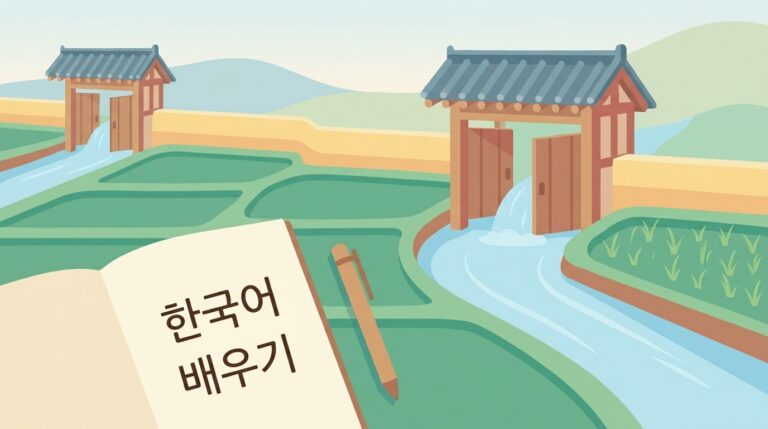
Phase 1: Empathy (Story-Driven Opening)
안녕하세요! 매일한글 에디터입니다. (Hello! This is your Daily Hangul editor.) Have you ever watched a high-stakes K-Drama boardroom clash where the tension is so thick you could slice it with a tteokbokki spatula? Two executive directors glare across a polished mahogany table in deafening silence. Neither side wants to concede an inch, and months of strategic collaboration hang by a fragile thread. Suddenly, the senior advisor clears his throat, pours warm barley tea, and says: “우리, 이제 슬슬 대화의 물꼬를 터야 하지 않겠습니까?” (Uri, ije seulseul daehwaui mulkkoreul teoya haji ankessseumnikka? – “Shouldn’t we gently open the channel for dialogue now?”)
Instant sigh of relief across the room! When you hit advanced Korean (C1 level), mastering conflict resolution goes beyond textbook phrases like “싸우지 마세요” (Don’t fight) or “사과하세요” (Please apologize). Real-life relationships—whether in business negotiations, complex office dynamics, or sensitive personal friendships—require refined metaphors that preserve dignity (chaemyeon) while forging tangible breakthroughs. Many of our advanced learners tell us: “I know how to argue my point, but I struggle to invite the other person into a diplomatic truce without sounding either timid or overly aggressive.” Today’s lesson solves that exact dilemma. Let’s delve into the art of opening long-stalled channels and navigating complex relationship dynamics with poise.
Phase 2: Deep Dive into 3 Essential Conflict Idioms
1. 물꼬를 트다 (Mulkko-reul teu-da)
- Pronunciation: [Mool-kkoh-reul teu-dah] (Think of the crisp, pop-like release of a water cork)
- Meaning: Literally “to cut an opening in a paddy embankment for irrigation”; figuratively, to break a persistent deadlock, initiate dialogue, or create the initial breakthrough in a stalled relationship.
- K-Culture Moment: Seen in corporate dramas like Misaeng or political thrillers like Designated Survivor: 60 Days when two opposing parties agree to a confidential working-level negotiation.
- Editor’s Insight: English speakers often reach for “break the ice,” but “물꼬를 트다” implies clearing a systemic, structural dam. It acknowledges that water (progress) has been dammed up for a long time and requires deliberate effort to direct its flow.
- Situation Spectrum: Casual ⚠️ | Semi-formal ✅ | Formal ✅
- 🤔 Think About It: In traditional Korean agriculture, water distribution (suri) was literally life or death for rice crops. How does an agrarian metaphor change the way a culture perceives the act of diplomatic communication?
2. 앙금을 풀다 (Anggeum-eul pul-da)
- Pronunciation: [Ahng-geum-eul pool-dah] (Smooth and soothing, like stirring honey into warm tea)
- Meaning: Literally “to dissolve the sediment settling at the bottom”; figuratively, to resolve deep-seated emotional grudges, lingering bitterness, or emotional residue after a conflict.
- K-Culture Moment: A classic late-night pojangmacha scene where two estranged friends finally drink soju together and confess the hurt they harbored for years.
- Editor’s Insight: An apology settles the facts, but anggeum addresses the murky dregs left in the heart. You don’t just apologize; you actively dissolve the emotional sediment together.
- Situation Spectrum: Casual ✅ | Semi-formal ✅ | Formal ⚠️
- 🤔 Think About It: Western idioms speak of “burying the hatchet” (weaponry), whereas Korean uses sediment dissolution (purification). What does this say about emotional catharsis in Korean relationships?
3. 등을 돌리다 (Deung-eul dol-li-da)
- Pronunciation: [Deung-eul dohl-lee-dah] (Sharp and decisive)
- Meaning: Literally “to turn one’s back”; figuratively, to abandon, alienate, sever ties, or betray a longstanding partnership.
- K-Culture Moment: The climatic turning point in revenge melodramas like The Glory or Reborn Rich when an ally coldly aligns with the antagonist.
- Editor’s Insight: In high-context Korean society where posture and physical orientation communicate respect, turning one’s back is an irrevocable physical declaration of severed communal trust.
- Situation Spectrum: Casual ✅ | Semi-formal ✅ | Formal ✅
- 🤔 Think About It: How does your native language describe deliberate alienation? Does it focus on body orientation, distance, or verbal confrontation?
Phase 3: Textbook Korean vs. Real Native Korean
Situation A: Proposing a breakthrough working session after weeks of negotiation stall
- 📖 교과서 한국어 (Textbook): “이제 서로 대화를 시작합시다.” (Ije seoro daehwareul sijakhapsida. – “Let us now begin talking with each other.”)
- 🗣️ 진짜 한국어 (Real Native C1): “이번 실무 협의를 계기로 대화의 물꼬를 텄으면 합니다.” (Ibeon silmu hyeob-uireul gyegiro daehwaui mulkkoreul teosseumyeon hamnida. – “I hope this working consultation serves as an occasion to open the channel for continuous dialogue.”)
- 💡 왜 다를까? (Why the difference?): Directly commanding “Let’s talk” disregards previous grievances and sounds blunt. Framing the meeting as “opening the irrigation channel” cushions the proposal and elevates your professional diplomacy.
Situation B: Cleansing old grudges over dinner with a long-time colleague
- 📖 교과서 한국어 (Textbook): “우리의 나쁜 감정을 없앱시다.” (Uriui nappeun gamjeongeul eopsaepsida. – “Let us eliminate our bad emotions.”)
- 🗣️ 진짜 한국어 (Real Native C1): “그동안 마음에 남았던 앙금은 오늘 술 한잔으로 다 풀자.” (Geudong-an maeume namatdeon anggeumeun oneul sul hanjaneuro da pulja. – “Let’s dissolve whatever lingering sediment was left in our hearts tonight over a drink.”)
- 💡 왜 다를까? (Why the difference?): Explicitly labeling feelings as “bad emotions” (nappeun gamjeong) triggers defensive embarrassment (suchisim). Acknowledging anggeum normalizes natural emotional residue while sealing the reconciliation through the communal ritual of sharing a drink.
Phase 4: K-Culture Deep Dive & Non-Verbal Manners
4-1. Nunchi & Physical Choreography of Reconciliation
When uttering an idiom as momentous as “물꼬를 트다” or “앙금을 풀다,” your non-verbal cues must do the heavy lifting:
* The Lowered Gaze & Breath: Never say these expressions while staring rigidly into the other person’s eyes. Briefly lower your eyes, exhale softly, and look back up with open, soft posture. This signals you are laying down your ego.
* Two-Handed Pouring (Judo – 주도): If this reconciliation takes place over tea or alcohol, pour using both hands (one holding the bottle/pot, the other supporting your forearm or wrist). Accepting and pouring drinks creates the physical bridge that mirrors the verbal opening of the water channel.
* Allowing Silence (Chimmuk): Do not rush the other person to reply. After offering to open the water channel, give them 3-5 seconds of comfortable silence to absorb the gesture.
4-2. The Pojangmacha Culture: Where Bitterness Transforms
In Korean media, why is the street tent (pojangmacha) or rustic barbecue joint the universal sanctuary for resolving conflict? It dismantles corporate hierarchy. Under red waterproof tarps, surrounded by sizzling samgyeopsal, formal distance shrinks. In Korean psychology, unexpressed sorrow (han, 한) must be released through shared space and honest vulnerability to transform into joyful communion (heung, 흥). That transitional moment is precisely where “물꼬를 트다” works its magic.
Phase 5: Real-World Roleplay Scenario
Setting: A quiet private dining room (hanjeongsik) in Gwanghwamun. Two lead project directors—Alex (you) and Director Min-jun (NPC)—have had their cross-border tech merger delayed due to mutual mistrust over resource allocation.
- Director Min-jun: “지난 두 달간 우리 실무진 사이의 긴장이 상당했습니다. 솔직히 프로젝트 진행이 불가능할 줄 알았습니다.” (Jinan du dalgan uri silmujin saiui ginjang-i sangdanghaetseumnida. Soljikhi peurojekteu jinhaeng-i bulganeunghal jul arasseumnida. – “Tension between our working teams over the past two months was immense. Frankly, I thought continuing the project was impossible.”)
🎭 [무거운 표정으로 찻잔을 만지작거리며 / Fiddling with his teacup with a solemn expression] - Alex (You): “네, 이사님. 서로의 입장을 오해하면서 갈등의 골이 깊어졌던 것 같습니다.” (Ne, isanim. Seoroui ipjang-eul ohaehamyeonseo galdeung-ui gori gipeojyeotdeon geot gatseumnida. – “Yes, Director. It seems the chasm of conflict deepened as we misunderstood each other’s stances.”)
🎭 [고개를 천천히 끄덕이며 / Nodding slowly] - Director Min-jun: “그렇죠. 하지만 계약 마감일은 다가오고, 우리는 아직 원점에 머물러 있습니다.” (Geureochyo. Hajiman gyeyak magam-ireun dagaogo, urineun ajik wonjeome meomulleo itseumnida. – “Indeed. But the contract deadline approaches, and we remain at square one.”)
🎭 [깊은 한숨을 쉬며 / Sighing deeply] - Alex (You): “그래서 오늘 자리가 중요합니다. 이번 미팅을 계기로 꽉 막혔던 대화의 물꼬를 텄으면 합니다.” (Geuraeseo oneul jariga jung-yohamnida. Ibeon miting-eul gyegiro kkwak makyeotdeon daehwaui mulkkoreul teosseumyeon hamnida. – “That is why today’s gathering is critical. I hope this meeting can open the water channel for our deadlocked dialogue.”)
🎭 [정중하게 눈을 맞추며 / Making respectful eye contact] - Director Min-jun: “물꼬를 튼다… 좋습니다. 하지만 양보 없는 대화는 의미가 없지 않겠습니까?” (Mulkkoreul teunda… Jo-seumnida. Hajiman yangbo eomneun daehwaneun uimiga eopji ankessseumnikka? – “Opening the water channel… I like that. But wouldn’t dialogue without concessions be meaningless?”)
🎭 [살짝 누그러진 눈빛으로 / With slightly softened eyes] - Alex (You): “물론입니다. 저희 팀부터 그간의 앙금을 풀고 유연한 조건을 제시하겠습니다.” (Mullon-imnida. Jeohui timbuteo geugan-ui anggeumeul pulgo yuyeonhan jogeoneul jesihagessseumnida. – “Naturally. Our team will take the lead in clearing past sediment and proposing flexible terms.”)
🎭 [두 손으로 따뜻한 차를 따라 올리며 / Pouring warm tea with both hands] - Director Min-jun: “알렉스 팀장의 그 진심 어린 한마디가 필요했습니다. 오늘 속 시원하게 풀어봅시다.” (Aellekseu timjang-ui geu jinsim eorin hanmadiga piryohaetseumnida. Oneul sok siweonhage pureobopsida. – “That sincere word from you, Team Lead Alex, was what I needed. Let’s resolve this refreshingly today.”)
🎭 [미소를 지으며 찻잔을 받는다 / Smiling and accepting the teacup] - Alex (You): “감사합니다, 이사님. 좋은 파트너십으로 이어가겠습니다.” (Gamsahamnida, isanim. Joeun pateuneosibeuro ieogagessseumnida. – “Thank you, Director. Let us carry this into a fruitful partnership.”)
🎭 [가볍게 목례하며 / Bowing lightly]
🔀 Interactive Decision Point
If Director Min-jun had asked: “How do you plan to handle the budget discrepancy right now?”, how should you respond?
- Choice A: “지금 당장 세부 숫자를 따지기보다는, 먼저 실무선 소통의 물꼬를 트고 점진적으로 조율해 나가시죠.” (Jigeum dangjang sebu sutjareul ttajigibodaneun, meonjeo silmuseon sotong-ui mulkkoreul teugo jeomjinjeog-euro joyulhae nagasijyo.)
- Outcome (Best): Diplomatic excellence. It prioritizes systemic communication before fighting over line items, preserving rapport.
- Choice B: “이사님이 지난번에 약속하신 예산안을 그대로 이행하시면 해결됩니다.” (Isanimi jinanbeone yaksokhasin yesan-aneul geudaero ihaenghasimyeon haegyeoldoemnida.)
- Outcome (Bad): Overly confrontational. Corners the executive and instantly slams the water gate shut.
- Choice C: “그건 나중에 생각하고 일단 식사부터 맛있게 하시죠.” (Geugeon najung-e saenggakhago ildan siksabuteo masitge hasijyo.)
- Outcome (Risk): Evasive. Signals that you lack preparation or are dismissing professional concerns as trivial.
Phase 6: 10-Second Emotion Shadowing Drill
Practice these lines out loud! Observe the pause markers (/) and embody the prescribed emotion:
[🤝 진중하고 정중하게 / Grave and deeply respectful]- 이번 실무 회담이 / 양사 간 협력의 물꼬를 트는 / 결정적 계기가 되길 바랍니다. (Ibeon silmu hoedam-i / yangsa gan hyeomnyeog-ui mulkkoreul teuneun / gyeoljeongjeok gyegiga doegil baramnida. – “I hope this working meeting serves as the decisive turning point that opens the water channel for bilateral cooperation.”)
[🥺 조심스럽지만 진심을 담아 / Cautious yet wholeheartedly sincere]- 지난 일로 마음에 남은 앙금은 / 이제 훌훌 털어버리고 / 새롭게 시작해요. (Jinan illo maeume nameun anggeumeun / ije hulhul teoreobeorigo / saeropge sijakhaeyo. – “Let’s brush off the sediment lingering in our hearts from past events and start afresh.”)
[⚖️ 단호하지만 품격 있게 / Firm yet dignified]- 오해가 깊어져 서로 등 돌리기 전에 / 지금 대화의 자리를 마련해야 합니다. (Ohaega gipeojyeo seoro deung dolligi jeone / jigeum daehwaui jarireul maryeonhaeya hamnida. – “Before misunderstandings deepen and we turn our backs on each other, we must arrange a forum for dialogue now.”)
Phase 7: K-Culture Mini Dictionary
- 물꼬 (Mulkko) | Noun | An opening cut into a ridge to channel irrigation water into a rice paddy. Figuratively: an initial conduit, gateway, or catalyst for negotiations, trade, or cultural exchange.
- 앙금 (Anggeum) | Noun | Fine insoluble sediment that settles at the bottom of a liquid; sweet red bean paste filling. Figuratively: unresolved, lingering emotional resentment or bitterness settled deep within the psyche.
- 눈치싸움 (Nunchissaum) | Noun | “Nunchi battle”; a tense psychological staring contest or battle of wits where both sides read atmosphere without explicitly stating demands.
- 실마리 (Silmari) | Noun | The outer thread-end of a silk cocoon or yarn. Figuratively: the initial clue, lead, or breakthrough needed to unravel and solve a tangled dispute.
Phase 8: Traveler’s Survival Kit for Relationship Dynamics
When caught in a cross-cultural misunderstanding during travel or business in Korea:
- Top 1: “제가 한국 문화가 서툴러서 실례를 범한 것 같습니다. 너그럽게 이해해 주시면 감사하겠습니다.” (Jega hanguk munhwaga seotulleoseo sillyereul beomhan geot gatseumnida. Neogeureopge ihaehae jusimyeon gamsahagessseumnida. – “Because I am unfamiliar with Korean customs, I seem to have committed a faux pas. I would deeply appreciate your generous understanding.”)
- Pro Tip: Conceding your cultural novice status immediately disarms tension and clears emotional anggeum.
- Top 2: “서로 오해가 있었던 것 같은데, 말씀 편하게 나누시죠.” (Seoro ohaega isseotdeon geot gateunde, malsseum pyeonhage nanusijyo. – “It seems there was a mutual misunderstanding; let us converse comfortably.”)
- Pro Tip: Ideal when a taxi driver, hotel staff, or vendor feels defensive.
- Top 3: “좋은 뜻으로 말씀해 주신 점 충분히 이해했습니다.” (Joeun tteuseuro malsseumhae jusin jeom chungbunhi ihaehaetseumnida. – “I fully understand that you spoke with good intentions.”)
- Pro Tip: Validates the other party’s dignity (gibun) even if the outcome wasn’t favorable.
Editor’s Travel Note
Navigating negotiations or finding discreet dining venues to patch up business ties in Seoul? Always secure reservations in advance. For hassle-free navigation without Google Maps limitations, check out our 네이버 지도 앱 다운로드 guide. If you need executive hail-riding across Seoul’s financial districts, download the 카카오 T 공식 가이드 to book premium black cabs effortlessly.
Phase 9: One Step Deeper (Reflective Humanities Essay)
In pre-industrial Korea, agriculture was fundamentally communal. Water was not an infinite personal asset; it was routed collectively through village canals. If one farmer greedily hoarded the water gate (mulkko), the neighboring fields dried up and village harmony collapsed. Opening the water gate to a neighbor’s paddy was therefore the quintessential gesture of collective survival and moral generosity. When a 21st-century Korean professional uses “대화의 물꼬를 트다,” they are unconsciously summoning centuries of communal agrarian ethics: “We cannot survive in isolation; let the lifeblood flow between us once again.”
💬 Your Turn: How does conflict reconciliation work in your native culture? Do people use legalistic contracts, physical gestures, or shared meals to mend broken bridges? Share your thoughts below!
Phase 10: Structured FAQ & Common Mistakes
Q: Can I use “물꼬를 트다” in casual romantic relationships?
A: While grammatically correct, using it for a petty lover’s spat (e.g., who forgot an anniversary) sounds humorously theatrical and overly solemn. In dating, stick to “우리 서운했던 거 이야기로 풀자” (Let’s dissolve our hurts through talking). Reserve “물꼬를 트다” for substantial estrangements, long-term silent treatments, or major life negotiations.
Q: What is the exact difference between “앙금을 풀다” and simply saying “화해하다”?
A: “화해하다” (to reconcile) is an objective behavioral action: two people shake hands and agree to stop fighting. “앙금을 풀다” focuses on internal psychological purification: dissolving the microscopic grudge particles that might cause future conflict.
Q: Can “물꼬를 트다” be used with negative outcomes?
A: Almost never. “물꼬를 트다” nearly always carries a constructive, hopeful nuance—initiating beneficial exchange, investment, cultural ties, or diplomatic dialogue. For negative flooding or catastrophic opening of floodgates, Korean uses “걷잡을 수 없이 번지다” (spreading uncontrollably).
🚨 Common Mistakes Alert
- Mistake: Saying “물꼬를 열다” (Opening the water gate – literal).
Correction: Always pair with the verb 트다 (to breach/clear/pierce an opening) -> “물꼬를 트다”. - Mistake: Saying “앙금을 씻다” (Washing the sediment).
Correction: Sediment is dissolved, not washed away. Always pair with 풀다 -> “앙금을 풀다”. - Mistake: Using “등을 돌리다” to mean physically turning around to look at something.
Correction: Physical turning around is “뒤를 돌아보다”. “등을 돌리다” is almost exclusively idiomatic for emotional abandonment or betrayal.
Phase 11: Action Missions for C1 Mastery
- 🥉 Bronze Level: Write down one sentence in your study journal applying “물꼬를 트다” to a global event or historical event (e.g., “이번 정상회담이 평화의 물꼬를 텄다”).
- 🥈 Silver Level: Record yourself performing the 10-Second Shadowing Drill from Phase 6 on Instagram or TikTok, tag @DailyHangul, and use the hashtag #KoreanIdiomC1.
- 🥇 Gold Level: During your next language exchange or Korean corporate meeting, replace a generic phrase like “이야기합시다” with “대화의 물꼬를 터봅시다”!
- 🎮 K-Culture Mission: Watch episode 1-3 of any corporate/legal drama (like Hyena, Misaeng, or Vincenzo). Listen carefully during boardroom or mediation scenes and note down whenever a character uses “물꼬” or “앙금”!
Phase 12: Interactive Quiz Challenge
1. Situation Judgment: You have had an ongoing dispute with a business supplier over delayed shipments. You want to invite them to a constructive dinner to reset negotiations. Which sentence demonstrates the highest diplomatic refinement?
* A) “언제까지 등을 돌리고 계실 겁니까? 당장 배상하세요.”
* B) “오늘 편안한 자리에서 그간의 오해를 풀고 새로운 협력의 물꼬를 텄으면 합니다.”
* C) “지난 실수는 앙금으로 묻어두고 그냥 잊어버립시다.”
2. Fill-in-the-Blank: 두 나라는 수십 년간 단절되었던 외교 관계의 ( ____ )를 트기 위해 특사를 파견했다.
* Hint: Think of the agrarian water outlet.
3. True or False: “앙금을 풀다” can be used to describe the physical act of dissolving sugar in water during baking.
👉 Click here to reveal the answers and explanations!
- Correct Answer: B
Explanation: Option B gracefully pairs “오해를 풀다” with “협력의 물꼬를 트다”. Option A is confrontational, and Option C misuses “앙금” (you dissolve grudges, you don’t bury them as sediment). - Correct Answer: 물꼬 (Mulkko)
Explanation: The complete idiom is “물꼬를 트다” (to open the water channel / unlock diplomatic breakthroughs). - Correct Answer: False
Explanation: While anggeum literally refers to sediment, the fixed phrase “앙금을 풀다” is strictly an emotional idiom for resolving lingering psychological grudges. For culinary dissolving, Korean uses “녹이다” (to dissolve/melt).






