

Master B2 Business Korean: Analyzing Customer Churn and Finding Retention Secrets in Exit Data
Phase 1: 공감 (Story Immersion Opening)
안녕하세요! 매일한글 에디터입니다.
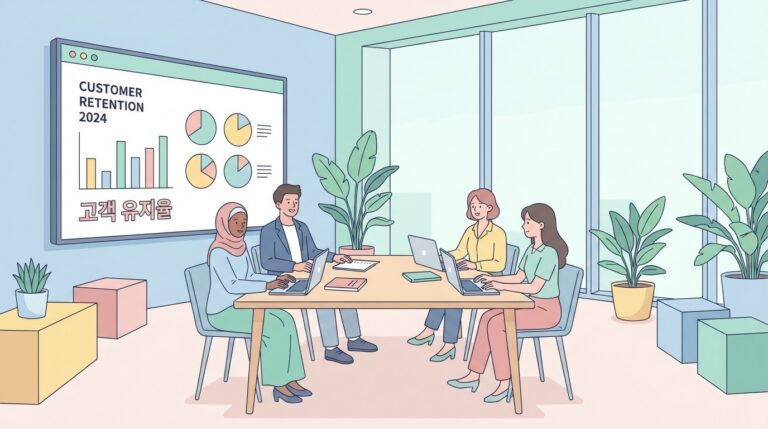
Picture this: You are standing in the sleek, glass-walled conference room of a fast-growing startup in Gangnam, Seoul. The atmosphere is tense. Your team lead, Min-jun, is furrowing his brow over the quarterly dashboard. Our monthly churn rate (고객 이탈률) just hit an all-time peak. In Korean corporate culture, especially within rapid tech and service sectors reminiscent of K-dramas like Start-Up or Search: WWW, presenting bad news can feel like walking on thin ice. How do you pitch a radical turnaround without sounding defensive or blaming the marketing team?
This is where many intermediate learners hit a brick wall. You know textbook Korean, but how do you express complex, data-backed insights with both deference and unshakable conviction? Over the past decade of coaching foreign professionals in Seoul, I’ve seen brilliant analysts freeze up during strategy meetings because they lacked the nuanced language to say: “The data proves that our departing customers hold the exact blueprint for our next release.” Mastering this specific linguistic landscape does not just improve your Korean—it earns you instant professional respect in Korean business settings. Let’s turn raw exit data into corporate gold together!
Phase 2: 핵심 표현 3선 심층 분석 (Core Expressions)
1. 떠나는 고객의 목소리에 답이 있습니다 (Hangul)
- Pronunciation: [Tteonaneun gogaek-ui moksorie dabi itseumnida] (Sounds like: “Ttur-nah-neun go-gek-wee mohk-so-ree-eh dah-bee eet-seum-nee-dah”)
- Meaning: Literal: “There is an answer in the voice of departing customers.” / Nuanced Business Meaning: “Our churned users’ feedback directly points to our core solution.”
- K-Culture Moment: This is the climactic line in a business drama where an insightful PM stands up to defend user research over high-level corporate guesswork.
- Editor’s Insight: Using “답이 있다” (the answer lies within) elevates simple feedback into an objective strategic roadmap. It frames customer complaints not as failure, but as empirical truth.
- Situation Spectrum: Casual: 🚫 | Semi-formal: ⚠️ | Formal: ✅
- 🤔 Think About It: In Western corporate culture, data often speaks for itself in charts. In Korea, why is anthropomorphizing data as a “voice” (목소리) so persuasive in building consensus?
2. 데이터를 뜯어보니 이탈 원인이 명확해졌어요 (Hangul)
- Pronunciation: [Deiteoreul tteudeoboni ital wonini myeonghwak-haejyeosseoyo] (Sounds like: “Day-ee-tuh-reul tteu-duh-bo-nee ee-tahl won-ee-nee myung-hwahk-heh-jyuh-ssuh-yo”)
- Meaning: Literal: “Unpacking and tearing through the data, the churn cause became clear.” / Nuanced Business Meaning: “Deep-dive cohort analysis pinpointed the exact drop-off bottleneck.”
- K-Culture Moment: A data scientist leaning across the table during a post-mortem huddle, showing the exact drop-off screen in an app.
- Editor’s Insight: The verb “뜯어보다” literally means to tear open or scrutinize closely. In business contexts, it shows you didn’t just look at the vanity metrics; you dissected the logs thoroughly.
- Situation Spectrum: Casual: ⚠️ | Semi-formal: ✅ | Formal: ⚠️ (Use “면밀히 분석한 결과” in ultra-formal boardrooms)
- 🤔 Think About It: Notice the casual vigor of “뜯어보다” vs. the Sino-Korean “분석하다”. How does using tactile physical verbs help dynamic workplace communication in Korean startups?
3. 리텐션을 잡으려면 온보딩 경험부터 손봐야 합니다 (Hangul)
- Pronunciation: [Ritensyeoneul jabeuryeomyeon onboding gyeongheombuteo sonbwaya hamnida] (Sounds like: “Ree-ten-syeon-eul jah-beu-ryuh-myun ohn-boh-ding gyung-hum-boo-tuh sohn-bwah-yah hahm-nee-dah”)
- Meaning: Literal: “To catch retention, we must touch/repair the onboarding experience first.” / Nuanced Business Meaning: “Securing customer retention demands an immediate overhaul of our onboarding UX.”
- K-Culture Moment: An urgent sprint-planning kickoff where the product team agrees to pause feature rollouts to fix the Day-1 retention curve.
- Editor’s Insight: “손보다” (to fix, tweak, or discipline) brings pragmatic, hands-on determination to business speech. Pair it with “-려면 ~해야 합니다” to state an indispensable prerequisite with confidence.
- Situation Spectrum: Casual: ⚠️ | Semi-formal: ✅ | Formal: ✅
- 🤔 Think About It: Why do Korean tech offices frequently mix Konglish loanwords like 리텐션 (Retention) and 온보딩 (Onboarding) with traditional idiomatic action verbs like 손보다?
Phase 3: 교과서 한국어 vs 진짜 한국어 (Textbook vs. Real Korean)
Situation A: Explaining that customers are leaving due to usability issues
- 📖 교과서 한국어: “고객들이 서비스 이용에 불편함을 느껴서 계약을 해지하고 있습니다.” (Customers are feeling discomfort using the service and terminating their contracts.)
- 🗣️ 진짜 한국어: “사용성 이슈 때문에 초기 이탈이 쏟아지고 있어요.” (Usability friction is triggering a massive initial drop-off.)
- 💡 왜 다를까? Textbook phrases sound like legal disclaimers. Real tech teams use vivid action terms like “이탈이 쏟아지다” (churn is pouring out) to communicate real-time operational urgency without unnecessary stiff jargon.
Situation B: Proposing to re-engage past churned users
- 📖 교과서 한국어: “과거에 떠난 고객들에게 설문 조사를 다시 배포합시다.” (Let us distribute survey questionnaires again to past churned customers.)
- 🗣️ 진짜 한국어: “이탈 유저 대상 윈백(Win-back) 캠페인으로 진짜 페인포인트를 캐내야 해요.” (We need to dig out the actual pain points through a targeted win-back campaign.)
- 💡 왜 다를까? Intermediate Korean moves beyond generic verbs like “배포하다” (distribute) to goal-oriented verbs like “캐내다” (unearth/dig up) combined with standard industry jargon like “윈백” (Win-back).
Phase 4: K-Culture 딥다이브 & 비언어적 매너 (Deep Dive & Body Language)
4-1. 눈치 (Nunchi) & Meeting Table Gestures
When delivering bad news—such as showing a 40% user drop-off during the checkout step—never point your index finger directly at the slide or a teammate. In Korean boardroom etiquette, use an open palm facing slightly upward (손바닥 펴기) when referencing the projection screen. Keep your shoulders relaxed and maintain respectful eye contact, interspersed with brief nods (고개 끄덕임). This non-verbal posture demonstrates that you are attacking the systemic flaw, not accusing your colleagues of incompetence.
4-2. The Culture of 뼈아픈 피드백 (Hard-Hitting Truths)
In the Korean business ecosystem, high-growth companies revere “뼈 때리는 피드백” (bone-hitting feedback). While collective harmony (화합) is crucial, modern agile environments deeply respect professionals who can respectfully present the naked truth backed by quantitative metrics. When you say “고객의 목소리 속에 정답이 있습니다” (The answer is in the voice of our users), you are invoking a sacred startup ethos: humility in the face of customer data.
Phase 5: 실전 롤플레이 시나리오 (Real-World Roleplay)
Setting: 4th-floor Strategy Room at a Fintech Startup in Yeouido, Seoul.
Characters:
* 팀장 민수 (Team Lead Min-soo): Analytical, under intense pressure from executives regarding quarterly renewal rates.
* 수석 분석가 알렉스 (Lead Analyst Alex – You): Armed with fresh cohort churn surveys and product analytics.
- 팀장 민수: 알렉스 님, 지난달 리텐션 지표 보고서 봤어요? 재구매율이 왜 이렇게 주저앉은 겁니까?
(Alex nim, jinandal ritensyeon jipyo bogoseo bwasseoyo? Jaegumaeyuri wae ireoke jujeoanjeun geomnikka?)
“Alex, did you see last month’s retention report? Why did our repeat purchase rate collapse like this?”
🎭 [머리를 감싸 쥐며 깊은 한숨을 내쉰다] -
수석 분석가 알렉스: 네, 팀장님. 지난주부터 탈퇴 유저 500명의 정성 로그 데이터를 정밀 분석했습니다.
(Ne, timjangnim. Jinanjubuteo taltoe yujeo obaengmyeong-ui jeongseong rogeu deiteoreul jeongmil bunseokhaesseumnida.)
“Yes, Team Lead. Starting last week, I conducted a deep dive into the qualitative logs of 500 churned users.”
🎭 [침착하게 태블릿을 켜며 슬라이드를 넘긴다] -
팀장 민수: 단순 가격 불만 때문인가요? 할인 프로모션을 더 세게 태워야 할까요?
(Dansun gagyeok bulman ttaemuningayo? Harin peuromosyeoneul deo sege taewoya halkkayo?)
“Is it just price dissatisfaction? Should we pour more budget into aggressive discount promotions?”
🎭 [불안한 눈빛으로 알렉스를 응시하며] -
수석 분석가 알렉스: 아닙니다. 데이터를 뜯어보니 떠나는 고객의 목소리에 진짜 답이 있었습니다.
(Animnida. Deiteoreul tteudeoboni tteonaneun gogaek-ui moksorie jinjja dabi itseumnida.)
“No, it isn’t. Dissecting the data showed that the true answer lies right in the voices of departing users.”
🎭 [차분하면서도 확신에 찬 어조로 고개를 들며] -
팀장 민수: 구체적으로 어떤 내용이 나왔길래 그렇게 확신하시죠?
(Guchejeogeuro eotteon naeyongi nawakkillae geureoke hwaksinhasijo?)
“What specific findings came out that make you so certain?”
🎭 [안경을 고쳐 쓰며 스크린에 집중한다] -
수석 분석가 알렉스: 70% 이상의 유저가 튜토리얼 이후 첫 결제 연동 과정에서 심각한 오류를 겪었다고 응답했습니다.
(Chilsip peosenteu isang-ui yujeoga tyutorieol ihu cheot gyeolje yeondong gwajeong-eseo simgakan oryureul gyeok-eotdago eungdaphaesseumnida.)
“Over 70% of users responded that they experienced critical friction during the first payment sync right after the onboarding tutorial.”
🎭 [화면의 이탈 깔때기 차트를 손바닥으로 정중히 짚으며] -
팀장 민수: 아… 마케팅 문제가 아니라 온보딩 결제 UX 병목이었군요.
(Ah… maketing munjega anira onboding gyeolje UX byeongmogi-eotgunyo.)
“Ah… so it wasn’t a marketing acquisition failure, but an onboarding payment UX bottleneck.”
🎭 [안도와 충격이 섞인 표정으로 턱을 괸다] -
수석 분석가 알렉스: 맞습니다. 리텐션을 잡으려면 신규 유입보다 이 결제 플로우부터 즉시 손봐야 합니다.
(Matseumnida. Ritensyeoneul jabeuryeomyeon singyu yu-ipboda i gyeolje peulloubuteo jeuksi sonbwaya hamnida.)
“Precisely. If we want to capture retention, we must repair this payment flow immediately rather than pouring money into new user acquisition.”
🎭 [단호하고 신뢰감 있는 미소를 지으며]
🔀 인터랙티브 분기점 (Interactive Decision Point)
At this moment, Team Lead Min-soo asks: “Can we deploy this UX patch by this Friday?” What is your strategic response?
- Choice A: “개발팀에 무조건 이번 주까지 끝내라고 강하게 밀어붙이겠습니다.” (I will forcefully push the dev team to finish by this week no matter what.)
- Outcome (Bad): 🚫 Disregards team collaboration and creates cross-functional friction. Highly risky in matrix-structured Korean companies.
- Choice B: “QA 일정을 감안해 핵심 결제 오류 핫픽스부터 금요일까지 배포하고, 전체 개선은 다음 스프린트에 반영하겠습니다.” (Considering QA timelines, we will ship the core payment bug hotfix by Friday and roll out full UX revamp in the next sprint.)
- Outcome (Best): ✅ Professional, realistic, metrics-focused, and respects development integrity. Demonstrates executive maturity.
- Choice C: “개발팀 일정이 바쁘니 그냥 이번 주는 할인 쿠폰으로 고객 이탈을 막아보죠.” (Since devs are busy, let’s just paper over the churn with discount coupons this week.)
- Outcome (Risk): ⚠️ Solves nothing permanently, burns cash, and invalidates your entire churn analysis finding.
Phase 6: 10초 감정 섀도잉 드릴 (Shadowing Drill)
Practice reading these lines aloud with the specified emotion and cadence indicators (/ marks a split-second pause):
[🧐 데이터의 엄중함과 분석적 확신을 담아]
“데이터를 뜯어보니 / 떠나는 고객의 목소리 속에 / 우리 서비스의 정답이 숨어 있었습니다.”
(Deiteoreul tteudeoboni / tteonaneun gogaek-ui moksori soge / uri seobiseu-ui jeongdabi sumeo itseumnida.)-
[📈 흔들림 없는 단호함과 설득력 있는 어조로]
“신규 프로모션보다 / 이탈 유저가 지적한 / 온보딩 병목부터 손봐야 합니다.”
(Singyu peuromosyeonboda / ital yujeoga jijeokan / onboding byeongmokbuteo sonbwaya hamnida.) -
[🤝 팀의 동의를 이끌어내는 정중한 제안]
“이번 스프린트에서는 / 리텐션 반등을 최우선 과제로 / 삼았으면 좋겠습니다.”
(Ibeon seupeurinteueseoneun / ritensyeon bandeung-eul choe-useon gwajero / sam-asseumyeon jokess-eumnida.)
Phase 7: K-Culture 미니 사전 (Mini Dictionary)
- 고객 이탈률 (Gogaek Ital-ryul)
- Translation: Customer Churn Rate
- Usage: Standard metric in boardrooms. Combined with “방어하다” (to defend against/mitigate): “이번 분기 목표는 고객 이탈률 방어입니다” (Our goal this quarter is mitigating customer churn).
- 리텐션 (Ritensyeon)
- Translation: User Retention
- Usage: Adopted widely across Korean digital business. Often paired with “잡다” (to capture) or “끌어올리다” (to boost).
- 손보다 (Sonboda)
- Translation: To overhaul, fix, or adjust
- Usage: Native Korean expression meaning hands-on remediation. Used when code, UI/UX, or operational workflows need a thorough fix.
- 정성 데이터 (Jeongseong Deiteo)
- Translation: Qualitative Data (Interviews, open-ended exit feedback)
- Usage: Paired in contrast with “정량 데이터” (Quantitative metric data). Essential when quoting user quotes in slides.
Phase 8: 직장인을 위한 생존 키트 (Workplace Survival Kit)
Top 3 Boardroom Survival Expressions
- “지표가 가리키는 방향을 다시 짚어볼 필요가 있습니다.”
(Jipyoga garikineun banghyang-eul dasi jipeobol piryoga itseumnida.)
Pro Tip: Use this to politely steer an executive away from a gut-feeling decision back toward your analytics data. - “초기 이탈 요인을 선제적으로 차단하겠습니다.”
(Chogi ital yoineul seonjejeog-euro chadanhagesseumnida.)
Pro Tip: “선제적으로” (preemptively) is an executive buzzword that conveys proactiveness and tactical foresight. - “데이터 근거를 바탕으로 다음 액션 아이템을 도출했습니다.”
(Deiteo geongeoreul batangg-euro da-eum aeksyeon aitem-eul dochulhaesseumnida.)
Pro Tip: Concludes your presentation by moving from problem analysis to concrete solution execution.
Editor’s Business Toolkit Note
When working in a Seoul-based corporate office, you’ll want fast access to enterprise tools. For keeping up with team collaboration and project files on mobile, prepare by completing the 네이버 웍스 모바일 앱 다운로드 and keep track of domestic tech startup indices via the 혁신의 숲 스타트업 데이터베이스 탐색 platform.
Phase 9: “한 발 더 깊이” (Cultural Reflection)
In Korean corporate philosophy, consensus is built not by aggressive confrontation, but by framing hard truths through the lens of collective service excellence. When you articulate that “the answers lie in the voices of departing users,” you allow leaders to save face (체면) because the failure is not attributed to their management—rather, the departing customers are presented as unbiased teachers. This linguistic pivot honors both hierarchy and data truth simultaneously.
💬 Your Turn: In your home country’s corporate meetings, do people openly embrace customer criticism, or do managers tend to explain it away with excuses? Share your experience in the comments below!
Phase 10: FAQ & 오해 방지 (FAQ & Common Mistakes)
Q: Can I use the verb “고치다” instead of “손보다” when talking about UX or strategies in meetings?
A: While “고치다” (to repair/fix) is grammatically correct, “손보다” sounds significantly more nuanced and strategic in business Korean. “고치다” implies something was outright broken (like a broken machine), which might sound accusatory toward your product team. “손보다” implies refining, fine-tuning, and polishing existing systems.
Q: How do I politely disagree with a senior executive who says churn is just due to seasonal trends?
A: Avoid direct negation like “아닙니다” (No, that’s wrong). Instead, lead with validation followed by counter-evidence: “팀장님 말씀대로 계절적 요인도 배제할 수 없으나, 코호트 데이터를 뜯어보면 온보딩 결제 단계의 이탈 비중이 전년 대비 45% 급증했습니다.” (As you mentioned, seasonal effects cannot be ruled out, but unpacking the cohort data shows onboarding payment churn has spiked 45% year-over-year.)
Q: Is “고객 이탈” (Customer Churn) used in everyday spoken Korean outside of meetings?
A: No. In ordinary casual conversation, people say “손님이 줄었다” (customers decreased) or “손님이 끊겼다” (customers stopped coming). “고객 이탈” and “이탈률” are specialized professional and marketing terms.
🚨 흔한 실수 (Common Mistakes) 경고판
- Mistake: Using “떠난 손님” in a corporate strategy meeting.
- Correct Action: Use “이탈 고객” (churned customer) or “탈퇴 회원” (unsubscribed member) for formal business authority.
- Mistake: Saying “데이터를 봤어요” during an official executive briefing.
- Correct Action: Upgrade to “데이터를 분석한 결과~” or “로그 데이터를 정밀 검토한 결과~”.
- Mistake: Saying “우리가 틀렸습니다” (We were wrong) when churn data contradicts strategy.
- Correct Action: Frame it as discovery: “새로운 사용자 패턴을 확인했습니다” (We confirmed a new user behavioral pattern).
Phase 11: 액션 미션 & 참여 유도 (Action Missions)
- 🥉 Bronze Mission (Solo Shadowing): Record voice memo reciting the Phase 6 shadowing sentences twice. Focus on natural pauses at the
/marks. - 🥈 Silver Mission (Social Application): Leave a comment below writing one sentence using the grammar structure:
~을/를 뜯어보니 ~에 답이 있었습니다applied to your personal life or career! - 🥇 Gold Mission (Real-World Execution): In your next corporate check-in, team sync, or Korean language class, replace the plain word “고치다” with “손보다” when discussing workflow optimizations.
- 🎮 K-Culture Mission: Watch an episode of a Korean business or workplace drama (such as Start-Up or Misaeng). Listen for when characters say “원인 규명” (finding root causes) or “피드백” (feedback) and note their tone of voice.
Phase 12: 인터랙티브 퀴즈 챌린지 (Interactive Quiz)
1. Situation Judgment:
You need to present a presentation slide stating that departing customers gave low ratings due to customer support response times. Which phrase sounds most polished and professional?
* (A) 떠난 사람들이 고객센터가 느려서 화를 냈습니다.
* (B) 이탈 고객 대상 설문 결과, 고객 지원 응답 지연이 주요 이탈 원인으로 파악되었습니다.
* (C) 유저들이 고객 지원팀 때문에 우리 앱을 다 지웠습니다.
2. Fill in the Blank:
“신규 고객 유입에만 집중하기보다, 떠나는 고객의 목소리에 귀 기울여 서비스의 취약점을 ______합니다.”
(Hint: Verb meaning to inspect, revamp, and refine hands-on)
3. Cultural True/False:
In a formal Korean tech retrospective, directly stating customer churn figures with an open-palm gesture toward the screen is considered polite and objective. (True / False)
👉 Click to reveal answers & explanations!
-
Answer: (B)
Explanation: (B) uses accurate corporate terminology (“이탈 고객 대상 설문 결과”, “주요 이탈 원인으로 파악되었습니다”). (A) and (C) are far too casual and emotionally charged for a business report. -
Answer: 손봐야 (손보다)
Explanation: “손보다” conveys the proactive refinement needed to resolve structural churn issues. -
Answer: True
Explanation: An open palm indicates formal respect toward the audience and the data, avoiding the rude perception of pointing fingers.







