

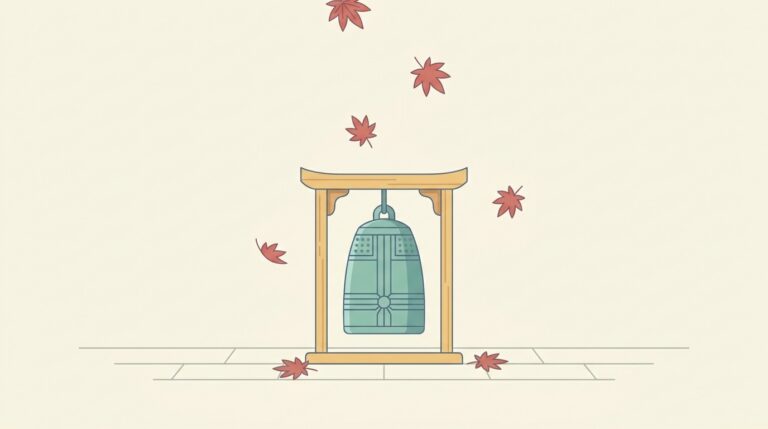
Phase 1: Empathy & The Resonance of Silence
Hello! It’s your Daily Hangul editor.
Have you ever listened to the strike of a great bronze temple bell—like the legendary Emile Bell of Gyeongju? When the wooden beam collides with the bronze, the initial clang is sudden and sharp. But the true majesty doesn’t lie in that initial strike. It lives in the yeo-un (여운)—the subterranean, undulating resonance that ripples through the mist long after the mallet has pulled away.
As advanced C2 learners, you have likely conquered complex grammar markers, idiomatic idioms, and formal speech registers. Yet, many non-native speakers hit an invisible wall right here: the impulse to over-explain. In Western debate and dialogue, silence is often an uncomfortable vacuum that begs to be filled. If you don’t say it, it doesn’t exist.
In high-level Korean, however, the highest form of eloquence is often found in what remains unsaid. We call this rhetorical art jeol-je (절제, restraint) and saeng-nyak (생략, deliberate ellipsis). Great Korean prose and elite spoken eloquence do not smother the listener with words; they strike the bell once, gently step back, and trust the listener’s heart to complete the sentence. Today’s guide is drawn directly from our masterclasses with literary translators and advanced debaters to help you master the pregnant pause, the trailing cadence, and the breathtaking power of silence.
Phase 2: Top 3 Core Expressions Deep Dive
1. 말을 아끼다 (Mareul akkida)
- Pronunciation: [Mareul akkida] (Think of akkida as “treating words like precious heirloom porcelain that you hesitate to take out of the cupboard”)
- Meaning: Literal: To hoard/spare words | Real Nuance: To practice intentional verbal restraint, choosing silence over hasty or inflammatory remarks.
- K-Culture Moment: In historical dramas (sageuk) or high-stakes corporate boardroom scenes, a venerable advisor does not shout down an opponent. Instead, the narrator remarks: “그는 이번 사안에 대해 말을 아꼈다 (Geuneun ibeon saane daehae mareul akkyeotda – He deliberately spared his words regarding this matter).”
- Editor’s Insight: This is not evasiveness; it is an active display of gravity (muge-gam). When you “spare your words,” the single sentence you eventually utter carries ten times the weight of a ten-minute monologue.
- Situation Spectrum: Casual ⚠️ | Semi-formal ✅ | Formal ✅
- 🤔 Think About It: In your native culture, does staying silent during a dispute imply admission of guilt, or does it signal emotional maturity as it does in Korean?
2. 말을 잇지 못하다 (Mareul itji mothada)
- Pronunciation: [Mareul it-ji mothada] (Imagine your vocal cords catching softly like a gentle sigh on it-ji)
- Meaning: Literal: To be unable to connect words | Real Nuance: Words failing someone due to overwhelming grief, deep awe, or profound reverence.
- K-Culture Moment: Seen frequently in tear-jerking documentary interviews or romantic climaxes in award-winning Korean cinema, where a character simply stops mid-sentence, their gaze softening as the silence completes their devotion.
- Editor’s Insight: C2 mastery means knowing when grammar must break down. Ending a sentence incomplete with an ellipsis—letting your voice taper into the ambient air—communicates what no adjective ever could.
- Situation Spectrum: Casual ✅ | Semi-formal ✅ | Formal ✅
- 🤔 Think About It: Why does over-explaining your sadness sometimes make it feel performative? How does trailing off preserve emotional authenticity?
3. 여운을 남기다 (Yeo-uneul namgida)
- Pronunciation: [Yeo-uneul namgida] (Yeo-un rhymes smoothly with “pure moon”, flowing into the firm nam-gida)
- Meaning: Literal: To leave an after-sound/resonance | Real Nuance: To deliberately conclude a conversation or piece of writing without tying every loose thread, allowing the implications to linger in the listener’s mind.
- K-Culture Moment: Critics reviewing a masterpiece by auteur Bong Joon-ho or Park Chan-wook often write: “결말이 관객에게 긴 여운을 남긴다 (Gyeolmari gwangaegege gin yeo-uneul namginda – The ending leaves a prolonged, resonant afterglow with the audience).”
- Editor’s Insight: You can use this in everyday senior business contexts. When concluding a pitch, rather than a robotic “Thank you for listening,” leaving an open, philosophical question creates an indelible impression.
- Situation Spectrum: Casual ⚠️ | Semi-formal ✅ | Formal ✅
- 🤔 Think About It: How does leaving an idea open-ended show respect for the listener’s intellect compared to spelling everything out?
Phase 3: Textbook Korean vs. Real Korean
Situation 1: Offering Condolences or Comforting a Friend in Deep Grief
- 📖 Textbook Korean: 삼가 고인의 명복을 빌며 슬픔을 가누기 어렵습니다. (Samga goin-ui myeongbogeul bilmyeo seulpeumeul ganugi eoryeopseumnida. – I pray for the soul of the deceased and find it difficult to contain my sadness.)
- 🗣️ Real C2 Korean: 무슨 말을… 더 보태겠습니까. 그저 곁에 있겠습니다. (Museun mareul… deo botaegesseumnikka. Geujeo gyeote itgesseumnida. – What words… could I possibly add? I will simply remain by your side.)
- 💡 Why the Difference? In the face of catastrophic grief, textbook Korean can sound like a boilerplate funeral card. True high-level Korean acknowledges the absolute futility of vocabulary, replacing verbal clutter with steadfast physical presence and understated accompaniment.
Situation 2: Praising a Breathtaking Novel or Cinematic Masterpiece
- 📖 Textbook Korean: 이 소설은 구성이 매우 치밀하고 결말의 감동이 대단했습니다. (I soseoreun guseongi maeu chimilhago gyeolmarui gamdong-i daedanhaesseumnida. – This novel’s structure was very intricate, and the ending’s emotional impact was great.)
- 🗣️ Real C2 Korean: 책장을 덮고도 한참을… 멍하니 앉아 있었습니다. (Chaekjangeul deopgodo hanchameul… meonghani anja isseosseumnida. – Even after closing the book, for a long while… I just sat there in a daze.)
- 💡 Why the Difference? Sophisticated Korean speakers convey artistic brilliance by describing its paralyzing after-effect on their own consciousness rather than ticking off analytical criteria.
Phase 4: K-Culture Deep Dive & Non-Verbal Manners
4-1. Nunchi & The Art of the Pregnant Pause
At the C2 tier, your physical presence does half the rhetorical work. When delivering an understated conclusion, never look up instantly expecting validation. Instead, gently drop your gaze toward the edge of the table or cup for a count of two, let your breathing settle into your abdomen (danjeon), and allow the air to carry the final syllable. In Korean interpersonal dynamics, rushing to conclude your thoughts makes you appear nervous or anxious (jogeup-hada). Pausing deliberately displays supreme confidence and invites the listener to step forward into the shared communicative space.
4-2. Cultural Code: The Ink Wash Aesthetic (Yeobaek-ui Mi)
To truly understand ellipsis in Korean conversation, one must look at traditional Sumukhwa (수묵화, Korean monochrome ink wash painting). In classical Korean landscape art, more than half the canvas is deliberately left unpainted. This is not empty blank paper; it is Yeobaek (여백)—negative space that represents the sky, the drifting mist, the unseen water, and the viewer’s imagination. When you speak advanced Korean with restraint and ellipsis, you are painting yeobaek into the acoustic atmosphere of the room. This exact philosophy permeates modern masterworks like the critically acclaimed film Decision to Leave (헤어질 결심), where love is confessed not through declarations, but through suppressed glances and choked sighs.
Phase 5: Real-World Roleplay Scenario
Setting: A quiet, centuries-old hanok tea pavilion in Bukchon on a rainy autumn evening.
Characters: You and Director Min (민 감독), a veteran film director known for his minimalist, introspective storytelling.
- You: 감독님, 이번 작품의 마지막 장면은 왜 대사가 전혀 없었나요? (Gamdongnim, ibeon jakpum-ui majimak jangmyeoneun wae daesaga jeonhyeo eopseonnayo?)
Translation: Director Min, why was there no dialogue at all in the final scene of your film?
🎭 Action: Leaning forward slightly, placing your teacup down with reverence. - Director Min: …소리가 넘쳐나는 세상이잖아요. ( …soriga neomchyeonaneun sesang-ijanhayo.)
Translation: …Isn’t the world already overflowing with noise?
🎭 Action: Looking out toward the wooden eaves dripping with rainwater. - You: 그래도 주인공의 속마음을 한마디쯤 들려주고 싶지 않으셨습니까? (Geuraedo juingong-ui songmaeumeul hanmadijjeum deullyeojugo sipji aneusyeosseumnikka?)
Translation: Still, didn’t you want to let the audience hear at least a word of the protagonist’s innermost thoughts?
🎭 Action: Tilting your head with genuine intellectual curiosity. - Director Min: 말로 내뱉는 순간, 그 감정의 크기가 규정되어 버리니까요. (Mallo naebaenneun sungan, geu gamjeong-ui keugiga gyujeongdoeeo beorinikkayo.)
Translation: Because the moment it is spat out in words, the true scale of that emotion becomes artificially confined.
🎭 Action: Taking a calm sip of hot Solomon’s seal tea (dung-gulle-cha). - You: 규정되는 순간… 감정이 오히려 작아진다는 말씀이시군요. (Gyujeongdoeneun sungan… gamjeong-i ohiryeo jagajindaneun malsseumisigunyo.)
Translation: The moment it is defined… you mean the emotion paradoxically shrinks.
🎭 Action: Nodding slowly, matching the rhythm of the rain outside. - Director Min: 그렇지요. 침묵 속에 둘 때, 관객의 마음속에서 비로소 자라나니까요. (Geureochiyo. Chimmuk soge dul ttae, gwangwaegui maeumsogeseo biroso jarananikkayo.)
Translation: Precisely. When left in silence, it only then begins to grow inside the audience’s heart.
🎭 Action: Offering a subtle, knowing smile. - You: 마치 마침표가 찍힌 뒤에야 진짜 이야기가 시작되는 것처럼요. (Machi machimpyoga jjik-hin dwieya jinjja iyagiga sijakdoeneun geotcheoreomyo.)
Translation: As if the real story only begins after the final period has been marked.
🎭 Action: Lowering your eyes quietly, savoring the pause. - Director Min: …허허, 제대로 짚으셨네요. ( …Heoheo, jedaero jipeusyeotneyo.)
Translation: …Haha, you’ve grasped it to the core.
🎭 Action: Pouring fresh warm tea into your cup without another word.
🔀 Interactive Choice Point
How do you respond to Director Min’s final tea offering to preserve the beautiful yeo-un?
- Option A: “맞아요! 저도 예전에 영화 공부할 때 교수님께 그런 연출 기법에 대해 논문을 쓴 적이 있거든요!” (Majayo! Jeodo yejeone yeonghwa gongbuhal ttae gyosunimkke geureon yeonchul gibeobe daehae nonmuneul sseun jeogi itgeodeunyo! – Exactly! I wrote a thesis on that directing technique when I studied film!)
- Feedback (Bad): You shattered the sacred silence! Over-sharing personal academic credentials immediately destroys the aesthetic intimacy and pulls the conversation into self-centered chatter.
- Option B: “(두 손으로 찻잔을 감싸 쥐며) …비 내리는 소리가 참 좋습니다.” ((Du soneuro chatjaneul gamssa jwimyeo) …bi naerineun soriga cham joseumnida. – [Cupping the tea with both hands] …The sound of the falling rain is truly exquisite.)
- Feedback (Best): Sublime! You redirect the conversation to nature and shared ambient presence. You honored his silence with poetic grace.
- Option C: “그런데 다음 영화 개봉일은 언제로 확정되었나요?” (Geureonde daeum yeonghwa gaebong-ireun eonjero hwakjeongdoeeotnayo? – By the way, when is the premiere date confirmed for your next film?)
- Feedback (Risk): Too abrupt. Pivoting instantly to transactional logistical questions feels cold, as if you merely tolerated his philosophical insight.
Phase 6: 10-Second Emotion Shadowing Drill
Train your breath, cadence, and pause markers (/) with these high-level sentences:
- [🍂 쓸쓸하고 담담하게 – Melancholic and composed]
그 시절 우리는… / 참 많은 것을 쥐려 했으나 / 결국 손에 남은 것은 / 바람뿐이었습니다.
(Geu sijeol urineun… / cham maneun geoseul jwiryeo haesseuna / gyeolguk sone nameun geoseun / baramppunieosseumnida.)
In those days, we… / tried to hold on to so much / but in the end, what remained in our hands / was merely the wind. -
[🕊️ 고요하고 깊은 여운으로 – With tranquil, deep resonance]
말을 다 쏟아내지 않아도 / 온전히 전해지는 마음이 / 분명… / 존재하는 법이지요.
(Mareul da ssodanaeji anado / onjeonhi jeonhaejineun maeumi / bunmyeong… / jonjaehaneun beobijiyo.)
Even without spilling every word / feelings that are communicated completely / surely… / have a way of existing. -
[☕ 나지막이 고개를 끄덕이며 – Murmuring with a quiet nod]
더 보탤 말이 없습니다. / 그저… / 마음에 오래 담아두겠습니다.
(Deo botael mari eopseumnida. / Geujeo… / maeume orae damadugesseumnida.)
I have no further words to add. / I will simply… / keep this deep in my heart for a long time.
Phase 7: K-Culture Mini-Dictionary
-
여운 (Yeo-un) | Lingering resonance / Afterglow
Originally referring to the lingering vibration of a struck bell or chime (yeo-eum, 餘音). In contemporary literature, film criticism, and deep interpersonal dialogue, it describes the emotional ripples that continue to reverberate after an event or conversation has ceased. -
여백 (Yeo-baek) | Intentional void / Negative space
The pristine, unpainted paper in traditional ink landscapes. In advanced rhetoric, it refers to conversational negative space—leaving conclusions unstated so the listener can participate in meaning-making. -
행간 (Haeng-gan) | Space between the lines
Literally the empty spatial gap between printed lines of text. To “read the haeng-gan” (행간을 읽다) is the hallmark of sophisticated social cognition in Korea, deciphering what was intentionally omitted. -
절제미 (Jeol-je-mi) | Aesthetic of restraint
The refined beauty found in minimalism, stoicism, and emotional containment. Rather than erupting with theatricality, high-culture Korean aesthetics prize holding ninety percent of the emotion under the surface.
Phase 8: Traveler’s Survival Kit
If you find yourself visiting serene mountain temples, traditional tea houses, or artistic retreats in South Korea, keep these three exquisite phrases ready:
- Top 1: 침묵이 참 따뜻하게 느껴집니다.
(Chimmugi cham ttatteuthage neukkyeojimnida.)
Pro Tip: Use this when sitting with a host or monk at a tea table when neither of you is speaking. It validates the quiet not as awkward, but as affectionate hospitality. - Top 2: 마음에 긴 여운이 남는 시간이었습니다.
(Maeume gin yeo-uni namneun siganieosseumnida.)
Pro Tip: The single most elegant parting compliment you can offer after an art exhibition, a bespoke dining course, or an intimate hanok stay. - Top 3: 더 이상의 설명은 필요 없을 것 같습니다.
(Deo isang-ui seolmyeongeun piryo eopseul geot gatseumnida.)
Pro Tip: Use this to signal profound agreement during artistic debates or literary evaluations; it conveys that the artwork speaks for itself.
Editor’s Travel Note
When traveling to secluded spiritual hubs like Haeinsa or Tongdosa, silence is your primary currency. Before you board the train, plan your journey using the Naver Map route navigation app to find tranquil rural bus connections without having to shout questions on the platform. Furthermore, if you wish to experience true resonance, reserve an overnight stay via the official Templestay reservation portal. During evening ceremonial drumming (Beopgo), keep your phone pocketed and let the acoustic vibration wash over your body.
Phase 9: A Step Deeper (Reflection)
In Korean linguistic philosophy, words are merely rafts designed to cross the river of separation; once you have arrived at mutual understanding (I-sim-jeon-sim, 이심전심, heart-to-heart telepathy), the raft can be abandoned. To insist on paddling the raft even after you have reached the shore is to burden the relationship with unnecessary verbal weight. In a modern world saturated with algorithm-driven clickbait and deafening hot takes, embracing linguistic restraint is a radical act of love and respect. Silence in Korean is not the absence of communication; it is communication at its highest resolution.
💬 Your Turn: Have you ever experienced a moment where saying nothing in Korean conveyed your heart far better than a full sentence? Share your story in the comments below!
Phase 10: FAQ & Avoiding Misunderstandings
Q: Does trailing off with an ellipsis make me sound unconfident or hesitant in formal situations?
A: Only if your non-verbal cues indicate panic. If your shoulders drop, your eyes dart around, and you say “어… 그게…”, you appear unprepared. However, if your spine is upright, your breathing is rhythmic, and your tone tapers smoothly with a calm gaze, trailing off indicates philosophical depth and courteous deference.
Q: What grammatical endings are best suited for creating this lingering resonance?
A: Sentence-ending particles that invite shared contemplation work best. Rather than hard declarative stops like -다 or -습니다, native masters frequently use -지요 (seeking mutual agreement), -아/어서요... (giving an elliptical reason and letting the consequence linger), or -을지도 모르겠습니다 (humble contemplation).
Q: How do I know when silence is polite versus when it becomes rude?
A: Context and eye posture determine everything. Silence accompanied by an impassive stare or crossing your arms is interpreted as hostile stonewalling. Silence accompanied by a gentle nod, softened shoulders, and attentive presence is considered the pinnacle of etiquette.
🚨 Common Mistakes Alert
- Mistake 1: Explaining the joke or metaphor. Saying “제가 비유적으로 말한 건데요…” (I meant that metaphorically…) ruins the magic immediately. Trust your listener’s intelligence.
- Mistake 2: Cutting into a pause too early. When a senior Korean colleague or mentor pauses for three to four seconds, foreigners often assume they have finished their turn. Do not interrupt! That pause is their rhetorical stage.
- Mistake 3: Overusing trailing endings in administrative paperwork. Ellipsis and restraint belong to interpersonal, philosophical, and literary contexts. In bureaucratic filings, corporate contracts, or legal paperwork, strict explicitness is mandatory.
Phase 11: Action Missions
- 🥉 Bronze Level: Practice reading the Phase 6 Shadowing Drills aloud in front of a mirror. Time yourself to maintain a full 2-second silent pause at every slash (
/) mark without flinching. - 🥈 Silver Level: Next time you comment on your favorite K-drama actor’s Instagram or YouTube video, don’t write generic praise like “연기 너무 잘해요!” (Your acting is so good!). Instead, write: “대사 없는 그 눈빛 하나로… 온 마음이 무너져 내렸습니다.” (With that single wordless gaze… my whole heart crumbled.)
- 🥇 Gold Level: In your next live Korean conversation or tutoring session, intentionally hold back from delivering the concluding clause of a non-urgent thought. End with “…싶어서요.” and let the other person fill the gap.
🎮 K-Culture Mission: Watch the classic Korean melodrama Christmas in August (8월의 크리스마스) or Park Chan-wook’s Decision to Leave. Note down at least three scenes where the characters say nothing, and analyze what their posture communicated.
Phase 12: Interactive Quiz Challenge
Test your mastery of advanced Korean silence and understatement!
1. Situational Judgment:
You have just visited a revered ceramics master in Icheon. He presents a rough, imperfect moon jar and asks, “이 항아리가 어떻게 보이십니까?” (How does this jar look to you?) Which response displays true C2 jeol-je (restraint)?
a) “완전 대박이에요! 인스타그램에 올리면 좋아요 1만 개는 그냥 받겠어요!”
b) “흙의 거친 숨결이… 비어 있는 공간을 온전히 채우고 있네요.”
c) “비대칭 곡선이 약 15도 정도 기울어져 있어서 조형미가 돋보입니다.”
2. Fill-in-the-Blank:
화려한 미사여구보다 때로는 침묵 속에 담긴 은은한 ( )이 사람의 마음을 더 깊이 흔든다.
(Rather than ornate rhetoric, sometimes the delicate [ ] contained within silence shakes a person’s heart more deeply.)
3. True or False:
In elite Korean discourse, an abrupt grammatical period (-습니다.) is always considered superior in literary charm to a trailing ending (-아서요...). ( True / False )
👉 Click to reveal answers & explanations!
-
Answer: b)
Explanation: Option b captures the poetic paradox of the moon jar—noting how the raw texture fills the void—without resorting to frivolous slang (Option a) or dry, clinical geometry (Option c). -
Answer: 여운 (Yeo-un / Resonance)
Explanation: Yeo-un is the exact rhetorical noun that pairs with “delicate” (euneunhan) and “silence” (chimmuk) to describe lasting emotional afterglow. -
Answer: False
Explanation: While-습니다.provides clarity in formal debriefs, the highest literary charm (mun-che) frequently utilizes lingering cadences to provoke active reader reflection.







