

Phase 1: Empathy (Story-Driven Opening)
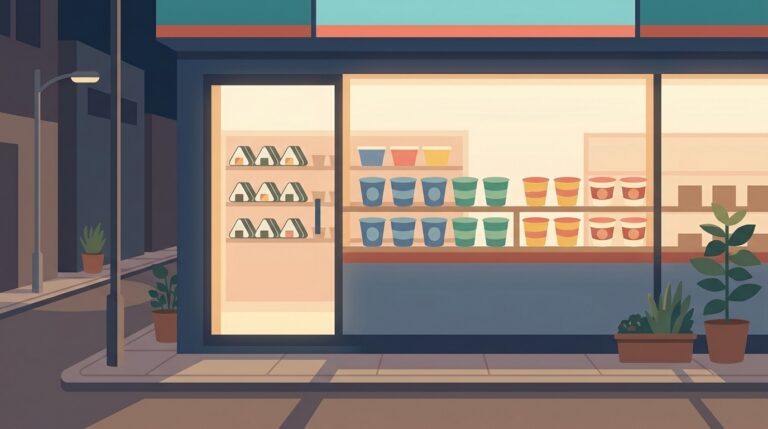
안녕하세요! 매일한글 에디터입니다. (Hello! I am your Daily Hangul editor.) Picture this: You just landed at Incheon Airport, checked into your hotel in Seoul, and it is 11:45 PM. Your stomach lets out a thunderous rumble. You recall dozens of cozy K-drama scenes where the main leads sit inside a warmly lit convenience store, happily chatting over a warm triangle kimbap and spicy cup ramyeon. Inspired and starving, you stroll into the nearest GS25 or CU with high hopes.
Then, reality strikes. You stand before a massive, towering wall of refrigerated shelves filled with dosirak lunchboxes, rolled kimbap, sandwiches, salads, and dozens of colorful packages covered in Korean script. Your eyes dart frantically across the shelves, but you cannot spot the triangular snacks anywhere. The friendly store clerk is looking toward you, and you want to ask for help, but your mind goes completely blank. You freeze, wondering: “How on earth do I say triangle kimbap in Korean? What if I use the wrong honorific?”
Take a deep breath! You are definitely not alone. Over the past ten years of coaching beginner Korean learners, navigating convenience stores is universally the number one challenge travelers face on their very first night in Korea. This guide is crafted directly from real learner struggles to ensure you never leave a Korean convenience store hungry or stressed again. Let us equip you with the exact words, manners, and cultural insights you need to find your favorite snack like a true local!
Phase 2: Core 3 Expressions In-Depth
1. 삼각김밥 어디 있어요? (Samgak-gimbap eodi isseoyo?)
- Pronunciation: Sam-gak-gim-bap eo-di is-seo-yo? (Think of it as: Sahm-gahk-geem-bahp uh-dee ee-ssuh-yo?)
- Meaning: Literal: “Triangle kimbap where exists?” | Real Nuance: “Where is the triangle kimbap?”
- K-Culture Moment: In dramas like Weightlifting Fairy Kim Bok-joo and Extraordinary Attorney Woo, you constantly see hungry students and busy workers pop into neighborhood stores and ask this exact phrase.
- Editor’s Insight: In formal textbooks, you might see the location particle “-에” (e) attached to “어디” (eodi). But in daily spoken Korean, dropping the particle and saying “어디 있어요?” (eodi isseoyo?) sounds far more natural and relaxed!
- Situation Spectrum: Casual: ✅ (to close friends: 삼각김밥 어디 있어? / Samgak-gimbap eodi isseo?) | Semi-formal: ✅ (to clerks: 삼각김밥 어디 있어요? / Samgak-gimbap eodi isseoyo?) | Formal: ⚠️ (삼각김밥이 어디에 위치하고 있습니까? / Samgak-gimbabi eodie wichihago isseumnikka? — much too stiff for a convenience store!)
- 🤔 Think About It: In English, we often rely on long polite buffers like “Excuse me, would you mind telling me where…?” In Korean, attaching the polite ending “-요” (-yo) instantly shows total courtesy without needing lengthy grammatical gymnastics. How does this direct-yet-polite style reflect fast-paced Korean city life?
2. 참치마요 있어요? (Chamchimayo isseoyo?)
- Pronunciation: Cham-chi-ma-yo is-seo-yo? (Think of it as: Chahm-chee-mah-yo ee-ssuh-yo?)
- Meaning: Literal: “Tuna mayo exists?” | Real Nuance: “Do you have the tuna mayo flavor in stock?”
- K-Culture Moment: Tuna mayonnaise is the undisputed king of triangle kimbap in South Korea, holding the number one sales spot across all major store chains for decades. K-pop idols frequently highlight it in their midnight snack vlogs!
- Editor’s Insight: If the fresh food shelf looks empty, do not give up immediately. Delivery crates often arrive late at night. Asking “있어요?” (isseoyo?) lets the clerk check if new inventory just arrived in the back room.
- Situation Spectrum: Casual: ✅ (참치마요 있어? / Chamchimayo isseo?) | Semi-formal: ✅ (참치마요 있어요? / Chamchimayo isseoyo?) | Formal: ⚠️ (참치마요가 있습니까? / Chamchimayoga isseumnikka?)
- 🤔 Think About It: Notice how you can substitute “참치마요” with any other flavor like “불고기” (bulgogi) or “전주비빔” (jeonjubibim). Why do you think Korean nouns connect so effortlessly into short, functional questions?
3. 이거 데워야 해요? (Igeo deowoya haeyo?)
- Pronunciation: I-geo de-wo-ya hae-yo? (Think of it as: Ee-guh deh-wuh-yah heh-yo?)
- Meaning: Literal: “This must be heated?” | Real Nuance: “Should I microwave this? / Do I heat this up?”
- K-Culture Moment: In slice-of-life webtoons and K-dramas, characters frequently stand in front of the in-store microwave counter, counting down the 20-second timer while their ramen noodles brew.
- Editor’s Insight: Certain flavors like tuna mayo taste fantastic cold or at room temperature, but meat-heavy varieties like spicy pork (jeyuk) taste ten times better when warm. Asking this question gets you an instant recommendation.
- Situation Spectrum: Casual: ✅ (이거 데워야 돼? / Igeo deowoya dwae?) | Semi-formal: ✅ (이거 데워야 해요? / Igeo deowoya haeyo?) | Formal: ⚠️ (이것을 데워야 합니까? / Igeoseul deowoya hamnikka?)
- 🤔 Think About It: Convenience store clerks manage quick transactions. Asking concise questions allows them to reply with a quick, helpful response like “네, 20초요!” (Ne, isip-choyo! / “Yes, 20 seconds!”).
Phase 3: Textbook Korean vs Real Korean
Situation 1: Asking the clerk where the item is located
- 📖 교과서 한국어: 실례하지만, 삼각김밥이 어디에 위치하고 있습니까? (Sillyehajiman, samgakgimbabi eodie wichihago isseumnikka? / Excuse me, in which location is the triangle kimbap situated?)
- 🗣️ 진짜 한국어: 저기요, 삼각김밥 어디 있어요? (Jeogiyo, samgak-gimbap eodi isseoyo? / Excuse me, where is the triangle kimbap?)
- 💡 왜 다를까? Textbook Korean often overuses heavy Sino-Korean vocabulary like “위치하다” (wichihada / to be situated) and the hyper-formal “-습니까” (-seumnikka). Real convenience store interactions are polite yet speedy. A soft “저기요” (jeogiyo) combined with “어디 있어요?” (eodi isseoyo?) is natural, friendly, and respectful.
Situation 2: Asking if a specific flavor has run out
- 📖 교과서 한국어: 혹시 참치마요 삼각김밥 재고가 남아 있습니까? (Hoksi chamchimayo samgakgimbap jaegoga nama isseumnikka? / By any chance, does the inventory of tuna mayo triangle kimbap remain?)
- 🗣️ 진짜 한국어: 참치마요 다 나갔어요? (Chamchimayo da nagasseoyo? / Is tuna mayo all sold out?)
- 💡 왜 다를까? While “재고” (jaego / stock) is common in warehouse logistics, native speakers colloquially use the active expression “다 나갔다” (da nagatda / literally “all went out”) to indicate that an item is completely sold out.
Phase 4: K-Culture Deep Dive & Non-Verbal Manners
4-1. 눈치 (Nunchi) & Gestures in the Store
- Eye Contact & The Friendly Head-Nod: When you walk in, the store clerk (알바생 / al-ba-saeng) will usually greet you with “어서 오세요!” (Eoseo oseyo! / Welcome!). You do not need a loud reply; a gentle, silent 15-degree head nod shows great nunchi (cultural etiquette).
- Locating the Fresh Zone: Triangle kimbap is categorized under 신선식품 (sinseon-sikpum / fresh foods). Always head toward the open-front refrigerators where milk, sandwiches, and salads are kept—never the deep frozen glass freezers.
- The Two-Hand Card Handover: When paying with a credit card or T-money transit card, hand it over using both hands, or support your right wrist/forearm lightly with your left hand. It is an effortless gesture that immediately makes you look well-mannered.
4-2. Culture Code Analysis: K-Food and the Art of the Wrapper
- The 1-2-3 Unwrapping Ritual: Korean triangle kimbap utilizes patented double-film technology to keep the roasted seaweed (gim) totally crisp and separated from the moist rice until the exact second you eat it. You must pull tab #1 straight down around the back, then gently slide off corner #2 and corner #3. If you rip it carelessly, the seaweed shreds, turning your snack into a crumbled rice bowl! Master this 3-step pull, and your Korean friends will treat you like a seasoned local.
- The Ultimate Comfort Pairing: For Korean high schoolers and university students, pairing a spicy cup ramyeon (like Shin Ramyun or Buldak) with a tuna mayo triangle kimbap is the quintessential soul meal. Many will even break the remaining kimbap directly into the leftover spicy soup to create savory porridge.
Phase 5: Real-Life Roleplay Scenario
- Setting: 11:50 PM inside a bright CU convenience store near Hongik University Station.
- Character: Min-woo (민우), a friendly part-time college student working behind the counter.
-
You: 저기요, 삼각김밥 어디 있어요? (Jeogiyo, samgak-gimbap eodi isseoyo?) [🎭 Looking around slightly bewildered near the snack aisle]
- Min-woo: 저쪽 샌드위치 옆 냉장고에 있어요! (Jeojjok saendeuwichi yeop naengjanggo-e isseoyo!) [🎭 Points with an open palm toward the back refrigerator wall]
- You: 아, 감사합니다! …혹시 참치마요 있어요? (A, gamsahamnida! …Hoksi chamchimayo isseoyo?) [🎭 Walking over to the shelf, scanning the labels intently]
- Min-woo: 잠시만요… 아, 참치마요는 다 나갔어요! (Jamsimanyo… A, chamchimayoneun da nagasseoyo!) [🎭 Looks at the display monitor and tilts his head apologetically]
- You: 아, 아쉽네요. 그럼 뭐가 제일 맛있어요? (A, aswimneyo. Geureom mwoga jeil masisseoyo?) [🎭 Smiles warmly while asking for his personal favorite]
- Min-woo: 전주비빔밥 맛있어요! 인기 많아요. (Jeonju bibimbap masisseoyo! Ingi manayo.) [🎭 Reaches into the shelf and highlights a red-labeled triangle kimbap with a thumbs-up]
- You: 좋아요, 이거 데워야 해요? (Joh-ayo, igeo deowoya haeyo?) [🎭 Receiving the kimbap politely with both hands]
- Min-woo: 네, 전자레인지에 20초만 데우세요! (Ne, jeonjareinjie isip-choman de-u-se-yo!) [🎭 Points to the corner microwave station with a cheerful grin]
🔀 Interactive Decision Branch: You stand in front of the store microwave. What do you do?
- Option A: Set the dial to 2 minutes with the packaging completely sealed.
- Feedback: 🚫 Bad! The plastic packaging will balloon up, the seaweed will turn into a hot, soggy mess, and you risk burning your mouth. Never microwave it for more than 20 to 30 seconds!
- Option B: Rip the plastic wrapper off completely, discard the seaweed, and heat the rice ball alone for 20 seconds.
- Feedback: ⚠️ Risk! While the rice warms up nicely, eating bare seasoned rice without the crispy seaweed robs you of the authentic texture and flavor balance.
- Option C: Pull tab #1 down halfway, pop it into the microwave for just 15–20 seconds, take it out, and finish pulling tabs #2 and #3.
- Feedback: ✅ Best! The rice warms gently without steaming the seaweed into sogginess, preserving the crunch. You just handled convenience store food like a Seoul native!
Phase 6: 10-Second Shadowing Drill
Practice these lines aloud with the emotional rhythm markers. Pause briefly at each slash mark (/).
- [😊 Polite and inquisitive]
저기요, / 삼각김밥 / 어디 있어요? (Jeogiyo, / samgak-gimbap / eodi isseoyo?) - [🥺 Curious and hopeful]
참치마요 / 있어요? (Chamchimayo / isseoyo?) - [💡 Eager and open-minded]
이거 / 데워야 해요? (Igeo / deowoya haeyo?) - [🙏 Warm and appreciative]
감사합니다! (Gamsahamnida!)
Phase 7: K-Culture Mini Dictionary
- 삼각김밥 (Samgak-gimbap / Triangle Kimbap): A triangular seasoned rice ball filled with meat, fish, or vegetables and wrapped in crisp nori. A staple quick meal costing around 1,200 to 1,800 KRW.
- 참치마요 (Chamchi-mayo / Tuna Mayonnaise): The perennial favorite kimbap filling combining flakes of savory canned tuna with creamy mayonnaise and ground black pepper.
- 편의점 (Pyeon-ui-jeom / Convenience Store): Korea’s 24-hour urban sanctuaries offering everything from hot food, postal shipping, and transit card recharges to emergency medications.
- 알바생 (Al-ba-saeng / Part-time Worker): Short for 아르바이트생 (areubaiteu-saeng). The young students and shift workers who keep Korea’s bustling convenience stores running around the clock.
Phase 8: Traveler’s Survival Kit
Top 3 Survival Expressions at the Counter
- 봉투 필요하세요? (Bongtu piryohaseyo? / Do you need a plastic bag?)
- Pro Tip: Plastic bags legally cost 100 to 200 KRW in Korea. If you want one, reply: “네, 주세요” (Ne, juseyo / Yes, please). If you have your own tote, simply say: “괜찮아요” (Gwaenchanayo / I am okay).
- 영수증 버려주세요 (Yeongsujeung beoryeojuseyo / Please throw away my receipt).
- Pro Tip: Clerks will frequently ask if you want your paper slip. Saying this save both time and paper.
- 계산해 주세요 (Gyesanhae juseyo / Please check me out / bill this).
- Pro Tip: If the clerk is busy stocking a shelf nearby, step up to the register and say this politely to let them know you are ready to pay.
Editor’s Travel Note
- Finding the nearest store: Download the Naver Map navigation app to spot every nearby CU, GS25, 7-Eleven, and Emart24 within 100 meters.
- Cashless Convenience: Most convenience stores in Korea prefer cashless payment. Tap your international credit card, smartphone pay, or preloaded T-money card directly onto the front reader.
Phase 9: Going One Step Deeper (Reflective Essay)
In South Korea’s fast-paced metropolitan centers, the 24-hour convenience store is much more than a retail storefront; it is a warm, democratic community sanctuary. Whether it is an exhausted high school student unwinding after nighttime academy (hagwon), a taxi driver grabbing a quick bite at 3:00 AM, or an international traveler seeking a late-night comfort meal, everyone gathers beneath the same neon sign. In a society characterized by intense dedication and high speeds, the humble triangle kimbap represents reliable, affordable nourishment available to anyone, at any hour.
💬 Your Turn: Which triangle kimbap flavor are you dying to try first on your upcoming trip to Korea? Tuna Mayo, Jeonju Bibimbap, or Spicy Pork? Drop your pick in the comments below!
Phase 10: FAQ & Avoiding Misunderstandings
Q: Can I eat my food inside the convenience store?
A: Yes! Almost all Korean convenience stores feature dedicated dining counters equipped with barstools, microwaves, hot water dispensers for ramen, and recycling bins. Just be sure to wipe your table clean and sort your trash into plastic, paper, and food waste bins when finished.
Q: What do the “1+1” and “2+1” tags on the shelves mean?
A: These are Korea’s iconic “Deom” (bonus) promotional deals! “1+1” means buy one, get one free; “2+1” means buy two, get one free. You must bring all eligible items to the checkout counter together to receive the promotion automatically at the register.
Q: Do I need to unwrap the triangle kimbap before microwaving?
A: No! It is best to microwave the triangle kimbap in its packaging for just 15 to 20 seconds. If you pull the wrapper off completely beforehand, the seaweed will absorb the escaping steam and lose its crunchy texture.
🚨 Common Mistakes Warning Board
- Ripping the red strip horizontally: Pulling tab #1 sideways shreds the plastic and damages the seaweed. Always pull tab #1 straight down through the center and all the way around the back.
- Microwaving for a full minute: Triangle kimbap is small. Microwaving it for 60 seconds will scorch the fillings and turn the rice into mush. Stick to 15–20 seconds maximum.
- Speaking in hyper-formal speech: Saying “어디에 위치하고 있습니까?” will confuse young store workers. Keep it breezy and polite with “-어디 있어요?” (eodi isseoyo?).
Phase 11: Action Missions & Engagement
- 🥉 Bronze Mission (Solo Practice): Stand in front of your mirror and practice saying: “저기요, 삼각김밥 어디 있어요?” smoothly 3 times in under 10 seconds without checking your notes.
- 🥈 Silver Mission (Social Share): Snap a photo of any rice snack or snack aisle on Instagram or TikTok, tag @DailyHangul, and use the hashtag #KoreanConvenienceMaster with your favorite flavor name in Hangul.
- 🥇 Gold Mission (Real-World Test): Walk into an authentic Asian market or a Korean convenience store, order a snack or inquire about a flavor entirely in Korean using: “[Flavor] 있어요?”
🎮 K-Culture Mission: While watching your next K-drama episode, look closely at any convenience store scene. Spot whether the characters are heating their kimbap or eating it straight from the wrapper, and listen for the words “어디” (eodi) or “있어요” (isseoyo)!
Phase 12: Interactive Quiz Challenge
Test your knowledge before your next convenience store visit!
- Scenario Question: You walk into GS25 wanting to find where the triangle kimbaps are placed. What is the most natural, polite phrase to say to the clerk?
- A) 삼각김밥 내놔! (Samgak-gimbap naenwa!)
- B) 삼각김밥 어디 있어요? (Samgak-gimbap eodi isseoyo?)
- C) 삼각김밥이 어디에 위치하고 있습니까? (Samgak-gimbabi eodie wichihago isseumnikka?)
- Fill in the Blank: Complete this sentence to ask if tuna mayo is in stock:
- “참치마요 _______?” (Hint: “Does it exist / Do you have it?”)
- True or False: You should pull tab #2 and #3 before pulling tab #1 when unwrapping triangle kimbap.
- [True / False]
👉 Click here to check your answers and explanations!
- Answer: B) 삼각김밥 어디 있어요? (Samgak-gimbap eodi isseoyo?)
- Explanation: Option A is impolite demand speech, while Option C is unnaturally formal for a casual store setting. Option B hits the perfect sweet spot of polite daily Korean.
- Answer: 있어요 (isseoyo)
- Full sentence: 참치마요 있어요? (Chamchimayo isseoyo? / Do you have tuna mayo?)
- Answer: False!
- Explanation: Always pull tab #1 straight down through the center first. Pulling tabs #2 or #3 first will tear the delicate seaweed sheets inside!
- Explanation: Always pull tab #1 straight down through the center first. Pulling tabs #2 or #3 first will tear the delicate seaweed sheets inside!






