

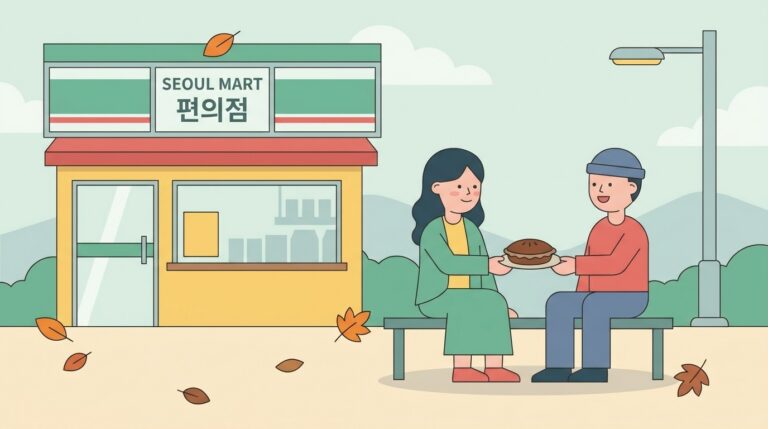
Phase 1: 공감 (Story-Driven Opening)
안녕하세요! 매일한글 에디터입니다.
Have you ever stood in the snack aisle of a Korean supermarket, staring at that iconic red box of Orion Choco Pie with the single, bold Chinese character 情 (Jeong) printed on it? If you’ve spent any time in Korea or watched classic K-dramas, you know this snack isn’t just a marshmallow-filled chocolate biscuit—it’s an emotional national icon.
Many of our intermediate learners come to us with a very specific cultural frustration: “My Korean coworkers or host family do kind things for me, like silently sliding a snack onto my desk or giving me extra side dishes, but they barely say anything. When I try to thank them effusively, they brush it off like it’s nothing! Are they being cold, or am I missing something?”
If you have ever felt this awkward disconnect, breathe a sigh of relief: you aren’t doing anything wrong. You have simply encountered the heart of Korean relational psychology—정 (Jeong). Through the legendary Choco Pie commercial series that taught modern Korea how to express affection, this guide will unlock how to read between the lines, speak intermediate-level emotional Korean, and build authentic connections without textbook stiffness.
Phase 2: 핵심 표현 3선 심층 분석
Here are three indispensable expressions deeply tied to the concept of Jeong, elevated to an authentic B2 communicative level.
1. 말하지 않아도 알아요 (Malhaji anado arayo)
- Pronunciation: [Mal-ha-ji a-na-do a-ra-yo] (Sounds like: Mahl-hah-jee ah-nah-doh ah-rah-yoh)
- Meaning: Literal: “Even if you do not speak, I know.” | Nuance: “No words needed between us; our bond and mutual empathy speak for themselves.”
- K-Culture Moment: The legendary soundtrack jingle of the 1990s Orion Choco Pie TV commercial campaign, where people share a snack in silence during poignant everyday moments.
- Editor’s Insight: This phrase encapsulates Korea’s high-context communication culture. Saying this shows you understand that silence between close people is not cold distance, but deep empathy.
- Situation Spectrum: Casual: ✅ | Semi-formal: ✅ | Formal: ⚠️ (Can sound poetic or melodramatic in formal business meetings)
- 🤔 Think About It: In Western cultures, explicit verbal appreciation is vital. Why does Korean culture place such immense value on sensing each other’s needs before words are uttered?
2. 정들었어요 (Jeongdeureosseoyo)
- Pronunciation: [Jeong-deu-reo-sseo-yo] (Sounds like: Jung-deu-ruh-ssuh-yoh with a soft, round ‘eo’ sound)
- Meaning: Literal: “Jeong has entered [us].” | Nuance: “I’ve grown truly fond of you / I feel deeply attached to this place or team.”
- K-Culture Moment: Used frequently in tearful departure episodes of variety shows like Running Man or when housemates bid farewell in reality dating shows.
- Editor’s Insight: Unlike sarang (romantic/filial love) or johahada (to like), jeongdeulda describes an attachment that develops organically through shared time, even through shared hardships.
- Situation Spectrum: Casual: ✅ | Semi-formal: ✅ | Formal: ✅
- 🤔 Think About It: Can you develop Jeong toward someone you initially disliked? (Koreans say yes—this is called 미운 정, miun jeong!)
3. 챙겨주고 싶어서요 (Chaenggyeojugo sipeoseoyo)
- Pronunciation: [Chaeng-gyeo-ju-go si-peo-seo-yo] (Sounds like: Chaeng-gyuh-joo-goh she-puh-suh-yoh)
- Meaning: Literal: “Because I wanted to look after / pack / take care of [you].” | Nuance: “I just felt a warm impulse to look out for you; don’t feel burdened to pay me back.”
- K-Culture Moment: When a senior student (선배) buys meals for a freshman or an older coworker slips vitamin drinks into your bag during crunch time.
- Editor’s Insight: The verb 챙기다 (chaenggida) is the active engine of Jeong. It is not about formal charity; it is spontaneous caretaking.
- Situation Spectrum: Casual: ✅ | Semi-formal: ✅ | Formal: ⚠️
- 🤔 Think About It: How does your home culture distinguish between “offering help” and “taking proactive responsibility for someone’s comfort”?
Phase 3: 교과서 한국어 vs 진짜 한국어
Situation 1: Giving a small snack or coffee to a coworker
- 📖 교과서 한국어: 이 과자를 선물로 드립니다. 맛있게 드십시오. (I present this snack as a gift to you. Please eat it deliciously.)
- 🗣️ 진짜 한국어: 일하시면서 당 떨어질 때 드세요. 오다 주웠어요! (Have this while working when your blood sugar drops. Picked it up on my way!)
- 💡 왜 다를까?: Textbook Korean sounds like an official diplomatic delegation handover. Real Koreans downplay their gifts with playful modesty (“오다 주웠어요” — literally “I picked it up on the way”) so the recipient doesn’t feel socially indebted.
Situation 2: Expressing emotional attachment at the end of a project
- 📖 교과서 한국어: 우리는 매우 친한 친구 사이가 되었습니다. (We have become very close friend relations.)
- 🗣️ 진짜 한국어: 우리 그동안 고생하면서 정 진짜 많이 들었네요. (Going through all those struggles together, we really formed such a deep bond.)
- 💡 왜 다를까?: Korean adults rarely define relationships through rigid labels like “best friend.” Instead, they describe the shared experience of endurance and the accumulated sentiment (jeong).
Phase 4: K-Culture 딥다이브 & 비언어적 매너
4-1. 눈치 (Nunchi) & Non-Verbal Manners: The Subtle Choco Pie Delivery
In Korean culture, the art of giving is governed by 눈치 (Nunchi – situational tact). When you want to share a snack like a Choco Pie or an energy drink:
* The Delivery: Don’t stand over their desk and announce, “Look what I brought you!” Instead, slide it smoothly onto the corner of their desk with a warm, brief nod or a soft, two-handed placement.
* The Reaction: Avoid demanding immediate praise. If someone does this for you, do not jump up with excessive bowing. Simply place your hand lightly on your heart, make gentle eye contact, and say softly: “어머, 감사해요. 잘 먹을게요!” (Eomeo, gamsahaeyo. Jal meogeulgeyo!).
4-2. Cultural Code: The Orion Choco Pie Ad Revolution
Starting in 1989, Orion ran its legendary 情 (Jeong) Campaign. The ads depicted everyday situations: a rural bus driver waiting patiently for an elderly passenger, an elementary school boy sharing his single Choco Pie with his gruff teacher, and soldiers consoling a homesick comrade on night duty. Accompanied by the soothing piano melody of “말하지 않아도 알아요”, it redefined the snack. Sharing a 500-won treat became synonymous with authentic Korean communal love—unspoken, unpretentious, and enduring.
Phase 5: 실전 롤플레이 시나리오
Setting: 9:30 PM at a creative agency in Mapo-gu, Seoul. You and your team senior, 민호 선배 (Minho Sunbae), are the only ones left in the office working on tomorrow’s client presentation.
- 민호 선배: 하… 오늘따라 수정 사항이 끝이 없네. 배 안 고파요? (Ha… oneulttara sujeong sahangi kkeuchi eomne. Bae an gopayo?)
🎭 Sighs heavily, rubbing his neck, then glances over at your computer screen with concern. - 나 (You): 괜찮아요, 선배님. 거의 다 정리되어 가요. (Gwaenchanhayo, seonbaenim. Geoui da jeonglidoeeo gayo.)
🎭 Typing steadily, smiling faintly to maintain professional calm. - 민호 선배: 말은 그렇게 해도 얼굴에 피곤하다고 쓰여 있구만. 잠깐만 있어 봐요. (Mareun geureoke haedo eolgure pigonhadago sseuyeo itguman. Jamkkanman isseo bwayo.)
🎭 Gets up from his ergonomic chair and walks toward the pantry area. - 나 (You): 네? 아니에요, 진짜 신경 안 쓰셔도 돼요! (Ne? Anieyo, jinjja singyeong an sseusyeodo dwaeyo!)
🎭 Turning your head slightly in panic, waving both hands politely in protest. - 민호 선배: 자, 이거. 서랍에 숨겨둔 비상식량인데 특별히 주는 거예요. (Ja, igeo. Seorabe sumgyeodun bisangsikryanginde teukbyeolhi juneun geoyeo.)
🎭 Slides a warm can of canned coffee and a classic red Choco Pie right beside your mousepad. - 나 (You): 헉, 초코파이네요! 밤에 먹는 초코파이가 진짜 최고인데… (Heok, chokopaineyo! Bame meongneun chokopaiga jinjja choegoinde…)
🎭 Looking up with wide, appreciative eyes at the thoughtful gesture. - 민호 선배: 거봐요, 좋아할 줄 알았어. 말하지 않아도 알죠. 얼른 먹고 힘내서 끝냅시다! (Geobwayo, joahalgul arasseo. Malhaji anado aljyo. Eolleun meokgo himnaeseo kkeutnaepsida!)
🎭 Gives a reassuring pat on the corner of your desk with a warm, brotherly smirk. - 나 (You): 선배님 진짜 감동이에요. 챙겨주셔서 정말 감사합니다! (Seonbaenim jinjja gamdongieyo. Chaenggyeojusyeoseo jeongmal gamsahamnida!)
🎭 Nodding gratefully, unwrapping the package immediately to show genuine appreciation.
🔀 인터랙티브 분기점 (Interactive Choice)
Now, how do you follow up the next morning? Choose your response:
- Option A: Leave a fancy hand-drip specialty coffee on Minho’s desk with a sticky note: “어제 챙겨주신 초코파이 덕분에 힘냈어요! 선배님 드시라고 사 왔습니다 :)”
- Outcome: Best! Perfect reciprocity. It keeps the circle of Jeong flowing naturally without causing financial burden.
- Option B: Send him a formal mobile gift card (기프티콘) worth 50,000 KRW with a formal message: “어제 야근 간식에 대한 정식 보답입니다.”
- Outcome: Bad! Overkill. Turning an informal, emotional gesture of care into a transactional reimbursement destroys Jeong and creates social burden (부담감).
- Option C: Pretend nothing happened and ignore the interaction completely.
- Outcome: Risk! While Jeong doesn’t demand fireworks, ignoring someone who looked after you makes you appear lacking in basic social senses (눈치 없는 사람).
Phase 6: 10초 감정 섀도잉 드릴
Shadow these lines aloud, honoring the pause markers (/) and capturing the required emotional texture:
[🥺 아쉽고 애교 섞어서]
벌써 한국을 떠날 시간이라니… / 우리 그동안 / 정 진짜 많이 들었나 봐요.
(Beolsseo hangugeul tteonal siganirani… / uri geudongan / jeong jinjja mani deureonna bwayo.)-
[😊 다정하고 든든하게]
혼자 끙끙 앓지 마요. / 말하지 않아도 / 다 아니까 / 언제든 기대요.
(Honja kkeungkkeung alji mayo. / Malhaji anado / da anikka / eonjedeun gidaeyo.) -
[🥰 쑥스럽지만 진심을 담아]
별거 아니에요. / 그냥 지나가다가 / 선배님 생각나서 / 챙겨 온 거예요.
(Byeolgeo anieyo. / Geunyang jinagadaga / seonbaenim saenggaknaseo / chaenggyeo on geoyeyo.)
Phase 7: K-Culture 미니 사전
- 정 (情, Jeong)
Trans: Sticky affection / collective unconditional bonding.
Usage: Unlike romantic passion that burns fast, Jeong is sticky, slow-cooked, and binds communities together through shared vulnerability. - 덤 (Deom)
Trans: Extra freebie / bonus items given out of generosity.
Usage: The traditional market vendor throwing three extra mandarins into your bag without charging is practicing Deom, the economic sibling of Jeong. - 눈치 (Nunchi)
Trans: Fast situational awareness / emotional reading of room cues.
Usage: The invisible radar that lets you realize when someone needs help or when they just want silent companionship. - 챙기다 (Chaenggida)
Trans: To pack, look after, care for proactively.
Usage: Used when you make sure colleagues eat lunch, or when you pack throat lozenges for a friend with a dry cough.
Phase 8: 여행자를 위한 생존 키트
Survival Expressions TOP 3
- 이거 서비스예요? (Igeo seobiseuyeyo?)
Pro Tip: Use with a sparkling smile at traditional restaurants when a complimentary dish appears. - 정이 정말 넘치시네요! (Jeongi jeongmal neomchisineyo!)
Pro Tip: “You are so full of warmhearted Jeong!” Say this to market elders who give you Deom—guaranteed to melt their hearts. - 제가 챙겨드릴게요. (Jega chaenggyeodeurilgeyo.)
Pro Tip: Perfect when traveling with Korean companions and offering to handle the tickets or napkins.
Editor’s Travel Note
When navigating traditional markets like Gwangjang or Tongin, ditch international map apps and use the KakaoMap navigation app download for real-time reviews of generous food stall grannies (할머니). If a street vendor hands you an extra fish cake skewer or snack, never refuse it outright—accept it gratefully with both hands and enjoy the authentic experience!
Phase 9: “한 발 더 깊이” (생각 질문)
In standard English, affection is largely an individualistic choice: “I like you because you are funny, kind, or helpful.” Korean Jeong, however, is fundamentally collective and relational. It does not stem from an individual’s merits, but from shared human coexistence (우리가 함께한 시간). Even when someone irritates you, the sheer time spent together generates Jeong, proving that Korean human relationships prioritize endurance and belonging over rapid personal utility.
💬 Your Turn: Have you ever experienced an unspoken moment of care—either in Korea or with an international friend—where words were completely unnecessary? Share your story below!
Phase 10: FAQ & 오해 방지 (FAQ Schema)
Q: Can I use the word “정” in formal business email communications?
A: Generally, no. “정” refers to emotional, organic, and informal human warmth. In formal professional contexts or B2B contracts, replace it with expressions like 신뢰 (Trust/Reliability), 배려 (Thoughtful Consideration), or 협력 (Cooperation).
Q: Is “말하지 않아도 알아요” taken literally in modern Korea?
A: Not always! While it is cherished culturally, contemporary young Koreans often joke, “말을 안 하면 어떻게 알아요?” (If you don’t say anything, how would I know?), especially in workplace task management. Use it for emotional support, not for project deliverables!
Q: If a coworker leaves a snack on my desk, do I have to buy them a lunch in return immediately?
A: Absolutely not. In fact, retaliating immediately with an expensive gift creates 부담 (psychological burden). Just say thank you sincerely, and wait for a natural moment weeks later to pass them a snack or drink in return.
🚨 흔한 실수 (Common Mistakes) 경고판
- ❌ Mistake 1: Saying “사랑해요!” to a coworker when they share their snacks.
👉 Correct Action: Say “우와, 잘 먹을게요! 진짜 감동이에요!” (Wow, I’ll eat well! I’m genuinely touched!). - ❌ Mistake 2: Giving a formal lecture on how much you owe them monetarily for a small favor.
👉 Correct Action: Reciprocate simply with food or a kind word. Jeong is kept alive by natural circulation, not ledger accounting. - ❌ Mistake 3: Refusing a senior colleague’s snack because you’re shy.
👉 Correct Action: Even if you can’t eat it immediately, receive it with two hands, thank them, and save it for later.
Phase 11: 액션 미션 & 참여 유도
- Bronze Mission (Solo Drill): Record your voice using Phase 6’s emotional shadowing drill. Match the pitch of the Choco Pie commercial.
- Silver Mission (Social Share): Snap a photo of a Korean snack on your desk and post it with the hashtag
#정들었어요and#DailyHangul. - Gold Mission (Real-Life Action): Tomorrow, secretly slide a small treat onto a friend or colleague’s desk with a simple note: “오늘도 파이팅!”
- 🎮 K-Culture Mission: Watch an episode of Reply 1988 (응답하라 1988) Episode 1. Count how many times the neighborhood mothers send their children to exchange side dishes across houses. That is Jeong in its purest state!
Phase 12: 인터랙티브 퀴즈 챌린지
Test your cultural mastery with these three intermediate questions:
- Situational Judgment: Your Korean team leader silently places a box of Orion Choco Pie on your desk while you are staring stressed at a spreadsheet. What is the most culturally savvy response?
- A) “선배님, 저 다이어트 중이라서 안 먹습니다.” (Sunbae, I’m on a diet so I don’t eat this.)
- B) “선배님, 이거 얼마예요? 계좌이체 해드릴게요.” (Sunbae, how much is this? I’ll bank transfer you.)
- C) “어머 선배님, 당 떨어졌는데 완전 타이밍 최고예요! 잘 먹겠습니다!” (Oh Sunbae, my blood sugar was dropping, your timing is legendary! I’ll enjoy it!)
- Fill-in-the-Blank: Choose the right phrase for an emotional farewell:
- “1년 동안 매일 같이 일하면서 우리 진짜 ______.”
- A) 계산했어요 (Calculated)
- B) 정들었어요 (Grown attached with Jeong)
- C) 잊어버렸어요 (Forgot)
- True / False Culture Check: In Korean culture, Jeong (情) can only exist between two people who like each other from the very beginning.
- True or False?
👉 Click here to check answers & explanations!
- Q1 Answer: C
Explanation: Acknowledging their thoughtful timing (nunchi) and accepting with lively appreciation validates their care without transactional friction. - Q2 Answer: B
Explanation: “정들었어요” is the standard, natural expression for bonding built over time through shared experiences. - Q3 Answer: False
Explanation: Koreans recognize 미운 정 (Miun Jeong), an ironic, deep attachment developed even toward people with whom you have argued or bickered over time!







