

Mastering Modern Korean Co-Parenting: The Shift in Fatherhood and Everyday Phrases
Phase 1: Empathy (Opening Story)
안녕하세요! 매일한글 에디터입니다. (Hello! It’s your Daily Hangul editor.)
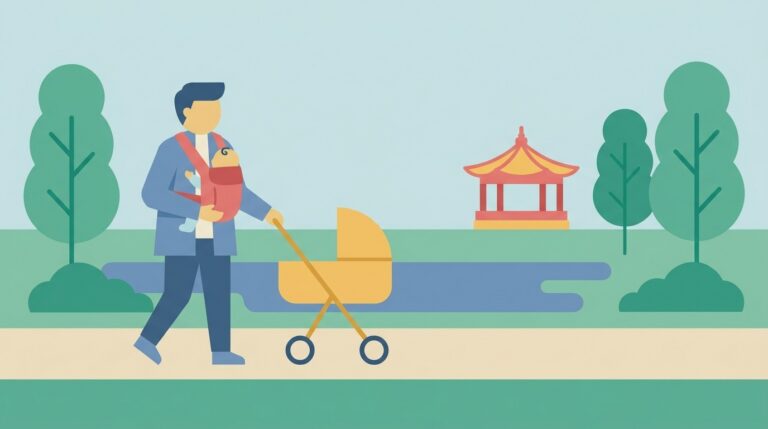
If you have watched classic K-Dramas from the 2000s, you might remember Korean fathers as stoic figures sitting at the head of the dining table, reading the newspaper while mom carried out the entire domestic routine. Fast forward to today’s Korea, and you will witness an entirely different landscape: fathers strapped into hip seats outside daycare centers, bustling through supermarket aisles with shopping lists, and celebrating yuktoe (baby bedtime) with a late-night cup of ramen.
Yet, many of our advanced learners who marry into Korean families or work closely with Korean colleagues encounter a subtle, frustrating linguistic barrier. Have you ever complimented a coworker by saying, “남편이 육아를 참 잘 도와주시네요” (Your husband helps with childcare so well!), only to be met with an awkward pause or a polite, slightly strained smile? In contemporary Korea, child-rearing linguistics has undergone a profound evolution. Using antiquated terms can inadvertently trigger painful nerves around unequal domestic labor. This comprehensive guide, built on a decade of cross-cultural coaching and direct feedback from multicultural couples in Seoul, is designed to give you the exact linguistic finesse and cultural sensitivity needed to discuss shared parenting like a true Seoul insider.
Phase 2: Core Expressions Deep Dive
1. 육아는 돕는 게 아니라 같이 하는 거예요 (Yuganeun domneun ge anira gachi haneun geoyeyo)
- Pronunciation: [Yu-ga-neun dom-neun ge a-ni-ra ga-chi ha-neun geo-ye-yo] (Think of ‘Yu-ga’ rhyming with ‘Nougat’, and ‘dom-neun’ sounding like ‘dome’ blending into ‘nun’)
- Meaning: Literal: Childcare is not helping, but doing together. | Nuanced: “Childcare isn’t a favor the father does for the mother; it is an equal parental responsibility.”
- K-Culture Moment: Frequently quoted in modern family variety shows, documentary shorts, and viral parenting reels on Instagram when challenging older generational attitudes.
- Editor’s Insight: In Korean, the verb “돕다” (to help) grammatically designates one party as the primary owner of the task and the other as a mere assistant. Modern Korean mothers reject being framed as the ‘default parent.’ Using “같이 하다” asserts co-ownership.
- Situation Spectrum: Casual: ✅ | Semi-formal: ✅ | Formal: ✅
- 🤔 Think About It: In your home country, do people still praise fathers for “babysitting” their own children? How does language shape who we view as the primary caregiver?
2. 독박육아 (Dokbang-yuga)
- Pronunciation: [Dok-bang-yu-ga] (Rhymes roughly with “Oak-bong-you-gah”, with a crisp, percussive ‘k’ stop)
- Meaning: Literal: Solo parenting penalty box. | Nuanced: “The exhausting, isolating burden of being left entirely alone to raise a child without partner or family support.”
- K-Culture Moment: Heard in candid web-dramas and maternal vlogs where one spouse works grueling corporate overtime while the other is stranded at home with toddlers.
- Editor’s Insight: Originating from the card game term dokbak (taking on all penalties yourself), this word encapsulates a profound societal critique. It validates emotional burnout and is commonly paired with the verb 탈출하다 (to escape): 독박육아 탈출!
- Situation Spectrum: Casual: ✅ | Semi-formal: ⚠️ | Formal: 🚫
- 🤔 Think About It: Why do you think slang derived from gambling and penalties (dokbak) became the defining term for modern parental isolation?
3. 칼퇴하고 애 보러 갈게요 (Kaltwoehago ae boreo galgeyo)
- Pronunciation: [Kal-twae-ha-go ae bo-reo gal-ge-yo] (‘Kal’ sounds like ‘Cull’ with an assertive tongue snap; ‘twae’ blends ‘tw’ with ‘way’)
- Meaning: Literal: I will leave like a knife and go look after the child. | Nuanced: “I am leaving work the second the clock strikes six so I can take over evening childcare duties.”
- K-Culture Moment: Slung across messaging apps like KakaoTalk between millennial dual-income working parents dividing the daycare pick-up run.
- Editor’s Insight: Kaltwoe (knife-like punch-out) emphasizes intentional boundaries. By pairing it with “애 보러 갈게요,” the speaker establishes parenting as an urgent, non-negotiable personal duty equal to corporate work.
- Situation Spectrum: Casual: ✅ | Semi-formal: ✅ | Formal: ⚠️
- 🤔 Think About It: How is workplace loyalty defined in your culture when pitted against hands-on fatherhood obligations?
Phase 3: Textbook Korean vs. Real Korean
Situation 1: Inquiring about a colleague’s partner sharing childcare
- 📖 교과서 한국어: 남편분이 육아를 잘 도와주시나요? (Nampyeonbuni yugareul jal dowajusinayo?) – Does your husband help out well with childcare?
- 🗣️ 진짜 한국어: 남편분도 육아 분담 확실히 하시죠? (Nampyeonbundo yuga bundam hwaksilhi hasijo?) – Your husband pulls his full weight dividing childcare, right?
- 💡 왜 다를까? (Why the shift?): The textbook version unconsciously frames the father as a secondary helper. Millennial and Gen Z Korean speakers actively swap “도와주다” (help) for “분담하다” (equitably divide) to signal progressive, egalitarian respect.
Situation 2: Announcing paternal parental leave to colleagues
- 📖 교과서 한국어: 저는 자녀 양육을 위하여 휴직을 신청할 예정입니다. (Jeoneun janyeo yangyugeul wihayeo hyujigeul sincheonghal yejeong-imnida.) – I plan to apply for a leave of absence for child-rearing.
- 🗣️ 진짜 한국어: 저 이번에 아빠 육아휴직 들어가기로 했어요. (Jeo ibeone appa yuga-hyujik deureogagiro haesseoyo.) – I decided to step out on paternity leave this term.
- 💡 왜 다를까? (Why the shift?): Textbook phrasing sounds like an excerpt from a legal labor code. In everyday corporate environments, “아빠 육아휴직” (dad’s parental leave) + “들어가다” (to enter/begin a cycle) is the standard, organic phrasing.
Phase 4: K-Culture Deep Dive & Non-Verbal Manners
4-1. Nunchi & Physical Etiquette in Shared Parenting Spaces
Navigating Korean kid cafes (키즈카페), apartment playgrounds, and pediatrician waiting rooms requires sharp nunchi (situational awareness):
* Eye Contact & Space: Modern Korean dads intentionally maintain soft, non-intrusive eye contact with other parents at playgrounds. Acknowledge fellow parents with a gentle 15-degree nod rather than an overly boisterous greeting.
* The “Two-Hand Phone Rule”: When checking work messages while pushing a stroller or supervising on slides, Korean parents frown upon complete digital disengagement. If you must send a text, keep one hand on the stroller handle or stay in clear physical proximity to communicate active supervision.
4-2. Cultural Code Analysis: The “Latte Papa” Revolution
In contemporary media, the paternal archetype has shifted dramatically. Variety franchises like The Return of Superman (슈퍼맨이 돌아왔다) previously framed fathers handling 48 hours alone with their kids as an extraordinary comic survival quest. However, viewers began pushing back, demanding depictions of genuine, routine co-parenting. Today, Korean society actively celebrates the Scandinavian concept of “라테파파” (Latte Papa)—fathers who comfortably push strollers with a coffee in hand, confident in feeding routines and emotional soothing.
Phase 5: Real-Life Roleplay Scenario
Setting: 6:45 PM at a neighborhood playground near an apartment complex in Mapo, Seoul. Min-jun, a 34-year-old software team lead, is pushing his 3-year-old on the swing while holding a diaper bag.
- Min-jun: 🎭 (Wiping sweat from his forehead with a tired smile) 어, 지우 아버님! 오늘도 칼퇴 성공하셨네요? (Eo, Jiu abeonim! Oneuldo kaltwoe seonggonghasyeonneyo?) – Oh, Ji-woo’s dad! You managed to leave right on the dot today too?
- Learner: 🎭 (Smiling warmly, adjusting backpack) 네, 민준 아버님. 오늘 야근 안 하려고 아침부터 달렸어요. (Ne, Minjun abeonim. Oneul yageun an haryeogo achimbuteo dallyeosseoyo.) – Yes, Min-jun’s dad. I raced through work since morning to avoid overtime today.
- Min-jun: 🎭 (Nodding in deep empathy) 맞아요. 퇴근하고 육아 출근하는 게 보통 일이 아니죠. (Majayo. Toegeunhago yuga chulgeunhaneun ge botong iri anijyo.) – Totally. Clocking out of work just to clock into parenting duty is no small feat.
- Learner: 🎭 (Chuckling softly) 그래도 아내가 혼자 독박육아 안 하게 얼른 와야죠. (Geuraedo anaega honja dokbang-yuga an hage eolleun wayajyo.) – Still, I had to hurry back so my wife wouldn’t be stuck solo parenting alone.
- Min-jun: 🎭 (Looking genuinely impressed) 역시 멋진 아빠시네요. 요즘은 육아를 분담해야 가정이 평화롭더라고요. (Yeoksi meotjin appasineyo. Yojeumeun yugareul bundamhaeya gajeongi pyeonghwaropdeoragoyo.) – You really are a great dad. These days, equitably dividing parenting is the only way to keep domestic peace.
- Learner: 🎭 (Shaking head gently with conviction) 돕는 게 아니라 당연히 같이 해야 할 일인걸요. (Domneun ge anira dang-yeonhi gachi haeya hal iringeollyo.) – It’s not helping out; it’s naturally something we must do together.
- Min-jun: 🎭 (Brightening up) 그 말 백퍼센트 공감합니다! 오늘 육퇴는 몇 시 예상하세요? (Geu mal baek-peosenteu gonggamhamnida! Oneul yuktoeneun myeot si yesanghaseyo?) – I 100% agree with that! What time do you anticipate tonight’s bedtime victory?
- Learner: 🎭 (Crossing fingers playfully) 9시 전 육퇴를 목표로 목욕 전쟁 치러야죠! (Ahopsi jeon yuktoereul mokpyoro mogyok jeonjaeng chireoyajyo!) – Aiming for bedtime before 9 PM; time to fight the bath-time battle!
🔀 Interactive Choice Point
Min-jun sighs and asks: “Actually, my parents keep telling my wife that she’s lucky I even hold the baby. It causes tension at home. What should I tell them?”
- Choice A: “부모님 말씀이 맞으니 아내분에게 조금만 참으라고 하세요.” (Your parents are right, so tell your wife to just endure it a little.)
- Choice B: “시대가 변했으니 육아는 부부 공동 책임이라고 단호하게 말씀드리세요.” (Tell them firmly that times have changed and parenting is a shared couple responsibility.)
- Choice C: “그냥 부모님 앞에서는 가만히 계시고 집에서만 도와주세요.” (Just stay quiet in front of your parents and help only at home.)
-
Choice Feedback:
- Choice A (Bad): Deeply offensive in contemporary Korean contexts; reinforces outdated patriarchal norms and escalates marital conflict.
- Choice B (Best): Perfect high-level response. Expresses balanced modern cultural literacy and directly advocates for equal division of labor.
- Choice C (Risk): A conflict-avoidant compromise that treats childcare as an undercover favor rather than an acknowledged equal standard.
Phase 6: 10-Second Emotional Shadowing Drill
Practice these lines using the slash marks (/) for breathing pauses and emotional markers:
[😊 Firm and progressive]
육아는 / 돕는 게 아니라 / 우리 둘이 같이 하는 거예요. / (Yuganeun / domneun ge anira / uri duri gachi haneun geoyeyo.)-
[😮💨 Relieved and exhausted]
오늘 밤 드디어 / 아홉 시에 / 육퇴 성공했어요! / (Oneul bam deudieo / ahop sie / yuktoe seonggonghaesseoyo!) -
[🤝 Collaborative and empathetic]
여보, / 오늘 고생 많았지? / 지금부터 바통 터치하자. / (Yeobo, / oneul gosaeng manatji? / Jigeumbuteo batong teochihaja.)
Phase 7: K-Culture Mini Dictionary
-
육아퇴근 / 육퇴 (Yuktoe)
Translation: Childcare clock-out / Baby bedtime.
Real-World Usage: A portmanteau of 육아 (parenting) and 퇴근 (leaving work). It denotes the glorious moment a child falls asleep at night, allowing parents a few hours of adult autonomy. Parents frequently text each other: “오늘 육퇴 완료?” (Is bedtime wrapped up?). -
육아휴직 (Yuga-hyujik)
Translation: Parental childcare leave.
Real-World Usage: Guaranteed under Korean labor laws for both parents. Fathers taking this are specifically called appa yuga-hyujikja. Essential in discussions regarding work-life balance and career pauses. -
공동육아 (Gongdong-yuga)
Translation: Co-parenting / Cooperative child-rearing.
Real-World Usage: Used for both equal marital parenting and community daycare cooperatives where neighborhood families share childcare shifts. -
라테파파 (Rate-papa)
Translation: Latte Papa.
Real-World Usage: Borrowed from Swedish cultural reporting, this term describes hands-on fathers who actively stroll through city centers, push carriages, and comfortably prioritize domestic presence.
Phase 8: Traveler & Expat Survival Kit
Survival Expressions TOP 3
- 여기 기저귀 갈이대 있나요? (Yeogi gijeogwi garidae innayo?)
Romanization: [Yeo-gi gi-jeo-gwi ga-ri-dae in-na-yo?]
Pro Tip: Essential when asking staff in cafes or subway stations where the baby changing table is located. - 아기의자 하나 부탁드립니다. (Agi-uija hana butakdeurimnida?)
Romanization: [A-gi-ui-ja ha-na bu-tak-deu-rim-ni-da]
Pro Tip: Polite phrasing for requesting a high chair at restaurants. - 유아차 들어가도 될까요? (Yuacha deureogado doelkkayo?)
Romanization: [Yu-a-cha deu-reo-ga-do doel-kka-yo?]
Pro Tip: Asking whether a compact restaurant or gallery space can accommodate a stroller. Notice modern speakers prefer “유아차” (gender-neutral) over the older “유모차” (which etymologically highlighted the mother).
Editor’s Travel & Relocation Note
When traveling or living in Korea with little ones, download the KakaoMap application with family filter facilities to locate designated nursing rooms (suyu-sil) and diaper-changing stations across all subway lines. For official support, expats can reference the Immigration and Multicultural Family Support Portal Danuri to explore subsidized local community childcare services.
Phase 9: Going One Step Deeper
South Korea’s rapid transformation from an agrarian, deeply Confucian society into an ultra-dense, hyper-technological metropolis compressed centuries of social change into mere decades. In traditional Korean households, the division between ansaram (inside person = wife) and bakkatsaram (outside person = husband) was absolute. Today’s younger generation of fathers finds itself pioneering a whole new archetype: they want to be present, affectionate, and emotionally connected to their children without a blueprint from their own fathers.
When you use words like 공동육아 and avoid reductive phrases like 남편이 돕다, you are not just exhibiting high grammatical accuracy; you are participating in one of the most vital civil dialogues unfolding across contemporary Korean society.
💬 Your Turn: What words or idioms in your native tongue reflect the evolving roles of modern parents? Drop your thoughts in the comments below!
Phase 10: FAQ & Avoiding Misunderstandings
Q: Why do some Korean mothers cringe when older relatives say “남편이 착해서 잘 도와주네”?
A: Because the term “도와주다” (to help) implies the mother is solely accountable for domestic labor and that any participation from the father is an act of optional charity rather than shared responsibility.
Q: Is the term “유모차” (Yumo-cha) considered offensive now?
A: It is not outright offensive, but public civic campaigns and government bodies actively encourage “유아차” (Yua-cha – infant carriage) instead of “유모차” (maternal carriage) to foster gender-neutral parenting language.
Q: Can I use “독박육아” in a formal business meeting?
A: No. It is an empathetic, casual-to-informal sociological term popular in media, among friends, and online. In a formal corporate presentation, use “1인 전담 양육 부담” (sole-caregiver burden) or “돌봄 공백” (caregiving gap).
🚨 Common Mistakes Board
- Mistake 1: Saying “남편이 오늘 아기 봐줘요” (My husband is babysitting the baby today).
- Correct Action: Say “남편이 오늘 애 보는 날이에요” (It’s my husband’s day to look after the kid).
- Mistake 2: Assuming all fathers outside during business hours are unemployed.
- Correct Action: Remember paternity leave (육아휴직) uptake has surged exponentially in tech hubs like Pangyo and Seoul.
- Mistake 3: Calling public nursing rooms “엄마방” (Mom’s room).
- Correct Action: Use “수유실” (Nursing room) or “아기쉼터” (Baby rest area), which welcome all caregivers.
Phase 11: Action Mission & Engagement
- Bronze Level: Practice speaking out loud the phrase: “육아는 돕는 게 아니라 같이 하는 거예요” three times with clear pronunciation and confident intonation.
- Silver Level: Next time you spot a social media reel showing an active father, comment in Korean: “공동육아 멋져요! 육퇴까지 파이팅!”
- Gold Level: In your next language exchange or conversation with a Korean native, initiate a thoughtful dialogue regarding 아빠 육아휴직 (paternity leave) in Korea compared to your home country.
- 🎮 K-Culture Mission: Watch an episode of a modern family variety show or contemporary family drama and spot whether fathers use the word “돕다” (to help) or “같이 하다 / 분담하다” (do together / divide).
Phase 12: Interactive Quiz Challenge
Test your situational mastery and cultural intuition below!
- Situational Judgment: Your coworker mentions that his wife is exhausted, so he wants to leave right at 6:00 PM to take over baby bath-time. Which sentence expresses the most natural, supportive, and progressive sentiment?
- A) 남편이 착하게 집안일을 잘 도와주시네요.
- B) 얼른 칼퇴하시고 육아 분담하러 가셔야죠! 힘내세요!
- C) 집안일은 원래 아내가 도맡아 하는 법이에요.
- Fill in the Blank: Korean parents celebrate the moment their child goes to sleep for the night by calling it childcare clock-out: “오늘 밤 드디어 9시에 [ ] 했어요!”
-
True or False: Modern Korean gender-equality initiatives recommend replacing the word “유모차” (Yumo-cha) with “유아차” (Yua-cha).
Click here to reveal answers & explanations!
-
Answer: B
Explanation: Option B utilizes “칼퇴” (punctual exit) and “육아 분담” (childcare division), recognizing the father’s active co-parenting role. Option A reduces his parenting to a nice deed, while Option C is an outdated patriarchal cliché. -
Answer: 육퇴 (or 육아퇴근)
Explanation: Derived from 육아 (childcare) + 퇴근 (clocking out from work). -
Answer: True
Explanation: The character ‘모’ (母) explicitly specifies ‘mother’. Civic initiatives recommend ‘유아’ (幼兒 – infant) to ensure the term is inclusive of fathers and other caregivers.







