

안녕하세요! 매일한글 에디터입니다.
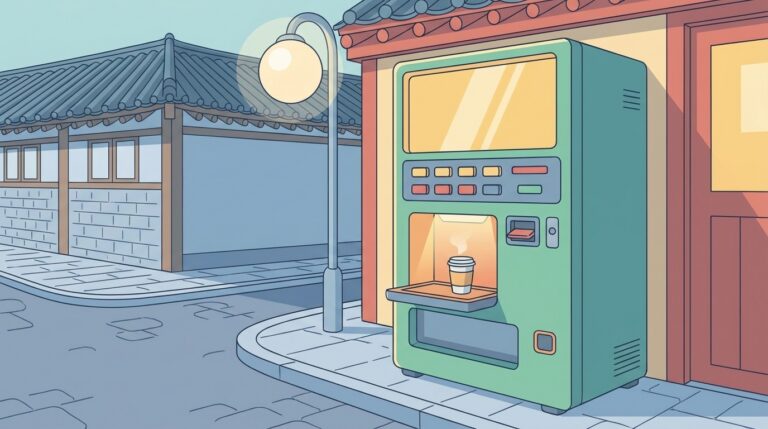
Picture this: You are standing in the dimly lit corridor of an express bus terminal in Seoul, waiting for your paper cup of 400-won instant coffee from a vintage vending machine. You hear a sharp clack, followed by the whirring sound of powdered mix dropping into hot water. Suddenly, an office worker in a tailored suit rushes past you, shoves his hand deep into the dispenser flap, and clutches the empty paper cup before the coffee has even begun pouring!
If you have spent any time in Korea, you have witnessed this heart-pounding spectacle. Why can’t we wait a mere 7 seconds for the machine to finish? Welcome to the epicenter of Korea’s infamous Pali-Pali (빨리빨리, hurry-hurry) culture. Many intermediate Korean learners tell me, “Teacher, I know the grammar for ‘hurry,’ but how do I actually talk about this frenetic lifestyle without sounding like a robotic textbook?” Mastering the nuances of this cultural impatience will unlock how Koreans work, socialize, and bond. Today, let’s explore the psychology behind the vending machine reflex and arm you with sharp, natural expressions used by native speakers.
1. 성격이 급하다 (Seong-gyeogi geuphada)
- Pronunciation: [Seong-gyeo-gi geu-pa-da] (Sounds like “song-gyuh-ghee goo-pah-dah”—say it crisp and snappy)
- Meaning: Literally “One’s personality is urgent/steep,” used to describe having an impatient or hasty temperament.
- K-Culture Moment: Seen constantly in variety shows like Running Man whenever a member rushes a game mission before the host finishes reading the rules.
- Editor’s Insight: This is not necessarily an insult. In Korean workplace culture, having an impatient personality is often affectionately paired with being efficient, proactive, and dynamic.
- Situation Spectrum:
- Casual: ✅ 너 진짜 성격 급하다! (Neo jinjja seonggyeok geuphada! – You are seriously so impatient!)
- Semi-formal: ✅ 제가 성격이 좀 급한 편이에요. (Jega seonggyeogi jom geuphan pyeon-ieyo. – I tend to be a bit impatient.)
- Formal: ⚠️ (Better to use 구체적인 추진력이 있다 – having concrete drive)
- 🤔 Think About It: In your culture, is impatience viewed purely as a character flaw, or can it be framed as high efficiency like in Korea?
2. 속 터지다 (Sok teojida)
- Pronunciation: [Sok teo-ji-da] (Think of a cork popping: “Soke tuh-jee-dah”)
- Meaning: Literally “One’s insides are bursting/exploding,” meaning to feel suffocatingly frustrated by someone or something moving too slowly.
- K-Culture Moment: Classic K-drama scene where a sassy mother-in-law watches someone peel garlic at snail speed and dramatically clutches her chest.
- Editor’s Insight: Sok (속) refers to your chest, stomach, or inner mind. When something crawls along at a sluggish pace, Koreans feel visceral physical pressure.
- Situation Spectrum:
- Casual: ✅ 아, 답답해서 속 터져 죽겠네! (Ah, dapdaphaeseo sok teojyeo jukgenne! – Ah, it’s so frustratingly slow my insides are bursting!)
- Semi-formal: ⚠️ 보는 내내 속 터지는 줄 알았어요. (Boneun naenae sok teojineun jul arasseoyo. – I felt so frustrated watching it the whole time.)
- Formal: 🚫 (Too emotionally loaded for business reports)
- 🤔 Think About It: Notice how Korean emotional vocabulary roots itself deeply in visceral body organs (속, 간, 심장). How does your language express physical agony caused by slowness?
3. 번개 불에 콩 볶아 먹다 (Beongae bure kong bokka meokda)
- Pronunciation: [Beon-gae bu-re kong bop-kka meok-da] (Smoothly connect “bure” like “boo-reh”)
- Meaning: Literally “To roast and eat soybeans over a lightning flash,” meaning to get things done at supersonic, frantic speed.
- K-Culture Moment: Frequently featured on variety show captions when a guest scarfs down a meal or packs their luggage in under two minutes.
- Editor’s Insight: This idiom captures the peak aesthetic of Korean Pali-Pali. It evokes vivid historical imagery of rushing so intensely that you try to cook over instantaneous lightning.
- Situation Spectrum:
- Casual: ✅ 무슨 일을 번개 불에 콩 볶아 먹듯 하니? (Museun ireul beongae bure kong bokka meokdeut hani? – Why do you rush through tasks like roasting beans on a lightning bolt?)
- Semi-formal: ✅ 번개 불에 콩 볶아 먹듯이 급하게 결정하지 마세요. (Beongae bure kong bokka meokdeusi geuphage gyeoljeonghaji maseyo. – Please don’t rush into a decision in a flash.)
- Formal: ⚠️ (Acceptable in speeches for colorful rhetorical flourish)
- 🤔 Think About It: Speed in Korea is treated almost as an art form. What folktales or idioms in your mother tongue capture extreme haste?
📖 교과서 한국어 (Textbook Korean) vs 🗣️ 진짜 한국어 (Real Korean)
Situation 1: Wanting to finish a group task rapidly
- 📖 교과서 한국어: 빨리 끝마칩시다. (Ppalli kkeutmachipsida. – Let us finish quickly.)
- 🗣️ 진짜 한국어: 이거 후딱 끝내버리자! (Igeo huttak kkeunnaebeorija! – Let’s wrap this up in a flash!)
- 💡 왜 다를까?: The textbook relies on standard adverbs like 빨리, whereas native speakers use vivid mimetic adverbs like 후딱 (huttak) or 후다닥 (hudadak) to spark immediate momentum and solidarity.
Situation 2: Playfully whining because someone or something is too slow
- 📖 교과서 한국어: 너무 늦어서 기다리기 힘듭니다. (Neomu neojeoseo gidarigi himdeumnida. – It is difficult to wait because it is too late.)
- 🗣️ 진짜 한국어: 아, 현기증 난단 말이에요! (Ah, hyeongijeung nandanmarieyo! – Ah, I’m getting dizzy waiting here!)
- 💡 왜 다를까?: Originated from a famous Korean viral video meme, claiming that waiting gives you dizziness (현기증) is a beloved, humorous hyperbole used when food or coffee takes longer than expected.
4-1. 눈치 (Nunchi) & The Vending Machine Stance
Next time you stand before a vending machine in a university hall or government office, observe the body posture of the person in front of you. Their weight rests on the balls of their feet, one arm is bent with fingers poised 2 centimeters away from the plastic dispenser flap, and their eyes dart back and forth between the coin return slot and the LED status light.
If you stand three steps back with your arms crossed waiting calmly, you radiate tourist energy. To read the nunchi of the room: do not block the dispenser after your cup drops! Grab it by the reinforced upper rim immediately so the person behind you can insert their coins without missing a beat.
4-2. The Cultural DNA of Speed
Korea’s compressed economic growth (압축성장) in the late 20th century transformed Pali-Pali from a survival tactic into modern pride. You see it everywhere: the 3-minute instant ramyeon, the 20-minute food delivery, and high-speed KTX trains. Sticking your hand in the coffee machine isn’t reckless—it’s a communal ritual of saving precious seconds.
Background & Characters
Location: Outside Exit 3 of Jongno 3-ga Station on a chilly autumn evening.
Characters: You and Assistant Manager Minho (민호 대리님), your direct senior coworker who lives on iced Americanos and adrenaline.
- 대리님 (Minho): 날씨 쌀쌀한데 자판기 믹스커피 한잔 때리고 갈까? (Nalssi ssalssalhande japangi mikseukeopi hanjan ttaerigo galkka? – It’s chilly out; want to hit up a quick paper-cup mix coffee before heading out?) 🎭 Rubbing hands together eagerly
- 나 (You): 좋아요! 제가 동전 넣을게요. (Joayo! Jega dongjeon neoheulgeyo. – Sounds great! Let me put the coins in.) 🎭 Fumbling with coins from wallet
- 대리님 (Minho): 아이고, 동전 찾다가 버스 떠나겠다! 비켜봐, 내가 교통카드로 찍을게. (Aigo, dongjeon chatdaga beoseu tteonagetda! Bikyeobwa, naega gyotongkadeuro jjigeulge. – Oh dear, our bus will leave before you find those coins! Step aside, I’ll tap my transit card.) 🎭 Instantly slaps his card onto the reader
- 나 (You): 앗, 감사합니다. 설탕 둘, 프림 둘 맞죠? (At, gamsahamnida. Seoltang dul, peurim dul matjyo? – Ah, thank you! Standard sweet mix, right?) 🎭 Watching the buttons light up
- 대리님 (Minho): 당연하지! (Dangyeonhaji! – Of course!) 🎭 Instantly shoves his right hand under the plastic drop flap while the machine begins whirring
- 나 (You): 대리님, 손 데여요! 아직 컵도 안 나왔는데 왜 손부터 넣으세요? (Daerinim, son deyeoyo! Ajik keopdo an nawanneunde wae sonbuteo neoheuseyo? – Boss, you’ll burn your hand! The cup hasn’t even dropped yet, why put your hand in already?) 🎭 Wide-eyed with concern
- 대리님 (Minho): 하하! 한국인 종특이잖아. 컵 나오는 소리 듣고 손 넣으면 이미 늦어! (Haha! Hangukin jongteugijana. Keop naoneun sori deutgo son neoheumyeon imi neujeo! – Haha! It’s a Korean trait. If you wait until you hear the cup drop, you’re already too late!) 🎭 Grinning proudly as the hot cup drops right into his waiting palm
- 나 (You): 와, 진짜 번개 불에 콩 볶아 드시네요. 속 터질 틈이 없어요! (Wa, jinjja beongae bure kong bokka deusineyo. Sok teojil teumi eopseoyo! – Wow, you truly roast beans on a lightning bolt. Not a single second to feel frustrated!) 🎭 Accepting the steaming cup carefully
🔀 Interactive Choice Point
Minho laughs and offers you the first cup, but the machine is still bubbling for the second one. What do you do?
- Option A: “대리님, 먼저 드세요. 저는 1초만 기다렸다 천천히 꺼낼게요.” (Daerinim, meonjeo deuseyo. Jeoneun ilchoman gidaryeotda cheoncheonhi kkeonaelgeyo.)
- Feedback (Best): Perfect polite response! You honor the senior by offering the first cup while playfully teasing the speed difference.
- Option B: “왜 이렇게 급하세요? 참을성이 부족하신 것 같아요.” (Wae ireoke geuphaseyo? Chameulseongi bujokhasin geot gatayo.)
- Feedback (Bad): Too direct! Telling a Korean senior they lack patience (참을성 부족) can come across as judgmental and blunt.
- Option C: Shove your own hand into the dispenser flap aggressively to match his speed.
- Feedback (Risk): You get an A+ for cultural imitation, but risk burning your fingers on scalding water if you miss the rim!
Practice these lines with exaggerated rhythm and the indicated emotional beats. The slashes / indicate brief pauses:
[⚡ 성격 급하게 / Frantically impatient]- “컵 나오는 소리 듣고 / 손 넣으면 / 이미 늦지!” (Keop naoneun sori deutgo / son neoheumyeon / imi neutji! – If you wait to hear the cup drop / before putting your hand in / it’s already too late!)
[😂 장난스럽게 / Playful teasing]- “아이고, / 동전 찾다가 / 오늘 밤새겠네!” (Aigo, / dongjeon chatdaga / oneul bamsaegenne! – Oh my, / looking for coins like that / we’ll be here all night!)
[☕ 여유롭게 / Chilled-out irony]- “한국에서는 / 커피 자판기 앞에서도 / 레이싱을 해요.” (Hangugeseoneun / keopi japangi apeseodo / reising-eul haeyo. – In Korea, / even in front of a coffee vending machine / people are racing.)
- 자판기 커피 (Japangi keopi) | Vending machine coffee | Specifically refers to cheap, sweet, powdered instant mix coffee (맥심 스타일) dispensed in small paper cups outside train stations, rest stops, or after meals at barbecue restaurants.
- 종특 (Jongteuk) | Racial/Cultural special trait | Slang (abbreviation of 종족 특성, racial trait from gaming). Used humorously by Koreans to describe their own innate habits like walking fast or putting hands in vending machines.
- 닫힘 버튼 (Dathim beoteon) | Elevator “Close Door” button | The most worn-out button in any Korean building. Pressing it five times consecutively is a classic symptom of Korean Pali-Pali syndrome.
- 벼락치기 (Byeorakchigi) | Cramming at the eleventh hour | Literally “striking with thunderbolts.” Used for studying all night before an exam or finishing a work proposal right before the deadline with frantic adrenaline.
Survival Expressions TOP 3
- 천천히 해주셔도 돼요. (Cheoncheonhi haejusyeodo dwaeyo. – You can take your time.)
- Pro Tip: Use this at small independent cafes or tailors. It makes Korean service workers feel immensely relieved and respected.
- 벌써 다 됐어요? (Beolsseoda dwaesseoyo? – Is it done already?)
- Pro Tip: The ultimate compliment when picking up dry cleaning, phone repairs, or bank documents.
- 후딱 다녀올게요! (Huttak danyeoolgeyo! – I’ll run there and back in a flash!)
- Pro Tip: Say this to coworkers when stepping out for a quick convenience store run.
Editor’s Travel Note
When navigating Korean streets, speed relies on digital efficiency. Make sure to complete the 네이버 지도 앱 다운로드 (Download Naver Map App) before landing; Google Maps does not provide real-time walking or subway step-by-step navigation in Korea. When taking the subway, check the platform floor stickers for quick transfer numbers (e.g., car 4-2) so you can transfer like a local.
Koreans often joke about our own impatience, but behind the frantic paper-cup reflex lies a profound historical legacy. Having built modern infrastructure, cutting-edge technology, and a global cultural wave from the ashes of war within half a century, speed was once Korea’s only competitive currency. Today, that frantic impulse is evolving: young Koreans are blending efficiency with mindfulness, yet the playful habit of waiting with our hand inside the dispenser endures.
💬 Your Turn: What is the “vending machine hand” equivalent in your country? What daily habit reveals your culture’s hidden relationship with time? Leave your thoughts in the comments below!
Q: Is it actually dangerous to put your hand inside a Korean vending machine before the coffee pours?
A: Yes! If the cup misaligns or the sensor malfunctions, 90°C water can splash directly onto your knuckles. While millions of Koreans do it instinctively to catch the cup as it drops, it is always safer to wait for the final chime.
Q: Can I use “성격이 급하다” in a job interview?
A: Yes, but only with a strategic pivot! You can say: “성격이 다소 급한 편이지만, 그만큼 실행력과 마감 준수 능력이 뛰어납니다.” (I tend to be rather urgent-tempered, but that translates into superior execution and deadline punctuality.)
Q: Do young Koreans still drink vending machine coffee?
A: While Mega Coffee and Compose Coffee provide huge 1,500-won iced Americanos on every corner, retro vending machine coffee remains a deeply nostalgic comfort drink enjoyed after hearty BBQ dinners or late-night highway rest stop breaks.
🚨 흔한 실수 (Common Mistakes) Warning Board
- Mistake 1: Saying “빨리 하세요!” (Ppalli haseyo! – Hurry up!) to store clerks or taxi drivers.
- Correct Action: It sounds demanding and condescending. Instead, politely explain your constraint: “제가 기차 시간이 조금 촉박해서요.” (My train time is a bit tight).
- Mistake 2: Blocking the elevator doors while conversing.
- Correct Action: Keep moving! Step inside immediately and gently hold the open button (열림) if others are following.
- Mistake 3: Waiting for the waiter to walk past your table to order.
- Correct Action: Look for the small call button (벨) attached to the table rim and press it with confidence.
- 🥉 Bronze Mission (Solo Shadowing): Stand in front of your mirror and deliver the line “아, 현기증 난단 말이에요!” with high-drama facial expressions.
- 🥈 Silver Mission (Social Share): Film yourself or take a picture next time you receive lightning-fast service in Korea and caption it with #후딱끝내버리자.
- 🥇 Gold Mission (Real Life Action): When a cashier or barista hands you your order in under 30 seconds, smile and say: “벌써 나왔어요? 정말 빠르시네요! (It’s out already? You are so fast!)”
- 🎮 K-Culture Mission: Watch an episode of the variety show I Live Alone (나 혼자 산다) and spot at least two instances where a celebrity presses the elevator “close” button repeatedly.
Question 1: Situation Judgment
Your Korean coworker is tapping her foot repeatedly while the office printer warms up. Which phrase is the most natural and culturally empathetic to lighten the mood?
* A) “왜 그렇게 화를 내세요?” (Why are you so angry?)
* B) “속 터지시죠? 저 기계가 오늘따라 유난히 굼뜨네요.” (Frustrating, isn’t it? That machine is especially sluggish today.)
* C) “빨리빨리 문화는 비합리적입니다.” (Pali-pali culture is irrational.)
Question 2: Fill-in-the-Blank
Complete the idiom meaning ‘to do something in a super-fast flash’:
* “그 일을 ______ 불에 콩 볶아 먹듯이 해치웠어요.”
Question 3: True / False
In Korean culture, describing someone as having 성격이 급하다 is always an unforgivable insult that ruins workplace relationships. (True / False)
👉 Click to reveal answers and explanations!
- Q1 Answer: B. Option B shows great cultural insight by using 속 터지다 playfully to validate her feeling without accusing her of anger.
- Q2 Answer: 번개 (Beongae – Lightning). The full idiom is 번개 불에 콩 볶아 먹다.
- Q3 Answer: False. While it points out impatience, it is frequently used as a warm, self-deprecating, or affectionate descriptor of high work drive and energetic execution.







