

Mastering Korean Leadership: Servant vs. Charismatic Styles in Corporate Korea
Phase 1: 공감 (Story-Immersive Opening)
안녕하세요! 매일한글 에디터입니다.
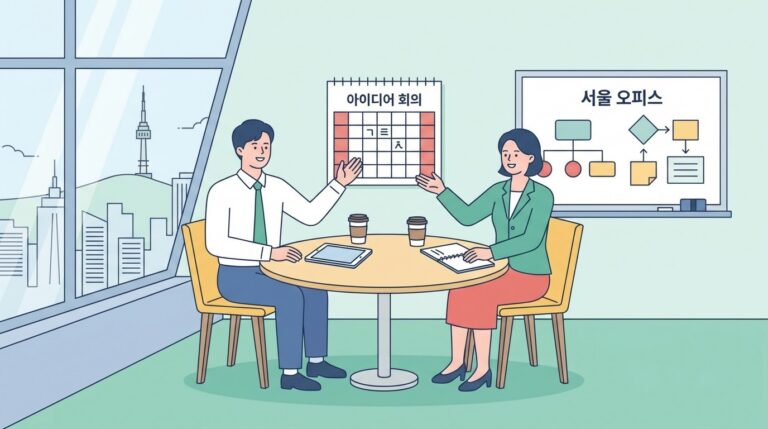
Picture this: You are sitting in a sleek glass conference room overlooking the buzzing skyline of Teheran-ro in Gangnam. Your team has just hit an unexpected roadblock with a high-stakes client. The room falls dead silent. All eyes shift to you. Should you embody the resolute, directive force often celebrated in classic K-dramas—standing up, taking full command, and declaring, “Follow me!”? Or should you adopt the nuanced, modern approach gaining massive ground in Seoul’s tech corridors—quietly reassuring your team from behind, clearing obstacles so they can shine?
If you have ever felt paralyzed choosing between traditional charismatic authority (카리스마 리더십) and modern servant mentorship (서번트 리더십) in a Korean workplace, you are not alone. As an advanced (C1) Korean speaker, knowing basic honorifics is no longer enough; you need the exact strategic phrasing to project either executive decisiveness or empathetic support without sounding overbearing or insecure. Based on over a decade of coaching foreign directors and team leads at multinational firms in Seoul, this guide breaks down the real linguistic playbook of Korean leadership. Let’s elevate your corporate presence to native fluency.
Phase 2: 핵심 표현 3선 심층 분석 (Core Leadership Expressions)
1. 제가 뒤에서 든든하게 받쳐 드리겠습니다. (Je-ga dwie-seo deundeun-ha-ge batchyeo deu-ri-get-seum-ni-da.)
- Pronunciation: [Je-ga dwie-seo deun-deun-ha-ge bat-chyeo deu-ri-get-seum-ni-da] (Think of “deundeun” sounding like a hearty, grounding thud of a solid oak pillar)
- Meaning: Literal: “I will firmly support you from behind.” | Real Nuance: “Go ahead and take bold ownership; I have your back and will protect you from any organizational fallout.”
- K-Culture Moment: Seen in contemporary workplace dramas like Search: WWW or Start-Up, where an empathetic director encourages junior developers to pitch radical ideas without fear of backlash.
- Editor’s Insight: This is the quintessential hallmark of Korean servant leadership. Notice the verb 받치다 (to prop up / underpin) combined with 든든하게 (reliably / stoutly). It conveys quiet emotional safety rather than micromanagement.
- Situation Spectrum: Casual 🚫 | Semi-formal ⚠️ | Formal ✅
- 🤔 Think About It: In many Western companies, leaders lead “from the front.” Why do modern Korean subordinates value a leader who offers support “from behind” (뒤에서)? How does this reflect the desire to avoid public embarrassment (체면)?
2. 이번 프로젝트는 제가 총대를 메겠습니다. (I-beon peuro-jek-teu-neun je-ga chong-dae-reul me-get-seum-ni-da.)
- Pronunciation: [I-beon peu-ro-jek-teu-neun je-ga chong-dae-reul me-get-seum-ni-da] (Chong-dae sounds like a sharp rifle sling catching your shoulder)
- Meaning: Literal: “I will carry the rifle for this project.” | Real Nuance: “I take absolute accountability for this high-risk decision; if it fails, I take the bullet.”
- K-Culture Moment: Classic charismatic leaders in corporate thrillers like Misaeng (Incomplete Life) or Agency step forward with this phrase when facing boardroom hostility to shield their division.
- Editor’s Insight: Originating from military imagery, 총대를 메다 represents peak charismatic sacrifice. It does not mean you will do all the work; it means you absorb all political liability.
- Situation Spectrum: Casual ⚠️ | Semi-formal ✅ | Formal ✅
- 🤔 Think About It: How does this phrase redefine charisma from “telling people what to do” to “absorbing organizational risk on behalf of others”?
3. 실무진의 의견을 적극 수렴하여 방향타를 잡겠습니다. (Sil-mu-jin-ui ui-gyeon-eul jeok-geuk su-ryeom-ha-yeo bang-hyang-ta-reul jap-get-seum-ni-da.)
- Pronunciation: [Sil-mu-ji-nui ui-gyeo-neul jeok-ggeuk su-ryeom-ha-yeo bang-hyang-ta-reul jap-get-seum-ni-da] (Bang-hyang-ta glides smoothly like a ship’s rudder steering calm waters)
- Meaning: Literal: “I will actively gather working-level opinions and hold the rudder.” | Real Nuance: “I will listen to the subject matter experts on the ground, but I will make the final executive strategic call.”
- K-Culture Moment: An executive leader addressing an all-hands town hall meeting, balancing horizontal consultation with executive decisiveness.
- Editor’s Insight: This phrase masterfully blends both styles. 수렴하다 (to converge/collect feedback) honors servant leadership, while 방향타를 잡다 (holding the rudder) demonstrates steady charismatic steerage.
- Situation Spectrum: Casual 🚫 | Semi-formal ⚠️ | Formal ✅
- 🤔 Think About It: Notice the word 실무진 (working-level team). Using this instead of 직원들 (employees) honors their technical expertise while keeping your strategic hierarchy intact.
Phase 3: 교과서 한국어 vs 진짜 한국어 (Textbook vs. Executive Reality)
Situation 1: Taking Responsibility for an Unpopular Strategy
- 📖 교과서 한국어: 제가 이 일의 책임을 지겠습니다. (Je-ga i il-ui chaek-im-eul ji-get-seum-ni-da. / “I will take responsibility for this work.”)
- 🗣️ 진짜 한국어: 결과에 대한 책임은 제가 온전히 질 테니, 소신껏 밀어붙이세요. (Gyeol-gwa-e dae-han chaek-im-eun je-ga on-jeon-hi jil te-ni, so-sin-kkeot mir-eo-but-i-se-yo. / “I will shoulder the entire responsibility for the outcome, so push forward with your convictions.”)
- 💡 Why the difference? Textbook phrasing sounds robotic and defensive. Native executive speech couples accountability (온전히 질 테니) with explicit empowerment (소신껏 밀어붙이세요), instantly inspiring psychological safety.
Situation 2: Delegating and Empowering Team Members
- 📖 교과서 한국어: 팀원들이 일할 수 있게 도와주겠습니다. (Tim-won-deur-i il-hal su it-ge do-wa-ju-get-seum-ni-da. / “I will help the team members work.”)
- 🗣️ 진짜 한국어: 실무진이 역량을 마음껏 펼칠 수 있도록 제가 판을 깔아 드리겠습니다. (Sil-mu-jin-i yeok-ryang-eul ma-eum-kkeot pyeol-chil su it-do-rok je-ga pan-eul kkal-a deu-ri-get-seum-ni-da. / “I will set the stage so our specialists can unleash their full potential.”)
- 💡 Why the difference? The idiomatic idiom 판을 깔아주다 (to lay down the arena/mat) demonstrates that a true leader builds the platform rather than intruding into execution.
Phase 4: K-Culture 딥다이브 & 비언어적 매너 (Deep Dive & Non-Verbal Manners)
4-1. 눈치 (Nunchi) & Body Language Nuances
- The Two-Handed Direction (두 손 제스처): Charismatic leadership in Korea never means pointing with an index finger (삿대질), which is perceived as aggressive and uncultured. When presenting strategic points, gesture with your open palm facing upward, moving both hands in synchrony.
- The Empathetic Gaze (경청의 시선 처리): When practicing servant leadership, avoid prolonged, piercing unblinking eye contact, which subordinates can interpret as interrogation. Instead, nod slowly with a 45-degree angle gaze toward their notebook or presentation screen, indicating you are reviewing data with them, not judging them.
4-2. Cultural Code Analysis: The Evolution of Workplace Dramas
In 1990s and 2000s Korean corporate media, the dominant archetype was the “호랑이 상사” (tiger boss)—a charismatic, autocratic figure who threw folders and commanded blind loyalty. Today, series like Misaeng, My Mister, and Good Manager celebrate leaders who shield juniors from toxic executive politics. Korean workplace culture is currently negotiating a hybrid equilibrium: employees desire a leader with the moral spine (소신) of a charismatic figure, but the humility (겸양) and protective care of a servant mentor.
Phase 5: 실전 롤플레이 시나리오 (Interactive Strategic Meeting)
Setting: A sunlit executive meeting room at a fintech venture in Pangyo. Team Leader Kang (강 팀장) is anxious about an upcoming board review after their new app launch hit server instability.
- 강 팀장: 상무님, 이번 서버 장애 이슈로 이사진의 질책이 만만치 않을 것 같습니다. (Sang-mu-nim, i-beon seo-beo jang-ae i-syu-ro i-sa-jin-ui jil-chaek-i man-man-chi anh-eul geot gat-seum-ni-da.)
🎭 Looking visibly stressed, nervously tapping his tablet stylus. - Alex (You): 강 팀장, 현장에서 고생 많으신 거 잘 알고 있습니다. (Kang tim-jang, hyeon-jang-e-seo go-saeng man-eu-sin geo jal al-go it-seum-ni-da.)
🎭 Nodding calmly with a warm, steady tone. - 강 팀장: 기술팀에서도 원인 분석에 최선을 다하고 있지만 시간이 다소 촉박합니다. (Gi-sul-tim-e-seo-do won-in bun-seok-e choe-seon-eul da-ha-go it-ji-man si-gan-i da-so chok-bak-ham-ni-da.)
🎭 Sighing softly, avoiding direct eye contact out of professional remorse. - Alex (You): 조급해할 것 없습니다. 기술적 디테일은 팀원들과 차분히 정리해 주세요. (Jo-geup-hae-hal geot eop-seum-ni-da. Gi-sul-jeok di-te-ir-eun tim-won-deul-gwa cha-bun-hi jeong-ri-hae ju-se-yo.)
🎭 Leaning forward slightly, placing both hands flat on the conference table. - 강 팀장: 하지만 이사회 보고 자리가 당장 내일 오전인데요… (Ha-ji-man i-sa-hoe bo-go ja-ri-ga dang-jang nae-il o-jeon-in-de-yo…)
- Alex (You): 이사회 브리핑에서 총대는 제가 메겠습니다. (I-sa-hoe beu-ri-ping-e-seo chong-dae-neun je-ga me-get-seum-ni-da.)
🎭 Speaking with firm, resolute clarity while making steady eye contact. - 강 팀장: 상무님께서 직접 방어해 주신다면 실무진이 큰 힘을 얻을 것 같습니다. (Sang-mu-nim-kke-seo jik-jeop bang-eo-hae ju-sin-da-myeon sil-mu-jin-i keun him-eul eot-eul geot gat-seum-ni-da.)
🎭 Shoulders relaxing visibly, bowing head slightly in relief and gratitude. - Alex (You): 여러분이 역량을 발휘할 수 있도록 제가 든든하게 받쳐 드릴 테니, 끝까지 힘내시죠. (Yeo-reo-bun-i yeok-ryang-eul bal-hwi-hal su it-do-rok je-ga deun-deun-ha-ge bat-chyeo deu-ril te-ni, kkeut-kka-ji him-nae-si-jo.)
🎭 Offering a confident smile and nodding encouragingly.
🔀 인터랙티브 분기점 (Branching Decision Point)
How would you conclude the meeting to transition into immediate recovery action?
- Option A: “제가 다 책임질 테니, 여러분은 그냥 하던 대로 하세요.” (Je-ga da chaek-im-jil te-ni, yeo-reo-bun-eun geu-nyang ha-deon dae-ro ha-se-yo. / I’ll take all responsibility, so just keep doing what you were doing.)
- Option B: “제가 바람막이가 되어 드릴 테니, 팀에서는 근본 원인 규명에만 집중해 주십시오.” (Je-ga ba-ram-mak-i-ga doe-eo deu-ril te-ni, tim-e-seo-neun geun-bon won-in gyu-myeong-e-man jip-jung-hae ju-sip-si-o. / I will be your windbreak, so please focus solely on root-cause analysis.)
- Option C: “이러다 다 같이 문책당합니다. 오늘 밤을 새워서라도 끝내세요.” (I-reo-da da gat-i mun-chaek-dang-ham-ni-da. O-neul bam-eul sae-wo-seo-ra-do kkeut-nae-se-yo. / At this rate we’ll all get reprimanded. Pull an all-nighter if needed.)
Feedback:
* Option A [Bad]: Dismissive. By saying “하던 대로 하세요,” you rob the team of ownership and imply their contribution is trivial.
* Option B [Best!]: Perfect C1 hybrid synthesis. Using 바람막이 (windbreak) provides servant protection while establishing clear accountability for results.
* Option C [Risk]: Destructive pressure. Threatening collective punishment damages trust and triggers toxic avoidance behavior.
Phase 6: 10초 감정 섀도잉 드릴 (Executive Shadowing Drills)
Practice these lines aloud with the indicated pause markers (/) and emotional tone anchors:
[💪 결단력 있고 묵직하게 - Resolute & Grounded]
“이번 결정에 대한 비판은 / 제가 온전히 감당할 테니, / 소신껏 추진하십시오.”
(I-beon gyeol-jeong-e dae-han bi-pan-eun / je-ga on-jeon-hi gam-dang-hal te-ni, / so-sin-kkeot chu-jin-ha-sip-si-o.)-
[🤝 신뢰를 주며 따뜻하게 - Reassuring & Supportive]
“어려운 부분은 / 언제든 말씀해 주세요. / 제가 뒤에서 / 확실하게 판을 깔아 드리겠습니다.”
(Eo-ryeo-un bu-bun-eun / eon-je-deun mal-sseum-hae ju-se-yo. / Je-ga dwie-seo / hwak-sil-ha-ge pan-eul kkal-a deu-ri-get-seum-ni-da.) -
[⚖️ 균형 잡힌 카리스마 - Balanced & Strategic]
“실무진의 피드백을 수렴하여, / 조직이 나아갈 올바른 방향타를 / 잡겠습니다.”
(Sil-mu-jin-ui pi-deu-baek-eul su-ryeom-ha-yeo, / jo-jik-i na-a-gal ol-ba-reun bang-hyang-ta-reul / jap-get-seum-ni-da.)
Phase 7: K-Culture 미니 사전 (Executive Vocabulary)
- 총대를 메다 (Chong-dae-reul me-da) | To shoulder the rifle / Take the bullet | Used in executive meetings when volunteering to face board scrutiny or regulatory defense.
- 판을 깔아주다 (Pan-eul kkal-a-ju-da) | To lay out the arena | Represents servant leadership by eliminating bureaucracy and providing funding/resources so subordinates can perform.
- 솔선수범 (Sol-seon-su-beom) | Leading by personal initiative | Hanja idiom (率先垂範) meaning a leader works alongside the crew during crises rather than watching from an ivory tower.
- 바람막이 (Ba-ram-mak-i) | Organizational windbreak | A revered senior who blocks political pressure from higher executives to protect productive engineers or creatives.
Phase 8: 여행자 & 주재원을 위한 생존 키트 (Expat Executive Kit)
Strategic Survival Expressions
- “제가 직접 챙기겠습니다.” (Je-ga jik-jeop chaeng-gi-get-seum-ni-da.)
Pro Tip: Use this with VIP clients or executive directors to demonstrate personal oversight without insulting your subordinates. - “애로사항이 있으시면 편하게 공유해 주십시오.” (Ae-ro-sa-hang-i it-eu-si-myeon pyeon-ha-ge gong-yu-hae ju-sip-si-o.)
Pro Tip: 애로사항 (bottlenecks/difficulties) is the ideal professional euphemism for complaints or project hurdles. - “팀의 노고를 높이 평가합니다.” (Tim-ui no-go-reul no-pi pyeong-ga-ham-ni-da.)
Pro Tip: Say this during formal reviews to acknowledge emotional and physical labor (노고).
Editor’s Travel & Expat Note
Navigating business in Seoul requires agile tools. Coordinate executive dinners near Gangnam or Yeouido using the 캐치테이블 예약 서비스 앱 다운로드 for private dining (룸식당), and stay punctual for critical negotiations via the 네이버 지도 대중교통 경로 확인.
Phase 9: “한 발 더 깊이” (Philosophical Insight)
Traditional Korean management drew from Confucian patriarchal hierarchies, where leaders acted as paternalistic guardians who commanded unquestioned devotion in exchange for lifelong security. However, as dynamic startups and globalized conglomerates redefine the peninsula’s economy, top-down charisma without empathy is rapidly discarded as “꼰대” (condescending traditionalism). True modern Korean leadership synthesizes two ancient values: 의리 (unwavering loyalty/accountability) from charismatic leaders, and 정 (humanistic care) from servant mentors.
💬 Your Turn: In your native culture, is leadership respected more when demonstrated through assertive authority or quiet facilitation? Share your workplace observations in the comments below!
Phase 10: FAQ & 오해 방지 (FAQ Schema)
Q: Does practicing servant leadership in Korea make you look weak or indecisive?
A: Not when paired with clear boundaries. If you use humble language without taking responsibility, you will appear passive. But when you pair support with executive shielding statements like “결과 책임은 제가 집니다” (I take responsibility for the results), your servant approach is perceived as supreme confidence.
Q: Can I use “총대를 메다” when talking directly to the CEO?
A: Yes, but refine the verb ending to formal deferential register: “이번 건은 제가 총대를 메고 완수해 보겠습니다” (I will step up, take responsibility, and see this through). It showcases ambition and courage.
Q: When is traditional charismatic leadership still preferred in Korea?
A: During corporate restructuring, sudden crisis management, or when leading cross-functional teams paralyzed by organizational ambiguity. Subordinates look for an unwavering anchor when external stakes threaten the entire department.
🚨 흔한 실수 (Common Mistakes) Warning Board
- Mistake: Saying “내가 도와줄게” (I’ll help you) to team members in a formal boardroom.
Correct Action: Use “지원해 드리겠습니다” or “판을 깔아 드리겠습니다” to preserve professional dignity. - Mistake: Overusing military slogans like “돌격” (charge) in tech or creative companies.
Correct Action: Modern charisma focuses on mission alignment: “명확한 방향성을 제시하겠습니다” (I will provide clear direction). - Mistake: Taking credit during wrap-up meetings by saying “제가 잘 이끌었습니다” (I led well).
Correct Action: Deflect praise to the team: “실무진이 헌신적으로 뛰어준 덕분입니다” (It is entirely thanks to our working-level team running dedicatedly).
Phase 11: 액션 미션 & 참여 유도 (Action Missions)
- Bronze Mission (Solo Practice): Record yourself delivering the Option B dialogue from Phase 5 using the emotion cues from Phase 6. Listen for natural pacing.
- Silver Mission (Social Sharing): Post one sentence using “총대를 메다” or “판을 깔아주다” in an online study group or on LinkedIn with the hashtag
#DailyHangulLeadership. - Gold Mission (Real Application): In your next real-life sprint planning or team check-in, tell a Korean colleague or partner: “제가 뒤에서 든든하게 받쳐 드릴게요.”
- 🎮 K-Culture Mission: Watch an episode of the drama Misaeng or Start-Up and identify a scene where a manager acts as a “바람막이” (windbreak) for their team.
Phase 12: 인터랙티브 퀴즈 챌린지 (Interactive Quiz)
1. Situational Judgment:
Your development team is afraid to release a bold feature overhaul because upper management might penalize them if metrics dip. Which phrase best demonstrates servant-charismatic leadership?
* A) “실패하면 여러분 책임입니다.”
* B) “결과에 대한 총대는 제가 멜 테니, 소신껏 밀어붙이세요.”
* C) “어차피 안 될 것 같으니 기획을 접읍시다.”
2. Fill-in-the-Blank:
“실무진이 역량을 발휘할 수 있도록 리더가 뒤에서 (____)을/를 깔아주어야 합니다.”
3. True or False:
In modern Korean corporate culture, charismatic leaders maintain authority by pointing their index fingers directly at individuals during presentations. (True / False)
👉 Click to reveal answers & explanations!
- Answer: B | Option B absorbs political fallout while motivating creative execution.
- Answer: 판 | The full idiom is 판을 깔아주다 (to lay down the arena / platform for action).
- Answer: False | Pointing fingers (삿대질) is considered disrespectful in Korea regardless of your seniority. Executives use open upward palms.







