

From Gaemocha to Doggy Omakase: Navigating Korea’s Luxury Pet Culture Like a True Seoulite
Phase 1: Empathy (스토리 몰입형 오프닝)
안녕하세요! 매일한글 에디터입니다.
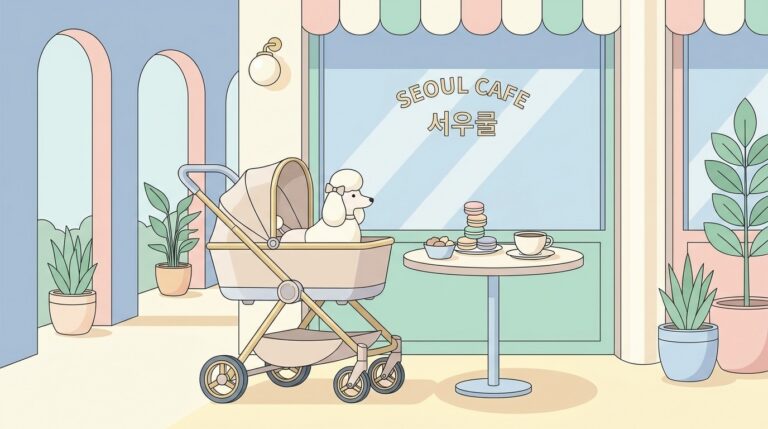
Imagine strolling down the tree-lined promenades of Cheongdam-dong or the aesthetic alleys of Seongsu-dong on a crisp Sunday afternoon. You spot a sleek, bespoke European stroller approaching. You glance inside, half-expecting to see a newborn swaddled in organic cashmere, only to lock eyes with a pampered Bichon Frisé donning a handcrafted tweed vest and matching pearl necklace. Welcome to modern South Korea, where the Petconomy (펫코노미) hasn’t just grown—it has ascended into ultra-luxury stratosphere.
For advanced Korean learners, this socio-cultural shift introduces a subtle linguistic pitfall. If you walk into a Gangnam canine boutique and refer to someone’s companion as an 애완동물 (ae-wan-dong-mul), native speakers might politely wince. That term—rooted in “pet as an ornamental object of amusement”—is practically obsolete among today’s dog and cat parents. Today, pets are 반려견 (ban-ryeo-gyeon), treated as first-born children, and showered with bespoke gourmet meals and five-star wellness retreats.
In this C2-level deep dive, drawn directly from real feedback and immersive linguistic coaching with top-tier expats in Seoul, we bridge the gap between academic Korean and the high-register, nuanced vernacular of Korea’s luxury pet lifestyle. By mastering these socio-cultural nuances, you will converse with discerning pet owners, vet specialists, and lifestyle curators without missing an emotional beat.
Phase 2: 핵심 표현 3선 심층 분석
1. 지갑으로 낳아 가슴으로 키운다 (Ji-gab-eu-ro na-ah ga-seum-eu-ro ki-un-da)
- Pronunciation: [Ji-ga-beu-ro na-a ga-seu-meu-ro ki-un-da] (Think of ‘ji-gahb’ like ‘jeep’ + ‘gawb’, and ‘ga-seum’ flowing like ‘gah-soom’ with a gentle sibilant)
- Meaning: Literal: “Birthed by my wallet, raised by my heart.” | Real Nuance: A humorous yet poignant admission of extreme financial investment in a pet’s wellbeing, acknowledging that unconditional love translates into premium spending.
- K-Culture Moment: Frequently featured on pet-centric YouTube channels like Kang Hyung-wook’s Bodeum TV or celebrity pet vlogs, where stars showcase luxury grooming suites or veterinary MRI receipts with affectionate resignation.
- Editor’s Insight: This phrase satirizes the famous adoptive parent adage “가슴으로 낳았다” (birthed from the heart) by unapologetically introducing the economic reality of the modern Petconomy.
- Situation Spectrum: Casual: ✅ | Semi-formal: ✅ | Formal: ⚠️ (Acceptable in lifestyle panel discussions; avoid in legal/statutory pet regulation contexts)
- 🤔 Think About It: Does your native tongue have idioms that boldly fuse consumer capitalism with maternal or paternal devotion toward animals?
2. 댕댕이 전용 오마카세 (Daeng-daeng-i jeon-yong o-ma-ka-se)
- Pronunciation: [Daeng-daeng-i jeon-yong o-ma-ka-se] (Say ‘Dang-dang-ee’ with an open bright ‘ae’ sound, like ‘dank’ without the ‘k’)
- Meaning: Literal: “Doggie-exclusive omakase.” | Real Nuance: Multi-course, veterinary-certified gourmet meals prepared live by specialized pet chefs using ingredients like sous-vide kangaroo, Jeju horse meat, and organic sweet potato puree.
- K-Culture Moment: Highlighted in trendy lifestyle variety shows where celebrities take their rescue dogs to private dining spaces in Hannam-dong costing upwards of 100,000 KRW per course.
- Editor’s Insight: “댕댕이” (Daeng-daeng-i) originated as Hangeul internet wordplay (야민정음), where the shape of the characters resembling “멍멍이” (meong-meong-i) was reinterpreted. Combining this playful slang with the ultra-posh culinary loanword “오마카세” exemplifies Korean linguistic hybridity.
- Situation Spectrum: Casual: ✅ | Semi-formal: ✅ | Formal: 🚫
- 🤔 Think About It: Notice how the pairing of playful net-slang with an elite culinary term highlights the consumer trend of democratized luxury for companion animals.
3. 개팔자가 상팔자다 (Gae-pal-ja-ga sang-pal-ja-da)
- Pronunciation: [Gae-pal-ja-ga sang-pal-ja-da] (Pronounce ‘pal-ja’ sharply like ‘pahl-jah’, stressing the aspirated ‘p’)
- Meaning: Literal: “A dog’s destiny is the highest destiny.” | Real Nuance: An age-old idiom now revitalized in modern society to describe how companion pets often live more stress-free, luxurious lives than overworked corporate professionals.
- K-Culture Moment: A colleague scrolls through Instagram during overtime, sees an acquaintance’s Maltese relaxing in a heated jacuzzi at a luxury pet resort, and sighs this exact phrase under their breath.
- Editor’s Insight: Historically, this proverb held cynical undertones about uselessness. In 21st-century Seoul, it has transformed into affectionate envy toward animals enjoying the fruits of hyper-capitalism.
- Situation Spectrum: Casual: ✅ | Semi-formal: ✅ | Formal: ⚠️
- 🤔 Think About It: How does this phrase reflect the contrast between Korea’s intense “Hustle Culture” and the tranquility afforded to family pets?
Phase 3: 교과서 한국어 vs 진짜 한국어
Situation 1: Inquiring About Pet Nutrition at a Specialized Boutique
- 📖 교과서 한국어:
“이 애완동물 사료에는 어떤 영양소가 포함되어 있습니까?” (I ae-wan-dong-mul sa-ryo-e-neun eo-tteon yeong-yang-so-ga po-ham-doe-eo it-seum-ni-kka?) - 🗣️ 진짜 한국어:
“저희 아이가 알레르기가 좀 있어서요, 혹시 무항생제 화식이나 동결건조 라인업으로 추천받을 수 있을까요?” (Jeo-hui a-i-ga al-le-reu-gi-ga jom it-seo-seo-yo, hok-si mu-hang-saeng-je hwa-sig-i-na dong-gyeol-geon-jo ra-in-eob-eu-ro chu-cheon-bad-eul su iss-eul-kka-yo?) - 💡 왜 다를까?
Modern pet parents rarely use the mechanical term “사료” (feed). Instead, they specify culinary preparations like “화식” (lightly cooked fresh food) or “동결건조” (freeze-dried), referring to the animal respectfully as “저희 아이” (our child).
Situation 2: Asking a Pet Owner About Their Companion’s Age
- 📖 교과서 한국어:
“당신의 개는 몇 살입니까?” (Dang-sin-ui gae-neun myeot sal-im-ni-kka?) - 🗣️ 진짜 한국어:
“어머, 견생 몇 년 차예요? 털 결 관리받은 거 보니까 완전 귀티 나네요!” (Eo-meo, gyeon-saeng myeot nyeon cha-ye-yo? Teol gyeol gwan-ri-bad-eun geo bo-ni-kka wan-jeon gwi-ti na-ne-yo!) - 💡 왜 다를까?
Direct second-person pronouns like “당신” sound aggressive or detached in spoken Korean. Native speakers substitute humanizing terms like “견생 몇 년 차” (which year of dog-life) coupled with polite aesthetic compliments like “귀티 난다” (exudes refined elegance).
Phase 4: K-Culture 딥다이브 & 비언어적 매너
4-1. 눈치 (Nunchi) & Gestures in High-End Pet Spaces
When encountering an immaculate pet stroller—colloquially called a 개모차 (Gae-mo-cha)—in an upscale departmental café:
1. The Eye-Level Gaze Rule: Never bend directly over the stroller with an outstretched hand. Treat the stroller as an extension of personal territory. Squat down slightly so your gaze is level, maintain an arm’s length distance, and address the owner first: “인사 나눠도 괜찮을까요?” (In-sa na-nwo-do gwaen-chan-eul-kka-yo? / May I say hello?)
2. The Back-of-the-Hand Offer: Present the back of your curled hand at chest height rather than pointing palms outward. This signals non-aggression in canine body language and displays cultured mindfulness to the owner.
3. De-escalating Physical Contact: High-end grooming coats often take hours of salon styling. Compliment visually (“모량이 정말 풍성하네요!” – The coat volume is incredible!) instead of immediately petting the crown of the head, which can crush meticulously groomed fur.
4-2. Cultural Code Analysis: The “Pet Humanization” Wave
In modern Korea, the rapid decline in birth rates and the surge of single-person households (1인 가구) have given rise to the 펫팸족 (Pet-fam Tribe) and 골드펫족 (Gold-Pet Tribe). Pets are no longer mere domestic companions; they occupy the role of children (펫 휴머니제이션 – Pet Humanization).
In dramas like Business Proposal or high-end lifestyle reels, a character’s socioeconomic stature is frequently signaled by their pet’s lifestyle: bespoke hotel check-ins, custom hydrotherapy sessions, and artisanal patisserie designed specifically without dairy, sugar, or wheat. Engaging in this culture requires understanding that expenditure on pets is viewed not as frivolous indulgence, but as an expression of parental accountability and affective devotion.
Phase 5: 실전 롤플레이 시나리오
Setting: Atelier de Chien, a bespoke canine wellness atelier and dietary boutique in Hannam-dong.
Characters:
* Min-woo (민우): Chief Pet Nutrition Concierge, impeccably suited, analytical, warm.
* Camille (카밀): A C2-level professional visiting with her miniature poodle, seeking bespoke catering.
Turn 1: Min-woo
“어서 오세요, 고객님. 오늘 사전 예약해 주신 맞춤형 영양 컨설팅 차 방문하신 카밀 님이실까요?”
(Eo-seo o-se-yo, go-gaek-nim. O-neul sa-jeon ye-yak-hae ju-sin mat-chum-hyeong yeong-yang keon-seol-ting cha bang-mun-ha-sin Ka-mil nim-i-sil-kka-yo?)
“Welcome. Are you Camille, who made the prior reservation for our bespoke nutritional consultation today?”
🎭 [Stands upright, hands lightly clasped in front, offering a warm 15-degree bow]
Turn 2: Camille
“네, 맞아요. 저희 아이가 최근 입맛이 좀 까다로워져서, 오더메이드 화식 플랜을 좀 상담받고 싶어서요.”
(Ne, maj-a-yo. Jeo-hui a-i-ga choe-geun ib-mas-i jom kka-da-ro-wo-jyeo-seo, o-deo-me-i-deu hwa-sik peul-laen-eul jom sang-dam-bad-go sip-eo-seo-yo.)
“Yes, that’s right. My little one has become quite a picky eater lately, so I’d like a consultation regarding a custom-tailored cooked meal plan.”
🎭 [Gently stabilizes her poodle on her lap while making confident, friendly eye contact]
Turn 3: Min-woo
“잘 오셨습니다. 견종 특성상 슬개골이나 알레르기 소인이 있을 수 있는데, 최근 혈액 검사나 알러지 패널 결과지도 지참하셨나요?”
(Jal o-syeos-seum-ni-da. Gyeon-jong teuk-seong-sang seul-gae-gol-i-na al-le-reu-gi so-in-i iss-eul su iss-neun-de, choe-geun hyeol-aek geom-sa-na al-leo-ji pae-neol gyeol-gwa-ji-do ji-cham-ha-syeos-na-yo?)
“You’ve come to the right place. Given the breed, there might be patellar or allergic predispositions; did you bring recent blood test or allergy panel results?”
🎭 [Opens a luxury leather-bound tablet folder to record baseline vitals]
Turn 4: Camille
“그럼요. 동물병원에서 받은 바이오 데이터 파일 다 챙겨왔어요. 가금류 단백질엔 과민반응이 살짝 있더라고요.”
(Geu-reom-yo. Dong-mul-byeong-won-e-seo bad-eun ba-i-o de-i-teo pa-il da chaeng-gyeo-wass-eo-yo. Ga-geum-ryu dan-baek-jil-en gwa-min-ban-eung-i sal-jjak it-deor-a-go-yo.)
“Of course. I brought all the biodata files from the veterinary hospital. Turns out there is a mild hypersensitivity to poultry protein.”
🎭 [Smoothly transfers the digital medical records via tablet]
Turn 5: Min-woo
“데이터를 확인해 보니 호주산 청정 양고기 베이스에 오메가-3와 관절 기능성 펩타이드를 배합한 저온 조리 식단이 이상적일 것 같습니다.”
(De-i-teo-reul hwag-in-hae bo-ni ho-ju-san cheong-jeong yang-go-gi be-i-seu-e o-me-ga-sseu-ri-wa gwan-jeol gi-neung-seong pep-ta-i-deu-reul bae-hab-han jeo-on jo-ri sik-dan-i i-sang-jeog-il geot gat-seum-ni-da.)
“Reviewing the data, a low-temperature cooked formulation blending Australian clean-pasture lamb with omega-3 and functional joint peptides appears ideal.”
🎭 [Nods thoughtfully, presenting visual sample ingredient cards]
Turn 6: Camille
“훌륭하네요. 기호성 테스트용 샘플 패키지도 먼저 급여해 볼 수 있을까요? 입맛에 안 맞으면 그림의 떡이니까요.”
(Hul-ryung-ha-ne-yo. Gi-ho-seong te-seu-teu-yong saem-peul pae-kki-ji-do meon-je geub-yeo-hae bol su iss-eul-kka-yo? Ib-mas-e an maj-eu-myeon geu-rim-ui tteog-i-ni-kka-yo.)
“That sounds superb. Could we try a palatability test sample package first? After all, if it doesn’t suit her palate, even the finest food is just pie in the sky.”
🎭 [Smiles knowingly, gently stroking the dog’s back without disturbing her coat]
Turn 7: Min-woo
“당연하죠. 3일분 스타터 키트를 소분 진공 포장으로 준비해 드리겠습니다. 식이 전환 가이드라인도 동봉해 둘게요.”
(Dang-yeon-ha-jyo. Sam-il-bun seu-ta-teo ki-teu-reul so-bun jin-gong po-jang-eu-ro jun-bi-hae deu-ri-gess-seum-ni-da. Sig-i jeon-hwan ga-i-deu-ra-in-do dong-bong-hae dul-ge-yo.)
“Naturally. We will prepare a 3-day starter kit, vacuum-sealed in individual portions. I will also enclose the dietary transition guidelines.”
🎭 [Places the bespoke starter kit into an insulated eco-canvas tote]
Turn 8: Camille
“세심한 케어 감사드립니다. 매니저님 덕분에 한시름 놓이네요.”
(Se-sim-han ke-eo gam-sa-deu-rim-ni-da. Mae-ni-jeo-nim deog-bun-e han-si-reum noh-i-ne-yo.)
“Thank you for the meticulous care. Thanks to you, manager, a huge weight has been lifted off my shoulders.”
🎭 [Takes the tote with both hands and offers a polite head nod of appreciation]
🔀 Interactive Decision Point (인터랙티브 분기점)
When Camille inquires about scheduling the dog’s weekly hydrotherapy session next, how should she phrase it?
- Option A: “저기요, 우리 강아지 물놀이 스케줄 아무 때나 비는 데로 대충 잡아줘요.”
Feedback: Bad. Overly blunt and dismissive (“아무 때나 대충”), and uses diminutive vocabulary (“물놀이”) in a clinical wellness institution. - Option B: “매니저님, 다음 주 관절 재활 수중 테라피 세션도 이번 식단 시작일에 맞춰 조율해 주실 수 있나요?”
Feedback: Best. Seamless C2 honorific integration, professional specialized lexicon (“관절 재활 수중 테라피”), and elegant syntax. - Option C: “선생님, 이 짐승의 목욕 일정을 예약하고 싶습니다.”
Feedback: Risk. “짐승” (beast/brute) sounds archaic, derogatory, and chilling in modern companion animal settings.
Phase 6: 10초 감정 섀도잉 드릴
Practice these high-frequency phrases with authentic rhythm, pauses (/), and emotional resonance:
[🧐 진지하고 세련되게 / Serious & Refined]
“저희 아이 체질 맞춤형이라 / 원재료 원산지 표기까지 / 꼼꼼하게 따져보게 되더라고요.”
(Jeo-hui a-i che-jil mat-chum-hyeong-i-ra / won-jae-ryo won-san-ji pyo-gi-kka-ji / kkom-kkom-ha-ge tta-jyeo-bo-ge doe-deor-a-go-yo.)
“Because it’s customized to our child’s constitution / I find myself meticulously examining / even the country-of-origin labeling.”-
[🥰 꿀 떨어지는 애정으로 / Overflowing with Affection]
“지갑으로 낳은 내 새끼인데, / 이 정도 유기농 간식쯤이야 / 당연히 플렉스 해줘야죠!”
(Ji-gab-eu-ro na-eun nae saek-ki-in-de, / i jeong-do yu-gi-nong gan-sik-jjeum-i-ya / dang-yeon-hi peul-rek-seu hae-jwo-ya-jyo!)
“She’s my baby born from my wallet; / flexing on organic treats of this caliber / is the absolute least I can do!” -
[😅 유쾌하고 자조 섞인 어조로 / Playful & Self-deprecating]
“이번 달 카드 명세서 보니까 / 제 식비보다 강아지 오마카세 비용이 / 훨씬 더 많이 나왔지 뭐예요.”
(I-beon dal ka-deu myeong-se-seo bo-ni-kka / je sik-bi-bo-da gang-a-ji o-ma-ka-se bi-yong-i / hwol-ssin deo man-i na-wass-ji mwo-ye-yo.)
“Looking at this month’s credit card statement / it turns out my dog’s omakase expenses / far exceeded my own grocery bill!”
Phase 7: K-Culture 미니 사전 (핵심 키워드 4개)
-
개모차 (Gae-mo-cha)
Translation: Dog stroller (Portmanteau of 개 [dog] + 유모차 [baby stroller]).
Usage: Premium pet transport. Often equipped with shock absorbers, UV-blocking canopies, and designer leather trims. Crucial in high-traffic department stores and lifestyle malls that mandate enclosed carriers. -
펫캉스 (Pet-kang-seu)
Translation: Pet staycation (Portmanteau of 펫 [pet] + 바캉스 [vacance]).
Usage: High-end hospitality packages at luxury hotels (e.g., Josun Palace, Grand Walkerhill) offering bespoke dog beds, monogrammed bathrobes, pet-in-room dining menus, and dedicated concierge attendants. -
묘르신 / 견생 (Myo-reu-sin / Gyeon-saeng)
Translation: Venerable Feline Elder (고양이 + 어르신) / Canine Life (견 + 인생).
Usage: Expressions reflecting anthropomorphism and deep respect. Aging cats are affectionately honored as “묘르신,” while a dog’s life journey is referred to as “견생,” emphasizing their existential dignity. -
펫펨족 (Pet-faem-jok)
Translation: Pet-as-Family demographic (Pet + Family + 족 [tribe]).
Usage: A core demographic in Korean consumer analysis referring to households where pets are prioritized identically to human family members in healthcare, housing choices, and leisure spending.
Phase 8: 여행자를 위한 생존 키트
서바이벌 표현 TOP 3
-
“혹시 개모차나 이동장 이용 시 실내 동반 입장 가능한가요?”
(Hok-si gae-mo-cha-na i-dong-jang i-yong si sil-nae dong-ban ib-jang ga-neung-han-ga-yo?)
Pro Tip: High-end spots in Seoul often permit dogs only if they remain inside an enclosed carrier or stroller to prevent shedding and allergen dispersion. -
“야외 테라스 석에 반려동물 리드줄 고정할 수 있는 고리가 구비되어 있나요?”
(Ya-oe te-ra-seu seog-e ban-ryeo-dong-mul ri-deu-jul go-jeong-hal su iss-neun go-ri-ga gu-bi-doe-eo iss-na-yo?)
Pro Tip: Sophisticated cafés in Seongsu or Pangyo often feature leash clips at terrace tables; asking this demonstrates situational etiquette. -
“혹시 멍푸치노에 유당 제거 락토프리 우유가 사용되나요?”
(Hok-si meong-pu-chi-no-e yu-dang je-geo rag-to-peu-ri u-yu-ga sa-yong-doe-na-yo?)
Pro Tip: When ordering a trendy Puppuccino (멍푸치노), verifying that it is lactose-free (락토프리) shows you are well-versed in canine digestive health.
Editor’s Travel Note
- App Essentials: When planning outings with companion animals, use the comprehensive 네이버 지도 반려동물 동반 필터 설정 가이드 to instantly screen verified pet-friendly cafes, clinics, and parks.
- Public Transit Protocol: Pet strollers are welcome on the Seoul Metro system during off-peak hours, provided the pet is fully enclosed within the carrier. Taxis generally require prior notification; utilize the pet option via 카카오 T 펫 서비스 이용 안내 for stress-free transport.
Phase 9: “한 발 더 깊이” (생각 질문)
Korea’s Petconomy boom is inextricably linked to demographic evolution. In a society navigating profound hyper-urbanization, hyper-dense apartment living, and delayed marriage trends, the emotional bandwidth traditionally poured into extended kinship networks is frequently focused on companion animals. Pampering a pet with an organic omakase dinner or a designer travel carriage is not merely status signaling; it is a manifestation of unadulterated emotional sanctuary in a hyper-competitive society. When a society cherishes animals with the linguistic honorifics previously reserved for human kin, it indicates a profound transformation of what constitutes a modern “family.”
💬 Your Turn: In your home culture, how does the emergence of high-end pet products mirror deeper demographic or generational transformations? Share your perspectives in the comments below!
Phase 10: FAQ & 오해 방지 (FAQ Schema)
Q: Why do Korean pet owners refer to their animals as “우리 아이” (our child) instead of “내 개” (my dog)?
A: In contemporary Korean culture, calling a companion animal “우리 아이” reflects the “Pet Humanization” phenomenon. Using “개” or “강아지” directly can sound clinical or emotionally distant to dedicated owners, whereas “아이” naturally evokes maternal or paternal affection and establishes the pet as a cherished family member.
Q: Is the term “애완견” (Ae-wan-gyeon) considered offensive in modern Korea?
A: It is not outright offensive, but it is distinctly outdated and increasingly avoided in polite, culturally progressive circles. The Hanja “완” (玩) connotes a plaything or toy. Using “반려견” (Ban-ryeo-gyeon; lifelong companion dog) demonstrates respect, linguistic refinement, and cultural attunement.
Q: Can I take my dog inside high-end department stores like Hyundai Seoul?
A: Yes, but strict protocols apply. Companion animals are typically allowed in designated areas only if they are placed inside a fully zipped carrier bag or an enclosed 개모차 (pet stroller). Many luxury venues provide stroller rental desks at the concierge on the ground floor.
🚨 Common Mistakes (흔한 실수 TOP 3)
- Mistake: Petting someone’s dog abruptly while cooing “강아지가 너무 귀여워요!”
Correct Action: Ask permission first and use the family-centric reference: “아이가 참 얌전하고 사랑스럽네요. 인사해도 될까요?” - Mistake: Offering commercial treats without asking the guardian.
Correct Action: Never give food without confirmation. High-tier dogs often follow strict functional diets: “혹시 알러지나 식이 제한 있는 아이인가요?” - Mistake: Assuming all outdoor café tables welcome unleashed pets.
Correct Action: Even in pet-designated outdoor areas, local municipal ordinances mandate a leash length under 2 meters at all times.
Phase 11: 액션 미션 & 참여 유도
- 🥉 Bronze Mission (Solo Practice): Stand before a mirror and practice Phase 6’s three shadowing drills, perfecting the natural pause marks (
/) and capturing the affectionate tone of “우리 아이.” - 🥈 Silver Mission (Social Media Engagement): Find an Instagram post featuring a Korean luxury pet cafe (use hashtags like
#댕댕이오마카세or#개모차) and leave an authentic native compliment: “아이 모질이 너무 윤기나고 귀티 나네요! 건강하게 견생 꽃길만 걸어라~” - 🥇 Gold Mission (Real-world Challenge): Next time you visit a Korean pet lifestyle boutique or talk to a Korean pet guardian, intentionally replace 애완동물 with 반려가족 or 반려견, and ask about their companion’s wellness preferences.
- 🎮 K-Culture Mission: Watch an episode of a Korean pet show (such as 개는 훌륭하다 or 세상에 나쁜 개는 없다) and take notes on how trainers and celebrity guests refer to companion animals using anthropomorphic honorifics.
Phase 12: 인터랙티브 퀴즈 챌린지
1. 상황 판단 (Situational Judgment)
You are attending an opening event for a luxury pet hotel in Gangnam. You want to praise a prominent CEO’s well-groomed Welsh Corgi in the most culturally polished, respectful manner. Which phrase is best?
* A) “사장님 집 개는 비싼 사료를 먹어서 그런지 살이 통통하네요.”
* B) “대표님, 아이 털 결 관리가 정말 예술이네요. 견생의 행복이 온몸으로 느껴집니다.”
* C) “이 애완동물은 얼마 주고 분양받으신 건가요?”
🔍 정답 및 해설 확인하기 (Click to reveal)
정답: B
해설: Phrase B uses the respectful “아이,” praises the dog’s coat condition with high-register phrasing (“털 결 관리가 정말 예술이네요”), and utilizes the philosophical term “견생.” Option A is crude (“집 개”, “비싼 사료”), and Option C uses the outdated “애완동물” while inappropriately inquiring about purchase price.
2. 빈칸 채우기 (Fill in the Blank)
Complete the sentence using the correct modern portmanteau for pet-inclusive luxury vacations:
“이번 여름 휴가에는 반려견과 함께 5성급 호텔에서 특별한 (________)를 즐기기로 예약했어요.”
🔍 정답 및 해설 확인하기 (Click to reveal)
정답: 펫캉스 (Pet-kang-seu)
해설: “펫캉스” is the established portmanteau of ‘펫 (Pet)’ and ‘호캉스 (Hotel Vacance)’, capturing the trend of luxury pet hotel staycations.
3. 문화 팩트 체크 (True or False)
Modern Korean pet etiquette dictates that it is completely acceptable to lift the canopy of an unknown dog’s stroller and stroke the pet as long as you do it with a smile.
🔍 정답 및 해설 확인하기 (Click to reveal)
정답: False
해설: An enclosed pet stroller (개모차) is considered a private sanctuary. Opening or touching it without explicit permission from the owner is regarded as an intrusive breach of non-verbal etiquette (눈치 없는 행동).







