

Mastering Shingles Vaccination and Immunity in Korea: A C2 Guide to Clinic Navigation
Phase 1: 공감 (Empathy: The Exhaustion Behind the Rash)
안녕하세요! 매일한글 에디터입니다.
Picture this quintessential K-drama trope: The brilliant, workaholic architect in a high-stakes Seoul firm spends three consecutive weeks pulling all-nighters (야근, yageun) fueled solely by iced Americanos and convenience store red ginseng pouches. Suddenly, on the day of the critical design presentation, sharp, electric twinges shoot across their left ribcage. Within twenty-four hours, a blistering unilateral rash emerges. The diagnosis? 대상포진 (Daesangpojin — Herpes Zoster / Shingles).
In hyper-efficient, high-stress South Korea, shingles isn’t merely an ailment of the elderly; it has become an alarming badge of modern burnout among twenty- and thirty-somethings who push their bodies past breaking point. Navigating a Korean medical clinic (내과 or 가정의학과) to discuss adult vaccines, immunity depletion, and post-herpetic neuralgia requires far more than generic dictionary words. You need nuanced register, clinical precision, and cultural situational fluency. Today, synthesized from the actual clinic experiences of long-term expats and C2 learners, we unpack how to discuss preventative immunization (예방 접종) and immunity revitalization like an articulate local insider.
Phase 2: 핵심 표현 3선 심층 분석 (3 Core Expressions)
1. 대상포진 예방접종을 맞으러 왔는데요. (Daesangpojin yebangjeopjong-eul majeureo watneundeyo.)
- Pronunciation: [Dae-sang-po-jin ye-bang-jeop-jong-eul ma-jeu-reo wan-neu-nde-yo] (Think of ‘po-jin’ like the snap of ‘pore-jean’, ending with a soft, trailing nasal ‘-nde-yo’)
- Meaning: “I came here to get a shingles vaccination.” (Literal) vs. “Hi, I’m checking in specifically to receive the shingles vaccine; please let me know the procedure.” (Nuanced)
- K-Culture Moment: The polite receptionist encounter in modern medical dramas like Hospital Playlist, where a patient registers calmly at the front desk without over-explaining.
- Editor’s Insight: The trailing background marker -는데요 (-neundeyo) softens your statement. Rather than abruptly commanding “Give me a shot,” it opens the floor for the nurse to consult you regarding vaccine brands (e.g., Shingrix vs. Zostavax) and pricing.
- Situation Spectrum: Casual: 🚫 | Semi-formal: ✅ | Formal: ✅
- 🤔 Think About It: Why does Korean healthcare communication rely heavily on ambient clause-ending particles like -는데요 instead of imperative requests? How does this reflect collective deference?
2. 요즘 면역력이 바닥나서 기운이 통 안 나요. (Yojeum myeon-yeoknyeogi badangnaseo giuni tong an nayo.)
- Pronunciation: [Yo-jeum myon-yong-nyeo-gi ba-dang-na-seo gi-u-ni tong an na-yo] (Notice the nasal assimilation: 면역력 sounds like ‘myeon-yeong-nyeok’)
- Meaning: “My immunity has bottomed out lately, and I have zero vitality.” (Literal & Colloquial Nuance)
- K-Culture Moment: Overheard during a heartfelt lunch scene in an office drama like Misaeng, where colleagues confide in each other over piping hot samgyetang.
- Editor’s Insight: 바닥나다 (to hit rock bottom / run out) paired with the intensifying negative adverb 통 (tong — completely/not at all) paints an immediate, vivid picture of systemic somatic depletion that Korean doctors immediately recognize as chronic fatigue syndrome.
- Situation Spectrum: Casual: ✅ | Semi-formal: ✅ | Formal: ⚠️
- 🤔 Think About It: How does the Korean conceptualization of 기운 (vital energy/Qi) shift an illness from a purely biological pathogen to an energetic imbalance within your lifestyle?
3. 접종 후에 생길 수 있는 부작용이나 주의사항이 있나요? (Jeopjong hue saenggil su inneun bujagyong-ina ju-uisahang-i innayo?)
- Pronunciation: [Jeop-jong hu-e saeng-gil su in-neun bu-ja-gyong-i-na ju-ui-sa-hang-i in-na-yo]
- Meaning: “Are there any potential side effects or precautions following the vaccination?”
- K-Culture Moment: The sharp, meticulous patient in a contemporary drama asking the physician before consenting to an elective preventative injection.
- Editor’s Insight: Utilizing 부작용 (adverse side effects) and 주의사항 (precautions/contraindications) marks your speech as linguistically sophisticated (C1-C2 Sino-Korean lexicon), signaling that you are an informed healthcare consumer.
- Situation Spectrum: Casual: 🚫 | Semi-formal: ✅ | Formal: ✅
- 🤔 Think About It: In many Western contexts, patients wait for the doctor to provide a printed disclosure sheet. In Korea, actively asking demonstrates proactiveness and clinical partnership.
Phase 3: 교과서 한국어 vs 진짜 한국어 (Textbook vs. Real-World)
Situation 1: Explaining your physical exhaustion at the triage counter
- 📖 교과서 한국어: 저는 피곤해서 면역 기능이 떨어졌습니다. (Jeoneun pigonhaeseo myeon-yeok gineung-i tteoreojyeotseumnida. / “Because I am tired, my immune function has deteriorated.”)
- 🗣️ 진짜 한국어: 만성 피로가 겹쳐서 면역력이 완전히 무너진 것 같아요. (Manseong piroga gyeopchyeoseo myeon-yeoknyeogi wanjeonhi muneojin geot gat-ayo. / “Chronic fatigue has piled up, so it feels like my immune system has completely collapsed.”)
- 💡 왜 다를까? Textbook phrases sound like clinical lab reports read aloud. Native speakers use evocative verbs like 무너지다 (to collapse/crumble) and 겹치다 (to compound/overlap) to express bodily strain dynamically.
Situation 2: Asking if the clinic carries the recombinant shingles vaccine
- 📖 교과서 한국어: 싱그릭스 백신이 있습니까? (Singgeurikseu baeksini itsseumnikka? / “Is there Shingrix vaccine?”)
- 🗣️ 진짜 한국어: 혹시 사백신인 싱그릭스 재고 남아 있나요? 1, 2차 비용도 여쭤볼게요. (Hoksi sabaeksinin singgeurikseu jaego nama innayo? Il, icha biyongdo yeojjwobolgeyo. / “By any chance, do you have stock of the inactivated Shingrix vaccine left? I’d also like to ask about the cost for doses 1 and 2.”)
- 💡 왜 다를까? Shingles vaccines in Korea are categorized into live (생백신, Zostavax/SkyZoster) and recombinant inactivated (사백신, Shingrix). Advanced speakers specify the vaccine type and inquire about package pricing straightforwardly, as non-reimbursable (비급여) costs vary significantly by clinic.
Phase 4: K-Culture 딥다이브 & 비언어적 매너 (Deep Dive & Nunchi)
4-1. 눈치 (Nunchi) & Clinic Etiquette
- The Discreet Symptom Display: If you already suspect early shingles lesions (stabbing localized neuropathic pain accompanied by red erythema), do not dramatically pull up your shirt at the reception counter. Use discreet verbal framing: “특정 부위에 찌릿한 신경통과 발진이 올라와서요” (I have tingling nerve pain and a rash flaring up in a specific area). The nurse will immediately expedite your triage without causing public discomfort in the waiting lobby.
- Two-Handed Consultation Paper Handling: When the physician hands you the vaccination confirmation certificate (예방접종 증명서) or prescription, accept it with both hands, lowering your shoulders slightly with a respectful nod.
4-2. 문화 코드 분석: The “Ringer Drip” (수액) and Immunity Economy
In Korea, prevention is not passive; it is an aggressive, proactive daily routine. If someone looks pale or mentions their immunity is shot, friends immediately recommend: “병원 가서 영양제 수액 한 대 맞아” (Go to the clinic and get an IV nutrient drip). Korea’s hyper-dense neighborhood clinics cater to this by offering specialized IV cocktail bars (garlic injections 마늘주사, placenta extract 태반주사, high-dose vitamin C). Moreover, getting shingles shots for aging parents has become the ultimate pragmatic “filial gift” (효도 선물). Taking care of the biological engine is viewed as an act of personal accountability to society and family.
Phase 5: 실전 롤플레이 시나리오 (Interactive Clinic Roleplay)
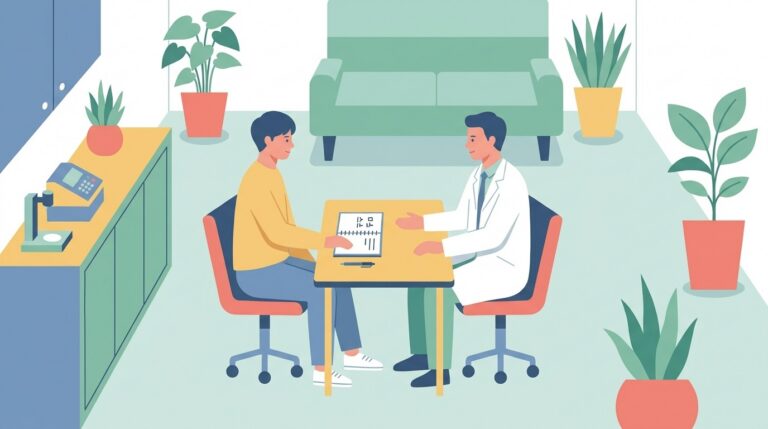
Setting: Seoul Gangnam Family Medicine Clinic (서울 강남 가정의학과). Clean white marble, aroma of eucalyptus sanitizer, soft piano jazz playing.
Characters: You (a conscientious resident preparing for peak winter stress) & Head Nurse Min (warm, sharp, professional).
- You: 안녕하세요, 대상포진 백신 접종 상담 좀 받으러 왔는데요. (Annyeonghaseyo, daesangpojin baeksin jeopjong sangdam jom badeureo watneundeyo.)
🎭 Bowing 15 degrees, presenting your Alien Registration Card politely.
(Hello, I came by to get a consultation regarding the shingles vaccine.) - Nurse Min: 네, 이쪽으로 앉으세요. 혹시 이전에 대상포진을 앓으신 적이 있으실까요? (Ne, ijjogeuro anjeuseyo. Hoksi ijeone daesangpojineul aleusin jeogi isseusilkkayo?)
(Yes, please have a seat here. Have you by any chance suffered from shingles previously?) - You: 직접 앓은 적은 없는데, 요즘 과로 때문에 면역력이 너무 떨어져서 미리 예방하려고요. (Jikjeop aleun jeogeun eomneunde, yojeum gwaro ttaemune myeon-yeoknyeogi neomu tteoreojyeoseo miri yebangharyeogoyo.)
🎭 Touching the side of the neck slightly to convey genuine fatigue.
(I haven’t had it myself, but my immunity has plunged due to overworking lately, so I want to prevent it proactively.) - Nurse Min: 잘 생각하셨어요. 저희 병원에 생백신이랑 사백신 둘 다 구비되어 있는데, 염두에 두신 백신이 있으세요? (Jal saenggakhaseosseoyo. Jeohi byeong-wone saengbaeksini-rang sabaeksin dul da gubidoeeo inneunde, yeomdue dusin baeksini isseuseyo?)
(You made a wise choice. We stock both the live vaccine and the inactivated vaccine; do you have a specific one in mind?) - You: 예방 효과가 90% 이상 지속된다는 사백신 싱그릭스로 맞고 싶어요. 2회 접종 간격이 어떻게 되죠? (Yebang hyogwaga gusip peosenteu isang jisokdoendaneun sabaeksin singgeurikseuro matgo sipeoyo. Ihoe jeopjong gan-gyeogi eotteoke doejyo?)
(I’d like to receive the inactivated Shingrix vaccine, which is known to maintain over 90% efficacy. What is the interval between the two doses?) - Nurse Min: 싱그릭스는 1차 맞으시고 2개월에서 6개월 사이에 2차를 맞으시면 됩니다. 오늘 바로 진료실 들어가실게요. (Singgeurikseuneun ilcha majeusi-go igaeworeseo yukgaewol sa-ie ichareul majeusi-myeon doemnida. Oneul baro jinryosil deureogasilgeyo.)
🎭 Handing over the preliminary screening questionnaire with a smile.
(For Shingrix, after your first dose, you take the second dose within 2 to 6 months. You can head right into the doctor’s consultation room today.) - You: 네, 감사합니다. 접종 당일에 격한 운동이나 음주는 피해야 하죠? (Ne, gamsahamnida. Jeopjong dang-ire gyeokhan undong-ina eumjuneun pihaeya hajyo?)
(Yes, thank you. I should avoid strenuous exercise and drinking on the day of vaccination, correct?) - Nurse Min: 맞습니다! 샤워도 가볍게만 하시고 푹 쉬셔야 항체가 잘 생겨요. (Masseumnida! Sya-wodo gabyeopgeman hasigo puk swisyeoya hangchega jal saenggyeoyo.)
(Precisely! Take only a light shower and get plenty of rest so your antibodies develop properly.)
🔀 인터랙티브 분기점 (Choose Your Response)
Before stepping into the doctor’s office, the nurse asks: “혹시 오늘 다른 감기 기운이나 미열은 전혀 없으신가요?” (Do you have any cold symptoms or a slight fever today?)
- Option A: “전혀 없어요! 컨디션 아주 좋습니다.” (None at all! My condition is great.)
- Outcome (Best): Demonstrates crisp self-awareness. The doctor proceeds directly to the injection after checking vitals.
- Option B: “사실 어제 열이 좀 났는데 약 먹고 참았어요. 그냥 지금 맞을게요.” (Actually, I had a fever yesterday, but took meds and endured it. I’ll just get the shot now.)
- Outcome (Risk): Medically inadvisable. Live and recombinant vaccines during an active febrile episode can cause adverse systemic reactions. The doctor will likely defer the vaccine.
- Option C: “아 몰라요, 의사 선생님이 알아서 확인해 주시겠죠.” (Ah, I don’t know, the doctor will figure it out.)
- Outcome (Bad): Disrespectful to the triage protocol and shows clinical apathy.
Phase 6: 10초 감정 섀도잉 드릴 (Emotional Shadowing Drill)
Practice these natural intonations. Slash (/) marks a micro-pause, and bold syllables carry dynamic stress.
[🤒 지치고 간절하게 / Exhausted and earnest]
요즘 과로가 겹쳐서 / 면역력이 바닥났는데 / 대상포진일까 봐 덜컥 겁이 나요.
(Yojeum gwaroga gyeopchyeoseo / myeon-yeoknyeogi badangnanneunde / daesangpojin-ilkka bwa deolkeok geobi nayo.)-
[💡 단호하고 지적인 문의 / Inquiring decisively and intelligently]
생백신보다는 / 사백신 싱그릭스가 / 예방률이 훨씬 높다고 들어서요 / 비급여 비용이 얼마인가요?
(Saengbaeksin-bodaneun / sabaeksin singgeurikseuga / yebangnyuri hwolssin nopdago deureoseoyo / bigeubyeo biyong-i eolma-ingayo?) -
[🙏 차분하고 신중한 확인 / Calm and cautious confirmation]
접종 부위 근육통이나 / 발열 같은 부작용은 / 보통 며칠 정도 지나면 가라앉나요?
(Jeopjong buwi geunyuktong-ina / baryeol gateun bujagyong-eun / botong myeochil jeongdo jinamyeon gara-annayo?)
Phase 7: K-Culture 미니 사전 (Mini Dictionary)
- 면역력 저하 (Myeon-yeoknyeok Jeoha) | Immune System Depletion
Usage: Frequently cited in corporate sick-leave discussions and health checkup consults. Ex: “면역력 저하로 인한 구내염이 계속 재발하네요.” (Stomatitis keeps recurring due to immune depletion.) - 영양 수액 (Yeongyang Su-aek) | IV Nutrient / Vitamin Drip
Usage: The go-to restorative solution offered in Korean local clinics (동네 의원) to rapidly replenish electrolytes, B-vitamins, and amino acids during extreme fatigue. - 신경통 (Sin-gyeong-tong) | Neuralgia / Nerve Pain
Usage: The defining symptom of shingles. Described as burning, electric, or prickling pain along nerve pathways (신경절). - 실비보험 (Silbi-boheom) | Private Actual-Loss Medical Insurance
Usage: Private insurance carried by nearly all Koreans. While preventive vaccines like Shingrix are generally non-reimbursable, treatment for acute shingles nerve pain is heavily covered.
Phase 8: 여행자와 거주자를 위한 생존 키트 (Survival Kit)
Top 3 Survival Phrases for Clinic Visits
- 대상포진 예방주사 얼마예요? (Daesangpojin yebangjusa eolma-yeyo?)
Pro Tip: Prices for non-covered shots vary widely from clinic to clinic (from 150,000 KRW for live vaccines to 250,000–300,000 KRW per dose for Shingrix). Calling ahead with this phrase saves significant money. - 오늘 샤워해도 되나요? (Oneul sya-wohaedo doenayo?)
Pro Tip: Doctors almost universally advise avoiding baths or showers for 24 hours to prevent secondary bacterial infections at the injection site. - 열이 나면 타이레놀 먹어도 될까요? (Yeori namyeon ta-ire-nol meogeodo doelkkayo?)
Pro Tip: Post-injection chills and localized muscle aches are common with Shingrix. Asking this ensures you get specific guidance on fever management.
Editor’s Travel & Living Note
To locate clinics offering competitive rates for adult immunizations, download the 건강보험심사평가원 비급여 진료비 정보 앱 (HIRA Non-reimbursable Medical Expense Portal) or use the 네이버 지도 앱 다운로드 to search for 내과 (Internal Medicine) or 피부과 (Dermatology). Non-citizens enrolled in the National Health Insurance Service (NHIS / 국민건강보험) can access local clinics seamlessly; simply hand over your ARC card.
Phase 9: “한 발 더 깊이” (Humanities Essay: The Culture of Preventative Armor)
In contemporary Korea, health maintenance is deeply bound to the concept of somatic responsibility. In a society historically defined by rapid industrialization and fierce competition, resting without justification was once viewed with suspicion. Consequently, proactive interventions—such as adult vaccinations, high-potency tonic concoctions (보약), and IV therapy—emerged as legitimate, socially sanctified methods to endure collective pressure. Getting vaccinated against shingles is not seen as an admission of physical fragility; rather, it is viewed as donning high-tech biological armor to sustain one’s craft and protect one’s family from the burden of long-term care.
💬 Your Turn: In your home culture, is adult immunization seen as a routine health hygiene habit, or something reserved strictly for vulnerable seniors? How does your society view overwork-induced illnesses like shingles? Share your thoughts below!
Phase 10: FAQ & 오해 방지 (FAQ Schema)
Q: Can foreign residents in Korea receive the shingles vaccine under National Health Insurance (NHIS)?
A: Shingles vaccines (대상포진 예방접종) are classified as non-reimbursable elective procedures (비급여) for the general adult population under the standard National Health Insurance scheme. Both Koreans and registered foreign residents pay the out-of-pocket clinic fee. However, certain local district public health centers (보건소) provide subsidized or free shots for seniors aged 65 and older who hold registered residence status.
Q: What is the medical difference between Zostavax and Shingrix in Korean clinics?
A: Zostavax (조스타박스) and the domestic SkyZoster (스카이조스터) are live attenuated vaccines (생백신) administered as a single dose. Shingrix (싱그릭스) is an inactivated recombinant vaccine (사백신) requiring two intramuscular doses spaced 2 to 6 months apart. While Shingrix has significantly higher long-term clinical efficacy (>90%), it costs approximately twice as much per dose.
Q: If I already had shingles in the past, do I still need the shot?
A: Yes. The Korean Society of Infectious Diseases recommends receiving the vaccine even after recovering from shingles, as recurrence is common once antibody titers wane. Doctors typically recommend waiting 6 to 12 months after active symptoms and rash have fully resolved before administering the vaccine.
🚨 흔한 실수 (Common Mistakes to Avoid)
- Calling shingles “성병” (STI): Herpes Zoster (대상포진) is caused by the reactivation of the chickenpox virus (Varicella-Zoster), distinct from Herpes Simplex STIs. Mixing them up causes immense awkwardness. Always say 대상포진.
- Telling the receptionist “주사 놔주세요” directly: Using the blunt imperative can sound like you are issuing orders to a medical professional. Instead, say “접종 상담받으러 왔어요” (I came for an immunization consultation).
- Rubbing the injection site (문지르기): While some intramuscular shots require gentle rubbing, modern recombinant vaccines like Shingrix should only be lightly pressed (지그시 누르기). Rubbing increases acute swelling and local inflammation.
Phase 11: 액션 미션 & 참여 유도 (Action Missions)
- 🥉 Bronze Level: Stand before a mirror and practice saying the sentence: “대상포진 예방접종 맞으러 왔는데요. 부작용이나 주의사항이 있나요?” smoothly in one breath.
- 🥈 Silver Level: Go to your social media or language exchange app (e.g., Hellotalk) and write a short entry describing your current immunity state using the phrase “면역력이 바닥나다”.
- 🥇 Gold Level: Visit a local Korean clinic (내과) or pharmacy (약국) and inquire directly: “혹시 대상포진 백신 싱그릭스 접종 비용이 어떻게 되나요?”
- 🎮 K-Culture Mission: Watch an episode of a Korean medical drama (like Hospital Playlist or Dr. Romantic). Listen for characters discussing physical burnout (과로), IV drips (수액), or fatigue symptoms.
Phase 12: 인터랙티브 퀴즈 챌린지 (Quiz Challenge)
1. 상황 판단 (Situational Judgment)
You have arrived at the clinic reception. You want to ask whether you can get the 2-dose recombinant Shingrix vaccine. Which phrase is the most natural, accurate, and culturally polite for a C2 speaker?
* ① 싱그릭스 백신 지금 바로 놓으세요.
* ② 사백신인 싱그릭스로 접종받고 싶은데 오늘 가능한가요?
* ③ 저 면역력 나쁘니까 제일 비싼 주사 줘요.
2. 빈칸 채우기 (Fill in the Blank)
- “요즘 야근이 계속돼서 면역력이 완전히 [ ] 기운이 하나도 없어요.”
- Hint: An idiomatic verb meaning ‘to hit rock bottom / run out completely’.
3. 문화 진위 퀴즈 (True / False)
- Q: In Korea, shingles vaccinations are universally free for all residents of any age under NHIS. (T/F?)
👉 클릭하여 정답과 해설 확인하기 (Click for Answers & Explanations)
- 정답: ②
해설: ① is an impolite imperative. ③ is crude and unspecific. ② demonstrates native clinical vocabulary (사백신, 접종받다) with the softening ending -가요?. - 정답: 바닥나서 (또는 바닥나서요)
해설: 바닥나다 is the natural, native expression for depleted energy, stamina, or immunity. - 정답: False
해설: Adult shingles vaccines are generally elective non-reimbursable procedures (비급여). Free or subsidized shots are only selectively provided by specific municipal public health centers (보건소) for low-income or elderly populations (65+).







