

Why Is the Elevator ‘Close’ Button Always Worn Out in Korea? 🏃💨
Phase 1: 공감 (The Seoul Elevator Experience)
안녕하세요! 매일한글 에디터입니다. (Hello! It’s your Daily Hangul editor here!)
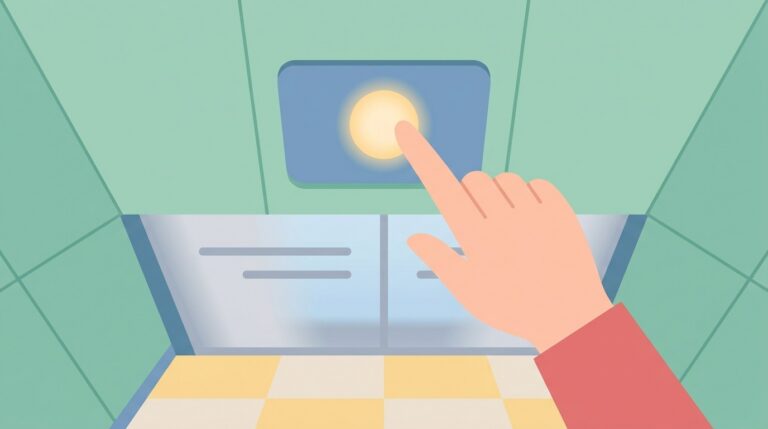
Picture this: You step into an elevator inside a sleek office building in Gangnam. You are admiring the futuristic interior when suddenly, a Korean person in a neat suit darts in. Before the elevator doors even start moving on their own, their index finger taps the 닫힘 (Close) button not once, not twice, but three rapid-fire times! You glance at the control panel and notice something hilarious: while the green 열림 (Open) button looks brand new, the 닫힘 (Close) button has its paint completely scratched off from years of intense pressing.
Did someone do something wrong? Are they angry? Not at all! You have just witnessed the beating heart of Korea’s legendary 빨리빨리 (Ppalli-Ppalli / Hurry-Hurry) culture.
Many of our beginner learners tell us: “I froze when the doors were closing on someone!” or “I didn’t know what to say when someone held the door for me!” Don’t worry. This guide was crafted directly from real field feedback of global travelers and language learners in Seoul. By the end of this lesson, you will master Korean elevator etiquette, unlock 3 essential everyday expressions, and navigate Korean urban life like an effortless local insider.
Phase 2: 핵심 표현 3선 심층 분석 (3 Core Elevator Expressions)
1. 닫을게요! (Dadeulgeyo!)
- Pronunciation: [Da-deul-ge-yo] (Think: “Da” like daddy + “deul” like dull + “geh-yo”)
- Meaning: Literal: “I will close it!” vs Real Nuance: “Heads up! I’m pressing the door-close button now, so please don’t get caught in the door!”
- K-Culture Moment: Seen in fast-paced K-Dramas like Business Proposal or Misaeng, whenever colleagues pack into a crowded lobby elevator during morning rush hour.
- Editor’s Insight: Koreans value collective speed. Saying this aloud makes you look thoughtful because you are warning people while still keeping the flow moving fast.
- Situation Spectrum:
- Casual (Friends): ⚠️ (Better: 닫는다! [Danneunda!])
- Semi-formal (Public/Coworkers): ✅
- Formal (High Executives/Clients): ⚠️ (Better: 문 닫겠습니다 [Mun datgetseumnida])
- 🤔 Think About It: In your country, is pushing the close button considered rude? Why do you think Korean society prioritizes collective time-saving over waiting for automated doors?
2. 먼저 타세요! (Meonjeo taseyo!)
- Pronunciation: [Meon-jeo ta-se-yo] (Think: “Mun” like monday + “juh” + “tah” + “say-yo”)
- Meaning: Literal: “Ride first!” vs Real Nuance: “Please, go right ahead after you!”
- K-Culture Moment: When an elderly neighbor or a parent with a stroller approaches the elevator door just as you arrive.
- Editor’s Insight: Even inside the fast Ppalli-Ppalli rhythm, Korean culture places immense weight on respecting elders and guests. Saying this with a gentle two-hand gesture transforms you into an etiquette master.
- Situation Spectrum:
- Casual: ⚠️ (To close friends: 먼저 타! [Meonjeo ta!])
- Semi-formal: ✅
- Formal: ✅
- 🤔 Think About It: Notice how polite Korean phrases balance speed with consideration. How does language reflect respect for personal space in small elevators?
3. 잠시만요! (Jamsimanyo!)
- Pronunciation: [Jam-si-man-yo] (Think: “Jahm” + “see” + “mahn” + “yo”)
- Meaning: Literal: “Just a little while!” vs Real Nuance: “Excuse me, please let me squeeze through / Hold on a second!”
- K-Culture Moment: When you are stuck in the deepest corner of a packed elevator and your floor chime rings.
- Editor’s Insight: This is the Swiss Army knife of Korean survival words. It works when squeezing past people, holding the door, or asking for someone’s attention.
- Situation Spectrum:
- Casual: ✅
- Semi-formal: ✅
- Formal: ✅
- 🤔 Think About It: Why does Korean use a time-related word (“a moment”) to mean “excuse me” when moving past someone?
Phase 3: 교과서 한국어 vs 진짜 한국어 (Textbook vs. Real Life)
Situation 1: Holding the door for someone rushing over
- 📖 교과서 한국어 (Textbook): 문을 열어 드리겠습니다. (Muneul yeoreo deurigesseumnida. – I shall open the door for you.)
- 🗣️ 진짜 한국어 (Real-life): 천천히 오세요! (Cheoncheonhi oseyeo! – Take your time, come on in!)
- 💡 왜 다를까?: Nobody speaks like a royal guard in daily life! Real Koreans cheer the runner with “천천히 오세요!” while holding down the 열림 button, creating warm micro-solidarity.
Situation 2: Asking someone near the button panel for your floor
- 📖 교과서 한국어 (Textbook): 7층 버튼을 눌러 주시겠습니까? (Chil-cheung beoteuneul nulleo jusigesseumnikka? – Would you please press the 7th floor button?)
- 🗣️ 진짜 한국어 (Real-life): 7층 부탁드립니다! (Chil-cheung butakdeurimnida! – 7th floor, please!)
- 💡 왜 다를까?: In tight spaces, short phrases equal good manners. Clear, concise nouns combined with 부탁드립니다 (Please) keep communication crisp and polite.
Phase 4: K-Culture 딥다이브 & 비언어적 매너 (Nunchi & Elevator Culture)
4-1. 눈치 (Nunchi) & Non-Verbal Manners: The “Button Captain”
If you stand right next to the elevator buttons, congratulations: you have unintentionally been appointed the Button Captain (버튼 기사)!
* The Golden Rule: Hold the 열림 (Open) button whenever someone enters or exits.
* The Head Nod (목례 – Mok-rye): You don’t need a deep 90-degree bow inside a tight box. A slight 15-degree nod of the head while keeping your eyes softly lowered signals respect without awkwardness.
* The Squeeze-Past Wave: When exiting from the back, extend one hand slightly downwards and say “잠시만요! (Jamsimanyo!)” to smoothly part the crowd.
4-2. Culture Code: The Secret of “Ppalli-Ppalli”
Foreigners often mistake Ppalli-Ppalli as pure impatience, but sociological studies in Korea show it is rooted in respect for others’ time. In high-density cities like Seoul, wasting 5 seconds means wasting 5 seconds for the 15 people standing behind you. When someone aggressively mashes the close button, they feel they are doing everyone a favor!
Phase 5: 실전 롤플레이 시나리오 (Interactive Roleplay)
Setting: 8:50 AM on a Monday morning in an office building in Yeouido, Seoul. Rain is pouring outside. The lobby elevator is quickly filling up.
Character: Min-jun (A polite but fast-moving Korean marketing associate carrying two iced Americanos).
- Turn 1 (Min-jun): 🎭 Rushing toward the closing elevator door with wet umbrella in hand “잠시만요! 같이 타요!” (Jamsimanyo! Gachi tayo! / Just a moment! Let me ride together!)
- Turn 2 (You): 🎭 Holding down the Open button with a welcoming smile “천천히 오세요! 타세요!” (Cheoncheonhi oseyeo! Taseyo! / Take your time! Come in!)
- Turn 3 (Min-jun): 🎭 Stepping inside breathlessly, bowing slightly “아, 정말 감사합니다!” (A, jeongmal gamsahamnida! / Ah, thank you so very much!)
- Turn 4 (You): 🎭 Looking toward the floor indicator “몇 층 가세요?” (Myeot cheung gaseyo? / Which floor are you going to?)
- Turn 5 (Min-jun): 🎭 Balancing iced coffees in his hands “저 12층 부탁드립니다!” (Jeo sib-i-cheung butakdeurimnida! / 12th floor for me, please!)
- Turn 6 (You): 🎭 Pressing button 12, then turning slightly to the group “닫을게요!” (Dadeulgeyo! / Closing doors!)
- Turn 7 (Min-jun): 🎭 Relieved sigh, nodding warmly “센스 있으시네요. 좋은 하루 보내세요!” (Senseu isseusineyo. Joeun haru bonaeseyo! / You’ve got great quick wits! Have a great day!)
- Turn 8 (You): 🎭 Nodding with a light smile “네, 좋은 하루 보내세요!” (Ne, joeun haru bonaeseyo! / Yes, have a wonderful day too!)
🔀 Your Interactive Branch Point!
The elevator reaches floor 12. Min-jun is wedged in the back, and the doors are starting to close automatically! What do you do?
- Choice A: Stand still and stare at your phone screen silently.
- 👉 Feedback [Bad]: The automatic sensors might close the doors on Min-jun! In Korea, ignoring someone struggling behind you breaks basic Nunchi etiquette.
- Choice B: Shout “Stop!” in English and block the metal doors with your foot.
- 👉 Feedback [Risk]: High physical risk! Korean elevator sensors can be forceful, and sudden shouting might surprise fellow passengers.
- Choice C: Press the 열림 (Open) button firmly with your finger and announce: “문 잡고 있어요! (Mun japgo isseoyo! – I’m holding the door!)”
- 👉 Feedback [Best 🎉]: Perfection! You protect Min-jun’s morning coffee and demonstrate peak Korean elevator manners.
Phase 6: 10초 감정 섀도잉 드릴 (10-Second Shadowing Drill)
Read aloud with rhythm! Use the slashes / for natural pauses:
[😊 친절하고 배려심 넘치게 - Kind and considerate]
“천천히 / 오세요! / 타세요!”
(Cheoncheonhi / oseyeo! / Taseyo!)-
[⚡ 빠르고 깔끔하게 - Crisp and efficient]
“10층 / 눌러드릴게요! / 닫을게요!”
(Sib-cheung / nulleodeurilgeyo! / Dadeulgeyo!) -
[🙏 공손하고 다급하게 - Polite yet urgent]
“잠시만요! / 저 / 내릴게요!”
(Jamsimanyo! / Jeo / naerilgeyo!)
Phase 7: K-Culture 미니 사전 (Mini Dictionary)
- 닫힘 [Dathim] | Close (Door)
- Essential label on elevator panels. Represented by opposing inward arrows
>|<. Almost always faded or worn out in Korean elevators!
- Essential label on elevator panels. Represented by opposing inward arrows
- 열림 [Yeollim] | Open (Door)
- Represented by outward arrows
<|>. Look closely: this button is usually shiny and pristine.
- Represented by outward arrows
- 빨리빨리 [Ppalli-ppalli] | Hurry-hurry / Quick-quick
- The national cultural mindset prioritizing speed, efficiency, and rapid execution across delivery, internet, transport, and daily interactions.
- 층 [Cheung] | Floor / Level
- Native counter for floors (e.g., 1층 = Il-cheung, 2층 = I-cheung, 지하 1층 = Jiha il-cheung / Basement 1).
Phase 8: 여행자를 위한 생존 키트 (Traveler’s Survival Kit)
Survival Expressions TOP 3
- 내릴게요! (Naerilgeyo!)
- Meaning: “I’m getting off!”
- Pro Tip: Call this out 2 seconds before the door opens if the elevator is packed like a sardine can.
- 몇 층 가세요? (Myeot cheung gaseyo?)
- Meaning: “Which floor are you going to?”
- Pro Tip: If you are standing near the panel, ask this to elderly riders entering after you.
- 감사합니다! (Gamsahamnida!)
- Meaning: “Thank you!”
- Pro Tip: Say it as you exit if someone held the door for you.
Editor’s Travel Note 🧭
When navigating Korean subway stations and shopping malls, elevators can sometimes be tricky to find because escalators are prioritized for speed. Make sure to download and utilize the 네이버 지도 앱 다운로드 to easily locate elevator-accessible exits, transit transfers, and real-time subway car locations!
Phase 9: “한 발 더 깊이” (Cultural Reflection)
To an outside observer, someone frantically pressing the close button inside an elevator might look like stress or impatience. But when you look deeper into Korean collectivism, you discover something fascinating: time is considered a shared communal resource. Saving three seconds for the elevator group is seen as an act of everyday cooperation. When you learn to press the button while announcing “닫을게요!”, you aren’t just speaking Korean—you are tuning your heartbeat to the communal rhythm of Seoul.
💬 Your Turn: Does your home culture prefer waiting patiently for automatic doors, or do you also have “button champions”? Leave a comment below with your elevator stories!
Phase 10: FAQ & 오해 방지 (FAQ Schema)
Q: Is pressing the close button considered impolite in Korea?
A: No! Unlike in some Western countries where pressing close right away might imply you don’t want anyone else entering, in Korea it is widely considered standard efficiency. However, pressing it while someone is running toward you is impolite—always hold it open if someone is approaching!
Q: What should I do if an elderly person enters the elevator?
A: Immediately hold the 열림 (Open) button, take a half-step back to clear physical space, and politely ask: “몇 층 눌러드릴까요? (Myeot cheung nulleodeurilkkayo? – Which floor may I press for you?)”.
Q: How do Koreans read basement floors?
A: Basement levels use the prefix 지하 (Jiha). For example, B1 is 지하 1층 (Jiha il-cheung) and B2 is 지하 2층 (Jiha i-cheung).
🚨 Common Mistakes Warning Board
- ❌ Mistake 1: Grabbing the metal closing door with your bare hand.
- 👉 Correct Action: Press and hold the 열림 (Open) button on the panel instead. Sensors can occasionally malfunction!
- ❌ Mistake 2: Whispering “Excuse me” in English while stuck at the back.
- 👉 Correct Action: Project your voice clearly and pleasantly: “내릴게요! 잠시만요! (Naerilgeyo! Jamsimanyo!)”
- ❌ Mistake 3: Standing in front of the button panel without pressing buttons for others.
- 👉 Correct Action: If you stand in the captain’s spot, be ready to tap buttons for incoming riders or step aside if you don’t feel comfortable.
Phase 11: 액션 미션 & 참여 유도 (Action Missions)
- 🥉 Bronze Mission (Solo): Stand in front of your mirror and practice saying “천천히 오세요!” 5 times with a gentle smile.
- 🥈 Silver Mission (Social): Next time you watch a modern K-Drama, spot an elevator scene! Look at whether someone presses the close button and share your discovery on Instagram or Twitter tagging #DailyHangul.
- 🥇 Gold Mission (Real Life): When visiting Korea or taking an elevator with a Korean speaker, step up as the Button Captain and say “닫을게요!” before the doors slide shut.
🎮 K-Culture Bonus Mission: In the acclaimed drama Misaeng (Incomplete Life), pay attention to the elevator scenes where corporate hierarchy is silently demonstrated by where employees stand inside the elevator box!
Phase 12: 인터랙티브 퀴즈 챌린지 (Interactive Quiz)
1. Situational Judgment:
You are in a crowded Seoul elevator. You need to exit at the 5th floor, but two people are blocking the door. What should you say?
* A) 비켜주세요! (Bikyeojuseyo!)
* B) 내릴게요! 잠시만요! (Naerilgeyo! Jamsimanyo!)
* C) 문 닫을게요! (Mun dadeulgeyo!)
🔍 Click here to reveal the answer & explanation!
Correct Answer: B
Explanation: 내릴게요! 잠시만요! (I’m getting off! Excuse me!) is polite and effective. Choice A is overly blunt and sounds like an order (“Get out of the way!”), while Choice C means “I will close the door!”
2. Fill-in-the-Blank:
When someone is rushing to catch the elevator, hold the door and say:
“_________ 오세요! 타세요!” (Cheoncheonhi oseyeo! Taseyo! – Take your time! Please get on!)
🔍 Click here to reveal the answer & explanation!
Correct Answer: 천천히 (Cheoncheonhi – Slowly / Without rushing)
Explanation: Saying “천천히 오세요” reassures the person that you won’t let the doors close on them.
3. True or False Cultural Quiz:
True or False: In Korea, if the 닫힘 (Close) button’s paint is completely peeled off on an elevator, it means the elevator is broken and unsafe.
🔍 Click here to reveal the answer & explanation!
Correct Answer: False!
Explanation: It just means that hundreds of busy Seoulites have tapped it repeatedly every day! It’s an iconic symbol of Korea’s dynamic Ppalli-Ppalli lifestyle.







