

Phase 1: Empathy (Real-Life Road Trip Connection)
안녕하세요! 매일한글 에디터입니다.
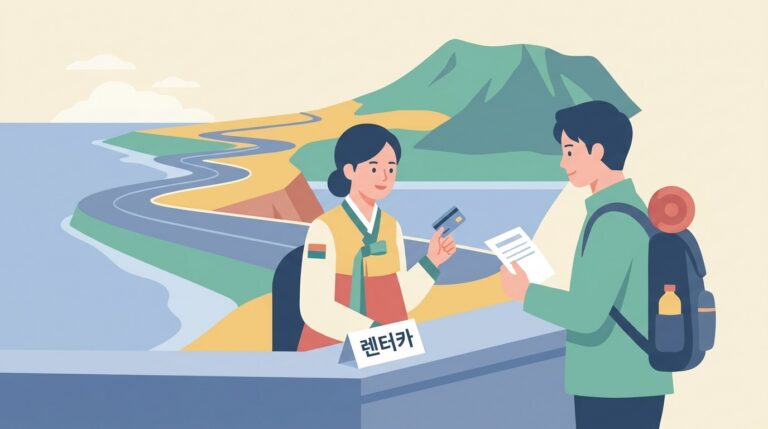
Picture this: You have just landed at Jeju International Airport or arrived at a Gangwon seaside branch, ready to live out your dream coastal road trip straight out of Hometown Cha-Cha-Cha or Welcome to Samdal-ri. The open road beckons, the scenic coastal cafes are pinned on your map, and you can practically smell the ocean breeze. But as you step up to the car rental counter, the staff politely bows and says: “운전면허증 확인 부탁드립니다 (Unjeonmyeonheojeung hwagin butakdeurimnida – May I please check your driver’s license?)”
Suddenly, your heart does a mini-flip. You are standing there juggling your backpack, a passport, an International Driving Permit (IDP), and your home country’s physical plastic card. Which one do you hand over first? What is the polite way to present it in Korean without sounding like a robotic textbook translation?
You are definitely not alone. Over the past decade of coaching foreign travelers, this exact 30-second interaction at the rental desk is where even confident A2 Korean learners freeze up. In this guide, we will break down the exact words, body language, and cultural know-how you need to breeze through the license check like an experienced local traveler!
Phase 2: Core 3 Expressions Deep Dive
1. 면허증 여기 있어요. (Myeonheojeung yeogi isseoyo.)
- Pronunciation: [Myeon-heo-jeung yeo-gi i-sseo-yo] (Think: “Myun-huh-jung yuh-ghee ee-ssuh-yo”)
- Meaning: “Here is my driver’s license.”
- Literal: License here exists.
- Nuance: A friendly, polite standard way to hand over an item at a service counter.
- K-Culture Moment: In modern Korean travel vlogs and dramas, whenever a character rents an electric scooter or car, they hand over their card with this effortless phrase.
- Editor’s Insight: Notice that we drop “저의 (jeoui – my)”. Koreans naturally omit possessive pronouns when the context is obvious. Adding “저의” sounds overly stiff.
- Situation Spectrum: Casual (⚠️ to friends only) / Semi-formal (✅ perfect for counters) / Formal (✅)
- 🤔 Think About It: In English, we usually say “Here you go!” or “Here is my license.” Why do you think Korean drops “my” and focuses on the shared space (“here”) instead?
2. 국제면허증도 보여드릴까요? (Gukjemyeonheojeungdo boyeodeurilkkayo?)
- Pronunciation: [Guk-je-myeon-heo-jeung-do bo-yeo-deu-ril-kka-yo?]
- Meaning: “Shall I show you my international driving permit as well?”
- Literal: International license also shall I show (humbly)?
- Nuance: Proactive, polite, and reassuring. It shows you know Korean rental regulations require both documents.
- K-Culture Moment: Watch any reality show where Korean stars travel abroad; they constantly use the humble “-드릴까요? (-deurilkkayo?)” pattern when offering assistance or documents to service staff.
- Editor’s Insight: The particle -도 (-do) means “also/too”, and 보여드리다 (boyeodeurida) is the humble honorific version of “to show”. Using this shows top-tier manners!
- Situation Spectrum: Casual (🚫) / Semi-formal (✅) / Formal (✅)
- 🤔 Think About It: Notice the built-in humility in “-드리다 (-deurida)” versus the plain verb “주다 (juda)”. How does using humble verbs change how people treat you?
3. 운전자 한 명 더 등록할 수 있어요? (Unjeonja han myeong deo deungnokal su isseoyo?)
- Pronunciation: [Un-jeon-ja han myeong deo deung-no-kal su i-sseo-yo?]
- Meaning: “Can we register one more driver?”
- Literal: Driver one person more register can do?
- Nuance: A practical and essential question if you are traveling with a partner or buddy to share the driving load.
- K-Culture Moment: In friendship travel reality shows like In the SOOP, members always register secondary drivers at the depot before embarking on long road trips.
- Editor’s Insight: In Korea, driving without being officially listed on the rental contract completely voids insurance in case of an accident. Never skip this step!
- Situation Spectrum: Casual (⚠️ with friends) / Semi-formal (✅) / Formal (✅)
- 🤔 Think About It: In many Western contracts, adding a secondary driver has a steep daily fee, but in Korea, it is often free. Why is legal registration emphasized so strongly in Korean service culture?
Phase 3: Textbook Korean vs Real Korean
Situation 1: Handing over your documents
- 📖 교과서 한국어: 이것은 저의 운전면허증입니다. (Igeoseun jeoui unjeonmyeonheojeung-imnida. – “This is my driver’s license.”)
- 🗣️ 진짜 한국어: 면허증 여기 있어요. (Myeonheojeung yeogi isseoyo. – “Here is the license.”)
- 💡 왜 다를까?: Real Koreans avoid full robotic subject-verb declarations at checkout desks. Short, polite phrases that highlight the object being handed over sound much more natural.
Situation 2: Asking if an international permit is accepted
- 📖 교과서 한국어: 이 국제면허증은 유효합니까? (I gukjemyeonheojeungeun yuhyohamnikka? – “Is this international license valid?”)
- 🗣️ 진짜 한국어: 이걸로 확인되나요? (Igeollo hwagindoenayo? – “Can this be verified? / Is this okay?”)
- 💡 왜 다를까?: Rigid legal words like “유효하다 (valid)” make you sound like an auditor. Service interactions prefer soft, indirect verification verbs like “확인되다 (to be verified)”.
Phase 4: K-Culture Deep Dive & Non-Verbal Etiquette
4-1. 눈치 (Nunchi) & Two-Handed Handover (두 손 건네기)
In Korea, non-verbal etiquette speaks louder than grammar. When handing over your driver’s license, credit card, or passport:
1. The Two-Hand Rule: Hold your card with both hands, or hold it with your right hand while lightly touching your right forearm or elbow with your left hand.
2. The Micro-Bow: A slight nod (about 15 degrees) while saying “여기 있어요 (Yeogi isseoyo)” signals immense respect. Handing over an ID casually with one limp hand can unintentionally look indifferent or dismissive.
4-2. The Korean Rental Reality: Jeju Island & The “Golden Trio”
Korea’s domestic road trip culture is famous, especially on Jeju Island where public transit is sparse compared to Seoul. However, Korean car rental agencies are strictly audited by the Ministry of Land, Infrastructure and Transport. To drive legally, foreign tourists must present the Golden Trio:
1. Physical Home Country Driver’s License
2. Physical International Driving Permit (Geneva or Vienna Convention, depending on treaty)
3. Passport
Pro-tip: Digital photos on smartphones are strictly rejected by law! Always have the physical hard copies ready on the counter.
Phase 5: Real-Life Roleplay Scenario
Setting: Jeju Airport Rental Car Lounge. Friendly agent Min-su greets Alex behind the sleek counter.
- 민수 (Min-su): 어서 오세요! 예약자 성함이 어떻게 되세요? (Eoseo oseyo! Yeyakja seonghami eotteoke doeseyo? / Welcome! What is the name under the reservation?)
🎭 밝게 웃으며 모니터를 본다 (Smiles brightly and checks the monitor) - 알렉스 (Alex): 안녕하세요. 알렉스 스미스로 예약했어요. (Annyeonghaseyo. Alex Smith-ro yeyakaesseoyo. / Hello. I made a reservation under Alex Smith.)
🎭 여권을 준비하며 답한다 (Prepares passport and responds) - 민수 (Min-su): 네, 확인되었습니다. 운전면허증 확인 부탁드립니다. (Ne, hwagindoeeotseumnida. Unjeonmyeonheojeung hwagin butakdeurimnida. / Yes, verified. May I please check your driver’s license?)
🎭 단말기 서류함을 가리킨다 (Points toward the counter tray) - 알렉스 (Alex): 네, 면허증 여기 있어요. (Ne, myeonheojeung yeogi isseoyo. / Yes, here is my license.)
🎭 두 손으로 카드를 공손히 건넨다 (Politely hands over card with both hands) - 민수 (Min-su): 혹시 국제운전면허증도 같이 있으신가요? (Hoksi gukje-unjeonmyeonheojeungdo gachi itsusin-gayo? / By any chance, do you also have your International Driving Permit?)
🎭 눈을 마주치며 확인한다 (Makes friendly eye contact) - 알렉스 (Alex): 네, 국제면허증도 여기 드릴게요. (Ne, gukjemyeonheojeungdo yeogi deurilgeyo. / Yes, I’ll hand you the international license right here.)
🎭 책자형 면허증을 함께 펼쳐 건넨다 (Hands over the booklet together) - 민수 (Min-su): 감사합니다. 추가 운전자 등록 필요하세요? (Gamsahamnida. Chuga unjeonja deungnok piryohaseyo? / Thank you. Do you need to register an additional driver?)
🎭 서명 패드를 준비한다 (Prepares the digital signature pad) - 알렉스 (Alex): 아니요, 저 혼자 운전해요. (Aniyo, jeo honja unjeonhaeyo. / No, I will drive alone.)
🎭 고개를 살짝 끄덕인다 (Nods lightly)
🔀 Interactive Decision Point
If the clerk asks you for additional identification, what do you say?
- Option A: “여권도 같이 보여드릴까요? (Yeogwondo gachi boyeodeurilkkayo? – Shall I show my passport as well?)”
- Feedback: BEST! Proactive, polite, and speeds up the paperwork instantly.
- Option B: “왜요? 면허증 줬잖아요. (Waeyo? Myeonheojeung jwotjanhayo. – Why? I already gave you my license.)”
- Feedback: BAD. Defensive and uses informal phrasing that creates awkward tension.
- Option C: “핸드폰에 사진 있어요. (Haendeupone sajin isseoyo. – I have a photo on my phone.)”
- Feedback: RISK. Korean rental laws reject phone photos. You risk being denied the rental car.
Phase 6: 10-Second Emotion Shadowing Drill
Practice matching the cadence / and emotional tone markers:
[😊 정중하고 친절하게 / Polite & pleasant]- 네, / 면허증 / 여기 있어요. (Ne, / myeonheojeung / yeogi isseoyo.)
[🤔 차분하게 확인하며 / Calm & verifying]- 국제면허증도 / 같이 / 드릴까요? (Gukjemyeonheojeungdo / gachi / deurilkkayo?)
[🤝 명확하고 확실하게 / Clear & confident]- 운전자 / 한 명 더 / 등록할게요. (Unjeonja / han myeong deo / deungnokalgeyo.)
Phase 7: K-Culture Mini Dictionary
- 운전면허증 (Unjeonmyeonheojeung): Driver’s license. The standard physical driving credential.
- 국제운전면허증 (Gukje-unjeonmyeonheojeung): International Driving Permit (IDP). A gray paper booklet required alongside your domestic card.
- 제2운전자 / 추가 운전자 (Je-i-unjeonja / Chuga unjeonja): Secondary or additional driver registered under the rental policy.
- 완전자차 (Wanjeonjacha): Super Collision Damage Waiver (Zero-deductible CDW). The most recommended insurance choice for tourists in Korea.
Phase 8: Traveler’s Survival Kit
Top 3 Survival Expressions
- 여권도 필요하세요? (Yeogwondo piryohaseyo?)
- Meaning: Do you need my passport too?
- Pro Tip: Keep your passport tucked behind your IDP booklet for immediate presentation.
- 이걸로 본인 확인 되나요? (Igeollo bonin hwagin doenayo?)
- Meaning: Can this be used for identity verification?
- Pro Tip: Useful when dealing with varying formats of international licenses.
- 차량 손상 사진 찍어도 돼요? (Charyang sonsang sajin jjigeodo dwaeyo?)
- Meaning: May I take photos of existing vehicle scratches?
- Pro Tip: Always photograph bumper scuffs and wheel rims before leaving the lot.
Editor’s Travel Note
Before picking up your car, remember that Google Maps does not support full turn-by-turn driving directions in Korea due to local security regulations. Be sure to check the 네이버 지도 앱 다운로드 (Download Naver Map App) or KakaoMap in advance. Also, check whether your rental vehicle has a Hi-Pass unit (하이패스) for automated expressway toll payments!
Phase 9: 한 발 더 깊이 (One Step Deeper)
In Korean administrative culture, handing over official credentials is treated with deliberate gravity. When you offer an official license with both hands and say “여기 있어요 (Yeogi isseoyo)”, you are acknowledging mutual respect in a professional encounter. It reflects the broader cultural philosophy of Sangho-jonjung (상호존중 – mutual respect), transforming a simple commercial transaction into a cooperative, warm exchange.
💬 Your Turn: Have you ever experienced a moment in another country where body language mattered just as much as speaking the language? Share your story in the comments below!
Phase 10: FAQ & Common Mistakes
Q: Can I drive in Korea using only an International Driving Permit (IDP) without my original home license?
A: No! By Korean law, an IDP is only considered valid when presented together with your original home country physical license and passport.
Q: Can I show a digital driver’s license from my government app?
A: Currently, foreign digital driver’s license apps are generally not accepted by Korean rental agencies. You must present the physical plastic card.
Q: Do both drivers have to be present at the desk to register an additional driver?
A: Yes. Both the primary and secondary drivers must be physically present at the counter with their original licenses to sign the indemnity paperwork.
🚨 Common Mistakes Alert Box
- Mistake 1: Tossing the card onto the counter with one hand.
- Correct Action: Always hand the card over with both hands or a supported wrist.
- Mistake 2: Forgetting the Geneva/Vienna treaty requirement.
- Correct Action: Ensure your IDP explicitly states 1949 Geneva or 1968 Vienna Convention compliance.
- Mistake 3: Assuming someone else can drive without registering.
- Correct Action: Explicitly ask “운전자 추가할게요 (I will add a driver)” at the desk.
Phase 11: Action Missions
- Bronze Mission (Solo Practice): Stand before a mirror with an ID card. Practice bowing slightly and saying “면허증 여기 있어요 (Myeonheojeung yeogi isseoyo)” using two hands three times.
- Silver Mission (Shadowing): Record an audio clip on your phone practicing the 3 sentences in the Phase 6 drill until the cadence sounds natural.
- Gold Mission (Live Prep): Next time you visit a Korean establishment or rental desk, hand over your payment card using the two-handed method while saying “여기 있어요 (Yeogi isseoyo)”.
- 🎮 K-Culture Mission: Search for a Korean travel vlog of Jeju Island on YouTube and spot how tourists interact with counter clerks when collecting their rental vehicles!
Phase 12: Interactive Quiz Challenge
1. Situational Judgment:
The rental clerk asks for your driver’s license. What is the most natural and polite phrase to say while handing it over?
* A) 이거 봐요. (Igeo bwayo.)
* B) 면허증 여기 있어요. (Myeonheojeung yeogi isseoyo.)
* C) 면허증을 주었습니다. (Myeonheojeungeul jueotseumnida.)
2. Fill-in-the-Blank:
Shall I show my international permit as well?
국제면허증____ 보여드릴까요? (Hint: The particle meaning ‘also/as well’)
3. True or False:
Taking a screenshot of your overseas driver’s license on your smartphone is sufficient to rent a car in South Korea.
* True / False
👉 Click to reveal answers & explanations!
- Answer: B – “면허증 여기 있어요” is natural, polite, and standard for counter transactions. (A is rude, C is grammatically awkward).
- Answer: 도 (-do) – The full sentence is “국제면허증도 보여드릴까요?”
- Answer: False – Physical original documents (Domestic License + IDP + Passport) are legally required by Korean car rental agencies.







