

Navigating Korean Subway Etiquette: The Unspoken Social Code of Priority Seating
Phase 1: Empathy (Story Immersion Opening)
안녕하세요! 매일한글 에디터입니다.
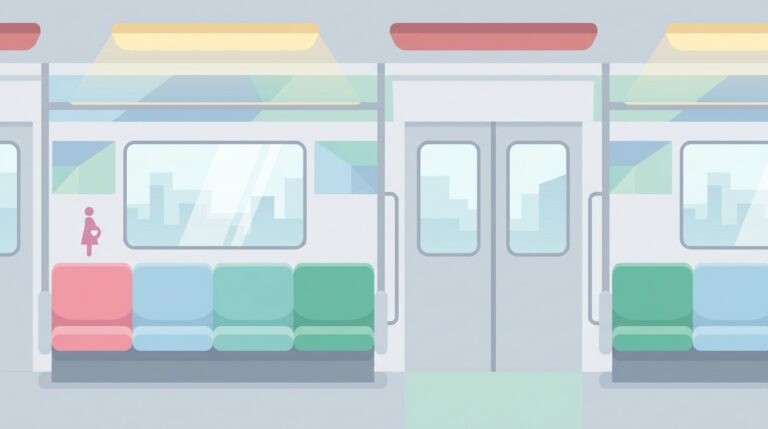
Imagine this: It is 6:45 PM on Seoul Metro Line 2. You are surrounded by a shoulder-to-shoulder sea of commuters after an exhausting ten-hour day. Your legs are trembling, your lower back aches, and suddenly, you spot an empty seat right by the carriage doorway. It gleams under the fluorescent lights like an oasis. But wait—the seat is draped in bright pink, or perhaps situated at the partitioned carriage end under a sign reading ‘교통약자석’ (Seats for the Transportation Vulnerable). The car is packed, yet nobody touches that seat. A foreign commuter, unaware of the unspoken gravitational field surrounding it, casually sits down. Instantly, an ambient chill settles over the immediate radius. Glances shift. Smartphones tilt downwards. The air thickens with what Koreans call nunchi (눈치).
If you have ever felt paralyzed between physical exhaustion and the dread of committing an accidental social faux pas on Korean transit, you are not alone. As an advanced C2 learner, your challenge is no longer merely asking for directions; it is deciphering the collective conscience and unwritten social contracts of Korean society. Based on hundreds of real coaching sessions with advanced expats, diplomats, and business professionals, this guide deconstructs the profound cultural philosophies, sociolinguistic nuances, and high-register expressions governing priority seating. Master this, and you will not just ride the subway—you will navigate Korean communal life like an enlightened local insider.
Phase 2: Top 3 Core Expressions In-Depth Analysis
1. 자리 양보해 드릴까요? (Jari yangbohae deurilkkayo?)
- Pronunciation: [Ja-ri yang-bo-hae deu-ril-kka-yo?] (Think of ‘yang-bo’ as ‘yahng-boh’, spoken with a gentle, rising terminal intonation like asking a favor rather than offering charity)
- Meaning: Literal: “Shall I concede my seat?” | Nuanced: “Would you care to have this seat, if it pleases you?”
- K-Culture Moment: Seen frequently in slice-of-life K-dramas like My Mister (나의 아저씨), where a weary young adult quietly assesses an elder carrying heavy grocery sacks before offering their seat without drawing attention.
- Editor’s Insight: The verb ‘양보하다’ (to concede/yield) paired with the deferential auxiliary ‘드리다’ (to give to an esteemed person) removes any patronizing undertone. At the C2 level, note that asking too abruptly can inadvertently cause an elder to feel aged or embarrassed; delivering this softly while preparing your body to stand preserves the other person’s chemyeon (체면, face/dignity).
- Situation Spectrum: Casual 🚫 | Semi-formal ✅ | Formal ✅
- 🤔 Think About It: In many Western individualistic societies, presuming someone needs a seat might imply they appear frail. How does the Confucian virtue of deference transform this assumption from an insult into an act of communal respect?
2. 비워두는 게 원칙이에요 (Biwodu-neun ge wonchik-ieyo)
- Pronunciation: [Bi-wo-du-neun ge won-chi-gi-e-yo] (Resonates like ‘bee-woh-doo-neun geh won-chik-ee-eyo’, with a steady, matter-of-fact cadence)
- Meaning: Literal: “Leaving it vacant is the principle.” | Nuanced: “The consensus here is to leave it empty regardless of whether anyone is currently using it.”
- K-Culture Moment: An enlightened character in a modern workplace drama gently informing a new foreign hire why no one occupies the pink pregnant women’s seat on an otherwise jam-packed train.
- Editor’s Insight: This phrase uses the nominalized form ‘비워두는 것’ alongside ‘원칙’ (fundamental rule/principle). It serves as an objective, emotionally neutral justification that depersonalizes social friction. It does not scold; rather, it invokes civic consensus.
- Situation Spectrum: Casual ⚠️ | Semi-formal ✅ | Formal ✅
- 🤔 Think About It: Why does Korean society often institutionalize absolute vacancies rather than conditional occupancies in civic spaces?
3. 몸이 불편하신 분 먼저 앉으세요 (Momi bulpyeonhasin bun meonjeo anjeuseyo)
- Pronunciation: [Mo-mi bul-pyeon-ha-sin bun meon-jeo an-jeu-se-yo] (Smooth liaison where ‘bul-pyeon-ha-sin’ flows gently without sharp consonant bursts)
- Meaning: Literal: “Those whose bodies are uncomfortable, please sit first.” | Nuanced: “Please, take the seat if you are feeling unwell or have mobility needs.”
- K-Culture Moment: An announcement or a conscientious commuter stepping back to invite someone who is limping or visibly fatigued to sit down without labeling them disabled.
- Editor’s Insight: The euphemism ‘몸이 불편하다’ is an exemplary showcase of high-context Korean linguistic care. Instead of specifying pregnancy, disability, or elderly fragility, it graciously covers all physical distress under a single respectful umbrella.
- Situation Spectrum: Casual 🚫 | Semi-formal ✅ | Formal ✅
- 🤔 Think About It: Notice how Korean syntax prioritizes the recipient’s state of being over the speaker’s generosity. What does this reveal about interpersonal hierarchy in public domains?
Phase 3: Textbook Korean vs. Real Native Korean
Situation 1: Offering your seat to an elderly passenger
- 📖 교과서 한국어: 어르신, 여기 앉으십시오. 제가 일어나겠습니다. (Eoreusin, yeogi anjeusipsio. Jega ireonagesseumnida. / “Elder, please sit here. I shall stand up.”)
- 🗣️ 진짜 한국어: 여기 앉으세요, 저 곧 내려요. (Yeogi anjeuseyo, jeo got naeryeoyo. / “Please take this seat; I am getting off soon anyway.”)
- 💡 왜 다를까?: Textbook phrasing can sound theatrical and place an uncomfortable psychological debt (부담, burden) on the recipient. Native Koreans often tell a polite white lie (“I’m getting off soon”) even if their destination is ten stops away, allowing the elder to accept the seat guilt-free.
Situation 2: Explaining why the pink maternity seat is unoccupied
- 📖 교과서 한국어: 저 자리는 임산부를 위한 지정석이므로 앉으면 안 됩니다. (Jeo jarineun imsanbureul wihan jijeongseogimeuro anjeumyeon an doemnida. / “Because that seat is a designated seat for pregnant women, you must not sit there.”)
- 🗣️ 진짜 한국어: 거기는 초기 임산부 배려해서 비워두는 분위기더라고요. (Geogineun chogi imsanbu baeryeohaeseo biwodu-neun bunwigideoragoyo. / “The prevailing norm is to keep that empty out of consideration for early-stage pregnant mothers.”)
- 💡 왜 다를까?: Native speakers avoid dogmatic prohibition (‘~하면 안 됩니다’) when speaking to peers about civic habits. Instead, they frame it via the collective atmosphere (‘분위기’) and empathize with less visible vulnerabilities (‘초기 임산부’).
Phase 4: K-Culture Deep Dive & Non-Verbal Manners
4-1. Nunchi & Silent Gestures
In Korean public transportation, silence is golden, but mindful spatial awareness is diamond. Priority seats at the ends of carriages (노약자석) are historically reserved for the elderly, disabled, and injured. Sitting there as an able-bodied young adult—even on a desolate 11:30 PM train—is universally taboo.
When yielding a regular seat:
1. The Averted Gaze: Do not lock eyes and point dramatically at the seat. Lightly tap their attention, offer a subtle nod at an angle of 15 degrees, say “여기 앉으세요” (Please sit here), and instantly vacate your position.
2. The Clean Disengagement: Move at least two steps away toward the exit doors or grab an overhead handle elsewhere. If you stand right in front of the seated elder, they may feel watched and uneasy.
4-2. Cultural Code Analysis: The Debate on ‘임산부 배려석’ (Pink Seats)
Introduced in 2013 across Seoul subways, the pink seat embodies a profound societal shift from traditional Confucian age-based hierarchy to institutional welfare for young families confronting Korea’s ultra-low birth rate. While senior citizens often police the end-carriage seats with overt authority, the pink seat operates under unspoken social peer pressure. Because early pregnancy is virtually invisible, the collective consensus encourages leaving the seat vacant at all times so an expecting mother never has to muster the courage to ask someone to move.
Phase 5: Real-Life Roleplay Scenario
Setting: Seoul Subway Line 3 heading toward Express Bus Terminal during the peak evening rush. The carriage is sweltering and completely packed. You are seated in a standard seat. An elderly woman carrying heavy traditional market bags boards the train.
Characters:
* You: A perceptive C2 learner who understands social subtleties.
* Halmeoni (할머니): A dignified grandmother in her late 70s, trying to maintain her balance.
Dialogue:
1. You: 🎭 (Gently shifting forward and making brief, polite eye contact) 어르신, 이쪽에 앉으세요. (Eoreusin, ijjoge anjeuseyo. / “Please take this seat over here, Ma’am.”)
2. Halmeoni: 🎭 (Hesitating, looking at your tired face) 아이고, 젊은이도 피곤할 텐데 괜찮아, 그냥 가요. (Aigo, jeolmeun-ido pigonhal tende gwaenchana, geunyang gayo. / “Oh dear, you look exhausted too, young person. It’s fine; keep sitting.”)
3. You: 🎭 (Standing up smoothly while holding the handrail, offering a mild smile) 아니에요, 저 마침 다음 역에서 갈아타야 해서요. (Anieyo, jeo machim daeum yeogeseo garatayeo haeseoyo. / “Not at all, I happen to be transferring at the very next station anyway.”)
4. Halmeoni: 🎭 (Relieved, settling her bags onto the floor) 아이구, 고마워요. 요즘 이런 배려 보기 드문데… (Aigu, gomawoyo. Yojeum ireon baeryeo bogi deumunde… / “Oh, thank you so much. Such thoughtfulness is rare these days…”)
5. You: 🎭 (Nodding politely and standing steady) 짐도 무거우신데 편히 앉아서 가세요. (Jimdo mugeousinde pyeonhi anjaseo gaseyo. / “Your bags are heavy as well; please sit comfortably for the ride.”)
6. Halmeoni: 🎭 (Looking up with genuine warmth) 젊은 사람이 마음씨도 곱고 한국말도 참 유창하네. (Jeolmeun sarami maeumssido gopgo hangukmaldo cham yuchanghane. / “You have such a kind heart, and your Korean is remarkably fluent.”)
7. You: 🎭 (Bowing head slightly in modest dismissal) 과찬이십니다. 조심히 들어가세요. (Gwachanisimnida. Josimhi deureogaseyo. / “You flatter me. Please travel safely.”)
8. Halmeoni: 🎭 (Patting your arm gently) 그래요, 오늘 하루도 고생 많았어요. (Geuraeyo, oneul harudo gosaeng manasseoyo. / “Indeed. You worked hard today as well.”)
🔀 Interactive Choice Point:
What if the grandmother vehemently refuses three times, insisting she is strong?
* Choice A: Sit right back down immediately, saying “알겠습니다. 그럼 제가 앉을게요.” (Understood, then I will sit).
* Choice B: Remain standing, step toward the door with a calm smile, and say “서서 가는 게 다리도 펴고 더 편해서요.” (Standing is actually more comfortable for me to stretch my legs).
* Choice C: Insist loudly: “노약자이시니 꼭 앉으셔야 합니다!” (You are elderly, so you must sit!).
Feedback:
* Choice A (Risk): Sitting back down may subtly highlight her vulnerability or make the initial offer appear insincere.
* Choice B (Best): This masterfully absolves her of social indebtedness while preserving her autonomy. You give her the space to claim the seat naturally.
* Choice C (Bad): Categorizing someone explicitly as ‘노약자’ damages their pride and creates awkward public attention.
Phase 6: 10-Second Emotion Shadowing Drill
[😊 배려 깊고 조심스럽게 / Thoughtful & Deferential]
저 다음 정거장에서 / 내릴 예정이라 / 편히 앉으세요.
(Jeo daeum jeong-geo-jang-eseo / nae-ril ye-jeong-i-ra / pyeon-hi an-jeu-se-yo.)
“I am getting off at the next stop anyway, so please sit comfortably.”-
[😌 담담하고 배려심 넘치게 / Composed & Reassuring]
짐이 꽤 무거워 보이시는데 / 여기 무릎 위에 / 올려놓으실래요?
(Ji-mi kkwae mu-geo-wo bo-i-si-neun-de / yeo-gi mu-reup wi-e / ol-lyeo-no-eu-sil-lae-yo?)
“Your bags appear quite heavy; would you like to rest them on my lap?” -
[🤝 정중하고 객관적으로 / Courteous & Objective]
임산부 배려석 배지가 있으신 분께 / 우선권이 있는 / 자리입니다.
(Im-san-bu bae-ryeo-seok bae-ji-ga it-seu-sin bun-kke / u-seon-gwo-ni in-neun / ja-ri-im-ni-da.)
“This seat prioritizes passengers carrying the expectant mother emblem.”
Phase 7: K-Culture Mini Dictionary
-
교통약자 (Gyotong yakja) | The Transportation Vulnerable
- Definition: Legal and administrative terminology referring to individuals with reduced mobility, including pregnant women, seniors, young children, and people with disabilities.
- Societal Usage: Found ubiquitously on transit signs and priority infrastructure.
- 임산부 배려석 (Imsanbu baeryeoseok) | Maternity Courtesy Seat
- Definition: Dedicated pink-colored seats on subways and buses designed for pregnant women.
- Societal Usage: A frequent subject of civic discourse regarding empty seat maintenance versus convenience during extreme rush hours.
- 암묵적 합의 (Ammukjeok habui) | Tacit Consensus / Unspoken Agreement
- Definition: Social expectations governed not by enforceable civil law, but by reciprocal peer pressure and shared ethical codes.
- Societal Usage: Explains why Koreans leave priority seats empty even in total crush loads.
- 자리 양보 (Jari yangbo) | Seat Concession
- Definition: Yielding transit seating to another out of civic duty.
- Societal Usage: Often referenced in generational discussions about evolving youth attitudes versus traditional filial conventions.
Phase 8: Traveler’s Survival Kit
Survival TOP 3 Expressions
- 먼저 앉으세요. (Meonjeo anjeuseyo.)
- Romanization: [Meon-jeo an-jeu-se-yo]
- Pro Tip: Use with an open palm gesture directing toward the vacant seat.
- 여기 자리 났어요! (Yeogi jari nasseoyo!)
- Romanization: [Yeo-gi ja-ri nas-seo-yo]
- Pro Tip: Perfect for notifying a companion or an elder standing nearby that a seat has opened up.
- 잠시만 지나가겠습니다. (Jamsiman jinagagesseumnida.)
- Romanization: [Jam-si-man ji-na-ga-get-seum-ni-da]
- Pro Tip: Far more sophisticated than shouting ‘실례합니다’ when extricating yourself through crowded doorways.
Editor’s Travel Note
- Essential Transit Apps: Download the 네이버 지도 앱 다운로드 (Naver Map app) for real-time crowd congestion monitoring on subway cars. For accessibility alerts and station elevator locations, install the 서울교통공사 또타지하철 앱.
- Transit Etiquette Hack: If you board Subway Line 1 (infamous for high elderly commuter traffic during midday), instinctively steer toward the middle carriages (cars 4–7) to avoid the high-tension territorial zones near the car partitions.
Phase 9: Going One Step Deeper
Public transit in Korea is not simply mobility infrastructure; it is an open-air theater of contemporary social negotiations. As South Korea transitions into a super-aged society with the world’s lowest fertility rates, the subway carriage becomes ground zero where contrasting generational anxieties collide. The silver seats celebrate centuries-old filial piety rooted in Confucianism, while the pink seats represent an urgent institutional plea to support new life. When an expat learns to respect both spaces instinctively, they cross the bridge from being a visiting consumer of K-culture to participating harmoniously in its collective civic identity.
💬 Your Turn: In your home country, is priority seating left empty by default, or occupied until someone eligible boards? How do you perceive the balance between personal utility and collective courtesy? Share your thoughts below!
Phase 10: FAQ & Common Mistakes
Q: Is it legally punishable to sit in the pink ‘임산부 배려석’ if I am not pregnant?
A: No, there is no legal fine or formal penalty. However, doing so attracts intense public disapproval (눈총, laser glares), and commuters may photograph or criticize violators on social media platforms. The universal norm is to leave it empty.
Q: Can an injured young adult with a cast sit in the end-car ‘노약자석’?
A: Technically yes, because ‘교통약자’ includes the temporarily injured. However, be prepared for some seniors to question you if your injury is not immediately glaring. Wearing a visible brace or bandage minimizes unnecessary friction.
Q: What if an elderly passenger abruptly taps me on the shoulder demanding my standard seat?
A: Stay composed. In Korean culture, some older citizens view transit seating through an unbending hierarchy of seniority. The most dignified and stress-free reaction is to stand up with a polite nod and say, “네, 앉으세요” without escalating.
🚨 Common Mistakes Board
- Sitting in the pink seat wearing headphones:
- Risk: Missing an expectant mother standing before you with her small pink badge.
- Correct Action: Keep the seat empty at all times.
- Loudly announcing an offer across the train car:
- Risk: Making the elder feel spotlighted and uncomfortable.
- Correct Action: Approach discretely, offer softly, and relocate quietly.
- Arguing about transit legality:
- Risk: Engaging in futile debates regarding individual rights versus cultural norms.
- Correct Action: Respect local social contracts as a reflection of communal harmony.
Phase 11: Action Missions & Engagement
- Bronze Mission (Self-Practice): Shadow the 3 emotions in Phase 6 ten times in front of a mirror until the transition between honorific verbs (드리다, 앉으시다) flows without stumbling.
- Silver Mission (Social Sharing): Post an Instagram Story or tweet about the difference between 노약자석 and 임산부 배려석, tagging your favorite Korean transit moment with #DailyHangul.
- Gold Mission (Real-Life Application): On your next subway ride in Seoul, practice yielding a standard seat gracefully using the white-lie method: “여기 앉으세요, 저 곧 내려요.”
🎮 K-Culture Mission: Watch an episode of a modern slice-of-life K-drama (such as Extraordinary Attorney Woo or My Liberation Notes) and note the carriage dynamics during commute sequences. Spot whether the pink seats remain vacant throughout the scene!
Phase 12: Interactive Quiz Challenge
1. Situational Assessment:
You are seated in a standard seat. A commuter holding a pink ‘임산부 먼저’ (Pregnant Women First) keychain stands nearby. The pink seat next to you is occupied by a person asleep with earphones. What is the most culturally adept move?
* A) Wake up the person in the pink seat and scold them.
* B) Stand up smoothly, make discreet eye contact with the pregnant passenger, and whisper: “이쪽으로 앉으세요.”
* C) Pretend to sleep like everyone else.
2. Fill in the Blank:
어르신께 자리를 양보할 때는 상대방의 부담을 덜어주기 위해 “저 ( ) 내려요”라고 덧붙이는 것이 자연스럽다.
3. True or False:
True or False: The end-car priority seats (노약자석) can be occupied freely by young commuters as long as the train is not crowded.
👉 Click to reveal Quiz Answers & Explanations
1. Correct Answer: B
Explanation: Directly confronting asleep passengers often leads to aggressive public altercations. Offering your regular seat quietly demonstrates superior empathy and avoids public drama.
2. Correct Answer: 곧 (got) or 다음 역에서 (daeum yeogeseo)
Explanation: Saying “저 곧 내려요” (I am getting off soon) is the gold standard of considerate Korean transit etiquette.
3. Correct Answer: False
Explanation: The end-carriage priority seats are maintained as strictly empty for vulnerable populations at all times in Korean subway culture, regardless of crowd density.







