

Phase 1: 공감 (스토리 몰입형 오프닝)
안녕하세요! 매일한글 에디터입니다.
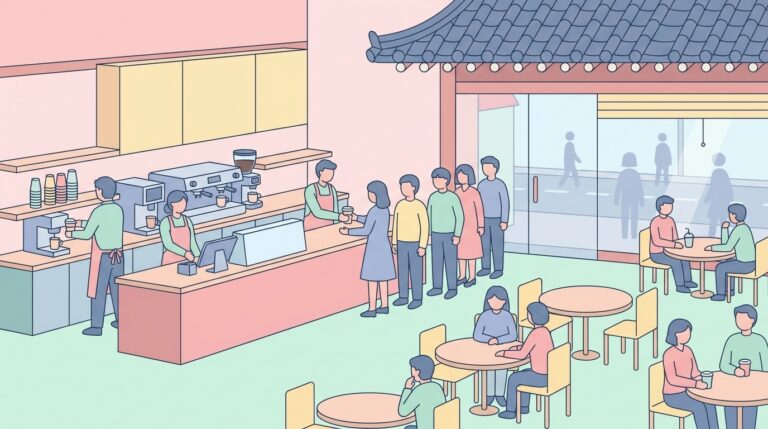
Picture this: You step into a traditional Gukbap (국밥, hot pork soup) restaurant in downtown Seoul during the midday lunch rush. The air is thick with steam and sizzling aromas. You barely manage to pull out a chair, hang your coat, and whisper your order to the server. You unlock your phone just to glance at a notification—and suddenly, clack! A boiling stone bowl, a stainless steel rice bowl, and four fresh side dishes are already sitting in front of you. You check your watch: exactly one minute and forty seconds have passed.
For many international visitors and intermediate Korean learners, Korea’s legendary “Ppalli-Ppalli” (빨리빨리, hurry-hurry) culture can feel like stepping into a video game set to 2x speed. Everything from food preparation and delivery to elevator doors and convenience store checkouts moves at a breathtaking tempo.
When I first coached intermediate students like Sarah from Toronto and Leo from Berlin, both shared the exact same anxiety: “Editor, I know intermediate grammar, but the moment Korean service workers speak so fast and wrap things up in three seconds, my mind goes completely blank!” Don’t worry. This guide is crafted specifically to turn that overwhelming speed into your personal playground. By mastering three natural B1-level core expressions and uncovering the cultural logic behind this hyperspeed service, you will walk into any Seoul restaurant, cafe, or taxi with rock-solid confidence.
Phase 2: 핵심 표현 3선 심층 분석
1. 바로 나와요 (Baro nawayo)
- Pronunciation: [Baro nawayo] (Sounds like “Bah-roh nah-wah-yo”, snappy and crisp like snapping your fingers.)
- Meaning: Literal: “It comes out immediately.” vs Actual Nuance: “It’s practically ready or already on its way—you won’t wait a single minute!”
- K-Culture Moment: You hear this in popular K-dramas whenever bustling office workers rush into a restaurant during a tight 1-hour lunch break, and the auntie shouts back from the kitchen before they even sit down.
- Editor’s Insight: The word 바로 (baro) means “right away” or “directly.” In service Korean, staff use this to reassure customers that they value their time. If a server says this, you don’t need to ask when your meal is coming.
- Situation Spectrum:
- Casual (to friends): 바로 나와 (Baro nawa) ✅
- Semi-formal (everyday politeness): 바로 나와요 (Baro nawayo) ✅
- Formal (high-end hotel/fine dining): 바로 나옵니다 (Baro naomnida) ✅
- 🤔 Think About It: In many Western cultures, fast service can sometimes be misinterpreted as rushed or unwelcoming. Why do you think Korean society views lightning-fast service as the highest form of hospitality and care?
2. 벌써 다 됐어요? (Beolsseo da dwaesseoyo?)
- Pronunciation: [Beolsseo da dwaesseoyo?] (Sounds like “Buhl-ssuh dah dwae-ssuh-yo?”—let the ‘buhl’ start with a slight dropped pitch and rise with genuine pleasant shock.)
- Meaning: Literal: “Is it all finished already?” vs Actual Nuance: “Whoa, that was insanely fast! Are you a wizard?”
- K-Culture Moment: Seen frequently on variety shows like Omniscient Interfering View (전지적 참견 시점) when guests marvel at how fast a master chef preps food or when a technician fixes a smartphone in under five minutes.
- Editor’s Insight: This is the ultimate compliment in Korea. Saying 벌써 다 됐어요? shows you acknowledge the worker’s efficiency and dedication. It brightens any service worker’s day.
- Situation Spectrum:
- Casual: 벌써 다 됐어? (Beolsseo da dwaesseo?) ✅
- Semi-formal: 벌써 다 됐어요? (Beolsseo da dwaesseoyo?) ✅
- Formal: 벌써 다 완료되었습니까? (Beolsseo da wallyodoeeotseumnikka?) ⚠️ (A bit stiff; usually stick to semi-formal with a bright smile!)
- 🤔 Think About It: How does your native language express awe at speed? Do you focus on the worker’s effort, or on the surprisingly short time elapsed?
3. 천천히 해주셔도 돼요 (Cheoncheonhi haejusyeodo dwaeyo)
- Pronunciation: [Cheoncheonhi haejusyeodo dwaeyo] (Sounds like “Chun-chun-hee hae-joo-syuh-doh dwae-yo”. Say it gently with a soft melodic cadence.)
- Meaning: Literal: “You may do it slowly.” vs Actual Nuance: “Please take your time, there is zero rush on my end!”
- K-Culture Moment: Used by thoughtful characters in slice-of-life K-dramas (like Hospital Playlist) when ordering late-night food from an exhausted cook or asking a busy dry cleaner for alterations.
- Editor’s Insight: In a society obsessed with speed, offering this sentence is an act of deep empathy (배려, baeryeo). It instantly relieves pressure from the other person while maintaining high social etiquette.
- Situation Spectrum:
- Casual: 천천히 해줘도 돼 (Cheoncheonhi haejwo-do dwae) ✅
- Semi-formal: 천천히 해주셔도 돼요 (Cheoncheonhi haejusyeodo dwaeyo) ✅
- Formal: 천천히 해주셔도 괜찮습니다 (Cheoncheonhi haejusyeodo gwaenchanhseumnida) ✅
- 🤔 Think About It: Have you ever felt pressured by someone rushing on your behalf? Notice how this phrase transforms an anxious interaction into a comforting moment.
Phase 3: 교과서 한국어 vs 진짜 한국어
Situation 1: Checking when food will be ready in a crowded eatery
- 📖 교과서 한국어 (Textbook):
음식이 언제 나옵니까? (Eumsigi eonje naomnikka? / When will the food appear?) - 🗣️ 진짜 한국어 (Real-life):
저기요, 저희 음식 언제쯤 나올까요? (Jeogiyo, jeohi eumsik eonjejjeum naolkkayo? / Excuse me, roughly when might our food be out?) - 💡 왜 다를까?: Textbook phrasing sounds like a police interrogation. Adding 저기요 (excuse me) and replacing the blunt 언제 with 언제쯤 (~쯤 softens the inquiry to “about when”) makes you sound considerate rather than impatient.
Situation 2: Telling someone not to rush on your account
- 📖 교과서 한국어 (Textbook):
서두르지 마십시오. (Seodureuji masipsio. / Do not hurry.) - 🗣️ 진짜 한국어 (Real-life):
급한 거 아니니까 천천히 하셔도 돼요! (Geuphan geo aninikka cheoncheonhi hasyeodo dwaeyo! / It’s not urgent at all, so please take your time!) - 💡 왜 다를까?: Direct imperatives like 서두르지 마십시오 sound like military commands or emergency broadcast warnings. Giving the friendly reason (급한 거 아니니까) before the softening grammar (-아/어도 되다) creates natural warmth.
Phase 4: K-Culture 딥다이브 & 비언어적 매너
4-1. 눈치 (Nunchi) & Table Manners: The Table Setup Ritual
In fast-paced Korean eateries, speed is a collaborative dance. The moment you sit down, don’t just stare at the menu! Use your 눈치 (nunchi – situational awareness):
1. The Cutlery Drawer: Look along the side rim of the table. You will almost always find a concealed drawer housing spoons, chopsticks, and napkins.
2. The Napkin Base: Pull out napkins and place one in front of each companion, then lay down their spoon and chopsticks atop the napkin. Doing this before water arrives is the ultimate sign of Korean dining etiquette.
3. The Call Button (호출벨): Most tables have a small round button. Press it once with a gentle click. Staff hear a chime and see your table number. Never wave your arms frantically or shout across the hall if a bell exists.
4-2. Cultural Code Analysis: Why Speed Means Love in Korea
Why is Korea so fast? Historically, post-war rapid industrialization ingrained the mindset that time equals survival and prosperity. But in modern K-Food and delivery culture (배달 문화), speed is also an expression of 정 (Jeong – affection/bonding).
Serving food hot and fast shows respect: “I will not let you stay hungry a second longer.” When delivery drivers zoom across city blocks to deliver your fried chicken within 20 minutes, or when Coupang drops your package at your front doorstep before 7:00 AM through Rocket Delivery, it is celebrated as technical mastery and peak civic infrastructure.
Phase 5: 실전 롤플레이 시나리오
Setting: A vibrant, noisy Sundae-gukbap (순대국밥) joint near Gangnam Station during peak lunchtime.
Characters:
* Alex (알렉스): An intermediate learner hungry for lunch.
* Imo-nim (이모님): The hyper-efficient, friendly restaurant owner moving with ninja-like reflexes.
Turn 1
* 이모님: 몇 분이세요? 저기 안쪽 자리 앉으세요! (Myeot bun-iseyo? Jeogi anjjok jari anjeuseyo!)
(How many people? Go take a seat over in that inside table!)
🎭 [Guiding Alex with a swift wave of her hand while clearing another table]
Turn 2
* 알렉스: 네, 감사합니다! 순대국밥 하나 주세요. (Ne, gamsahamnida! Sundaegukbap hana juseyo.)
(Yes, thank you! One Sundae-gukbap, please.)
🎭 [Quickly sliding into the booth and pulling out a napkin]
Turn 3
* 이모님: 네, 순대 하나! 바로 나와요~ (Ne, sundae hana! Baro nawayo~)
(Got it, one sundae! Coming right out~)
🎭 [Shouting toward the kitchen while placing water and kimchi down]
Turn 4
* 알렉스: 🎭 [Setting chopsticks on napkins for two seconds]
벌써 다 됐어요? (Beolsseo da dwaesseoyo?)
(Is it done already?)
Turn 5
* 이모님: 아이구, 우리 집은 1분 컷이지! 뜨거우니까 조심해서 드세요. (Aigu, uri jibeun il-bun keosiji! Tteugeounikka josimhaeseo deuseyo.)
(Aww, our restaurant serves within a 1-minute cut! It’s boiling hot, so eat carefully.)
🎭 [Setting down the vigorously boiling earthen pot with tongs]
Turn 6
* 알렉스: 와, 진짜 빠르시네요! 잘 먹겠습니다. (Wa, jinjja ppareusineyo! Jal meokgetseumnida.)
(Wow, you’re genuinely so fast! I will eat well.)
🎭 [Holding his hands up in genuine admiration]
Turn 7
* 이모님: 밥 모자라면 더 말해요! 천천히 많이 먹고 가요~ (Bap mojalamycon deo malhaeyo! Cheoncheonhi mani meokgo gayo~)
(If you need more rice, just say so! Take your time and eat lots before you leave~)
🎭 [Patting the side of the table warmly before rushing to the counter]
Turn 8
* 알렉스: 네, 이모님! 천천히 맛있게 먹을게요. (Ne, imonim! Cheoncheonhi mas-itge meogeulgeyo.)
(Yes, Imo-nim! I’ll take my time and enjoy it deliciously.)
🎭 [Bowing his head lightly with a comfortable grin]
🔀 인터랙티브 분기점 (Interactive Choice)
At the end of the meal, you notice Imo-nim is juggling four takeout bags and managing three new customers waiting in line. You need to pay with your credit card at the counter. What do you say?
- Option A: 저기요, 빨리 계산 좀 해주세요! (Jeogiyo, ppalli gyesan jom haejuseyo! / Hey, calculate my bill quickly!)
- Option B: 이모님, 바쁘시니까 천천히 해주셔도 돼요. 카드 여기 둘게요! (Imonim, bappeusinikka cheoncheonhi haejusyeodo dwaeyo. Kadeu yeogi dulgeyo! / Imo-nim, since you’re busy, take your time. I’ll leave my card right here!)
- Option C: 사장님, 왜 이렇게 오래 걸립니까? (Sajangnim, wae ireoke orae geollimnikka? / Boss, why is this taking so long?)
Results:
* Option A (Risk): 🚫 Demanding “빨리” from an older worker or elder will come off as rude and impatient. Even in a fast culture, customers shouldn’t command staff to hurry.
* Option B (Best!): ✅ Perfect empathy! You acknowledge her hard work, lower her stress, and use natural polite grammar. She will probably give you a free candy or beverage discount!
* Option C (Bad): 🚫 Extremely confrontational textbook phrasing. Guaranteed to freeze the room and earn sharp frowns from surrounding locals.
Phase 6: 10초 감정 섀도잉 드릴
Read these aloud while mimicking the exact tempo and pauses indicated by /.
[⚡ 급하고 쾌활하게 - Energetic & Fast]
저기요, / 주문 바로 들어갔나요? / 너무 기대돼요!
(Jeogiyo, / jumun baro deureogatnayo? / neomu gidaedwaeyo!)
(Excuse me, / did the order go in right away? / I’m so excited!)-
[😲 눈이 동그래지며 깜짝 놀라게 - Wide-eyed Amazement]
벌써 다 나왔어요? / 와, / 진짜 1초 만에 나온 것 같아요!
(Beolsseo da nawasseoyo? / Wa, / jinjja il-cho mane naon geot gat-ayo!)
(Is it all out already? / Wow, / it feels like it literally came out in one second!) -
[😊 다정하고 차분하게 - Warm, Relaxed & Gentle]
급한 거 아니니까 / 천천히 해주셔도 돼요, / 정말 감사합니다.
(Geuphan geo aninikka / cheoncheonhi haejusyeodo dwaeyo, / jeongmal gamsahamnida.)
(It’s not urgent, / so you can take your time, / thank you so much.)
Phase 7: K-Culture 미니 사전
-
빨리빨리 (Ppalli-ppalli) | Hurry-hurry / Lightning speed
The socio-cultural driving force prioritizing speed and extreme efficiency across daily life, logistics, and hospitality in South Korea. -
진동벨 (Jindong-bel) | Vibrating buzzer / Cafe pager
The handheld plastic puck given at cafes and food courts. When your iced Americano is ready, it buzzes and flashes red lights, signaling an immediate pickup. -
로켓배송 (Roket-baesong) | Rocket Delivery
Iconic overnight delivery service pioneered by Coupang. Order items as late as midnight, and they arrive neatly packed at your front door before dawn. -
회전율 (Hoejeon-yul) | Table turnover rate
A restaurant business metric. In popular hotspots, high turnover keeps ingredients remarkably fresh and prices competitive, prompting efficient dining habits.
Phase 8: 여행자를 위한 생존 키트
서바이벌 표현 TOP 3
- 포장 바로 돼요? (Pojang baro dwaeyo?)
Can this be packed to go right away?
Pro Tip: Perfect when you need to catch a KTX high-speed train and need quick food. - 카드 먼저 꽂아둘게요. (Kadeu meonje kkojadulgeyo.)
I’ll insert my card first.
Pro Tip: At busy convenience stores or cafes, inserting your IC card into the terminal while the cashier scans items shaves off 5 precious seconds. - 영수증은 버려주세요. (Yeongsujeungeun beoryeojuseyo.)
Please discard the receipt.
Pro Tip: Most Koreans skip paper receipts. Saying this briskly lets the cashier finish your transaction instantaneously.
Editor’s Travel Note
- Essential Navigation: Download the 네이버 지도 앱 다운로드 to check real-time subway arrival times down to the exact second.
- Hailing Rides: Use the 카카오 T 택시 앱 다운로드 to hail cabs seamlessly without ever having to explain your destination verbally.
- Payment Speed: Apple Pay and contactless international credit cards work widely at major franchises, but keeping a T-Money transportation card preloaded ensures zero delays at subway turnstiles!
Phase 9: “한 발 더 깊이” (생각 질문)
To outsiders, the Korean pursuit of speed can initially appear restless or hyper-stressful. Yet beneath the surface of “Ppalli-Ppalli” lies a deeply collectivist philosophy of mutual consideration. When a restaurant worker serves you in two minutes, they are saying, “Your time is precious, and I will honor it.” When customers swiftly pack up their laptops after finishing their coffee during peak hours, they are respecting the next stranger waiting in line. Speed in Korea is not just about moving fast—it is about keeping society flowing smoothly together.
💬 Your Turn: How does your home country balance customer service speed with personal relaxation? Have you ever experienced a moment in Korea that made your jaw drop from speed? Drop your thoughts in the comments below!
Phase 10: FAQ & 오해 방지
Q: Does asking “벌써 다 됐어요?” sound like I am complaining about rushed food quality?
A: Not at all! As long as you deliver it with a pleasant, amazed tone of voice and wide eyes, it is universally received as a warm compliment praising their astonishing speed.
Q: Can I tell older servers or taxi drivers “빨리 가주세요” (Please go fast)?
A: Be very careful. Telling an elder or driver “빨리 가주세요” can sound demanding and entitled. If you truly are in an emergency, say: “기사님, 제가 조금 급해서 그러는데 최대한 부탁드립니다.” (Driver, I’m in a bit of a rush, so I’d be very grateful if you could do your best.)
Q: Why do people press the elevator door-close button (> <) repeatedly in Korea?
A: It’s an ingrained national habit! Most Korean elevators close relatively quickly, but locals instinctively tap the close button the second everyone steps in to shave off three seconds. It’s not anger; it’s reflex.
🚨 흔한 실수 (Common Mistakes) 경고판
- Mistake: Shouting “이모! 빨리요!” (Auntie! Fast!) when you are hungry.
Correct Action: Press the table bell once or say: “저기요, 주문 부탁드립니다!” (Excuse me, order please!). - Mistake: Lingering at the checkout counter putting your wallet away while a long line waits behind you.
Correct Action: Step slightly to the side immediately after tapping your card, allowing the next customer to pay smoothly. - Mistake: Interpreting fast table clearing as being kicked out.
Correct Action: When plates are cleared quickly, staff are simply keeping your table tidy or managing high turnover. Unless there is a line out the door, you can finish your drink comfortably.
Phase 11: 액션 미션 & 참여 유도
- 🥉 Bronze Mission (Solo Practice): Stand in front of your mirror and repeat Phase 6’s Shadowing Drill 3 times with exaggerated emotional facial expressions.
- 🥈 Silver Mission (Social Connection): Record a 5-second voice note saying “천천히 해주셔도 돼요!” and share it with your language exchange partner or on your study Instagram story.
- 🥇 Gold Mission (Real Life Execution): The next time you visit a Korean restaurant or cafe, say “벌써 다 됐어요? 감사합니다!” to the staff when you receive your tray.
🎮 K-Culture Mission: Watch any episode of the popular food reality show Baek Jong-won’s Alley Restaurant (골목식당). Spot at least two moments where Chef Baek evaluates a restaurant’s food prep speed and prep system!
Phase 12: 인터랙티브 퀴즈 챌린지
Q1. [상황 판단] You are at a bustling coffee shop in Sinchon. The barista looks completely overwhelmed by a massive rush of orders. What is the most considerate Korean phrase to say?
① 빨리 만들어 주세요! (Ppalli mandeureo juseyo!)
② 천천히 해주셔도 돼요. (Cheoncheonhi haejusyeodo dwaeyo.)
③ 왜 아직 안 나와요? (Wae ajik an nawayo?)
👉 정답 및 해설 보기 (Click to reveal answer)
정답: ② 천천히 해주셔도 돼요.
해설: ① means “Make it quickly!” which adds severe stress and sounds rude. ③ means “Why hasn’t it come out yet?” which is confrontational. ② demonstrates warm empathy and thoughtful B1-level social etiquette.
Q2. [빈칸 채우기] Fill in the blank to complete this compliment:
“와, 음식이 ( ) 다 됐어요? 진짜 빠르시네요!”
(Hint: The word for ‘already’ expressing surprise)
👉 정답 및 해설 보기 (Click to reveal answer)
정답: 벌써 (Beolsseo)
해설: ‘벌써’ is used when something happens earlier or faster than expected, carrying a nuance of pleasant surprise!
Q3. [True / False 문화 퀴즈] In Korean casual restaurants, setting chopsticks and spoons on top of paper napkins for yourself and your companions before the food arrives is considered good dining etiquette.
* True or False?
👉 정답 및 해설 보기 (Click to reveal answer)
정답: True
해설: Yes! Taking the initiative to set up napkins and cutlery for everyone at the table shows great manners, mindfulness, and good 눈치 (nunchi)!







