

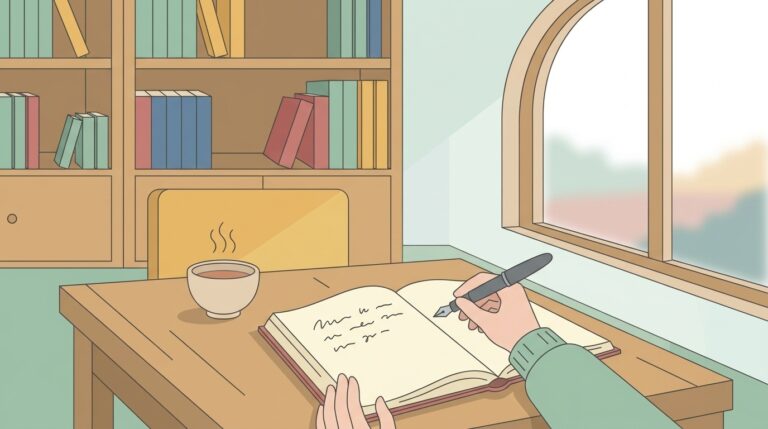
Phase 1: 공감 (Story-Driven Opening)
안녕하세요! 매일한글 에디터입니다.
Have you ever settled into a cozy wooden corner of an independent bookstore in Yeonnam-dong or Mangwon-dong, surrounded by the aromatic blend of freshly brewed drip coffee and aged paper, eager to dive into a Korean literary essay—only to hit an invisible wall after just two paragraphs? You know every individual grammar particle—은/는, 을/를, -(으)ㄹ 뿐만 아니라—yet the sentences feel like fleeting mist. You read words, but they don’t settle into your chest. When you attempt to write a book review (서평) on Instagram or discuss it with Korean friends in a book club, you freeze, defaulting to basic expressions like “책이 정말 재미있었어요” (The book was really fun) when your heart truly wanted to describe how the author’s prose echoed your deepest yearnings.
Take heart: this frustration is the hallmark of reaching the advanced C1 plateau. You no longer need beginner sentence drills; you need to absorb the rhythm, texture, and emotional cadence of Korean syntax. In award-winning Korean dramas like Chicago Typewriter or Mr. Sunshine, you will notice that whenever characters confront profound life transitions, they reach for ink, brush, or fountain pen. They write out sentences word by word. In Korea, this beloved, mindful practice is called 필사 (Pilsa – transcribing/hand-copying texts).
Based on over a decade of mentoring advanced Korean language learners, I have observed that learners who integrate pilsa into their daily reading routine enhance their sentence formulation speed, intuitive vocabulary recall, and literary sensitivity by more than triple. This guide isn’t merely about copying words onto paper; it is your cultural compass for internalizing authentic Korean thought patterns through the fingertips.
Phase 2: 핵심 표현 3선 심층 분석 (Core Expressions)
1. 문장을 곱씹다 (Munjang-eul gop-ssip-da)
- Pronunciation: [Mun-jang-eul gop-ssip-da] (Think of the crisp snapping sound of gop followed by ssip like savoring a slow, hearty chew)
- Meaning: Literally “to chew over a sentence like a cud,” figuratively meaning to reflect deeply, savor, and contemplate a piece of writing over and over again.
- K-Culture Moment: In literary podcasts and indie book review vlogs, reviewers often remark, “이 소설은 문장을 천천히 곱씹으며 읽을 때 진가가 드러납니다” (This novel reveals its true worth when you slowly chew over and savor every sentence).
- Editor’s Insight: At the C1 level, avoid saying “문장을 깊이 생각하다” (to think deeply about a sentence). Native Korean writers use culinary sensory verbs like 곱씹다 to express that text is nourishment for the mind.
- Situation Spectrum:
- Casual: ✅ (“그 문장 자꾸 곱씹게 돼.”)
- Semi-formal: ✅ (“천천히 문장을 곱씹어 보세요.”)
- Formal: ✅ (“작가의 문장을 곱씹으며 사유의 깊이를 더합니다.”)
- 🤔 Think About It: Why does Korean connect deep intellectual contemplation with the physical sensation of chewing (곱씹다)? How does your native language describe re-reading something with emotional depth?
2. 손끝으로 읽다 (Son-kkeut-euro ik-da)
- Pronunciation: [Son-kkeu-teu-ro ik-da] (Son as in sonnet, kkeut like ‘good’ with a tight hard k-g burst)
- Meaning: Literally “to read with one’s fingertips,” this is the quintessential poetic metaphor for pilsa (hand-copying a text). It describes tactile, deliberate reading through the act of writing.
- K-Culture Moment: Seen on the covers of Korean transcription journals (필사 노트) sold in art-stationery hubs in Seongsu-dong: “눈으로 스치지 않고, 손끝으로 읽는 시간” (A time not to skim with your eyes, but to read through your fingertips).
- Editor’s Insight: Use this expression when you want to contrast shallow, hurried digital skimming with slow, intimate reading. It demonstrates an elite grasp of Korean poetic metaphor.
- Situation Spectrum:
- Casual: ⚠️ (A bit too poetic for texting about buying groceries)
- Semi-formal: ✅ (“이번 주말에는 손끝으로 책을 읽어 보려고 해요.”)
- Formal: ✅ (“필사는 책을 손끝으로 읽으며 작가의 호흡을 느끼는 과정입니다.”)
- 🤔 Think About It: In an era of instant AI summaries and 15-second video reels, how does your culture view the tactile act of physical pen-on-paper transcription?
3. 마음에 긴 울림을 주다 (Maeum-e gin ul-lim-eul ju-da)
- Pronunciation: [Mae-um-e gin ool-lim-eul joo-da] (Ul-lim sounds like the deep reverberation of a temple bell)
- Meaning: Literally “to give a long resonance/vibration to the heart,” meaning a book, phrase, or artwork leaves a profound, lingering emotional aftertaste.
- K-Culture Moment: Whenever a host on a Korean cultural show summarizes an interview with an acclaimed novelist, they often say, “오늘 들려주신 말씀이 우리 마음에 긴 울림을 줍니다” (The words you shared with us today impart a lingering resonance to our hearts).
- Editor’s Insight: Beginner learners rely heavily on “감동적이에요” (It is touching). Advanced speakers utilize sound-wave and physical metaphors such as 울림 (reverberation) and 여운 (lingering trace).
- Situation Spectrum:
- Casual: ⚠️ (Can sound slightly theatrical with buddies over beer)
- Semi-formal: ✅ (“마지막 챕터가 마음에 긴 울림을 주네요.”)
- Formal: ✅ (“독자들에게 긴 울림을 주는 훌륭한 평론입니다.”)
- 🤔 Think About It: Why do Koreans associate intense emotional impact with deep acoustic vibration (울림) rather than just visual or fiery metaphors?
Phase 3: 교과서 한국어 vs 진짜 한국어 (Textbook vs. Real Korean)
Situation 1: Describing the Deep Impression of a Literary Work in a Book Club
- 📖 교과서 한국어 (Textbook):
“이 책은 정말 재미있고 교훈적이어서 제 마음에 큰 감동을 주었습니다.”
(I chaek-eun jeongmal jaemi-itgo gyohunjeog-ieoseo je maeum-e keun gamdong-eul jueosseumnida. – This book was very interesting and educational, giving my heart great emotion.) - 🗣️ 진짜 한국어 (Real C1 Native):
“행간에 숨은 의미가 많아서, 마지막 문장을 덮고도 한참 동안 마음에 묵직한 여운이 남더라고요.”
(Haeng-gan-e sum-eun uimiga man-aseo, majimak munjang-eul deopgodo hancham dong-an maeum-e mukjjikhan yeo-uni namdeoragoyo. – There was so much between the lines; even after closing the last sentence, a heavy, poignant aftertaste lingered in my heart for quite a while.) - 💡 왜 다를까?: Advanced Korean speakers rarely speak in direct value judgments like “교훈적이다” (educational). They praise nuanced subtext (행간) and the tactile weight of emotion (묵직한 여운).
Situation 2: Recommending Handwriting Practice for Language Mastery
- 📖 교과서 한국어 (Textbook):
“한국어 실력을 향상시키려면 책에 있는 문장을 공책에 그대로 똑같이 쓰십시오.”
(Hangugeo sillyeog-eul hyangsangsikilyeomyeon chaek-e inneun munjang-eul gongchaek-e geudaero ttokgachi sseusipsio. – If you want to improve your Korean skills, copy the sentences in the book into a notebook identically.) - 🗣️ 진짜 한국어 (Real C1 Native):
“눈으로만 훑지 말고, 마음에 와닿는 구절을 골라 손끝으로 꾹꾹 눌러 써 보세요. 문장력이 달라져요.”
(Nun-euro-man hutji malgo, maeum-e wadanneun gujeor-eul golla son-kkeut-euro kkuk-kkuk nulleo sseo boseyo. Munjangnyeog-i dallajyeoyo. – Don’t just skim with your eyes; select passages that strike your heart and press them down deliberately with your fingertips. Your command of phrasing will transform.) - 💡 왜 다를까?: Natural native advice leans on vivid sensory onomatopoeia like 꾹꾹 (firmly pressing down) and colloquial idioms like 마음에 와닿다 (to strike a chord in one’s heart), making the suggestion friendly yet deeply authoritative.
Phase 4: K-Culture 딥다이브 & 비언어적 매너 (Culture & Etiquette)
4-1. 눈치 (Nunchi) & Spatial Etiquette in Korean Book Culture
When participating in a Korean 독서 모임 (book club) or visiting a neighborhood indie bookstore (동네책방):
* The Nod of Resonant Silence: When someone shares a personal reflection on a transcribed sentence, avoid interrupting with loud verbal agreement like “맞아요! 저도요!” (Right! Me too!). Instead, lower your gaze slightly, nod slowly three times with hands loosely clasped on the table, and let 2–3 seconds of silence breathe before speaking. This shows you are 곱씹는 중 (digesting their thought).
* Respecting Written Marginalia: In Korea, handling books in small indie shops demands subtle body language. Always hold a book with both hands. If taking notes or transcribing, never place your notebook directly on top of the original bookstore copy, as that is seen as thoughtless pressure (배려 없는 행동).
4-2. The Modern Korean Pilsa Craze (#필사스타그램)
In fast-paced, hyper-digital South Korea, pilsa has evolved from an old scholar’s scholastic habit into an aesthetic mindful movement known as “슬로우 라이프” (Slow Life). Search the hashtag #필사 or #필사스타그램 on Instagram, and you will discover tens of thousands of young Koreans pairing classic literature (such as Yun Dong-ju’s poetry or Han Kang’s prose) with fountain pens, textured Korean paper (한지), and warm desk lamps. It serves as digital detox, aesthetic self-expression, and literary therapy rolled into one.
Phase 5: 실전 롤플레이 시나리오 (Interactive Roleplay)
Setting: The quiet, wood-scented reading nook of 달빛 서재 (Moonlight Study), an indie book cafe in Mangwon-dong, Seoul. Rain taps softly against the glass.
Characters:
* 민지 (Min-ji): The discerning book cafe owner and moderator of an evening book salon.
* You: An advanced Korean learner looking to refine your literary expression and transcription habits.
Dialogue:
- 민지: “어서 오세요. 비가 와서 그런지 오늘 서점이 유난히 차분하네요. 어떤 책 찾으세요?”
(Eoseo oseyo. Biga waseo geureonji oneul seojeomi yunanhi chabunhaneyo. Eotteon chaek chajeuseyo?)
“Welcome. Perhaps because of the rain, the bookshop feels particularly tranquil today. What kind of book are you looking for?”
🎭 따뜻한 둥글레차를 건네며 온화하게 미소 짓는다. -
You: “안녕하세요, 민지 님. 최근에 한국 소설을 읽기 시작했는데, 눈으로만 보니까 문장이 쉽게 흩어지더라고요.”
(Annyeonghaseyo, Minji nim. Choegeun-e hangugeoseoseor-eul ikgi sijakhaenneunde, nun-euro-man bonikka munjangi swipge heuteojideoragoyo.)
“Hello, Min-ji. I recently started reading Korean novels, but when I only read with my eyes, the sentences seem to scatter away too easily.”
🎭 아쉬운 표정으로 펼쳐진 공책을 살짝 매만진다. -
민지: “그 마음 백번 이해해요. 외국어든 모국어든 좋은 문장은 스치듯 읽으면 금방 날아가 버리거든요.”
(Geu ma-eum baekbeon ihaehaeyo. Oegug-eodeun mogug-eodeun joeun munjangeun seochideut ilgeumyeon geumbang naraga beorigeodeunyo.)
“I understand that sentiment one hundred percent. Whether in a foreign language or one’s mother tongue, fine sentences fly away in no time if you merely skim past them.”
🎭 고개를 천천히 끄덕이며 서가에서 얇은 시집 한 권을 꺼낸다. -
You: “그래서 저도 이번에는 필사를 제대로 해보려고요. 혹시 손끝으로 곱씹기 좋은 책이 있을까요?”
(Geuraeseo jeodo ibeon-eneun pilsareul jedaero haeboryeogoyo. Hoksi son-kkeut-euro gop-ssipgi joeun chaegi isseulkkayo?)
“That’s why I’d like to try transcribing properly this time. Could you recommend a book whose sentences are wonderful to savor through one’s fingertips?”
🎭 호기심 어린 눈빛으로 추천받을 책을 바라본다. -
민지: “이 시집 어떠세요? 문장의 호흡이 차분해서 한 글자씩 꾹꾹 눌러쓰다 보면 마음에 깊은 울림이 남을 거예요.”
(I sijip eotteoseyo? Munjang-ui hoheub-i chabunhaeseo han geuljassik kkuk-kkuk nulleosseuda bomyeon maeum-e gipeun ullim-i nameul geoyeyo.)
“How about this poetry collection? The breathing of each sentence is calm, so if you write it down letter by letter, it will leave a deep resonance in your heart.”
🎭 조심스럽게 책 표지를 쓸어내리며 건넨다. -
You: “표지만 봐도 마음이 편안해지네요. 매일 하루 한 페이지씩 필사하고 짤막한 서평도 남겨봐야겠어요.”
(Pyojiman bwado maeumi pyeon-anhaejineyo. Maeil haru han peijissik pilsahago jjalmakhan seopyeongdo namgyeobwayagesseoyo.)
“Just looking at the cover puts my mind at ease. I should transcribe one page every day and write brief book reviews as well.”
🎭 만년필 뚜껑을 만지작거리며 결심한 듯 미소를 띤다. -
민지: “정말 멋진 생각이에요. 필사를 거친 문장은 나중에 말할 때도 자연스럽게 본인의 어휘로 튀어나오거든요.”
(Jeongmal meotjin saenggag-ieyo. Pilsareul geochin munjangeun najung-e malhal ttaedo jayeonseureopge bonin-ui eohwiro twieonaogodeunyo.)
“That is a wonderful thought. Sentences that have passed through transcription naturally leap out as your very own vocabulary when speaking later on.”
🎭 응원의 눈빛을 보내며 책갈피를 선물로 얹어준다. -
You: “민지 님 덕분에 용기가 생겼어요. 오늘부터 이 문장들과 함께 천천히 호흡을 맞춰볼게요!”
(Minji nim deokbun-e yong-giga saenggyeosseoyo. Oneulbuteo i munjangdeulgwa hamkke cheoncheonhi hoheub-eul matchwobolgeyo!)
“Thanks to you, Min-ji, I’ve gained courage. Starting today, I will match my breath slowly alongside these sentences!”
🎭 공손히 두 손으로 책을 받아 품에 안는다.
🔀 인터랙티브 분기점 (Interactive Branching)
Min-ji asks you: “오늘 필사를 시작하실 때, 어떤 마음가짐으로 첫 문장을 적고 싶으세요?” (When you begin transcribing today, in what state of mind would you like to write your first sentence?)
- Option A: “빨리 실력을 늘려야 하니까 오늘 밤 안에 이 시집의 절반을 다 베껴 쓰려고요!”
(Since I need to improve quickly, I’ll copy half the poetry book tonight!)- Feedback [Bad ❌]: Missing the entire philosophy of pilsa. High-speed mechanical copying turns a profound cultural meditation into cramming, guaranteeing hand fatigue without linguistic retention.
- Option B: “단어 뜻을 하나하나 사전에서 다 찾아서 문법 분석표를 옆에 완벽히 정리하면서 쓸 생각이에요.”
(I plan to look up every single word in the dictionary and assemble a complete grammatical analysis sheet beside it.)- Feedback [Risk ⚠️]: Valid for test preparation, but over-intellectualizing the prose kills the literary rhythm. You become an analytical machine rather than allowing the sentence structure to intuitively permeate your linguistic instincts.
- Option C: “욕심부리지 않고, 제 마음에 와닿는 단 한 구절만 골라 작가의 호흡을 느끼며 천천히 곱씹어 보려고요.”
(Without greed, I plan to pick just one passage that touches my heart, feeling the author’s breath as I slowly savor it.)- Feedback [Best ✅]: Perfect C1 sensibility! It demonstrates respect for authorial cadence, realistic daily habit formation, and emotional maturity in foreign language acquisition.
Phase 6: 10초 감정 섀도잉 드릴 (Emotional Shadowing Drill)
Practice reading these sentences aloud, pausing precisely at the slashes (/), and adopting the specified emotional persona:
[✍️ 진중하고 차분하게 - Deep, calm, and contemplative]
“눈으로만 훑던 문장을 / 손끝으로 꾹꾹 눌러 쓸 때 / 비로소 작가의 숨결이 / 온전히 전해집니다.”
(Nun-euro-man hutdeon munjang-eul / son-kkeut-euro kkuk-kkuk nulleo sseul ttae / biroso jakga-ui sumgyeor-i / onjeonhi jeonhaejimnida.)
Pause length: 0.5s at each slash.-
[✨ 벅찬 감동을 담아 - With stirring emotional resonance]
“행간을 채우는 침묵과 / 문장의 묵직한 여운이 / 오랫동안 / 제 가슴속을 맴도네요.”
(Haeng-gan-eul chaeuneun chimmuk-gwa / munjang-ui mukjjikhan yeo-un-i / oraedong-an / je gaseumsog-eul maemdoneoyo.) -
[💡 깨달음을 얻은 어조로 - With enlightened realization]
“필사는 단순히 글씨를 베끼는 것이 아니라, / 타인의 깊은 사유를 / 내 마음에 정성스레 들여놓는 일입니다.”
(Pilsaneun dansunhi geulssireul bekki-neun geos-i anira, / tain-ui gipeun sayureul / nae maeum-e jeongseongseure deuryeononneun irimnida.)
Phase 7: K-Culture 미니 사전 (Mini Dictionary)
- 필사 (筆寫, Pilsa)
- Meaning: Hand-transcription; the act of copying books or written prose by hand.
- Usage: In modern Korea, pilsa is celebrated as a lifestyle art form. You will encounter dedicated 필사 전용 노트 (notebooks tailored specifically for fountain pen transcription) in stationery boutiques across Seoul.
- 행간 (行間, Haenggan)
- Meaning: The space between written lines; figurative subtext, unspoken meaning, or emotional nuance.
- Usage: Highly praised in reviews: “행간을 읽다” means to decipher subtle implied meanings that are never explicitly spoken aloud.
- 인생책 (Insaengchaek)
- Meaning: One’s “life book”; a defining, transformative book that shaped one’s world perspective.
- Usage: Frequent icebreaker in cultural gatherings: “당신의 인생책은 무엇인가요?” (What is your all-time defining book?)
- 서평 (書評, Seopyeong)
- Meaning: Book review / literary critique.
- Usage: Unlike a casual one-line reaction (한줄평), a 서평 analyzes theme, sentence structure, emotional impact, and contextual relevance.
Phase 8: 여행자를 위한 생존 키트 (Traveler’s Survival Kit)
Top 3 Survival Expressions for Seoul Book Cafes & Stationery Shops
- “필사하기 좋은 만년필용 노트를 찾고 있는데 추천해 주실 수 있나요?”
(Pilsahagi joeun mannyeonpilyong noteureul chatgo inneunde chucheonhae jusil su innayo?)
Pro Tip: Perfect when browsing stationery shops like Kyobo Hottracks or indie specialty ateliers in Insadong. - “이 책에서 가장 문장력이 아름답다고 평가받는 구절이 어디인가요?”
(I chaeg-eseo gajang munjangnyeog-i areumdapdago pyeong-gabanneun gujeor-i eodi-ingayo?)
Pro Tip: Use this with independent bookstore clerks to pinpoint the most transcribable literary excerpt. - “혹시 이 구역은 조용히 글을 쓰거나 필사를 해도 괜찮은 공간인가요?”
(Hoksi i gu-yeog-eun joyonghi geur-eul sseugeona pilsareul haedo gwaenchaneun gonggan-ingayo?)
Pro Tip: Many Korean cafes designate quiet areas (작업 존 or 북 존) distinct from social spaces.
Editor’s Travel Note
When hunting for the best literary spots in Seoul, skip generic search engines. Install the Naver Map app navigation for local indie bookstores to discover hidden gems like Gwangheungdang or boutique literary salons near Hapjeong Station. Most independent bookshops do not accept large foreign credit networks with ease, so ensure you have T-money or local payment readiness (신용카드/네이버페이). Respect the photography policy—many book cafes display discreet signs asking visitors to mute camera shutter sounds (무음 카메라) out of courtesy to readers.
Phase 9: “한 발 더 깊이” (Deep Reflection Essay)
In a society globally celebrated for its high-speed technological hyper-connectivity and intense 빨리빨리 (hurry-hurry) ethos, the Korean resurgence of pilsa presents a beautiful cultural paradox. Transcribing a sentence by hand forces a person to slow their physical movements to the speed of ink absorption. It functions as a gentle rebellion against instant digital answers, creating an intimate inner sanctuary where one honors the author’s solitary craft. By slowing down to transcribe Korean by hand, you stop treating the language as an efficiency code to be decoded; you begin dwelling inside its emotional architecture.
💬 Your Turn: What is the most beautiful sentence you have ever encountered in Korean literature, drama, or song lyrics? Share it in the comments below, write it out by hand, and let us know what resonance it left in your heart!
Phase 10: FAQ & 오해 방지 (FAQ & Common Mistakes)
Q: Should I look up every unfamiliar word while doing pilsa?
A: Definitely not on your first pass! If you reach for a dictionary after every third syllable, you destroy the rhythmic musicality of the prose. First, transcribe the entire paragraph smoothly, feeling the punctuation and tone. Return to mark unknown vocabulary only after your handwriting drill is complete.
Q: Is it better to transcribe novels or poetry for Korean learning?
A: For beginners to pilsa, contemporary poetry collections (현대 시집) or short essay collections (산문집) are superior. Their sentences possess clear breath stops, concise grammar structures, and vivid sensory diction. Novels can easily overwhelm you if chosen without guidance.
Q: What kind of pen should I use for Korean calligraphy and pilsa?
A: While fountain pens (만년필) provide exquisite tactile feedback, a smooth 0.5mm gel pen or a traditional pencil (연필) allows you to feel the friction against the paper grain, which solidifies muscle memory for complex Korean consonant strokes like ㄹ, ㅂ, and ㅄ.
🚨 Common Mistakes Alert (흔한 실수 TOP 3)
- Drawing characters rather than following stroke order (획순)
- Wrong: Scribbling complex Hangul blocks like 읊 or 밟 haphazardly like drawings.
- Correct Action: Follow correct top-to-bottom, left-to-right stroke order to establish fluid writing rhythm and muscle memory.
- Ignoring spacing rules (띄어쓰기) during transcription
- Wrong: Clumping words together without checking spaces between nouns and dependent nouns (것, 줄, 수).
- Correct Action: Korean spacing alters semantic meaning radically. Pay obsessive attention to how spaces function between words in literary prose.
- Transcribing excessively long passages until exhausted
- Wrong: Trying to transcribe five chapters in one sitting, leading to physical burnout.
- Correct Action: Focus on “One Day, One Sentence” (하루 한 문장). Depth of rumination (곱씹음) trumps volume every single time.
Phase 11: 액션 미션 & 참여 유도 (Action Missions)
- 🥉 Bronze Mission (Solo Practice): Choose a favorite quote from a Korean drama or essay. Write it down in a notebook with correct stroke order and spacing three times in absolute silence.
- 🥈 Silver Mission (Community Share): Snap an aesthetic photo of your handwritten Korean quote alongside your pen or coffee cup. Post it with the hashtag
#DailyHangulPilsaand#필사along with a one-sentence reflection. - 🥇 Gold Mission (Real-Life Review): Write a 3-sentence 서평 (mini book review) in Korean utilizing at least two expressions learned today (문장을 곱씹다, 여운이 남다, 울림을 주다) and share it with your language partner or in the comments below!
- 🎮 K-Culture Mission: Watch an episode of a period or romance drama (such as Mr. Sunshine or When the Weather is Fine). Spot a scene where someone reads a letter or poem aloud, and transcribe that spoken phrase directly by ear.
Phase 12: 인터랙티브 퀴즈 챌린지 (Quiz Challenge)
1. Situational Judgment
You are writing an advanced review of a novel for a Korean literary forum. Which sentence expresses the most natural, high-level praise for the book’s deep lingering impact?
* (A) 이 책은 재미있는 내용이 많아서 즐거웠습니다.
* (B) 책장을 덮은 뒤에도 마지막 문장의 울림이 마음에 오래 머물며 진한 여운을 남깁니다.
* (C) 글자를 손으로 베껴 쓰니까 단어 암기가 아주 잘 되었습니다.
2. Fill-in-the-Blank
Fill in the blank with the appropriate poetic expression meaning ‘to transcribe and read deliberately through touch’:
“눈으로만 대충 스치지 말고, 이 아름다운 문장들을 ( ) 보세요.”
3. Cultural True or False
In contemporary Korean culture, pilsa (필사) is considered an outdated scholastic punishment that modern youths avoid.
* True
* False
🔍 Click here to reveal answers & explanations
- Answer: (B)
- Explanation: Choice (B) uses sophisticated C1 literary terminology (책장을 덮다, 울림이 머물다, 진한 여운을 남기다). Choice (A) is overly elementary (A2), and choice (C) focuses narrowly on mechanical test memorization rather than literary appreciation.
- Answer: 손끝으로 읽어 (or 손끝으로 꾹꾹 눌러써)
- Explanation: The poetic phrasing 손끝으로 읽다 encapsulates reading through the physical movement of transcription.
- Answer: False
- Explanation: Pilsa has undergone a massive resurgence in South Korea as a trendy mindfulness practice, digital detox hobby, and artistic Instagram lifestyle trend among young adults.
- Explanation: Pilsa has undergone a massive resurgence in South Korea as a trendy mindfulness practice, digital detox hobby, and artistic Instagram lifestyle trend among young adults.







