

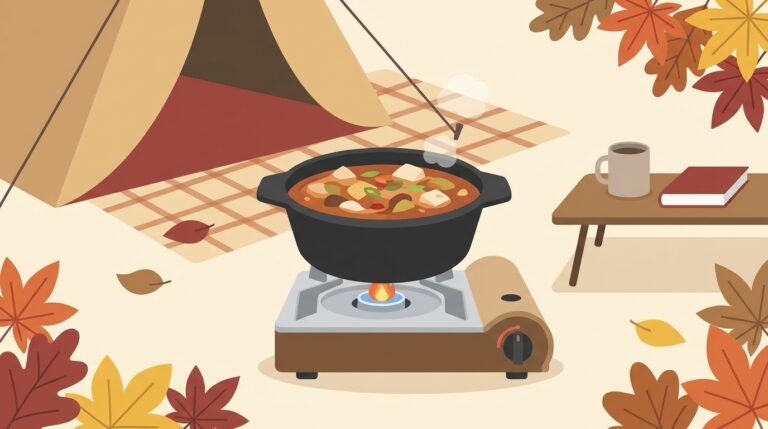
Master Korean Camping Cuisine: Cook Meal Kits Like a Pro
Phase 1: Empathy (Welcome to the K-Camping Craze!)
안녕하세요! 매일한글 (Daily Hangul) editor here! Imagine this: You find yourself nestled beside the Han River in Gapyeong, the autumn leaves glowing amber under fairy lights strung across a stylish glamping tent. The portable gas stove is set up, crickets are chirping, and your Korean friends are cheering for dinner. Suddenly, a sleek vacuum-sealed package lands in your hands: a 밀키트 (mil-kiteu – meal kit) for spicy army stew (Budae Jjigae). You open it, excited to show off your culinary chops, but freeze—the instructions look like a dense wall of text, the sauce packet has no English, and someone calls out, “물 맞췄어?” (Did you adjust the water?). Panic sets in. Did you add too much water? Are you supposed to boil the noodles now, or at the very end?
Camping in Korea—especially modern glamping and chabak (car camping)—is almost entirely centered around food, and meal kits are the undisputed kings of the campsite. In this B2-level guide crafted from real learner feedback and years of riverside camping trials, we’ll demystify the culinary slang, unspoken camping etiquette, and cooking vocabulary you need to cook like a seasoned Korean camper. Grab your tongs; let’s dig in!
Phase 2: Core Expressions Deep Dive
1. 국물이 진짜 끝내준다! (Gungmuri jinjja kkeutnaejunda!)
- Pronunciation: [Goong-moo-ree jin-jja kkeut-nae-joon-da!] (Think of ‘Gung’ like ‘gung-ho’, and ‘kkeut’ like the sharp click of a stove igniter)
- Meaning: Literal: “The soup truly terminates!” / Nuance: “This broth is absolutely killer / out of this world!”
- K-Culture Moment: Think of Hospital Playlist where the 99ers gather around a steaming camp stew after a grueling week at Yulje Medical Center, exhaling a deeply satisfied “크으~ 끝내준다!” after their first spoonful.
- Editor’s Insight: 끝내주다 literally means “to put an end to something,” suggesting the flavor is so supreme it eliminates all competition. In Korean cooking, evaluating the broth (국물) first is an involuntary reflex of respect.
- Situation Spectrum: Casual ✅ | Semi-formal ⚠️ (Use 국물이 정말 끝내주네요) | Formal 🚫
- 🤔 Think About It: In English, we often praise solid food first (e.g., “The meat is so tender”). Why do Koreans prioritize the broth (국물) when judging outdoor cuisine?
2. 설명서대로 물 맞춰야 해. (Seolmyeongseodaero mul matchwoya hae.)
- Pronunciation: [Seol-myeong-seo-dae-ro mool mat-chwo-ya hae] (Rhymes smoothly; ‘matchwoya’ sounds like ‘ma-chwo-ya’)
- Meaning: Literal: “We must fit the water according to the manual.” / Nuance: “We have to measure the water exactly as the instructions say.”
- K-Culture Moment: In outdoor reality shows like Three Meals a Day or Camping Vibes, you always see the self-appointed “Chef Friend” scolding others for guessing the water volume instead of using a standard paper cup.
- Editor’s Insight: 맞추다 means “to match, align, or calibrate.” Korean meal kits rely heavily on precise sodium-to-water ratios; watering it down (한강물 만들기 – making the Han River) is considered a culinary crime at a campsite.
- Situation Spectrum: Casual ✅ | Semi-formal ✅ (Use 설명서대로 물 맞춰야 해요) | Formal ⚠️
- 🤔 Think About It: Does your native language view “measuring strictly” as scientific or uncreative? Notice how Korean culinary culture blends casual street food with laboratory-like water precision.
3. 마지막에 라면 사리 넣자! (Majimage ramyeon sari neotja!)
- Pronunciation: [Mah-ji-ma-geh rah-myeon sah-ree neot-jah!] (Emphasize ‘sa-ri’ like the first syllables of ‘safari’)
- Meaning: Literal: “Let’s put the ramen addition in at the end!” / Nuance: “Save the ramen noodles for the finale!”
- K-Culture Moment: Every late-night campfire scene on Korean YouTube camping vlogs features the moment someone pulls out a pack of plain 사리 noodles just as the stew sauce thickens.
- Editor’s Insight: 사리 specifically refers to noodle, rice cake, or dumpling add-ins meant to soak up concentrated broth. Putting noodles in too early turns your soup starchy and thick before the ingredients have simmered!
- Situation Spectrum: Casual ✅ | Semi-formal ✅ (Use 마지막에 사리 넣어요) | Formal 🚫
- 🤔 Think About It: Adding carbohydrates at the very end (사리, 볶음밥) serves as the “grand finale” in Korean dining. How does this contrast with multi-course dining in your culture?
Phase 3: Textbook Korean vs. Real Korean
Situation 1: Measuring water for the meal kit stew
- 📖 교과서 한국어 (Textbook): 물을 500밀리리터 넣고 끓이십시오. (Mureul obaek-milliriteo neotgo kkeuripsio. / Please add 500 milliliters of water and boil it.)
- 🗣️ 진짜 한국어 (Real-life): 종이컵으로 두 컵 반 정도 부으면 딱 맞아. (Jong-ikeobeuro du keop ban jeongdo bueumyeon ttak maja. / Pouring about two and a half paper cups is just right.)
- 💡 왜 다를까? Nobody brings measuring cups to a campsite! In Korea, disposable paper cups (roughly 180~190ml) are universal measuring units everywhere from instant ramen instructions to top-tier camping vlogs.
Situation 2: Repurposing leftover sauce
- 📖 교과서 한국어 (Textbook): 남은 국물에 밥을 볶아 먹겠습니다. (Nameun gungmure babeul bokka meokgetseumnida. / I will fry rice in the remaining broth.)
- 🗣️ 진짜 한국어 (Real-life): 국물 졸아들면 바로 K-디저트 볶음밥 가야지! (Gungmul joradeulmyeon baro K-dijeoteu bokkeumbap gayaji! / Once the broth reduces, we’ve got to go straight for that K-dessert fried rice!)
- 💡 왜 다를까? Koreans jokingly refer to fried rice (볶음밥) cooked in leftover meat grease or stew as “K-dessert” because no savory meal is truly finished without a carbohydrate closer.
Phase 4: K-Culture Deep Dive & Non-Verbal Manners
4-1. 눈치 (Nunchi) & Campsite Dining Etiquette
- The Two-Handed Pot Transfer: When moving a scalding meal kit pot onto the center table trivet, use both hands with heat-resistant gloves and announce clearly: “뜨거워요, 조심하세요!” (It’s hot, watch out!).
- The Broth Ladle Protocol: Never dig your personal spoon directly into the shared meal kit pot upon first boiling. Wait for the host or cook to ladle the first scoop (첫 국자) into individual bowls (앞접시). Once everyone has eaten a few bites, community dipping becomes acceptable among close friends.
- Blowing Gracefully: While tasting steaming hot broth, lift the spoonful slightly, cup your left hand beneath the spoon (preventing drips), and gently blow twice before tasting with an approving nod.
4-2. Cultural Codes: The Meal Kit & “Bulmeong” Revolution
Korea has transformed camping from rugged survival into an aesthetic art form known as 감성 캠핑 (Gamsong Camping – Aesthetic Camping). The core engine behind this trend is the hyper-efficient 밀키트 (Meal Kit) market dominated by services like Market Kurly and Baemin B-Mart. Instead of chopping garlic and prepping meat in cold campsite washrooms, modern campers bring ready-to-simmer kits ranging from 곱창전골 (beef tripe hot pot) to 바지락술찜 (clam stew). This leaves maximum time for 불멍 (bulmeong)—the meditative state of zoning out while staring into a crackling campfire.
Phase 5: Interactive Real-Life Roleplay
- Setting: A glamping ground in Gapyeong. The wind is chilly, and the portable camp stove flame is flickering.
- Characters:
- 민호 (Minho): The outdoorsy Korean friend who takes pride in his camping gear.
- You (You): The eager foreign friend in charge of making tonight’s Dakbokkeumtang (Spicy Chicken Stew) meal kit.
— Dialogue Start —
- 민호: 🎭 (Adjusts the wind guard around the burner) 날씨 쌀쌀한데, 닭볶음탕 밀키트 슬슬 끓여볼까?
(Nalssi ssalssalhande, dakbokkeumtang mil-kiteu seulseul kkeuryeobolkka?)
“It’s getting chilly. Shall we start boiling that spicy chicken stew meal kit?” -
You: 🎭 (Unboxes the plastic packaging) 좋아! 내가 해볼게. 설명서대로 물 맞춰야 해?
(Joha! Naega haebolge. Seolmyeongseodaero mul matchwoya hae?)
“Great! I’ll do it. Should we measure the water strictly according to the directions?” -
민호: 🎭 (Nods approvingly) 당연하지! 채소에서 물 나오니까 종이컵 두 컵만 딱 부어.
(Dang-yeonhaji! Chaeso-eseo mul naonikka jong-ikeop du keopman ttak bueo.)
“Of course! The vegetables will release water, so pour exactly two paper cups.” -
You: 🎭 (Pours water and adds the sauce pack) 양념 다 넣었어. 이제 뚜껑 닫고 센 불로 끓일게.
(Yangnyeom da neo-eosseo. Ije ttukkeong datgo sen bullo kkeurilge.)
“Sauce is all in. Now I’ll close the lid and boil it on high heat.” -
민호: 🎭 (Sniffs the rising aroma and rubs hands together) 와, 냄새 대박이다. 국물 간 한번 봐볼래?
(Wa, naemsae daebagida. Gungmul gan hanbeon bwabollae?)
“Wow, the aroma is insane. Want to taste the broth to check the seasoning?” -
You: 🎭 (Takes a spoonful with a cupped hand) 와, 국물이 진짜 끝내준다! 얼큰하고 딱 좋아.
(Wa, gungmuri jinjja kkeutnaejunda! Eolkeunhago ttak joha.)
“Whoa, the broth is out of this world! Spicy and just right.” -
민호: 🎭 (Laughs) 인정! 고기 거의 다 익었으니까 당면부터 건져 먹자.
(Injeong! Gogi geoui da igeosseunikka dangmyeonbuteo geonjyeo meokja.)
“Agreed! Meat is almost cooked, so let’s scoop out the glass noodles first.” -
You: 🎭 (Grins and shows a ramen packet) 오케이, 그리고 마지막에 라면 사리 넣자!
(Okei, geurigo majimage ramyeon sari neotja!)
“Okay, and let’s throw in the ramen noodle add-in at the very end!”
— Dialogue End —
🔀 Decision Fork: Minho asks, “혹시 떡이나 치즈 사리도 넣을까?” (Should we add rice cake or cheese toppings too?)
- Option A: “치즈 넣으면 국물 맛 텁텁해지니까 떡만 넣자!” (If we put cheese in, the soup gets too murky/heavy, so let’s just add rice cakes!)
- 👉 Feedback [Best]: Natural native phrasing! Demonstrates intermediate understanding of soup texture descriptors (텁텁하다).
- Option B: “치즈는 몸에 안 좋으니까 절대 안 돼요.” (Cheese is bad for health, so you must never do that.)
- 👉 Feedback [Bad]: Overly rigid, preachy tone (절대 안 돼요 kills the lively camping mood).
- Option C: “아무거나 다 괜찮아요.” (Anything is fine.)
- 👉 Feedback [Risk]: A bit passive. Camping is collaborative; showing enthusiasm or playful preference builds camaraderie.
Phase 6: 10-Second Emotion Shadowing Drill
Read aloud along the rhythm markings (/ indicates a slight breath/pause):
[🤤 군침을 삼키며 - Mouthwatering anticipation]- 국물이 / 진짜 / 끝내준다! (Gungmuri / jinjja / kkeutnaejunda!)
[🧐 신중하고 꼼꼼하게 - Attentive and meticulous]- 설명서대로 / 물 / 맞춰야 해. (Seolmyeongseodaero / mul / matchwoya hae.)
[🎉 신나고 의기양양하게 - Excited & triumphant]- 고기 다 먹고 / 마지막에 / 라면 사리 넣자! (Gogi da meokgo / majimage / ramyeon sari neotja!)
Phase 7: K-Culture Mini Dictionary
- 밀키트 (Mil-kiteu) | Meal Kit
- Pre-portioned ingredients and specialty sauces packed in a box. In Korea, meal kits range from basic stews to luxury restaurant collaborations (RMR – Restaurant Meal Replacements).
- 불멍 (Bulmeong) | Campfire Zone-out
- A compound word of 불 (fire) and 멍때리다 (to zone out). It represents the therapeutic quiet time after a heavy meal kit feast.
- 사리 (Sari) | Carb/Topping Add-on
- Additional portions of noodles (ramen, udon, glass noodles), rice cakes, or dumplings tossed into boiling soups or stir-fries.
- 차박 (Chabak) | Car Camping
- Camping inside a retrofitted SUV or hatchback. Highly popular due to Korea’s abundant designated riverside parking camps.
Phase 8: Traveler’s Survival Kit
Top 3 Campsite Survival Phrases
- 부탄가스 하나 더 있나요? (Butang-gaseu hana deo innayo?)
- “Do you have an extra butane canister?” — Pro Tip: Convenience stores near Korean campsites always sell butane gas canisters (부탄가스).
- 남은 음식물 쓰레기는 어디에 버려요? (Nameun eumsingmul sseuregineun eodie beoryeoyo?)
- “Where do we dispose of leftover food waste?” — Pro Tip: Korean campgrounds enforce strict separation between general trash and organic food waste.
- 화구 화력이 좀 약한 것 같아요. (Hwagu hwaryeogi jom yakan geot gatayo.)
- “I think the burner flame power is a bit weak.” — Pro Tip: Wind guards (바람막이) are essential outdoor cooking gear in Korea.
Editor’s Travel Note
- Navigation & Groceries: Avoid Google Maps for remote camping sites. Check the Naver Map App camping locator to pinpoint glamping sites and local grocery markets (하나로마트 – Hanaro Mart), which offer the freshest local meat and regionally themed meal kits.
- Ordering Ahead: If your campsite accepts package deliveries, order premium meal kits directly using Coupang Rocket Fresh delivery guide the night before your arrival.
Phase 9: “One Step Deeper” (Linguistic & Cultural Insight)
In Korean culinary culture, the highest form of solidarity is encapsulated in the word 한솥밥 (hansotbap)—literally “rice cooked in the same pot.” Sharing a meal kit over an open camp stove is not just about convenience; it is a contemporary ritual of Jeong (정 – deep emotional bonding). Unlike Western individual plated camping rations, Korean outdoor cooking relies on a communal centerpiece where spoons meet, broth is shared, and carbs are collaboratively customized. When you say “사리 넣자!”, you are inviting everyone into a shared sensory journey.
💬 Your Turn: What is the signature outdoor meal in your home country? Would a multi-ingredient soup meal kit work well around your campfires? Tell us in the comments below!
Phase 10: FAQ & Avoiding Misunderstandings
Q: Can I just throw all meal kit ingredients in at once to save time?
A: Generally, no! Most Korean meal kits (especially tteokbokki or stew kits) specify stages: root vegetables and meat first to deepen the broth, followed by soft leafy greens (대파, 깻잎), and finally delicate noodles (면 사리). Boiling noodles too early absorbs all the soup before the meat cooks thoroughly.
Q: What should I do if the broth turns out way too spicy or salty?
A: Don’t just dump plain tap water blindly. Ask your campsite mates: “육수 좀 더 넣을까요, 아니면 물 부을까요?” (Should we add more stock, or just pour water?). Keeping an extra carton of plain chicken or anchovy broth (육수) is a pro camper trick!
Q: How do I tell if a meal kit needs to be refrigerated or frozen at the campsite?
A: Look for the text 냉장보관 (Refrigerated, 0~10°C) or 냉동보관 (Frozen, below -18°C) on the front label. In summer, keeping refrigerated meal kits in a soft cooler bag with ice packs is mandatory to prevent seafood and pork spoilage.
🚨 Common Mistakes Alert!
- Mistake: Dumping the plastic absorbent pad (흡수패드) beneath meat straight into the boiling pot.
- Correct Action: Always inspect the meat tray; remove the thin white liquid-absorbing pad before adding meat.
- Mistake: Throwing away vegetable trimmings in general trash.
- Correct Action: Korean campgrounds separate food scraps into dedicated yellow bins (음식물 쓰레기통).
- Mistake: Cooking on a portable gas stove using an oversized pan that covers the butane gas lid.
- Correct Action: Never let pans overlap the butane compartment; heat reflection can cause the canister to explode (과열 폭발 위험).
Phase 11: Action Missions
- 🥉 Bronze Mission (Solo Mastery): Practice saying “국물이 진짜 끝내준다!” in front of a mirror with genuine facial satisfaction three times.
- 🥈 Silver Mission (Social Share): Next time you prepare instant noodles or soup, snap a photo and tag
@DailyHangulwith the caption: “마지막에 라면 사리 넣자!” - 🥇 Gold Mission (Real-Life Pro): Visit a Korean grocery mart (or local campsite mart), purchase a meal kit (밀키트), follow the Korean instructions using paper-cup water measurements, and share your feast with friends!
- 🎮 K-Culture Scout Mission: Watch an episode of a Korean travel show (like House on Wheels or Camping Vibes) and spot how many times the cast mentions the word 사리 (sari) or 국물 (gungmul).
Phase 12: Interactive Quiz Challenge
1. Situational Judgment
You are cooking Budae Jjigae (Army Stew) with Korean friends at a campsite. The soup is boiling vigorously, and someone passes you the uncooked ramen packet. What is the most culturally natural response?
* A) Put it in immediately before the sausages cook.
* B) Say: “마지막에 라면 사리 넣자! 국물 먼저 좀 먹고.”
* C) Break the noodles into tiny powder pieces and dissolve them.
2. Fill in the Blank
When ensuring you don’t overfill the pot with water, you say:
* “___________ 물 맞춰야 해.” (We have to measure the water according to the instructions.)
3. True / False Cultural Check
- Statement: In Korea, disposing of leftover meal kit broth directly into the forest soil or stream is widely accepted as organic fertilizer. (True / False)
👉 Click to reveal answers & explanations!
- Answer: B — Korean meal etiquette prioritizes enjoying the simmered meats and broth first, adding the starchy ramen noodles (라면 사리) toward the end so the soup remains clear.
- Answer: 설명서대로 (Seolmyeongseodaero) — Combining 설명서 (manual/instructions) with -대로 (in accordance with / just as).
- Answer: False — Absolutely false! Campgrounds enforce strict environmental guidelines. Broth contains heavy salt and spices; it must be drained into food waste bins (음식물 처리기) or campsite sink strainers to protect wildlife.







