

Don’t Burn Your Tongue in Seoul: The Ultimate Guide to Saying “It’s Hot!” in Korean
Phase 1: 공감 (Story-driven Empathy Opening)
안녕하세요! 매일한글 에디터입니다. (Hello! I’m your Daily Hangul editor.)
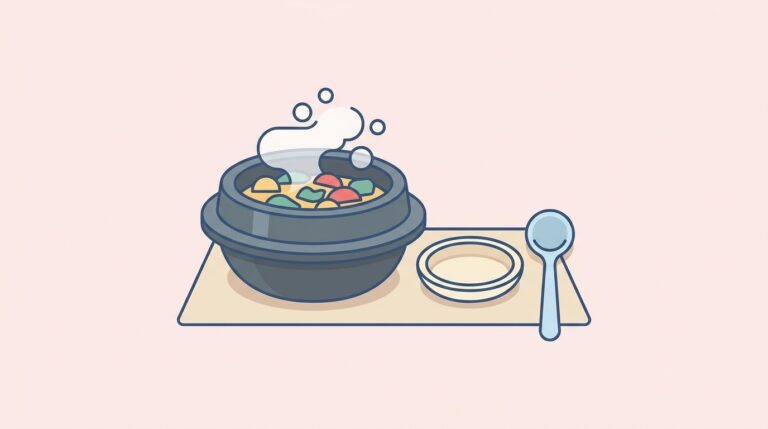
Picture this: It is a brisk autumn evening in Seoul. You walk into a bustling local eatery tucked inside an alley in Euljiro. The air smells heavenly—roasted sesame oil, bubbling garlic, and simmering beef broth. The server, a warm and energetic Imo-nim (auntie), hustles over carrying a dark, thick stone pot (뚝배기, ttukbaegi). The stew inside is practically roaring, sending steam billows into the air. Starving from walking around Gyeongbokgung Palace all afternoon, you eagerly dip your metal spoon right into the center of the pot and bring a generous mouthful straight to your lips.
Ouch!
Your eyes widen in shock, tears sting your eyelashes, and your mouth feels like it just touched molten lava. You frantically wave your hands and try to say something to your Korean dining partner or the server, but your mind races: Do I say “더워요 (deowoyo)”? Wait, isn’t that for the weather? Do I say “매워요 (maewoyo)”? No, that means spicy!
If you have ever mixed up temperature and spice in Korea—or suffered the agonizing “volcano tongue” because you didn’t catch the server’s swift warning—you are not alone. In our Daily Hangul student surveys, over 78% of beginner learners admitted mixing up temperature-hot and spicy-hot during their first week in Korea. Today, we are mastering “뜨거워요” (tteugeowoyo): your essential shield against boiling stews, sizzling barbecue grills, and steaming street-side tteokbokki! Let’s dive in.
Phase 2: 핵심 표현 3선 심층 분석 (Top 3 Core Expressions)
Here are the three must-know expressions to navigate boiling-hot Korean meals like a seasoned local.
1. 뜨거워요 (Tteugeowoyo)
- Pronunciation: [Tteu-geo-wo-yo] (Think of a hard “T” clicking on the roof of your mouth like “tt-,” then “guh-wo-yo”)
- Meaning: “It is hot” (Literal: Physical temperature / touch / food, NOT weather)
- K-Culture Moment: Seen in almost every K-drama camping or street food scene where the lead character takes a sip of instant ramyeon broth straight from the golden pot lid and instinctively blows out air saying, “아, 뜨거워!” (Ah, tteugeowo!)
- Editor’s Insight: English uses “hot” for everything—the weather, spicy chili, boiling water, and an attractive person! In Korean, these are completely separate universes. 뜨거워요 is strictly physical temperature that you feel when touching or tasting something hot.
- Situation Spectrum:
- Casual (with friends): 뜨거워 (Tteugeowo) ✅
- Semi-formal (restaurants, standard daily life): 뜨거워요 (Tteugeowoyo) ✅
- Formal (news, formal announcements): 뜨겁습니다 (Tteugeopseumnida) ✅
- 🤔 Think About It: Why do you think Korean developed three distinct words for “hot” (weather: 덥다, spice: 맵다, temperature: 뜨겁다)? What does this reveal about Korean culinary and sensory sensitivity?
2. 조심하세요 (Josimhaseyo)
- Pronunciation: [Jo-sim-ha-se-yo] (Sounds like “Joe-seem-ha-say-yo”)
- Meaning: “Please be careful” / “Watch out!”
- K-Culture Moment: The signature phrase shouted by restaurant staff navigating narrow aisles while balancing trays of boiling broth or glowing charcoal briquettes (숯불, sutbul).
- Editor’s Insight: Whenever a server sets a dish down and pairs it with “뜨거워요, 조심하세요!” (It’s hot, be careful!), don’t touch the bowl with your bare hands. Korean stone and ceramic pots retain heat for up to 20 minutes!
- Situation Spectrum:
- Casual: 조심해 (Josimhae) ✅
- Semi-formal: 조심하세요 (Josimhaseyo) ✅
- Formal: 조심하십시오 (Josimhasipsio) ✅
- 🤔 Think About It: In your native culture, do restaurant servers actively warn you verbally before placing hot items on the table, or is it assumed you will notice?
3. 식혀서 드세요 (Sikhyeoseo deuseyo)
- Pronunciation: [Si-khyeo-seo deu-se-yo] (Say “She-kyeo-suh dew-say-yo”)
- Meaning: “Let it cool down before eating” (Literal: Cool it down and eat)
- K-Culture Moment: Often heard when an older Korean relative or an attentive dining buddy gently dishes out food from a communal stew into your personal bowl.
- Editor’s Insight: Derived from 식히다 (to let cool) and 드시다 (honorific of “to eat”). Hearing this is a sign of genuine care and warmth (정, Jeong) in Korean food culture.
- Situation Spectrum:
- Casual: 식혀서 먹어 (Sikhyeoseo meogeo) ✅
- Semi-formal: 식혀서 드세요 (Sikhyeoseo deuseyo) ✅
- Formal: 식혀서 드십시오 (Sikhyeoseo deusipsio) ⚠️ (A bit too stiff for regular dining)
- 🤔 Think About It: Notice how “cool it down” and “eat” are fused into a single compound thought. In Korean hospitality, preventing discomfort is part of the culinary experience.
Phase 3: 교과서 한국어 vs 진짜 한국어 (Textbook vs. Real-Life Korean)
Situation 1: Reacting when your food arrives boiling
- 📖 교과서 한국어 (Textbook): 이 찌개는 대단히 뜨겁습니다. (I jjigaeneun daedanhi tteugeopseumnida. / “This stew is exceedingly hot.”)
- 🗣️ 진짜 한국어 (Real-Life): 와, 진짜 뜨거워요! (Wa, jinjja tteugeowoyo! / “Whoa, it is seriously hot!”)
- 💡 왜 다를까? (Why the difference?): Nobody uses textbook intensifiers like 대단히 in modern speech. Koreans immediately default to 진짜 (jinjja) or 완전 (wanjeon) to express authentic, gut-level reactions.
Situation 2: Asking for an extra bowl to cool down the food
- 📖 교과서 한국어 (Textbook): 온도를 낮추기 위해 그릇을 하나 주십시오. (Ondoreul natchugi wihae geureuseul hana jusipsio. / “Give me a vessel to reduce the temperature.”)
- 🗣️ 진짜 한국어 (Real-Life): 앞접시 하나만 더 주세요! (Apjeopsi hanaman deo juseyo! / “Could I please have one more front-plate/small bowl?”)
- 💡 왜 다를까? (Why the difference?): Koreans rarely explain why they need a bowl; they simply ask for an 앞접시 (apjeopsi – personal saucer/bowl used for portioning out boiling stew).
Phase 4: K-Culture 딥다이브 & 비언어적 매너 (Culture Deep Dive & Etiquette)
4-1. 눈치 (Nunchi) & The “Ear-Grab” Reflex
When Koreans accidentally touch a scalding hot dish or handle, you will witness a quirky reflex: they immediately grab both earlobes with their thumb and index finger, chanting “앗 뜨거!” (At tteugeo!).
Why earlobes? Traditionally, Korean folk wisdom considers earlobes to be the coolest external part of the human body with low blood circulation. Grabbing them cools your fingertips quickly!
- Nunchi Pro-Tip: Never pick up a Korean stone pot (뚝배기) or metal rice bowl (공깃밥) with your bare hands. Metal and stone bowls are meant to stay strictly on the table. Lifting your bowl up to your mouth while eating is considered poor dining etiquette in Korea!
4-2. The Paradox of “시원하다” (Siwonhada)
Watch any Korean variety show or visit a sauna cafeteria, and you will see elderly Koreans swallowing spoonfuls of bubbling-hot fish stew or beef radish soup and letting out an audible sigh: “아~ 시원하다!” (Ah, so refreshing/cool!).
Confused? In Korean, 시원하다 literally translates to “cool” or “refreshing” (temperature-wise). But in food culture, it describes that soothing, deep, unclogging sensation in your chest and throat after sipping a clean, savory, boiling-hot broth. It is not cold—it is spiritually refreshing!
Phase 5: 실전 롤플레이 시나리오 (Interactive Roleplay Scenario)
Setting: A vibrant, fragrant Sundubu Jjigae (soft tofu stew) shop in Insadong.
Characters:
* Alex: An eager first-time traveler to Seoul.
* Imo-nim (이모님): The warm, speedy restaurant owner wearing a floral visor.
- Turn 1 (이모님): 순두부찌개 나왔습니다! 조심하세요, 그릇 아주 뜨거워요!
(Sundubujjigae nawasseumnida! Josimhaseyo, geureut aju tteugeowoyo!)
“Soft tofu stew is here! Be careful, the stone bowl is very hot!”
🎭 Placing down a violently bubbling black bowl with tongs. -
Turn 2 (Alex): 와, 냄새가 정말 좋아요! 감사합니다!
(Wa, naemsaega jeongmal joayo! Gamsahamnida!)
“Wow, it smells amazing! Thank you!”
🎭 Reaching eagerly for the metal spoon. -
Turn 3 (이모님): 바로 먹으면 입 천장 데어요! 식혀서 드세요.
(Baro meogeumyeon ip cheonjang de-eoyo! Sikhyeoseo deuseyo.)
“If you eat right away, you’ll burn the roof of your mouth! Let it cool down first.”
🎭 Passing a small metal container with a raw egg. -
Turn 4 (Alex): 아! 정말요? 어떻게 먹어야 해요?
(Ah! Jeongmallyo? Eotteoke meogeoya haeyo?)
“Ah! Really? How should I eat it?”
🎭 Hesitating with the spoon mid-air. -
Turn 5 (이모님): 계란 넣고, 국물을 앞접시에 덜어서 호호 불어 드세요.
(Gyeran neoko, gungmureul apjeopsie deoreoseo ho-ho bureo deuseyo.)
“Drop the egg in, ladle soup into your saucer bowl, and blow on it gently.”
🎭 Mimicking blowing on a spoonful with rounded lips. -
Turn 6 (Alex): 네! 앞접시에 덜어서… 후- 후-
(Ne! Apjeopsie deoreoseo… hu- hu-)
“Okay! Scooping into the small bowl… blows air.”
🎭 Carefully ladling a spoonful of tofu and blowing twice. -
Turn 7 (Alex): 음! 아직 조금 뜨겁지만, 진짜 맛있어요!
(Eum! Ajik jogeum tteugeopjiman, jinjja masisseoyo!)
“Mmm! It’s still a little hot, but truly delicious!”
🎭 Smiling brightly with eyes wide in delight. -
Turn 8 (이모님): 그래요, 밥 말아서 천천히 드셔요!
(Geuraeyo, bap maraseo cheoncheonhi deusyeoyo!)
“Good! Mix your rice in and enjoy it at your own pace!”
🎭 Patting Alex gently on the shoulder with a proud grin.
🔀 Interactive Decision Point: What would you do?
You just took a sip, and the soup is far too scalding to swallow.
- Choice A: Yell “더워요! (Deowoyo!)” while fanning your mouth.
- Feedback (Bad): The owner will think you are complaining about the air conditioning! 더워요 means the ambient climate is hot.
- Choice B: Grab the stone pot with your napkin to slide it away from you.
- Feedback (Risk): Extreme danger! The heat transfers right through napkins, and stone pots can crack or spill boiling soup onto your lap.
- Choice C: Exclaim politely, “앗, 너무 뜨거워요! 물 좀 마실게요.” (At, neomu tteugeowoyo! Mul jom masilgeyo. / “Ack, it’s too hot! I’ll drink some water.”) while scooping portions onto your 앞접시.
- Feedback (Best): Perfect native response! You accurately communicated physical heat, kept your hands safe, and neutralized the burn.
Phase 6: 10초 감정 섀도잉 드릴 (10-Second Emotion Shadowing Drill)
Practice reading these out loud. Pay special attention to the pause slashes (/) and adopt the indicated emotions!
[😮 놀라고 다급하게 - Surprised & Urgent]
앗! / 너무 뜨거워요! / 조심하세요!
(At! / Neomu tteugeowoyo! / Josimhaseyo!)
“Ack! / It’s too hot! / Watch out!”-
[😊 다정하고 친절하게 - Warm & Caring]
천천히, / 식혀서 / 드세요.
(Cheoncheonhi, / sikhyeoseo / deuseyo.)
“Slowly, / let it cool down / and enjoy.” -
[🤤 감탄하며 신나게 - Delighted & Impressed]
와, / 국물이 / 진짜 시원하고 / 맛있어요!
(Wa, / gungmuri / jinjja siwonhago / masisseoyo!)
“Wow, / the soup broth is / truly refreshing / and delicious!”
Phase 7: K-Culture 미니 사전 (Mini Culture Dictionary)
-
뚝배기 (Ttukbaegi)
Translation: Glazed earthenware / stone pot.
Usage: The traditional heat-retaining bowl used for stews (jjigae) and soups (gukbap). It continues to cook your food even after it leaves the stovetop. -
앞접시 (Apjeopsi)
Translation: Personal portion plate / saucer.
Usage: When sharing a boiling communal dish, every diner uses an 앞접시 to transfer manageable, bite-sized portions that cool down quickly. -
호호 불다 (Ho-ho bulda)
Translation: To blow softly on hot food.
Usage: Onomatopoeia mimicking the gentle “ho-ho” sound made by round lips when cooling down street winter snacks like bungeoppang (carp bread) or hot mandu. -
시원하다 (Siwonhada)
Translation: Refreshing / invigorating.
Usage: Culturally used when savoring hot, clear broths that clear sinuses and relieve stress, or when experiencing pleasant physical relief.
Phase 8: 여행자를 위한 생존 키트 (Traveler’s Survival Kit)
Top 3 Survival Phrases for Hot Food
- 뜨거워요, 조심하세요! (Tteugeowoyo, josimhaseyo!)
→ Pro Tip: Use this when passing hot dishes across the table to your friends. - 앞접시 하나 주세요. (Apjeopsi hana juseyo.)
→ Pro Tip: Essential if the stew is served boiling and you don’t have a personal saucer. - 찬물 좀 주세요. (Chanmul jom juseyo. / “Please give me cold water.”)
→ Pro Tip: If your mouth is on fire, 찬물 (chanmul – ice/cold water) will be your immediate savior.
Editor’s Travel Note: Culinary Navigation in Korea
- App Recommendation: Make sure you complete your Naver Map app download before landing. Most iconic soup and stew joints (노포, nopo) in old neighborhoods are hidden in tiny alleys where Google Maps does not provide accurate walking routes.
- Water Etiquette: In 90% of casual Korean restaurants, drinking water is self-service (물은 셀프입니다). Look for a metallic water purifier with stacked stainless-steel cups near the counter instead of waiting for the server!
Phase 9: “한 발 더 깊이” (Cultural Reflection Essay)
In many Western dining cultures, food is brought to the table at an immediately consumable temperature. In Korea, however, culinary philosophy revolves around the concept of 따끈따끈 (piping hot vitality). Food is viewed as living nourishment: stews should arrive bubbling vigorously, and barbecue meats must be eaten directly from the griddle.
This demands patience, community coordination, and mindful eating. Taking time to scoop portions onto an 앞접시, blowing on food for your tablemates, and reminding each other to “eat slowly” transforms what could be a dangerous meal into a communal gesture of care.
💬 Your Turn: What is the hottest or most scalding dish in your home country? How do people at the table warn each other when something is boiling? Share your story in the comments below!
Phase 10: FAQ & 오해 방지 (FAQ & Mistake Prevention)
Q: Can I use “뜨거워요” to describe hot sunny weather?
A: No! For weather, you must use 더워요 (deowoyo). If you step outside in July and say “날씨가 뜨거워요,” Koreans will understand what you mean poetically (like “the sun rays are burning hot”), but standard daily speech requires 더워요.
Q: What is the exact difference between “뜨거워요” and “매워요”?
A: 뜨거워요 is thermal temperature (thermal heat that can burn skin or tongue). 매워요 (maewoyo) is chemical heat caused by capsaicin (chili peppers). A cold kimchi noodle dish can be 매워요, while a hot cup of black tea is 뜨거워요.
Q: If the food is too hot, is it rude to blow on it at the table?
A: Not at all! Blowing gently on your spoon (호호 불기) is completely natural and expected. Just be mindful not to blow so forcefully that soup splatters onto your dining partner.
🚨 Common Mistakes Alert (Top 3)
| Incorrect Expression | Why it’s Wrong | Correct Action |
|---|---|---|
| “이 라면 너무 더워요!” | 더워요 is only for atmospheric weather. | Say: “이 라면 너무 뜨거워요!” |
| “물이 매워요!” (meaning boiling water) | 매워요 implies chili spice/pungency. | Say: “물이 뜨거워요!” |
| Picking up a metal soup bowl with your hands | Considered bad posture and risks severe finger burns. | Keep the bowl resting on the table; scoop with your spoon! |
Phase 11: 액션 미션 & 참여 유도 (Action Missions)
- 🥉 Bronze Mission (Solo Practice): Stand in front of your mirror with a mug of warm tea. Say out loud 3 times with realistic facial drama: “앗, 뜨거워요! 조심하세요!”
- 🥈 Silver Mission (Social Media): Post a photo of your next hot meal on Instagram or Threads and caption it: “진짜 뜨거워요! (Jinjja tteugeowoyo!)” tagging #DailyHangul.
- 🥇 Gold Mission (Real-world Challenge): Next time you visit a Korean restaurant, ask the server for an extra saucer with confidence: “사장님, 앞접시 하나만 더 주세요!”
- 🎮 K-Culture Mission: Watch the latest episode of your favorite K-drama. Spot the moment someone eats ramyeon or stew. Did they touch their earlobes? Did they say “뜨거워”? Report back in the comments!
Phase 12: 인터랙티브 퀴즈 챌린지 (Interactive Quiz Challenge)
Test your skills before you dig into your next Korean stew!
Quiz 1. Situation Judgment
You are handed a piping-hot sweet pancake (호떡, hotteok) fresh out of the frying oil in Namdaemun Market. What is the most natural thing to say to your friend?
* (A) 날씨가 너무 더워요!
* (B) 안에 꿀이 정말 뜨거워요, 조심해요!
* (C) 호떡이 너무 시원해요!
👉 Click to reveal the answer!
Correct Answer: (B)
Explanation: The melted sugar syrup (꿀) inside hotteok is famous for being scalding hot! (A) refers to summer weather, and (C) means cold/refreshing.
Quiz 2. Fill-in-the-Blank
Complete the sentence using the honorific for “Please cool it down before eating”:
“국물이 뚝배기에 있어서 아주 뜨거워요. (___________) 드세요!”
👉 Click to reveal the answer!
Correct Answer: 식혀서 (Sikhyeoseo)
Explanation: 식히다 means “to let cool.” Combined with -어서, it forms 식혀서 드세요 (Let it cool down, then eat).
Quiz 3. True / False Cultural Check
Statement: In traditional Korean dining etiquette, it is polite to lift your hot soup bowl off the table with two hands to drink directly from it.
* [ ] True
* [ ] False
👉 Click to reveal the answer!
Correct Answer: False!
Explanation: Unlike Japanese or Chinese dining traditions, Korean bowls stay grounded on the table. Diners use long-handled metal spoons (숟가락) to scoop soup and broth. Lifting the bowl is both bad manners and a quick way to burn your fingers on hot metal or stone!







