

Phase 1: 공감 (Story-driven Opening)
안녕하세요! 매일한글 에디터입니다.
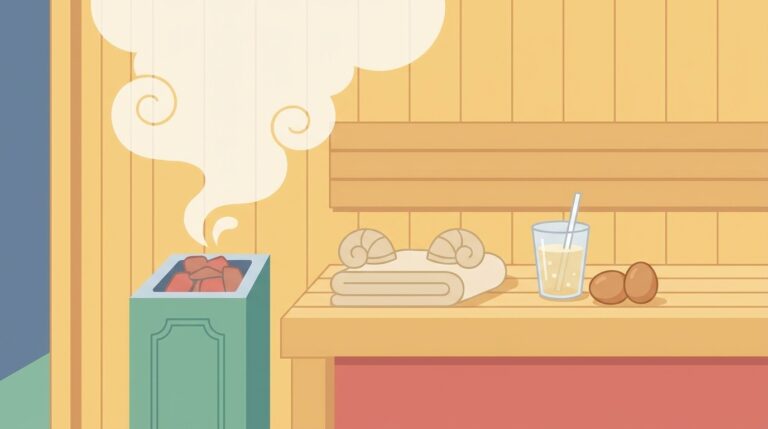
Picture this: You have walked twenty thousand steps exploring the vibrant alleys of Bukchon Hanok Village and shopping through Myeongdong. Your feet are throbbing, your shoulders are stiff, and you want nothing more than to melt into a warm bath. You recall those legendary scenes from K-dramas like Crash Landing on You or Reply 1988 where families relax in cozy saunas, wearing cute towel ‘sheep horns’ on their heads and cracking brown eggs on each other’s foreheads. You eagerly push open the doors of a glowing jjimjilbang (Korean sauna), but instantly freeze.
The front desk staff looks up, asks a rapid-fire question in Korean, and points at several racks of clothes, keys, and shoe cubbies. Panic sets in: Do I need special clothes? How do I pay for the entrance? Where do my shoes go? Take a deep breath! Many of our Daily Hangul learners have shared this exact moment of intimidation. In this guide, you will master the simple, natural A2-level Korean phrases you need to breeze through the counter, order tasty treats at the snack bar, and soak away your fatigue like a true local.
Phase 2: 핵심 표현 3선 심층 분석
1. 성인 한 명이요 (Seong-in han myeong-iyo)
- Pronunciation: [Seong-in han myeong-ee-yo] (Sounds like “Song-een hahn myung-ee-yo”)
- Meaning: “One adult, please.” (Literal: “Adult one person, is”)
- K-Culture Moment: Every time a traveler or solo character steps up to a public bath (mokyoktang) ticket counter in Korean variety shows, this is the instant, natural phrase they utter with a smile.
- Editor’s Insight: In Korean counters, you don’t need complicated grammatical structures like “I would like to purchase one ticket.” Stating the category (
성인= adult) and count (한 명= one person) with the polite ending~이요is 100% natural, polite, and universally understood.- Situation Spectrum: Casual: ⚠️ (with friends) | Semi-formal / Counter: ✅ | Formal: ⚠️
- 🤔 Think About It: In English, we often ask “Can I get a ticket for one adult?” In Korean, stating the headcount directly with
~이요conveys politeness through brevity. Why do you think Korean service interactions value concise efficiency?2. 찜질복 포함이에요? (Jjimjilbok poham-ieyo?)
- Pronunciation: [Jjim-jil-bok po-ham-ee-eh-yo?] (Think of “Jeem-jeel-bohk poh-hahm-ee-eh-yo”)
- Meaning: “Does this include the sauna clothes?” (Literal: “Sauna clothes included-is?”)
- K-Culture Moment: Seen in travel shows like 2 Days & 1 Night when cast members confirm if they can enter the shared lounge floor where everyone wears the matching oversized t-shirt and shorts.
- Editor’s Insight: Traditional public baths have only the hot baths (tang), while a jjimjilbang features heated communal lounges requiring rental uniforms (jjimjilbok). Often, the base fee covers just the bath, and the clothes cost 1,000–3,000 KRW extra. Asking this avoids awkward confusion.
- Situation Spectrum: Casual: ⚠️ | Semi-formal / Counter: ✅ | Formal: ✅
- 🤔 Think About It: Why do you think Korean saunas make everyone wear the exact same uniform in the co-ed public lounge?
3. 식혜랑 구운 계란 주세요 (Sikhyerang guun gyeran juseyo)
- Pronunciation: [Seek-hyeh-rahng goo-oon gyeh-rahn joo-seh-yo]
- Meaning: “Please give me sweet rice punch and baked eggs.”
- K-Culture Moment: In countless Korean dramas, characters lie on the heated floor of a jjimjilbang, break an amber-colored baked egg on their friend’s skull with a loud thock, and sip sweet, icy sikhye through a plastic straw.
- Editor’s Insight: The connector
~랑(rang) means “and” in casual/conversational speech.구운 계란refers to sauna-style eggs baked slowly at high temperatures until nutty and brown. Simply attach주세요(please give me) at the end!- Situation Spectrum: Casual: ⚠️ | Semi-formal / Snack Bar: ✅ | Formal: 🚫
- 🤔 Think About It: How does combining a sweet digestive drink with protein-rich baked eggs reflect the Korean philosophy of replenishing energy after sweating?
Phase 3: 교과서 한국어 vs 진짜 한국어
Situation 1: Paying at the entrance counter
* 📖 교과서 한국어: 입장료는 얼마입니까? (Ipjangryoneun eolma-imnikka? – How much is the admission fee?)
* 🗣️ 진짜 한국어: 성인 한 명이요! (Seong-in han myeong-iyo! – One adult, please!)
* 💡 왜 다를까? Textbook Korean teaches formal inquiry questions, but in busy real-world Seoul saunas, staff already know you want to enter. Stating your group size immediately lets the cashier ring you up in two seconds.
Situation 2: Ordering at the in-house snack bar
* 📖 교과서 한국어: 식혜 한 개와 계란 세 개를 주십시오. (Sikhye han gaewa gyeran se gaereul jusipsio. – Please provide one sikhye and three eggs.)
* 🗣️ 진짜 한국어: 식혜 하나랑 계란 세 개 주세요~ (Sikhye hana-rang gyeran se gae juseyo~ – One sikhye and three eggs, please~)
* 💡 왜 다를까? 주십시오 is overly stiff and sounds like an official military command. Using 주세요 with soft conversational numbers (하나, 두 개, 세 개) creates a warm, approachable atmosphere.
Phase 4: K-Culture 딥다이브 & 비언어적 매너
4-1. 눈치(Nunchi) & Gestures
- The Shoe First Rule: Before touching the reception desk, look for the shoe lockers near the door. Remove your shoes right at the entrance threshold, lock them up, and hand that exact shoe key to the counter clerk. In exchange, they will give you your bath locker key and clothing.
- Gaze Etiquette in the Bath Area: In the gender-separated bathhouse (mokyoktang), complete nudity is standard. The ultimate nunchi rule here is eye contact: look straight ahead or slightly down. Staring at other bathers—or even glancing too curiously—violates bath etiquette. Walk with your small modesty towel held naturally in front of you.
- The Electronic Key Tap: At the snack bar and massage chairs, never take cash or physical credit cards out. Your wristband key has an RFID chip. Simply tap the band against the reader and say
계산할게요(Gyesan-halgeyo – “I will pay with this”). You settle the total bill at the front desk when exiting.
4-2. Cultural Code Analysis: The Jjimjilbang Community & The Towel Sheep Head
Why are saunas so deeply woven into Korean culture? Korea has long celebrated a communal culture known as Jeong (정). In a sauna, all social statuses vanish—professors, students, business executives, and taxi drivers all wear the same plain shorts and sit on the same heated ondol floor.
Furthermore, the famous 양머리 (Yangmeori – Sheep Head) towel fold originated in the 2005 drama My Lovely Sam Soon. Bath towels provided in Korean saunas are intentionally compact. By rolling the two ends of a folded towel outward into round buns, it turns into a snug cap that prevents your hair from touching the hot sauna floor while absorbing forehead sweat. It quickly evolved from a practical life-hack into an iconic cultural statement.
Phase 5: 실전 롤플레이 시나리오
Setting: The entrance counter of “Hangul Spa” in central Seoul. The desk is managed by a cheerful, brisk Korean auntie (Imo-nim).
- Turn 1 (Staff): 안녕하세요! 몇 분이세요? (Annyeonghaseyo! Myeot bun-iseyo?)
🎭 Looking up from the computer and greeting briskly.
(Hello! How many people in your party?) - Turn 2 (You): 안녕하세요! 성인 한 명이요. (Annyeonghaseyo! Seong-in han myeong-iyo.)
🎭 Handing over your small shoe locker key with two hands.
(Hello! One adult, please.) - Turn 3 (Staff): 사우나만 하세요, 찜질방도 가세요? (Saunaman haseyo, jjimjilbang-do gaseyo?)
🎭 Holding up a set of folded orange cotton clothes.
(Are you only using the bath sauna, or going to the jjimjilbang lounge too?) - Turn 4 (You): 찜질복 포함이에요? (Jjimjilbok poham-ieyo?)
🎭 Pointing softly at the orange clothes to double check.
(Does this include the sauna clothes?) - Turn 5 (Staff): 네, 이천 원 추가하시면 찜질방 이용 가능해요. (Ne, icheon won chugahasimyeon jjimjilbang iyong ganeunghaeyo.)
🎭 Tapping the register and smiling.
(Yes, if you add 2,000 won, you can use the jjimjilbang.) - Turn 6 (You): 네, 찜질복도 주세요! (Ne, jjimjilbok-do juseyo!)
🎭 Nodding pleasantly.
(Yes, please give me the sauna clothes too!) - Turn 7 (Staff): 수건 두 장이랑 락커 키예요. 여탕은 2층입니다! (Su-geon du jang-irang rak-keo ki-yeyo. Yeotang-eun i-cheung-imnida!)
🎭 Handing over towels and the numbered electronic wristband.
(Here are two towels and your locker key. The women’s bath is on the 2nd floor!) - Turn 8 (You): 감사합니다! (Gamsahamnida!)
🎭 Bowing head slightly and receiving the items with both hands.
(Thank you!)
🔀 Interactive Branching Point
After paying, you walk into the locker room, change into your jjimjilbok, and reach the central snack bar. You want a refreshing sweet drink and two baked eggs. What do you say?
- Choice A: 저기요, 식혜 하나랑 구운 계란 두 개 주세요. (Jeogiyo, sikhye hana-rang guun gyeran du gae juseyo.)
- Choice B: 식혜와 계란을 빨리 가져오세요. (Sikhyewa gyeraneul ppalli gajyeo-oseyo.)
- Choice C: 사장님, 메뉴판에 있는 거 다 주세요! (Sajangnim, menyupane inneun geo da juseyo!)
Feedback:
* Choice A (Best!): Perfect! 저기요 politely gets the attendant’s attention, and 하나랑 두 개 주세요 is natural and friendly A2 Korean. The attendant will happily tap your wristband.
* Choice B (Bad): 빨리 가져오세요 means “Bring it quickly!” This sounds demanding and impolite in Korean service settings.
* Choice C (Risk): This means “Give me everything on the menu!” Unless you plan to feed forty people and drain your travel budget, your snack bar auntie will burst out laughing!
Phase 6: 10초 감정 섀도잉 드릴
Practice saying these three sentences aloud using the rhythm marks (/) and feeling the emotional cues:
[😊 Polished & Confident]
안녕하세요! / 성인 / 한 명이요!
(Annyeonghaseyo! / Seong-in / han myeong-iyo!)
Stress: Put a slight bounce on “성인” (adult) and finish softly on “~이요.”-
[🤔 Curious & Inquiring]
찜질복 / 포함이에요?
(Jjimjilbok / poham-ieyo?)
Stress: Raise the intonation slightly at the very end on “~에요?” to show a polite question. -
[🤤 Hungry & Delighted]
이모님! / 식혜 하나랑 / 구운 계란 주세요!
(Imo-nim! / Sikhye hana-rang / guun gyeran juseyo!)
Stress: Friendly upward melody on “이모님!” followed by a relaxed pace on “주세요.”
Phase 7: K-Culture 미니 사전
- 찜질방 (Jjimjilbang) | Korean Dry Sauna Complex
A large multi-floor wellness entertainment facility equipped with traditional kiln saunas (ranging from pine-scented 40°C rooms to 90°C clay domes), sleeping halls, restaurants, PC rooms, and massage chairs. - 때밀이 (Ttaemiri) | Professional Body Scrub Service
A traditional service where a skilled bathhouse specialist uses an abrasive textured glove (Italy towel) to scrub away dead skin cells. You will leave feeling like you have brand-new silk skin! - 양머리 (Yangmeori) | Sheep Head Towel Cap
A distinctive way of rolling a hand towel into two snug side rolls that fit over your head, famously worn in Korean saunas to keep hair neat and celebrate bathhouse leisure. - 식혜 (Sikhye) | Sweet Fermented Rice Punch
A traditional chilled malt beverage with floating cooked grains of rice. Served ice-cold, it is the quintessential drink to rehydrate after sweating in a thermal room.
Phase 8: 여행자를 위한 생존 키트
Top 3 Survival Expressions
- 남탕 / 여탕 어디예요? (Namtang / Yeotang eodi-yeyo?)
Meaning: Where is the men’s bath / women’s bath?
Pro Tip: Look at the door curtains: Blue typically marks 남 (Men) and Red or Pink marks 여 (Women). - 수건 하나 더 주세요. (Su-geon hana deo juseyo.)
Meaning: Please give me one more towel.
Pro Tip: In men’s locker rooms, small towels are often stacked freely. In women’s locker rooms, you are usually issued two towels at the counter; ask politely if you need an extra. - 키 잃어버렸어요. (Ki ileobeoryeosseoyo.)
Meaning: I lost my key band.
Pro Tip: Report this immediately to the counter! The electronic band tracks all your snack purchases and secures your shoes.
Editor’s Travel Note
- Finding Authentic Saunas: Do not rely on generic search engines which often miss small neighborhood gems. For real-time opening hours and local customer reviews, use the 네이버 지도 앱 다운로드 (Naver Map app download) and search for
찜질방or사우나near your station. - Overnight Stays: Almost all large jjimjilbangs allow you to sleep overnight for a very modest surcharge (around 15,000–20,000 KRW total). Just grab a mat, a wooden neck pillow from the communal rack, and pick a quiet sleeping room (Sumyeon-sil).
Phase 9: “한 발 더 깊이” (Cultural Essay)
In Western cultures, privacy is strictly guarded, and the idea of being naked in a public bath with strangers can trigger intense vulnerability. But in Korean society, the bathhouse represents the ultimate form of social equality and emotional closeness. When Koreans say “우리는 목욕탕도 같이 간 사이야” (We are close enough to have gone to the bathhouse together), it symbolizes absolute trust and honesty. Stripped of designer clothes, jewelry, and social titles, everyone is simply a human being relaxing in warm water. It is an unvarnished space of communal rejuvenation.
💬 Your Turn: Have you ever experienced a public bath or sauna in your home country? Would you be brave enough to try a traditional Korean body scrub (ttaemiri)? Share your thoughts in the comments below!
Phase 10: FAQ & 오해 방지
Q: Can I wear a swimsuit into the bath area?
A: No. Swimsuits are strictly prohibited in the gender-separated bathhouse (tang). Everyone bathes completely unclothed to maintain water purity. However, you must wear the provided t-shirt and shorts (jjimjilbok) in the co-ed public sauna lounge.
Q: Are people with tattoos allowed into Korean saunas?
A: Small, discreet tattoos are generally overlooked nowadays. However, large, visible body tattoos (especially full back or sleeve tattoos) can still make older visitors uncomfortable and some traditional baths may restrict entry. If you have visible ink, choose modern, tourist-friendly mega-spas in Seoul like Cimer or Spa Lei.
Q: What should I do before entering the hot water tubs?
A: You must shower thoroughly first! Walking directly into the hot communal tubs without washing your body and rinsing off soap is considered a major breach of etiquette.
🚨 Common Mistakes (흔한 실수 TOP 3)
- Stepping into the locker room with shoes on:
Wrong: Walking past the entrance threshold wearing your street shoes.
Correct Action: Slip your shoes off immediately at the front entrance foyer and put them into the dedicated shoe lockers (Sinbal-jang). - Dunking your head or towel into the shared bath:
Wrong: Submerging your hair or dipping your washcloth into the tub water.
Correct Action: Tie long hair up or balance your folded towel on top of your head to keep the shared hot bath clean. - Using soap inside the hot tub:
Wrong: Bringing soap or scrub towels into the soaking pools.
Correct Action: Soap, wash, and scrub exclusively at the individual sit-down washing stalls before entering the tubs.
Phase 11: 액션 미션 & 참여 유도
- 🥉 Bronze Mission (Self Practice): Stand before your bathroom mirror and practice saying:
성인 한 명이요!(Seong-in han myeong-iyo!) and식혜랑 계란 주세요!(Sikhyerang gyeran juseyo!) three times without hesitation. - 🥈 Silver Mission (Social Share): Fold a standard hand towel into the famous Yangmeori (sheep head) style, snap a selfie, and tag us on Instagram with
#DailyHangulSauna! - 🥇 Gold Mission (Real Life): On your next trip to Korea, visit a local jjimjilbang, pay for entry using only Korean, and order a cup of iced sikhye at the snack kiosk!
- 🎮 K-Culture Mission: Watch an episode of a slice-of-life K-drama (like Weightlifting Fairy Kim Bok Joo or Business Proposal). Spot the sauna scene and listen closely: did the characters order sikhye and crack eggs?
Phase 12: 인터랙티브 퀴즈 챌린지
1. Situational Judgment:
You are at the counter, and you want to ask if the sauna loungewear is included in your entry ticket. Which phrase should you say?
(A) 찜질복 포함이에요? (Jjimjilbok poham-ieyo?)
(B) 찜질복 버려주세요. (Jjimjilbok beoryeo-juseyo.)
(C) 찜질복 없어요. (Jjimjilbok eopseoyo.)
2. Fill-in-the-Blank:
To order sweet rice punch and eggs at the snack counter:
“식혜______ 구운 계란 주세요!” (Fill in the conversational particle meaning “and”):
(A) 은 (eun)
(B) 랑 (rang)
(C) 도 (do)
3. True or False:
In a Korean bathhouse (mokyoktang), it is polite to jump straight into the hot tub to warm up before taking a shower.
[ True / False ]
👉 Click here to reveal the Answers & Explanations!
- Quiz 1 Answer: (A)
찜질복 포함이에요?(Does this include the sauna clothes?). Choice B means “Please throw away the clothes,” and Choice C means “I don’t have clothes.” - Quiz 2 Answer: (B) 랑 (rang). In everyday spoken Korean,
단어 + 랑is the most natural way to say “Item A and Item B” (e.g., 식혜랑 계란). - Quiz 3 Answer: False! You must always thoroughly shower and wash before stepping into any communal hot bath.







