

The Art of Scent and Stillness: Navigating Korean Tea Ceremony and Incense Culture
Phase 1: 공감 (Immersive Storytelling Opening)
안녕하세요! 매일한글 에디터입니다.
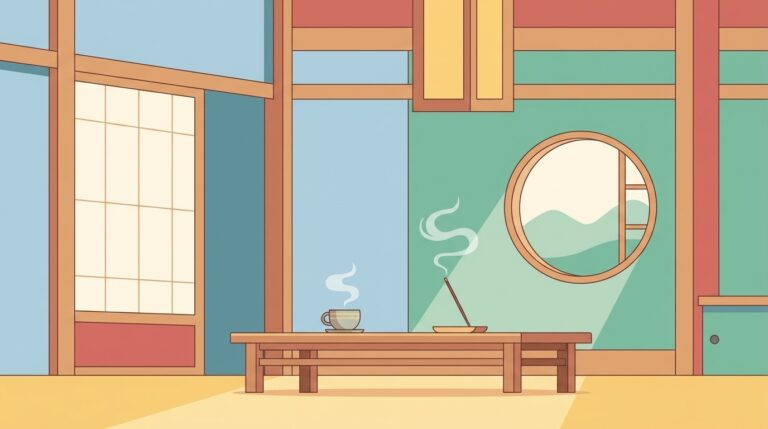
Imagine stepping out of the bustling, neon-lit rhythm of Seoul and ducking beneath the pine eaves of a secluded Hanok teahouse in Bukchon. The frantic hum of traffic fades, replaced by the soft drip of water over stone and the dry, grounding warmth of sandalwood drifting through the air. You sit cross-legged on the silk cushion, ready to partake in a traditional tea and meditation session. The tea master places a slender incense stick (incense stick / 향) into a ceramic holder and strikes a match. The flame flares, and out of instinct, you lean forward to blow it out with your mouth—only to catch the master’s eyes widening slightly in gentle alarm.
In that quiet instant, you realize that every breath, flick of the wrist, and sensory description in a Korean tea room carries layered cultural codes. For advanced learners, stepping beyond standard classroom Korean into the world of traditional aesthetics (pungryu, 풍류) requires nuance. You aren’t just “drinking tea”; you are entering an intentional space of mindfulness, aroma, and refined sensory expression. Based on years of mentoring learners through cultural faux pas and nuanced conversational shifts, this guide is your insider compass to mastering Korean tea and incense etiquette at an authentic C1 level.
Phase 2: 핵심 표현 3선 심층 분석
1. 마음을 가라앉히다 (Maeumeul garaanjhida)
- Pronunciation: Mae-um-eul ga-ra-an-chi-da (Imagine saying “My uhm” followed by “gala” and “un-chee-dah”)
- Meaning: Literal: “To sink one’s heart/mind” | Real Nuance: To settle emotional agitation, center oneself, or find internal stillness.
- K-Culture Moment: Commonly heard in healing variety shows such as Hyori’s Homestay or Three Meals a Day when cast members step away from chaos to breathe in the dawn air or sip hot tea.
- Editor’s Insight: Unlike standard verbs for “calming down” like 진정하다 (jinjeonghada), which often feels clinical or reactive to sudden panic, 마음을 가라앉히다 describes a deliberate, poetic descent into meditative equilibrium—like sediment settling slowly to the bottom of clear water.
- Situation Spectrum:
- Casual: ✅ (Used among close friends when reflecting deeply)
- Semi-formal: ✅ (Common in tea rooms, yoga retreats, therapy contexts)
- Formal: ✅ (Poetic speeches, essays, broadcast media)
- 🤔 Think About It: In English, we often say we want to “clear our head.” Why do you think Korean expresses grounding as “sinking the mind” (downward into the torso) rather than clearing it outward?
2. 잔향이 은은하다 (Janhangi euneunhada)
- Pronunciation: Jan-hyang-i eun-eun-ha-da (Sounds like “Jahn-hyahng-ee” + “oon-oon-ha-dah” with soft unrounded vowels)
- Meaning: Literal: “The lingering fragrance is subtle/gentle” | Real Nuance: The scent doesn’t overpower; it delicately hovers in the background, creating a cozy and sophisticated ambiance.
- K-Culture Moment: Featured frequently in K-drama interior scenes or lifestyle vlogs where characters appreciate niche Korean perfumeries or traditional incense brands in Ikseon-dong.
- Editor’s Insight: 은은하다 (euneunhada) is one of the most culturally valued aesthetic descriptors in Korea. It praises restraint. It can describe light (달빛이 은은하다), sound (음악이 은은하다), or scent. Pairing it with 잔향 (janhyang – lingering base notes) highlights an advanced, mature sensory appreciation.
- Situation Spectrum:
- Casual: ✅ (Appreciating a friend’s room diffuser)
- Semi-formal: ✅ (Tasting tea or smelling incense with an artisan)
- Formal: ✅ (Aesthetic critiques, food & scent reviews)
- 🤔 Think About It: Contrast euneunhada with words like 강렬하다 (gangnyeolhada, intense). How does the Korean preference for subtlety reflect social decorum and respect for shared sensory space?
3. 향멍을 때리다 (Hyangmeongeul ttaerida)
- Pronunciation: Hyang-meong-eul ttae-ri-da (“Hyahng-mung-eul tteh-ree-dah”)
- Meaning: Literal: “To hit an incense-daze” | Real Nuance: To zone out peacefully while watching the smoke curl from an incense stick.
- K-Culture Moment: Born from the modern Korean “meong” culture (e.g., bul-meong / campfire zoning out, mul-meong / staring at water), celebrated by young Koreans seeking digital detox in hip tea bars.
- Editor’s Insight: While 때리다 literally means “to hit,” in modern vernacular it forms lighthearted compound idioms for taking indulgent mental breaks. While slightly colloquial, even discerning tea masters use “향멍” affectionately today.
- Situation Spectrum:
- Casual: ✅ (Perfect for peer conversation, Instagram captions)
- Semi-formal: ⚠️ (Use sparingly; prefer ‘명상에 잠기다’ with elders)
- Formal: 🚫 (Avoid in academic or solemn ceremonies)
- 🤔 Think About It: Why has “zoning out” (meong) transformed from an criticized sign of laziness into a prized wellness commodity in ultra-fast paced (ppalli-ppalli) Korean society?
Phase 3: 교과서 한국어 vs 진짜 한국어
Situation 1: Expressing that the tea and aroma relieve your stress
- 📖 교과서 한국어: 차를 마시고 향을 맡으니 스트레스가 풀리고 편안합니다. (Cha-reul masigo hyang-eul mateuni seuteureseuga pulligo pyeon-an-hamnida. – “Drinking tea and smelling incense relieves my stress and feels comfortable.”)
- 🗣️ 진짜 한국어: 흙내음 섞인 차향 덕분에 복잡했던 머릿속이 싹 비워지는 기분이에요. (Heungnae-eum seokkin chahyang deokbune bokjap-haetdeon meoritsogi ssak biwojineun gibunieyo. – “Thanks to this tea scent with earthy undertones, it feels like my cluttered head is completely swept clean.”)
- 💡 왜 다를까?: C1-level natural Korean avoids generic loanwords like “스트레스” when describing traditional or contemplative experiences. Instead, native speakers evoke sensory textures (흙내음, 차향) and vivid idiomatic release (머릿속이 싹 비워지다).
Situation 2: Complimenting the host’s incense selection
- 📖 교과서 한국어: 이 인센스 스틱 냄새가 정말 좋습니다. (I insenseu seutik naemsaega jeongmal joseumnida. – “The smell of this incense stick is very good.”)
- 🗣️ 진짜 한국어: 향이 전혀 텁텁하지 않고 끝 맛처럼 뒤에 남는 잔향이 참 정갈하네요. (Hyangi jeonhyeo teopteop-haji anko kkeut mat-cheoreom dwie namneun janhyangi cham jeonggal-haneyo. – “The scent isn’t stifling at all; the lingering trail it leaves behind feels remarkably pure and neat.”)
- 💡 왜 다를까?: “냄새” (naemsae) can refer to any odor (even unpleasant ones), whereas “향” (hyang) specifically denotes fragrant incense or aroma. Using nuanced sensory adjectives like 텁텁하다 (stifling, heavy) and 정갈하다 (neat, clean, refined) demonstrates sophisticated aesthetic discernment.
Phase 4: K-Culture 딥다이브 & 비언어적 매너
4-1. 눈치(Nunchi) & 제스처 (The Silent Language of Incense)
- Never blow out the flame with your breath (절대 입으로 불지 마세요): In traditional Korean customs—rooted in both ancestral rites (jesa) and Buddhist practices—human breath is considered physically impure compared to the sacrificial flame. If you light an incense stick, gently wave your hand (손으로 부채질하듯 끄기) or make a soft, swift downward motion with the stick to extinguish the flame. Blowing on it with your lips will instantly rupture the meditative atmosphere.
- Two-handed reverence (두 손의 미학): When receiving a bowl of tea (dawan) or taking an incense holder to inspect its craftsmanship, support the base with your right palm while steadying the side with your left fingers. This subtle physical posture signals humility and mindfulness.
4-2. 문화 코드 분석 (From Ancestral Altars to Hipster Sanctuaries)
Historically, incense in Korea was strictly bound to sacred spheres: Buddhist temples and ancestral memorial tables (jesasang). For older generations, the smell of traditional agarwood (chimhyang) or sandalwood (baekdan) often evoked funeral parlors or solemn rituals.
However, a fascinating cultural renaissance has swept modern South Korea. Young Koreans, overburdened by the relentless pressure of urban life, have rebranded incense into an essential pillar of lifestyle curation. Neighborhoods like Seongsu-dong, Hannam-dong, and Samcheong-dong are home to hybrid tea ateliers where traditional herbal scents meet minimalist Western design. The incense stick is no longer a ritualistic bridge to the dead; it is a sensory boundary marker delineating work from personal healing (healing culture / 힐링 문화).
Phase 5: 실전 롤플레이 시나리오
Setting: Suyeon Sanbang, an antique wooden tea salon nestled in northern Seoul. Rain taps against the paper windows (changhoji). You sit across from Master Hyewon, an experienced tea sommelier and meditation guide.
Turn 1
* Master Hyewon: 비 오는 날에 찾아와 주셔서 다실의 차향이 한결 짙게 느껴지네요. 오늘 어떤 차를 먼저 우려 드릴까요?
* (Bi oneun nare chajawa jusyeoseo dasil-ui chahyangi hangyeol jitge neukkyeojiney.)
* “Coming on a rainy day makes the tea aroma in the room feel notably richer. Which tea may I steep for you first?”
* 🎭 Action: Pours hot water slowly from a celadon kettle, warming the teacups.
Turn 2
* Learner: 비 내리는 바깥 풍경을 보면서 마음을 좀 가라앉히고 싶어서요. 추천해 주실 만한 게 있을까요?
* (Bi naerineun bakkat punggyeongeul bomyeonseo maeumeul jom garaanjhigo sipeoseoyo. Chucheonhae jusil manhan ge isseulkkayo?)
* “I want to settle my mind while watching the rain outside. Do you have something you might recommend?”
* 🎭 Action: Rest hands gently on the wooden low table, maintaining calm posture.
Turn 3
* Master Hyewon: 그렇다면 깊은 산의 솔향을 머금은 발효차와 함께 백단향을 조금 피워드릴게요. 향 피우는 걸 직접 해보시겠어요?
* (Geureotamyeon gipeun san-ui solhyangeul meogeumeun balhyochawa hamkke baekdanhyangeul jogeum piwo-deurilgeyo. Hyang piuneun geol jikjeop haebosigesseoyo?)
* “In that case, I will brew a fermented tea imbued with deep pine aroma and light a bit of sandalwood. Would you like to try lighting the incense yourself?”
* 🎭 Action: Slides a brass matchbox and a slender, dark incense stick forward.
Turn 4
* Learner: 네, 해볼게요. 그런데 불을 붙이고 나서 입으로 불어서 끄면 안 된다고 들었어요, 맞나요?
* (Ne, haebolgeyo. Geureonde bureul buchigo naseo ibeuro bureoseo kkeumyeon an doendago deureosseoyo, mannayo?)
* “Yes, I’d love to try. But I heard one shouldn’t blow the flame out with their mouth, is that right?”
* 🎭 Action: Strikes the match carefully away from the master.
Turn 5
* Master Hyewon: 어머, 예절을 참 잘 알고 계시네요! 맞아요, 불꽃은 이렇게 손으로 살짝 흔들어 끄셔야 향이 그을리지 않아요.
* (Eomeo, yejeoreul cham jal algo gyesiney! Majayo, bulkkoceun ireoke soneuro saljjak heundeureo kkeusyeoya hyangi geueulliji anayo.)
* “Oh, you know the etiquette so well! Exactly, you should gently wave the flame out with your hand so the incense doesn’t scorch.”
* 🎭 Action: Demonstrates a graceful flick of the wrist through the air.
Turn 6
* Learner: 가르쳐 주신 대로 끄니까 연기가 곱게 피어오르네요. 향이 자극적이지 않고 잔향이 참 은은해요.
* (Gareuchyeo jusin daero kkeunikka yeongiga gopge pieo-oreuneyo. Hyangi jageukjeogiji anko janhyangi cham euneunhaeyo.)
* “Extinguishing it just as you taught makes the smoke rise so elegantly. The scent isn’t harsh; the lingering trace is so subtle.”
* 🎭 Action: Places the stick upright into the white celadon burner.
Turn 7
* Master Hyewon: 맞아요. 타들어 가는 연기를 가만히 보고만 있어도 복잡했던 생각이 스르륵 비워지지요.
* (Majayo. Tadeon-eoganeun yeongireul gamanhi bogoman isseodo bokjap-haetdeon saenggagi seureureuk biwojijiyo.)
* “Indeed. Just quietly watching the smoke burn down gently dissolves cluttered thoughts.”
* 🎭 Action: Passes the first small cup of hot tea using both hands.
Turn 8
* Learner: 네, 이게 요즘 유행한다는 ‘향멍’이군요. 찻잔의 온기까지 더해지니 온몸이 편안해집니다.
* (Ne, ige yojeum yuhaenghandaneun ‘hyangmeong’igunyo. Chatjan-ui ong-gikkaji deohaejini onmomi pyeon-anhaejimnida.)
* “Ah, so this is that ‘hyangmeong’ everyone talks about these days. Adding the warmth of the teacup makes my whole body feel relaxed.”
* 🎭 Action: Accepts the cup with both hands, taking a deliberate, quiet sip.
🔀 인터랙티브 분기점 (Choose Your Response)
When the master gently asks, “향의 무게감이 너무 무겁진 않으신가요?” (Is the body of the scent not too heavy for you?), how do you reply?
- Option A: “향이 아주 세서 코가 좀 아프지만 참을 만해요.” (Hyangi aju seseo koga jom apeujiman chameul manhaeyo.)
- 👉 Feedback [Risk]: Too blunt. Saying it “makes your nose hurt but is bearable” disregards the polite indirectness expected in contemplative tea settings. The host will feel uncomfortable.
- Option B: “아니요, 전혀요. 깊은 나무 향이라 오히려 차분해지고 딱 적당합니다.” (Aniyo, jeonhyeoyo. Gipeun namu hyang-ira ohi려 chabunhaejigo ttak jeokdanghamnida.)
- 👉 Feedback [Best]: Impeccable! You reassure the host, specify the sensory profile (deep woody scent), and connect it to emotional composure (chabunhaejida).
- Option C: “냄새가 좋은지 나쁜지 솔직히 잘 모르겠어요.” (Naemsaega joeunji nappeunji soljiki jal moreugesseoyo.)
- 👉 Feedback [Bad]: Abrupt and awkward. Dismissing the sensory effort with “I honestly can’t tell” stalls the roleplay and misses the opportunity for cultural exchange.
Phase 6: 10초 감정 섀도잉 드릴
Speak these aloud, pausing at the slashes (/) and channeling the bracketed emotional states:
[🕊️ 고요하고 차분하게 - Quiet & Serene]
“비 오는 소리를 들으며 / 차를 한 모금 머금으니 / 마음이 절로 가라앉네요.”
(Bi oneun sorireul deureumyeo / cha-reul han mogeum meogeumeuni / maeumi jeollo garaanjneyo.)
“Listening to the sound of rain / as I take a sip of tea / my heart naturally settles into stillness.”-
[🌿 깊이 감탄하며 - Deeply Appreciative]
“인센스 향이 자극적이지 않고 / 잔향이 은은해서 / 공간 전체가 정갈하게 느껴져요.”
(Insenseu hyangi jageukjeogiji anko / janhyangi euneunhaeseo / gong-gan jeonchega jeonggal-hage neukkyeojyeoyo.)
“The incense isn’t overpowering / and its subtle trail / makes the entire space feel purified.” -
[☕ 여유롭고 나른하게 - Relaxed & Dreamy]
“피어오르는 연기를 보면서 / 향멍을 때리다 보니 / 시간 가는 줄도 몰랐어요.”
(Pieo-oreuneun yeongireul bomyeonseo / hyangmeongeul ttaerida boni / sigan ganeun juldo mollasseoyo.)
“Watching the smoke curl up / while zoning out with the incense / I completely lost track of time.”
Phase 7: K-Culture 미니 사전 (4 Key Terms)
-
다도 (茶道, Dado)
- Meaning: The Way of Tea / Traditional Korean tea ceremony.
- Practical Usage: While Japanese Chado is celebrated for strict choreography, Korean Dado emphasizes naturalness, personal connection, and tranquil spontaneity without rigid performative anxiety.
- 은은하다 (Euneunhada)
- Meaning: Delicate, subtle, gently lingering (light, sound, or fragrance).
- Practical Usage: The gold-standard compliment in Korean aesthetics. Used in business gifting: “은은한 향의 차 세트로 준비했습니다” (I prepared a tea set with a gentle aroma).
- 향멍 (Hyangmeong)
- Meaning: Zoning out while focusing quietly on burning incense.
- Practical Usage: Used widely among millennials and Gen Z on social platforms. When hosting guests: “우리 차 한잔하면서 향멍이나 때릴까?” (Shall we drink tea and zone out to some incense?).
- 잔향 (Janhyang)
- Meaning: Scent trail, lingering base notes, dry down.
- Practical Usage: Crucial in beauty, interior design, and tea culture. Describing a lasting impression of a space: “이 찻집은 나갈 때 문 앞까지 따라오는 잔향이 참 좋아.” (I love how the lingering scent of this teahouse follows you all the way to the door).
Phase 8: 여행자를 위한 생존 키트
서바이벌 표현 TOP 3
- “혹시 향이 약하거나 은은한 차로 추천받을 수 있을까요?”
- (Hoksi hyangi yakhageona euneunhan charo chucheonbadeul su isseulkkayo?)
- Pro Tip: Perfect when entering an intimidating teahouse menu filled with unfamiliar wild mountain leaves.
- “이 향은 어떤 재료로 만들어졌나요?”
- (I hyangeun eotteon jaeryoro mandeureojyeonnayo?)
- Pro Tip: Great for testing artisanal incense craft (e.g., sandalwood/백단, agarwood/침향, or mugwort/쑥).
- “향로와 스틱을 함께 구매하고 싶은데 선물 포장도 되나요?”
- (Hyangrowa seutigeul hamkke gumaehago sipeunde seonmul pojangdo doenayo?)
- Pro Tip: Incense burners (hyang-ro) paired with sticks make classic, elegant cultural gifts.
Editor’s Travel Note
When hunting for serene tea sanctuaries, avoid typical tourist portals. Use [네이버 지도 앱 다운로드 (Download Naver Map App)] and search using specific terms like 전통 다도 체험 (Traditional tea ceremony experience), 한옥 찻집 (Hanok teahouse), or 인센스 쇼룸 (Incense showroom).
Hidden Gem Districts: Skip the main tourist drag of Insadong. Instead, explore the quiet hill slopes of Buam-dong or the residential lanes of Seochon. In boutique scent shops, testers are often resting on small ceramic stones; pick up the stone to inhale rather than holding the fragile raw stick directly to your nose.
Phase 9: “한 발 더 깊이” (생각 질문)
Traditional Korean art and philosophy have long cherished the concept of 여백의 미 (Yeobaek-ui mi)—the beauty of empty space. In architecture, painting, and music, it is not the brushstroke or the note that holds the truest meaning, but the deliberate void that cradles it. Burning incense in a wooden tea room functions as temporal yeobaek: the smoke occupies physical emptiness for a brief, transient moment, only to vanish into the rafters. In a society historically propelled by intense speed and collective density, this ritual creates a precious sanctuary where one is permitted—and encouraged—simply to pause, unburdened by productivity.
💬 Your Turn: What ritual in your native culture mirrors this act of creating sensory and mental “empty space”? Have you ever experienced an aroma that instantly grounded your emotions? Share your reflections below!
Phase 10: FAQ & 오해 방지 (FAQ Schema)
Q: Why do Korean people get surprised if I blow out an incense stick with my mouth?
A: In traditional Korean funeral rites (jesa) and Buddhist practices, human breath is viewed as physically impure compared to pure flame and sacred incense smoke. Blowing on the flame is considered disrespectful to the spirit or the sacred space. To extinguish it gracefully, wave your hand in a gentle fan-like motion or gently flick your wrist downward.
Q: What is the difference between ‘향기’ (hyanggi) and ‘냄새’ (naemsae)?
A: While both translate broadly to “smell” in English, 향기 (or simply 향) refers specifically to pleasant, aromatic scents, perfumes, tea notes, and flowers. 냄새, on the other hand, is neutral or leans negative (e.g., 발냄새 – foot odor, 땀냄새 – sweat odor). Saying “인센스 냄새” isn’t grammatically wrong, but “인센스 향” sounds far more refined.
Q: Is burning incense at home common in modern Korea, or is it mostly for temples?
A: It has become immensely popular among Korean urbanites living in studio apartments (one-rooms) and flats. Modern Korean lifestyle brands have formulated low-smoke (yeon-gi jeogeun) incense specifically designed for smaller indoor spaces, turning it into a staple of modern self-care.
🚨 흔한 실수 (Common Mistakes) 경고판
- Calling incense “향수” (Hyangsu):
- Wrong: 인센스 향수가 참 좋네요. (X)
- Correction: 향수 means liquid perfume/cologne. Refer to incense sticks as 인센스 스틱 or simply 향 (Hyang).
- Extinguishing incense by smashing the burning tip:
- Wrong: Crushing the glowing amber against the ceramic plate like a cigarette butt.
- Correction: Allow it to burn to its natural end, or if you must stop it, separate the tip gently into an ash bowl using tweezers or a dedicated brass snuffer.
- Pouring tea to the very brim:
- Wrong: Filling a traditional small tea cup all the way to the top.
- Correction: Fill only about 70% of the cup. Leaving the top third empty allows the drinker to lift the cup without burning their fingers and provides room for the steam’s aroma to swirl.
Phase 11: 액션 미션 & 참여 유도
- 🥉 Bronze Mission (Solo Practice): Practice the shadowing drill from Phase 6 three times aloud until the phrase “마음을 가라앉히다” rolls smoothly off your tongue without hesitation.
- 🥈 Silver Mission (Social Connection): Head to your favorite Korean variety clip or drama on YouTube where characters visit a traditional teahouse. Comment using the word 은은하다 or 잔향 in context.
- 🥇 Gold Mission (Real-world Execution): Visit an authentic Korean tea room or incense boutique (in person or via a live-stream shopping platform) and ask the host: “잔향이 은은한 향으로 추천해 주실 수 있나요?”
🎮 K-Culture Mission: Watch an episode of a restorative Korean lifestyle show like Lee Hyori’s Seoul Check-in or a travel series in Kyoto/Jeju. Spot how many times someone uses the word 멍 (e.g., 불멍, 물멍, 향멍) when sitting in silence!
Phase 12: 인터랙티브 퀴즈 챌린지
Q1. [Situational Judgment]
You are at an artisanal tea lounge in Samcheong-dong. The host lights a stick of white sandalwood incense and offers it to your table. How should you extinguish the small flame at the tip?
A) Blow it out quickly with a short puff of air.
B) Gently wave your hand back and forth to create a breeze that puts out the flame.
C) Tap the glowing tip against the wooden table.
👉 정답과 해설 확인하기 (Click for Answer & Explanation)
Correct Answer: B
Explanation: Blowing with the mouth is a cultural faux pas associated with impurity or ancestral rites taboos, and crushing the tip on wood damages furniture. A gentle wave of the hand (손으로 부채질하듯 끄기) is the correct, polite etiquette.
Q2. [Fill-in-the-Blank]
Complete the sentence to express an advanced sensory compliment:
“이 차는 첫 모금보다 마시고 난 뒤에 감도는 ( )이 참 은은하네요.”
(This tea’s lingering after-scent that hovers after a sip is remarkably subtle.)
👉 정답과 해설 확인하기 (Click for Answer & Explanation)
Correct Answer: 잔향 (Janhyang)
Explanation: While ‘향기’ means aroma in general, ‘잔향’ precisely captures the lingering after-scent or dry down that remains after the tea has been swallowed or the incense has burned.
Q3. [True / False Cultural Check]
In contemporary Korean culture, the word ‘향멍’ is an impolite insult used only to scold people who do not pay attention during ceremonies. (True / False)
👉 정답과 해설 확인하기 (Click for Answer & Explanation)
Correct Answer: False
Explanation: ‘향멍’ (incense daze) is an affectionate, popular modern buzzword derived from ‘불멍’ (campfire zoning out). It refers to the trendy wellness practice of meditating quietly while watching curling incense smoke to de-stress.







