

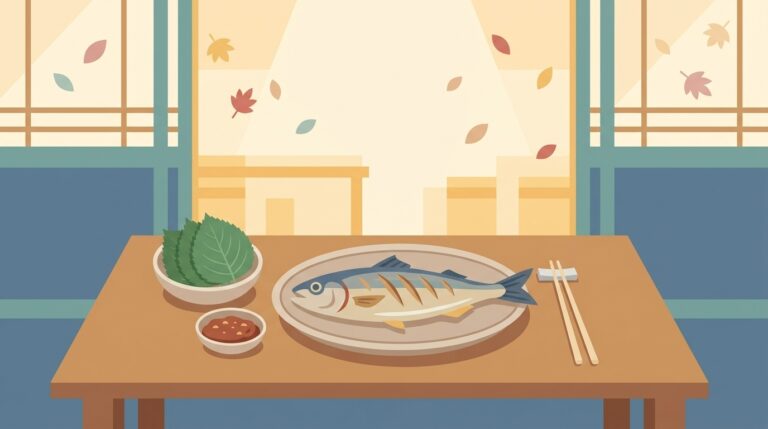
Savor the Flavors of Fall: Your Beginner Guide to Eating Autumn Jeoneo Like a Local
Phase 1: 공감 (Story Immersion Opening)
안녕하세요! 매일한글 에디터입니다.
Picture this: It is a crisp October evening in Seoul. The cool breeze is sweeping through the alleyways, and the leaves are turning amber. You walk down a bustling street in Euljiro or Mapo, and suddenly, an intoxicating, nutty, savory aroma pulls you in. Outside a local seafood tent (pocha), you spot a bright tank full of darting, silver-scaled fish, and a vibrant banner proclaiming: “가을 전어 개시” (Autumn Jeoneo Season Has Begun!).
Your stomach rumbles. You want to step inside, sit on those iconic plastic chairs, and order like a confident local. But then anxiety strikes: How do I order this specific seasonal fish? Do I eat it raw or grilled? What about the bones? Will the restaurant staff understand my beginner Korean?
Don’t worry! You are definitely not alone. Many of our foreign learners tell us that stepping into traditional seafood spots is one of the most intimidating parts of dining in Korea. This guide is crafted directly from real learner feedback and my ten years of experience navigating Korean food culture. By the end of this lesson, you will master the simple A2-level phrases and dining etiquette needed to conquer Korea’s beloved autumn delicacy—전어 (Jeoneo / Gizzard Shad).
Phase 2: 핵심 표현 3선 심층 분석 (Top 3 Essential Expressions)
Let’s break down the three most practical sentences you will use at any seafood restaurant this autumn.
1. 전어 구이 주세요 (Jeoneo gui juseyo)
- Pronunciation: [Jeo-neo goo-ee joo-seh-yo] (Sounds like “juh-nuh” + “gooey” + “joo-say-yo”)
- Meaning: “Please give me grilled jeoneo.” (Literal) → “I’d like an order of the grilled gizzard shad!” (Nuance)
- K-Culture Moment: You will see this scene constantly in K-Dramas like Hospital Playlist or food variety shows when characters flock to coastal towns or seasonal pop-up restaurants every October.
- Editor’s Insight: 구이 (gui) means grilled dish, and 주세요 (juseyo) is the magic wand of Korean dining. If it’s your first time trying jeoneo, grilled is the safest and most aromatic entry point!
- Situation Spectrum: Casual (✅ with close friends: 전어 구이 줘), Semi-formal (✅ 전어 구이 주세요 – Best for restaurant staff), Formal (⚠️ 전어 구이를 부탁드립니다 – A bit too stiff for a casual restaurant).
- 🤔 Think About It: In English, we often ask “Could I get the grilled fish?” as a question. In Korean, adding 주세요 (juseyo) makes direct statements polite and natural. Why do you think Korean favors polite imperatives over hypothetical questions when ordering?
2. 뼈째 먹어요? (Ppyeojjae meogeoyo?)
- Pronunciation: [Ppyeo-jjae meo-geo-yo?] (The double ‘pp’ is like the sharp ‘p’ in ‘spot’, followed by ‘jjae’ as in ‘jazz’)
- Meaning: “Do I eat it with the bones?” (Literal & Nuance)
- K-Culture Moment: Often asked by foreigners and young Koreans alike on YouTube food vlogs when the server places whole small grilled fish or finely sliced raw fish on the table.
- Editor’s Insight: 뼈 (ppyeo) means bone, and -째 (-jjae) means “intact / along with.” Autumn jeoneo bones are famously soft and full of calcium. Koreans eat small grilled jeoneo whole—from head to tail!
- Situation Spectrum: Casual (✅ 뼈째 먹어?), Semi-formal (✅ 뼈째 먹어요?), Formal (⚠️ 뼈째 먹는 것입니까?).
- 🤔 Think About It: Many Western cultures strictly fillet fish to avoid any bones. How does eating whole fish reflect the Korean philosophy of enjoying ingredients in their most natural, seasonal state?
3. 가을 전어가 제일 맛있어요 (Gaeul jeoneoga jeil masisseoyo)
- Pronunciation: [Ga-eul jeo-neo-ga je-il ma-si-sseo-yo] (Think: “gah-eul” + “juh-nuh-gah” + “jay-ill” + “mah-she-so-yo”)
- Meaning: “Autumn jeoneo is the most delicious.” (Literal) → “Autumn is definitely the best season to eat jeoneo!” (Nuance)
- K-Culture Moment: Used by friendly neighborhood elders or coworkers when toasting with a glass of soju during a company gathering (hoesik).
- Editor’s Insight: 제일 (jeil) means “the most / number one.” This phrase is a wonderful icebreaker. Saying this to the restaurant owner will instantly earn you broad smiles and perhaps even free drinks (service)!
- Situation Spectrum: Casual (✅ 가을 전어가 제일 맛있어), Semi-formal (✅ 가을 전어가 제일 맛있어요), Formal (✅ 가을 전어가 가장 맛있습니다).
- 🤔 Think About It: Seasonal changes in Korea (제철 – jecheol) dictate the menu throughout the year. Does your home culture have a single dish that defines an entire season quite like jeoneo defines autumn in Korea?
Phase 3: 교과서 한국어 vs 진짜 한국어 (Textbook vs. Real Korean)
Situation 1: Asking if the seasonal item is available right now
- 📖 교과서 한국어 (Textbook): “전어가 지금 신선합니까?” (Jeoneoga jigeum sinseonhamnikka? – Is the gizzard shad fresh right now?)
- 🗣️ 진짜 한국어 (Real-life): “지금 전어 철이에요?” (Jigeum jeoneo cheorieyo? – Is it jeoneo season right now?)
- 💡 왜 다를까? (Why the difference?): In Korea, asking if seafood is “fresh” can sound slightly accusatory to the chef. Instead, asking if it is 철 (cheol – in season) implicitly confirms that it is at peak freshness and flavor.
Situation 2: Asking if you can try both raw sashimi and grilled fish
- 📖 교과서 한국어 (Textbook): “회 한 접시와 구이 한 접시를 모두 주문할 수 있습니까?” (Hoe han jeopsiwa gui han jeopsireul modu jumunhal su isseumnikka?)
- 🗣️ 진짜 한국어 (Real-life): “회랑 구이, 반반 돼요?” (Hoerang gui, banban dwaeyo? – Can we do half sashimi, half grilled?)
- 💡 왜 다를까? (Why the difference?): Koreans love combining options using the word 반반 (ban-ban – half and half), just like half-fried, half-sauce Korean fried chicken! It’s short, punchy, and natural.
Phase 4: K-Culture 딥다이브 & 비언어적 매너 (Culture Deep Dive & Etiquette)
4-1. 눈치 (Nunchi) & Dining Gestures
When eating grilled jeoneo at a bustling seasonal restaurant:
1. The Chopstick Hold vs. Hands: Don’t hesitate to use your fingers! While Koreans usually eat with metal chopsticks, picking up a whole small grilled jeoneo with your fingers or a napkin to nibble from the head down is completely acceptable and shows you know how to eat it properly.
2. The Perilla Leaf (Kkaennip) Wrap: If you order 전어회 (jeoneo-hoe / raw jeoneo), do not dip it solely in soy sauce. Place it inside a fragrant perilla leaf (깻잎), add a dab of fermented soybean paste (쌈장 – ssamjang), and pop it all in your mouth in one bite. Looking around the table and mirroring how locals wrap their food is the ultimate display of 눈치 (nunchi).
4-2. Cultural Code: The Runaway Daughter-in-law Legend
There is a legendary Korean proverb every child knows: “가을 전어 굽는 냄새에 집 나간 며느리도 돌아온다” (The smell of grilling autumn jeoneo brings back the runaway daughter-in-law). Historically, the daughter-in-law (myeoneuri) bore the heaviest burden in traditional households. The saying humorously suggests that the nutty, mouthwatering scent of fat-rich autumn fish is so irresistible that anyone who left would return home just for a bite!
Phase 5: 실전 롤플레이 시나리오 (Real-Life Roleplay Scenario)
- Setting: An open-air seaside tent restaurant in autumn. Breeze is blowing, lanterns are glowing.
- Characters: You (learning Korean) & Emo-nim (the warm, energetic restaurant owner).
- 이모님 (Emo-nim): 어서 오세요! 몇 분이세요?
(Eoseo oseyo! Myeot bun-iseyo?)
“Welcome! How many people?”
🎭 Wiping down an empty round metal table with a friendly smile. -
You: 두 명이에요. 지금 전어 철이에요?
(Du myeong-ieyo. Jigeum jeoneo cheorieyo?)
“Table for two. Is it jeoneo season right now?”
🎭 Holding up two fingers politely and smiling. -
이모님 (Emo-nim): 그럼요! 지금 딱 기름지고 맛있을 때야.
(Geureomyo! Jigeum ttak gireumjigo masisseul ttaeya.)
“Of course! Right now is exactly when they are rich, fatty, and delicious.” -
You: 회랑 구이, 반반 돼요?
(Hoerang gui, banban dwaeyo?)
“Can we get half raw and half grilled?” -
이모님 (Emo-nim): 아이고, 센스 있네! 반반 세트로 해줄게요.
(Aigo, senseu inne! Banban seteuro hae-julgeyo.)
“Oh, you’ve got great taste! I’ll make a half-and-half set for you.” -
You: 감사합니다! 그런데 전어는 뼈째 먹어요?
(Gamsahamnida! Geureonde jeoneoneun ppyeojjae meogeoyo?)
“Thank you! By the way, do we eat jeoneo with the bones?”
🎭 Leaning in with curious, respectful eyes. -
이모님 (Emo-nim): 구이는 머리부터 다 씹어 먹고, 회는 깻잎에 싸서 먹어봐요!
(Guineun meoributeo da ssibeo meokgo, hoeneun kkaennipe ssaseo meogeobwayo!)
“For grilled, chew it all up starting from the head; for raw, wrap it in perilla leaf and try!” -
You: 네, 맛있게 먹겠습니다!
(Ne, masitge meokgetseumnida!)
“Got it, we will enjoy the meal!”
🎭 Giving a slight, respectful bow before picking up your utensils.
🔀 Interactive Decision Point
The grilled fish arrives, crisp and steaming hot. How do you respond?
- Option A: “이모님, 생선 가시 발라주세요.” (Emo-nim, saengseon gasi ballajuseyo. – Auntie, please debone this fish for me.)
- Option B: “우와, 냄새가 정말 고소해요! 잘 먹겠습니다.” (Uwa, naemsaega jeongmal gosohaeyo! Jal meokgetseumnida. – Wow, the smell is so nutty and rich! We will eat well.)
- Option C: “이거 너무 작아서 배 안 부를 것 같아요.” (Igeo neomu jagaseo bae an bureul geot gatayo. – This is too small, I don’t think it will make me full.)
Feedback:
* Option A (Risk): Jeoneo is meant to be eaten whole because the bones are tiny and soft. Asking the busy cook to debone individual tiny fish creates awkwardness and misses the whole cultural point!
* Option B (Best): 🌟 Perfect! Complimenting the aroma (고소해요 – gosohaeyo) shows high cultural appreciation. The owner might even bring you extra side dishes (service)!
* Option C (Bad): ❌ Culturally insensitive. Jeoneo is prized for delicacy and seasonal fat content, not for sheer bulk size like salmon or tuna.
Phase 6: 10초 감정 섀도잉 드릴 (10-Second Emotion Shadowing Drill)
Practice saying these lines with the indicated emotional rhythm and pause slashes (/):
[😋 Anticipating flavor & excited]
지금 / 전어 철이에요?
(Jigeum / jeoneo cheorieyo?)-
[😊 Polite and confident ordering]
회랑 구이, / 반반 돼요?
(Hoerang gui, / banban dwaeyo?) -
[😍 Pure delight after taking the first bite]
우와, / 진짜 고소해요!
(Uwa, / jinjja gosohaeyo!)
Phase 7: K-Culture 미니 사전 (Mini Dictionary: 4 Seasonal Keywords)
-
제철 음식 (Jecheol eumsik)
Meaning: Seasonal food.
Usage: Koreans strongly believe in eating foods at their natural seasonal peak for health and maximum flavor. Jeoneo is the undisputed king of autumn jecheol eumsik. -
세꼬시 (Sekko-si)
Meaning: Sliced raw fish prepared with soft bones intact.
Usage: Often used at sashimi bars when raw jeoneo is sliced thinly across the spine. It provides a unique, crunchy, chewy texture (ssipneun mat). -
고소하다 (Goso-hada)
Meaning: Nutty, savory, aromatic (like sesame oil or roasted nuts).
Usage: You will hear this word 100 times around jeoneo tables. It is the exact descriptor for the rich fat content of autumn fish. -
회무침 (Hoe-muchim)
Meaning: Spicy sweet-and-sour raw fish salad.
Usage: If eating raw fish whole feels intimidating, order 전어 회무침 (jeoneo hoe-muchim). It comes tossed with shredded cabbage, pears, and spicy gochujang dressing!
Phase 8: 여행자를 위한 생존 키트 (Traveler’s Survival Kit)
Top 3 Survival Phrases
- 소주 한 병 주세요 (Soju han byeong juseyo) – “Please give us one bottle of Soju.”
Pro Tip: Grilled jeoneo pairs famously with clean Korean soju or draft beer (maekju). - 깻잎 더 주세요 (Kkaennip deo juseyo) – “Please give us more perilla leaves.”
Pro Tip: Wrapping raw fish in perilla leaves cuts the richness. Asking for extra leaves is free and normal! - 계산해 주세요 (Gyesanhae juseyo) – “Check, please.”
Editor’s Travel Note
- Where to Go: Head to the Noryangjin Fisheries Wholesale Market or the Mapo seafood street between late September and early November.
- Essential Navigation: Download the Naver Map app download for iOS and Android to search for “가을 전어 맛집” (Top Autumn Jeoneo Restaurants) rather than relying on Google Maps, which often misses local seasonal tent bars.
- Payment Tip: Nearly all pochas and fish markets accept international credit cards, but having 10,000 to 20,000 KRW in cash is great etiquette if visiting very small outdoor stalls.
Phase 9: “한 발 더 깊이” (Deep Cultural Reflection)
In contemporary Korean dining, seasonal foods are not merely culinary choices; they are communal rituals that anchor people to the rhythm of nature amidst hyper-modern city lives. Gathering around a noisy plastic table on an autumn night to chew whole fish, sharing steam and stories, honors the agricultural and coastal heritage of Korea. Eating jecheol (seasonal) food reminds Koreans to pause, welcome the change of the calendar, and share nourishment with friends.
💬 Your Turn: Does your culture celebrate a specific food when the weather turns cool in the autumn? Share your favorite seasonal tradition in the comments below!
Phase 10: FAQ & 오해 방지 (FAQ & Common Mistakes)
Q: Can I really eat the bones of grilled jeoneo without choking?
A: Yes! Autumn jeoneo are young and small, so the bones are soft and thin like threads when grilled thoroughly. Chew slowly and thoroughly (ssibeoseo), and you won’t even notice them. If you are very sensitive, you can gently remove the main backbone and eat the rest.
Q: What is the best month to try jeoneo in Korea?
A: Late September through late October is the prime window. By late November, the bones become slightly tougher and the fish migrate to deeper waters.
Q: What is the difference between 전어구이 (grilled) and 전어회 (raw)?
A: 전어구이 (gui) is savory, smoky, and intensely rich with melted fish oil. 전어회 (hoe) is fresh, crunchy, slightly chewy, and traditionally eaten wrapped with garlic, ssamjang, and perilla leaf.
🚨 Common Mistakes Warning Board
- Mistake: Trying to pick out every tiny bone with chopsticks for 20 minutes.
Correct Action: Nibble the fish whole! Chewing the small bones provides that signature nutty flavor (고소한 맛). - Mistake: Dipping raw jeoneo in only wasabi-soy sauce like Japanese salmon.
Correct Action: Jeoneo is fatty. Pair it with 초고추장 (spicy sweet red chili sauce) or 쌈장 (seasoned soybean paste) and wraps for the authentic balance. - Mistake: Visiting in the middle of summer or spring and asking for jeoneo.
Correct Action: Remember the key seasonal word: 가을 (Gaeul – Autumn)! In summer, ask for eel (장어); in autumn, ask for 전어.
Phase 11: 액션 미션 & 참여 유도 (Action Missions)
- 🥉 Bronze Mission (Solo Practice): Stand in front of your mirror and practice ordering: “이모님, 전어 구이 주세요!” with a confident smile three times.
- 🥈 Silver Mission (Social Connection): Search the hashtag
#가을전어on Instagram. Leave a comment on a photo saying: “정말 맛있어 보여요!” (It looks really delicious!) - 🥇 Gold Mission (Real Life Action): When visiting a Korean restaurant this autumn, spot a seasonal menu item and ask the staff: “지금 전어 철이에요?”
- 🎮 K-Culture Media Mission: Watch an episode of a Korean food variety show (such as Delicious Guys or Baek Jong-won’s Alley Restaurant) featuring autumn seafood, and spot how often they use the word 고소하다!
Phase 12: 인터랙티브 퀴즈 챌린지 (Interactive Quiz Challenge)
1. Situation Quiz:
You walk into a seafood restaurant with a friend and want to taste both raw sashimi and grilled jeoneo without ordering two giant full-sized portions. What should you ask?
* (A) 전어 다 버려주세요.
* (B) 회랑 구이, 반반 돼요?
* (C) 물만 한 잔 주세요.
2. Fill in the Blank:
“우와, 생선이 정말 __________!” (Hint: “Nutty and rich smelling/tasting”)
* (A) 매워요 (Spicy)
* (B) 고소해요 (Savory/Nutty)
* (C) 차가워요 (Cold)
3. True or False:
In Korea, eating the head and soft bones of grilled autumn jeoneo is considered normal and delicious. (True / False)
👉 Click to reveal answers and explanations!
Answers:
1. (B) 회랑 구이, 반반 돼요? (Can we do half raw, half grilled? Perfect for trying both textures! Option A means ‘please throw it all away’!).
2. (B) 고소해요 (Goso-haeyo is the quintessential word for jeoneo’s rich flavor).
3. True! Autumn jeoneo bones are soft and full of savory flavor, traditionally eaten whole.







