

Phase 1: Empathy (Story Immersion Opening)
안녕하세요! 매일한글 에디터입니다. (Hello! This is your Daily Hangul editor.)
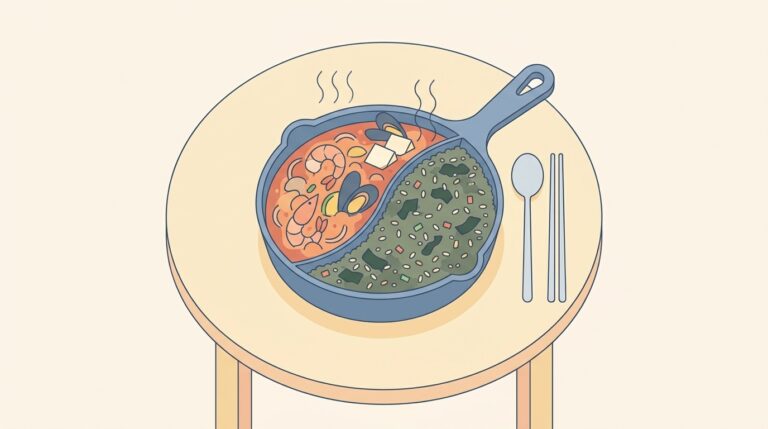
Picture this scene from your favorite weekend K-Drama: a table packed with friends surrounding an enormous, fiery-red platter of haemul-jjim (해물찜, spicy braised seafood). Giant octopus tentacles, plump blue crabs, and crunchy soybean sprouts smothered in thick, savory gochugaru sauce. Everyone groans, pats their full bellies, and puts down their chopsticks. In most food cultures around the world, this signifies the end of the meal. You might reach for the wet wipe and think, “Time to ask for the bill!”
Stop right there. If you wave down the server and pay right now, any Korean dining with you will gasp in genuine horror. You have just committed the ultimate culinary cardinal sin: leaving the table before the 볶음밥 (bokkeumbap / fried rice) finale.
Many of our intermediate learners tell us, “I knew Koreans loved fried rice, but when the server asked what to do with the leftover seafood sauce, I panicked! I didn’t know how much sauce to keep, how many bowls of rice to order, or how to ask them to crisp the bottom without sounding rude.” In Korean dining, this post-stew fried rice isn’t just a side dish—it is reverently dubbed “K-디저트” (The K-Dessert). Master this transition, and you bridge the gap between being an awkward tourist and a culturally fluent insider.
Phase 2: Core Expressions Deep Dive
1. 여기 볶음밥 두 개 볶아주세요!
- Pronunciation: [Yeogi bokkeumbap du gae bokk-a-juseyo!] (Sound analogy: “Bokk-a” sounds like “poke-ah” with a sharp, crisp ‘k’ sound)
- Meaning: Literal: “Please stir-fry two fried rices here!” | Actual Nuance: “We are ready for the finale! Please make two servings of fried rice with our leftover sauce.”
- K-Culture Moment: Commonly heard in variety shows like Tasty Guys (맛있는 녀석들) right after the main braised dish is reduced to rich sauce.
- Editor’s Insight: In Korean casual restaurants, you order fried rice by the portion count (개, gae or 공기, gonggi). Even if there are four people, ordering “두 개” (two servings) is standard if everyone is already stuffed.
- Situation Spectrum: Casual ✅ | Semi-formal ✅ | Formal ⚠️ (Fine dining rarely has table-top self-stirring)
- 🤔 Think About It: In English, you’d say “Could we get some fried rice?” In Korean, you use the active verb 볶아주다 (to fry for us), emphasizing the communal preparation process.
2. 양념 조금만 남겨둘게요.
- Pronunciation: [Yangnyeom jogeum-man namgyeodulgeyo.] (Sound analogy: “Yang-nyeom” flows like “young-yum”)
- Meaning: Literal: “I will leave just a little bit of seasoning/sauce.” | Actual Nuance: “Let’s save a bit of this sauce on our small plates before they take the pan away.”
- K-Culture Moment: A veteran foodie character in a gourmet K-Drama swiftly ladling red sauce onto their personal plate before the waiter whisks the pan to the kitchen.
- Editor’s Insight: When making fried rice, servers take the large pan away to the kitchen or scrape the excess sauce into a separate bowl. Savvy locals always keep 2-3 spoonfuls of sauce on their personal dish to drizzle over the finished rice later.
- Situation Spectrum: Casual ✅ | Semi-formal ✅ | Formal ✅
- 🤔 Think About It: Why announce this intention? Korean table culture balances personal preference with table-wide consensus; keeping seasoning requires coordinating with your tablemates.
3. 누룽지 살짝 눌려 먹는 게 국룰이죠.
- Pronunciation: [Nurungji saljjak nullyeo meongneun ge gungnurijyo.] (Sound analogy: “Gung-nul” sounds like “goong-nool”, blending ‘k’ and ‘r’ into an ‘ng-n’ sound)
- Meaning: Literal: “Letting the scorched rice press slightly and eating it is the national rule.” | Actual Nuance: “Crisping the bottom layer until crunchy is the undisputed golden rule!”
- K-Culture Moment: A staple catchphrase across Korean YouTube Mukbang channels whenever fried rice hits the hot grill.
- Editor’s Insight: 국룰 (gungnur) is a portmanteau of 국가 (nation) and rule. It denotes an unwritten cultural consensus that everyone agrees with instinctively.
- Situation Spectrum: Casual ✅ | Semi-formal ✅ | Formal 🚫 (Too trendy and colloquial for formal company executives)
- 🤔 Think About It: Food is not just sustenance in Korea; it’s a shared ritual. How does your culture define “unwritten food rules”?
Phase 3: Textbook Korean vs. Real-World Korean
Situation 1: Calling the server to make fried rice
- 📖 교과서 한국어 (Textbook): “남은 양념에 밥을 볶아 주실 수 있습니까?” (Nameun yangnyeome babeul bokka jusil su isseumnikka? / Could you please fry rice in the remaining sauce?)
- 🗣️ 진짜 한국어 (Real-World): “사장님, 저희 밥 두 개만 볶아주세요!” (Sajangnim, jeohi bap du gaeman bokk-a-juseyo! / Boss, please fry just two portions of rice for us!)
- 💡 왜 다를까?: Textbook phrasing sounds like an overly polite customer inquiry at a hotel counter. In bustling dining spots, using friendly titles like 사장님 (boss/owner) or 이모님 (auntie) paired with the brisk imperative -아/어 주세요 is the standard social frequency.
Situation 2: Commenting on the crispy bottom layer
- 📖 교과서 한국어 (Textbook): “팬 바닥에 눌어붙은 밥이 무척 바삭하고 맛있습니다.” (Paen badage nureobeuteun babi mucheok basakhago masitseumnida. / The rice stuck to the bottom of the pan is very crispy and delicious.)
- 🗣️ 진짜 한국어 (Real-World): “이 누룽지 긁어먹는 맛에 볶음밥 시키는 거죠!” (I nurungji geulgeomongneun mase bokkeumbap sikineun geojyo! / Scraping this scorched rice is the whole reason we order fried rice!)
- 💡 왜 다를까?: Native speakers celebrate the texture 누룽지 (scorched rice) and the physical act of 긁어먹다 (scraping and eating) rather than giving clinical descriptions of crispiness.
Phase 4: K-Culture Deep Dive & Non-Verbal Manners
4-1. 눈치 (Nunchi) & Table Gestures
- The Sauce Preservation Rule: Never empty your seafood pan down to the bare metal. The kitchen needs at least 3-4 ladles of spicy, starch-thickened seafood sauce and leftover bean sprouts to mix with sesame oil, dried seaweed flakes (김가루), and warm rice.
- The Waiting Game (인내의 시간): When the server brings back the pan with the flattened rice, do not touch it immediately. Turn the portable gas burner on low heat. Wait for that gentle crackling sound (치이익—). Once the bottom toasts into a thin crust, turn off the flame. Only then do you dig in!
- Spoon Etiquette: Everyone uses their regular spoon to gently scrape the bottom pan together. Avoid hammering the pan with chopsticks—it scratches non-stick surfaces and looks impatient.
4-2. The “K-Dessert” (K-디저트) Phenomenon
In Korean culinary logic, carbohydrates are not finished until they are crowned by another carbohydrate. Whether you eat Dalg-galbi (spicy chicken), Gamjatang (pork bone soup), Tteokbokki, or Haemul-jjim, the dish merely serves as a vehicle to create flavorful sauce. The final fried rice absorbs the concentrated essence of sea squirts (미더덕), squid, prawns, and clam broth. Skipping it is akin to leaving an opera before the final aria.
Phase 5: Real-World Roleplay Scenario
- Setting: A buzzing, steam-filled Haemul-jjim restaurant in Euljiro, Seoul. Yellow paper lanterns, sizzling gas stoves, clinking soju glasses.
- Characters:
- 민호 (Minho): Your Korean colleague and self-proclaimed gourmet.
- 이모님 (Imo-nim): The sharp, lightning-fast restaurant auntie holding a pair of tongs.
- You (학습자): Ready to test your B2 dining prowess.
- 민호: 아, 배부르다! 해물찜 진짜 푸짐했지? 이제 슬슬 마무리할까?
(Ah, baebureuda! Haemul-jjim jinjja pujimhaetji? Ije seulseul mamurihalkka?)
“Ah, I’m stuffed! That seafood stew was generous, right? Shall we wrap things up now?”
🎭 민호 pats his stomach and looks at the red sauce remaining in the wide shallow pan. -
You: 당연하죠. 사장님, 여기 밥 두 개만 볶아주세요!
(Dang-yeonhajyo. Sajangnim, yeogi bap du gaeman bokk-a-juseyo!)
“Of course! Boss, could you fry two servings of rice here please?”
🎭 You raise your hand briskly toward the aisle with a confident smile. -
이모님: 네~ 남은 양념 덜어드릴 그릇 가져올게요. 콩나물 조금만 더 남겨두지 그랬어~
(Ne~ Nameun yangnyeom deoreodeuril geureut gajyeoolgeyo. Kongnamul jogeumman deo namgyeoduji geuraesseo~)
“Sure thing! I’ll bring a bowl to spoon out the leftover sauce. You should have left a few more bean sprouts!”
🎭 이모님 sets down a stainless steel bowl and skillfully ladles excess sauce out. -
You: 아, 이모님! 저희 찍어 먹게 양념 조금만 따로 남겨둘게요.
(A, imonim! Jeohi jjigeo meokge yangnyeom jogeumman ttaro namgyeodulgeyo.)
“Ah, Auntie! We’ll keep a little sauce on the side so we can dip our rice into it.”
🎭 You scoop three spoons of red sauce onto your personal side dish with ease. -
이모님: 아이고, 뭘 좀 아네! 맛있게 볶아 올 테니까 불 켜고 잠깐만 기다려요.
(Aigo, mwol jom ane! Masitge bokk-a ol tenikka bul kyeogo jamkkanman gidaryeoyo.)
“Oh, you know how things work! I’ll stir-fry it deliciously, so turn the flame on low and wait a moment.”
🎭 She swoops away with the pan and returns 3 minutes later with a glistening, seaweed-topped spread. -
민호: 와, 참기름 냄새 대박이다… 지금 바로 먹을까?
(Wa, chamgireum naemsae daebagida… Jigeum baro meogeulkka?)
“Whoa, the sesame oil aroma is insane… Shall we eat right away?”
🎭 민호 reaches his spoon toward the sizzling rice bed. -
You: 안 돼요! 누룽지 살짝 눌려 먹는 게 국룰이잖아요. 1분만 참아요.
(An dwaeyo! Nurungji saljjak nullyeo meongneun ge gungnurijanh-ayo. Il-bunman cham-ayo.)
“No way! Crisping the bottom layer is the golden rule. Endure for just one minute.”
🎭 You gently block his spoon with a grin, pointing at the crackling pan. -
민호: 캬, 한국인 다 됐네! 바닥까지 싹싹 긁어먹자!
(Kya, hangukin da dwaenne! Badakkkaji ssakssak geulgeomokja!)
“Man, you are practically Korean now! Let’s scrape it clean right down to the bottom!”
🎭 Both of you grab your spoons as the irresistible crackle announces perfection.
🔀 Interactive Choice Point
The fried rice arrives at your table. It is spread thin across the iron pan and gently crackling. Minho looks at you and asks: “불 지금 끌까?” (Shall I turn off the fire now?) How do you respond?
- Option A: “네, 바로 끄고 타기 전에 빨리 먹어요!” (Yes, turn it off immediately and eat quickly before it burns!)
- ⚠️ Feedback (Risk): You’ll get soft, moist rice, but you’ll miss out on the crunchy 누룽지 (scorched layer). Minho will look slightly heartbroken.
- Option B: “아니요, 약불로 조금만 더 눌려서 누룽지 만들고 꺼요.” (No, let’s toast it on low heat a bit more to make scorched rice, then turn it off.)
- 🌟 Feedback (Best): Perfect! You demonstrate intermediate cultural intuition. You respect the textural climax of Korean table-cooking.
- Option C: “사장님 불러서 불 조절해 달라고 하세요.” (Call the boss and ask them to adjust the flame for us.)
- 🚫 Feedback (Bad): Adjusting table burners for fried rice is standard self-service for diners. Calling staff for a simple burner knob feels overly helpless in a lively pub atmosphere.
Phase 6: 10-Second Emotion Shadowing Drill
Practice these natural cadence patterns. Pay attention to pauses (/) and emotional cues:
[🙋♂️ 경쾌하고 당당하게 / Confident and breezy]
“사장님! / 저희 볶음밥 두 개만 / 맛있게 볶아주세요!”
(Sajangnim! / Jeohi bokkeumbap du gaeman / masitge bokk-a-juseyo!)-
[😋 꿀팁을 전수하듯 장난스럽게 / Playful, sharing an insider secret]
“양념 다 보내면 안 돼요. / 한 숟가락만 / 앞접시에 덜어둘게요!”
(Yangnyeom da bonaemyeon an dwaeyo. / Han sutgarakman / apjeopsie deoreodulgeyo!) -
[🔥 단호하고 맛에 진심인 태도로 / Resolute foodie conviction]
“숟가락 잠깐 스톱! / 누룽지 바삭하게 눌린 다음에 / 긁어먹는 게 국룰이에요.”
(Sutgarak jamkkan seutop! / Nurungji basakhage nullin daeume / geulgeomongneun ge gungnurieyo.)
Phase 7: K-Culture Mini Dictionary
-
K-디저트 (K-Dijeoteu)
Literal: Korean Dessert.
Real-World Usage: Refers ironically and affectionately to savory carbs consumed at the end of meals—most notably stir-fried rice (bokkeumbap) or noodles added to remaining stew broths. -
누룽지 (Nurungji)
Literal: Scorched rice crust.
Real-World Usage: The crunchy, caramelized layer of rice forming at the base of hot pots or stone dolsot bowls. Prized for its earthy, nutty (gosohan) flavor. -
앞접시 (Ap-jeopsi)
Literal: Front-dish / personal plate.
Real-World Usage: The small personal plate given to each diner at communal tables. Used to cool down spicy food or preserve flavorful sauces before communal pans are taken away. -
국룰 (Gungnul)
Literal: National rule.
Real-World Usage: Slang for an unspoken consensus, golden guideline, or universal habit everyone follows without needing to explain (e.g., dipping pork belly in ssamjang, crisping fried rice).
Phase 8: Traveler’s Survival Kit
Top 3 Survival Expressions
- “밥 몇 개 볶을까요?” (Bap myeot gae bokkeulkkayo?)
Meaning: “How many portions of rice should we stir-fry?”
Pro Tip: If you are a party of 3 or 4, say: “두 개만 볶아주세요!” (Just two, please!). It prevents over-ordering. - “치즈 사리 추가해 주세요.” (Chijeu sari chugahae juseyo.)
Meaning: “Please add mozzarella cheese topping to the rice.”
Pro Tip: Cheese cuts the intense spicy seafood heat and creates an Instagram-worthy cheese pull. - “불 지금 꺼도 돼요?” (Bul jigeum kkeodo dwaeyo?)
Meaning: “Can we turn off the flame now?”
Pro Tip: Use this if you are worried the scorched bottom might burn into black char.
Editor’s Travel Note
When hunting for authentic Haemul-jjim in areas like Mapo or Jongno, skip generic tourist maps and search via the 네이버 지도 앱 다운로드 (Naver Map app) using the term 해물찜 맛집. Look for spots where reviews specifically praise “볶음밥 맛집” (great fried rice spot). Most seafood restaurants operate self-service stations for side dishes (banchan), but fried rice is always made to order by staff.
Phase 9: “One Step Deeper” (Reflective Essay)
In Western individual dining, sharing sauce or eating from one vessel can be uncommon. However, the Korean bokkeumbap finale represents emotional and culinary communion (정, Jeong). By pooling together the remaining essence of a shared meal and pressing it flat with collective patience, diners transition from solitary eaters into a unified group sharing one final golden skillet.
It is a culinary philosophy stating that nothing precious should be wasted, and that flavor compounds, like relationships, deepen when concentrated over sustained warmth.
💬 Your Turn: What is your culture’s equivalent of “not letting good sauce go to waste”? Do you wipe it with bread, mix it with pasta, or something else? Drop your stories in the comments below!
Phase 10: FAQ & Common Mistakes
Q: Can I order fried rice if we completely finished all the seafood and sprouts?
A: Yes, but it won’t taste nearly as delicious! The flavor comes directly from the thickened seafood reduction. Always leave at least a handful of bean sprouts and a couple of spoonfuls of red sauce in the pan before ordering.
Q: Is it rude to scrape the pan loudly with metal spoons?
A: No! Gentle scraping to free the crispy nurungji is music to the restaurant owner’s ears—it proves you loved the food. Just avoid aggressive gouging that damages the iron pan coating.
Q: Can one person order just one serving of fried rice (밥 하나)?
A: Absolutely. Say: “밥 하나만 볶아주세요” (Bap hanaman bokk-a-juseyo). Even solo diners or stuffed duos can order a single portion.
🚨 Common Mistakes Alert (흔한 실수 TOP 3)
- Mistake: Handing the server an empty pan after eating every scrap of onion and sauce.
Correct Action: Leave 10% of the sauce and vegetables intact. - Mistake: Turning off the heat immediately once the fried rice pan lands on your table.
Correct Action: Keep heat on low for 60 to 90 seconds until a crackling sound develops. - Mistake: Eating the rice with chopsticks.
Correct Action: Fried rice is strictly a spoon affair (숟가락); chopsticks will only scatter the grains.
Phase 11: Action Missions
- 🥉 Bronze Mission (Solo Practice): Record yourself repeating the shadowing sentence: “사장님, 여기 볶음밥 두 개 볶아주세요!” focus on the natural intonation rise on “사장님!”.
- 🥈 Silver Mission (Social Connection): Next time you see a Korean food reel featuring fried rice on Instagram or TikTok, leave a comment: “역시 마무리는 볶음밥이 국룰이죠!”.
- 🥇 Gold Mission (Real-World Test): At your next Korean restaurant visit, order the fried rice post-stew without checking your notes, and successfully preserve extra sauce on your personal plate.
🎮 K-Culture Mission: Watch an episode of the Korean variety show I Live Alone (나 혼자 산다) or Delicious Guys. Spot the exact moment the cast says “밥 볶을까?” (Shall we fry rice?). Notice how their expressions transform from full to eager!
Phase 12: Interactive Quiz Challenge
1. Situation Judgment: Your server brings the fried rice pan back to your table. What is the most culturally savvy step?
* A) Pour water over it to cool it down.
* B) Let it crackle on low heat for 1 minute to make nurungji, then turn off the flame.
* C) Eat only the seaweed flakes on top and leave the rest.
2. Fill in the Blank: Complete the famous Korean slang describing an absolute dining truth:
“해물찜 먹고 볶음밥 먹는 건 ______이죠!” (Gung-nul)
3. True or False: Leaving some bean sprouts and spicy sauce behind before ordering fried rice is considered wasteful and bad manners in Korea.
👉 Click to reveal answers & explanations!
- Answer: B – Creating a golden crispy bottom crust (nurungji) is the pride of Korean skillet dining.
- Answer: 국룰 (Gungnur / National Rule) – Short for “national unwritten law”.
- Answer: False – The kitchen specifically requires leftover sauce and bean sprouts to season and texture the fried rice properly!







