

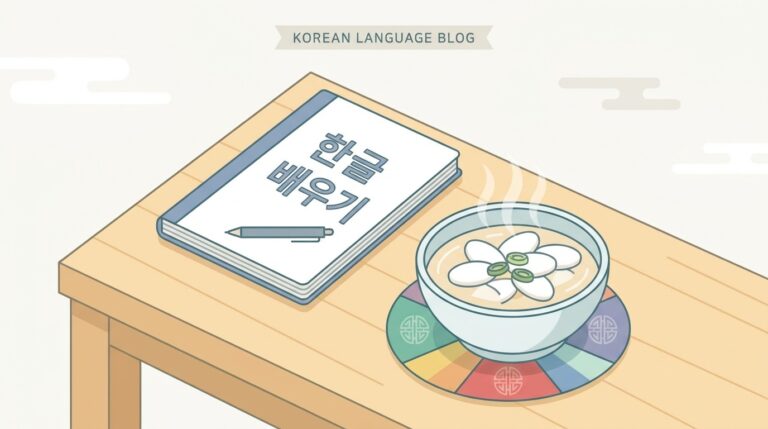
안녕하세요! 매일한글 에디터입니다. Have you ever watched a Korean variety show or K-drama around January or February and seen someone say with a heavy sigh, “Aish, I don’t want to eat this soup because I don’t want to get older”? You might pause and wonder: does a humble bowl of soup actually hold the supernatural power of aging you? In Korea, Lunar New Year (설날, Seollal) is incomplete without a hot, steaming bowl of tteokguk (rice cake soup). Many international learners find themselves bewildered when their Korean friends ask on New Year’s morning, “How many bowls did you eat?” rather than “Happy New Year!” Through real classroom trials and student feedback, we realized that understanding this single culinary custom unlocks genuine intimacy in Korean relationships. By the end of this guide, you will laugh, banter, and celebrate like a real local at any Korean family table.
Phase 2: Core Expressions Deep Dive
1. 떡국 먹었어요? (Tteokguk meogeosseoyo?)
- Pronunciation: [Tteok-guk meo-geo-sseo-yo?] (Think of tuck-gook muh-guh-ssuh-yo, snapping the initial ‘tt’ briskly)
- Meaning: “Did you eat rice cake soup?” vs. “Did you properly welcome the New Year and grow a year wiser?”
- K-Culture Moment: In modern webtoons and slice-of-life K-dramas, colleagues meeting on the first working day after Seollal ask this instead of the textbook greeting.
- Editor’s Insight: It is not just about food intake; it is a warm, culturally coded check-in acknowledging that both of you are embarking on another collective chapter of life together.
- Situation Spectrum: Casual: ✅ | Semi-formal: ✅ | Formal: ✅
- 🤔 Think About It: In your culture, is growing older celebrated individually on birthdays, or does society ever mark a collective transition together?
2. 한 살 더 먹었어요. (Han sal deo meogeosseoyo.)
- Pronunciation: [Han sal deo meo-geo-sseo-yo.] (Hahn sahl duh muh-guh-ssuh-yo)
- Meaning: “I ate one more year” vs. “I became one year older.”
- K-Culture Moment: When K-pop idols hold New Year’s live streams, they playfully complain to their fans: “나이 한 살 더 먹었어요!” (I gained another year!).
- Editor’s Insight: Notice the verb 먹다 (to eat). Koreans do not just ‘become’ older (되다); they digest their age alongside experiences, hardships, and nourishment.
- Situation Spectrum: Casual: ✅ | Semi-formal: ✅ | Formal: ⚠️ (Use ‘나이를 먹었습니다’ in formal reflections)
- 🤔 Think About It: Why do you think Korean expresses age progression through ingestion rather than mere chronological passing of time?
3. 새해 복 많이 받으세요! (Saehae bok mani badeuseyo!)
- Pronunciation: [Sae-hae bok ma-ni ba-deu-se-yo!]
- Meaning: “Please receive a lot of New Year blessings!”
- K-Culture Moment: Bowing deeply during the ceremonial sebae in traditional Hanbok while receiving warm wishes and pocket money from grandparents.
- Editor’s Insight: Unlike the English “Happy New Year”, this phrase literally commands good fortune to flow abundantly to the listener.
- Situation Spectrum: Casual: ⚠️ (Use ‘새해 복 많이 받아’ for close friends) | Semi-formal: ✅ | Formal: ✅
- 🤔 Think About It: Notice the humility in wishing fortune as a gift to be ‘received’ rather than a personal pursuit.
Phase 3: Textbook Korean vs. Real Korean
Situation 1: Asking someone about their age increase during Seollal
- 📖 교과서 한국어: “새해가 되었으니 당신은 나이를 한 살 더 먹었습니까?” (Saehaega doeeosseumuro dangsineun naireul han sal deo meogeosseumnikka? – As it has become a new year, did you gain one year of age?)
- 🗣️ 진짜 한국어: “떡국 드셨어요? 이제 진짜 한 살 더 먹었네요!” (Tteokguk deusyeosseoyo? Ije jinjja han sal deo meogeonneyo! – Did you have tteokguk? Now we really gained a year!)
- 💡 왜 다를까?: Native speakers avoid awkward literary pronouns like ‘당신’ (you) and instead use the shared ritual of eating tteokguk as an empathetic, lighthearted social bridge.
Situation 2: Playfully refusing a second bowl of tteokguk
- 📖 교과서 한국어: “저는 더 이상 나이를 먹고 싶지 않기 때문에 그만 먹겠습니다.” (Jeoneun deo isang naireul meokgo sipji anki ttaemune geuman meokgetseumnida. – I will stop eating because I do not want to gain any more age.)
- 🗣️ 진짜 한국어: “두 그릇 먹으면 두 살 먹잖아요, 참을래요!” (Du geureut meogeumyeon du sal meokjanayo, chameullaeyo! – If I eat two bowls, I’ll age two years! I’ll pass!)
- 💡 왜 다를까?: Koreans love turning the folk belief into comedic self-deprecating banter over holiday feasts to keep the mood light and fun.
Phase 4: K-Culture Deep Dive & Non-Verbal Manners
4-1. 눈치 (Nunchi) & Table Manners
When sitting down for Seollal breakfast, do not reach for your spoon the moment the piping-hot bowl lands in front of you. Look at the eldest person at the table first. Until your friend’s grandmother or father lifts their silver spoon, keep your hands gently folded near your lap. When accepting the bowl from an elder, hold it or steady your base using both hands (du son) as a show of deference. If offered a second serving, never bluntly shout “No!”; instead, wave your hands lightly in front of your chest with a smiling, appreciative tone.
4-2. Culture Code: The Secret Shape of Rice Cakes
Why tteokguk? The cylindrical rice cake cylinder (garaetteok) represents longevity, stretching out life without illness. When cut diagonally into flat, oval coins, it mimics ancient Korean coins (yeopjeon), symbolizing financial prosperity in the coming year. Eating clear beef-broth tteokguk is literally absorbing a clean slate, pristine health, and fortune into your body!
Phase 5: Real-Life Roleplay Scenario
Setting: A cozy traditional kitchen in Jeonju during Seollal morning. Grandmother Kim (Halmeoni) is standing over a fragrant pot of simmering brisket broth, ladling out fluffy sliced rice cakes and egg ribbons.
- Turn 1: 할머니 (Halmeoni): 우리 민우, 배고프지? 어서 와서 떡국 한 그릇 먹어라. (Uri Minu, baegopeuji? Eoseo waseo tteokguk han geureut meogeora. – Our Minwoo, hungry right? Hurry and have a bowl of tteokguk.)
🎭 인자하게 웃으며 김이 모락모락 나는 그릇을 건넨다 - Turn 2: 알렉스 (Alex): 와, 냄새가 정말 좋아요! 잘 먹겠습니다, 할머니! (Wa, naemsaega jeongmal joayo! Jal meokgetseumnida, halmeoni! – Wow, the aroma is amazing! Thank you for the meal, Halmeoni!)
🎭 두 손으로 조심스럽게 그릇을 받으며 공손히 인사한다 - Turn 3: 할머니 (Halmeoni): 국물 따뜻할 때 얼른 들어. 떡국을 먹어야 진짜 한 살 먹는 법이란다. (Gungmul ttatteuthal ttae eolleun deureo. Tteokgugeul meogeoya jinjja han sal meongneun beobiranda. – Eat quickly while the soup is warm. Eating tteokguk is how you truly age a year.)
🎭 국자를 내려놓고 맞은편에 다정하게 앉는다 - Turn 4: 알렉스 (Alex): 그럼 할머니, 저 오늘 떡국 먹고 한국 나이로 스물여섯 살 되는 건가요? (Geureom halmeoni, jeo oneul tteokguk meokgo hanguk nairo seumul-yeoseot sal doeneun geongayo? – Then Halmeoni, after eating this today, do I become 26 in Korean age?)
🎭 숟가락을 들기 전 호기심 가득한 눈으로 묻는다 - Turn 5: 할머니 (Halmeoni): 아이고, 그렇지! 지혜도 한 살 더 쌓이고 복도 가득 받는 거지. (Aigo, geureochi! Jihedo han sal deo ssaihigo bokdo gadeuk banneun geoji. – Oh, of course! You gain one more year of wisdom and receive abundant blessings too.)
🎭 알렉스의 어깨를 기특하게 토닥이며 밥상에 깍두기를 올려놓는다 - Turn 6: 알렉스 (Alex): 국물이 정말 깊고 떡이 쫄깃해요. 한 그릇 더 먹고 싶어요! (Gungmuri jeongmal gipgo tteogi jjolgit-haeyo. Han geureut deo meokgo sipeoyo! – The broth is so deep and the rice cakes are chewy. I want another bowl!)
🎭 바닥까지 싹 비운 그릇을 보여주며 눈을 반짝인다 - Turn 7: 할머니 (Halmeoni): 호호, 더 먹는 건 좋은데 그럼 두 살 더 먹어서 나보다 먼저 할아버지 되겠네? (Hoho, deo meongneun geon joeunde geureom du sal deo meogeoseo naboda meonjeo harabeoji doegenne? – Hoho, eating more is great, but then you’ll age two years and become an old grandpa before me!)
🎭 손으로 입을 가리고 유쾌하게 웃는다 - Turn 8: 알렉스 (Alex): 하하, 그럼 오늘은 딱 한 살만 더 먹고 숟가락 놓을게요! (Haha, geureom oneureun ttak han salman deo meokgo sutgareuk noeulgeyo! – Haha, then today I’ll age just one year and put down my spoon!)
🎭 배를 두드리며 만족스러운 미소를 짓는다
🔀 Interactive Decision Point
Halmeoni offers you a second bowl with an affectionate wink. How do you respond?
* Choice A: “할머니, 저 진짜 두 살 먹기 싫어서 거절할게요.” (Halmeoni, I hate gaining two years so I refuse.)
* Choice B: “너무 맛있어서 세 살 먹어도 좋으니까 반 그릇만 더 주세요!” (It’s so delicious I don’t care if I age three years; please give me half a bowl more!)
* Choice C: “배불러요. 그만 줘요.” (I’m full. Stop giving me.)
- Choice Analysis:
- Choice A (Risk): While playful in intent, using “거절할게요” (I refuse) sounds overly stiff and blunt to an elder.
- Choice B (Best): Brilliant witty K-wit! It compliments her culinary skill and playfully embraces the age metaphor.
- Choice C (Bad): Extremely rude (banmal-adjacent tone) that will instantly freeze the warm holiday atmosphere.
Phase 6: 10-Second Emotion Shadowing Drill
Repeat these aloud, pausing at the slashes (/) and matching the exact emotion:
[😊 Cheerful and grateful]
할머니, / 국물이 정말 진하고 / 떡이 쫄깃해요! 잘 먹었습니다!
(Halmeoni, / gungmuri jeongmal jinhago / tteogi jjolgit-haeyo! Jal meokgeotseumnida!)-
[😆 Playful and cheeky]
두 그릇 먹으면 / 두 살 먹는 거죠? / 그럼 저는 한 그릇만 먹을래요!
(Du geureut meogeumyeon / du sal meongneun geojyo? / Geureom jeoneun han geureutman meogeullaeyo!) -
[🙇♂️ Respectful and sincere]
새해 복 / 많이 받으시고, / 올 한 해도 건강하세요!
(Saehae bok / mani badeusigo, / ol han haedo geonganghaseyo!)
Phase 7: K-Culture Mini Dictionary
- 떡국 (Tteokguk) | Sliced rice cake soup cooked in beef or anchovy broth. Serves as the quintessential cultural staple eaten on New Year’s Day to symbolize rejuvenation and clean luck.
- 세배 (Sebae) | The formal, traditional floor bow performed to grandparents and parents on Seollal morning to show honor and wish them health.
- 세뱃돈 (Sebaetdon) | New Year’s gift money given by elders to children and young adults immediately after receiving their formal sebae bow.
- 나이 한 살 (Nai han sal) | “One year of age.” In colloquial Korean, this is frequently paired with the verb ‘먹다’ (to eat), expressing the passing of years as something absorbed and carried.
Phase 8: Traveler’s Survival Kit
Top 3 Survival Expressions
- 떡국 포장돼요? (Tteokguk pojang-dwaeyo?)
- Pro Tip: If spending Seollal solo in Seoul, many traditional snack spots (bunsikjip) let you take away warm broth and uncooked sliced tteok to boil at your hotel or Airbnb.
- 설날 연휴에도 문 열어요? (Seollal yeonhyuedo mun yeoreoyo?)
- Pro Tip: Major department stores and local diners often close on the day of Seollal. Always verify operational hours in advance!
- 새해 복 많이 받으세요! (Saehae bok mani badeuseyo!)
- Pro Tip: Deliver this cheerfully to convenience store clerks, taxi drivers, or hotel staff on the holiday; you will instantly receive the warmest smiles.
Editor’s Travel Note
Traveling during Seollal requires smart digital prep. Subway and bus lines run on limited holiday schedules, and highways experience intense gridlock (gwisung-gil). Make sure to install the Naver Map navigation application to track real-time holiday transit updates, and bookmark the Korail KTX train booking portal months ahead if planning to move outside Seoul during the holiday.
Phase 9: A Step Deeper (Reflective Essay)
In Western traditions, aging is an individual milestone marked strictly by the day you were born. In contrast, the Korean concept of aging through eating tteokguk on Seollal reflects a community-first philosophy: nobody grows old alone. By gathering together, sharing the exact same hearth food, and stepping into the New Year in unison, Korean society binds generations in shared empathy, reminding everyone that life’s burdens and beauty are meant to be carried collectively.
💬 Your Turn: Does your home country have any special food or tradition that ties personal growth or aging to a collective national holiday? Share your story in the comments below!
Phase 10: FAQ & Avoiding Misunderstandings
Q: Does the new 2023 Korean Age Law mean Koreans no longer say “eating tteokguk makes you age”?
A: Legally, South Korea adopted the international age system in June 2023 for official documents and healthcare. However, cultural traditions don’t disappear overnight! Koreans still passionately crack the classic joke: “You only truly get older once you finish your tteokguk.” Treat it as an enduring cultural metaphor rather than legal paperwork.
Q: Can vegetarians or vegans eat traditional tteokguk?
A: Traditional tteokguk broth uses beef brisket (sogogi) or anchovy kelp (myeolchi-dasi). However, temple cuisine restaurants and modern grocery shops in Insa-dong offer tteokguk made purely with rich dried shiitake mushroom broth (pyogo-beoseot yuksu).
Q: Can I ask for seconds without being teased about aging two years?
A: Absolutely! Just say: “떡이 너무 맛있어서 나이 상관없이 더 먹을래요!” (The rice cakes are so good I don’t care about age, I want more!). It will delight your host.
🚨 Common Mistakes Warning Board
- Mistake: Bowing with one hand touching the ground during sebae.
- Correct Action: Keep both hands overlapped neatly at forehead level (left hand over right for women, right over left for men during festive occasions) and lower smoothly.
- Mistake: Using casual slang like “나이 먹었어?” to someone older than you.
- Correct Action: Use honorific expressions: “연세가 어떻게 되세요?” or stick to holiday queries: “떡국 드셨어요?”
- Mistake: Sticking your spoon upright into the tteokguk bowl.
- Correct Action: Never stick chopsticks or spoons vertically into food; this resembles ancestral funeral incense rites. Always rest utensils beside the bowl.
Phase 11: Action Mission & Engagement
- 🥉 Bronze Mission (Solo Practice): Record a 15-second voice memo saying: “새해 복 많이 받으세요! 떡국 드셨어요?” Focus on clean rhythm without pausing mid-word.
- 🥈 Silver Mission (Social Media): Post a photo of soup or your breakfast on Instagram Stories with the caption: “오늘 떡국 먹고 한 살 더 먹었어요!” Tag your Korean study buddy.
- 🥇 Gold Mission (Real-Life Encounter): Next time you meet a Korean teacher, friend, or local store clerk during the Lunar New Year season, greet them with warm eye contact and say: “새해 복 많이 받으세요! 떡국 많이 드셨어요?”
- 🎮 K-Culture Mission: Watch any Seollal-themed episode of Running Man or Hangout with Yoo (놀면 뭐하니) and spot the exact moment the cast argues about who ate the most tteokguk bowls!
Phase 12: Interactive Quiz Challenge
Test your cultural fluency below!
- Situational Judgment: You are invited to your Korean friend’s house for Seollal breakfast. The table is laden with side dishes and steaming tteokguk. What is the most polite first step?
- A) Slurp the hot broth immediately to show how delicious it looks.
- B) Wait patiently with hands placed politely until the family elder takes their first spoonful.
- C) Hand your empty bowl to the mother and request double dumplings.
- Fill-in-the-Blank: 설날에 ( )을 먹어야 나이를 한 살 더 먹는다는 전통이 있어요.
- A) 김치찌개 (Kimchijjigae)
- B) 떡국 (Tteokguk)
- C) 삼계탕 (Samgyetang)
- True or False: Sliced cylindrical garaetteok is cut in coin shapes to symbolize long life and financial fortune for the upcoming year.
- (True / False)
👉 Click here to reveal answers and explanations!
- 1. Answer: B. In Korean dining etiquette (nunchi), meals formally start only after the oldest person lifts their utensils.
- 2. Answer: B (떡국). Tteokguk is the signature holiday dish directly associated with age and clean vitality.
- 3. Answer: True. The elongated shape represents a healthy, long life, and the round coin slices symbolize wealth and prosperity!







