

Phase 1: Empathy (Story-Driven Opening)
안녕하세요! 매일한글 에디터입니다. (Hello! I’m your Daily Hangul editor.)
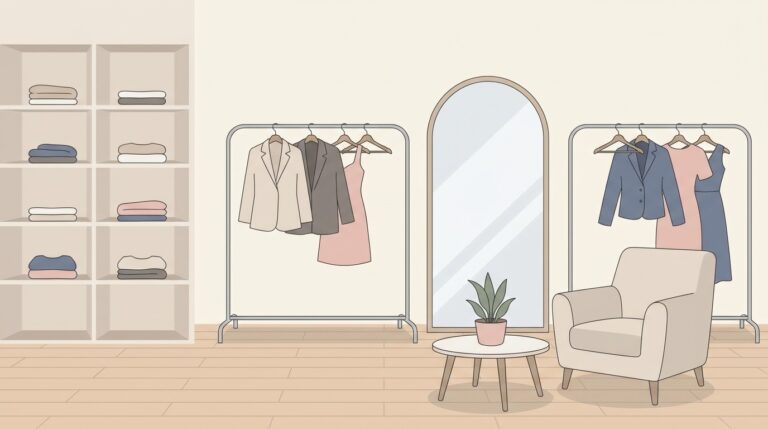
Picture this: You are standing inside the sleek, sunlit personal styling suite on the 4th floor of The Hyundai Seoul. Racks of impeccably curated designer pieces line the room, and a chic Korean personal shopper with an effortlessly tailored blazer greets you with a warm bow. You came prepared with mood boards on your phone—images inspired by contemporary K-dramas like Queen of Tears and effortless Seongsu street style. But when the stylist smiles and asks how they can help elevate your wardrobe today, your mind suddenly freezes.
How do you explain in Korean that you want something “trendy yet understated,” or that a specific silhouette “swallows your frame”? How do you ask for clothing that flatters your undertone without sounding like you’re reading from a robotic beginner phrasebook?
Navigating high-end shopping in Seoul is one of the most thrilling cultural experiences you can have, but it can quickly feel overwhelming when textbook phrases fail to capture nuance. Today’s guide is crafted directly from field coaching sessions with our intermediate learners who wanted real, sophisticated fashion vocabulary. By the end of this lesson, you will walk into any styling lounge or boutique in Cheongdam or Gangnam and articulate your style goals with the calm, polished confidence of a Seoul insider.
Phase 2: Top 3 Core Expressions
1. 제 체형의 단점을 보완해 주는 스타일을 찾고 있어요.
- Pronunciation: [Je che-hyeong-ui dan-jeom-eul bo-wan-hae ju-neun seu-ta-il-eul chat-go iss-eo-yo.] (Sounds like: Jeh cheh-hyong-we dahn-johm-eul boh-wahn-heh joo-noon sty-eel-eul chaht-goh eess-oh-yoh)
- Meaning: Literal: “I am looking for a style that compensates for the weak points of my body shape.” | Real Nuance: “I’m looking for a cut that flatters my frame and balances my proportions.”
- K-Culture Moment: Seen frequently in K-drama makeover episodes where a lead character steps into a boutique to prepare for an executive board meeting or a high-society gala, politely trusting the personal stylist’s professional eye.
- Editor’s Insight: Korean fashion consultation places immense value on proportion harmony rather than just size tags. Using the verb 보완하다 (bo-wan-ha-da, to complement/compensate) signals to your stylist that you are open to their structural expertise.
- Situation Spectrum: Casual: ⚠️ | Semi-formal: ✅ | Formal: ✅
- 🤔 Think About It: In Western shopping contexts, we often specify clothing cuts directly (e.g., “A-line,” “high-waisted”). Why do Korean fashion consultations focus on mutual structural harmony (체형 보완)? How does this reflect Korea’s holistic view of personal presentation?
2. 차분하면서도 세련된 무드로 연출하고 싶은데요.
- Pronunciation: [Cha-bun-ha-myeon-seo-do se-ryeon-doen mu-deu-ro yeon-chul-ha-go sip-eun-de-yo.] (Sounds like: Chah-boon-hah-myon-soh-doh seh-ryon-dwen moo-doo-roh yon-chool-hah-goh sheep-oon-deh-yoh)
- Meaning: Literal: “I want to direct it with a calm yet sophisticated mood.” | Real Nuance: “I’d love an understated, polished vibe that feels effortlessly chic.”
- K-Culture Moment: Stylists on YouTube channels like W Korea or Vogue Korea constantly use 무드 (mood) and 연출하다 (to direct/style) when explaining an idol’s clean, quiet-luxury off-duty look.
- Editor’s Insight: The word 무드 (mood) is ubiquitous in modern Seoul styling. Rather than listing individual colors, using 차분하다 (calm/composed) combined with 세련되다 (refined) gives the shopper an exact aesthetic direction without boxing them in.
- Situation Spectrum: Casual: ✅ | Semi-formal: ✅ | Formal: ✅
- 🤔 Think About It: Why has the theatrical term 연출하다 (originally meaning “to direct a play/film”) become an everyday verb for styling an outfit in Korean?
3. 과하지 않게 데일리 룩으로 활용할 수 있을까요?
- Pronunciation: [Gwa-ha-ji an-ge de-il-li rug-eu-ro hwal-yong-hal su iss-eul-kka-yo?] (Sounds like: Gwah-hah-jee ahn-geh day-il-lee rook-eu-roh hwahr-yong-hahl soo eess-ool-kkah-yoh?)
- Meaning: Literal: “Without being excessive, can this be utilized as a daily look?” | Real Nuance: “Can I tone this down and style it for everyday wear without looking overdressed?”
- K-Culture Moment: When celebrities preview runway outfits with their wardrobe coordinators, they often ask how to balance couture pieces with everyday staples for airport fashion.
- Editor’s Insight: 과하다 (gwa-ha-da, excessive/over-the-top) is the ultimate styling red flag in contemporary Korean street style. The peak Korean aesthetic is effortlessly put together, so this question demonstrates advanced cultural awareness.
- Situation Spectrum: Casual: ✅ | Semi-formal: ✅ | Formal: ✅
- 🤔 Think About It: How does the cultural dread of looking 과하다 connect to the Korean social virtue of fitting in seamlessly while subtly standing out?
Phase 3: Textbook Korean vs. Real Native Korean
Situation 1: Asking if an outfit combination works well together
- 📖 교과서 한국어 (Textbook):
이 바지와 이 셔츠가 잘 어울립니까?
(I ba-ji-wa i syeo-tsu-ga jal eo-ul-lim-ni-kka? / Do these pants and this shirt look good together?) - 🗣️ 진짜 한국어 (Real Native):
이 조합으로 매치하면 톤그로 없이 자연스러울까요?
(I jo-hab-eu-ro mae-chi-ha-myeon ton-geu-ro eop-si ja-yeon-seu-reo-ul-kka-yo? / If I pair these together, will it avoid clashing with my undertone and look cohesive?) - 💡 왜 다를까? (Cultural Insight):
Textbook Korean relies on the generic verb 어울리다 (to suit). Native shoppers at intermediate and advanced levels use terms like 조합 (combination), 매치하다 (to match), and slang-turned-mainstream terms like 톤그로 (color tone mismatch that ruins your complexion).
Situation 2: Asking for a versatile, timeless wardrobe recommendation
- 📖 교과서 한국어 (Textbook):
유행하는 옷을 보여주세요.
(Yu-haeng-ha-neun os-eul bo-yeo-ju-se-yo. / Please show me fashionable clothes.) - 🗣️ 진짜 한국어 (Real Native):
유행 타지 않으면서도 감각적인 스테디템 위주로 보여주실 수 있나요?
(Yu-haeng ta-ji an-eu-myeon-seo-do gam-gak-jeok-in seu-te-di-tem wi-ju-ro bo-yeo-ju-sil su iss-na-yo? / Could you show me timeless, tasteful staples that won’t go out of style next season?) - 💡 왜 다를까? (Cultural Insight):
Asking simply for “fashionable clothes” sounds like a tourist. Koreans distinguish sharply between passing micro-trends (유행 타는 옷) and sensible investments (스테디템, steady item).
Phase 4: K-Culture Deep Dive & Non-Verbal Manners
4-1. 눈치 (Nunchi) & Fitting Room Etiquette
Using a personal shopper in Korea is an intimate customer-service experience rooted in high 눈치 (situational awareness):
* The Fabric Touch: When handling high-end garments shown by your stylist, never yank them off the hanger. Touch the hem gently between your thumb and forefinger to inspect the texture. Stylists observe how gently you treat pieces before bringing out archive or VIP items.
* The Curtain Reveal: When stepping out of the fitting room, wait for the shopper to adjust the collar, lapel, or cuff. Stand tall, rest your arms naturally at your sides, and look into the full-length mirror together rather than looking down at your feet.
* Receiving Suggestions: When a stylist suggests an alternative piece, accept it with both hands or a light two-handed touch on the hanger accompanied by a soft head nod (목례).
4-2. Cultural Code Analysis: The Obsession with “Personal Color” & TPO
In Korea, fashion consultations are heavily anchored in two sacred concepts:
1. 퍼스널 컬러 (Personal Color): Knowing if you are Warm Tone (봄/가을 웜톤) or Cool Tone (여름/겨울 쿨톤) is not just a trend—it is a societal baseline. Personal shoppers use this framework to select palette pairings that illuminate your skin.
2. TPO (Time, Place, Occasion): Korean society places intense emphasis on dressing for the setting. A personal shopper won’t just ask what you like; they will ask, “Where will you wear this first?” Being overdressed is just as problematic as being underdressed.
Phase 5: Real-Life Roleplay Scenario
Setting: VIP Personal Styling Suite at a premier department store in Gangnam.
Characters:
* 민지 실장님 (Min-ji, Lead Stylist): Discerning, elegant, warm, with an encyclopedic knowledge of Korean minimalist silhouettes.
* 유나 (Yuna, The Client): Visiting Seoul, seeking a signature capsule wardrobe.
대화 (Dialogue):
- 민지 실장님: 어서 오세요, 고객님! 오늘 특별히 찾으시는 스타일이나 TPO가 있으실까요?
(Eo-seo o-se-yo, go-gaek-nim! O-neul teuk-byeol-hi chat-eu-si-neun seu-ta-il-i-na TPO-ga iss-eu-sil-kka-yo?)
“Welcome! Is there a specific style or occasion you are dressing for today?”
🎭 She offers a cup of warm barley tea and gestures toward a curated clothing rail. -
유나: 반갑습니다! 출근할 때도 입고, 주말 모임에도 두루 어울리는 꾸안꾸 스타일을 보고 싶어요.
(Ban-gap-seumnida! Chul-geun-hal ttae-do ip-go, ju-mal mo-im-e-do du-ru eo-ul-li-neun ggu-an-ggu seu-ta-il-eul bo-go sip-eo-yo.)
“Nice to meet you! I’d love to explore an effortlessly chic style that transitions from work to weekend gatherings.”
🎭 Yuna smiles politely, keeping an open posture. -
민지 실장님: 아, 포멀함과 캐주얼함의 밸런스네요. 고객님 피부톤을 보니 뉴트럴 쿨톤 계열의 슬랙스와 오버핏 블레이저 조합이 잘 어울리실 것 같아요.
(A, po-meol-ham-gwa kae-ju-eol-ham-ui bael-leon-seu-ne-yo. Go-gaek-nim pi-bu-ton-eul bo-ni nyu-teu-reol kul-ton gye-yeol-ui seul-raek-seu-wa o-beo-pit beul-re-i-jeo jo-hab-i jal eo-ul-li-sil geot gat-a-yo.)
“Ah, the balance between formal and casual. Looking at your skin undertone, I think neutral cool-toned slacks paired with a tailored relaxed blazer would suit you beautifully.”
🎭 Min-ji pulls out a charcoal fluid-drape blazer and matching wide-leg trousers. -
유나: 어깨 라인이 너무 각져 보이지 않을까요? 제 체형의 단점을 보완해 주면 좋겠어요.
(Eo-kkae ra-in-i neo-mu gak-jyeo bo-i-ji anh-eul-kka-yo? Je che-hyeong-ui dan-jeom-eul bo-wan-hae ju-myeon jok-ess-eo-yo.)
“Won’t the shoulder line look too structured? I’m hoping it softens and flatters my proportions.”
🎭 Yuna gently touches the shoulder padding to test the softness. -
민지 실장님: 걱정 마세요. 패드가 얇고 드롭 숄더 실루엣이라 자연스럽게 떨어져요. 한번 피팅해 보시겠어요?
(Geok-jeong ma-se-yo. Pae-deu-ga yalp-go deu-rop syol-deo sil-ru-es-i-ra ja-yeon-seu-reop-ge tteol-eo-jyeo-yo. Han-beon pi-ting-hae bo-si-gess-eo-yo?)
“No need to worry. The padding is minimal with a dropped-shoulder silhouette, so it falls very naturally. Would you like to try it on?”
🎭 Min-ji guides Yuna toward the private fitting suite with an inviting hand gesture. -
유나: (피팅룸에서 나오며) 핏감은 마음에 드는데, 이너를 어떻게 매치해야 과하지 않을까요?
(Pit-gam-eun ma-eum-e deu-neun-de, i-neo-reul eot-teoh-ge mae-chi-hae-ya gwa-ha-ji anh-eul-kka-yo?)
“(Stepping out) I really love the fit, but how should I style the inner layer so it doesn’t look overdone?”
🎭 Yuna checks the silhouette in the mirror while smoothing down the front lapels. -
민지 실장님: 은은한 실크 슬립이나 텐셀 소재의 얇은 터틀넥을 이너로 받쳐 입으시면 훨씬 세련돼 보여요.
(Eun-eun-han sil-keu seul-rip-i-na ten-sel so-jae-ui yalp-eun teo-teul-nek-eul i-neo-ro bat-chyeo ib-eu-si-myeon hwol-ssin se-ryeon-dwae bo-yeo-yo.)
“If you layer a subtle silk slip or a sheer Tencel turtleneck underneath, it will look significantly more polished.”
🎭 Min-ji demonstrates the layering effect against the lapel. -
유나: 역시 전문가의 안목이 다르네요! 이 구성 그대로 착장해 볼게요.
(Yeok-si jeon-mun-ga-ui an-mok-i da-reu-ne-yo! I gu-seong geu-dae-ro chak-jang-hae bol-ge-yo.)
“As expected, a professional’s eye makes all the difference! I’ll go with this exact full outfit combination.”
🎭 Yuna nods appreciatively with a slight bow.
🔀 Interactive Decision Point
Suppose the stylist brings out a bright lime-green leather trench coat that feels completely outside your comfort zone. How do you respond?
- Option A: “이건 완전 제 스타일 아닌데요. 촌스러워요.” (This isn’t my style at all. It looks tacky.)
- Option B: “색감이 유니크하긴 한데, 제 퍼스널 컬러에는 조금 톤그로가 될 것 같아서요. 혹시 뉴트럴 계열로 볼 수 있을까요?” (The color is unique, but I think it might clash with my skin undertone. Could we look at neutral tones instead?)
- Option C: “네, 예쁘네요. 그냥 이걸로 살게요.” (Yes, it’s pretty. I’ll just buy this.)
Feedback:
* Option A (Bad): 촌스럽다 (tacky/outdated) is very offensive to a professional stylist. It shuts down constructive collaboration.
* Option B (Best!): Polite, articulate, and culturally savvy. Mentioning your personal color tone and requesting neutral tones (뉴트럴 계열) shows sophisticated taste and mutual respect.
* Option C (Risk): You end up spending a substantial amount of money on a statement piece you will likely never wear again due to buyer’s remorse.
Phase 6: 10-Second Emotion Shadowing Drill
Practice these natural rhythm pauses (/) and emotional deliveries out loud:
[✨ 기대감 넘치고 공손하게 / Eager & Polite]
저한테 어울리는 실루엣으로 / 추천해 주실 수 있나요?
(Jeo-han-te eo-ul-li-neun sil-ru-es-eu-ro / chu-cheon-hae ju-sil su iss-na-yo?)
“Could you recommend / a silhouette that suits me?”-
[🤔 신중하고 솔직하게 / Thoughtful & Honest]
핏감은 정말 예쁜데 / 평소에 입기에는 조금 과한 것 같아요.
(Pit-gam-eun jeong-mal ye-ppeun-de / pyeong-so-e ip-gi-e-neun jo-geum gwa-han geot gat-a-yo.)
“The fit is truly gorgeous, / but for daily wear it feels slightly over-the-top.” -
[😍 대만족하며 감탄하듯이 / Delighted & Impressed]
단점은 싹 가려주고 / 비율이 훨씬 좋아 보여요!
(Dan-jeom-eun ssak ga-ryeo-ju-go / bi-yul-i hwol-ssin jo-a bo-yeo-yo!)
“It completely conceals my weak points / and my proportions look so much better!”
Phase 7: K-Culture Mini Dictionary
-
꾸안꾸 (Ggu-an-ggu)
- Meaning: Short for “꾸민 듯 안 꾸민 듯” (Looking styled without looking overly done up; effortless chic).
- Usage: The golden rule of Korean street fashion. Use it when you want pieces that look stylishly low-maintenance rather than rigidly formal.
- 톤그로 (Ton-geu-ro)
- Meaning: Portmanteau of “톤 (Tone)” and “어그로 (Aggro/drawing unwanted negative attention)”.
- Usage: Describes makeup or clothing colors that clash with your natural skin undertone, making your complexion look sallow, red, or washed out.
- 착장 (Chak-jang)
- Meaning: Full outfit / styled set (head-to-toe coordination).
- Usage: Commonly used in fashion forums, Instagram OOTDs, and retail consultations when referring to a complete ensemble rather than individual items.
- 스테디템 (Seu-te-di-tem)
- Meaning: Steady Item (a classic staple that transcends fast-fashion seasonal trends).
- Usage: Great when shopping on a budget or investing in high-quality wool coats, trench coats, or leather loafers that last for years.
Phase 8: Survival Kit for Travelers
Top 3 Survival Expressions
- 혹시 다른 컬러웨이나 사이즈도 피팅 가능한가요?
(Hok-si da-reun keol-reo-we-i-na sa-i-jeu-do pi-ting ga-neung-han-ga-yo?)
Pro Tip: High-end boutiques often keep alternative colorways (컬러웨이) and extended sizes in back-stock vaults. -
텍스 리펀드 현장 영수증 발행해 주실 수 있나요?
(Tek-seu ri-peon-deu hyeon-jang yeong-su-jeung bal-haeng-hae ju-sil su iss-na-yo?)
Pro Tip: Most major department stores in Seoul offer instant tax refunds at dedicated customer service desks or automated kiosks. -
이 원단 관리할 때 드라이클리닝 필수인가요?
(I won-dan gwan-ri-hal ttae deu-ra-i-keul-li-ning pil-su-in-ga-yo?)
Pro Tip: Korean luxury fashion utilizes high-grade Tencel, cashmere, and silk blends that require specific garment care.
Editor’s Travel Note
- Booking Personal Shoppers: High-end department stores like The Hyundai Seoul, Shinsegae Gangnam, and Galleria Luxury Hall require booking through their official portals or international concierge desks. To confirm appointments on the go, download the Catch Table reservation app for linked VIP pop-ups, or navigate directly using the Naver Map navigation app since foreign GPS services lack precise indoor floor plans in Korea.
- Card Payments: Most styling services do not accept overseas wire transfers on the spot; ensure your physical credit card has dynamic currency conversion enabled, or pay directly via local mobile systems where supported.
Phase 9: “A Step Deeper” (Reflective Question)
In Korean society, the clothes you wear are rarely treated merely as an expression of extreme individualism. Rather, fashion is considered an act of social courtesy toward the space you enter and the people you encounter—a philosophy encapsulated by the societal obsession with TPO and 단정함 (neatness/orderliness). When consulting with a personal shopper, you are not simply buying garments; you are negotiating your aesthetic presence within the social tapestry of modern Korea.
💬 Your Turn: Does your home culture view shopping more as an individualistic expression or as a contextual social etiquette? How do you feel about discussing your body proportions openly with a stylist? Let us know in the comments below!
Phase 10: FAQ & Misunderstanding Prevention
Q: Do personal shoppers in Seoul charge an hourly fee on top of clothing purchases?
A: In major department stores (like Shinsegae, Lotte, and Hyundai), styling consultations for VIPs or international concierge guests are often complimentary if you meet a minimum spend threshold or book an official promotional program. However, independent private styling studios in Cheongdam-dong charge fixed hourly consultation rates (typically 150,000 to 350,000 KRW) regardless of whether you purchase items.
Q: Can I take photos of the outfits inside the fitting lounge?
A: Generally yes, but always ask first: “착장 사진 몇 장 찍어도 괜찮을까요?” (Chak-jang sa-jin myeot jang jjik-eo-do gwaen-chanh-eul-kka-yo? / May I take a few photos of the outfit?). Some private boutiques restrict photography of unreleased seasonal samples.
Q: What should I wear on the day of my consultation?
A: Wear skin-toned, seamless undergarments and easy slip-on shoes. Avoid heavy foundation or red lip products that could transfer onto delicate necklines, as Korean fitting rooms strictly require you to wear a disposable face cover (페이스 커버) when trying on tops.
🚨 Common Mistakes (경고판)
- Mistake 1: Trying on clothes without a face shield.
- Correct Action: When slipping into garments, always utilize the translucent 페이스 커버 (face cover) provided in the fitting booth to prevent makeup smears.
- Mistake 2: Asking for oversized discounts on fixed-price items.
- Correct Action: Department stores in Korea have strict fixed pricing (정찰제). Instead of haggling, ask about tax refunds or department store card membership discounts (카드 제휴 할인).
- Mistake 3: Saying “너무 뚱뚱해 보여요” (I look too fat) instead of focusing on silhouette.
- Correct Action: Say “부해 보여요” (Bu-hae bo-yeo-yo / It gives an overly bulky silhouette) or “라인이 덜 정돈된 느낌이에요” (The lines feel less streamlined) for refined nuance.
Phase 11: Action Mission & Engagement
- 🥉 Bronze Level: Stand in front of your mirror and practice saying Phase 6’s three shadowing drill sentences aloud with the specified emotion tags.
- 🥈 Silver Level: Snap your favorite OOTD today, post it to Instagram or our study forum, and write a caption describing it using at least two core terms: 꾸안꾸, 착장, or 스테디템.
- 🥇 Gold Level: During your next shopping trip (or browsing an online Korean fashion store like Musinsa or 29CM), find a set and write a 3-sentence Korean consultation inquiry asking for neutral alternatives and body-shape compliments.
🎮 K-Culture Mission: Watch an episode of a fashion-forward K-drama (such as Queen of Tears or Celebrity) or a stylist vlog on YouTube. Listen closely and spot when someone uses the words 무드 or 착장!
Phase 12: Interactive Quiz Challenge
Test your fashion consultation mastery! Try answering these questions before checking the answers below.
- Situation Judgment: You want to tell your stylist that an outfit looks a bit too dramatic for wearing to work on casual Fridays. Which phrase is the most natural and polite?
- A) 너무 이상해서 직장에 못 입고 가요.
- B) 출근 룩으로는 조금 과한 느낌이라, 데일리하게 연출할 수 있을까요?
- C) 이 옷은 진짜 촌스러워요.
- Fill in the Blank: Fill in the missing B2 fashion vocabulary:
“제 피부톤이 여름 쿨톤이라 베이지색은 ( )가 생길 것 같아요. 모노톤으로 보여주세요.”
(Hint: The term used when a color tone aggressively clashes with your complexion.) -
True or False Cultural Fact: When trying on pull-over tops in Korean boutique dressing rooms, it is considered polite to use a paper or fabric face cover to prevent makeup stains.
- True / False
👉 Click to view answers and explanations
- Answer: B
- Explanation: Choice B politely expresses that the outfit feels a bit excessive (과한 느낌) for office wear and asks how to style it casually (데일리하게 연출하다). Choices A and C are rude and unconstructive.
- Answer: 톤그로 (Ton-geu-ro)
- Explanation: 톤그로 describes when a mismatched color makes your skin look muddy, dull, or sallow.
- Answer: True
- Explanation: Using a 페이스 커버 (face cover) is standard boutique etiquette throughout Korea to keep delicate garments pristine.
- Explanation: Using a 페이스 커버 (face cover) is standard boutique etiquette throughout Korea to keep delicate garments pristine.







